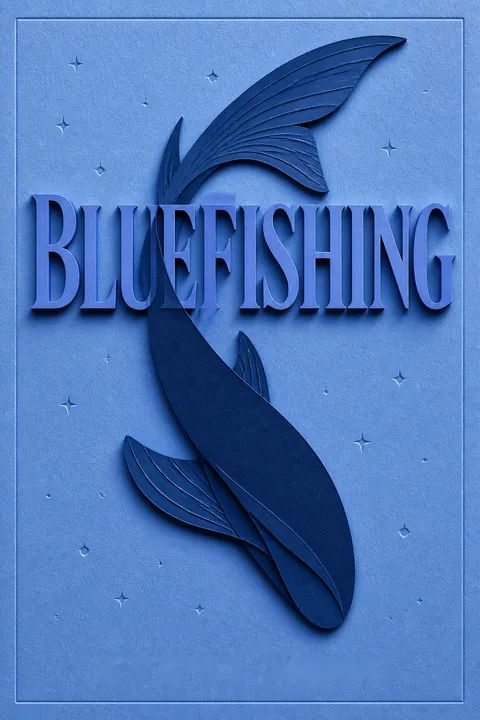


Key Takeaways
Treat closed doors as puzzles, not proof that you do not belong.
Agency starts with a question. Bluefishing is Steve Sims’s name for a practical mindset: pursue what seems out of reach by acting, learning, listening, and finding a way through. It is less a checklist than a habit of refusing to treat the first obstacle as the final answer. Sims grew up in London’s East End, working as a bricklayer. At nineteen, he quit after seeing his family’s future mapped out on the ladders below him.
Start before certainty arrives. Jobless in Hong Kong after being fired from a bank, he found work at a club door. Instead of simply letting people in, he sent them elsewhere when the night looked dull, then built better parties with word-of-mouth invitations and passwords. The work grew into a business connecting clients to experiences they thought were impossible.
The book’s strongest premise is not that every barrier is imaginary, but that people often mistake unfamiliarity for impossibility. Sims’s path shows how small experiments can reveal options that a person’s inherited expectations conceal. That is a valuable corrective to status anxiety and learned self-exclusion. Still, a mindset cannot erase structural obstacles such as poverty, discrimination, or limited access. The useful distinction is between acknowledging those constraints and treating them as a reason never to test what remains possible. Agency begins with a better question, but it also benefits from allies, resources, and realistic risk assessment.
Ask what the request is really trying to make someone feel.
Listen beneath the ask. Sims recommends probing beyond a person’s first description of what they want. His client initially requested tickets to the Playboy Mansion, but spoke without enthusiasm. When Sims asked about his interests, the client lit up about wine and Napa Valley. He admitted that the original request came from pressure to prove himself to colleagues. Sims arranged a Napa trip instead, and the client became a long-term customer because he felt understood.
Keep asking with care. Sims suggests following an initial answer with further questions about why it matters. The first response may be a convenient explanation; deeper answers can reveal the emotion or personal story underneath. This is not a license to interrogate or override someone. It is a way to check whether the proposed solution serves the person’s real aim.
This is a sharp lesson in the difference between order-taking and problem-solving. In product design, the stated feature request often points toward a deeper need, such as security, recognition, or ease. The same distinction matters in relationships: people may ask for a specific outcome when what they want is belonging or relief. The method works best when questions are genuinely curious and the other person can decline to answer. Without that humility, probing becomes a sales tactic that treats someone’s vulnerability as leverage rather than information.
Make every ambitious ask create a meaningful win for someone else.
Build a shared reason. A CNBC commentator once asked Sims to arrange a meeting with Journey, whose music had helped him through college. Sims asked what would make the encounter matter most. The client had once performed Journey songs in a cover band, so a brief handshake was not the real dream. Sims found a connection between the client’s family and a band member’s family around autism, then built a charitable event around that common concern. The client sang onstage with the band, and the event raised substantial donations for Autism Speaks.
Keep the destination clear. The route changed, but the goal stayed intact. Sims’s approach is to discover what each party values and offer a reason to participate that is not merely a favor to him. Money may be involved, but shared purpose and recognition can matter just as much.
The example illustrates a useful negotiation principle: collaboration becomes more durable when the parties can each explain why the arrangement makes sense for them. A shared cause gave the request legitimacy beyond access to a famous band. That does not make every exchange equally beneficial, and charitable purpose should not be used to disguise a one-sided deal. The practical test is whether each participant’s interests are represented honestly. When they are, creativity can expand the available options instead of turning negotiation into a contest over who gives way.
Show people you listened through details no automated message could fake.
Make attention tangible. Sims favors small, personal gestures that show a person was remembered. He once sent a hotel’s cocktail menus to five hundred clients, adding handwritten notes about the drink and why it made him think of each recipient. In another experiment, he had children wrap fifty glossy travel books by hand instead of mailing them from a fulfillment center. Clients responded directly, and the company booked sixty hotel rooms within a week.
Choose the right moment. A handwritten note, a relevant book, or a modest object connected to someone’s interests can make communication feel personal. The point is not to spend heavily or send gifts constantly. It is to show that the gesture was chosen for this person, not copied into a campaign.
These gestures work as signals of attention: the recipient can see evidence that someone spent time noticing their preferences. That is more persuasive than a generic claim of care because it makes the claim concrete. The book’s examples also show why scale is not always the same as reach; fifty thoughtfully addressed packages can create more conversation than a much larger automated blast. Yet personal touches lose force if they are deployed mechanically or create an expectation of reciprocity. Their value depends on fit, sincerity, and restraint.
Test ideas in public before preparation becomes an elegant form of avoidance.
Trade speculation for evidence. Sims recounts an aspiring restaurant owner who had little money and could not cook. Instead of debating the dream in the abstract, Sims suggested inviting ten people over, serving a meal, and asking for honest feedback. The experiment could reveal whether the person enjoyed the work, what needed improvement, and whether someone else should handle the cooking. The point was to learn before investing heavily.
Treat setbacks as information. Sims describes a startup founder who researched investors and perfected pitch materials for so long that the company ran short of money before pitching anyone. He favors small tests, including crowdfunding campaigns, that show how real people respond. A weak response may reveal a problem with the product, audience, or message. It is useful feedback, though it can still cost time, money, and morale.
The chapter’s practical strength is its bias toward reversible experiments. A small test can expose mistaken assumptions before they become expensive commitments, a principle shared by scientific inquiry and iterative product development. The important word is small: experimentation is not automatically wise if the downside is ruinous or the test gives misleading results. Nor does every unsuccessful attempt contain a clear lesson. It takes honest diagnosis to distinguish a fixable flaw from evidence that the idea itself is weak. Action beats endless planning when action is designed to teach.
Build a credible personal brand by dropping the costume.
Make appearance match behavior. Once Sims began earning money, he tried to look like the wealthy people around him, wearing expensive clothes to signal credibility. He found that the performance created distance because his manner and presentation did not feel consistent. He returned to simpler clothes and a more natural way of showing up. A photograph from Monaco, where he posed beside his Ferrari and a yacht that was not even his, became a reminder of how easily status-seeking turns into comparison.
Define fit honestly. Sims recommends writing down what a person values, does well, and repeatedly gets wrong. His Chug Test is a quick compatibility check: would he gladly share an informal drink with a potential client, colleague, or partner? It is a prompt to consider trust and fit, not just revenue or appearances.
The useful insight is that reputation is built through consistency between what someone signals and how they actually behave. That consistency can make trust easier because others spend less effort reconciling conflicting cues. The Chug Test adds a human question to decisions often reduced to credentials or short-term performance. It should not become a proxy for hiring people who resemble the decision-maker; comfort and competence are not identical. Authenticity is also not the same as sharing everything. A credible public identity is selective, but it does not require pretending to be someone else.
Say no to draining relationships before they contaminate good work.
Protect attention and morale. Sims argues that accepting every client, project, or relationship can dilute the work a person does best. He describes firing a top salesperson with whom he had a persistently difficult relationship, despite knowing the company would lose money in the short term. He felt immediate mental relief, and the team’s working relationships improved. For Sims, the decision was not only about output; it was also about the energy the relationship consumed.
Review the whole circle. He suggests listing the people who shape daily life, from close family and friends to clients and suppliers, then asking who contributes and who repeatedly drains attention. A boundary may mean ending a relationship, changing its terms, or limiting contact. The goal is to use time deliberately, not to label every disagreement toxic.
The case for boundaries is persuasive because emotional friction consumes attention that could otherwise go to work, family, or recovery. But the book’s bold language can make separation sound simpler than it is. Some relationships involve financial dependence, caregiving, shared obligations, or conflict that can improve through clearer expectations. A useful audit asks not only who feels draining, but why, whether the pattern is changeable, and what obligations exist. Saying no is most powerful when it protects a considered priority rather than becoming a reflexive escape from discomfort.
Delegate execution so your rare strengths can steer the whole project.
Lead instead of doing everything. Sims proposes identifying the small part of a project where a person’s abilities are unusually strong, then assigning other tasks to people better suited to them. He calls the leader an orchestra conductor: responsible for the overall result, but not required to play every instrument. Delegation is not abandonment. The leader still monitors the important risks and matches tasks to people’s strengths.
Buy back attention. A personal chef prepared weekday dinners for Sims’s family. He says the arrangement gave him and his wife two to four hours a day by removing shopping, meal planning, and cooking interruptions. The specific service is costly for many households, but the principle can apply to recurring errands, administrative work, or small tasks that repeatedly break concentration.
Delegation is often presented as a route to scale, but this account emphasizes a more immediate return: fewer interruptions and more attention for high-value work and relationships. It also makes clear that delegation requires judgment. Tasks must be specified, assigned to capable people, and checked according to their risk. Otherwise, the manager simply transfers confusion and later has to repair it. The example of a chef is not universally affordable, yet the underlying audit is widely applicable: identify recurring friction, then decide whether it is worth paying, sharing, simplifying, or eliminating.
Enter rooms where you are a beginner and absorb one useful lesson.
Practice being new. Sims calls this learning posture Sponge Mode: entering an unfamiliar setting ready to observe and take in what others know instead of pretending to be an expert. He advises aiming to leave slightly more informed than when you arrived. That may mean attending a meeting outside your field, asking basic questions, or seeking feedback from people with greater experience.
Experience can precede ownership. As a young man, Sims visited the Ritz hotel lobby and asked to see a room, although he could not afford to stay there. He wanted to understand the environment. He later applied the same curiosity to hotels and cars, learning by looking, asking, and observing. Exposure can make an unfamiliar world less intimidating, though it does not substitute for the skill or resources needed to operate in it.
This is a compelling account of low-cost experiential learning. Observation and direct exposure can replace vague assumptions with concrete knowledge, while admitting ignorance makes it easier to ask useful questions. The approach also reframes embarrassment as a temporary price for becoming more capable. Its limits matter: entering a prestigious space does not automatically create access, and some environments impose real barriers. The strongest version of Sponge Mode pairs curiosity with respect for others’ time, preparation to learn, and an honest distinction between having seen a practice and being able to perform it.
Fear staying stuck more than looking awkward while you try.
Move toward growth. Sims treats fear as unavoidable, but suggests redirecting it toward the prospect of being in the same place months from now. He describes riding through California mountains after brush fires and seeing new growth emerge from the burned ground. For him, the image represents how painful events can become part of a new beginning rather than a permanent definition of a person.
Keep the effort sustainable. Trying something unfamiliar can create mistakes, rejection, and fatigue. Sims’s own ways to reset include riding a motorcycle, boxing, and taking time away from work. These pauses are not a retreat from ambition; they help restore attention and perspective. The goal is continued movement, not constant activity or a life without rest.
Reframing fear around stagnation can help people act when the familiar routine has become more costly than the risk of change. The wildfire image gives the idea emotional force without pretending that recovery is instant or guaranteed. There is also a needed counterweight in the advice to rest: relentless movement can become its own form of avoidance, especially when people use productivity to escape uncertainty. Growth requires both exposure to difficulty and recovery from it. A sustainable test is whether an action expands capability without consuming the health and relationships that make progress worthwhile.
Analysis
Bluefishing is a book about agency expressed through relationships. Its surface subject is extraordinary access, from a client singing with Journey to dinners arranged in unlikely places. Its deeper argument is that access comes from a repeatable combination: challenge assumptions, uncover what people care about, create reciprocal value, and keep adapting when the first route fails. The stories make the method legible because Sims presents himself as an unlikely guide, a working-class bricklayer who learned by trying things before he had credentials or a polished plan.
The book is strongest when it turns social attention into practical craft. Asking what a request means, noticing where someone’s enthusiasm rises, and making a personal gesture are not merely sales techniques. They are ways of resisting the abstraction that makes people feel interchangeable. Its examples also connect personal credibility with business design: a brand is not only an image but the pattern of behavior others encounter.
Its weakest tendency is to make will and confidence sound more universally powerful than they are. Persistence does not guarantee success, and not every obstacle is self-created. Some stories also blur the line between confident persuasion and pressure. The book’s best principles are therefore more reliable when paired with consent, proportional risk, and honest attention to unequal resources.
The most useful reading is neither a literal promise that anything can be arranged nor a collection of luxury anecdotes. It is a field guide to becoming more observant, more willing to experiment, and more deliberate about who receives one’s time. The title’s central metaphor works because doors rarely open through force alone: someone must understand what the people on the other side value. In this account, making things happen is less about demanding access than about building enough trust, relevance, and persistence that cooperation becomes sensible.
Review Summary
Bluefishing: The Art of Making Things Happen receives mixed reviews, with an average rating of 3.97 out of 5. Many readers appreciate Sims' energetic style, practical advice on networking, and emphasis on passion and relationships. The book is praised for its motivational content and unique perspectives on customer service. However, some critics find the content repetitive or lacking depth. Readers value Sims' personal anecdotes and his unconventional approach to achieving goals, though some struggle to apply his methods to their own lives.
People Also Read





Glossary
Bluefishing
Making unlikely things happenSims’s term for a mindset and practice of turning ambitious aims into action. It combines initiative, curiosity about what people value, reciprocal problem-solving, learning through attempts, and adapting when a route fails. The book presents it as useful in business and personal life, not only in arranging unusual experiences.
Sponge Mode
Learning through open observationA deliberate posture of entering an unfamiliar situation as a learner rather than pretending to know more than one does. The person listens, asks questions, observes how others work, and aims to absorb a small amount of new understanding. Sims treats discomfort and beginner status as opportunities for growth.
Chug Test
A personal fit checkSims’s informal test for deciding whether a potential client, colleague, vendor, or friend feels like someone he would willingly spend relaxed time with. The question is meant to reveal comfort, trust, and compatibility beyond money or credentials. It is a prompt for judgment, not an objective measure of someone’s ability.
ugly
Raw, personal communicationSims’s specialized use of ugly refers to communication that is intentionally unpolished, individualized, and recognizably human. Examples include handwritten notes, roughly wrapped packages, and brief personal videos. The point is not poor quality for its own sake, but the visible evidence that a message was made for a particular person rather than mass-produced.
The Bluefishing Playbook
Sims’s practical principlesThe book’s concluding collection of reminders for acting with initiative, uncovering real motivations, creating mutual benefit, learning through attempts, communicating personally, and protecting time and energy. It is a synthesis of the book’s advice rather than a formal sequence that must be followed in a fixed order.
FAQ
What's "Bluefishing: The Art of Making Things Happen" about?
- Overview: "Bluefishing" by Steve Sims is about achieving seemingly impossible goals by adopting a unique mindset and approach to life and business.
- Core Concept: The book introduces the concept of "Bluefishing," which involves breaking down barriers, thinking creatively, and making things happen through unconventional means.
- Personal Stories: Sims shares personal anecdotes and experiences from his career as a luxury concierge, illustrating how he has made extraordinary experiences possible for his clients.
- Mindset Focus: The book emphasizes the importance of mindset, passion, and persistence in achieving success and fulfillment.
Why should I read "Bluefishing: The Art of Making Things Happen"?
- Inspiration: The book is a source of inspiration for those looking to break out of their comfort zones and achieve extraordinary things.
- Practical Advice: It offers practical advice and strategies for overcoming obstacles and making dreams a reality.
- Unique Perspective: Steve Sims provides a unique perspective on success, drawn from his experiences working with high-profile clients and creating unforgettable experiences.
- Empowerment: Readers are empowered to take control of their lives and pursue their passions with confidence and creativity.
What are the key takeaways of "Bluefishing: The Art of Making Things Happen"?
- Mindset Matters: Success is largely about adopting the right mindset and being willing to take risks and think outside the box.
- Passion and Persistence: Passion fuels persistence, and together they are key to overcoming challenges and achieving goals.
- Authenticity is Crucial: Being authentic and true to oneself is essential for building genuine relationships and achieving lasting success.
- Action Over Analysis: Taking action and learning from failures is more valuable than overanalyzing and planning to the point of inaction.
How does Steve Sims define "Bluefishing"?
- Definition: "Bluefishing" is the art of making things happen by breaking down barriers and thinking creatively.
- Approach: It involves a mindset of possibility, where no goal is too big or too out of reach.
- Execution: Bluefishers use unconventional methods and leverage relationships to achieve extraordinary outcomes.
- Philosophy: The philosophy is about living life fully, embracing challenges, and creating memorable experiences.
What is the "Power of the Password" in "Bluefishing"?
- Concept: The "Power of the Password" refers to creating exclusivity and intrigue by using a password to access special events or experiences.
- Application: Sims used this concept to build a network and create buzz around events, making people feel special and part of something unique.
- Psychological Impact: It taps into the human desire for exclusivity and belonging, making experiences more memorable and desirable.
- Business Strategy: This approach can be applied in business to create a sense of community and loyalty among clients and customers.
How does Steve Sims suggest overcoming fear and failure in "Bluefishing"?
- Reframe Failure: Sims suggests viewing failure as a form of discovery and learning, rather than a setback.
- Embrace Fear: Fear is seen as a natural part of growth, and Sims encourages using it as a motivator rather than a barrier.
- Persistence: He emphasizes the importance of persistence and resilience in the face of challenges.
- Growth Mindset: Adopting a growth mindset allows individuals to see obstacles as opportunities for learning and improvement.
What role does authenticity play in "Bluefishing"?
- Core Principle: Authenticity is a core principle in Bluefishing, as it builds trust and genuine connections with others.
- Personal Branding: Sims advises individuals to be true to themselves and not conform to others' expectations, which enhances personal branding.
- Relationship Building: Authenticity fosters stronger relationships, as people are drawn to those who are genuine and sincere.
- Business Success: In business, being authentic can differentiate a brand and create a loyal customer base.
What is the "Chug Test" mentioned in "Bluefishing"?
- Definition: The "Chug Test" is a simple method to determine if someone is a good match for you, whether in business or personal life.
- Application: Ask yourself if you would want to chug a beer with the person in question. If the answer is no, they may not be a good fit.
- Purpose: It helps in making quick decisions about relationships and partnerships based on gut feelings and personal comfort.
- Simplicity: The test is straightforward and emphasizes the importance of enjoying the company of those you work or associate with.
How does "Bluefishing" address the concept of personal branding?
- Personal Branding: Sims emphasizes that personal branding is about being true to oneself and not conforming to external expectations.
- Self-Audit: He suggests conducting a self-audit to understand one's strengths, weaknesses, and core values.
- Authenticity: Authenticity is key to effective personal branding, as it attracts like-minded individuals and opportunities.
- Differentiation: Personal branding helps differentiate oneself in a crowded market by highlighting unique qualities and passions.
What are some practical strategies from "Bluefishing" for making things happen?
- Action-Oriented: Take immediate action rather than overanalyzing situations, and learn from the outcomes.
- Build Relationships: Leverage relationships and networks to open doors and create opportunities.
- Creative Thinking: Think creatively and be willing to try unconventional methods to achieve goals.
- Persistence: Maintain persistence and resilience in the face of challenges, using failures as learning experiences.
What are the best quotes from "Bluefishing: The Art of Making Things Happen" and what do they mean?
- "No one ever drowned from falling in the water. They drowned from staying there." This quote emphasizes the importance of taking risks and not being afraid of failure, as long as you keep moving forward.
- "The experience beats the cash, every time." Sims highlights the value of creating memorable experiences over monetary gain, as experiences have lasting impact.
- "If communication isn’t personal, it’s not communication." This underscores the importance of genuine, personal interactions in building relationships and achieving success.
- "Passion is something you have to discover. Relax. Try stuff. It takes time. But never stop looking." This encourages readers to actively seek out their passions and be open to new experiences.
How can "Bluefishing" be applied to personal and professional life?
- Personal Growth: Use the principles of Bluefishing to pursue personal passions and overcome self-imposed limitations.
- Career Advancement: Apply the mindset and strategies to advance in your career by taking risks and building strong networks.
- Entrepreneurship: Entrepreneurs can use Bluefishing techniques to innovate, create unique experiences, and differentiate their businesses.
- Relationship Building: Strengthen personal and professional relationships by being authentic, listening actively, and providing value to others.
Download PDF
Download EPUB
.epub digital book format is ideal for reading ebooks on phones, tablets, and e-readers.








