

Plot Summary
Alexis Learns the Wheel
Alexis Ivanovich1 returns to Roulettenburg after fetching money for the General’s4 stepdaughter,2 Polina,2 whom he loves with a humiliating, near-violent devotion.
The household is waiting on news that Grandmamma,3 a wealthy relative, has died and left an inheritance; the General4 needs it to settle debts to the Frenchman de Grieux6 and marry the dazzling Blanche.7 Polina2 gives Alexis1 seven hundred gulden and orders him to gamble for her, though she refuses to explain what the money is for.
At the tables, his first nervous bets unexpectedly turn ten gold pieces into a small fortune. He hands Polina2 her winnings, then insists he must play for himself. The risk has already begun to feel less like a means of earning money than a way to remake his standing in her eyes.
The opening binds two forms of dependence together. The General’s family waits for an inheritance, while Alexis waits for Polina to recognize him; both imagine money can alter relationships that are already organized by unequal power. Alexis’s first win is therefore not simply good luck. It gives bodily force to his belief that fortune can supply what rank and self-command have denied him. His insistence on gambling for himself marks a shift from obedient service to self-invention, but not freedom: he is still acting within the emotional economy Polina controls. Roulette offers him a fantasy of agency precisely because its outcomes cannot be negotiated.
The Baron’s Lost Respectability
Alexis1 soon loses the money he is gambling for Polina,2 then discovers how little the household’s polished appearance protects it. He insults a Prussian baron at Polina’s2 urging, expecting the baron’s anger to amuse her.
Instead, the General4 dismisses him to avoid a scandal that might threaten his plans for Blanche.7 Mr Astley,5 a shy Englishman who loves Polina,2 explains that Blanche7 has been expelled from the resort before and now risks exposure if the Baroness recognizes her. He also confirms that the General4 has mortgaged his estate to de Grieux.6
Then Grandmamma3 arrives alive, in her invalid chair, and confronts the family that had been sending telegrams to learn whether she was dead. Their anticipated inheritance vanishes at once, leaving debts, courtship, and fragile alliances exposed.
The baron episode turns Alexis’s impulsiveness into a social event with consequences, showing that his private devotion can damage the very household he hopes to serve. Polina’s command treats him as a tool, while the General’s dismissal confirms that his place depends on usefulness and appearances. Astley’s account makes respectability look like a costume maintained through selective ignorance: Blanche’s title, family connections, and refined public image conceal a past shaped by gambling and expedience. Grandmamma’s arrival breaks the family’s central illusion. Her body in the hotel is more decisive than any telegram, because it makes visible how eagerly everyone had converted her possible death into money.
Grandmamma Bets It Away
Grandmamma3 insists on seeing the roulette tables, learns the rules, and wins heavily by betting on zero and then red. Her twelve thousand florins briefly make the casino crowd admire her and revive the General’s4 hopes that she might still help him.
But she refuses to give him money and returns to gamble. As Alexis1 watches, she loses her winnings, changes her securities at punishing rates, and stakes her remaining fortune until it is gone. The General4 and de Grieux6 try to stop her, while Blanche7 turns her attention elsewhere and Polina2 refuses Grandmamma’s3 offer of shelter unless the General’s4 young children can come too.
Grandmamma3 leaves for Moscow, having lost an enormous sum, and Alexis1 refuses to accompany her back to the tables. The family’s financial rescue has disappeared with her money.
Grandmamma’s wins and losses expose the difference between having money and being governed by it. Her first success feels like proof of mastery, but each win intensifies the appetite that makes her unable to stop. The General, de Grieux, and Blanche do not share her risk; they depend on her wealth while treating her as an obstacle whenever she acts beyond their plans. Her refusal to subsidize the General punctures the assumption that inheritance belongs morally to its expected recipients. Polina’s concern for her younger siblings offers a counterpoint to the adults’ financial calculations, though her refusal to leave also keeps her entangled in the household’s damage. Alexis’s decision not to assist Grandmamma marks a limit he can enforce, unlike the limits he cannot set at the wheel.
A Fortune Cannot Buy Polina
De Grieux’s6 letter to Polina2 reveals that he has ended their connection and returned part of the property he held as security against the General’s4 debts. Polina2 brings the letter to Alexis,1 and he rushes to the casino convinced he can solve everything by winning.
In a feverish run of bets, he breaks the bank twice and leaves with one hundred thousand florins. Polina2 is waiting in his room. He offers her a large sum so she can repay de Grieux,6 but she hears the offer as another attempt to purchase her and throws the money back in his face.
Feverish and distraught, she runs from the hotel to Astley,5 who takes her in and arranges medical care. Alexis1 chooses instead to travel to Paris with Blanche,7 who promises him pleasure in exchange for part of his winnings.
Alexis’s triumph at the tables appears to fulfill his private prophecy, but the money arrives too late to mean what he wanted it to mean. He offers Polina practical rescue; she experiences the gift through the history of de Grieux’s financial power and sees herself being priced again. Her rejection makes clear that wealth can change Alexis’s capacity to spend, not his ability to understand her. The feverish night leaves affection, illness, humiliation, and money tangled together, without giving him a stable interpretation of what happened. His departure with Blanche is less a deliberate romantic choice than an escape into the same transactional world he thought his winnings would free him from.
The Wheel Takes Him Back
In Paris, Alexis1 lets Blanche7 control his fortune and spends lavishly while growing bored and despondent. The General4 follows them there, and Blanche7 eventually marries him, having used the relationship to secure her own position.
Alexis1 drifts through resorts, becomes a servant, and is jailed in Roulettenburg for a small unpaid debt before someone unknown pays for his release. Eighteen months after his first fortune, he meets Astley5 in Homburg. Astley5 tells him that Polina2 has recovered enough to travel, that Grandmamma3 left her an inheritance, and that the General4 died in Paris; Blanche7 obtained the money he left.
Astley5 also tells Alexis1 that Polina2 still loves him. Even after hearing this, Alexis1 keeps only a little money and plans to gamble again, trusting that one careful run can restore his life.
The final movement refuses the neat moral shape of recovery. Alexis can narrate his ruin with clarity, recognize the mechanism of his compulsion, and understand that Polina’s love has not vanished; none of this makes him stop. His gambling serves less as a simple pursuit of wealth than as a demand to recover an identity he feels has been stripped away by servitude, prison, and rejection. Astley offers both evidence of another life and a small amount of money, but Alexis converts that help into another stake. The ending’s forward-looking hope is therefore unstable: the promise of beginning again is also the language through which the addiction renews itself.
The Cemetery Finds Its Voice
In Bobok, Ivan Ivanovich,8 a struggling writer whose rejected work has left him bitter and unsettled, attends a relative’s funeral. While resting among the graves, he hears buried voices speaking as if their minds have survived their bodies for a brief interval.
A general10 tries to preserve rank and card-playing etiquette; a shopkeeper13 and a society lady12 quarrel over the dead woman’s unpaid bill; and a newly buried young man frets over which doctor failed to save him.
More corpses wake, including Klinevich,9 a debauched young aristocrat who urges the group to spend its remaining consciousness without shame or lies. The dead agree to expose themselves through personal histories. Before they begin, Ivan8 sneezes, and the voices fall silent. He leaves, intending to return and listen again.
The cemetery reverses the usual promise of death as moral settlement. Rank, vanity, resentment, and sexual appetite survive the body, while the dead briefly gain a freedom they did not exercise among the living: they can speak without ordinary reputational consequences. Yet Klinevich’s proposal of honesty is not a clean moral awakening. He treats truth as a final entertainment, and the group’s eagerness to discard shame risks turning confession into another form of appetite. Ivan’s presence complicates the scene: the writer who feels dismissed by the living becomes a listener to their hidden continuities. His sneeze ends the gathering, leaving the promised disclosures unspoken and suggesting that observation can disturb what it seeks to expose.
The General Visits the Wedding
In A Nasty Story, the newly promoted General Ivan Ilyich Pralinsky14 argues over champagne that officials should treat their social inferiors with humanity. After his carriage disappears, he walks through a poor district and learns that Porphyrius Pseldonimov,15 a clerk in his department, is celebrating his wedding.
Pralinsky14 decides that arriving uninvited will prove his humane principles in action and win the loyalty of his staff. Pseldonimov,15 who has accepted a sickly young bride19 partly because her family offers a house and money, receives his superior in stunned silence.
The guests stop dancing and stand uneasily around the General.14 Pralinsky14 attempts to put them at ease with jokes and ceremonious kindness, but his rank dominates the room. His supposed gesture of fellowship has already made the wedding revolve around him.
Pralinsky mistakes benevolent intention for shared experience. Because he imagines himself as the author of the visit, he expects the clerk and guests to experience it as generosity rather than intrusion. His concern for humanity remains hierarchical: he wants to lift his subordinates while retaining control over the meaning of the gesture and the gratitude it should produce. Pseldonimov’s silence exposes the asymmetry. He cannot freely welcome, refuse, or even interpret his superior without risking his livelihood. The wedding becomes a test of Pralinsky’s self-image, but he has chosen a setting where his authority makes genuine equality impossible. What he calls spontaneity arrives as another obligation for the poor to manage.
Blancmange at Dawn
Pralinsky14 stays through the supper, drinks too much, and attempts a grand speech about Russia and humanity while the guests mock him and the journalist among them denounces his visit as a performance. He collapses unconscious into a plate of blancmange.
Pseldonimov’s mother16 spends the night caring for him, while the newlyweds’ bed collapses under the General’s14 weight and the bride19 retreats to her family. At dawn, Pralinsky14 wakes in shame and slips away. He avoids his office for eight days, imagining lasting disgrace, then returns and finds his staff behaving respectfully.
When Akim Petrovich20 brings Pseldonimov’s15 request for a transfer, Pralinsky14 tries to convey that he means no harm. Akim20 retreats in embarrassment, and Pralinsky14 concludes that he could not endure his own attempt at humility.
The physical comedy is also a precise account of power’s costs. Pralinsky’s drunken collapse transfers the labor of his self-image to the people least able to refuse it: Pseldonimov’s mother tends his body, and the newlyweds surrender their bed and privacy. His shame afterward is real, but it does not automatically produce insight. At the office, ordinary deference lets him imagine that the incident has passed, while Pseldonimov’s request to leave shows that the subordinate has paid a continuing price. Pralinsky’s final retreat into severity is psychologically telling: he can tolerate authority more easily than reciprocal vulnerability. His experiment fails because he wants the emotional reward of kindness without surrendering the privileges that make kindness necessary.
Analysis
Across these three works, Dostoyevsky makes self-understanding unreliable by placing characters in situations where their stated motives collide with visible consequences. Alexis1 calls roulette a route to independence, yet the wheel repeatedly narrows his life around the next stake. Pralinsky14 calls his wedding visit humane, but his rank forces a poor family to serve his need for admiration. The dead in Bobok promise honesty, though even their imagined freedom threatens to become another appetite for spectacle. Money is especially powerful because it appears measurable and therefore morally neutral; in practice, it organizes the General’s4 courtship, Polina’s2 vulnerability, Grandmamma’s3 choices, and Alexis’s1 fantasies of self-respect. Social rank works similarly, surviving even where its legitimacy is questioned. The works do not offer a simple opposition between hypocrisy and virtue. Alexis1 genuinely loves Polina,2 Pralinsky14 genuinely wants to be decent, and the cemetery’s dead genuinely crave release from shame, yet genuine feeling does not protect anyone from self-deception. Each story tests ideals through consequence: a returned fortune cannot guarantee love, a generous intention can humiliate its recipient, and a promise of truth can remain unfulfilled. Comedy sharpens rather than softens these failures. The absurdity of a general14 waking in a clerk’s15 bridal bed or a dead aristocrat9 defending etiquette makes the characters’ evasions visible, while their pain keeps them human. Together, the stories suggest that moral change requires more than recognizing one’s motives. It requires giving up the control, status, or fantasy that those motives protect. Their characters often glimpse that demand, then reach again for the wheel, the title, or the last word.
Review Summary
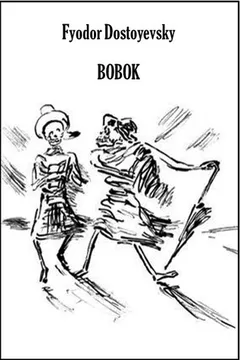
Bobok is a short story by Dostoevsky that elicits mixed reactions from readers. Many praise its wit, humor, and philosophical depth, comparing it to Gogol's style. The tale follows a writer who overhears conversations between the dead in a cemetery, exploring themes of morality, social criticism, and the afterlife. Some readers find it profound and thought-provoking, while others see it as bizarre or underwhelming. The story's brevity and unconventional premise make it a unique entry in Dostoevsky's oeuvre, often surprising those familiar with his longer works.
Characters
Alexis Ivanovich
The tutor at the tablesA young Russian tutor in the General’s4 household, Alexis is sharp-eyed, theatrical, and painfully conscious of his low status. He loves Polina2, but his devotion mixes tenderness with resentment and a wish to escape the role of obedient servant. His talent for observation does not make him emotionally reliable: he often turns partial evidence into certainty, especially when jealousy or hope is involved. He is drawn to extreme choices because ordinary patience feels like accepting humiliation. His fascination with roulette grows from that same temperament, joining the desire for money to a larger desire to prove that his life can change in an instant.
Polina Alexandrovna
The proud stepdaughterThe General’s4 stepdaughter, Polina is intelligent, proud, and guarded, with a fierce sense of responsibility toward the younger children in her family. She can be cutting with Alexis1 even while relying on his help, a tension that reflects both her need for control and the limited choices available to her. She distrusts easy declarations and resists being treated as someone whose loyalty can be secured by money. Her emotional reserve is not indifference; it is a defense shaped by dependence, family pressure, and her own complicated attachments. She is among the few people in the household who sees that the children’s future matters beyond the adult scramble for inheritance.
Grandmamma
The imperious heiressAntonida Vasilyevna, called Grandmamma by the household, is a wealthy older relative whose physical disability does nothing to soften her force of will. She is direct, inquisitive, generous on impulse, and intolerant of flattery. Her authority comes from more than money: she takes pleasure in challenging the manners and assumptions of people who expect her to behave as a frail dependent. She can be capricious and stubborn, but she is not merely a family fortune waiting to be inherited. Her presence tests whether others can relate to her as a person rather than as a source of financial rescue.
The General
A debtor chasing respectabilityPolina’s2 stepfather, the General is a proud but financially precarious widower whose attraction to Blanche7 is bound up with status and security. He cares about appearances and often speaks in grand, unfinished pronouncements, especially when circumstances threaten his authority. His dependence on other people sits uneasily beside his insistence on being obeyed. He is neither simply villainous nor capable of sustained self-command; anxiety makes him alternately pompous, pleading, and confused.
Mr Astley
The watchful English friendA shy, observant Englishman, Astley is quietly devoted to Polina2 and forms a genuine friendship with Alexis1. His reserve can look like passivity, but he notices the motives and vulnerabilities that louder characters conceal. He is careful about what he claims to know and refuses to indulge Alexis’s1 jealous speculation. His practical kindness contrasts with the General’s4 show of authority and Alexis’s1 appetite for dramatic proof. Astley’s loyalty does not make him uncritical: he can be blunt when he believes a friend is destroying himself.
De Grieux
The polished creditorA Frenchman entangled in the General’s4 finances and close to Polina2, de Grieux presents himself as refined, competent, and socially assured. His influence rests on both money and manners, which allow him to move through the household as more than a mere creditor. Alexis1 distrusts him, but his own jealousy makes his judgments difficult to separate from evidence. De Grieux embodies the attraction of polished social form, especially for people who mistake elegance for moral character.
Mademoiselle Blanche
The calculating beautyBeautiful, bold, and socially ambitious, Blanche understands how appearance can become a form of leverage. She moves easily among men whose wealth or status might serve her interests, and she is skilled at changing her manner to suit an audience. Alexis1 sees her as both comic and dangerous, though his fascination with risk makes him less detached than he imagines. Beneath her extravagant self-presentation is a practical attention to money, security, and the social position she hopes to claim.
Ivan Ivanovich
The rejected writerThe first-person narrator of Bobok is an embittered, financially insecure writer who is alert to insult and eager to defend his literary worth. His complaints are comic, but they also reveal a mind becoming unsettled, prone to digression and strange perceptions. He wants respect and recognition while distrusting the standards by which others grant them. His visit to the cemetery makes him an accidental witness, yet his own judgments remain part of the story’s uncertainty.
Klinevich
The shameless instigatorA young aristocrat who remains audacious even in the grave, Klinevich treats decorum as a game and other people’s embarrassment as entertainment. He urges the dead to abandon shame and reveal their histories, presenting confession as a final pleasure rather than a moral duty. His irreverence unsettles the older figures who cling to rank and propriety. He is charismatic enough to redirect the gathering, but his appetite for disruption does not guarantee that his proposed honesty will be humane.
General Pervoyedov
The rank-bound dead manA deceased general who tries to preserve the authority and formal habits he possessed in life. His insistence on rank and rules makes him a comic counterweight to Klinevich’s9 rebellion, while revealing how deeply status can persist after its practical power is gone.
Lebezyatnikov
The graveyard flattererA smooth-tongued former official, Lebezyatnikov acts as an eager intermediary among the dead. His deference to rank survives the change in circumstances, and he is quick to explain, soothe, and ingratiate himself with whoever seems important.
Avdotya Ignatyevna
The indignant society ladyA sharp-tongued woman in the cemetery, Avdotya Ignatyevna resents the company and indignities surrounding her. She guards her social superiority even after death, but her impatience and appetite for scandal make her an enthusiastic participant in the very talk she condemns.
The Shopkeeper
The blunt grave neighborA dead tradesman buried beside a wealthy woman, the shopkeeper brings ordinary debts and commercial grievances into the cemetery. His practical speech punctures the lady’s claims to superiority and gives the graveyard argument its earthy comic force.
Ivan Ilyich Pralinsky
The self-styled reformerA newly promoted general in A Nasty Story, Pralinsky wants to be both an effective official and a humane, memorable man. He is intelligent enough to recognize that his ambitions exceed his achievements, but he compensates with speeches and imagined scenes of admiration. His liberal concern for subordinates is sincere in feeling and compromised in practice by his need to remain superior. He is unusually sensitive to ridicule and prone to treating disagreement as an insult. His defining struggle is between the person he hopes to be and the authority he cannot stop using.
Porphyrius Pseldonimov
The persevering junior clerkA poorly paid clerk with little education and few allies, Pseldonimov is quiet, economical, and stubbornly capable of enduring hardship. His outward meekness hides a durable instinct for survival, built through years of scarcity beside his devoted mother16. He accepts a marriage shaped partly by material necessity, not by romantic illusion. Because his livelihood depends on superiors and his new household is crowded with demanding relatives, he has little room to express anger openly. His silence should not be mistaken for consent or gratitude.
Mrs Pseldonimov
The tireless motherPseldonimov’s15 mother is a hardworking, warm-hearted woman who has shared poverty with her son15 and remains fiercely attentive to his welfare. She is practical under pressure and capable of giving care without ceremony. Her kindness contrasts with the household’s domestic hostility and with Pralinsky’s14 abstract language about humanity: she performs the work of compassion rather than making it a public claim.
Stepan Nikiforovich Nikiforov
The comfortable old officialAn older official and former superior of Pralinsky14, Nikiforov values routine, privacy, and the quiet security earned through decades of service. He distrusts grand enthusiasm and listens to Pralinsky’s14 reformist speeches with dry skepticism. His restraint makes him a foil to Pralinsky’s14 need to turn ideals into a public performance.
Simon Ivanovich Shipulenko
The cynical colleagueA hard-edged official who shares Nikiforov’s17 social circle, Shipulenko responds to Pralinsky’s14 idealism with mockery and practical cynicism. His bluntness helps provoke Pralinsky’s14 need to demonstrate that he can act on his principles.
Pseldonimov’s Bride
The wary young brideA young woman from a domineering, impoverished family, Pseldonimov’s15 bride has little freedom to shape her future. She is quick-tempered and guarded, and her marriage is entangled with material arrangements and family pressure. Her limited education and constrained choices make her difficult to read from the outside, but her sharpness suggests a person who has learned to protect herself within a hostile household.
Akim Petrovich Zubikov
The deferential chief clerkA meek, capable civil servant in Pralinsky’s14 office, Akim Petrovich is careful to respect hierarchy and reluctant to act beyond his station. His gentleness is genuine, but the habits of service make him uncomfortable when a superior tries to draw him into personal intimacy.
Plot Devices
The Roulette Wheel
Chance as false controlRoulette turns sudden change into a visible, repeatable ritual: a stake is placed, the wheel spins, and money appears or disappears. Alexis1 treats its unpredictable outcomes as evidence that fate may favor him, while Grandmamma’s3 play shows how a win can deepen the urge to risk more. The wheel also levels social distinctions briefly, since a tutor1 and a wealthy woman3 can both stand at the same table. Yet the casino remains a system built to profit from continued play. Its repeated turns give the characters a compelling substitute for patience, work, and difficult conversation.
The Expected Inheritance
Money behind every allianceThe family’s telegrams about Grandmamma’s3 health make her inheritance the invisible center of life at Roulettenburg. The General4 hopes it will settle his debts and support his marriage to Blanche7; other characters calculate how its arrival might change their own position. Because the expected fortune is treated as nearly certain before Grandmamma3 appears, her arrival exposes the difference between a plan and an entitlement. The inheritance plot reveals how financial dependence shapes intimacy, loyalty, and even the family’s treatment of an elderly relative.
The Graveyard Voices
Death strips status bareIn Bobok, a brief period of awareness after burial allows the dead to continue speaking before consciousness fades. The voices preserve their old habits of rank, resentment, vanity, and desire, while the grave removes their ability to enforce ordinary social rules. The device makes the cemetery both an afterlife and a grotesque extension of the living world. The narrator8 hears the dead but cannot control what they reveal, and his accidental sneeze interrupts their planned confessions before they can become a complete spectacle.
The Wedding Intrusion
Kindness under hierarchyPralinsky’s14 uninvited appearance at a subordinate’s wedding is designed as a living demonstration of humane leadership. The social gap between general14 and clerk15 makes the gesture impossible to receive simply as kindness: the guests must stop their celebration, Pseldonimov15 must perform deference, and the household must absorb the disruption. The wedding setting magnifies the cost of Pralinsky’s14 self-image because it is a private event that he turns into a public test of his ideals. His later shame cannot undo the labor and humiliation imposed on the family.
About the Author
Other books by Fyodor Dostoevsky









Download PDF
Download EPUB
.epub digital book format is ideal for reading ebooks on phones, tablets, and e-readers.








