Plot Summary
Flight to Morvoren House
Esther Stevens, under the alias Hester Why, flees London in the dead of winter, her heart heavy with shame and secrets. She is running from a scandal involving her former mistress, Lady Rose, and a stolen snuffbox, seeking refuge at Morvoren House in remote Cornwall. The journey is grueling, marked by a coach accident in which Esther's medical skills save a man's life, but also draw unwanted attention. Her dependence on gin and laudanum is already evident, a crutch for her frayed nerves and haunted conscience. The landscape grows wilder as she approaches the edge of the country, mirroring her own sense of exile and isolation. Esther's arrival is not just a physical journey, but a plunge into a world where the boundaries between reality and superstition blur, and where her past is never far behind.
Arrival on the Clifftop
Morvoren House stands bleak and isolated atop a Cornish cliff, battered by wind and sea. Esther is greeted by a staff both warm and odd: the kindly housekeeper Mrs Quinn, the cheerful scullery maid Merryn, and the enigmatic coachman Gerren. The house is a blend of faded grandeur and eerie stillness, its stuccoed halls and blue-and-white china collection at odds with the wildness outside. Esther's new role as nurse and lady's maid to the reclusive Miss Pinecroft is immediately complicated by the house's peculiar customs—sharing a room with a servant, talk of fairies, and a pervasive sense of being watched. The staff's superstitions, especially those of the ancient maid Creeda, unsettle Esther, who is desperate to keep her own secrets hidden. The ocean's presence is both awe-inspiring and menacing, a constant reminder of the house's—and Esther's—precarious position.
The China Room's Mistress
Miss Louise Pinecroft, the mistress of Morvoren House, is a spectral figure, rendered nearly mute and immobile by age and illness. She spends her days in a freezing room, surrounded by an obsessive collection of blue-and-white bone china, refusing warmth or comfort. Esther's attempts to care for her are met with indifference or resistance; the old woman's only concern is the preservation of her china. The room itself is a mausoleum of memory, each piece a relic of the past and a symbol of loss. Esther senses that Miss Pinecroft is guarding more than porcelain—she is keeping vigil over old wounds and unspoken horrors. The china, with its recurring Willow pattern, becomes a motif of doomed love and entrapment, echoing the tragedies that haunt both mistress and maid.
Secrets and Addictions
Esther's dependence on laudanum deepens as she struggles to maintain her composure and hide her true identity. She steals from the house's medicine cabinet, rationalizing her actions as temporary necessity. The snuffbox she stole from Lady Rose is her most precious possession, a link to a past she cannot let go. The threat of discovery looms large, especially as the house's routines and relationships grow more complex. The staff's superstitions—lines of salt, bible-balls, and tales of changelings—begin to infect Esther's rational mind, especially as she witnesses strange lights and hears unearthly music at night. The boundaries between addiction, guilt, and the supernatural blur, and Esther's grip on reality becomes increasingly tenuous.
The Hanover Square Years
Flashbacks reveal Esther's former life as a lady's maid in the grand house of Hanover Square, London. There, she served the beautiful and fragile Lady Rose, whose marriage to Sir Arthur Windrop was marred by class tensions and the domineering presence of his mother. Esther's devotion to Lady Rose bordered on obsession, fueled by a desperate need for love and belonging. The household was a web of rivalries and resentments, with Esther caught between her mistress's affection and the suspicions of other servants. The acquisition of a new Willow pattern china set, and the story it tells, becomes a symbol of Lady Rose's own sense of entrapment and longing for escape. The seeds of tragedy are sown in these gilded rooms, as love curdles into jealousy and despair.
Lady Rose's Tragedy
Lady Rose's much-anticipated assembly ends in disaster when she suffers a miscarriage in front of her guests, her blood staining the prized Willow pattern china. The event shatters her confidence and isolates her further, as society's judgment falls heavily on her and Sir Arthur. Esther becomes her sole confidante, nursing her through grief and shame, but also growing possessive and resentful as Lady Rose's affections shift. The arrival of a new nurse, Mrs Friar, and the imposition of strict "lowering" treatments for Lady Rose's next pregnancy, push Esther to the margins. Her love turns toxic, culminating in a moment of near-poisoning and a hasty, guilt-ridden flight from the house. The snuffbox, a token of Lady Rose's trust, becomes both a treasure and a curse.
The Willow Pattern's Curse
The Willow pattern, with its tale of doomed lovers and transformation, weaves through both past and present. In Morvoren House, the china collection is both a comfort and a prison for Miss Pinecroft, who clings to its order as her mind and body fail. In London, the pattern becomes a symbol of Lady Rose's longing for freedom and her ultimate fate—her suicide by drowning, pockets weighted with stones, at Westminster Bridge. For Esther, the pattern is a mirror of her own destructive love, her inability to let go, and the way she is haunted by the past. The china's fragility and beauty are inseparable from the violence and loss it commemorates, and its presence in the house is a constant reminder that some stories are doomed to repeat.
Love, Loss, and Betrayal
Esther's relationships are marked by a desperate hunger for connection and a pattern of self-sabotage. Her love for Lady Rose is possessive and ultimately destructive, leading to betrayal and exile. In Morvoren House, she is drawn into new webs of dependency and suspicion, her need for laudanum and gin echoing her emotional cravings. The staff's kindness is met with paranoia; her attempts at care are undermined by her own instability. The house itself seems to conspire against her, its superstitions and secrets feeding her sense of alienation. The more Esther tries to atone for her past, the more she finds herself repeating its mistakes, unable to break free from the cycle of longing and loss.
Escape and Reinvention
Esther's flight from London is both a literal and symbolic attempt to reinvent herself, but the past is never far behind. The advertisement for her arrest, the stolen snuffbox, and the memory of Lady Rose's death haunt her every step. In Morvoren House, she is both fugitive and caretaker, her identity always at risk of exposure. The house's isolation mirrors her own, and the staff's superstitions become a kind of prison. Even as she tries to help Miss Pinecroft and Rosewyn, she is ensnared by the same patterns of secrecy and self-destruction. The sense of being pixy-led—drawn by unseen forces into danger and despair—pervades her experience, and the possibility of redemption grows ever more remote.
The House of Superstition
Morvoren House is steeped in Cornish folklore, its staff and routines shaped by beliefs in fairies, changelings, and protective rituals. Creeda, the oldest servant, is the chief keeper of these traditions, her authority rooted in both fear and love. Lines of salt, bible-balls, and the careful management of hair and urine are all part of the house's defense against supernatural threats. Rosewyn, the ward, is treated as both precious and perilous, her innocence a magnet for otherworldly attention. The house's isolation and the wildness of the landscape reinforce the sense that the boundary between worlds is thin, and that the past is never truly dead. For Esther, these superstitions become both a source of terror and a metaphor for her own haunted state.
Forty Years Ago: The Caves
In a parallel narrative set forty years earlier, the origins of Morvoren House's curse are revealed. Dr. Ernest Pinecroft, devastated by the loss of his wife and children to consumption, brings his surviving daughter Louise to Cornwall, determined to find a cure. He establishes a radical experiment, housing consumptive prisoners in the sea caves beneath the house, convinced that the damp air will heal them. Louise, practical and compassionate, becomes both nurse and surrogate mistress, her own hopes and desires subsumed by duty. The arrival of Creeda, a maid with a mysterious past and a deep belief in fairy lore, introduces new tensions. The experiment is doomed by hubris, ignorance, and the inescapable power of grief.
The Doctor's Experiment
Dr. Pinecroft's experiment in the caves is a desperate attempt to impose order and meaning on chaos. He subjects his patients to a range of treatments—smoke, foxglove, cupping, and setons—while ignoring the realities of infection and the limits of his own knowledge. The men, a mix of criminals and victims, suffer and die, their fates intertwined with the superstitions of the house above. Louise's growing attachment to one of the patients, Harry, offers a brief respite from despair, but ends in tragedy. The boundaries between science and magic, reason and madness, blur as the experiment unravels. The caves become a site of both medical ambition and supernatural dread, their darkness swallowing hope and reason alike.
Madness, Magic, and Medicine
As the experiment collapses, Dr. Pinecroft descends into madness, convinced that his patients are changelings and that only violence can restore order. Louise, exhausted and traumatized, is left to pick up the pieces, her faith in medicine and family shattered. Creeda's role as both victim and agent of superstition becomes more pronounced, her rituals and beliefs both a comfort and a curse. The house itself seems to absorb the pain and violence of its inhabitants, its china collection a silent witness to generations of suffering. The past bleeds into the present, and the cycle of loss and longing continues.
The Unraveling of the Past
In the present, Esther's efforts to care for Miss Pinecroft and Rosewyn are increasingly undermined by the house's secrets and her own unraveling mind. The breaking of a china urn unleashes a final crisis, as Miss Pinecroft suffers a fatal fit and the staff's superstitions reach a fever pitch. The truth about Rosewyn's parentage, Creeda's manipulations, and the legacy of the caves comes to light. The house's rituals—once a means of protection—are revealed as both futile and destructive. Esther's own guilt and longing reach their breaking point, and she is forced to confront the consequences of her actions.
The Breaking of the Spell
With Miss Pinecroft dead and Rosewyn missing, the house descends into chaos. Esther, desperate to atone, joins the search for Rosewyn, who is found on the cliff's edge, poised between life and death. The cycle of sacrifice and longing is laid bare: the house demands a victim, and Esther, recognizing her own role as both destroyer and protector, offers herself in Rosewyn's place. The boundaries between worlds dissolve, and the spell that has bound Morvoren House for generations is finally broken. The sea, ever-present and indifferent, receives its due.
The Final Reckoning
In the aftermath, the survivors are left to reckon with the cost of love, loss, and belief. The house, stripped of its illusions, stands as a monument to the dangers of obsession and the limits of both science and superstition. Esther's final act is both a surrender and a liberation, a recognition that some debts can never be repaid, and that peace may only be found in letting go. The story ends where it began: on the edge of the world, with the sea as witness and the past finally laid to rest.
The Last Sacrifice
Esther's final moments are a release from the burdens she has carried—guilt, longing, and the need to belong. In offering herself to the sea, she breaks the cycle of sacrifice that has haunted Morvoren House for generations. Rosewyn is saved, the house is freed from its spell, and the dead are finally at peace. The story closes with a sense of bittersweet resolution: the recognition that love, in all its forms, is both a blessing and a curse, and that sometimes the only way to heal is to let go.
Characters
Esther Stevens / Hester Why
Esther is a woman on the run, both from the law and from her own past. Her role as a lady's maid in London ended in scandal, theft, and the suicide of her beloved mistress, Lady Rose. Driven by guilt, addiction, and a longing for connection, she reinvents herself as Hester Why, seeking refuge at Morvoren House. Her relationships are marked by neediness and self-sabotage; she is both caretaker and destroyer, her love as much a curse as a blessing. Esther's psychological complexity is rooted in trauma, shame, and a desperate hunger for belonging. Her journey is one of attempted atonement, but she is ultimately unable to escape the patterns that have shaped her life. Her final act is both a sacrifice and a release, a recognition that some debts can never be repaid.
Miss Louise Pinecroft
Miss Pinecroft is the reclusive mistress of Morvoren House, rendered nearly mute and immobile by age, illness, and trauma. Her obsessive care for her blue-and-white china collection is both a coping mechanism and a form of penance, a way of keeping vigil over the losses that have defined her life. In her youth, she was the daughter of a brilliant but broken doctor, and the survivor of a family destroyed by consumption and failed ambition. Her relationship with her ward, Rosewyn, is both maternal and haunted, shaped by secrets and the legacy of the past. Miss Pinecroft's psychological landscape is one of frozen grief, her silence both a shield and a prison. Her death marks the end of an era, but also the possibility of release.
Creeda Tyack
Creeda is the oldest and most enigmatic member of the Morvoren staff, a woman whose authority is rooted in both fear and tradition. Her belief in fairies, changelings, and protective rituals shapes the life of the house, and her care for Rosewyn is both loving and controlling. Creeda's own past is marked by trauma—abduction, loss, and a sense of being "other"—and she wields her superstitions as both shield and weapon. She is both victim and agent, her actions driven by a need to impose order on a chaotic world. Creeda's psychological complexity lies in her ability to inspire both pity and dread; she is a figure of both comfort and menace, her power waning only as the house's spell is finally broken.
Rosewyn Pinecroft
Rosewyn is the ward of Miss Pinecroft, a woman-child whose innocence and simplicity make her both precious and vulnerable. Treated as a perpetual child by Creeda and the staff, she is the focus of the house's superstitions and the target of supernatural fears. Her true parentage is shrouded in secrecy, and her psychological development is stunted by years of isolation and control. Rosewyn's longing for freedom is palpable, and her near-sacrifice on the cliffs is both a cry for agency and a reenactment of the house's cycle of loss. She is both victim and survivor, her fate ultimately determined by the actions of others.
Dr. Ernest Pinecroft
Dr. Pinecroft is the tragic patriarch of the house's past, a man destroyed by the loss of his wife and children to consumption. His obsession with finding a cure leads him to establish a radical experiment in the sea caves, housing consumptive prisoners in the hope that the damp air will heal them. His relationship with his daughter Louise is both loving and fraught, marked by shared trauma and unspoken expectations. As his experiment fails, Dr. Pinecroft descends into madness, his belief in changelings and supernatural causes overtaking his scientific reason. He is both a victim of circumstance and an agent of destruction, his legacy a warning against the dangers of unchecked ambition and unresolved grief.
Louise Pinecroft
Louise is the daughter of Dr. Pinecroft, a practical and compassionate woman whose life is shaped by duty and loss. She becomes both nurse and surrogate mistress in Morvoren House, her own hopes and desires subsumed by the needs of others. Her attachment to one of the consumptive patients, Harry, offers a brief respite from despair, but ends in tragedy. Louise's psychological resilience is tested by the failures of medicine, the weight of family expectation, and the encroachment of superstition. Her survival is both a testament to her strength and a reminder of the costs of love and loyalty.
Lady Rose Windrop
Lady Rose is the beautiful and fragile mistress of Hanover Square, whose marriage to Sir Arthur Windrop is marred by class tensions and personal tragedy. Her relationship with Esther is marked by affection, dependence, and ultimately betrayal. Lady Rose's miscarriages, social humiliation, and the loss of agency drive her to despair and suicide, her death echoing the story of the Willow pattern china she so loved. She is both victim and catalyst, her fate a warning about the dangers of love unmoored from self-preservation.
Mrs Quinn
Mrs Quinn is the housekeeper of Morvoren House, a figure of warmth and common sense who tries to maintain order amid chaos. Her authority is limited by the house's traditions and the power of Creeda, and her attempts to protect Esther and Rosewyn are often undermined by her own fears and the inertia of the staff. Mrs Quinn's psychological role is that of the well-meaning bystander, her kindness both a comfort and a limitation.
Merryn
Merryn is the youngest and most innocent member of the staff, her friendliness and curiosity a counterpoint to the house's darker currents. She is both confidante and victim, her own vulnerabilities—marked by a birthmark and social position—making her a target for both kindness and suspicion. Merryn's psychological resilience is tested by the events of the house, and her loyalty to Esther is both a blessing and a burden.
Gerren Tyack
Gerren is the coachman and husband to Creeda, a man of few words whose authority is rooted in the old ways. He is both enforcer and protector, his actions shaped by loyalty to the house and its customs. Gerren's psychological landscape is one of endurance and resignation, his role as both witness and participant in the house's rituals making him a figure of both strength and complicity.
Plot Devices
Dual Timelines and Mirrored Fates
The novel's structure alternates between Esther's present-day narrative and the story of the Pinecroft family forty years earlier. This dual timeline allows for a gradual revelation of the house's secrets, the origins of its superstitions, and the repetition of patterns across generations. The mirrored fates of Esther and Louise, Miss Pinecroft and Rosewyn, and the cycles of love, loss, and sacrifice, create a sense of inevitability and doom. The use of flashbacks and parallel events deepens the psychological resonance of the story, highlighting the ways in which trauma and longing are inherited and reenacted.
Superstition vs. Rationality
The conflict between reason and superstition is central to the novel's plot and atmosphere. The rituals of protection—salt, bible-balls, hair and urine, lines of salt—are both literal and symbolic defenses against chaos. The characters' attempts to impose order, whether through medicine or magic, are ultimately shown to be futile in the face of overwhelming loss. The supernatural is both a metaphor for psychological distress and a real force within the world of the novel, blurring the boundaries between reality and delusion.
The Willow Pattern Motif
The recurring image of the Willow pattern china, with its story of doomed lovers and transformation, serves as both a literal object and a symbolic thread. The china is a repository of memory, a site of both beauty and violence, and a marker of the house's—and Esther's—haunted state. The breaking of the china, the errors in its pattern, and its role in key moments of crisis all reinforce the themes of fragility, repetition, and the inescapability of the past.
Unreliable Narration and Psychological Horror
Esther's dependence on laudanum and gin, her haunted conscience, and the house's atmosphere of suspicion and secrecy create a sense of psychological instability. The narrative's ambiguity—are the supernatural events real, or the product of trauma and addiction?—heightens the horror and suspense. The reader is drawn into Esther's unraveling mind, forced to question what is true and what is imagined.
Sacrifice and Cycles of Violence
The motif of sacrifice—whether in the form of medical experiments, emotional betrayal, or literal self-offering—runs throughout the novel. The house is depicted as a site that demands victims, its peace bought at the cost of love and life. The cycles of violence and longing are only broken when Esther, recognizing her own role in the pattern, offers herself in Rosewyn's place. The sea, ever-present and indifferent, is both the agent of destruction and the possibility of release.
Analysis
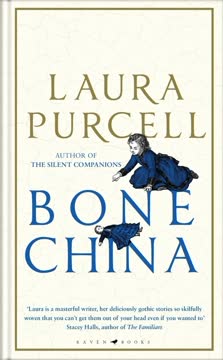
Bone China is a masterful exploration of the ways in which grief, guilt, and longing can warp both individuals and the spaces they inhabit. Laura Purcell weaves together psychological horror, historical detail, and Cornish folklore to create a narrative that is as emotionally resonant as it is unsettling. The novel interrogates the boundaries between science and superstition, love and obsession, care and control, showing how the need for order—whether through medicine, ritual, or love—can become a prison. The dual timelines reinforce the sense that trauma is inherited, that the past is never truly dead, and that the stories we tell ourselves—about fairies, about cures, about love—can both sustain and destroy us. Ultimately, Bone China is a story about the cost of survival, the dangers of unchecked need, and the possibility of peace only through letting go. Its lessons are both timeless and timely: that the search for meaning in suffering is both necessary and perilous, and that sometimes the only way to heal is to break the spell of the past.
Last updated:
Review Summary
Bone China by Laura Purcell receives mixed reviews averaging 3.65/5 stars. Readers praise the atmospheric Gothic setting on Cornwall's coast, rich historical detail, and exploration of Victorian medicine and folklore. The dual timeline follows nurse Hester Why and Louise Pinecroft forty years earlier. Strengths include vivid descriptions, ambiguous supernatural elements, and the author's trademark creepy atmosphere. Common criticisms cite disjointed timelines, underdeveloped characters, confusing plot threads, and unsatisfying endings. Many found it inferior to Purcell's debut "The Silent Companions," though fans appreciate her consistent Gothic style incorporating superstition, consumption treatment, and bone china symbolism.