

Plot Summary
Nicholas versus Words
Twelve-year-old Nicholas Hall would rather play soccer or FIFA with his best friend, Coby Lee, than study the strange-word dictionary his father wrote. His father treats vocabulary as preparation for a larger life; Nicholas experiences it as another chore imposed by a man who already asks too much of him.
His mother, once a horse trainer, keeps family life playful with Ping-Pong and teasing, while Nicholas privately longs for a more ordinary father and an escape from books.
At school, he daydreams through English class and mangles a familiar expression, making his classmates laugh and his teacher, Ms. Hardwick, lose patience. Meanwhile, his crush on April Farrow leaves him tongue-tied, and a ballroom-dance class offers an awkward chance to get closer.
Nicholas’s resistance to reading is not simply a dislike of books. His father’s dictionary has become the visible form of adult expectation, so rejecting it lets Nicholas defend a small territory of choice. Soccer, by contrast, gives him competence without explanation: he can act, react, and measure himself by what he does. The contrast also shapes his relationship with his father, whose care arrives disguised as instruction. April complicates his self-image in a gentler way. Around her, Nicholas wants language to help him connect, even as he resents being made to study it.
The Library Dragonfly
After Nicholas misuses an expression in class, Ms. Hardwick assigns him a search for examples of mistaken words in Mark Twain’s Huckleberry Finn. His attempt to avoid the work fails when he finds two examples and makes Ms. Hardwick laugh.
At the school library, Skip MacDonald, known as The Mac, tries to recruit Nicholas and Coby into his book club, Nerds and Words. The boys tease The Mac’s dragonfly decorations and guarded box, but the librarian keeps pressing books into Nicholas’s hands.
He also learns that The Mac once produced rap music and now uses jokes, performances, and books to make the library feel less like a classroom. Nicholas remains skeptical, yet the assignment and The Mac’s attention have put reading within reach of his own humor.
The Mac offers Nicholas a different model of literacy from his father’s. Where Dad links words to achievement and future credentials, The Mac links them to play, performance, and social belonging. Nicholas’s accidental comedy with Ms. Hardwick matters because it shows his verbal ability before he accepts it as a strength. The teacher’s laughter rewards his wit, while the assignment quietly demands that he look closer at language. The Mac’s mysterious box performs a similar invitation: curiosity is allowed to come before mastery. Nicholas has not become a reader, but books are beginning to arrive through relationships rather than orders.
Dallas and Kentucky
Nicholas’s travel team receives an invitation to the prestigious Dallas Cup, where international clubs and scouts will gather. Coby’s rival club gets an invitation too, turning the tournament into another contest between best friends who now play for different teams.
Nicholas hopes for money and a place in the competition, but his parents’ silence at dinner signals a more serious change. His mother tells him she has accepted horse-training work in Kentucky and that she and his father are separating.
Nicholas is stunned that she plans to leave him with Dad, even if she promises to return regularly. Soon she drives away, and Nicholas watches from his window as the life he thought secure breaks apart. He withdraws, sleeps poorly, and begins failing at school.
The Dallas Cup represents a future Nicholas can imagine clearly: travel, competition, and proof that his skills matter. His mother’s departure arrives in the same stretch of time, making ambition feel suddenly fragile. He cannot control either the tournament’s demands or the adults’ decision, so he interprets the separation as a subtraction from his own life. The parents’ promise that they still love him does not answer his immediate question of where home is. This is the novel’s first deep loss of agency. Nicholas’s sleeplessness and academic decline are not side effects; they show how grief enters the ordinary machinery of a child’s day.
The Lunchroom Freeze
After his mother leaves, Nicholas struggles through school and a futsal tournament. His team loses its final match, and his mother’s teasing about the defeat only deepens his anger about the family breakup. April sends him a kind note, but he still cannot speak comfortably with her.
Then the Eggleston twins, Dean and Don, return to school after a year at a behavior center. Dean warns Nicholas away from April and later knocks food from his tray when she defends him.
When the twins turn their insults toward Coby, Coby answers back and fights them. Nicholas freezes rather than helping. The twins are sent away again, while Coby receives a suspension. Nicholas is left with the knowledge that his best friend faced the twins alone because he could not move.
The lunchroom scene converts Nicholas’s private helplessness into a visible moral failure. He is not the target of every insult, but he knows what the twins are doing and wants to intervene. His imagined comeback briefly grants him the courage he lacks in reality, making the gap between fantasy and action especially painful. Coby’s willingness to defend himself contrasts with Nicholas’s paralysis, but the scene does not make courage effortless: Coby pays for his response with a suspension. April’s defense also matters. She refuses Dean’s claim of ownership, giving Nicholas a glimpse of the directness he wishes he possessed.
The Stolen Bicycle
Nicholas apologizes to Coby for standing aside, and Coby accepts, asking him to be braver next time. But the twins soon ambush Nicholas on his ride home and take his bicycle. His father focuses first on the broken rules and the missing bus pass, then restricts Nicholas’s phone and threatens to keep him from Dallas. Nicholas erupts, accusing his father of taking away everything he values, including his mother and soccer.
In anger, he says he wishes he were dead. His father alerts his mother, who drives through the night to see him. She reassures him, takes him onto the soccer field, and then tells him he cannot attend a New York tournament. The family also begins sessions with a psychologist, despite Nicholas’s insistence that he is fine.
The bicycle theft strips away a small but important form of independence. Nicholas has been bullied at school and constrained at home, and the lost bike makes those pressures feel like one continuous attack. His statement about wanting to die is an impulsive expression of overwhelm, but the adults are right to take it seriously. Their response is imperfect from Nicholas’s perspective: therapy and canceled soccer feel like further punishment. Still, his mother’s overnight return interrupts his isolation, and the psychologist gives his distress a place to be examined. The scene asks how adults can protect a child without mistaking distress for disobedience.
The Match Ends Early
Nicholas resents the canceled New York trip and the therapy sessions, but he keeps training and prepares for a match against Coby’s team. He feels ill before the game, then vomits at halftime and insists he can continue. During the second half, his stomach pain worsens.
When Coby challenges him for the ball, their collision leaves Nicholas with a sprained ankle, but hospital scans reveal a more urgent problem: his appendix has ruptured. Doctors operate immediately and keep him in the hospital because of infection risk.
Nicholas learns that recovery will take at least three weeks, too long for the Dallas Cup, which begins the following week. The tournament he and Coby have anticipated becomes impossible, and his body has made the decision for him.
The injury first appears to be the familiar cost of a contact sport, but the diagnosis changes the scale of Nicholas’s problem. He has spent the novel treating soccer as the one part of life he can control; now even his body refuses to cooperate. His insistence on playing through pain echoes his broader habit of denying vulnerability until circumstances force it into view. Missing Dallas is not only a lost competition. It means losing a shared milestone with Coby and a chance to imagine a future beyond the family crisis. The hospital makes rest unavoidable, opening a space Nicholas would never have chosen for himself.
A Book Opens the Ward
Confined to his hospital bed, Nicholas bargains for television by reading pages, then spends his time resisting his father’s suggestion to open a book. Ms. Hardwick visits with All the Broken Pieces, a verse novel about a Vietnamese boy rebuilding his life in America. April follows, bringing a class card and telling Nicholas she has read the book too.
Nicholas starts reading to earn screen time, but the boy’s experience of bullying and displacement catches his attention. The Mac later reads the entire book aloud with the energy of a performance, and Nicholas listens, laughs, and follows the story to its end. He texts April that he liked it and asks what he should read next. For the first time, his interest in a book belongs to him.
Reading becomes possible when it stops being a test of obedience. April offers a recommendation, Ms. Hardwick brings a book chosen for him, and The Mac turns the pages into a shared performance. Each person gives Nicholas a different route into the story. The protagonist of the book mirrors Nicholas’s experience of being singled out, but the connection is not reducible to a lesson about bullying; Nicholas responds to the character’s inner life and to the form itself. His message to April marks a shift from reluctant compliance to appetite. He is not suddenly transformed into his father. He has discovered that words can be chosen, shared, and enjoyed.
Home, Then Apart
After his discharge, Nicholas asks to stop at the library for another book, though he hides his growing enthusiasm from his parents. He reads Out of the Dust and calls April to discuss it. She makes him an official participant in Nerds and Words and encourages him to choose the next title.
When April and several classmates come to his house for book club, Nicholas finds himself discussing a novel with girls, including Winnifred, his longtime classroom rival.
His parents’ household briefly feels whole again: his mother returns, his father joins family routines, and laughter comes back to dinner. Then they tell Nicholas they have decided to divorce. His mother must return to Kentucky for work, and the renewed family warmth gives way to another goodbye.
The book club makes Nicholas’s new reading life social rather than solitary. He contributes to a discussion, negotiates with Winnifred, and discovers that his knowledge can connect him to people who once seemed like adversaries. At home, the return of laughter briefly encourages him to mistake affection for permanence. His parents do love him and can cooperate, but their care cannot restore the marriage. That distinction is emotionally difficult because Nicholas keeps reading adult closeness as evidence that the family might return to its old shape. The second separation hurts partly because the temporary reunion has made hope feel reasonable.
Learning to Stay Afloat
After his mother leaves again, Nicholas tells the psychologist that he feels as if he is drowning. The therapist helps him see that he can take practical steps even when he cannot change the divorce, so Nicholas begins sending his mother regular, joking messages.
He returns to Miss Quattlebaum’s etiquette class and finally asks April to the eighth-grade formal. At school, he resumes soccer as his ankle heals, and April cheers him on at the playoffs. His father, meanwhile, backs away from the dictionary routine just as Nicholas reaches its final letters.
Their relationship shifts during a dinner conversation when Dad describes a childhood bully and the lesson his own father gave him: fear is normal, but it need not decide what he does. Nicholas listens closely.
Nicholas’s progress is practical rather than triumphant. He cannot reconcile his parents or guarantee that bullies will leave him alone, but he can call his mother, ask April to the formal, and return to the field. These actions restore agency in increments. His father’s childhood story also alters the meaning of their conflict. Dad’s insistence on excellence has often felt like control, yet his admission of fear reveals a less polished person underneath the lectures. The two do not suddenly become alike, but Nicholas can now hear advice without accepting it as a verdict on his worth. Courage becomes action taken while afraid.
The Dragonfly Box
On Nicholas’s birthday, he visits The Mac before soccer practice and gives the librarian a book he has read and enjoyed. The Mac is moved that Nicholas took his recommendation seriously, then offers him a new book and lets him unlock the dragonfly box he has wondered about since joining the library.
Nicholas opens it and finds a surprise that delights him, though the moment keeps the box’s contents private. Soon after, The Mac appears in a rare blue convertible to return Nicholas’s forgotten flash drive.
He explains that he is leaving the school library to follow a new path and gives Nicholas another book. The Mac’s departure makes their friendship feel less like a borrowed school-year connection and more like something Nicholas can carry forward.
The Mac’s gift completes a relationship built on invitations rather than demands. He never makes Nicholas prove that he deserves access to books; he keeps offering them until Nicholas discovers his own reasons to read. The box has functioned as a playful mystery, and opening it signals that Nicholas has earned trust through reciprocal attention, not compliance. The Mac’s departure also echoes the larger pattern of adults leaving Nicholas’s daily life. Unlike the separation from his mother, this goodbye comes with a chosen gift and a visible model of change: a person can leave one role without erasing what the relationship made possible.
Nicholas Faces the Twins
At Charlene’s pool party, Nicholas sees Dean and Don harassing another boy and decides not to watch in silence again. He calls Dean out, then uses a sidestep and a trip to send the larger twin into the pool. Don advances, and Nicholas remembers his father’s story about confronting a bully despite fear. He distracts Don with a joke, blocks his first punch, and is knocked unconscious by the next blow.
When he wakes, Coby is beside him, the twins have left, and the bicycle they stole has been returned. Nicholas has not won by overpowering them, but he has acted while afraid and interrupted their bullying. April is still in his life, his formal invitation stands, and soccer and reading now belong to a wider version of himself.
The final confrontation refuses a simple fantasy of mastery. Nicholas does not defeat Don in a clean fight; he is hit hard enough to lose consciousness. Yet the meaningful change is that he no longer confuses courage with guaranteed victory. His soccer footwork helps him handle Dean, while his father’s story gives him a way to face Don without pretending fear has vanished. The outcome also depends on other people: Coby stays close, and an adult threat of police intervention helps end the twins’ presence. Nicholas’s growth is therefore neither solitary nor invulnerable. He has learned to act and to accept support.
Analysis
Booked makes language both the source of Nicholas’s frustration and one of the tools by which he becomes more independent. His father’s dictionary embodies a loving but overbearing form of preparation: the father wants to equip his son for a world Nicholas cannot yet imagine, while Nicholas hears the lessons as evidence that his own preferences do not count. The story does not solve this conflict by declaring either man right. Instead, Nicholas discovers uses for language that his father’s program could not prescribe, from joking with friends to interpreting a crush and discussing books.
The family separation gives that question of agency emotional weight. Nicholas cannot choose whether his parents stay together, whether his mother’s work takes her away, or whether an injury removes him from the Dallas Cup. His grief therefore appears in concrete losses: sleep, school focus, a bicycle, a tournament, and confidence around April. Therapy is useful not because it makes these losses disappear, but because it helps him separate what he can influence from what he cannot. Contact with his mother and new choices about reading become modest acts of self-direction.
The final confrontation with the Eggleston twins resists the fantasy that growing up means becoming physically invincible. Nicholas acts, uses the movement he knows from soccer, and still gets knocked unconscious. His courage is measured not by winning cleanly but by ending his silence and accepting the presence of Coby and others. The book’s emotional resolution is similarly partial and credible: his parents remain separated, his mother lives away, and Nicholas still faces uncertainty. What changes is his capacity to move among those realities. He can read because he wants to, speak to his mother, risk a date, and stand up despite fear. Freedom here is not the absence of constraints; it is a widening ability to choose within them.
Review Summary
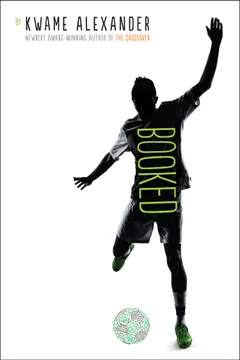
Booked is a novel-in-verse about 12-year-old Nick, a soccer player navigating family, friends, and first love. Readers praise Alexander's poetic style, relatable characters, and incorporation of diverse vocabulary. The book tackles themes of divorce, bullying, and self-discovery with humor and heart. Many reviewers highlight the positive portrayal of reading and the memorable librarian character. While some found the ending abrupt, most recommend it highly for middle-grade readers, especially reluctant ones, noting its accessibility and engaging narrative.


Characters
Nicholas Hall
Reluctant wordsmithNicholas is an eighth grader, a devoted soccer player, and a boy who feels crowded by the adults’ plans for him. His father’s dictionary seems to stand for every expectation Nicholas has not chosen, while the soccer field gives him a clearer sense of competence and control. He uses jokes and daydreams to cover embarrassment, especially around April and the school bullies. His sharp eye for language is evident even when he insists that he hates words. Nicholas is not fearless or consistently confident; he often imagines the brave response before he can manage it in person. His central struggle is to distinguish his own interests from the identities his family and school keep assigning him.
Coby Lee
Soccer-obsessed best friendCoby is Nicholas’s closest friend and fiercest soccer rival. Born in Singapore to a Ghanaian mother and a Singaporean father, he carries his family’s cultural ties into his devotion to the game. Soccer occupies nearly every corner of his attention, from his room’s national-team colors to his encyclopedic talk about players and tournaments. Coby is more direct than Nicholas, especially when he sees someone being targeted, but his confidence does not make him invulnerable. Their friendship is tested by different clubs, competition, and Nicholas’s hesitation under pressure. Coby offers affection through teasing and practical loyalty, giving Nicholas both a model of boldness and a steady companion who expects him to grow.
Nicholas’s mother
Horse trainer and playful parentNicholas’s mother is a former racehorse trainer who misses working with horses and brings warmth, physical affection, and humor into family life. She plays Ping-Pong fiercely, teases Nicholas, cooks his favorite meals, and watches his soccer matches. Her professional ambitions place her at odds with the family’s earlier decision to remain in the city, and Nicholas experiences her choices through the immediate lens of separation. She is loving without being endlessly accommodating: she expects him to take school seriously and sometimes limits his soccer plans. Her bond with Nicholas is especially embodied, through meals, kisses, horse stories, and time on the field. She wants to remain his mother while reclaiming work that matters to her.
Nicholas’s father
Professor of wordsNicholas’s father is a linguistics professor and dictionary writer who believes words can help his son understand the world and prepare for adulthood. His concern often emerges as rules, assignments, and questions, which Nicholas experiences as relentless pressure. The two clash over reading, chores, and the meaning of being exceptional, but the father’s strictness grows from a genuine investment in Nicholas’s future. He is less practiced at showing vulnerability than Nicholas’s mother, and the strain in his marriage leaves him guarded. His own childhood experiences with bullying complicate his image as a merely demanding parent. He represents both the burden of inherited expectations and the possibility that a parent can reveal the fear beneath his advice.
April Farrow
Kind, confident crushApril is Nicholas’s classmate and crush, a girl who notices his humor and treats his interests with genuine attention. She is comfortable speaking directly, whether defending Nicholas from Dean or encouraging him to talk about soccer and books. Her interest in words grows through her contact with Nicholas’s father’s dictionary, giving their connection a shared language that neither has to force. April is not simply an idealized audience for Nicholas: she has her own opinions, friends, and family, including a protective father who can embarrass her. Her warmth gives Nicholas room to risk honesty, while her encouragement helps him move from awkward admiration toward real conversation.
Skip MacDonald
The library’s playful guideSkip MacDonald, whom the students call The Mac, is a former rap producer turned librarian. Tall, eccentric, and fond of dragonfly motifs, bowling, and improvised performances, he makes the library feel like a place where wit and curiosity belong. His own history includes brain surgery and a departure from the music business, but he does not use hardship to demand admiration. Instead, he nudges students toward books through humor, trust, and carefully chosen recommendations. He recognizes Nicholas’s verbal talent without treating it as an obligation. The Mac’s relationship with Nicholas is important because he offers mentorship without parental pressure, showing that adults can invite a young person forward while leaving the choice to him.
Ms. Hardwick
Demanding English teacherMs. Hardwick teaches Nicholas’s English class and expects him to pay attention, read assigned books, and take language seriously. Her stern manner makes Nicholas assume she dislikes him, but she can recognize humor and talent beneath his disruptions. She gives him a vocabulary assignment that unexpectedly reveals his comic instincts, then later helps connect him with a book suited to his circumstances. Her relationship with Nicholas complicates his belief that adults only correct him. She remains a demanding teacher, but her standards include the possibility that he can surprise himself.
Dean and Don Eggleston
Bullying twin brothersDean and Don Eggleston are intimidating eighth graders known for aggressive behavior and a history of being removed from their soccer league. They use insults, threats, and physical force to control other students, especially when they feel challenged. Dean targets Nicholas over April, while both twins direct racist taunts at Coby. Their presence tests whether Nicholas can move from imagined bravery to action. The brothers are not developed through private motives, but their bullying has clear consequences for the school community and for Nicholas’s sense of safety.
Winnifred
Know-it-all classmateWinnifred is the highly prepared student Nicholas calls Winey, a nickname rooted in his irritation at her corrections. She once beat him in a spelling bee and is quick to volunteer answers in Ms. Hardwick’s class. Her confidence can make her seem smug, but she is also a genuine reader who contributes seriously to the book club. Through shared discussion, Nicholas begins to see more than the classroom rival who irritates him. Winnifred’s character shows how easily a child can mistake competence for arrogance when comparison has become a habit.
Miss Quattlebaum
Etiquette and dance teacherMiss Quattlebaum runs the ballroom-dance and etiquette class Nicholas attends. She teaches handshakes, manners, and formal dances with strict attention to posture and courtesy. Nicholas initially regards the class as an inconvenient requirement, though it also gives him chances to be near April. Her lessons place him in situations where confidence cannot be improvised from the sidelines; he has to participate, make mistakes, and try again. She represents a structured social world that Nicholas finds awkward but gradually learns to navigate.
Dr. Fraud
Nicholas’s therapistDr. Fraud is Nicholas’s nickname for the psychologist his parents bring him to see after his angry outburst and alarming statement. He asks questions that Nicholas initially finds repetitive or intrusive, especially when the sessions keep him from soccer. The therapist does not dismiss Nicholas’s distress, but he also helps Nicholas identify practical choices within circumstances he cannot control. His calm persistence gives Nicholas a setting where family separation, bullying, and fear can be discussed without becoming another school assignment.
Pernell
Nicholas’s competitive teammatePernell is Nicholas’s co-captain in a match against Coby’s team. He approaches the rivalry aggressively, taunting Coby and escalating the tension on the field. His competitive behavior contributes to the match’s charged atmosphere, while Nicholas’s worsening illness makes the contest more dangerous than anyone realizes.
Plot Devices
The word dictionary
Pressure becomes possibilityNicholas’s father’s dictionary first functions as a daily source of conflict. Nicholas associates its lists of unusual words with forced study and a future planned by someone else. Yet the vocabulary also gives him a precise, playful way to understand people and situations. His malapropisms create comedy, the term limerence helps him name his feelings for April, and his growing fluency becomes something he can use rather than merely endure. The dictionary connects father and son even when they disagree about what learning should mean. It turns the novel’s central tension into an object Nicholas can resent, explore, and eventually finish on his own terms.
Soccer and the Dallas Cup
A field of controlSoccer gives Nicholas a place where effort, skill, and teamwork appear more legible than the confusing decisions adults make at home. The Dallas Cup sharpens that promise by offering a major tournament he can share with Coby, even as they play for rival clubs. Matches also reveal character through action: Coby’s confidence, Nicholas’s competitiveness, and the cost of ignoring pain. Soccer is not a cure for grief, and the story repeatedly interrupts Nicholas’s wish to use it as an escape. It remains both his refuge and a measure of what he believes he can control.
Books and Nerds and Words
Reading becomes chosenThe book club gives Nicholas a social route into reading. Ms. Hardwick assigns classics, The Mac recommends books, and April invites Nicholas to discuss stories with classmates. These encounters change the meaning of reading from a task imposed by his father into an activity he can select, interpret, and share. Books also create parallels with Nicholas’s own life, especially stories about displacement and being singled out. The club’s mixed group of students makes reading a place for awkwardness as well as belonging, so Nicholas must contribute rather than simply hide behind the page.
The dragonfly box
Curiosity earns trustThe Mac’s locked dragonfly box recurs as a small mystery in the library. Nicholas and Coby joke about it, and The Mac turns their curiosity into an ongoing exchange rather than answering immediately. Its eventual opening marks a moment of trust between librarian and student, while preserving the surprise as part of Nicholas’s experience. The box reflects The Mac’s larger method: he does not force a lesson or explain everything in advance. He lets curiosity gather, then offers access when the relationship has grown enough to make the reveal meaningful.
Family separation and therapy
Naming what cannot changeNicholas’s parents’ separation creates the emotional pressure that touches his sleep, schoolwork, temper, and soccer. His first response is to treat the decision as something the adults have done to him, and the temporary warmth of family routines makes him hope that normal life can be restored. Therapy helps distinguish his real distress from the parts of the situation he cannot control. The psychologist’s focus on communication leads Nicholas toward regular contact with his mother, not toward an easy resolution. This device keeps the family conflict grounded in the child’s perspective while allowing coping to mean adaptation rather than repair.
The Crossover Series Series

Download PDF
Download EPUB
.epub digital book format is ideal for reading ebooks on phones, tablets, and e-readers.








