

Key Takeaways
Treat cheap credit as a cultural stress test, not a neutral fuel.
Credit revealed preferences. Michael Lewis begins with a question about the 2008 crisis: what happens when countries are handed abundant borrowed money? From 2002 to 2007, global public and private debt more than doubled, according to figures assembled by investor Kyle Bass. The same credit wave produced very different excesses. Icelanders tried to become international bankers, Greeks used the state as a source of private spoils, and Irish banks financed a frenzy of buying Irish property.
Each place had its own boom. Germany largely avoided borrowing at home, but its banks financed risky deals abroad. In the United States, public and private debt piled up together. The crisis was not simply one bad product spreading everywhere. It exposed what people, businesses, and governments chose to do when borrowing seemed easy and consequences seemed remote.
What's valuable here is the distinction between a shared financial shock and different local responses. In economics, this resembles a stress test: pressure reveals weaknesses that ordinary conditions conceal. The book also invites a useful caution. Describing national behavior as national character can make contingent choices sound permanent. Policy, regulation, incentives, and who had access to credit shaped these outcomes as much as inherited culture. The strongest reading is not that each country has an unchanging financial personality, but that credit magnifies the habits and institutional failures already rewarded in a particular place.
Iceland's tiny state could not rescue banks carrying debts of 850% of GDP.
Scale overwhelmed the country. In 2003, Iceland's three largest banks had assets roughly equal to the country's annual economic output. Within a few years, their assets exceeded $140 billion, vastly larger than Iceland's capacity to support them. When the banks collapsed, the potential losses amounted to about $330,000 for every resident. The country's total debts reached 850 percent of GDP, according to the book.
Households joined the gamble. Many Icelanders borrowed in yen or Swiss francs at low interest rates, then benefited while the krona rose. When the krona plunged, repaying those foreign-currency loans became far more expensive. A car or house bought with cheap credit could suddenly carry debt several times its value. The boom had made the country look wealthy, but much of that prosperity depended on rising asset prices and borrowed money.
A banking system's size matters not only to investors but to the public that may be expected to rescue it. When private institutions grow far beyond the state's fiscal capacity, their failure becomes a national risk before a bailout is even announced. This is a form of moral hazard: actors may take greater risks when they expect someone else to absorb the damage. Yet sheer size is not the only cause. Iceland's concentrated banking sector, weak oversight, and easy foreign funding mattered too. The useful test is not simply whether banks are large, but whether their losses could be credibly contained.
Tie financial claims to sustainable production, as Iceland did with fish quotas.
Rules created durable wealth. Iceland once faced a familiar common-pool problem: because fish were available to everyone, each fisherman had an incentive to catch as much as possible, even if the total catch threatened future stocks. The government introduced quotas. Scientists set a sustainable annual catch, and fishermen received defined shares of it. Those shares could be transferred or used as collateral, helping fishing rights move toward operators who could harvest efficiently.
The contrast is revealing. This system helped turn fish into a lasting source of prosperity. But as Iceland educated more young people, many no longer wanted to fish or work in aluminum smelting. Banking seemed like a sophisticated new industry, though its growth relied heavily on borrowing, asset speculation, and lending among connected insiders. The lesson is not that finance creates no value. It is that paper claims detached from productive activity can imitate wealth without securing it.
The quota story gives the book a useful counterexample to its portrait of financial excess. Public rules can protect a shared resource while allowing private initiative, a balance often sought in fisheries, forests, and other commons. The design also raises a fairness question: assigning valuable rights to fishermen based on past catches rewarded incumbents and created sudden wealth for a small group. Efficiency and equitable access are separate tests. The deeper principle is that financial claims are safer when tied to an underlying source of value whose limits are understood, monitored, and maintained.
When tax evasion becomes normal, the state loses revenue and public trust.
The Greek state could not count itself. In 2009, the new finance minister found that the government's reported budget deficit had been drastically understated. The figure moved from an initial estimate of 3.7 percent of GDP to nearly 14 percent. The problem was not only missing or manipulated accounts. Tax collection was weak, public spending inefficient, and political favors widespread. One tax official estimated that 30 to 40 percent of potentially taxable economic activity went unrecorded, compared with about 18 percent elsewhere in Europe.
Cheating became self-reinforcing. Many self-employed workers avoided taxes, while people assumed that officials could be bribed and that others were cheating too. In such a system, honest payment can feel like volunteering to carry someone else's burden. Greek banks were not the primary source of the crisis in Lewis's account. Rather, the state borrowed heavily, concealed its true position, and lacked the public trust needed to collect revenue or share sacrifice.
Tax systems depend on more than enforcement. They also rely on perceived reciprocity: people are more willing to contribute when they believe others contribute and public money is used competently. That helps explain why corruption can become self-reinforcing rather than a collection of isolated crimes. Still, a story about civic culture should not obscure who designed the rules or controlled enforcement. Citizens did not create the state's weak accounting systems by themselves. The case is strongest when corruption is understood as both behavior and institutional design, with each helping to reproduce the other.
Guaranteeing Irish bank debts made private property bets a national obligation.
A bailout shifted the burden. In 2008, Ireland guaranteed the debts of its major banks, whose lending had helped inflate a property boom. Anglo Irish Bank alone later reported losses of 34 billion euros. Economist Morgan Kelly estimated property-related losses across Irish banks at about 106 billion euros. The guarantee reassured creditors, but it also made the public responsible for debts created by private lending decisions.
The choice was broader than it appeared. Officials argued that protecting bondholders was necessary to prevent financial contagion, and later suggested that the law left them little choice. Lewis argues that the government could have changed the law and treated bondholders differently from ordinary depositors. Ireland instead nationalized Anglo Irish, bought troubled assets, and relied heavily on European Central Bank support. The guarantee may have calmed markets at first, but it tied the country's finances to losses that proved far larger than the public had been led to expect.
Guarantees can stop a bank panic from spreading, so the decision cannot be judged as if officials had unlimited time and perfect information. But rescuing deposits and protecting investors who voluntarily bought bank debt are different interventions, with different consequences for future risk-taking. The Irish case makes that distinction vivid. When creditors expect public protection, the price of risky lending can become detached from its true social cost. A credible crisis plan therefore needs to say in advance which claims are protected, which can absorb losses, and why.
Treat dissenting forecasts as evidence to test, not disloyalty to punish.
Warnings were available. Irish economist Morgan Kelly saw that house prices and construction had become detached from income and demand. More than a fifth of the workforce was building houses, and construction had grown to nearly a quarter of the economy. He warned that prices could fall sharply and that banks, heavily exposed to property, would suffer. Many officials and business figures dismissed him. A Merrill Lynch analyst who documented the Irish banks' aggressive lending also saw his report rewritten after banks objected.
Critics had weak incentives. In Iceland, a Danish bank warned that the financial system was growing dangerously fast, and economist Bob Aliber described the boom as a bubble before it burst. Some of the people with the best evidence were investors who could profit by betting against the system, making their warnings easy to portray as self-interested. The failure was not simply that no one foresaw trouble. It was that institutions discounted bad news and rewarded reassuring stories.
This is a case of organizational silence: people may notice danger but learn that raising it threatens status, revenue, or belonging. The remedy is not to treat every alarm as correct. Forecasts fail, and contrarianism can become its own performance. Institutions need a process for checking claims against data, recording dissent, and stress-testing the consensus. That approach turns warning into a routine input rather than a personal attack. It also makes the conflict of interest visible when a bank that profits from a boom is asked to assess whether the boom is safe.
A triple-A label cannot substitute for understanding what a bank owns.
Ratings hid the underlying risk. German bank IKB helped create Rhineland Funding, an offshore vehicle that borrowed short-term and bought longer-term bonds backed by American consumer loans. IKB guaranteed the vehicle, helping it receive a top credit rating. Yet its investment systems did not clearly distinguish subprime mortgages from other home loans. The portfolio grew from about $10 billion in 2005 to $20 billion in 2007. IKB eventually suffered losses exceeding $15 billion, against capital of roughly $4 billion.
Rules were mistaken for judgment. IKB's analysts carefully screened bonds against formal criteria, but those criteria did not protect them when the quality of the underlying loans deteriorated. German banks had largely avoided a domestic credit boom, yet many invested heavily in risky assets abroad. A product could pass the checklist and still be dangerous. Knowing the rating or the label was not the same as knowing what borrowers, collateral, and incentives sat beneath it.
The case illustrates model risk: a measurement system can be precise while answering the wrong question. Ratings summarize assumptions about likelihood and loss; they do not remove uncertainty or guarantee that past patterns will persist. The more complex a product becomes, the easier it is for responsibility to disappear between originators, arrangers, buyers, and reviewers. Formal controls are necessary, but they cannot replace independent judgment about the underlying asset. A useful discipline is to ask what must remain true for an investment to be safe, and who has verified those conditions.
California's pension promises can bankrupt services before a city runs out of cash.
A city can fail operationally first. San Jose's pension costs rose from a projected $73 million a year to $245 million, with much higher costs expected. The city closed libraries several days a week, reduced park services, and laid off police officers and firefighters. Mayor Chuck Reed called this condition service-level insolvency: the city may still pay its bills, yet lack the resources to provide services residents expect.
Vallejo showed the endpoint. The city declared bankruptcy in 2008. It had about $500 million in claims and only $6 million available for creditors, while public services had been sharply cut. In California, tax limits, voter initiatives, and rules requiring broad legislative agreement made spending and revenue changes difficult. Schwarzenegger's proposals to change spending and governance were rejected by voters. The political system could promise services and benefits more easily than it could fund them.
Public pensions are deferred compensation, not automatically wasteful spending. The central problem is whether promises are transparently valued, sustainably funded, and balanced against current services. California's fragmented budgeting made that tradeoff hard to see and harder to change. This resembles a fiscal commons: voters, officials, and employee groups can each support benefits while expecting the cost to fall elsewhere or later. The distribution matters too. Cutting libraries, staffing, or safety services shifts the immediate burden to residents who may have had little role in negotiating the original commitments.
Scarcity can teach cooperation, but only if people choose to change.
Abundance weakens restraint. Neuroscientist Peter Whybrow argues that human reward systems evolved in conditions of scarcity and can struggle with constant access to money, food, and other immediate rewards. He tells of Henry, a pheasant at Blenheim Palace that ate so freely after other birds disappeared that it grew too large to fly and was eventually taken by a fox. Lewis uses the story to suggest that people and institutions may keep consuming until reality imposes limits.
Limits can prompt redesign. Vallejo firefighter Paige Meyer had to manage a department cut from 121 employees to 67. Rather than only mourn lost resources, he began measuring risks and reconsidering how the department fought fires. The book ends without promising an easy recovery. Debt can push people toward short-term comfort, but a crisis can also force practical adaptation. Whether that becomes cooperation depends on people changing how they treat one another, not merely on the pain of losing money.
Behavioral economics supports the broad point that immediate rewards can outweigh distant costs, especially when consequences are uncertain or shared. But hardship is not a reliable teacher by itself. Scarcity can spur cooperation, or it can intensify conflict and exclusion; the outcome depends on trust, leadership, and the availability of fair ways to share sacrifice. Meyer's response is a useful counterweight to the pheasant story: adaptation is more than punishment. It involves measuring reality, revising routines, and keeping a public purpose in view.
Analysis
Boomerang is a travel narrative built around an economic question: why did a common flood of cheap credit produce such different disasters? Lewis moves from a Dallas hedge fund manager's sovereign-debt thesis through Iceland, Greece, Ireland, Germany, and American state and city finances. The itinerary is not decorative. Each place becomes a case study in how borrowing interacts with local institutions, public expectations, and habits of accountability.
The book's strongest analytical move is to follow risk across boundaries. Icelandic banks grew beyond the capacity of Iceland's state; Irish officials transferred private bank losses to the public; German institutions bought risky American assets; California cities discovered that pension commitments could crowd out basic services. These are not identical failures, but they share a pattern: benefits arrived visibly and immediately, while costs were deferred, dispersed, or described as someone else's responsibility. That pattern connects individual incentives to institutional design. Debt is not only a sum owed. It is a claim on future choices.
Lewis also shows why technical expertise alone does not prevent collapse. Morgan Kelly and other critics had relevant evidence, yet their warnings were dismissed when they threatened lucrative or politically convenient narratives. At IKB, formal screening did not compensate for poor knowledge of the loans beneath the bonds. In Greece, a state could not reliably measure its own obligations. The failures were failures of attention, incentives, and governance as much as failures of forecasting.
The book's most memorable device, national character, is also its most debatable. Icelandic men, Greek civic behavior, Irish reserve, and German rule-following make vivid storytelling, but they risk turning historically specific conduct into enduring national traits. The institutional evidence often supplies a stronger explanation: people respond to what their systems reward and what those systems permit. Read this way, the portraits remain sharp without becoming stereotypes. The book's lasting question is practical: when easy credit makes promises feel painless, who has the authority, information, and incentive to insist on the bill coming due?
Review Summary
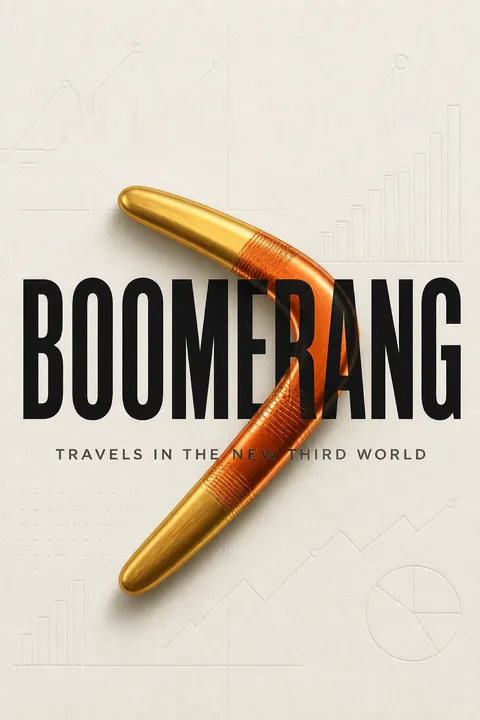
Boomerang explores the global financial crisis through Lewis's travels to Iceland, Greece, Ireland, Germany, and California. Readers praise his ability to explain complex economic issues with humor and insight, though some criticize his reliance on cultural stereotypes. The book examines how each country's unique characteristics contributed to their financial downfall. While entertaining and informative, some reviewers found it less substantive than Lewis's previous work. Overall, it's considered a valuable, if sometimes superficial, look at the aftermath of the 2008 crash.
People Also Read







Glossary
credit default swap
default insurance contractA contract in which a buyer pays a premium for protection against a borrower failing to meet its debt obligations. In the book, these contracts also let investors bet against bonds without owning them. Kyle Bass used credit default swaps on sovereign debt to position his fund for possible government defaults.
quota
share of a sustainable catchIn Iceland's fishing system, a quota grants its holder a defined share of the total fish catch allowed in a season. Scientists determine the overall catch limit to protect fish stocks. Quotas could be transferred or used as collateral, helping fishing rights move toward operators able to harvest efficiently.
Rhineland Funding
offshore bond-buying vehicleAn entity created by German bank IKB to borrow short-term through commercial paper and invest in longer-term bonds backed by American consumer loans. IKB guaranteed its obligations, helping it obtain a top credit rating. The vehicle became a major channel through which IKB accumulated risky assets it did not adequately understand.
conduit
off-balance-sheet funding vehicleA financial vehicle that raises money, often through short-term borrowing, and invests it elsewhere, without necessarily operating like a conventional regulated bank. Rhineland Funding was described as a conduit. Its structure helped obscure the connection between IKB's funding commitments and the mortgage-related assets ultimately carrying the risk.
service-level insolvency
failure to fund public servicesA term used by San Jose Mayor Chuck Reed for a city that may still pay its bills but cannot afford to provide expected services. In the book, rising pension and health costs contributed to library closures, reduced park services, and fewer public employees. The phrase distinguishes operational and civic failure from formal bankruptcy.
Boys Will Be Boys: Gender, Overconfidence, and Common Stock Investment
study of trading and overconfidenceA 2001 study by Brad Barber and Terrance Odean that examined trading in more than 35,000 households. As Lewis summarizes it, men traded more frequently than women, and the authors linked this pattern to overconfidence in financial judgment. The book uses the study to discuss the male-dominated risk-taking culture in Icelandic and American finance.
FAQ
What's "Boomerang: Travels in the New Third World" about?
- Exploration of Financial Crises: The book examines the financial crises that hit several countries, including Iceland, Greece, Ireland, Germany, and the United States, following the 2008 global financial meltdown.
- Cultural Insights: Michael Lewis delves into the cultural and societal behaviors that contributed to these financial disasters, offering a unique perspective on how different nations responded to the same economic pressures.
- Personal Narratives: Through engaging storytelling, Lewis provides personal anecdotes and interviews with key figures involved in the financial crises, making complex financial topics accessible and relatable.
- Global Implications: The book highlights the interconnectedness of global economies and the ripple effects of financial mismanagement, emphasizing the broader implications for the world economy.
Why should I read "Boomerang: Travels in the New Third World"?
- Understanding Financial Crises: The book offers a deep dive into the causes and consequences of financial crises, providing valuable insights for anyone interested in economics or global finance.
- Engaging Storytelling: Michael Lewis is known for his ability to turn complex financial topics into compelling narratives, making the book both informative and entertaining.
- Cultural Analysis: By exploring the cultural factors that contributed to financial disasters, the book provides a unique perspective on how different societies handle economic challenges.
- Broader Lessons: The book offers lessons on the dangers of unchecked financial practices and the importance of understanding the cultural context in global finance.
What are the key takeaways of "Boomerang: Travels in the New Third World"?
- Cultural Influence on Finance: The book emphasizes how cultural attitudes and behaviors can significantly impact financial decision-making and outcomes.
- Interconnected Economies: It highlights the interconnected nature of global economies and how financial crises in one country can have far-reaching effects.
- Human Nature and Economics: Lewis explores the role of human nature, including greed and denial, in financial disasters, suggesting that these traits are universal and persistent.
- Need for Reform: The book underscores the need for financial reform and better regulation to prevent future crises, pointing out systemic flaws in the global financial system.
How does Michael Lewis explain the financial crisis in Iceland in "Boomerang"?
- Rapid Banking Expansion: Lewis describes how Iceland's banking system expanded rapidly, with assets growing from a few billion dollars to over $140 billion in just a few years.
- Cultural Shift: The book highlights a cultural shift in Iceland, where a traditionally fishing-based economy suddenly embraced high finance, leading to reckless financial behavior.
- Collapse and Consequences: When the banks collapsed, Icelanders found themselves responsible for massive debts, leading to a national financial crisis and a reevaluation of their economic practices.
- Lessons Learned: Lewis uses Iceland as a case study to illustrate the dangers of unchecked financial growth and the importance of understanding cultural influences on economic decisions.
What insights does "Boomerang" provide about Greece's financial crisis?
- Government Mismanagement: The book details how Greece's government mismanaged finances, with widespread tax evasion and corruption contributing to the crisis.
- Cultural Factors: Lewis explores cultural factors, such as a lack of trust in government and a tendency to prioritize short-term gains over long-term stability.
- Impact of the Euro: The adoption of the euro allowed Greece to borrow money cheaply, but it also masked underlying economic weaknesses that eventually led to a crisis.
- Need for Reform: The book emphasizes the need for structural reforms in Greece to address systemic issues and prevent future financial disasters.
How does "Boomerang" portray Ireland's financial situation?
- Real Estate Bubble: Lewis describes how Ireland's financial crisis was fueled by a massive real estate bubble, with banks lending recklessly to property developers.
- Cultural Optimism: The book highlights a cultural shift in Ireland, where newfound optimism led to excessive borrowing and spending, contributing to the crisis.
- Bank Failures: When the bubble burst, Irish banks faced enormous losses, leading to a national financial crisis and a government bailout.
- Lessons for the Future: Lewis uses Ireland as an example of the dangers of unchecked financial growth and the importance of maintaining realistic economic expectations.
What does "Boomerang" reveal about Germany's role in the financial crisis?
- Prudent Domestic Practices: The book notes that Germany's domestic financial practices were prudent, with little borrowing and a focus on fiscal responsibility.
- Risky Foreign Investments: Despite their domestic caution, German banks made risky foreign investments, particularly in U.S. subprime loans and European sovereign debt.
- Cultural Contradictions: Lewis explores the cultural contradictions in Germany, where a desire for order and cleanliness coexists with a fascination for risk and chaos.
- Impact on Europe: Germany's role as a creditor in the European debt crisis highlights the interconnectedness of global finance and the challenges of managing diverse economic cultures.
How does "Boomerang" address the financial challenges in the United States?
- State and Local Debt: The book examines the financial challenges faced by U.S. states and cities, highlighting issues like pension liabilities and budget deficits.
- Cultural Factors: Lewis explores cultural factors, such as a tendency to prioritize short-term gains over long-term stability, contributing to financial challenges.
- Need for Reform: The book emphasizes the need for financial reform at the state and local levels to address systemic issues and prevent future crises.
- Broader Implications: Lewis uses the U.S. as a case study to illustrate the broader implications of financial mismanagement and the importance of understanding cultural influences on economic decisions.
What are the best quotes from "Boomerang: Travels in the New Third World" and what do they mean?
- "The lights are out, you can do whatever you want to do and no one will ever know." This quote highlights the temptation and lack of accountability that led to reckless financial behavior in several countries.
- "The deeper social and economic problems that gave rise to it remained." Lewis emphasizes that the financial crisis was a symptom of deeper systemic issues that still need to be addressed.
- "The only way I can explain it is that they got the money because it was there." This quote reflects the ease with which people and governments accessed credit, leading to unsustainable financial practices.
- "We’re all going to be rich. We’re all going to live forever." Lewis captures the unrealistic optimism that fueled excessive borrowing and spending, contributing to financial crises.
How does Michael Lewis use personal narratives in "Boomerang"?
- Engaging Storytelling: Lewis uses personal narratives to make complex financial topics accessible and engaging, drawing readers into the human side of economic crises.
- Interviews with Key Figures: The book includes interviews with key figures involved in the financial crises, providing firsthand insights into the decisions and behaviors that led to economic disasters.
- Relatable Characters: By focusing on individual stories, Lewis creates relatable characters that help readers understand the broader cultural and economic forces at play.
- Humanizing Economics: The use of personal narratives humanizes economics, making it easier for readers to grasp the real-world implications of financial mismanagement.
What lessons does "Boomerang" offer for preventing future financial crises?
- Cultural Awareness: The book emphasizes the importance of understanding cultural influences on financial behavior to prevent future crises.
- Regulatory Reform: Lewis highlights the need for better financial regulation and oversight to address systemic issues and prevent reckless financial practices.
- Long-term Thinking: The book advocates for a shift from short-term gains to long-term stability in financial decision-making, both for individuals and governments.
- Global Cooperation: Lewis underscores the interconnectedness of global finance and the need for international cooperation to address financial challenges and prevent future crises.
How does "Boomerang" illustrate the interconnectedness of global economies?
- Ripple Effects: The book highlights how financial crises in one country can have far-reaching effects on other nations, emphasizing the interconnectedness of global economies.
- Shared Challenges: Lewis explores shared challenges faced by different countries, such as excessive borrowing and cultural factors, illustrating common themes in global finance.
- Cross-Border Investments: The book examines cross-border investments and their role in spreading financial risk, highlighting the need for international cooperation in managing economic challenges.
- Lessons for Policymakers: By illustrating the interconnectedness of global economies, Lewis offers lessons for policymakers on the importance of understanding and addressing systemic financial issues.
About the Author
Other books by Michael Lewis






Download PDF
Download EPUB
.epub digital book format is ideal for reading ebooks on phones, tablets, and e-readers.








