

Plot Summary
The Cabin Burns Twice
At nine, Peter Barlow hides behind his bedroom door while his parents fight over food and money. When his mother, Sissy, spills hot coffee on his father, Jack, Jack shoots her. Peter watches him grieve, then turn the same rifle on himself as fire spreads through their small cabin. Peter escapes the burning house carrying only a wind-up clock, but the scene follows him into sleep for years.
In 1905, now sixteen and living at St. Vincent’s Orphanage, he wakes from another nightmare. He has made himself useful by caring for younger boys, while the clock and recurring memories keep his lost childhood close. His need to protect others grows from having once been unable to protect his mother.
Peter’s first act of survival is watching, not intervening. The locked doorway makes him both witness and child, a position that later shapes his instinct to notice who is alone or in danger. The clock gives his former life a physical remnant, but cannot make that life feel secure again. His care for the orphans is therefore more than good nature: he is trying to become the person he needed when his family collapsed. The trauma does not simply make him fearful. It gives him a persistent, sometimes exhausting sense of responsibility for other people’s safety.
Mercy Breaks the Rule
St. Vincent’s keeps thirty-two boys fed and housed through a strict routine of labor, inspections, prayer, and punishment. Peter, one of the oldest, mediates disputes and protects younger children, while Father Andrew teaches him Latin and considers him a future priest.
Peter’s faith is uncertain, partly because he loves Grace Hill, the farmer’s daughter, and cannot imagine surrendering a life with her. At a meal, the quiet Bartholomew tries to share his food with Simon, who has been denied his portion for dirty hands.
Father Poole orders Bartholomew to surrender his own meal too. Bartholomew eats it instead, defying the priest, and Poole sends him to the underground punishment hole. Peter’s attempt to defend kindness has little power against the institution’s rules.
The orphanage treats obedience as proof of virtue, so a small act of generosity becomes a challenge to authority. Poole’s punishment of Bartholomew is especially revealing: he frames deprivation as a lesson for the boy who was already hungry. Peter sees the cruelty but remains caught inside the same structure, where food, safety, and approval can all be withdrawn. His uncertainty about priesthood develops in this environment. Andrew offers a more humane form of religious guidance, but Peter’s attraction to Grace forces him to ask whether devotion means renouncing the ordinary bonds that make life worth living.
The Sheriff Brings Paul
During a snowstorm, Sheriff Baker arrives at St. Vincent’s with his wounded brother, Paul, whose body is covered in occult markings. The sheriff explains that Paul and others sacrificed a three-year-old girl in the woods, and that he shot his brother while stopping him.
Father Poole recognizes that the crisis may be more than an ordinary injury and begins an exorcism, with Andrew reading from the ritual book. Holy water makes Paul convulse. He breaks free of his restraints, kills a deputy with a broken bedpost, and declares that the force within him is many.
Sheriff Baker shoots him dead. Afterward, the orphanage doors burst open by themselves and the iron cross above the dormitory entrance falls. Peter and David hear the strange laughter, but the adults keep the boys away from the room.
Paul’s arrival brings the distant violence of the valley into the orphanage, where its religious language and routines seem suddenly inadequate. The sheriff has stopped a crime but cannot undo it, and his decision to bring Paul to Poole transfers an impossible burden to the priests. The exorcism offers a brief, concrete test of faith: holy water provokes a reaction, yet prayer does not contain Paul or prevent a deputy’s death. The fallen cross turns the aftermath into an intrusion rather than a conclusion. The boys have heard the evidence, even as the adults try to preserve their ordinary schedule.
The Dormitory Takes Sides
The next morning, Brother Johnson opens the punishment hole and Bartholomew walks back to the orphanage through the snow, smiling despite the night underground. The boys begin behaving in ways Peter cannot explain: old enemies gather as friends, while Simon grows close to Bartholomew and distant from Peter.
David finds that the grass over Paul Baker’s grave has turned black, as if scorched. At Mass, Simon and Bartholomew refuse communion by pretending they have committed sins that bar them from it, unsettling Father White with their mock piety.
Peter sees the fallen cross and senses that ordinary loyalties are changing. When he tries to ask what is happening, the boys offer no answer. A frightened Basil tells him that the others are waiting to see which side he chooses.
The first signs of danger are social, not spectacular. Friendships rearrange, teasing becomes harder to interpret, and familiar religious practices turn into performances of defiance. Peter notices the changes but lacks a clear explanation, while Basil gives the disturbance its most important shape: the boys are sorting themselves into sides. The burned grass over Paul’s grave suggests that the violence has left a material trace, yet David and Peter still disagree about what such evidence means. Their uncertainty matters. The threat can exploit the same distrust that has always divided the boys from their keepers and from one another.
Grace Opens Another Life
On the supply trip to Hill farm, Peter remembers meeting Grace years earlier, when she lent him a book and began a private correspondence with him. Now she kisses him, and Peter understands that he wants a life with her rather than the priesthood.
Andrew has already assured him that love and honest choice need not be shameful. While Peter is away, Simon lures Basil toward the shed by promising him a snake to see. Other boys seize Basil, strangle and cut him, then hang his naked body on the chapel cross.
Ben discovers the killing. Peter returns with supplies and finds a small coffin; David tells him Basil was murdered. Poole instead announces that Basil killed himself, leaving Peter to confront both a friend’s death and the adults’ refusal to name what happened.
Peter’s first kiss and Basil’s murder occupy the same turning point because they expose two sharply different futures. Grace offers a life built through mutual affection and choice; the attackers turn a vulnerable child’s trust into a weapon. Andrew’s counsel has prepared Peter to choose without self-condemnation, but the timing makes that freedom feel fragile. Basil’s death also tests the orphanage’s moral authority. Poole’s claim of suicide protects institutional order at the cost of truth, making the official account another form of violence against the children who know what they saw.
Basil Is Called Suicide
Poole tells the boys that Basil hanged himself and will be buried in the orphanage cemetery. Bartholomew challenges the decision, arguing that suicide should bar Basil from consecrated ground. Ben then reveals that he saw the body and insists that other boys killed him. Rather than investigate, Poole calls Ben a liar and orders Johnson to take both boys to the hole.
Andrew objects, but Poole silences him. The next morning, the orphanage gathers for Basil’s memorial. Peter speaks about the boy’s kindness and toughness, while Poole presents the death as a private tragedy. Andrew notices shadows moving beyond the chapel doors and realizes that some boys are missing, but he does not finish counting before the pounding begins.
Poole’s handling of Basil’s death converts uncertainty into an instrument of discipline. By declaring suicide, he makes the victim responsible for the violence and casts witnesses as troublemakers. Bartholomew’s question is not merely theological; it exposes the gap between the priest’s formal rules and his willingness to use them selectively. Andrew recognizes the injustice but cannot yet break openly with Poole. The approaching violence gathers force in that silence. Peter’s memorial speech restores Basil to the community through specific memories, while Poole’s official story tries to reduce him to a cautionary example.
The Memorial Becomes Slaughter
During the memorial, boys attack with hidden knives, tools, and candlesticks. Simon cuts Father White’s throat, while Jonah and others stab and beat children who try to flee. They overturn candles, setting the chapel tapestries and Basil’s coffin alight.
Andrew tries to stop the killing and is wounded; Poole is knocked into the flames. Johnson fights toward the priests and breaks the chapel doors open, allowing a wave of terrified boys to escape. Peter is struck with a mallet and wakes in the foyer beside David and the surviving children.
Andrew tells Peter that several boys were killed and many more are wounded, but the attackers have scattered through the building. The adults have lost control, and the children cannot tell which familiar faces are still safe.
The memorial becomes a scene of public contradiction: the community gathers to honor a murdered boy, then its own children turn the chapel into a killing ground. The violence is not random in its effects. The attackers use tools from the orphanage and church, making ordinary objects serve the institution’s destruction. Andrew’s effort to protect the boys preserves his moral clarity but does not give him control of the room. Peter’s brief unconsciousness leaves him dependent on what others report, while the survivors’ first task becomes distinguishing the living from the dangerous.
Snow Closes the Valley
Peter and David gather the uninjured boys in the dormitory while Andrew searches for the wounded and tries to find a route to help. The storm deepens, and the horses are discovered butchered in their stalls, eliminating the fastest escape.
Peter asks Andrew whether Paul Baker was possessed; Andrew admits that the sheriff’s story involved a ritual and that Paul’s behavior defied ordinary explanation. Andrew nevertheless insists that the attacking boys remain human children. At the same time, Johnson returns to the hole after hearing Ben and Bartholomew call for help, but Bartholomew pulls him underground.
Peter and Andrew later find the hole empty. When Jonathan reaches the dormitory, he reports hearing Bartholomew with Johnson near Poole’s room. Andrew decides he must check on Poole, leaving Peter and David to guard the children.
The weather turns the orphanage’s isolation into a tactical trap. With the horses dead and the roads disappearing beneath snow, the boys cannot simply leave the danger behind. Peter and Andrew also divide over how to understand it: Peter sees a supernatural pattern, while Andrew resists reducing the attackers to monsters. That disagreement is ethically important, even if it cannot resolve the immediate threat. Meanwhile, Johnson’s disappearance and Jonathan’s report undermine the adults’ remaining authority. Andrew goes to investigate because loyalty still governs his choices, while Peter and David are left to assume responsibility without knowing whom they can trust.
Jonathan Unbars the Door
Before Andrew can return, Jonathan removes the iron cross that bars the dormitory doors and opens them to the attackers. Johnson leads the assault, and the boys strike sleepers first. David charges him but is hurled through a window into the snow. Andrew tries to shield the children, but a cross is driven through his stomach. Beneath a cot, he asks Peter to accept the ministry of a priest.
Peter, who had planned to leave the priesthood for Grace, agrees, and Andrew marks his forehead with holy water before dying. Peter rises with the cross, kills Jonah when he attacks, and commands the remaining assailants to stop. Bartholomew refuses his authority, declares the survivors prisoners, and offers them safety only if they submit to him.
Andrew’s ordination arrives not as the culmination of a secure vocation but as a decision made under unbearable pressure. Peter accepts because Andrew’s trust and the children’s immediate need converge, not because his love for Grace has vanished. The scene makes leadership costly: Andrew transfers responsibility while dying, and Peter inherits a role he had not wanted in this form. Jonathan’s betrayal shows how affection can be exploited, while Peter’s brief success against Jonah proves that courage can interrupt violence without ending it. Bartholomew’s offer follows at once, converting survival into a test of allegiance.
The Master's Cruel Bargain
Outside the dormitory, David survives his fall and finds Father Poole alive in the smoke-blackened chapel, blinded and badly wounded. Poole persuades him to fetch kerosene and a hatchet so they can burn the attackers.
Meanwhile, Bartholomew exploits Johnson’s buried grief and guilt over his wife and infant son, forcing him to choose between killing Ben and being killed himself. Johnson strangles Ben, then Bartholomew burns Johnson’s face and takes control of him. He uses the ruined man to blind Poole, turning the orphanage’s old enforcer against its head priest.
David carries oil toward the dormitory, believing it will let him strike back. The children who once feared Poole and Johnson now face a new authority that knows how to make their private wounds serve its purposes.
Bartholomew’s power works through intimate knowledge rather than force alone. He turns Johnson’s guilt into a coercive choice, then turns the resulting trauma into a leash. Poole’s blindness reverses the old hierarchy, but not through justice: it is another act of deliberate injury. David’s decision to help Poole reflects his need to protect Peter and the other children, yet the plan he carries is designed by a man whose own authority has depended on cruelty. The section makes revenge difficult to distinguish from rescue, especially when every available tool can injure the people it is meant to save.
Holy Water, Living Fire
Bartholomew orders Johnson to kill Byron, who is holding the attackers back. Peter splashes holy water onto Johnson and baptizes him, interrupting the control that has filled his mind with a swarm of commands.
Johnson releases Byron and turns to shield the younger children when David’s kerosene catches fire. The explosion tears through the dormitory entrance, killing attackers and opening a route through the blaze. Johnson stands between the advancing fire and the boys until the flames overwhelm him.
Peter and the survivors climb through an attic hatch as the dorm burns below. David guides them through the crawlspace, but the floor collapses ahead, forcing them back toward the smoke and the remaining attackers. The fire has bought them time, not safety.
Peter’s baptism gives religious action a practical consequence: Johnson’s grip loosens, and the violence briefly stops. The rite does not erase Johnson’s past, but it restores his ability to choose, allowing him to protect the children he had helped endanger. David’s kerosene plan, meanwhile, succeeds in breaking the attack at terrible cost. Fire is both weapon and narrowing deadline. The survivors’ ascent into the attic turns escape into a physical problem, while the collapsed floor demonstrates that even a successful act of resistance can leave them trapped between two forms of danger.
Peter Falls Through Flame
In the smoke-filled attic, Bartholomew blocks the survivors’ path with Poole’s ornate knife and stabs Peter in the stomach. Peter sees the younger boys behind David and Byron and forces himself upright. He charges Bartholomew, driving them both through the collapsed floor into the burning dormitory.
They land on a metal bedframe, breaking Bartholomew’s back. As Bartholomew dies, his expression briefly becomes that of a frightened boy; he asks Peter for forgiveness, and Peter grants absolution.
David then leads the survivors through the attic and out a window into deep snow. The group includes David, Byron, Timothy, Finnegan, and the youngest boys. Peter is alive, but his wound is severe, and each step toward the Hill farm costs him more strength.
Peter’s final confrontation joins physical sacrifice to the choice he made beside Andrew. He does not defeat Bartholomew by claiming invulnerability; he uses his own body to stop the knife-wielding boy and end the immediate threat. Bartholomew’s last moments complicate any easy separation between monster and child: the possessing force has made him dangerous, but his fear remains recognizable. Peter’s absolution is an act of compassion, not a denial of the harm done. The escape belongs equally to David, whose practical courage carries the survivors beyond the burning building.
The Valley's Last Morning
Peter, David, Byron, Timothy, Finnegan, and the younger boys struggle through the snow toward Hill farm. John Hill and Grace spot them from the house and rush out with coats and blankets. Peter has lost too much blood to recover. As Grace holds his hand, he looks across the empty landscape and describes the dead children and priests as gathered around him.
He believes they are waiting, and that he has saved them. David begs him to remain, but Peter’s attention drifts toward the open sky. Grace tells him that he has done what he could and lets him go without demanding that he choose between love and faith again. The survivors reach shelter, but St. Vincent’s and Peter’s childhood are gone.
The farm answers the opening image of the burning cabin with a different kind of arrival. Peter is not alone beside his final loss: Grace, David, and the surviving boys surround him, and John brings shelter to those who can still be saved. Peter’s vision of the dead may be spiritual certainty or the final shape of a damaged mind; the story does not require the reader to settle that question. What matters is that he understands his responsibility as completed. Grace’s response honors his belief without trying to pull him back into a life his body can no longer reach.
Analysis
The novel makes institutional cruelty and supernatural evil difficult to separate without making them identical. St. Vincent’s has already trained its boys to expect hunger, humiliation, and punishment before Paul Baker arrives. Poole turns rules into instruments of control, while the attackers exploit the same damaged relationships and the same confined environment. The demonic explanation intensifies the horror, but it does not absolve the adults who have taught children that power means domination.
Peter’s development is measured by choices rather than certainty. He begins as a child paralyzed by his parents’ deaths, then becomes the boy who protects Basil, Simon, and the younger orphans. His attraction to Grace gives him a plausible future outside religious service, and Andrew insists that such a future is morally legitimate. Peter’s later acceptance of ordination is therefore not a simple conversion from doubt to faith. It is a decision made when Andrew is dying and other children need protection. Faith becomes a practice of responsibility, not a guarantee of safety.
David supplies the story’s crucial counterweight. He sees that the boys’ violence grows from neglect and abuse, not merely from an abstract evil, and he resists Peter’s certainty even while choosing to protect the others. His judgment keeps the narrative from reducing the children to monsters. Johnson’s coerced violence further complicates the divide between perpetrator and victim: his past contains real harm, but Bartholomew weaponizes his guilt until he can act again by choice.
The ending grants no clean restoration. St. Vincent’s burns, Peter dies, and the surviving children reach a home that cannot return what they lost. Yet Grace and David remain with Peter at the end, and he understands his work as saving the others. The book’s hope is therefore local and costly. It appears in acts of care that resist an institution’s lies, even when they cannot undo the damage.
Review Summary
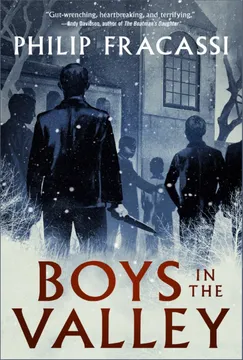
Boys in the Valley receives overwhelmingly positive reviews, averaging 4.1 out of 5 stars. Readers frequently compare it to Lord of the Flies meets The Exorcist, praising Fracassi's atmospheric writing, compelling characters, and relentless tension. Set in an early 1900s Pennsylvania orphanage, the story follows boys facing demonic possession after a stranger's death unleashes ancient evil. Highlights include strong characterization, old-school horror vibes, and an emotional, action-packed finale. Minor criticisms mention pacing issues around the 30% mark and, for some, an overly religious resolution.
Characters
Peter Barlow
The orphan seeking a callingPeter is a thoughtful, dutiful teenager shaped by a childhood catastrophe and years of strict life at St. Vincent’s. He protects younger boys because he recognizes their fear and knows how easily an adult’s power can become a threat. Father Andrew nurtures his interest in faith, while Grace Hill represents intimacy, books, and a future outside the orphanage. Peter’s central struggle is not simply belief versus doubt; it is whether a meaningful life must be chosen through religious service or through human attachment. He is compassionate but not passive, and his need to help can become a burden he takes on without asking whether he can carry it.
David
The guarded older brotherDavid is Peter’s closest peer and the other oldest boy at St. Vincent’s. Sardonic and wary, he conceals a strong protective instinct behind jokes and apparent indifference. His history of harsh punishment has taught him to distrust authority and imagine escape before sacrifice. Peter understands the kindness beneath David’s defenses, even when David resists the leadership Peter assumes. Their friendship grows through friction: Peter offers a model of care, while David brings practical skepticism and survival skills. David’s arc is rooted in the question of whether protecting others can become his choice rather than another duty imposed by adults.
Father Andrew
The merciful priest-mentorAndrew Francis is Peter’s teacher, spiritual guide, and closest adult ally. Unlike Poole, he believes discipline should leave room for dignity and that a young person must understand what a life choice costs before making it. He supports Peter’s education and takes him to Hill farm, where Peter can form a life beyond the orphanage. Andrew’s kindness is not naivety; he recognizes the institution’s cruelty but struggles with when and how to oppose it. His paternal affection for Peter sits beside his religious conviction, creating a real tension between wanting Peter to remain and wanting him to choose freely.
Grace Hill
The life beyond vowsGrace is the farmer John Hill’s daughter and Peter’s friend from outside the closed world of St. Vincent’s. She shares books with him and maintains a private correspondence that gives him access to ideas, experiences, and hopes unavailable in the orphanage. Warm and direct, she does not treat Peter as a charity case or a project; she responds to him as an equal. Her presence makes Peter’s vocational question concrete. A future with Grace means ordinary human commitments, while the priesthood asks for a different form of service. She embodies possibility rather than temptation.
Bartholomew
The silent boy observerBartholomew is a withdrawn orphan whose quietness makes the others regard him as peculiar and difficult to read. He watches the social order closely, noticing who holds power and how rules are used against the vulnerable. His isolation sets him apart from Peter’s more visible role as a protector, and his relationship with the other boys changes the atmosphere around him. Bartholomew’s story draws on the danger of a child whose resentment has no safe outlet. He is not introduced as a simple rival to Peter, but as a neglected presence whose intelligence and estrangement make him hard for the adults to understand.
Brother Johnson
The brutal keeperJohnson is the orphanage’s imposing lay enforcer, a former criminal who serves under Poole rather than facing prison. He distributes tools, oversees punishments, and uses physical intimidation to make the institution’s rules felt. His reputation is built on violence, but the narrative also shows the fear and guilt buried beneath his hard exterior. Johnson’s childhood terror of confinement and his past family life shape his vulnerability to anyone who can reach those memories. He represents the difference between having power over others and having command of oneself.
Father Poole
The iron-fisted rectorPoole is the senior priest at St. Vincent’s and the chief architect of its punitive routine. He believes order must be enforced from above and uses food, public shame, and physical punishment to secure obedience. His religious language gives his authority a sacred appearance, even when his actions contradict the care he claims to offer. Peter and Andrew see the harm in Poole’s methods, but the other boys have few ways to challenge him. Poole’s character exposes how institutions can confuse control with moral authority and mistake compliance for spiritual health.
Simon
Peter's dependent friendSimon is a younger orphan whom Peter befriends after Simon arrives frightened and vulnerable. He looks to Peter for the security of an older brother, and Peter feels responsible for protecting him. Simon’s place in the dormitory depends on those bonds, making changes in his friendships especially unsettling to Peter. His close connection with Bartholomew contrasts with the familiar loyalty he once showed Peter. Simon’s role underscores how a child’s need to belong can be turned toward new loyalties, especially when the established adults offer little trust or genuine emotional safety.
Basil
The overlooked little boyBasil is a small, sickly English boy who has known hunger and instability before arriving at St. Vincent’s. His timid manner and interest in snakes make him an easy target for teasing, though he is more perceptive than the others assume. Peter treats him with particular tenderness, and Basil regards Peter as a dependable older brother. He tries to interpret changes in the dormitory before the adults take them seriously. Basil’s gentle curiosity makes the orphanage’s rough treatment especially visible.
Ben
The frightened witnessBen is a sensitive boy who is easily frightened and rarely commands attention in the crowded dormitory. He notices more than the older boys expect and becomes a witness to the violence surrounding Basil. His terror does not make him unreliable; it reflects the danger of speaking when the people in authority prefer a convenient story. Ben’s vulnerability shows how little protection the orphanage’s rules actually provide when a child needs to be believed.
Byron
The stubborn protectorByron arrives from the city with a reputation for fighting and bullying younger boys. Peter’s frank appeal to his sense of responsibility helps redirect that aggression into protection. Byron remains blunt and physically confident, but his loyalty to Peter and his readiness to defend vulnerable children reveal an earnest moral core. He is one of the few boys who can meet violence with practical force. His character suggests that anger can be redirected toward care, though it remains difficult to separate courage from the habit of fighting.
Jonathan
Finnegan's chosen twinJonathan is one half of the inseparable pair the boys call the twins, though he and Finnegan are unrelated. Their closeness gives both boys a dependable source of companionship in a place where children come and go. Jonathan is sociable and usually moves through the orphanage as part of that pair, making his actions difficult for Finnegan and the others to interpret when the dormitory’s loyalties shift. Their bond is a counterpoint to the institution’s instability.
Finnegan
The inseparable companionFinnegan is Jonathan’s closest friend and the other half of the orphanage’s self-styled twin pair. He is lively, affectionate, and accustomed to having Jonathan at his side. Their companionship provides a rare sense of chosen family in a home defined by separation and turnover. Finnegan’s dependence on the bond is not weakness; it is a form of emotional trust built in the absence of stable relatives.
Timothy
The stuttering scholarTimothy is a red-haired boy whose stutter is mistaken by Father White for a failure to learn his lessons. He is thoughtful and capable, but his difficulty speaking makes him vulnerable to humiliation. Peter recognizes the difference between ignorance and an inability to get words out, while other boys sometimes treat Timothy as a nuisance. His character highlights how authority can punish a child for a problem it has not bothered to understand.
Father White
The frail senior priestFather White is an elderly priest whose weak eyesight and fading faculties make him an imperfect overseer of the boys. He participates in inspections and religious services, but often fails to recognize what a child is trying to tell him. His presence shows the gap between the orphanage’s formal pastoral role and the actual attention its children receive. He is not as forceful as Poole, yet his limitations still affect the boys.
John Hill
Grace's protective fatherJohn Hill owns the farm that supplies St. Vincent’s with food and essential goods. A former sailor and a widower, he has built a stable home for Grace and approaches Peter with warmth rather than suspicion. His practical generosity gives Peter a glimpse of family life beyond institutional rules. John is observant about the dangers around the orphanage, but he respects the boundary between helping and controlling his daughter’s choices.
Sheriff Baker
A lawman with divided loyaltiesSheriff Baker is the lawman responsible for the nearby town and a familiar visitor to St. Vincent’s. He tries to keep order while facing a crisis that becomes personal through his family. His appeal to the priests reflects desperation as much as trust in their religious authority. Baker is burdened by the tension between his duties as sheriff and his obligations to his brother.
Paul Baker
The sheriff's troubled brotherPaul is Sheriff Baker’s brother, a man whose involvement in the events in the woods brings the valley’s violence to St. Vincent’s. His condition is severe enough that the sheriff seeks help far from town. Paul’s presence gives the story its first unmistakable rupture in the orphanage’s routine and forces the priests to confront what they cannot explain.
Sissy Barlow
Peter's tender motherSissy is Peter’s mother, a religious woman who hopes her son will grow strong despite his small size. Her care offers Peter a brief image of home before his childhood becomes defined by loss. She tries to hold the family together under poverty and her husband’s volatility.
Jack Barlow
Peter's volatile fatherJack is Peter’s father, a struggling hunter whose frustration and drinking intensify the household’s instability. Peter remembers him as a source of both instruction and fear, which makes the rifle they once shared a lasting object of trauma. Jack’s inability to contain his anger shapes the child Peter becomes.
Plot Devices
The punishment hole
A prison beneath the snowThe hole is a deep, roofed pit outside the orphanage, built as a punishment for boys who defy Poole’s rules. Its cold, darkness, and isolation make it a threat even before anyone is sent there. Bartholomew’s return from it, smiling after a night underground, becomes an early sign that the familiar punishments no longer work as expected. The pit later holds Bartholomew and Ben with Johnson, bringing the keeper of the punishment into the same confined space he helped create. It turns the orphanage’s abuse into a physical setting where control changes hands.
The iron cross
Faith turned into a barrierThe iron cross hangs above the dormitory doors as a constant emblem of the orphanage’s Catholic order. When it falls after Paul Baker’s death, the boys see a physical disturbance that unsettles the adults’ attempt to return to routine. Later, David and Peter wedge the cross into the dormitory handles to keep attackers out. The object’s function shifts from symbol to barricade, then to weapon in the struggle to survive. Its changing uses track the story’s central question: whether religious symbols have power by themselves, or whether meaning depends on what people choose to do with them.
The winter storm
A valley sealed shutThe early snowfall becomes a practical barrier between St. Vincent’s and help. It covers the road, intensifies the cold, and makes travel dangerous for the underfed boys. The storm also obscures what is happening outside and turns the orphanage grounds into a place where cries for help can be missed. When the attackers butcher the horses, the weather removes the survivors’ most obvious escape route. Snow finally serves a different purpose when it cushions the fall of boys escaping through a window. It is both a trap and, briefly, a means of survival.
Holy water and ritual
A test of spiritual agencyThe priests use an exorcism ritual and holy water when Paul Baker arrives, but the ceremony does not prevent him from breaking free and killing a deputy. Later, Peter uses the same religious practice in a more personal way when Johnson is under the attackers’ control. The contrast makes ritual neither a guaranteed defense nor empty ceremony. Its effect depends on Peter’s willingness to act with compassion and authority when he has no certainty that it will work. The device joins the supernatural plot to Peter’s changing understanding of priesthood.
Grace's borrowed books
A window beyond St. Vincent'sGrace first connects with Peter by lending him a book from her private library, then continues the friendship through secret letters. These exchanges let Peter encounter imaginative worlds and a kind of attention absent from the orphanage. They also give his attraction to Grace substance: their relationship grows through shared reading, questions about the future, and the gradual trust of correspondence. The books and letters are not merely romantic tokens. They represent a life in which Peter may choose his own intellectual and emotional commitments, making his vocational decision more than an abstract debate.
Download PDF
Download EPUB
.epub digital book format is ideal for reading ebooks on phones, tablets, and e-readers.








