Key Takeaways
1. Bulimia is a Habit, Not a Complex Illness
I binged because I had urges to binge.
Simple truth. The author's core revelation is that bulimia is not a complex psychological disorder stemming from deep emotional issues, but a destructive habit driven by urges. This simple, direct understanding contrasts sharply with years of therapy that sought elaborate "underlying causes" for her binge eating. The urges themselves, not external stressors or internal turmoil, were the immediate and direct cause of every binge.
Misguided focus. Traditional therapy often frames binge eating as a symptom of deeper problems like low self-esteem, depression, or family conflicts, suggesting that resolving these issues will make the bingeing disappear. However, the author found that even when these "underlying issues" were present, or temporarily alleviated by medication, the urges to binge persisted. This led her to conclude that focusing on anything other than the urges themselves was a waste of time and resources.
A physical problem. The author redefines bulimia as a "binge-created brain-wiring problem"—a physical habit ingrained in the brain through repeated behavior. This perspective shifts the focus from psychological weakness to a neurological pattern that can be understood and, crucially, unwired. Understanding this physical basis empowers individuals to take direct action rather than feeling like victims of an uncontrollable illness.
2. The Two Brains: Lower vs. Highest Human
The human brain is "able to suppress any appetite, able to defeat any addiction, any time you choose."
Internal conflict. The book introduces the concept of "two brains" at play in addiction: the "lower brain" (or animal brain) and the "highest human brain" (or prefrontal cortex). The lower brain is primitive, automatic, and survival-oriented, generating irrational urges. The highest human brain, conversely, is responsible for consciousness, reason, identity, and voluntary control over actions.
Source of urges. The lower brain, through survival instincts and habit formation, mistakenly believes that binge eating is necessary for survival or well-being, thus generating powerful, automatic urges. These urges are not the "true self" speaking, but rather the voice of a primitive, unthinking part of the brain. Recognizing this distinction is crucial for separating oneself from the urges.
Ultimate control. Despite the lower brain's powerful signals, the highest human brain retains ultimate control over voluntary actions. It can choose whether or not to act on these urges because it controls the muscles involved in eating. This "veto power" or "free won't" is the key to breaking the cycle, as the highest human brain can suppress inappropriate motor actions regardless of the intensity of the urge.
3. Urges to Binge are "Neurological Junk"
I had to view the urges as junk and only junk, emanating from the depths of my brain and not worth any further consideration whatsoever.
Meaningless signals. A pivotal step in recovery is re-evaluating the nature of binge urges. The author learned to see them not as indicators of genuine physical or emotional needs, but as "neurological junk"—automatic, valueless signals from a lower brain conditioned by past behavior. This perspective strips the urges of their perceived power and significance.
Challenging assumptions. Therapy often legitimized urges by linking them to emotional needs (e.g., bingeing to cope with stress or loneliness). This inadvertently gave the urges more weight and made them harder to resist. By dismissing these interpretations, the author realized that the urges were simply a product of a "binge-created brain-wiring problem," devoid of deeper meaning.
Ego-dystonic nature. The urges were "ego-dystonic," meaning they felt alien and contrary to her true self. This inherent conflict allowed her to separate from them. Understanding that these thoughts and feelings were not truly "hers" but rather automatic firings from a conditioned part of her brain made it easier to disregard them without emotional entanglement.
4. Recovery is About Not Acting on Urges
My recovery was nothing more than learning to say no.
Direct action. The most straightforward path to recovery is simply to stop acting on the urges to binge. This behavioral change, rather than complex psychological work, is the direct cure for bulimia. The author realized that her brain's urges, no matter how strong, could not force her to eat; she always retained the power of choice.
No substitutes needed. Unlike traditional therapy's emphasis on finding "substitute behaviors" or "coping mechanisms," the author found that no alternative activity could truly satisfy the lower brain's demand for a binge. The solution was not to replace the binge with something else, but to simply not binge. This meant going about her day, even sitting idly, while experiencing an urge, without feeling compelled to act.
Empowering choice. This realization shifted the author from feeling powerless to feeling in control. She understood that the physical act of binge eating required voluntary muscle movements, which her highest human brain could always veto. This tangible control made it "relatively easy not to act," even when the urges were present.
5. Neuroplasticity: Rewiring Your Brain
By not acting on my urges, I physically corrected my brain-wiring problem.
Brain's adaptability. Neuroplasticity, the brain's ability to rewire itself based on experience, is central to the author's recovery. Just as repeated bingeing created and strengthened the neural pathways of the habit, repeatedly not acting on urges weakened and eventually pruned these pathways. The brain is efficient: what is not used, is lost.
The "use it or lose it" principle. Each time the author resisted an urge, she sent a clear message to her brain that the bingeing habit was no longer necessary. This consistent non-action caused the neural connections supporting the binge-created brain-wiring problem to fade. The urges diminished because the physical structures in the brain that generated them were no longer being reinforced.
Self-directed change. The author's recovery was a process of "self-directed neuroplasticity." Her conscious choices, driven by her highest human brain, actively reshaped her lower brain's automatic responses. This demonstrated that individuals can intentionally change their brain's wiring through consistent behavioral choices, leading to a permanent cessation of urges.
6. Traditional Therapy Often Misses the Mark
Therapy made me devote more time and thought to my binge eating, when I really wanted to devote less.
Indirect approach. Traditional therapy, particularly psychodynamic and cognitive behavioral therapy (CBT), often failed the author because it approached bulimia indirectly. By focusing on uncovering "root causes," "adaptive functions," or "triggers," therapy diverted attention from the direct act of bingeing and purging, inadvertently strengthening the habit.
Reinforcing the problem. Concepts like "bingeing to cope" or "relapse is expected" provided excuses that made it easier to give in to urges. The constant analysis of thoughts, feelings, and situations surrounding binges, while intended to help, actually amplified the neural activity associated with the habit, making it more entrenched. The author felt therapy "empowered the old pattern" by giving it too much mental focus.
Unrealistic expectations. Therapy often set broad, long-term goals for recovery, such as achieving emotional fulfillment, perfect self-esteem, or resolving past traumas. The author realized these were lifelong endeavors, not prerequisites for stopping a specific behavior. This made recovery seem daunting and unattainable, prolonging her struggle unnecessarily.
7. Dieting: The Root of the Problem
My restrictive eating habits, which I maintained for over a year and a half before my first binge, were the reason I felt compelled to eat so much sweet cereal that spring morning.
Survival response. The author's initial urges to binge were a direct, biological response to restrictive dieting. Her "animal brain" interpreted calorie restriction as a threat to survival, triggering powerful instincts to seek and consume large amounts of food. This was a normal, healthy brain reaction to an artificial food shortage, not a sign of psychological illness.
Age vulnerability. Dieting during adolescence compounded the problem, as the adolescent brain is more survival-oriented and its higher-functioning prefrontal cortex is not yet fully developed. This made it harder for her to resist the primitive urges compared to an adult. Society's pressure for thinness, combined with this biological vulnerability, created a perfect storm for the onset of bulimia.
The binge-purge cycle begins. After the first binge, the author's attempts to "undo the damage" through purging (over-exercising and further restriction) only reinforced the lower brain's belief that food was scarce. This perpetuated the cycle: restriction led to urges, binges compensated, and purging signaled continued deprivation, keeping the survival instincts in overdrive and eventually cementing the habit.
8. Purging: A Compensatory Behavior
Take away the binge, and the purge serves no purpose.
Direct consequence. Purging, whether through over-exercising, restricting, or self-induced vomiting, is a direct compensatory behavior for binge eating. It is not a standalone psychological issue or a symbolic act of self-punishment, but a desperate attempt to undo the perceived damage of a binge and alleviate the fear of weight gain.
Habitual reinforcement. While initially a conscious choice, purging also became habitual. The brain learned a stimulus-response pattern where a binge (stimulus) automatically triggered an urge to purge (response). This created a physically linked cycle in the brain, making it difficult to stop one without stopping the other.
Breaking the chain. By stopping binge eating, the author effectively removed the stimulus for purging. Without binges, the urges to purge faded because the neural pathways supporting them were no longer activated. This demonstrated that addressing the core behavior (bingeing) naturally eliminates the compensatory behaviors.
9. Coexisting Problems are Often Consequences
Once I ended my habit and took away that source of guilt, isolation, self-hatred, and stress, much of my anxiety and depression alleviated.
Effect, not cause. Many problems commonly coexisting with bulimia, such as depression, anxiety, and low self-esteem, are often results of the eating disorder rather than its root causes. The constant cycle of bingeing and purging, with its accompanying shame, guilt, and isolation, significantly exacerbates these emotional states.
Amplified issues. While some individuals may have predispositions to anxiety or depression, bulimia amplifies these tendencies. The author found that once she stopped binge eating, much of her anxiety and depression naturally lessened, revealing that the eating disorder itself was a major contributor to her emotional distress.
Prioritizing recovery. The author argues that in most cases, it makes more sense to address bulimia first. Solving the eating disorder allows individuals to clearly see which emotional problems truly remain and which were merely consequences. This approach streamlines recovery, preventing wasted time on issues that resolve themselves once the core habit is broken.
10. Relapse is a Choice, Not an Inevitability
In order to relapse, I would have to not only experience an urge to binge, but choose to act on it.
Foolproof protection. Once the mechanism of bulimia is understood—that urges are neurological junk and the highest human brain has veto power—relapse becomes a conscious choice, not an unavoidable event. The author asserts that her recovery is permanent because she knows how to handle any future urges: recognize, detach, and do not act.
Challenging traditional views. Traditional therapy often frames relapse as an inevitable part of recovery, blaming it on unresolved underlying issues or triggers. This mindset can inadvertently promote relapse by suggesting a lack of personal control. The author's experience demonstrates that even in stressful situations or with lingering emotional issues, the choice to binge remains entirely with the individual.
Brain's memory vs. action. While the lower brain might retain "memories" of old patterns and potentially generate urges in the future, these are just signals. They do not compel action. The author's fully developed prefrontal cortex, combined with her understanding of neuroplasticity, provides a robust defense against re-establishing the habit.
11. The Power of Detachment and Non-Reaction
As long as I stayed apart from my urges, they had no power over my emotions, and I no longer had to fear them.
Mindful observation. The author's recovery hinged on a specific mental skill: observing urges with detachment, as if they were external phenomena. This "mindfulness" allowed her to create mental space between her true self (highest human brain) and the automatic signals from her lower brain. She listened to the urges without reacting emotionally or assigning them significance.
Stripping power. By refusing to engage with the urges emotionally—not getting angry, frustrated, or excited by them—she stripped them of their power. Emotional reactions amplify neural activity, making urges stronger. Detachment, conversely, allowed the urges to "fizzle out" on their own, as they were not being fed by attention or emotional energy.
Effortless resistance. This detached observation transformed resistance from a painful struggle into a relatively effortless process. She didn't need to fight, reason, or distract herself; she simply needed to not act. This non-action, consistently applied, gradually weakened the neural pathways of the bingeing habit, leading to the complete disappearance of urges.
Last updated:
Review Summary
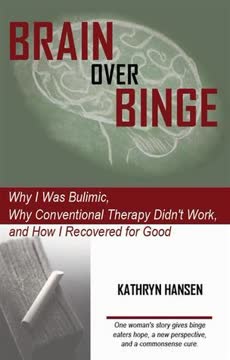
Brain over Binge presents a controversial approach to overcoming bulimia and binge eating disorders. Some readers found it life-changing, praising its empowering message of personal responsibility and the ability to stop bingeing through mindfulness and willpower. Others criticized it as oversimplified, potentially dangerous, and dismissive of traditional therapy. The book's repetitive nature and the author's arrogant tone were common complaints. While some appreciated the neurological explanations, others found them pseudoscientific. Overall, readers were divided on whether the book's approach is revolutionary or misguided.
Similar Books