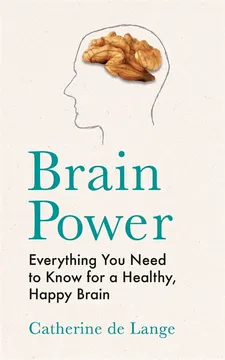


Key Takeaways
Build brain health through ordinary habits before symptoms demand attention
The body is part of the brain story. The brain uses about a fifth of the body’s energy, and its health is tied to sleep, movement, food, relationships, and physical conditions such as diabetes. The author opens with a neurologist recommending high-dose vitamin B2 for migraines. Some trials found fewer migraines, but the treatment did not work for everyone. It is a useful miniature of the book’s central message: research can offer practical clues without promising a universal fix.
Play the long game. The evidence is strongest for a combination of sustainable habits, not a single supplement or fashionable regimen. Genetics still matters, and lifestyle cannot prevent every neurological or mental-health condition. But beginning earlier gives everyday choices more time to matter.
The most useful shift here is from treating the brain as a sealed organ to seeing it as part of a living system. That perspective makes routine care feel less like a wellness trend and more like basic maintenance: cardiovascular health, sleep, and mood all shape the conditions in which the brain functions. The B2 story also models good scientific judgment. A plausible intervention can be worth discussing with a clinician while remaining uncertain. The risk is turning population-level findings into personal guarantees; variation between people is central, not an annoying exception.
Feed the gut with variety, not miracle ingredients
Microbes communicate with the brain. The gut-brain axis is the two-way communication between the digestive system and brain, involving nerves, hormones, immune signals, and gut microbes. These microbes help break down fibre and produce compounds that may influence inflammation and brain activity. Animal studies and early human research link microbiome differences with mood, but they do not establish that a particular food or probiotic reliably treats a mental-health condition.
Favor a varied pattern. The book recommends a wide range of plant foods, with one expert suggesting at least thirty different plant-based foods each week. In the 12-week SMILES trial, 67 adults with depression received either dietary support or social support. Those receiving the dietary intervention were about four times as likely to reach remission. The study is promising, but small and intensive, not proof that diet replaces clinical care.
The microbiome is compelling partly because it connects nutrition to systems often studied separately: immunity, metabolism, and emotion. Its practical lesson is modest and useful. A diverse, fibre-rich diet supports many bodily processes without requiring confidence in a specific probiotic product. The SMILES result adds experimental evidence beyond simple correlations, but the intervention bundled food guidance with repeated sessions from a nutrition professional. That makes it difficult to isolate the active ingredient. The strongest conclusion is that dietary quality can be part of mental-health care, not that one menu works for everyone.
Protect sleep: the brain learns, regulates emotion, and clears waste overnight
Sleep does active work. During deep non-REM sleep, the brain appears to strengthen and reorganize some memories. Sleep also supports emotional regulation. In experiments, sleep loss increased emotional reactivity, while rested participants were better able to retain both positive and negative material. A useful study routine is therefore a sleep sandwich: get adequate rest before learning, and again afterwards, rather than sacrificing the night to cram.
The Alzheimer’s link is promising, not settled. In animal research, sleep activates the glymphatic system, a proposed waste-clearance network that moves fluid through brain tissue. Human studies have linked disrupted deep sleep with higher levels of Alzheimer’s-associated proteins, including after a single experimentally disturbed night. These findings offer a possible mechanism, but they do not prove that improving sleep will prevent Alzheimer’s. Adults generally need seven to nine hours, though needs vary.
Sleep is a rare case where a behavior supports several forms of brain function at once: learning, emotional balance, and possibly waste clearance. That makes it more than a recovery period after productive work. The memory findings also challenge a common cultural bias: time spent sleeping can improve what was learned while awake. The Alzheimer’s evidence deserves careful language, however. Protein levels and disease risk are not the same as a diagnosis, and laboratory sleep disruption is not ordinary life. Better sleep is a sound health goal without being sold as a guarantee against dementia.
Move regularly; even moderate exercise supports cognition and mood
Movement benefits more than muscles. Exercise supports blood flow, can influence molecules involved in brain-cell health, and is associated with better memory, attention, and mood. Reviews cited in the book found that regular activity was linked to a 20 to 40 per cent lower risk of cognitive decline, although studies differ and cannot always separate exercise from other healthy habits. Moderate activity counts; brisk walking and gardening need not be replaced by punishing workouts.
Make it repeatable. A common target is 150 minutes of moderate aerobic activity each week, alongside strength work twice weekly. Exercise has also been associated with fewer symptoms of depression and anxiety. In a study of 1.2 million people, team sports, cycling, and aerobic exercise were among the activities most strongly associated with better mental health. These are associations, not proof that a particular exercise dose cures a disorder.
Exercise is especially persuasive because the proposed pathways converge: healthier circulation, metabolic regulation, and signals from working muscles may all support the brain. Its practical advantage is flexibility. A person who dislikes running can still walk, garden, dance, or play a team sport. Enjoyment matters because a theoretically optimal routine that someone abandons has little value. The evidence for preventing dementia is encouraging but not uniform, and exercise should not be framed as a moral test. Access, disability, safety, and time all influence what movement is realistic.
Keep learning to build mental reserve, not a fantasy of invulnerability
Challenge may provide a cushion. Cognitive reserve is the brain’s apparent ability to maintain everyday functioning despite damage or age-related change. Neurologist Yaacov Stern developed the idea after observing that some people with Alzheimer’s symptoms had substantial brain damage but similar outward impairment to people with less damage. Education, mentally demanding work, languages, and music may help build this reserve by engaging multiple skills and networks.
Reserve does not mean immunity. One review found lower dementia risk among people with higher education, occupational status, and IQ, but these factors overlap with health and opportunity. Bilingualism has been associated in some studies with dementia symptoms beginning several years later, while other studies have not replicated the result. Adult neurogenesis, the formation of new neurons, is also an active research area. Learning is worthwhile, but no lesson or brain game can promise protection.
The reserve idea is powerful because it distinguishes brain damage from the visible consequences of damage. It also shifts the goal from preserving an untouched brain to sustaining function and adaptability. Yet education is not simply a personal choice: access to schooling, cognitively demanding work, and leisure activities is unequally distributed. That makes reserve both a useful individual model and a public-policy concern. The mixed evidence on bilingualism and measured decline is a reminder that a delayed diagnosis does not necessarily mean the disease process itself has slowed.
Choose connection and daylight; loneliness is not the same as solitude
Loneliness is perceived disconnection. It is possible to live alone without feeling lonely, or to feel lonely among other people. Chronic loneliness is associated with stress, negative interpretations of social situations, sleep problems, and poorer mental health. The book describes a possible feedback loop: feeling threatened can make people withdraw, which reduces chances for connection. The useful target is not a bigger contact list, but relationships and activities that meet a person’s need for connection.
Place matters, too. Time in nature is associated with improved mood, attention, and wellbeing. Research discussed in the book suggests that feeling connected to nature may matter as much as proximity. Light also helps set the body’s circadian rhythms. Bright outdoor light in the morning and less artificial light at night can support alertness and sleep. Marriage and pet ownership may bring social benefits for some, but neither is a universal prescription.
This section resists a convenient but misleading equation: more people nearby does not automatically mean less loneliness. That distinction helps explain why interventions should address a person’s felt social needs rather than count their contacts. Nature and daylight offer a complementary route, giving attention a gentler focus and helping organize daily rhythms. Still, access to safe green space and natural light is shaped by housing and work, not just individual preference. Connection is best understood as partly personal and partly environmental, with both dimensions relevant to mental health.
Treat hearing and gum disease as brain-health issues, not minor nuisances
Small bodily problems can reach the brain. Hearing loss is strongly associated with dementia risk. The book describes research in which mild hearing loss doubled risk, moderate loss tripled it, and severe loss raised it further. Hearing difficulty may increase the effort required to follow conversation, reduce social participation, or reflect shared age-related changes. Hearing aids have been associated with better cognitive outcomes, though this does not establish that they prevent dementia. Testing and treating hearing problems can improve communication regardless.
The dental evidence remains emerging. The mouth bacterium P. gingivalis, associated with gum disease, has been detected in some Alzheimer’s research, and animal experiments suggest it may contribute to inflammation and brain changes. This is a hypothesis, not a settled explanation of Alzheimer’s. Brushing, flossing, and seeking dental care for bleeding or sore gums are sensible actions for oral health, with possible brain-health relevance.
The strength of this insight is that it makes prevention concrete. Hearing checks and dental care are accessible points of contact with health services, and their immediate benefits do not depend on proving a dementia mechanism. Hearing loss also illustrates how bodily impairment can affect cognition indirectly: effort spent decoding speech may compete with other mental tasks, while isolation can compound the burden. The gum-disease theory is more tentative and should remain so. A plausible route from infection to brain inflammation is a research lead, not evidence that poor oral hygiene alone causes Alzheimer’s.
Reframe stress as useful activation, then act on its signal
Stress is a response, not a verdict. The body’s stress response evolved to prepare for danger. Adrenaline increases alertness, while cortisol helps mobilize energy. When the response is prolonged or triggered too often, it can harm health and interfere with thinking. But the book argues that how people interpret stress matters: seeing it as potentially useful, rather than automatically damaging, was associated with fewer negative effects in studies and could shape the body’s response.
Use the signal deliberately. Psychologist Alia Crum’s approach has three steps: name the stressor, recognize what matters enough to cause concern, and channel the increased focus or energy toward a useful action. For example, anxiety before a presentation can be reframed as readiness to perform. This does not make chronic stress harmless or erase difficult circumstances. Reappraisal is a tool for responding, not a substitute for changing an unsafe or unsustainable situation.
The distinction between stress exposure and stress interpretation is an important contribution because it avoids treating every difficult feeling as damage. Reappraisal can restore agency: naming a concern makes it easier to move from alarm toward planning. But mindset advice has limits. It can help someone meet a challenge while also obscuring conditions that need structural change, such as unmanageable workloads or insecurity. The most balanced reading holds both ideas: the stress response can be mobilized constructively, and persistent stress may still be a sign that the environment needs attention.
Turn healthy choices into cue-driven routines you can enjoy
Habits conserve attention. Repeated actions become linked to cues in the environment, allowing the brain to perform them with less conscious effort. The book describes the striatum as a key part of this shift from deliberate action to routine. To establish a brain-supportive behavior, specify the cue and the action, then repeat it consistently. A plan such as taking a short walk after lunch is easier to enact than a vague promise to be more active.
Expect an uneven timeline. One study found that habit formation took an average of 66 days, but individual estimates ranged from 18 to 254 days. Missing a day did not erase progress. The book recommends choosing activities that feel rewarding, linking them to existing routines, and making supportive choices easier to reach. If an unwanted habit runs on autopilot, tracking when it occurs can make its cues visible enough to reconsider.
The habit account turns brain health from a catalogue of recommendations into a problem of design. Environmental cues reduce reliance on memory and moment-to-moment motivation, which is especially valuable when people are tired or stressed. The emphasis on enjoyable routines is not indulgent; it improves the odds that the behavior will persist. Still, automation is not always an unqualified good. Habits can preserve unhelpful routines as effectively as useful ones. The practical skill is to notice which cues are shaping behavior, then redesign the surroundings rather than treating every lapse as a failure of character.
Analysis
The book’s central claim is not that lifestyle can defeat illness, but that brain health is partly shaped by ordinary conditions across the body. Its strongest synthesis links apparently separate domains: sleep affects learning and emotional regulation; movement supports mood and circulation; diet interacts with the gut and immune system; hearing and social connection influence cognitive engagement. The result is a practical model of brain care as cumulative, distributed, and personal rather than as a single intervention.
The book is also strongest when it distinguishes levels of evidence. Randomized dietary interventions and controlled sleep experiments can test narrower causal questions, while long-term findings about education, exercise, marriage, or dementia often rely on observational data. Those associations are valuable, but healthy habits cluster together, making it difficult to attribute an outcome to one factor. Mechanisms such as microbiome signaling, adult neurogenesis, and oral bacteria are scientifically promising, yet they should not be treated as established clinical explanations. The book generally signals this uncertainty, although vivid mechanisms can still sound more conclusive than the underlying evidence warrants.
A further strength is its attention to individual variation. A population average does not dictate what will help one person, and a practice is only useful if it is feasible and sustainable. That principle points toward a broader implication: brain-health advice is not purely an individual responsibility. Sleep depends on working conditions, exercise on time and access, nature on neighborhoods, and mental engagement on educational opportunity. The most credible reading therefore combines personal experimentation with public investment in environments that make healthy behavior possible.
The practical message is unusually coherent: choose several actions that support both body and mind, favor those that can become ordinary parts of life, and resist promises of a guaranteed outcome. This is not a shortcut to a perfect brain. It is a way to improve the conditions under which brains learn, adapt, and age, while respecting the limits of current science.
Glossary
gut–brain axis
gut-brain communicationThe two-way communication network connecting the digestive system and the brain. Signals travel through routes including the vagus nerve, hormones, immune activity, and substances produced by gut microbes. Researchers study this system to understand how digestion, inflammation, and microbiome activity may relate to mood and cognitive function.
psychobiotics
microbes studied for mental healthA term for probiotics or related interventions involving gut microbes that are investigated for possible effects on mental health and brain function. Early animal and human studies have suggested potential effects on mood, but the evidence does not yet establish a reliable treatment. Different people have different microbiomes, and many commercial products lack demonstrated mental-health benefits.
neurogenesis
formation of new neuronsThe process by which new neurons develop. Research reviewed in the book suggests that neurogenesis can occur in parts of the adult human brain, particularly the hippocampus, which is important for learning and memory. Its extent in humans, how it changes with age, and how lifestyle affects it remain active areas of scientific study.
cognitive reserve
resilience despite brain damageA proposed capacity that helps explain why people with similar brain damage can show different levels of cognitive difficulty. Education, mentally demanding work, and sustained cognitive activity may help build reserve by supporting flexible or efficient use of brain networks. The concept describes differences in how damage affects function; it does not mean that disease or brain damage is prevented.
glymphatic system
brain waste-clearance networkA proposed system in which fluid moves through brain tissue and helps carry away metabolic waste. Research, particularly in animals, indicates that this process becomes more active during sleep and may help clear substances associated with Alzheimer’s disease. Its precise role in human health and disease is still being investigated.
social jet lag
mismatch with body-clock timingA mismatch between a person’s internal circadian timing and the schedule imposed by work, school, or social commitments. Regularly sleeping and waking at substantially different times can disrupt sleep patterns and leave people feeling tired or out of sync. The term is not limited to travel across time zones.
stress mindset
belief about stress effectsA person’s general belief about whether stress is primarily harmful or can sometimes be useful. The book describes research suggesting that interpreting stress as potentially enhancing may change how people experience and respond to challenging situations. This perspective can support coping, but it does not make chronic stress harmless or remove the need to address its causes.
attention restoration theory
nature replenishes directed attentionA theory proposing that natural settings can help restore directed attention, the effortful concentration used to focus on a task and suppress distractions. Nature often captures attention gently through changing, interesting sights and sounds, giving effortful attention a break. The theory offers one explanation for links between time outdoors and improved focus or wellbeing.
Download PDF
Download EPUB
.epub digital book format is ideal for reading ebooks on phones, tablets, and e-readers.








