

Key Takeaways
Study the mind through the brain, and let experiments revise inherited assumptions.
Join philosophy to experiment. Neurophilosophy is the study of traditional questions about mind and knowledge using evidence from neuroscience and cognitive science. Its starting claim is that thinking, feeling, deciding, and remembering are brain activities, not operations of an independent soul. But brain data alone cannot define what needs explaining: psychology must map a capacity’s range, limits, and behavior first.
Expect unfinished explanations. Churchland stresses that neuroscience is still young, with major gaps between activity in individual neurons and the work of whole networks. The project is not to replace philosophical questions with brain scans, but to make them answerable to anatomy, experiments, and better theories. That approach also leaves room for unexpected discoveries and revision.
What's distinctive is the division of labor: psychology characterizes the phenomenon, neuroscience investigates its machinery, and philosophy checks the concepts and arguments linking them. That is a useful model for interdisciplinary research well beyond the mind sciences. It also guards against a familiar error: treating a neural correlation as a complete explanation. The brain-based outlook is a strong research strategy, but its success depends on evidence, not on declaring in advance that every mental category already has a neat neural counterpart.
Treat metaphysics as unfinished science, not a truth beyond evidence.
Let explanations earn their reach. Churchland argues that many questions called metaphysical are questions asked before a science has developed enough to answer them. In her pragmatic view, there is no separate, infallible method for discovering reality. Inquiry proceeds by using existing knowledge, testing it, and revising it when evidence demands.
Reduction does not erase reality. A reductive explanation shows how a larger-scale phenomenon arises from the structure and activity of smaller components. Heat, for example, was explained through molecular motion, but heat did not thereby become unreal. Likewise, a brain-based explanation of pain would deepen understanding of pain, not make suffering imaginary. Neuroscience may ultimately integrate with psychology in steps, but the exact form of that integration remains unsettled.
This account avoids both mystification and premature certainty. Scientific explanations often preserve useful everyday categories while changing what those categories mean, so the choice is not simply between folk language and neural vocabulary. The historical lesson is powerful: confidence in a supposedly obvious foundation can obstruct discovery. A necessary caution is that not every unresolved philosophical question is merely immature science. Some disputes concern values or standards of explanation, and empirical findings alone cannot settle those choices.
Model the self as coordinated brain activity, not a hidden inner object.
A self has many parts. Self-representational capacities are the brain’s ways of tracking its body, needs, memories, intentions, and place among other people. They are not one inner object or a single, complete picture. A patient with severe amnesia could still use the word I and express preferences, while losing nearly all autobiographical memory. Other brain injuries can disrupt awareness of a limb or the boundary between self and world.
Movement supplies a foundation. An emulator is an internal model that helps the brain predict what a movement will do. It can support reaching, planning, and imagining actions before they happen. The account connects a basic model of the acting body to richer forms of self-understanding, while treating that connection as a research hypothesis rather than a finished explanation.
The model makes the self less like a hidden captain and more like an ongoing coordination achievement. That fits a broader idea in cognitive science: agency depends on linking perception, bodily state, memory, and possible action. The clinical cases show why no single memory or introspective feeling can define personal identity. Still, a functional account of self-modeling does not by itself settle every question about personhood, including how continuity through radical change should matter in law or relationships.
Probe consciousness experimentally, but do not confuse correlation with explanation.
Use controlled contrasts. Binocular rivalry occurs when each eye receives a different image and perception alternates between them, although both images remain present. In monkey studies, some neurons in visual areas tracked which image the animal reported seeing. That is evidence linking neural activity with awareness, but correlation alone cannot show whether the activity causes awareness, follows it, or merely accompanies it.
Compare competing models. The global-workspace model proposes that conscious information becomes broadly available to systems for memory, planning, and action. It offers a testable direction, but the precise neural meaning of broad access remains unclear. Churchland also considers brainstem and self-representation accounts. Her point is methodological: pursue experiments, state conclusions cautiously, and do not treat current gaps as proof that consciousness is supernatural or unknowable.
The chapter is strongest when it treats consciousness as a set of researchable contrasts rather than a single mystery waiting for a magic key. Rivalry, masking, anesthesia, and brain injury each reveal different pieces of the problem. The caution about correlation is especially important because brain imaging measures indirect signals and aggregates activity across many neurons. Yet skepticism should cut both ways: a plausible neural account is not established merely because it uses measurable terms. Its predictions must distinguish it from serious alternatives.
Keep responsibility compatible with causes, and assess control by degrees.
Caused does not mean compelled. Libertarianism is the view that genuinely free choices must be uncaused. Churchland follows Hume in rejecting that demand: choices normally arise from a person’s beliefs, desires, habits, and character. Randomness would not make a choice more controlled. Nor does causation make behavior perfectly predictable, since brains are complex and relevant conditions are difficult to measure.
Control comes in degrees. A sleepwalker, a person with a neurological disorder, and a deliberate offender may all act from causes, but the causes differ in ways relevant to responsibility. Churchland suggests judging control through a broad profile of brain function and behavior, not a simple all-or-nothing test. Legal and social judgments can use clear cases as prototypes while remaining open to evidence that responsibility is diminished.
This position separates two questions that are often collapsed: whether actions have causes, and whether an agent can regulate behavior in ways that matter socially. That distinction supports accountability without pretending every person has identical control in every circumstance. It also cautions against using brain scans as instant verdicts about guilt. Neural evidence can clarify capacities and impairments, but deciding what response is fair remains a normative task involving harm, protection, rehabilitation, and the quality of available evidence.
Give emotion a seat at the reasoning table.
Feelings guide practical judgment. Patient E.V.R. retained strong performance on intelligence tests after damage to frontal brain regions, yet his work and personal life became chaotic. He could explain sensible long-term choices but repeatedly acted against them. In the Iowa Gambling Task, he kept choosing decks that offered large immediate gains but produced losses over time. Unlike control subjects, he showed no anticipatory bodily response to the risky decks.
Reason and emotion cooperate. Churchland interprets these results as evidence that feelings help evaluate imagined outcomes and steer decisions. They are not simply noise that pure reason must suppress. This does not mean every strong feeling is wise: emotion can mislead, and practical judgment still depends on learning, memory, and attention. But removing emotional signals can make a person less able to choose well, not more rational.
The case challenges the tidy picture of a rational mind calculating first and feeling afterward. Research on decision-making increasingly treats value as part of cognition itself, not an optional decoration. The important distinction is between emotion as information and emotion as command: a warning signal can be useful without being decisive. This framework also highlights a limitation. One patient and one task cannot define rationality, but they can expose weaknesses in theories that treat emotion as irrelevant.
Explain representation through neural patterns and action, not inner sentences.
Test ideas against behavior. Rats trained to find food on one arm of a T-shaped maze turned the opposite way when the maze was rearranged. That response suggests they used spatial information about the environment, rather than merely repeating a learned turn. Place cells in the hippocampus also responded when rats occupied particular locations, providing neural evidence for spatial mapping.
Patterns can carry meaning. Vector coding is a proposed way for a population of neurons to represent a feature through its overall activity pattern, rather than assigning one neuron to each item. The idea helps explain how a brain can represent similarities and categories without storing miniature sentences. It remains a working account, not a settled theory. The brain’s representations are shaped by what the animal needs to perceive and do.
The move from sentences to patterns is valuable because it makes nonverbal intelligence intelligible without pretending animals think in human language. It also links representation to action: a spatial map matters because it supports navigation, not because it resembles a picture in the head. This perspective resonates with embodied and situated approaches to cognition, where organisms use both neural resources and stable features of their surroundings. The challenge is to specify what information a neural pattern carries without defining it only by the behavior it is meant to explain.
Treat learning as brain change shaped by genes and experience together.
Reject the two-bin story. Genes help build brains, but they do not directly encode complex behaviors or concepts. Development depends on interactions among genes, cellular conditions, and experience. The same is true of learning: experience can alter connections between neurons, and those changes can involve gene expression. Nature and nurture are not separate ingredients that can be cleanly assigned to different abilities.
Learning leaves physical traces. Hebbian plasticity is a proposed rule in which connections strengthen when the activity of connected neurons is appropriately coordinated. In fear conditioning, a tone paired with a mild shock can come to trigger a fear response. Research traces parts of this learning through the amygdala, specific cell populations, and receptor mechanisms. Other kinds of memory, such as conscious recollection of events, depend on hippocampal structures and follow different neural pathways.
The developmental account replaces a false opposition with a more realistic question: how do genes, neural activity, and surroundings regulate one another over time? That framing aligns with systems biology, where outcomes emerge from interacting levels rather than one master cause. It also discourages simplistic claims about innate talent or learned character. A useful caution is that identifying a mechanism in a rat or a cell population does not automatically explain complex human learning. The bridge requires behavioral evidence and careful comparison across species.
Test revelations against brain states before treating them as divine evidence.
Separate experience from interpretation. Churchland examines reports of religious revelation during temporal-lobe seizures. Such episodes can produce intense, unusual feelings, but similar experiences were reported by volunteers whose temporal-lobe activity was experimentally altered. This provides a plausible brain-based explanation for the feelings. It does not logically disprove God, but it weakens the claim that these experiences are independent evidence of divine contact.
Apply the same scrutiny broadly. Arguments from design and first cause face difficulties once natural explanations are considered, while suffering raises a challenge to belief in an all-powerful, all-knowing, wholly benevolent God. Reports of near-death experiences and past lives also require careful testing for memory distortion, stress effects, and selective evidence. The book’s standard is not ridicule or blind acceptance, but comparison of explanations and evidence.
This approach preserves respect for the sincerity of religious experience while distinguishing sincerity from proof. Neuroscience can explain why an experience feels overwhelming without answering every metaphysical question about reality. That distinction is valuable in medicine, where unusual experiences deserve care rather than automatic pathologizing. It also limits the conclusion: a neural cause for a religious experience does not, by itself, establish that its interpretation is false. The relevant question is whether that interpretation explains more than competing accounts.
Judge moral rules by human consequences, not divine authority alone.
Ask what makes a rule right. In Plato’s Euthyphro, Socrates asks whether the gods declare an act right because it is right, or whether it becomes right simply because they declare it so. The first answer leaves the source of morality unexplained. The second makes morality depend on divine choice, which could make it arbitrary. The exchange challenges claims that religious authority alone settles moral questions.
Keep judgment revisable. Churchland favors naturalistic inquiry into how social behavior, emotion, and moral understanding develop. But explaining the origins of moral tendencies does not automatically prove which rules are good. Human communities still need argument, reflection, and attention to consequences. Moral life is not reducible to a fixed algorithm, and no brain theory can substitute for the difficult work of judging particular cases.
The central distinction is between explaining why humans have moral capacities and justifying what they ought to do. Evolutionary and psychological accounts can illuminate cooperation, empathy, and punishment, but facts about origins do not by themselves yield ethical conclusions. That is not a weakness in naturalistic ethics so much as a reminder that evidence and values perform different jobs. The Socratic test remains useful: whenever authority is invoked, ask whether it clarifies the reasons for a rule or merely ends discussion.
Analysis
Brain-Wise is best understood as a methodological argument carried through a tour of classic problems. Its central proposal is not merely that the brain matters to philosophy, but that claims about mind, self, agency, and knowledge should face the same empirical discipline as claims about digestion or vision. The strongest chapters model this discipline well: split-brain cases unsettle the idea of a unified, indivisible self; E.V.R. shows how intact abstract reasoning can coexist with poor practical judgment; and learning studies connect behavior to progressively finer levels of neural organization.
The book’s most durable contribution is its insistence that categories are revisable. Everyday terms such as self, will, and consciousness may remain useful while their scientific explanation changes. This is a more nuanced position than simply replacing psychology with neuroscience. It also provides a practical rule for interdisciplinary work: characterize the behavior carefully, identify candidate mechanisms, and avoid claiming more than the evidence supports.
The argument is less secure when a promising research program is presented as a likely reduction. Neural correlates, models, and animal experiments can constrain theories without yet explaining subjective experience or complex human judgment. The text recognizes much of this uncertainty, particularly in its discussions of consciousness, but its confidence in a future brain-based account sometimes outruns the evidence available in 2002. Readers should therefore distinguish the book’s strong methodological case from its more speculative scientific proposals.
Its treatment of free will and morality is especially useful when read with that distinction in mind. Brain causes do not erase responsibility, but causal explanation alone cannot determine what accountability should mean. Likewise, a natural account of moral behavior does not settle moral standards. The book’s best lesson is not that science has answered philosophy, but that philosophy makes better progress when it works beside science, tests its intuitions, and remains willing to revise its own questions.
Review Summary
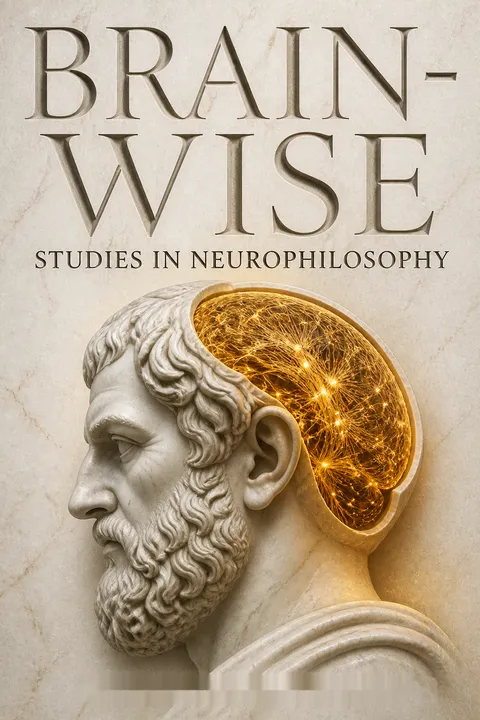
Brain-Wise receives mixed reviews, with an overall rating of 4.02/5. Positive reviews praise its clarity, accessibility, and comprehensive coverage of neuroscience and philosophy. Critics argue it's dismissive of philosophical questions and overly reductionist. Some readers appreciate the author's no-nonsense approach and engaging writing style, while others find it lacking in contemporary philosophical perspectives. The book's strengths lie in its neuroscientific content and illustrations, making it suitable for undergraduate courses in neurophilosophy, though some suggest alternatives for general readers.
Glossary
Neurophilosophy
Philosophy informed by brain scienceAn approach that brings neuroscience and cognitive science to philosophical questions about mind, consciousness, the self, free will, and knowledge. It treats empirical findings as relevant to these questions while using philosophical analysis to clarify concepts, assess arguments, and identify what experiments need to explain.
Reduction
Explanation across levelsA scientific explanation in which the properties of a larger-scale phenomenon are accounted for through the structure and causal powers of smaller-scale components. Reduction does not necessarily make the larger phenomenon unreal or useless. Explaining heat through molecular motion, for example, preserves the reality of heat while revealing more about its nature.
Self-representational capacities
Brain models of selfThe brain’s varied capacities for tracking its body, needs, feelings, memories, intentions, and relations to the surrounding world. They are not a single inner object or one complete representation. Different capacities can be impaired separately, as shown by amnesia, limb denial, and disturbances in distinguishing self from others.
Emulator
Internal model for actionA neural model that predicts the likely results of a movement or action plan. Working with motor commands and sensory information, an emulator can help coordinate the body, correct movements, and evaluate possible actions before they are carried out. The concept is used to explain how internal simulations can support planning and self-representation.
Global-workspace model
Broad access to informationA model of consciousness in which information becomes widely available to different brain functions, such as memory, planning, perception, and action. The model links consciousness with flexible use of information. The book treats it as a promising hypothesis while noting that its proposed neural basis and the meaning of global access remain unsettled.
Libertarianism
Free choice without causesA position on free will holding that a genuinely free choice must be uncaused, rather than determined by prior conditions. Churchland argues that this view conflicts with ordinary ideas of responsible action, which typically connect choices to an agent’s beliefs, desires, intentions, and character.
Vector coding
Patterns represent featuresA proposed neural coding strategy in which a feature is represented by the combined activity pattern of a population of neurons. Individual neurons can contribute to representations of many features, and the population pattern distinguishes among them. The approach offers a way to model categories and similarities without assigning one neuron to every possible item.
Hebbian plasticity
Activity-linked connection changeA form of neural change in which the strength of a connection can be modified according to the coordinated activity of connected neurons. In a simplified account, connections tend to strengthen when activity in one neuron contributes to activity in another. The principle offers a candidate mechanism for how experience changes neural networks.
Long-term potentiation (LTP)
Persistent synaptic strengtheningA lasting increase in the effectiveness of a synaptic connection after particular patterns of neural activity. In some cells, NMDA receptors help trigger the changes that produce potentiation. Research on LTP provides a possible cellular mechanism for learning, including aspects of fear conditioning and memory formation.
Declarative memory
Conscious memory of eventsMemory for facts and personally experienced events that can be consciously recalled and described. It differs from procedural memory, such as knowing how to perform a skill, and from some forms of conditioning. The book connects declarative memory to the hippocampal structures and their role in learning and consolidating new information.
Neuroepistemology
Brain-based study of knowingThe study of how brains represent the world, learn, and acquire knowledge. It brings epistemological questions about knowing into contact with neuroscience and cognitive science. The term captures a research program rather than a settled theory, since the nature of neural information and representation remains under investigation.
FAQ
What is Brain-Wise: Studies in Neurophilosophy by Patricia S. Churchland about?
- Interdisciplinary exploration: The book investigates how neuroscience and cognitive science intersect with traditional philosophical questions about the mind, such as consciousness, free will, and the self.
- Neurophilosophy framework: Churchland argues that understanding the mind requires a neurobiological approach, integrating empirical findings with philosophical analysis.
- Comprehensive coverage: The text is organized around metaphysics, epistemology, and religion, providing a panoramic view of philosophical problems from the vantage point of brain sciences.
- Naturalistic and pragmatic: The approach is grounded in evidence and testable hypotheses, blending insights from neuroscience, psychology, and philosophy.
Why should I read Brain-Wise: Studies in Neurophilosophy by Patricia S. Churchland?
- Bridges philosophy and neuroscience: The book offers a clear, accessible introduction to how brain sciences inform and transform philosophical questions about the mind.
- Rich in neurobiological detail: It provides more scientific depth than typical philosophy texts, illustrating the importance of experimental design and neuroscientific data.
- Challenges conventional wisdom: Churchland integrates historical and philosophical context to question traditional views and stimulate innovative thinking.
- Practical implications: The book addresses real-world issues like free will, responsibility, and morality from a neurophilosophical perspective.
What are the key takeaways from Brain-Wise: Studies in Neurophilosophy by Patricia S. Churchland?
- Mind is brain-based: Mental phenomena, including consciousness and self, are shown to depend on brain structure and function, not on nonphysical substances.
- Empirical progress is possible: The book advocates for scientific investigation of consciousness, free will, and knowledge, emphasizing incremental progress and theory refinement.
- Integration of disciplines: Churchland demonstrates the value of combining neuroscience, philosophy, psychology, and evolutionary biology to address age-old questions.
- Morality and religion reconsidered: The text explores how neuroscience challenges traditional religious claims and offers naturalistic explanations for morality.
How does Brain-Wise by Patricia S. Churchland define and approach consciousness?
- Consciousness as a natural phenomenon: The book treats consciousness as something that can be investigated scientifically, focusing on its neural mechanisms and causal organization.
- Prototypical conscious states: Consciousness includes sensory perceptions, memories, emotions, and awareness of thoughts, with varying degrees of complexity.
- Neural correlates and mechanisms: Churchland discusses experimental strategies to identify brain mechanisms of consciousness, such as binocular rivalry and neural activity in the cortex.
- Integration and global access: Theories like the global workspace model are explored, emphasizing the brain's ability to integrate and broadcast information widely.
What is the "neural correlates of consciousness" concept in Brain-Wise by Patricia S. Churchland?
- Experimental paradigm: Researchers use techniques like binocular rivalry and masking to identify neurons whose activity correlates with conscious perception.
- Correlation vs. causation: Churchland cautions that neural activity correlated with awareness may not be the cause, highlighting the need to identify true causal mechanisms.
- Distributed neural coalitions: Conscious awareness likely arises from synchronized activity in distributed neuron populations reaching a threshold.
- Scientific significance: Identifying these correlates is a crucial step toward a neurobiological explanation of consciousness, moving beyond philosophical speculation.
How does Brain-Wise by Patricia S. Churchland address the mind-body problem and critique dualism?
- Critique of dualism: The book argues there is no convincing evidence for a nonphysical mind or soul interacting with the brain.
- Dependence on brain states: Mental phenomena, including consciousness and self, are shown to depend on brain structure and function, as evidenced by brain lesions and split-brain studies.
- Philosophical and empirical challenges: Dualism lacks positive explanatory frameworks and is contrasted with the growing neurobiological understanding of the mind.
- Analogy with vitalism: Churchland draws parallels to the historical shift from vitalism to biological explanations of life.
What is the "internal-model solution" to the problem of the self in Brain-Wise by Patricia S. Churchland?
- Self as representational capacity: The self is not a single thing but a set of brain-based representational capacities coordinating body, history, and world.
- Body and brain integration: Self-representation depends on brain structures that integrate sensory, motor, and visceral signals to maintain coherence and agency.
- Development and disorders: The book examines how self-representation emerges in infancy and how it is disrupted in conditions like amnesia, schizophrenia, and dementia.
- Emulators and internal models: Neural emulators simulate body movements and predict sensory consequences, supporting self-representation and motor control.
How does Brain-Wise by Patricia S. Churchland explain the development of theory of mind and social cognition?
- Infant capacities: Babies develop perspective-taking and understanding of others’ intentions before language acquisition.
- Simulation hypothesis: The brain uses emulators to simulate others’ actions and intentions, supported by mirror neuron research.
- Evolutionary and clinical insights: The book discusses animal theory of mind, autism as mind blindness, and neural substrates of social cognition.
- Neural mechanisms: Parietal cortex, cerebellum, and mirror neurons are highlighted as fundamental to self and other representations.
What is the "global workspace" theory of consciousness discussed in Brain-Wise by Patricia S. Churchland?
- Consciousness as global accessibility: The theory suggests that conscious states are those whose neural information is globally accessible across diverse brain functions.
- Neural workspace neurons: Specific long-axon neurons in parietal, cingulate, and prefrontal cortices are hypothesized to broadcast information widely, akin to a "neural bulletin board."
- Critiques and challenges: The theory faces difficulties defining "global access" neurobiologically without circularity and explaining why some widely accessible signals are not consciously experienced.
- Integration with empirical data: Churchland discusses how this theory aligns with and is challenged by neuroscientific findings.
How does Brain-Wise by Patricia S. Churchland address free will and responsibility from a neurophilosophical perspective?
- Free will compatible with causation: The book argues that all choices are caused, but this does not negate responsibility; responsibility depends on the nature of the causes.
- Neurobiological basis of control: Brain structures like the anterior cingulate cortex and neuromodulators (serotonin, dopamine) influence self-control and decision-making.
- Emotion and reason integration: Emotions are essential for practical reasoning and wise decision-making, as shown by patients with ventromedial frontal lesions.
- Critique of quantum indeterminacy: Churchland is skeptical of quantum explanations for free will, favoring causal accounts grounded in neuroscience.
How does Brain-Wise by Patricia S. Churchland explain the nature and origin of knowledge?
- Knowledge as brain-environment product: Knowledge arises from the interaction of genetic factors and experience, with no strict nature vs. nurture dichotomy.
- Multiple types of knowledge: The book distinguishes between knowledge-how, knowledge-that, conscious and unconscious knowledge, and abstract vs. sensory-based knowledge.
- Learning mechanisms and plasticity: Experience-dependent synaptic changes, neuromodulation, and neurogenesis contribute to acquiring and storing knowledge.
- Naturalized epistemology: Churchland advocates integrating empirical findings from neuroscience, psychology, and evolutionary biology to understand knowledge acquisition and representation.
What insights does Brain-Wise by Patricia S. Churchland provide about the brain's role in religion, spirituality, and morality?
- Neural basis of religious experiences: Temporal-lobe epilepsy and stimulation can induce feelings interpreted as spiritual or divine presence, suggesting a neurobiological origin for some religious experiences.
- Critical evaluation of religious claims: The book discusses arguments from design, first cause, and evil, highlighting challenges to traditional theistic beliefs based on scientific understanding.
- Morality without God: Churchland argues that morality can be grounded in naturalistic explanations rather than divine command, drawing on evolutionary biology and social cognition.
- Empirical approach to spirituality: The text emphasizes the need for evidence and skepticism in evaluating religious and moral claims.
Download PDF
Download EPUB
.epub digital book format is ideal for reading ebooks on phones, tablets, and e-readers.








