

Key Takeaways
Choose courage as a relationship with yourself, not a performance for others.
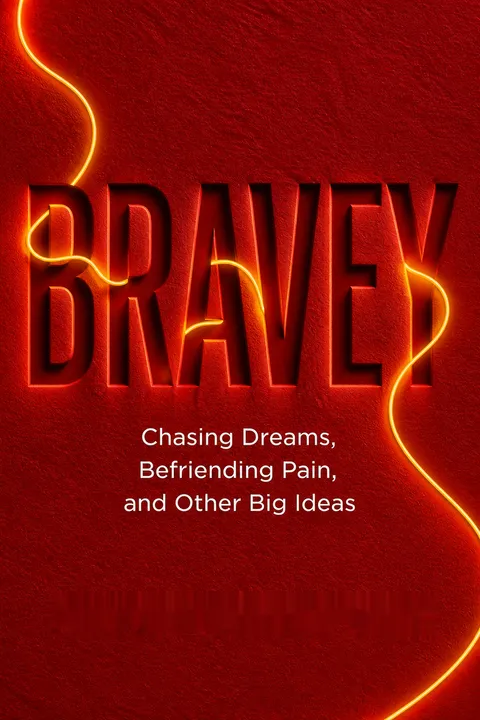
Bravery is a choice. Pappas calls someone who pursues a meaningful goal despite fear a Bravey. The idea began in a playful poem she shared with younger runners, but it became a way to describe an inward decision, not a public image of being tough or fearless. A person can be nervous, uncertain, or hurting and still choose to try.
A dream can start anywhere. As a child, Pappas wanted to matter after her mother’s severe mental illness left little room for her needs. Running became a place to test her limits, and later she chased both athletic and creative ambitions. Her path was neither straight nor free of setbacks. The point is not to copy her goals, but to give your own a chance.
The Bravey idea usefully separates courage from temperament. In self-determination theory, motivation is more durable when people experience a goal as their own, rather than as a demand imposed by others. That distinction fits Pappas’s emphasis on choosing a private stance toward fear. It also protects the concept from becoming another performance standard. If bravery means looking confident, people who are anxious or exhausted can feel they have failed before beginning. Here, fear is compatible with action, and the person defines what the action is.
Borrow mentors' confidence, then build a life that belongs to you.
Mentorship is something to seek. After losing her mother, Pappas learned about womanhood by watching friends’ mothers, au pairs, teachers, coaches, and public figures. Petra, an au pair who played basketball, was the first woman she wanted to imitate completely. Petra instead urged her to become a fuller version of herself. The lesson: admire particular qualities without trying to become their owner.
Ask with curiosity. A friend’s mother taught Pappas to cook and sew because she asked specific questions and showed genuine interest. Her poetry adviser, Cynthia Huntington, offered a different kind of guidance. Though Pappas had scholarships to graduate writing programs, Cynthia urged her to take a rare chance to compete for Oregon. Mentorship can clarify a choice, but the person receiving advice still has to make it.
This is a practical account of social learning: people absorb not only advice but also ways of carrying themselves, working, and treating others. Pappas’s mentors form a network of partial examples rather than a single ideal parent. That model is especially useful when no one person can meet every need. Still, access to generous mentors is uneven, and admiration can distort judgment. Specific questions, as Pappas suggests, make mentorship more reciprocal and concrete, while the final decision remains with the person whose life is at stake.
Protect long-term health when a system rewards short-term speed.
Fitness is not the same as durability. As a teenager, Pappas was told to choose running over soccer. When she refused to specialize, she was removed from the running team. The pause gave her body time to mature. She argues that young female distance runners can be harmed when coaches mistake immediate speed for lasting health, especially if athletes train too hard or eat too little during puberty.
Development takes time. Pappas returned to serious running at Dartmouth, initially finishing near the back of races, and gradually built the strength to compete at the NCAA and professional levels. She later trained at more than one hundred miles a week. Her experience supports a broader point: athletes need support that accounts for growth, recovery, and long-term function, not just current results.
The distinction between present performance and future capacity is central to responsible coaching. In sport, a fast result can conceal inadequate recovery or underfueling, while the consequences may appear only after the athlete has been praised for being fit. Pappas’s account also exposes a gendered blind spot: assumptions drawn from male development can misread female athletes’ needs. Her experience is not a universal training prescription, however. Puberty, health, and competitive development vary, so decisions belong with informed athletes and qualified medical professionals, not a rigid template.
Prepare for pain instead of spending your strength fearing its arrival.
Expect the hard part. Before races, Pappas learned to study the course and imagine herself reaching difficult stretches with composure. She paired that rehearsal with small physical cues, such as relaxing her shoulders or changing her arm movement when discomfort arrived. Those instructions gave her something specific to do when an abstract command to feel better would not help.
Bad days belong in training. Coach Ian’s Rule of Thirds describes a demanding pursuit as a mix of good, ordinary, and difficult days, rather than constant progress. At first, Pappas feared pain and imagined escape. Later, she recognized that other elite runners hurt too. That insight also helped with emotional pain: during a hard workout in Greece, she let herself cry rather than hide her grief.
The strongest element here is preparation without the fantasy of control. Mental rehearsal can make a difficult situation feel more familiar, while a physical cue turns attention toward a manageable next action. The approach resembles skills used in performance psychology and exposure-based therapies, where a person practices meeting discomfort rather than waiting for it to vanish. Yet effort pain and injury pain are not interchangeable. A useful cue must not become a reason to ignore warning signs, especially in sports where toughness is already overvalued.
Treat depression as an injury, not a failure of gratitude.
A crisis needs care. After the 2016 Olympics, Pappas continued training while facing sleeplessness, injury, career upheaval, and increasingly dangerous thoughts. She tried to push through and conceal what was happening. Friends noticed the change, and her family insisted she seek professional help. A psychiatrist and psychologist diagnosed an acute depressive crisis and treated her with therapy and medication.
Start with actions. Her clinician helped her stop treating bleak feelings as proof that recovery was impossible. Instead, she focused on concrete steps: attending therapy, taking prescribed medication, and working on recovery. Her thoughts and feelings did not change overnight, and she remained deeply sad for months. This is her account, not a substitute for care. Severe depression or thoughts of suicide require prompt help from qualified professionals and trusted support.
The injury analogy counters a common moralizing mistake: treating depression as a character flaw that should yield to gratitude or willpower. Behavioral activation, a component of some cognitive behavioral treatments, similarly emphasizes planned actions even when motivation is low, though care must be individualized. The memoir also makes clear that a person can appear productive while in serious danger. Its sequence of action, thought, and feeling is a useful therapeutic frame, not a guaranteed timetable. Professional assessment matters, particularly when suicidal thoughts are present.
Budget your energy and allow recovery without calling it laziness.
Notice what drains you. Pappas uses willpower budgeting to decide where her limited daily energy should go. Before an important training day, she prepares clothes, coffee, and a schedule the night before, reducing small decisions in the morning. She also uses headphones on team drives when conversation would leave her depleted.
Map your own pattern. Her Willpower Index sorts activities along two dimensions: whether they help or harm, and whether they replenish or drain energy. A workout may be beneficial but exhausting; cooking may take effort yet restore her. The map is personal, not a moral ranking. Seeing those differences helped Pappas stop blaming herself for fatigue and make room for rest, enjoyable activities, and demanding work.
The practical strength of this framework does not depend on every choice literally consuming a measurable reserve. The classic ego-depletion account of willpower has faced substantial challenges in replication, so the book’s resource metaphor should be treated cautiously. Its planning advice remains useful for another reason: routines and advance decisions reduce friction, while awareness helps people match demanding tasks to their capacity. The index also avoids a common trap, assuming that an activity is energizing or exhausting for everyone in the same way.
Rewrite rules that once protected you but now constrain you.
Unwritten rules can be false. As a college freshman, Pappas believed that entering a man’s room meant agreeing to sex. At a party, a friend texted her to leave, helping her recognize that she could still choose. Years later, her future husband stopped an intimate encounter because he wanted to know her better. His choice revealed that her supposed rule was not universal, and that consent could be reconsidered at any point.
Old rules can outlive their use. Pappas also followed an internal command to work as hard as possible at all times. It once helped her persist, but later fed anxiety and made rest feel like failure. She calls the process of outgrowing such a rule the Old Boyfriend Rule: something may have mattered and still be something to leave behind.
The bedroom story makes an important principle about consent unusually concrete: prior flirtation, entering a room, or earlier agreement never removes the right to stop. The broader idea applies to personal scripts that feel socially mandatory but were never examined. Rules can offer predictability, especially after instability, yet a rule that once provided safety can become costly when circumstances change. Reassessment is not evidence of weakness. It is a way to preserve the underlying value, such as effort or intimacy, without obeying a damaging version of it.
Turn a dream into a time-bound commitment with resources and checkpoints.
Interest is not commitment. Pappas distinguishes wanting a goal from accepting the sustained, often tedious work it requires. Her advice is to write the goal down, share it with a trusted core team, identify the resources needed, and choose a defined period of focused effort. She favors reviewing major ambitions about a year at a time instead of pretending to know every turn years ahead.
Build what is missing. After college, Pappas lacked a professional running contract. She found local businesses willing to provide food in exchange for promotion, worked part-time, and stayed in the training environment she needed. For a summer of improv in New York, she shaped an independent research project to qualify for a grant. Neither path was handed to her as a ready-made option.
The time window is a strong safeguard against both premature retreat and endless striving. It lets a person commit long enough to learn something, then review evidence with trusted people. That is more adaptive than treating every doubt as a command to quit or every sunk cost as a reason to continue. The book’s language of commitment can sound as though sufficient effort defeats any obstacle. It cannot. Finances, discrimination, health, and caregiving responsibilities set real limits, so a wise checkpoint may change the goal rather than intensify the sacrifice.
When the original goal breaks, choose a new definition of success.
Keep agency when plans fail. In her first marathon, Pappas hoped to run around 2:30, but an old hamstring problem surfaced early. Once the target time was no longer realistic, she faced a choice between withdrawing and finishing at a slower pace. She changed the goal to completing the race, then kept moving one step at a time. The finish was not the result she had planned, but it was a meaningful achievement under new limits.
Notice what you did. Her Dartmouth coach used a line on the path to make runners slow down and recognize the work they had completed. Pappas and her husband later called this practice relishing. The point is to register effort and progress, rather than letting the mind keep only a record of what went wrong.
Flexible goals preserve motivation when circumstances change. Research on goal adjustment distinguishes letting go of an unattainable target from finding a new, meaningful one, a distinction that fits Pappas’s mid-race decision. Her story also shows why a slower result need not equal surrender. Still, reframing has limits: it should help people interpret reality, not conceal preventable harm or make every outcome sound triumphant. Relishing adds a useful counterweight to the mind’s tendency to notice errors more readily than completed work.
Let achievement express your worth, never serve as its proof.
Success cannot settle every question. As a child, Pappas connected achievement with being noticed and mattering. Becoming an Olympian and making films fulfilled real ambitions, but neither could permanently answer the deeper fear that she was not enough. Her post-Olympic depression exposed the danger of expecting an external milestone to repair an internal wound.
Let others help carry the truth. Pappas’s mother hid the extent of her suffering, and Pappas recognized a similar habit in herself. During her crisis, her father, brother, friends, and clinician helped her stay connected and get treatment. She also found meaning in a relationship built around shared creative and athletic goals. Ambition remained part of her life, but it no longer had to prove that she deserved to be there.
This conclusion separates achievement from worth without asking people to abandon ambition. In psychological terms, it shifts success from a verdict on the self toward an activity the self chooses. That distinction can make striving more sustainable because setbacks no longer threaten a person’s entire identity. The memoir also resists a simplistic story in which hardship automatically becomes strength. Pappas had support, medical care, opportunity, and luck alongside determination. Naming those conditions makes the lesson more humane: independence matters, but recovery and growth are often relational.
Analysis
Bravey works as both a memoir and a practical guide, but its deepest structure is a series of corrections. Pappas first treats effort as proof that she deserves attention, then discovers that effort without rest can become a threat. She seeks mentors because she lacks maternal guidance, but learns that their purpose is to strengthen her own judgment, not replace it. She values persistence, yet her depression makes clear that persistence alone cannot repair a clinical crisis. These tensions give the book more substance than a simple celebration of grit.
The most useful recurring distinction is between an intention and the conditions that make it sustainable. A dream needs a goal, a team, resources, and periods for reassessment. Athletic development needs health as well as fitness. Mental recovery needs professional care, not merely positive thinking. Even confidence is partly social: mentors, friends, coaches, and family help Pappas see possibilities she cannot yet see alone. Her story therefore complicates the image of the self-made achiever. Agency matters, but it operates inside relationships and material constraints.
The memoir also needs to be read with care. Pappas’s exceptional drive produces an Olympic career, but the same drive becomes harmful when it refuses rest and turns every unproductive hour into evidence of failure. Her account of female athletes adds a structural critique: people can be damaged not only by weak resolve, but by systems that misunderstand development and reward short-term performance. This is an important limit on the book’s rhetoric of commitment. Some barriers are not overcome by wanting something more intensely, and changing direction can be wiser than persisting.
Its most durable contribution is not a promise that pain leads to triumph. It is a vocabulary for noticing when pain asks for effort, when it asks for help, and when it asks for a different plan. The central achievement is a life in which ambition remains vivid without being asked to certify the person who pursues it.
Review Summary
Bravey received mixed reviews, with many praising Pappas' honesty, vulnerability, and inspirational messages about chasing dreams and overcoming mental health challenges. Readers appreciated her insights on running, goal-setting, and resilience. However, some found the writing style simplistic or repetitive, and felt the advice was geared towards younger readers. The book resonated strongly with female athletes and those seeking motivation, but others found it less engaging or too privileged in tone. Overall, reviewers commended Pappas' openness about her experiences and the book's potential to inspire young women.
People Also Read


Glossary
Bravey
Courageous pursuit of a goalA Bravey is someone who chooses to pursue a meaningful goal despite fear, uncertainty, or discomfort. Pappas uses the term for an inward decision rather than an outward identity such as being strong or fast. The goal can be athletic, creative, or personal, and the choice belongs to the person pursuing it.
Rule of Thirds
A pattern for judging hard workCoach Ian’s model for interpreting a demanding pursuit: roughly one third of the time may feel good, one third ordinary, and one third difficult. Feeling bad constantly can indicate excessive strain, while feeling good all the time may mean the challenge is too easy. The proportions are a coaching heuristic, not a measured law.
willpower budgeting
Planning energy for prioritiesPappas’s practice of shaping a day so that attention and effort are available for important work. It includes preparing in advance, reducing avoidable decisions, limiting draining commitments, and making room for recovery. The approach asks people to notice their own patterns rather than assume every activity affects everyone identically.
Willpower Index
A personal energy mapA two-axis chart Pappas uses to classify activities by whether they are beneficial or harmful, and whether they drain or restore personal energy. For example, an activity can be good for someone while still exhausting them. The index is intended to guide self-understanding and balance, not to rank people or activities.
personal laws
Beliefs shaped by past experienceDeep assumptions formed in response to experience that can influence later thoughts, feelings, and behavior. Pappas describes how a painful experience can make a person react strongly to situations that resemble it, even when those situations are different. With professional help and reflection, a person can question these assumptions and cultivate more supportive ones.
playable action
A concrete response to distressA physical or specific action used to make an overwhelming internal experience more manageable. In a race, it might be changing posture or relaxing the shoulders; in an emotional moment, it might be allowing tears. The action does not erase the feeling. It gives attention something practical to do while the feeling is present.
Old Boyfriend Rule
Permission to outgrow old rulesPappas’s name for the idea that a once-important relationship, belief, or personal rule can become outdated. Something may have helped at one stage of life without remaining right for the next. The rule encourages reassessment and change rather than treating past choices as permanent obligations.
relishing
Noticing what went wellA practice Pappas and her husband use to deliberately recognize the day’s completed work or small pleasures. It counters the tendency to dwell on mistakes and unfinished tasks. Relishing does not require a major achievement; it can mean acknowledging a good workout, a useful meeting, or a satisfying meal.
FAQ
What's Bravey: Chasing Dreams, Befriending Pain, and Other Big Ideas about?
- Personal Journey of Resilience: The book is a memoir by Alexi Pappas, detailing her experiences as an Olympian and filmmaker, and the challenges she faced, including mental health struggles and the impact of her mother's suicide.
- Chasing Dreams: Pappas emphasizes the importance of pursuing one's dreams despite obstacles, using her own journey in athletics and filmmaking as a backdrop.
- Embracing Pain: The narrative explores how pain, both physical and emotional, can be befriended and transformed into a source of strength and growth.
Why should I read Bravey?
- Inspiring Life Lessons: Pappas shares valuable insights on resilience, mental health, and the pursuit of dreams, making it relatable for anyone facing challenges.
- Authentic Storytelling: The book is filled with vulnerability and honesty, allowing readers to connect deeply with Pappas's experiences and emotions.
- Empowerment: Readers are encouraged to embrace their own journeys and understand that pain can lead to personal growth and empowerment.
What are the key takeaways of Bravey?
- Be a Bravey: Pappas introduces the concept of being a "Bravey," which means embracing courage and pursuing dreams despite fear and uncertainty.
- Pain as a Teacher: The book illustrates that pain can be a powerful teacher, helping individuals grow and develop resilience.
- Importance of Mentorship: Pappas emphasizes the value of seeking mentors and learning from others, which played a crucial role in her journey.
What are the best quotes from Bravey and what do they mean?
- “You make your own cape”: This quote signifies the idea that individuals have the power to create their own strength and resilience, rather than relying on external sources.
- “Chasing a dream is like building a sandcastle”: This metaphor highlights the importance of every small effort in achieving a larger goal, emphasizing patience and persistence.
- “Actions change your thoughts, then feelings”: Pappas stresses that taking action is the first step toward overcoming negative emotions, illustrating a practical approach to mental health.
How does Bravey address mental health?
- Personal Struggles: Pappas candidly shares her experiences with depression and anxiety, particularly after the Olympics, illustrating the complexities of mental health.
- Seeking Help: The book emphasizes the importance of seeking professional help and support from loved ones, showcasing Pappas's journey toward recovery.
- Coping Strategies: Pappas discusses various strategies she employed to manage her mental health, including visualization techniques and the importance of self-care.
What is the significance of Pappas's relationship with her mother in Bravey?
- Impact of Loss: Pappas reflects on how her mother's suicide shaped her understanding of pain and resilience, influencing her journey as an athlete and individual.
- Complex Emotions: The book explores the complicated feelings of love, loss, and longing that Pappas grapples with throughout her life.
- Legacy of Strength: Despite the tragedy, Pappas honors her mother's memory by using her experiences to fuel her own growth and determination.
How does Alexi Pappas define bravery in Bravey?
- Conscious Choice: Pappas describes bravery as the act of making a conscious choice to pursue one's dreams despite fear and uncertainty.
- Facing Pain: She emphasizes that bravery involves befriending pain and using it as a catalyst for growth, rather than avoiding discomfort.
- Empowerment: Bravery is about claiming one's power and taking responsibility for one's life, which Pappas illustrates through her own experiences.
How does Pappas approach the concept of personal laws in Bravey?
- Definition of Personal Laws: Pappas describes personal laws as beliefs formed from past experiences that can dictate behavior and mindset, often subconsciously.
- Impact on Life: She explains how these laws can limit individuals, causing them to replicate negative patterns or fears, particularly in relation to her mother's struggles.
- Reframing Personal Laws: Pappas advocates for recognizing and reframing these laws to empower oneself and create a more positive narrative.
What is the significance of the title Bravey?
- Combination of Brave and Baby: The title reflects the duality of being brave while also embracing the vulnerability of being a beginner or learner in life.
- Encouragement to Readers: It serves as a reminder that everyone can be a "Bravey" by choosing to face their fears and pursue their dreams, regardless of their starting point.
- Empowerment Message: The title encapsulates the book's overarching message of empowerment, resilience, and the importance of self-belief.
How does Pappas illustrate the importance of community in Bravey?
- Support Systems: Pappas emphasizes the role of supportive relationships, such as her partnership with Jeremy and her connections with mentors, in her journey.
- Collective Growth: She highlights that pursuing dreams is often a team effort, where collaboration and encouragement from others can enhance individual success.
- Shared Experiences: The book showcases how sharing struggles and victories with a community can foster resilience and a sense of belonging.
What lessons does Pappas share about failure in Bravey?
- Reframing Failure: Pappas encourages readers to view failures as opportunities for growth rather than as definitive endpoints, emphasizing the importance of learning from setbacks.
- Integrity in Effort: She stresses that maintaining integrity and effort, regardless of the outcome, is crucial for personal development and fulfillment.
- Embracing the Journey: The book teaches that the journey toward achieving dreams is filled with ups and downs, and embracing this journey is essential for long-term success.
How does Bravey explore the theme of identity?
- Struggles with Self-Perception: Pappas discusses her journey of self-discovery, particularly in relation to her athletic identity and the pressures that come with it.
- Cultural Background: The book touches on Pappas's Greek heritage and how it influences her sense of identity and belonging.
- Embracing Authenticity: Pappas encourages readers to embrace their true selves and recognize that identity is multifaceted and ever-evolving.
Download PDF
Download EPUB
.epub digital book format is ideal for reading ebooks on phones, tablets, and e-readers.








