

Plot Summary
The Empty Seat at Home
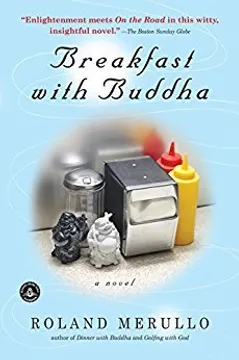
Otto Ringling, a Manhattan food-book editor, has built a warm, comfortable life with his wife, Jeannie, and their teenagers, Natasha and Anthony. Then his parents die in a crash on a North Dakota highway, struck by a drunk driver. Grief brings more than sorrow: Otto begins to doubt the busy routines and pleasures that have always made his life feel sufficient.
He must return to the family farm to settle the estate and retrieve several pieces of furniture. Jeannie suggests that the trip might also give him room to think. Their children refuse to join, so Otto faces the long drive alone, carrying a practical errand and a question he cannot quite put into words.
The crash does not create Otto's spiritual uncertainty so much as remove the cover over it. His parents' sudden absence turns ordinary comforts into evidence of life's fragility, while the estate gives his grief a practical task. The contrast matters: he cannot resolve mortality by thinking abstractly, because he must drive toward the actual place where his parents lived and died. His children declining the trip also makes the journey a small rehearsal for separation. Otto loves his family, yet must confront that love cannot keep time still.
A Guru Takes the Passenger Seat
At his sister Cecelia's home in Paterson, Otto expects to collect her for the drive. Instead, he finds her with Volya Rinpoche, a broad, shaved-headed spiritual teacher in a maroon robe. Cecelia says she will not travel, partly because she cannot leave a client in the middle of a past-life session, and reveals that she may give Rinpoche her share of the family property so he can establish a retreat center.
Otto suspects she is being exploited and argues that the land is valuable, but her certainty and affection disarm his anger. She insists Rinpoche needs his help learning America and cannot travel by air. Otto reluctantly agrees to drive him, leaving Paterson with the man he had not planned to meet.
Cecelia's decision forces Otto into contact with exactly the kind of spiritual life he distrusts. His objections are partly protective: he worries that his sister's instability makes her vulnerable and that the inheritance could secure her future. But his irritation also protects his own assumptions from scrutiny. Rinpoche enters not as a chosen teacher but as an imposition, which keeps Otto from romanticizing the encounter. The trip begins in a family argument over what counts as security: money and property for Otto, trust and spiritual purpose for Cecelia.
Dirt in the Water
Otto starts out determined to drive quickly, keep the conversation civil, and deliver Rinpoche to North Dakota. When traffic stops after a serious crash, his frustration erupts into a roadside tantrum. The wreck unsettles him because it resembles the accident that killed his parents, and he follows Rinpoche's earlier suggestion to leave the interstate for slower roads.
In Pennsylvania, an elderly man sends them to Lititz for dinner, and Rinpoche supports the detour. At breakfast, Rinpoche drops dirt into Otto's water and lets it settle, using the cloudy glass to show how anger and appetite cloud perception. Otto resents the lesson, but the image stays with him as they visit Hershey's chocolate attraction and continue west.
The traffic crash makes Otto's anger more than a comic inconvenience: it exposes how quickly he converts fear and helplessness into irritation. Rinpoche does not punish or soothe him; he simply remains present, denying Otto the usual feedback that fuels a tantrum. The dirt-filled glass gives Otto a physical image for mental agitation, but he is not ready to accept its moral implications. The journey's detours also begin to challenge his efficiency. He measures value by time saved and good meals found, while Rinpoche treats interruption as part of the encounter.
Youngstown's Empty Windows
In Bedford, Otto learns from a letter Cecelia has sent with Rinpoche that the trip includes paid and unpaid speaking engagements. The first is in Youngstown that evening, and Otto speeds west to get him there. He arrives late in a city scarred by shuttered buildings and abandoned factories.
Rather than join the small audience, Otto waits in the car, uneasy among the neighborhood's poverty and his own privilege. He eventually enters as Rinpoche answers questions about spiritual learning and human conduct.
Otto challenges the idea that people need spiritual practice if an ordinary, decent life already satisfies them. Rinpoche turns the question back on him, asking why he chooses to act well. Otto has no ready answer, and carries the discomfort to Chagrin Falls.
Youngstown places Otto's private unease beside visible economic abandonment. His choice to wait in the car is not simply skepticism; it is an attempt to avoid both the audience and the guilt stirred by the neighborhood. When he finally enters, he uses argument to regain control, but Rinpoche's question about his own goodness defeats the strategy. Otto's decency has been part of his identity, not a subject he has examined. The scene shifts his problem from whether spiritual claims are true to why goodness matters to him when no reward or punishment is guaranteed.
The Pink Bowling Ball
At Chagrin Falls, Otto asks why some people meet death calmly and hears Rinpoche describe a peace beyond ordinary pleasures. Otto declines an invitation to meditate and spends the allotted time watching daytime television.
The next leg brings them to South Bend, where a scheduling mistake leaves them outside a locked Notre Dame auditorium. Rinpoche proposes bowling instead. At the lanes, his first throw sends a pink ball toward a group of tattooed motorcyclists.
When their leader asks for a blessing, Rinpoche responds with a gentle prayer that changes the man's mocking posture into quiet respect. Otto reads Rinpoche's book that night. The following day, at the rescheduled interfaith conference, he watches the teacher address priests and nuns across religious boundaries.
The bowling alley gives Rinpoche a practical test that no lecture could provide. He meets a group prepared to ridicule him without either retreating or asserting authority, and his unforced kindness changes the encounter. Otto witnesses the effect before he can explain it away. The missed lecture and improvised evening also replace his careful itinerary with experiences he could not have planned. Reading Rinpoche's book afterward gives the journey a second channel: Otto can resist the man in conversation, but the book's account of self-imposed limits continues to work on him privately.
Chicago's Second Beginning
In South Bend, Rinpoche's conference talk draws a sharp challenge from a nun, but he answers by describing enlightenment as a gradual change in how people see the world. Otto hears echoes of the book he has been reading, especially its image of a person who gives up improving because he believes he has reached his limit.
On the road to Chicago, he admits that he bought the book secretly and asks what he would need to do to explore its promise of a deeper pleasure. Rinpoche proposes an exchange: Otto will show him America, and Rinpoche will try to show Otto a little of the inner life. In Chicago, Otto revisits the hotel where he and Jeannie first became lovers, then takes Rinpoche to Wrigley Field and an architectural boat tour.
The bargain is the journey's first voluntary change in Otto's posture. He does not suddenly accept Rinpoche's beliefs; he agrees to investigate them, while offering something of his own in return. That reciprocity matters because it keeps the relationship from becoming a conversion story in which one man simply instructs the other. Chicago reconnects Otto with the beginnings of his marriage, a lived experience of vulnerability and trust. The baseball game offers another kind of lesson: Rinpoche can be peaceful without performing solemnity, falling asleep amid the crowd while Otto watches the contentment on his face.
The Figure in the Painting
In Madison, Otto and Rinpoche eat at a Nepali restaurant, where Rinpoche points out a print of a spiritual world and identifies a small figure that resembles Otto. A Nepali woman places a blue-bead necklace on Rinpoche and bows to Otto as well, leaving him shaken by the attention. Rinpoche then takes him to a yoga class, placing him in the front row despite his protests.
Otto struggles through the poses, falls, sweats, and resents being presented as the teacher's student. During the final resting pose, however, his body settles and his thoughts briefly stop. The quiet lasts only seconds, but it is unlike anything he has experienced before. Afterward, he cannot retrieve it by force, and that inability makes him want to understand it.
The painting and the woman's gesture unsettle Otto because they assign him significance he cannot accept on rational grounds. The yoga class makes that uncertainty physical. His ordinary defenses are not debated away; they are exhausted through effort, embarrassment, and bodily attention. The brief stillness matters precisely because it is modest. Otto does not receive a vision or a doctrine, only an experience that contradicts his assumption that the mind must always be active. Its elusiveness prevents him from turning it into another possession or achievement.
The Quiet Between Thoughts
After the yoga class, Otto confronts Rinpoche about being tricked into the front row. Rinpoche asks whether he wants to keep his old self or try the brief calm he felt in the resting pose. Otto agrees to sit with him that evening, though he complains when Rinpoche also proposes a fast.
For two hours on a hotel sofa, Otto follows the sounds of a bird tapping at the window and a refrigerator humming, returning his attention to breathing whenever thoughts carry him away. At first, his mind floods with food, family, work, and irritation. Near the end, those thoughts begin to pass without capturing him. The next morning, his muscles ache from yoga, but he tries the breathing practice as he slowly gets out of bed.
The guided sit turns spiritual practice from an idea into an observable struggle with attention. Otto discovers that his mind does not merely think; it repeatedly seizes on food, family, work, and self-judgment as if each thought demanded immediate action. Rinpoche's method does not ask him to suppress those subjects, which distinguishes attention from denial. The painful morning afterward also refuses an easy transformation narrative. Otto has not become serene or physically renewed. He has gained a small practical method for noticing his reactions before mistaking them for the whole of himself.
A Professor's Miniature Duel
At Barker's Island, Otto and Rinpoche join university professors Matthew and Eveline Fritton for miniature golf. Matthew uses intellectual jokes to belittle Rinpoche's beliefs, then stakes dinner on a contest that will decide who gets to pose a spiritual question.
Rinpoche wins with an unlikely hole in one and asks Matthew to explain what happens when a hand does not obey a person's intention. Matthew answers that another part of the self is overriding the command. Rinpoche accepts the answer and invites the couple to dinner rather than humiliating them.
Later, under a rising moon, he uses a fallen flower petal and an overturned teacup to describe the defenses people build around their capacity to love. Otto recognizes that his own intelligence can function as such armor.
Matthew's contest externalizes a conflict Otto has been carrying internally. The professor's wit resembles Otto's own habit of using intelligence to keep uncertainty at a safe distance. Rinpoche's victory does not depend on humiliating him; instead, the teacher turns the wager into a question that reveals the gap between conscious intention and the forces that shape behavior. The flower and cup image gives Otto a more personal challenge. His ability to love is not in doubt, but his control over how openly he receives the world is.
The Loon Over Mississippi
In Duluth, a massage therapist recognizes Rinpoche's name and tells Otto that meditation has changed her life. On the drive west, Otto asks how a spiritual person should respond to terrorism and war.
Rinpoche urges protection of children but warns against answering violence with more violence, admitting that the moral choice is difficult. Later, Otto shows him the Mississippi River and a loon calling from the water; he phones Jeannie so she can hear it, then learns Anthony has made the football team and Natasha is saving for a car.
They swim at Leech Lake and visit a casino, where Otto finally pulls Rinpoche away from a losing slot machine. The day's pleasures and interruptions leave Otto less interested in separating spiritual practice from ordinary life.
This stretch tests Rinpoche's principles against situations that resist tidy answers. His counsel on war does not erase the duty to protect loved ones, yet it refuses to make violence morally clean. Otto's phone call to Jeannie anchors the discussion in what he actually values: his children growing up, his wife waiting at home, and a shared moment of beauty. Swimming and gambling keep the spiritual journey from becoming austere theater. Rinpoche enjoys the world, even when Otto must intervene to stop him losing more money, and that balance makes his teaching harder to dismiss as mere renunciation.
Love Beneath the Prairie
On the final stretch toward North Dakota, Otto and Rinpoche stop in Park Rapids for a German meal that recalls Otto's parents. Rinpoche explains that, in his view, love is the force that animates the physical world and sometimes gathers intensely in human lives as a saint or teacher.
Otto feels the idea as something more than an argument, recalling the overwhelming love he felt when his children were born. They reach Bismarck after midnight, where Cecelia surprises Otto by arriving after overcoming her fear of flying.
The next morning, she joins them for breakfast before they drive to the farm. Passing the fatal intersection, Otto slows while Cecelia weeps. At the house, he walks to his childhood hiding place and considers what to do with the land.
The meal gives Otto's parents a presence in the journey without pretending that grief can be reversed. Rinpoche's account of love connects a cosmic claim to Otto's own bodily memory of his children's births, making the idea emotionally legible even though it remains unprovable. Cecelia's unexpected arrival shifts the family story as well: her fear has not defined her completely, and she has made a difficult journey of her own. The return to the crash site and farmhouse makes Otto's new understanding answerable to family history, not just to the road's passing scenery.
The Farm Becomes a Beginning
At the farm, Cecelia explains that she wants most of the acreage sold and the proceeds set aside for Otto's children. She hopes to give Rinpoche the house and remaining land for a retreat center, then live there as his spiritual wife. She is also expecting a daughter, whom she believes may have a special spiritual purpose, and admits she is frightened of failing her.
Otto thinks of their parents' practical expectations, but also of the uncertainty that has followed him since their deaths. Instead of mocking Cecelia, he reassures her that she is suited to raise the child. Back inside, he finds Rinpoche in their father's old chair, walks toward him, kneels, and touches his forehead to the floor, accepting a relationship he once resisted.
The resolution does not require Otto to abandon his family, career, or Protestant inheritance. It asks him to stop using ridicule as a shield against possibilities he cannot verify. Cecelia's plan remains unconventional and risky, but Otto can now recognize the care and conviction within it without pretending every concern has vanished. His bow is therefore not a declaration that Rinpoche is infallible. It is an embodied admission that he has been changed by the encounter and is willing to learn. The old farmhouse, once the site of childhood confinement and memory, becomes a place where the family can choose a new future.
Analysis
Breakfast with Buddha treats spiritual change not as the acquisition of a new creed but as a change in what a person can notice. Otto's crisis begins when his parents' deaths expose the limits of the comfortable system through which he has organized life: work, family, food, travel, and modest good behavior. Rinpoche does not defeat Otto's skepticism with evidence. Instead, he repeatedly alters the conditions of attention. Otto is delayed in traffic, embarrassed at yoga, made to wait through silence, and drawn into pleasures he would not have chosen. These experiences loosen the assumption that rational control is the only reliable way to understand the world.
The novel is careful to distinguish spiritual practice from moral superiority. Rinpoche enjoys sweets, bowling, swimming, and gambling; his teacherly authority does not rest on rejecting ordinary life. His lesson is that pleasure can be real without being sufficient, and that discipline can clear attention without making its practitioner better than other people. This balance also complicates Otto's Protestant background, Cecelia's New Age convictions, Catholic ritual, and the many religious voices encountered on the road. The danger is not belief itself but the use of belief, or disbelief, to divide people into the enlightened and the foolish.
The road trip makes these questions social as well as private. Otto sees Youngstown's industrial decline, poverty beside comfort, religious broadcasting, and the casual ease of ordinary kindness. His discomfort is not resolved by a single theory of justice or karma. Instead, the journey shifts his attention from judging whole lives to choosing how he acts in the life he can touch. Returning to the family farm, he does not discard his old world. He accepts that love, grief, and responsibility can coexist with uncertainty, and that humility may begin when he stops treating uncertainty as a reason to close the door.
Review Summary
Breakfast with Buddha receives mixed reviews, averaging 3.87/5 across 20,056 ratings. Many readers praise its humor, philosophical depth, and engaging road-trip narrative, comparing it favorably to works like Zen and the Art of Motorcycle Maintenance. Fans appreciate its light yet thoughtful exploration of Buddhism and spirituality without being preachy. Critics, however, find it shallow, contrived, and overly simplistic, arguing the protagonist lacks sufficient struggle for meaningful growth. Overall, readers with an open spiritual mindset tend to enjoy it most, while skeptics find it formulaic.
Characters
Otto Ringling
The skeptical homeward travelerOtto is a forty-four-year-old food-book editor, husband, father, and son of North Dakota farmers. He values good meals, family routines, clear reasoning, and the competence he has built through work. His humor is affectionate but can turn into a weapon when he feels cornered, especially around his sister's spiritual beliefs. His parents' deaths expose a question he has long kept at the edge of his attention: whether comfort and decency are enough to prepare him for loss and death. Otto's intelligence helps him examine experience, but also gives him ways to evade it. He is most vulnerable when his ordinary loyalties, to Jeannie and the children, meet a possibility he cannot neatly explain.
Volya Rinpoche
The irreverent spiritual teacherVolya Rinpoche is a Siberian-born spiritual teacher who travels in robes, speaks several languages, and draws ideas from many religious traditions without insisting on a single label. He can seem comic, disorganized, or deliberately puzzling, yet he is attentive to the people around him and unusually unafraid of embarrassment. His teaching arrives through small actions as often as through lectures: a muddy glass, a bowling alley, a quiet sit, or a question that exposes what a person has not examined. Rinpoche's warmth does not mean passivity; he can be firm when Otto hides behind argument. He values balance, kindness, and attention, and treats ordinary pleasures as part of life rather than obstacles to it.
Cecelia Ringling
The hopeful spiritual seekerCecelia is Otto's younger sister, a gifted gardener who earns a living through psychic readings and past-life work. Her habits and enthusiasms strike Otto as erratic, but she is generous, affectionate, and more trusting than he is. She has little interest in conventional markers of security and follows her spiritual convictions even when they alarm her family. Her long embrace, bright optimism, and deep attachment to her brother reveal the love underneath the sibling friction. Cecelia's choices force Otto to consider whether he dismisses her because she is foolish or because her way of living unsettles his own assumptions.
Jeannie Ringling
Otto's steady-hearted wifeJeannie is Otto's perceptive, practical wife and the mother of Natasha and Anthony. Their marriage rests on long familiarity, humor, honest disagreement, and a shared habit of making time to talk. She sees that Otto is avoiding the North Dakota estate and encourages him to make the trip, while trusting the bond between them enough to let him travel without her. Jeannie understands his tenderness even when he disguises it with jokes. Her presence at home gives Otto a secure place to question his life without turning his search into a rejection of the family he loves.
Natasha Ringling
The independent teenage daughterNatasha is Otto and Jeannie's sixteen-year-old daughter, bright, socially absorbed, and already protective of her independence. She declines the family road trip and is saving money toward a car, but her reserve does not cancel her attachment to her parents. Otto notices echoes of his own mother in her directness and worries about how quickly his children are growing beyond the family orbit. Natasha helps make his fear of loss concrete: loving a teenager means supporting a separation that is both natural and painful.
Anthony Ringling
The grieving young athleteAnthony is Otto and Jeannie's fourteen-year-old son, navigating puberty, sibling friction, and his growing interest in football. He was close to his grandfather, so the loss of Otto's parents touches him in a way he does not easily discuss. Anthony's need for privacy makes him hard for his father to reach, but Otto understands the silence as part of growing up rather than proof of indifference. His football hopes and family attachments keep Otto's thoughts grounded in the ordinary future he is trying to protect.
Ronald Ringling
The taciturn farm fatherRonald is Otto and Cecelia's father, a capable North Dakota farmer with a strong work ethic and a temper he rarely directs at his family. His practical habits and emotional reserve shaped Otto's childhood, including Otto's sense that affection often went unspoken. Remembered through farm work, family routines, and small flashes of anger, Ronald embodies the landscape and values his son both carries and has left behind.
Matilda Ringling
The steady farm motherMatilda is Otto and Cecelia's mother, a resilient farm woman whose quiet care helped steady the household. She understood when Ronald's temper was passing and met it with practical tenderness. Otto remembers her through meals, gardening, family rituals, and the emotional habits of a generation that did not often name its feelings. Her absence helps turn the return to the farm into more than an estate errand.
Matthew Fritton
The defensive philosophy professorMatthew is a philosophy professor Otto and Rinpoche meet during miniature golf near Duluth. Quick with references and intellectual challenges, he uses cleverness to test Rinpoche and assert control of the conversation. His manner suggests that argument can function as armor, protecting a person from being affected by ideas he cannot dismiss. The encounter also lets Otto recognize a familiar defensive habit in someone else.
Eveline Fritton
The candid English professorEveline is Matthew's wife and an English professor. She recognizes when her husband's teasing becomes unkind and challenges him rather than quietly accepting it. Her presence gives the miniature-golf encounter a second perspective: she can enjoy the game while seeing the tension Matthew creates. She is direct, socially perceptive, and more willing than he is to let the meeting remain human rather than turn into a contest.
Plot Devices
The cross-country drive
A moving classroomThe route from suburban New York to North Dakota gives Otto and Rinpoche hours of unavoidable company. Each stop supplies a different test of what Otto notices: a traffic accident, a chocolate factory, a neglected Ohio city, a bowling alley, a baseball stadium, and the open prairie. The changing geography prevents their discussions from becoming abstract debates alone. Otto's planned itinerary repeatedly yields to detours and encounters, so the road itself becomes the setting in which his habits are exposed and revised.
The muddy glass
A visible mindAt breakfast, Rinpoche stirs dirt into Otto's water and waits as the sediment slowly settles. The demonstration gives a concrete form to the novel's recurring question about how anger, craving, and judgment affect perception. It does not prove Rinpoche's broader spiritual claims; instead, it gives Otto an image he can remember when his own mind becomes agitated. Its simplicity suits the teacher's method: an ordinary object becomes a prompt for observation rather than a rule Otto must accept.
Everyday pleasures
Lessons through playFood, bowling, baseball, swimming, and miniature golf repeatedly place spiritual questions inside ordinary enjoyment. Otto initially treats pleasure as proof that his life is already complete, while Rinpoche neither condemns it nor treats it as an ultimate answer. Shared activities let the two men learn one another's worlds without requiring formal agreement. Their humor and appetite also prevent the journey from becoming a solemn sequence of lectures. Pleasure becomes a way to notice attachment, attention, generosity, and the limits of self-control.
The quiet practice
Attention without escapeRinpoche introduces meditation and yoga as practical exercises in noticing thought rather than suppressing it. Otto encounters the method first through physical strain in a yoga class, then through a longer sit in a hotel room. The practice connects recurring concerns, including food, irritation, family, mortality, and the possibility of a calmer mind. It gives Otto an experience he can assess for himself, while leaving its larger religious interpretation open. The gradual, imperfect process mirrors the book's refusal to make spiritual change instantaneous.
About the Author

Download PDF
Download EPUB
.epub digital book format is ideal for reading ebooks on phones, tablets, and e-readers.








