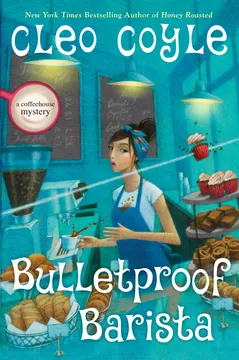


Plot Summary
Prologue
Three weeks before filming reaches the Village Blend, a concealed saboteur loosens the bolts of a soundstage lighting rig and sets a small explosive beneath it. When comedian Jerry Sullivan and his crew arrive, the lights crash down on his assistant Norman, badly injuring him.
The saboteur watches the crew rush to help, then slips away, satisfied that the incident will pass as an accident. A real location shoot, the saboteur recognizes, will be harder to control, so the attacks must be disguised even more carefully.
The prologue makes production itself a crime scene: every cable, rig, and practical effect can be turned from an instrument of illusion into a weapon. The saboteur’s amusement at the injury is especially chilling because it treats a human body as a successful punch line. The later story tests whether people will accept the film industry’s convenient explanations, especially when acknowledging danger could cost jobs, insurance, and a show. The unseen attacker also establishes a useful limit on the reader’s knowledge. We know the damage is deliberate, but not who benefits from it.
Jerry Sullivan Arrives
Clare Cosi, manager and master roaster of Greenwich Village’s Village Blend, hopes a location shoot for comedian Jerry Sullivan’s series will revive the shop’s flagging foot traffic. She is thrilled when the star arrives by red e-bike, though his new assistant, Drew Merriweather, crashes his own bike outside.
Jerry explains that Norman, his longtime assistant, was gravely injured when lights fell on a soundstage, then lets slip that the production may be jinxed or sabotaged.
Clare also meets Lizzy Meeks, Jerry’s intense fan-club president, who condemns the show and demands to know its filming plans. When Clare challenges her lucrative fan-club business, Lizzy leaves warning that the production is cursed. The celebrity visit has opened the door to trouble as well as publicity.
Clare’s first response to danger is professional hospitality: she wants to protect the shop, serve excellent coffee, and make the production a success. That instinct puts her inside a conflict where hospitality can become access. Jerry’s charm makes his warnings easy to dismiss as comic exaggeration, while Lizzy’s intensity makes her appear the more obvious threat. The contrast is a deliberate trap for both Clare and the reader. In a business built on performance, neither a genial face nor a strange one reliably reveals what someone intends.
Coffee Turns Dangerous
The next morning, Driftwood Coffee parks its craft-services truck directly outside the Village Blend, an insult to Clare and her staff after years of corporate copying and coffee-industry rivalry. When crewman Fred Denham drinks one of the truck’s first espressos, he collapses, unable to breathe.
Clare suspects cleaning chemicals in an inadequately flushed machine and warns bystanders to discard their drinks. Matt Allegro, Clare’s ex-husband and business partner, performs CPR until Fred breathes again.
The production cancels filming, but the Village Blend reopens to feed the stranded crew. Driftwood CEO Cody Wood arrives to accuse Clare and Matt of slander, only for Jerry to fire his company after learning Fred may have suffered a toxic reaction. Jerry hires the Village Blend to provide coffee and food instead.
The scene converts a petty commercial rivalry into a question of bodily safety. Driftwood’s inferior service is not merely a matter of taste once a customer collapses, and Clare’s expertise becomes practical emergency knowledge. Matt’s CPR gives their former marriage a present-tense form of partnership: he acts decisively, while she recognizes a possible source of danger and warns the crowd. The production’s decision to replace Driftwood with Clare’s team rewards competence, but it also increases her exposure to a set already marked by unexplained harm.
A Vest Stops the Bullet
On the following shoot day, Jerry films a comic gun scene with Clare’s assistant manager, Tucker Burton, playing the victim. The weapon fires far more loudly than anyone expects, and Tucker crashes into a table with a hole torn through his apron.
Esther Best, his close friend, reaches him first. Tucker groans, alive, because he secretly wore a bulletproof vest beneath his costume. The projectile is a real bullet, not a blank. Clare demands police involvement, but Jerry fears an investigation will halt the production and cost the crew their jobs.
He offers the Village Blend a lucrative catering contract and roles for Tucker, Esther, and the staff in exchange for silence. Clare accepts only after securing permission to investigate privately.
Tucker’s vest makes the gap between cinematic death and actual death almost impossibly thin. His precaution is a form of professional memory: he knows film-set accidents have killed performers, and he refuses to trust appearances. Jerry’s offer then turns economic dependence into a silencing mechanism. He frames secrecy as protection for the crew, a persuasive argument because their livelihoods are genuinely at stake. Clare’s conditional acceptance preserves access to the set but compromises her moral position. She agrees not to summon police officially, while insisting on enough freedom to discover whether the danger is continuing.
Billy’s Rooftop Collapse
Clare’s fiancé, NYPD Lieutenant Mike Quinn, finally returns and shares confidential information about a designer stimulant called Funtenol, linked to deaths among people in film and television. When an anonymous tip directs Quinn’s overdose squad to a rooftop party, Clare joins the raid because she knows the hotel’s loading alley.
Ordered to remain in the police vehicle, she watches director Sebastian Albee and actor Kylee Ferris escape through a service elevator with an unidentified driver.
She then slips upstairs, where officers are trying to revive guest star Billy Saddler with Narcan. Billy is rushed to hospital. The next morning, Jerry tells the crew that Billy is recovering from exhaustion, concealing the possible drug connection. Clare’s sighting makes the party a new line of inquiry.
The raid widens the mystery from unsafe production equipment to a culture of silence around drugs. Clare’s decision to follow the elevator is reckless, but it is also consistent with her need to see evidence directly rather than rely on competing accounts. The scene complicates the apparent distinction between insiders and outsiders: a cast member may flee because of guilt, fear, or protection of a vulnerable colleague. Jerry’s reassuring announcement shows how quickly a crisis can be converted into a manageable public story. Billy’s collapse remains medically uncertain, leaving Clare with observation but not yet proof.
A Snake in Kylee’s Trailer
Clare and Nancy Kelly bring pizza and a cherry soda to Kylee’s trailer, hoping to question the actor without turning the conversation into an interrogation. Kylee admits that director Sebastian once patiently coached her through the panic she felt during her first season, and she credits him with her acting progress.
She also confirms that they attended Billy’s party and left by the service elevator after production manager Tina Bird warned them the police were coming.
Their escape, she says, was meant to protect Sebastian’s recovery from addiction. When Kylee lowers a fold-out table, a live snake drops onto it. The terrified actor leaves the set, delaying her scenes. Jerry blames Lizzy, but Clare has no evidence tying the fan-club president to the prank.
Kylee’s kindness and vulnerability resist Lizzy’s portrait of her as a shallow rival. Her account of Sebastian makes gratitude central to their relationship, while also establishing an emotional dependence that may later become unstable. The snake turns that private history into public spectacle: Kylee is visibly frightened, the schedule is disrupted, and suspicion immediately falls on the already stigmatized fan. Clare’s approach is imperfect. She presses too quickly, then repairs the exchange by offering practical concern. The scene rewards listening, but it also warns that sympathy alone cannot identify who staged an incident.
Fred Never Reaches Barbados
After overhearing assistant property master Hutch Saunders speak with Fred, Clare learns the hospitalized armorer plans to leave town. She races uptown to Mount Sinai, spots him walking away, and follows him into Central Park.
When Fred runs from her, two gunshots sound among the trees. Clare finds him dead, his head destroyed, and police mistake the scene for a robbery because his wallet and phone are missing. They release Clare after she identifies him. Shaken, she tells Matt what happened, then returns to find Lizzy hiding in her office.
Lizzy claims an informant told her Norman’s lighting accident involved a deliberately triggered squib, and that Fred knew more about it. She urges Clare to investigate, but withholds the informant’s identity.
Fred’s death changes Clare’s investigation from workplace vigilance to a case with an active killer. His planned flight and sudden disappearance of his phone and wallet fit the police robbery theory, but his connection to the missing safety equipment makes that explanation feel incomplete. Lizzy’s account provides a mechanism for the earlier lighting collapse, yet its source cannot be tested. Clare must manage evidence of unequal quality: a body she found herself, a witness she barely trusts, and an accusation that implicates a production she has agreed to protect. Her willingness to keep listening is not the same as accepting Lizzy’s version.
Tina’s Other Production
The next day, Hutch explains that weapons and squibs should have been locked in a safe, but Fred’s emergency departure left the gun case vulnerable in a prop truck. He suspects someone could have replaced a blank with live ammunition.
Tina Bird then threatens Clare for questioning the crew and orders her to stay within catering duties. That evening, Clare and Tucker follow Tina to a private Broadway preview called Project Nine.
There Clare spots Drew speaking with Morris Windham Jr., whose family once employed Jerry in Las Vegas, and learns that Tina is related to Dan Coffey, Jerry’s estranged former comedy partner. The musical is a project Tina hopes to produce, and fired writer Tate Cabot is involved. Several people now have motives to resent Jerry.
This section expands the suspect field without making every connection equally incriminating. Hutch identifies a concrete security failure, while Tina’s hostility could reflect guilt, managerial anxiety, or both. The theater preview supplies a web of professional ties: family favors, a lost casino contract, a fired writer, and an ambitious side project. In show business, old relationships rarely stay private because employment, credit, and money keep them active. Clare’s detective work consists less of dramatic revelation than of noticing who knows whom and who may gain if Jerry’s current project falters.
The Coffey Break Rupture
Clare asks Madame Blanche Dreyfus Allegro Dubois, the Village Blend’s longtime owner, why Jerry and Dan Coffey stopped working together. Madame recalls their early partnership, forged when two comics competed for a stage slot and discovered that their quarrel delighted audiences.
Their television show, The Coffey Break, became a hit, but the network censored its edgier material. Jerry secretly substituted a rejected sketch for an approved segment.
The network canceled the show, and Dan, who had not known of the switch, blamed Jerry for destroying the cast and crew’s livelihoods. Dan punched Jerry during the wrap gathering at the Village Blend. Jerry later vanished without saying goodbye to Madame. The old breach gives Dan a powerful reason to resent Jerry’s return.
The flashback reveals how a comic performer’s desire for artistic control can become destructive when other people share the consequences. Jerry’s risk was not simply that he defied a network; he made the choice alone while Dan bore the public and professional fallout. Madame’s memory also corrects the myth of effortless success. The show’s cancellation left unpaid tabs, injured friendships, and workers without jobs. This history matters because the present production repeats its central temptation: Jerry again prefers to contain damage rather than expose what happened. His past is not a parallel mystery but a psychological pattern.
The Party Was Murderous
As filming shifts to a Queens factory, Quinn tells Clare that Billy Saddler died with fentanyl in his system, although the Funtenol seized at the party contained none. Investigators suspect someone secretly gave Billy the opioid.
Clare identifies people in party photographs, including Tina, Drew, Kylee, Sebastian, Lizzy, Windham, and Cabot. Quinn assigns Detective Sanchez to work undercover on Clare’s catering crew. Clare also suspects Sebastian has resumed using stimulants after a sudden change in mood, so she and Matt follow him to a basement meeting.
They discover it is Narcotics Anonymous, where Sebastian describes resisting cravings and fearing his marriage may end. Clare recognizes she misread his behavior. The meeting protects his recovery while redirecting her suspicion toward the people and pressures surrounding him.
The homicide finding gives the earlier party a sharper moral edge: Billy’s death may have been disguised as voluntary drug use, exploiting the stigma attached to addiction. Yet Clare’s suspicion of Sebastian shows how easily behavioral clues become biased by a known history. Her correction matters. The director is vulnerable, but vulnerability is not evidence of relapse or crime. By recognizing the meeting’s privacy and listening only from outside, Clare approaches a boundary she has already crossed in other ways. The investigation becomes more precise when she distinguishes a person’s risk from their guilt.
A Rooftop Rescue
At the unfinished factory, Clare overhears Kylee pressuring Sebastian to leave his wife, though he insists he intends to reconcile. During filming on the windy roof, a standing light falls and knocks a canvas windbreak over the edge.
Victoria Albee, Sebastian’s wife, is left hanging from the construction mesh below. Matt climbs down without a harness and catches her as her grip fails; Hutch and the stunt coordinator help pull them both to safety. Hutch points out that the light fell against the wind, suggesting it was not blown over.
Jerry orders the site preserved for an insurance investigation instead of burying the incident. Later, Clare tells him she believes Kylee is behind the attacks. Before they can continue, they smell smoke and find themselves trapped in the office set.
The rooftop fall gives Clare’s investigation a visible victim and turns suspicion into immediate physical danger. Matt’s rescue expresses a familiar strength, but here his risk-taking serves another person rather than his own appetite for danger. Hutch’s attention to the direction of the fall supplies the kind of small physical contradiction that can puncture a convenient accident story. Jerry’s decision to preserve the site marks a change: he no longer insists on hiding every mishap. The fire that follows will test whether that change is trust in Clare or merely a response to his own proximity to death.
Clare Climbs Through Smoke
Smoke fills the false office while a door blocked by unused generators refuses to open. Jerry freezes, so Clare breaks a window with a chair, climbs the building’s construction mesh to the roof, and calls emergency services from a spot with reception.
She then circles back through the smoke, shifts the generators, and frees Jerry. Firefighters extinguish the blaze and identify gasoline poured over a generator as arson. The attack confirms that someone wants the production stopped and is willing to kill.
Clare persuades Jerry that they must identify the culprit rather than wait for another attempt. They devise a staged confrontation at the Village Blend, using the cameras and actors’ skills to invite the suspected attacker into a controlled trap.
Clare’s rescue reverses the familiar structure of celebrity protection: Jerry’s status cannot save him, and his comic confidence collapses when faced with a real fire. Clare’s craft knowledge does not help here; she survives through improvisation, nerve, and a willingness to return for someone who could barely move. The arson also converts the production’s central metaphor into literal fact: the show’s machinery has become dangerous outside the frame. Their counterplan uses performance ethically, as a way to create evidence rather than conceal it. Jerry’s agreement signals a belated willingness to let the truth be seen.
The Killer Takes the Bait
Clare and Jerry summon Kylee to the closed Village Blend by falsely claiming Lizzy tried to kill Sebastian’s wife and set the fire. Jerry points an apparently real gun at Kylee, then lets her believe he has lowered his guard.
Kylee seizes the weapon and shoots him; the blood is theatrical, and the gun contains only a blank. She then admits she planted the squib that injured Norman, poisoned Fred with fentanyl, and replaced a blank with live ammunition to kill Jerry. Her attempt failed when Jerry changed the scene so Tucker took the shot.
Kylee also describes trying to poison Jerry and secretly drugging Billy, while the Blend staff’s fresh service blocked further tampering. Hidden cameras record her confession. Police arrest her with Fred’s gun and drugs in her handbag.
The solution depends on separating performance from reality without pretending the distinction is safe. Kylee’s confession supplies motive and method: she wanted the production and its leading figure removed, but repeatedly adapted when ordinary sabotage failed. Her targeting of Jerry grew from entitlement to his attention and control over the show, while her willingness to endanger colleagues reveals how completely she treated them as obstacles. The trap is morally uneasy because Clare and Jerry risk a real confrontation to obtain proof. Its success depends on preparation, cameras, a blank, and police nearby, not on the assumption that a dangerous person will behave predictably.
Old Partners Reunite
Two weeks after Kylee’s arrest, Dan Coffey returns to the Village Blend, where he and Jerry first broke apart. The former partners embrace before the cast, crew, press, and Madame, then find their old comic rhythm while planning scenes together. Tina leaves the production to pursue her musical, backed by Windham, while Detective Sanchez continues with the catering crew as filming moves through New York.
Jerry’s decision to face Dan replaces the old impulse to flee after failure. Their reunion does not erase the harm caused by the canceled television show decades earlier, but it gives them a chance to work together without pretending nothing happened. The season continues filming, though Kylee’s arrest has left its future uncertain.
The reunion is not a simple restoration of the past. Jerry and Dan can embrace because the injury has finally been named and both men can meet as older collaborators rather than as rivals trapped in their first public failure. The Village Blend’s role as their meeting place makes the setting an active witness to repair: it held the original rupture and now hosts a more honest encounter. Tina’s departure likewise shows that professional ambition can be pursued without remaining inside Jerry’s orbit. The fragile continuation of filming prevents reconciliation from becoming a false promise that every consequence has been solved.
Epilogue
Kylee is indicted for the murders of Billy and Fred, but her celebrity defense and the unfinished production keep the case in public view. Ballistics link Fred’s own gun to the weapon found in her handbag.
The streaming service shelves the second season, leaving Tucker and Esther’s filmed work unseen, even as the crimes draw crowds to the Village Blend. Lizzy turns down Jerry’s offer to manage his career and accepts work with Drew, whose new series is being written by Tate Cabot.
She and Cabot begin a relationship. Jerry and Dan resume writing together at the coffeehouse, then devise a revised season with Sebastian and his wife. When Jerry asks Clare to cater the new production, she agrees, despite knowing how much work the deal will bring.
The epilogue refuses a tidy equation between solving a crime and restoring what the crime damaged. Kylee’s arrest ends the immediate threat, but the season itself is lost, and the people who risked themselves cannot recover their work through exposure alone. Instead, the Village Blend benefits from notoriety it never sought, while Jerry and Dan make something new from the place where their first collaboration failed. Lizzy’s choice to move on is important: she stops treating access to Jerry as the source of her worth and takes a professional role on her own terms. The closing deal is hopeful because it is chosen with clearer knowledge of its costs.
Analysis
Bulletproof Barista treats show business as a workplace where performance can disguise labor, danger, and accountability. The production’s most harmful incidents are repeatedly labeled accidents, pranks, or bad luck, not because those explanations are persuasive but because they protect schedules, contracts, reputations, and jobs. Jerry’s instinct to keep the show moving is understandable: a shutdown could cost dozens of people their livelihoods. Yet the story shows how care for a group can become a rationale for withholding facts from that same group. Clare’s decision to investigate from inside the catering operation exposes the contradiction. Her role is both service and surveillance, and the distinction becomes increasingly difficult to maintain.
Coffee is more than cozy atmosphere. Clare’s insistence on fresh preparation, quality sourcing, and attentive service gives her a concrete way to protect people. The same discipline that distinguishes the Village Blend from Driftwood’s careless operation helps prevent tampering. Hospitality becomes a form of attention: remembering who drank what, who entered which trailer, and which safety procedure was skipped. This is a particularly grounded model of amateur detection. Clare does not solve the case through abstract brilliance; she notices how systems work and where people have stopped respecting them.
The book also examines the emotional economics of celebrity. Lizzy’s fan-club devotion, Kylee’s dependence on Sebastian’s approval, and Jerry’s avoidance of his past each show how admiration can become a substitute for mutual recognition. Jerry initially treats people’s concerns as disruptions, while Kylee’s need for validation distorts her sense of what she is owed. Dan’s history clarifies the cost of Jerry’s earlier self-absorption. Their eventual reunion matters because it requires more than nostalgia: Jerry must acknowledge that his unilateral artistic choice harmed a partner and a crew.
Clare’s relationships help her correct her own errors. Mike teaches her to separate suspicion from proof; Matt recognizes addiction without reducing Sebastian to it; Madame supplies the history that present-day self-protection has hidden. The resolution therefore depends on shared knowledge rather than solitary intuition. Its final optimism is qualified: Kylee is stopped, but the season is lost. The coffeehouse endures because its community is more durable than the production built around it.
Review Summary
Bulletproof Barista receives high praise from readers, with many calling it one of the best in the series. Fans appreciate the well-developed characters, engaging plot, and New York City atmosphere. The book's premise of a TV show filming at the Village Blend coffeehouse is particularly popular. Readers enjoy the twists and turns, the balance of mystery and humor, and the familiar cast of characters. Many reviewers note that the book works well as a standalone, even for those new to the series.
Characters
Clare Cosi
Coffeehouse sleuthClare manages the Village Blend, roasts its coffee, and takes pride in knowing both her staff and her customers. A working-class upbringing taught her to respect labor and to notice when people are being overlooked, qualities that shape her amateur investigations. She is generous, practical, and often funny, but her curiosity can outrun her caution, especially when someone she cares about may be at risk. Clare balances loyalty to her coffeehouse with a growing commitment to uncovering uncomfortable facts, even when a profitable contract depends on silence. Her relationships with her ex-husband Matt, fiancé Mike, and mentor Madame give her several forms of support, but none can substitute for her own judgment.
Jerry Sullivan
Comedian under pressureJerry is the charismatic star and writer of Only Murders in Gotham, a comedian whose charm makes people feel noticed. He remembers the Village Blend from his early New York career and carries a private history of artistic ambition, public failure, and damaged friendships. Comedy gives him a way to control a room, but it can also help him evade painful subjects. He values his crew and worries that one scandal could destroy the production, yet that concern can become an excuse to suppress evidence. Clare’s admiration for him complicates her work: she wants him to succeed, while learning that affection cannot replace scrutiny.
Matt Allegro
Coffee hunter and partnerMatt is Clare’s ex-husband, business partner, and a globe-trotting coffee importer who sources exceptional beans for the Village Blend. His adventurous temperament can make him impulsive, but years of recovery have taught him discipline and patience. Matt remains deeply connected to Clare and their adult daughter, Joy, even as he builds a separate personal life. He is physically brave and quick to act in emergencies, while sometimes resisting the limits that a dangerous situation demands. His knowledge of addiction gives him a grounded perspective when Clare misreads Sebastian’s behavior, and his steady presence helps Clare distinguish concern from evidence.
Mike Quinn
NYPD overdose lieutenantMike leads the NYPD’s overdose squad and is Clare’s fiancé. Once a firefighter, he still sees saving lives as the center of his work, though his current cases require patience, evidence, and difficult conversations. His professional reserve can make him seem stern, but he is attentive to Clare’s intelligence and increasingly willing to share information when it may keep her safe. He respects the boundary between private affection and police procedure, even when Clare’s investigations blur it. Their relationship is built on trust that has been tested before, and Mike’s quiet method of questioning offers Clare a model for approaching witnesses without turning every conversation into a confrontation.
Kylee Ferris
Pop star turned actorKylee is a former teen pop star who has moved into acting as the costar of Jerry Sullivan’s streaming series. Away from the camera, she is warm, casual, and more uncertain than her fame suggests. Her early struggles with performance leave her reliant on Sebastian Albee’s direction and encouragement, while industry attention places her under constant comparison with older, more established figures. Kylee wants to prove she can build a lasting career beyond music, and she takes praise and opportunity seriously. Her relationships with Jerry, Sebastian, and the production crew reveal how ambition can be shaped by gratitude, insecurity, and the unequal power of a set.
Madame Blanche Dreyfus Allegro Dubois
Village Blend matriarchMadame owns the Village Blend and is Matt’s mother, Clare’s former mother-in-law, and a trusted mentor. Elegant and socially adept, she has a formidable practical intelligence shaped by displacement, bereavement, and the long struggle to preserve her family’s coffeehouse. She believes the shop’s quality and community ties matter more than rapid expansion. Madame understands that business depends on relationships, but she is not sentimental about what those relationships cost. Her memory of Jerry and Dan’s early partnership gives Clare access to a history the comedians themselves avoid. She often guides Clare with affection, while leaving her room to choose her own course.
Tucker Burton
Actor and assistant managerTucker manages the Village Blend by day and pursues acting and cabaret work at night. His theatrical instincts make him alert to performance, image, and the ways people conceal vulnerability behind a role. He is funny without being careless, and his loyalty to Clare and Esther is unmistakable. Tucker takes professional opportunity seriously, even when the parts are small, and he understands how retaliation can damage an actor’s career. His experience onstage helps him recognize the emotional risks of Jerry’s production, while his wit gives the staff a way to absorb stress without pretending it is harmless.
Esther Best
Slam poet baristaEsther is a sharp-tongued Village Blend barista and a slam poet who shares an apartment with Nancy. Her skepticism protects her from easy celebrity worship, though Jerry’s recognition of her performance briefly unsettles her defenses. Esther is fiercely loyal to her coworkers and quick to challenge anyone she believes is exploiting them. She uses humor as both a social weapon and a way to maintain emotional distance. Beneath the cynicism is a performer who wants her work taken seriously, even when she pretends not to care about recognition.
Nancy Kelly
Starstruck baristaNancy, the youngest of Clare’s baristas, is enthusiastic about Jerry’s show and openly admires Kylee Ferris. Her eagerness can make her seem naive, but she is observant and willing to help when Clare needs an approachable way to speak with a celebrity. Nancy’s warmth makes the production feel exciting rather than merely dangerous, and her loyalty to Esther gives their shared home life a gentle counterpoint to the shop’s pressures. She is proud of her work and delighted by the possibility of being seen on screen.
Lizzy Meeks
Fan-club presidentLizzy runs Jerry Sullivan’s fan club and its merchandise business, combining professional competence with an intense personal attachment to the star. She is polished, anxious, and easily wounded when someone questions whether her devotion also benefits her financially. Lizzy regards her work as a way to support Jerry, but her closeness to celebrity makes it difficult for her to separate service from intimacy. She has a complicated history with Jerry and retains ties to people on the production. Her persistent attention can appear threatening, though she also possesses information that others have kept hidden.
Sebastian Albee
Meticulous television directorSebastian is an award-winning young director whose intense focus extends from camera placement to the smallest performance detail. He has helped Kylee build confidence as an actor and is deeply invested in the people whose work he directs. Sebastian is also in recovery, and the demands of a high-pressure production test the stability he has worked to build. He can be guarded when strangers ask about his private life, partly because he knows others may reduce him to his past. His marriage and career matter to him, though distance and work make both difficult to sustain.
Tina Bird
Production managerTina is the production manager of Jerry’s show, known for brisk movement, clear authority, and an ability to organize a hectic crew. She is small in stature but commands attention when work falls behind. Tina protects the production’s schedule and the privacy of its cast, sometimes treating questions as disruptions rather than legitimate concerns. Her family connections and ambitions outside the series link her to a wider entertainment network. She is capable and hardworking, but her guardedness makes it difficult for Clare to know when she is acting from professional responsibility or personal interest.
Hutch Saunders
Assistant property masterHutch is a young production worker with bright red Rasta locks who assists the property master and handles equipment for the show. He is informal and quick to joke, but he understands that firearms and special effects require careful control. When an emergency pulls him away from his duties, he is left confronting how easily a prop can become dangerous. Hutch’s position gives him access to the equipment and knowledge needed to explain how the set is supposed to operate, making his account important to Clare’s search for the truth.
Drew Merriweather
Jerry’s inexperienced assistantDrew is Jerry’s young assistant, promoted into a demanding role after Norman’s injury. His oversized glasses and clumsy arrival make him an easy target for Jerry’s jokes, but he is more connected to the entertainment business than his bumbling manner suggests. Drew is a member of a family with influence in Las Vegas, and he hopes to build a career of his own rather than remain a gofer. He moves between the production office and the people who may shape its future, leaving his loyalties difficult for Clare to read.
Dan Coffey
Jerry’s former comedy partnerDan is an older comedian whose television partnership with Jerry Sullivan once brought him national attention. He is forceful, sociable, and more comfortable working a room than Jerry is, but the history between the two men includes a painful professional rupture. Dan’s career continued along a different path after their show ended, and his later projects connect him to younger people in the industry. He represents both the creative energy Jerry once shared and the cost of a choice made without his partner’s consent.
Fred Denham
Production armorerFred is the production’s property master and armorer, responsible for equipment and firearm safety. A heavyset man in an unmistakable Lakers jacket, he has a gambling habit and a practical familiarity with the props and effects used on set. His departure from work after a medical emergency leaves a gap in the production’s safety procedures. Fred’s place in the crew makes him an important source of knowledge about what was stored, handled, and moved.
Billy Saddler
Beloved guest comedianBilly is a veteran comedian and actor whom Jerry admires as both a performer and a friend. His career spans live comedy and television, and colleagues remember his wit as much as his talent. He is preparing to join Jerry’s production as a guest star, bringing renewed attention to the series. His presence connects the current crew to an older generation of show business, where long friendships and old habits can travel alongside professional opportunity.
Detective Sanchez
Undercover coffeehouse workerSanchez is an NYPD detective assigned to Clare’s craft-services crew to observe the production without disrupting it. Raised around his family’s restaurant, he is comfortable with food-service work and fits naturally into the Village Blend’s routines. His professional calm contrasts with Clare’s more improvisational approach to investigation. Sanchez provides a discreet connection between the coffeehouse and Quinn’s squad, while his assignment tests how easily ordinary hospitality can conceal police work.
Lori Soles and Sue Ellen Bass
Homicide detective partnersSoles and Bass are veteran NYPD detectives who investigate Fred Denham’s death. They work as a tightly coordinated pair: Lori is the cooler, more methodical presence, while Sue Ellen is more confrontational and quick with a cutting remark. Their established rhythm gives them confidence in the robbery explanation, even when Clare suspects a connection to the production. They represent the formal investigative process, which depends on evidence strong enough to support a case rather than on hunches alone.
Plot Devices
The Production Set
Accidents become evidenceThe film set supplies both the story’s public spectacle and its dangerous machinery. Lights, props, trailers, scripts, and schedules create opportunities for someone to alter what others believe is safe or accidental. The show’s procedures also shape the investigation: workers fear delays and blacklisting, while executives worry about insurance and publicity. Because Clare’s coffeehouse becomes a filming location and a craft-services hub, she can observe the crew closely, but she also becomes responsible for people whose work is vulnerable to sabotage. The set is therefore not just a backdrop. It is a controlled workplace where control itself can be abused.
The Bulletproof Vest
A hidden safeguard changes outcomesTucker’s concealed vest converts a seemingly fatal shooting into a survivable injury and establishes that the danger on set is not merely theatrical. The vest is introduced as a private precaution grounded in the history of real accidents during filming. Its presence also complicates the production’s attempt to describe the shooting as a planned stunt, since Tucker has a reason to conceal the truth if he fears professional retaliation. The device pays off again when Clare and Jerry stage a final confrontation using a gun loaded with a blank. The story repeatedly asks whether an object designed to imitate danger can be trusted once someone has tampered with it.
Coffee and Craft Services
Hospitality becomes protectionThe Village Blend’s coffee and food service places Clare’s staff in the center of the production’s daily life. Fresh preparation and direct handoff make it harder for someone to tamper with drinks than when cups sit unattended on a truck counter. The service contract also gives Clare a legitimate reason to move through the set, speak with crew members, monitor food, and notice departures. Coffee is therefore both a motif of ordinary care and a practical security system. The contrast between carefully sourced, carefully prepared Village Blend products and careless mass service becomes plot-relevant when an early poisoning occurs.
The Squib and Prop Gun
Stage effects mask real harmA squib, a small explosive used to create practical effects, provides a way to make accidents appear technically plausible. The story establishes the device through Norman’s injury and the production’s use of guns, then revisits it as Clare learns that effects equipment can be triggered or misused. The distinction between a blank, a live round, and a prop is central to the mystery because people rely on set conventions to trust dangerous objects. Once those conventions are breached, ordinary safety checks become part of the evidence. This device links the first soundstage incident, Tucker’s shooting, and the production’s culture of secrecy.
The Camera Trap
Performance captures a confessionClare and Jerry turn the production’s own tools into an investigative trap. They invite Kylee to the Village Blend under a fabricated warning, then stage a confrontation that encourages her to reveal her intentions. The cameras record her actions and admissions, while a blank gives the scene the appearance of a murder attempt without firing a lethal round. The method is risky because it depends on controlling a person who has already demonstrated willingness to use violence. Its theatrical structure also reflects the story’s central concern: performance can conceal the truth, but with careful preparation it can make hidden behavior visible.
Download PDF
Download EPUB
.epub digital book format is ideal for reading ebooks on phones, tablets, and e-readers.








