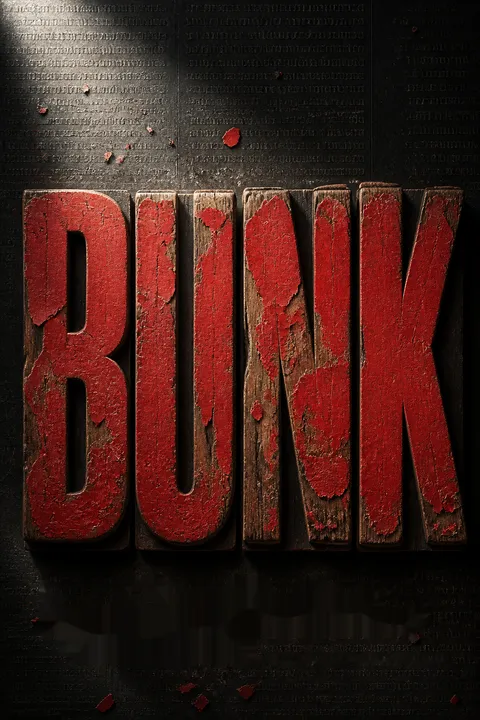


Key Takeaways
Read every hoax as a map of the audience's buried beliefs
A hoax is social evidence. Young's central claim is not simply that people accept false stories. Hoaxes expose the wishes and prejudices that make a story feel plausible, then recruit an audience to complete it. In 1835, Richard Adams Locke's Moon Hoax described lunar life in the language of astronomy. New York papers spread the reports, and readers argued over them more than they tested them. The invented moon became a mirror of a young nation hungry for wonder, status, and racial hierarchy.
Belief has collaborators. P. T. Barnum understood that spectators could suspect a trick and still pay to see it. Their participation does not make them as responsible as the deceiver, but it helps explain why exposure rarely ends a hoax's appeal. The useful question is not only whether a claim is true, but what the claim permits its audience to believe about itself.
What's striking is the shift from treating gullibility as a personal flaw to examining belief as a social arrangement. A crowd can reward a story because it organizes uncertainty, confirms familiar categories, or offers a pleasurable spectacle. That does not make truth merely subjective: it shows that evidence competes with incentives and identity. The framework is strongest when it distinguishes an audience's complicity from the greater responsibility of the person who fabricates and profits.
Judge the show by what it delivers, not what it promises
Barnum's useful distinction. In his account, a humbug grabs attention through exaggeration, but may still give paying spectators an enjoyable show. A swindler, by contrast, takes money and fails to provide the promised value. Barnum's distinction conveniently flatters Barnum, whose own displays depended on deception, but it identifies a real difference between theatrical fakery and fraud that leaves people materially harmed.
The audience buys a role. His Feejee Mermaid, assembled from animal parts, was nothing like the advertised creature. Yet the exhibit could still entertain visitors who sensed they were being fooled. By contrast, Joice Heth's display claimed that an enslaved Black woman was George Washington's elderly nursemaid, turning her body and history into a commercial attraction. The show may have delighted its audience, but its value for them rested on another person's exploitation.
The distinction resembles a basic principle in consumer ethics: presentation can be playful, but consent and promised value still matter. A magic trick works because spectators knowingly enter a bounded fiction; a fraudulent investment works by concealing the boundary. Barnum's own self-defense should not be mistaken for a neutral rule. Whether an audience enjoyed a spectacle cannot settle whether the people exhibited were coerced, degraded, or denied a say.
Ask who pays when race becomes the spectacle
Entertainment carried a hierarchy. Barnum's exhibitions repeatedly invited white audiences to classify people as primitive, animal-like, or exotic. His display called What Is It? presented a Black performer as a supposed missing link, while the Circassian Beauty act sold an invented image of endangered white femininity. The acts looked different, but both turned race into a story about who deserved power, admiration, or protection.
The stage shaped the science. The exhibits borrowed the authority of natural history and racial classification, making prejudice look like observation. Young connects this entertainment to the era's pseudosciences, including claims that skull shape could rank human intelligence. The point is not that every spectator consciously endorsed a theory. The point is that spectacle gave inherited assumptions a vivid body, a ticket price, and an air of proof.
What's valuable here is the recognition that representation is not just a picture of social hierarchy; it can help manufacture one. Museums, exhibitions, and scientific displays borrow authority from their settings, so an audience may experience a political judgment as neutral description. The analysis also asks who is allowed to be an individual and who becomes a type. That question remains useful, though the specific histories and harms behind different racial performances should not be collapsed into one.
Demand independent evidence before treating a vivid image as proof
Images are staged objects. The Moon Hoax gained authority by attributing its invented observations to the respected astronomer John Herschel and a distant journal. Spirit photographer William Mumler used photographic techniques to make supposed ghosts appear beside mourners, including Mary Todd Lincoln. In each case, a medium associated with evidence was used to make a wish visible.
A photograph still has authors. The Cottingley fairy pictures, accepted by Arthur Conan Doyle, were staged with paper figures, but experts focused on whether the negatives had been altered. The trick was in the setup, not necessarily the processing. These episodes show why a convincing image cannot verify its own origin. The key questions are who made it, under what conditions, and whether independent evidence supports the story attached to it.
The argument anticipates a central problem of visual culture: an image can be authentic as an image while false as evidence for the event it appears to show. Digital tools make manipulation easier, but framing, staging, selection, and captions have always shaped interpretation. Verification therefore requires provenance and corroboration, not just technical inspection. Skepticism also needs restraint: an unexplained image is not automatically fraudulent, and uncertainty should not be mistaken for proof in either direction.
Keep memoir's emotional force separate from its factual contract
Feeling true is not enough. James Frey's A Million Little Pieces presented invented or altered events as memoir, including details about jail and a fatal accident. Margaret Seltzer's Love and Consequences adopted a false identity and a fabricated upbringing in South Central Los Angeles. Both books drew power from readers' belief that the suffering had happened to the named author.
Memory has limits, not a blank check. Young distinguishes ordinary shaping of memory from knowingly inventing events and presenting them as fact. Memory can be incomplete, and memoir can use literary form, but readers still rely on a promise that the events substantially occurred. The cases of purported Holocaust survivor Binjamin Wilkomirski and other fabricated testimonies show how invented pain can displace actual survivors and distort public understanding.
The distinction matters because nonfiction is not valuable only as a storehouse of dates. Its form can be intimate, selective, and artful while still accepting a duty to correct errors and mark uncertainty. Research on memory supports caution about perfect recall, but fallibility is not the same as fabrication. A useful standard is transparent method: tell readers what is remembered, documented, reconstructed, or uncertain, instead of using emotional impact to evade the question.
Do not let borrowed identities drown out the people they imitate
An identity can be appropriated as evidence. Grey Owl, born Archibald Belaney in Britain, built fame by presenting himself as Indigenous. Tim Barrus wrote as the invented Navajo author Nasdijj, borrowing elements from actual Native writers. Tom MacMaster invented Amina Arraf, a Syrian American lesbian blogger, during the Arab Spring. These stories offered audiences a supposedly intimate guide to people whose own voices were often ignored.
Advocacy does not cancel the theft. Such impersonations can redirect attention from living communities toward the impostor's performance. MacMaster's invented activist also risked casting doubt on real Syrian bloggers using pseudonyms for safety. Young's examples show that identity is not a costume anyone can put on without consequences. The harm includes misrepresentation, competition for attention, and making real people's accounts seem less credible.
The section's strongest ethical insight is that representation involves power over attention, not just a question of who may write which character. Good cross-cultural work can be imaginative and empathetic, but it benefits from accountability, research, and awareness of who is being displaced. At the same time, identity categories are complex, and every act of writing across difference is not impersonation. The decisive distinction is whether the work claims lived authority it does not possess.
Make reporters verify the human beings behind the vivid details
Anecdotes need checking. Janet Cooke's Pulitzer-winning Washington Post story about an eight-year-old heroin user named Jimmy described a child who did not exist. Stephen Glass fabricated sources, organizations, and documents at the New Republic. Jayson Blair filed reports that falsely implied he had traveled to locations and met grieving families. Their stories felt compelling partly because editors trusted details that were vivid, timely, and hard to verify quickly.
Verification is a system. The cases were uncovered by other journalists, but each exposed weak points in newsroom routines, including pressure for scoops, insufficient source checks, and limited communication between reporters and editors. Cooke's story also relied on racial assumptions that made its invented subject seem plausible to editors unfamiliar with the community. Independent corroboration and open internal dissent are not bureaucratic obstacles. They are part of reporting the story accurately.
Journalistic accuracy depends on more than an individual reporter's virtue. Deadline pressure, status hierarchies, and competition can make institutions reward the very qualities that conceal fraud. Diverse newsrooms can widen the range of questions asked, but no group should be treated as a magical fact-checking instrument. The durable safeguards are documented sourcing, independent confirmation, and a culture where junior staff can challenge a spectacular claim without being punished for slowing the story.
Treat plagiarism as stolen labor, memory, and authorship, not flattery
Borrowing and stealing differ. Influence, quotation, translation, and collage can build new work when their sources and methods are made visible. Plagiarism conceals that relationship and presents another person's language as one's own. Kaavya Viswanathan's novel closely copied passages from Megan McCafferty's books, while poet Christian Ward reused poems with only small alterations. In both cases, the issue was not merely shared ideas but concealed appropriation of expression.
The theft reaches beyond words. Young argues that writing carries the decisions, labor, and experience of its maker. Frederic Prokosch's forged literary pamphlets and modern plagiarism cases show how a claim of originality can erase the source while elevating the copier. This does not make every resemblance theft. It does mean that claims of homage or creative freedom cannot substitute for transparent attribution and meaningful transformation.
The distinction between influence and plagiarism is partly ethical and partly formal. A reader can appreciate a remix more deeply when the source is acknowledged and the new work changes its material in a consequential way. Disclosure lets the audience judge the relationship rather than accept a false claim of origin. Still, authorship norms vary across oral, collaborative, and commercial traditions, so no single model of ownership explains every practice. Concealment is the central warning sign here.
A confession without repair is another performance of innocence
Exposure starts a second act. Once caught, hoaxers often deny, redirect blame, admit a smaller offense, or offer an incomplete confession. Young calls this recurring pattern the Five Stages of Grift. The label describes a familiar defense script, not a reliable path to remorse. James Frey admitted fabrications only after his memoir's claims were challenged; Lance Armstrong maintained his denials for years before confessing to doping.
Repair requires more than admission. A confession can center the deceiver's pain and desire for redemption while leaving victims, readers, and institutions to absorb the damage. Stephen Glass's repeated efforts to reframe his conduct illustrate why remorse must be assessed through sustained accountability, not emotional performance alone. The question after a confession is concrete: has the person corrected the record, acknowledged who was harmed, and accepted consequences?
Confession has a complicated social function: it can restore trust, but it can also become a new stage on which the offender controls the narrative. Restorative justice offers a useful contrast because it asks what happened, who was harmed, and what repair is possible, rather than treating self-disclosure as sufficient. Not every wrong can be repaired, and accountability need not mean endless punishment. It does require more than a compelling account of the offender's feelings.
Practice skepticism without surrendering the possibility of truth
A new climate of evasion. Young calls the present he describes the Age of Euphemism, a culture in which language blurs what happened and claims can be defended by feeling, repetition, or spectacle. In his account, the 2016 campaign's use of terms such as alternative facts and fake news reflected a wider habit of treating inconvenient evidence as merely another opinion.
Doubt must stay disciplined. The book does not argue that every disputed claim is a hoax or that experts are infallible. The Tasaday case shows how outsiders can mistake incomplete knowledge and flawed observation for proof of conspiracy. The better response combines inquiry with humility: test claims, admit what remains uncertain, and revise conclusions when evidence changes. Cynicism feels protective, but it can leave falsehoods untouched by making every source seem equally untrustworthy.
This is a useful distinction between skepticism and generalized distrust. Skepticism asks for methods, evidence, and opportunities for correction; cynicism assumes that every institution lies and therefore treats all claims as interchangeable. The latter can look rebellious while leaving people more vulnerable to confident manipulators. A further challenge is practical: verification takes time, while media systems reward speed. Building trustworthy habits therefore requires both individual judgment and institutions that make checking possible.
Analysis
Bunk is best understood as a cultural history of deception, not a catalogue of amusing tricks. Its recurring question is why certain inventions feel credible, profitable, or emotionally necessary at particular moments. Barnum's museum, spirit photography, fake memoirs, journalistic fabrications, and plagiarism appear to be separate genres, but Young links them through an audience seeking proof of prior beliefs. The hoax becomes a social transaction: a maker supplies a story, institutions lend authority, and spectators fill in what is missing.
The book's most distinctive contribution is its account of race as a recurring structure of that transaction. Black, Native, Asian, and other marginalized identities are repeatedly turned into scenery, credentials, victims, or threats. This is more than a claim that hoaxers are prejudiced. It shows how fabricated identities can make a culture's inherited assumptions look like firsthand knowledge. The frame also clarifies why certain deceptions cause harms beyond financial loss: they can crowd out real testimony and weaken trust in people whose accounts already face disbelief.
The argument is strongest when it joins close reading of artifacts to institutional history. A fake photograph is not just an image; it travels through newspapers, experts, markets, and grief. A fabricated memoir is not only a lie about an author; it alters the perceived record of suffering. This attention to circulation makes the book relevant to digital media, where reposting can detach claims from their origins.
There is a productive tension in Young's approach. The emphasis on racial power gives the book force, but not every hoax can be reduced to race, and audience participation is not evenly distributed. A reader eager for a simple taxonomy may also find the book's sprawling, associative structure demanding. Yet those are appropriate pressures for a subject that resists neat categories. The practical lesson is not to distrust everything. It is to ask who benefits, what evidence supports the claim, and whose reality disappears when the fiction is accepted.
Review Summary
Bunk receives mixed reviews, with some praising its thorough examination of hoaxes in American history and their connection to racism. Critics applaud Young's research and insights but note the book's dense, academic writing style. Many find the subject matter fascinating but struggle with the book's length and occasional lack of focus. Some reviewers appreciate Young's cultural analysis, while others feel it overshadows the historical content. Overall, readers agree the book offers thought-provoking ideas but can be challenging to digest.
People Also Read


Glossary
Humbug
attention-grabbing deceptionP. T. Barnum uses humbug for an extravagant or misleading presentation that attracts an audience and may still deliver an entertaining experience. He distinguishes it from a swindle, which takes payment without providing the promised value. His definition is self-serving, since his own shows relied on deception, but it highlights the difference between theatrical fakery and material fraud.
Vraisemblance
resemblance to believabilityA term Young uses for the quality of seeming likely or credible without being true. The Moon Hoax gained force by borrowing scientific language, respected names, and the form of a news report. Vraisemblance describes how a story can resemble the conventions of reliable knowledge closely enough to persuade readers, even when its central claims are invented.
Travel liar
invented firsthand travel accountYoung distinguishes a travel liar from a writer of openly imaginary journeys. The travel liar claims to have visited a real place and presents invented observations as firsthand fact, often to gain money, status, or support for a viewpoint. The false account can turn actual communities into props for the writer's preferred story about the world.
Science faction
fiction dressed as scienceYoung's term for invented narratives that use scientific vocabulary, reporting conventions, or expert authority to make false claims seem credible. The Moon Hoax is a central example: its imaginary lunar discoveries were presented through the language of astronomy. Science faction works by making fiction resemble a report of measurable fact.
Five Stages of Grift
recurring post-exposure defense scriptYoung's label for a familiar response pattern after a hoax or plagiarism is exposed. The deceiver may deny wrongdoing, redirect attention, admit a lesser fault, offer a reluctant confession, and try to turn the confession into a new opportunity. The term is a diagnostic description of recurring behavior, not a formal psychological model.
Age of Euphemism
era of truth-blurring languageYoung's name for a cultural moment in which words and public narratives obscure responsibility, soften harm, or make claims difficult to verify. Euphemism here is broader than polite wording. It includes the substitution of spectacle, personal feeling, and political spin for accountable descriptions of events, allowing misinformation to circulate as if it were simply another interpretation.
disembody
person reduced to racial imageYoung's term for a figure, especially a Black figure in fabricated stories, stripped of individual interiority and made into a blank role: criminal, victim, brute, or symbol. The figure may be vivid in description but lacks a real person's agency or history. The concept names how a hoax can create an invented body while erasing living people.
Download PDF
Download EPUB
.epub digital book format is ideal for reading ebooks on phones, tablets, and e-readers.








