


Plot Summary
Prologue
At eighteen, Alessandro Zanetti is caught picking a lock and beaten by Captain Kruger’s covert government unit. Kruger has studied Alessandro’s skill at bypassing alarms and knows about Natalie, the young woman Alessandro loves.
He threatens to take her unless Alessandro joins the unit, where operatives are trained to eliminate targets without leaving a trace. Alessandro agrees to protect Natalie, beginning a life of violence that he hides from her. Years later, the work will make him lethal, but the promise he makes under duress will become the measure of what he has lost.
The recruitment scene makes coercion the starting condition of Alessandro’s adult life. Kruger does not persuade him with patriotism or ideology; he identifies the person Alessandro loves and turns that attachment into leverage. The unit’s claim to serve the government is already compromised by its willingness to threaten a young woman and erase people without accountability. Alessandro’s competence is real, but it is cultivated inside a structure that treats loyalty as something to exploit. His later secrecy toward Natalie begins as protection, yet it also prepares the isolation that will define his grief.
Natalie’s Last Morning
Eight years before the present, Alessandro returns from a mission planning to leave the unit and start over with Natalie, his wife. Captain Kruger tells him she has been struck by a car and is dying. At the hospital, Alessandro cannot bring himself to enter her room until the doctor confirms she is gone.
He burns the house they had made together, keeps Natalie’s teddy-bear charm, and discards the false identities he used for his work. From then on, he searches for the driver and the people who concealed the hit-and-run. His grief gives revenge the shape of a life purpose, while the charm on his wrist preserves the tenderness that his work has failed to erase.
Alessandro’s loss turns an already violent life into a single-purpose existence. The fire destroys a home he had built as an exit from the unit, but it cannot remove the intimate objects that make that home emotionally real. Keeping the charm while burning the house exposes the contradiction at his center: he wants to extinguish the past, yet needs a physical remnant to keep his promise alive. His revenge is not simply punishment for a crime. It replaces the future he and Natalie had planned, offering control where grief gave him none.
A Sister Becomes Payment
Four months before the present, Ravenna Cattaneo is juggling two low-paid jobs and worrying about her mother and younger brother, Vitto. Since their father’s death, Vitto has drifted toward the Cosa Nostra, despite Ravenna’s attempts to steer him away. When he disappears overnight, a soldier takes Ravenna to a hidden poker room, where capo Rocco Pisano reveals that Vitto has gambled away far more than he can repay.
Rocco offers to erase the debt if Ravenna becomes his wife. She accepts to spare her brother, believing she can protect her family from the consequences. The bargain instead places her inside Rocco’s household, where his public generosity conceals coercion and violence.
Ravenna’s marriage begins as a sacrifice made under constrained choices, not as romantic naivety. She acts from a protective role shaped by family loyalty, but the Mafia’s debt system converts that care into a mechanism of control. Vitto’s recklessness has consequences for Ravenna, yet the bargain is Rocco’s decision, not a fair exchange. Her willingness to absorb the cost also anticipates the resourcefulness she later uses to escape: she has learned to calculate risk for people she loves, even when the calculation leaves her own needs last.
The Bodyguard’s Double Mission
Alessandro has spent years working his way into New York’s Cosa Nostra, following a trail that leads him to Rocco and Rocco’s father, Elio. He learns that Rocco was the drunk driver who killed Natalie and that Elio helped bury the evidence. With his revenge plan already mapped, Alessandro accepts an assignment as Ravenna’s bodyguard.
Rocco believes the new guard is gay and will not desire his wife, so he gives Alessandro constant access to the mansion and expects detailed reports on her movements. Ravenna meets him in a red dress chosen by Rocco; Alessandro sees her as the last piece of his retaliation. Their first exchange is almost wordless, but each reads the other’s hostility as something more complicated.
The assignment creates a moral trap before either protagonist understands the other. Alessandro’s operational logic reduces Ravenna to a substitute target, a way to make Rocco feel the loss he inflicted on him. Rocco, meanwhile, mistakes surveillance for protection and trusts a man he has not truly assessed. Ravenna’s silence is not consent to her husband’s rules, but Alessandro initially interprets it through the hierarchy that surrounds them. The mismatch between what each character knows and what each character assumes drives the early suspense.
The Spa That Isn’t
During Ravenna’s outings, Alessandro notices that she buys expensive clothes without trying them on, checks their prices, and leaves many of the purchases with her mother. At the pharmacy, Ravenna and her friend Melania exchange a package through a coded familiarity, and at a supposed spa appointment Alessandro finds Ravenna secretly doing accounting work.
He also sees her mother’s shabby apartment and watches Ravenna clean it while pretending to show off her purchases. An elevator breakdown triggers Ravenna’s claustrophobia; Alessandro steadies her with a counting exercise rather than exploiting her panic. Each discovery weakens his belief that she is a vain, compliant Mafia wife, though he still hides what he has learned from Rocco.
The apparent luxuries around Ravenna function as camouflage for a clandestine economy. Clothes become assets she can resell, the pharmacy provides access to discreet medication, and the spa offers a place to work beyond her husband’s direct gaze. Alessandro begins to read the pattern only because he watches behavior rather than accepting Rocco’s account of his wife. His response in the elevator is especially revealing: he could use her vulnerability as leverage, but instead helps her regain agency. Care arrives before trust, unsettling the categories he uses to justify his revenge.
Breakfast Without Permission
When Rocco’s housekeeper limits Ravenna to bread and water because her husband has ordered it, Alessandro dismisses her and brings Ravenna the food she asked for. Ravenna laughs at his awkward question about the meal, then explains that Rocco uses food to remind her who controls the household. Alessandro also sees how she hides clothes and jewelry through her mother, but protects her secret instead of reporting it.
When Rocco insists that Ravenna display herself at Mafia gatherings, Alessandro covers her with his own coat, walks her to warmth, and gives up his distance one small gesture at a time. After Rocco’s valuable garage burns, Alessandro recognizes that his first step in the revenge plan has also made him Ravenna’s reluctant ally.
The food restriction is a small, concrete expression of Rocco’s larger claim to ownership. Alessandro’s intervention matters because it restores an ordinary choice without demanding gratitude or information in return. Ravenna’s laughter is likewise significant: it briefly belongs to her, not to the performance of a polished wife. The burned garage marks Alessandro’s revenge as materially real, but the section’s emotional movement runs in the opposite direction. As he damages Rocco’s property, he begins protecting the person he had intended to sacrifice, and his actions expose the instability of his own plan.
The Royal Flush
At a Cosa Nostra banquet, Rocco’s father humiliates Ravenna with jokes about her body and the poker game that secured her marriage. Alessandro takes her outside and lends her his coat, while her distress strengthens his resolve to punish Rocco. At a secret tournament, he faces Rocco behind concealed screens and wins the Mafia capo’s remaining diamonds, then forces him to stake a million dollars and takes that too with a royal flush.
Rocco returns home furious and frightened. Alessandro fires into his car at the gate, making the attack look like a warning from the Serbian syndicate. Rocco’s security team blames Drago Popov, leaving Alessandro free to escalate his retaliation without exposing his identity.
The poker game turns Rocco’s preferred language of power against him. He once used gambling to claim Ravenna; now Alessandro uses the same arena to strip away his money and composure. The concealed tables also mirror the hidden motives of the men playing: Rocco believes he is competing for wealth, while Alessandro is manipulating his fear. Ravenna’s humiliation at the banquet makes the revenge emotionally less abstract, yet Alessandro still treats her pain as fuel for his vendetta. The false attribution to Drago shows how easily violence can redirect suspicion in a criminal world.
A Shot Through the Hand
After the car attack, Rocco locks Ravenna in a dark bathroom, having shattered its light and left her trapped with the panic he has taught her to fear. She counts alone until he releases her. The next morning, Alessandro notices bruises on her neck and follows Rocco to a construction site. Instead of killing him, he shoots his right hand, the hand that hurt Ravenna, and leaves him wounded but alive.
Rocco is taken to a private hospital. When Ravenna visits her mother, Alessandro discovers that she is selling purchases to save money for an escape, while Vitto is gambling again. He learns that the guard Federico saw Ravenna’s bruises and did nothing, then quietly kills him and arranges self-defense lessons for Ravenna.
Alessandro’s shot is a decisive shift from revenge as a distant plan to intervention in Ravenna’s immediate danger. He does not yet abandon his desire to kill Rocco, but his chosen target is now the hand that abused her. Ravenna’s counting recalls the help she received in the elevator, turning a moment of care into a tool she can use alone. Her escape fund and Vitto’s return to gambling show that she is still managing several threats at once. Alessandro’s execution of Federico is protection expressed through the same lethal methods that created his original crisis.
The Brother Learns the Truth
At her mother’s apartment, Ravenna confronts Vitto over the gambling money in his backpack. He claims his choices are his own and treats her marriage as evidence that his earlier wager worked out. Their mother tells him that Rocco has been beating Ravenna for more than a year. Vitto rushes to leave and attack Rocco, but Alessandro restrains him and makes him consider what his death or imprisonment would do to Ravenna.
Ravenna admits that she accepted the marriage to settle Vitto’s original debt and has been selling possessions to get their family away. Alessandro recognizes that her apparent passivity has been a prolonged fight for survival. Later, he begins teaching her practical ways to escape a stronger attacker’s hold.
The revelation forces Vitto to confront the difference between benefiting from Ravenna’s sacrifice and understanding its price. His first response is retaliatory anger, but Alessandro redirects it toward the consequences of reckless action, offering him a model of restraint that contrasts with his own violence. Ravenna’s survival strategy becomes visible to her family at last. What they mistook for comfort or luck was covert labor, calculation, and endurance. Alessandro’s respect grows because he finally sees her as a strategist rather than a symbol in his private war.
A Lesson Becomes Confession
During a private self-defense lesson, Alessandro shows Ravenna how to escape a grip at her throat and a hold from behind. Their physical closeness breaks through his restraint, and they sleep together in the library. In the aftermath, he tells her that he came to Rocco’s house intending to use her as revenge before killing Rocco.
Ravenna reveals that Rocco is impotent and has never consummated their marriage, though he has still abused and controlled her. The confession gives their desire a painful context: Ravenna has chosen Alessandro, while Alessandro’s attraction collides with a promise made to Natalie. He continues to call his feelings hatred, but his actions increasingly protect Ravenna rather than advance the plan.
The lesson begins as an attempt to give Ravenna physical agency, but it also becomes a scene in which both characters lose control of the roles they have assigned themselves. Alessandro’s disclosure is a form of honesty that does not excuse his original intention; it makes Ravenna’s consent more complicated, not less meaningful. Her revelation about Rocco separates sexual possession from actual intimacy: Rocco has controlled her body without sharing mutual desire. Alessandro’s tenderness and violence remain intertwined, leaving the relationship charged with both safety and danger.
Natalie’s Name Between Them
At a Mafia gathering, a gunfight erupts between Chicago visitor Damian Rossi and another guest, and Alessandro carries Ravenna out of danger. He later kills Elio in the older man’s home, torturing him before revealing that Elio helped conceal the hit-and-run that killed Natalie. The next morning, Alessandro tells Ravenna the full story: Rocco was driving drunk when he struck Natalie, then fled, while Elio protected his son.
Alessandro had planned to kill Ravenna in front of Rocco as an eye-for-an-eye punishment. Ravenna understands why Alessandro has looked at her with hatred, even as his tenderness has made her feel safe. The truth deepens their bond, but also makes her fear that she can never replace the wife he lost.
The revelation gives Alessandro’s revenge a specific moral wound, while exposing its central injustice: Ravenna was selected not for anything she did, but because she occupies a role that can be made to resemble Rocco’s loss. Elio’s murder shows the cost of allowing grief to govern judgment. Ravenna’s response is psychologically complex because she can understand Alessandro’s pain without accepting herself as its instrument. The teddy-bear charm and the story of Natalie establish a living emotional presence in their relationship, one that neither desire nor guilt can simply erase.
Seven Days to Decide
At the hospital, Serbian leader Drago Popov confronts Alessandro and demands a week to settle accounts with Rocco, who ordered an attack on the Serbian club. Alessandro claims Rocco as his personal target and prevents Drago from acting first. Ravenna asks Alessandro to take her with him when he leaves, but he refuses because the Cosa Nostra will hunt them both.
At a later gathering, she asks him to leave her alone; he cannot, and they make love in a private study. She tells him she loves him, then asks him to go. Alessandro departs, intending to finish the revenge alone. Before he can leave, Drago’s men attack the gathering, shooting through the glass walls and turning his planned departure into a fight for Ravenna’s life.
The deadline compresses Alessandro’s long revenge into an immediate choice, while Ravenna’s request exposes the emotional price of his self-protection. He believes refusing her is a way to keep her safe, but his decision also preserves the revenge identity that has consumed his life. Their farewell encounter holds affection and harm together: intimacy gives them a shared truth, yet his departure repeats the abandonment both fear. The attack disrupts that private logic. Violence, which Alessandro has treated as an instrument he can schedule, arrives on its own terms and forces him to decide what matters now.
The Glasshouse Attack
When Drago’s men fire into the gathering, Alessandro searches through the shattered room until he finds Ravenna alive behind an overturned table. He checks her for cuts, then holds her as the danger passes.
The possibility that she could have died breaks the hold of his revenge; he tells her they are leaving together. Before they flee, he takes her to Natalie’s grave and leaves the teddy-bear charm there, acknowledging the wife whose memory has governed him. Ravenna accompanies him without asking him to forget Natalie.
Alessandro then calls his former handler Felix and asks him to arrange a sniper to kill Rocco, rather than taking that shot himself and drawing the Cosa Nostra’s pursuit toward Ravenna. His new choice is escape with her, not revenge at any cost.
The attack makes Alessandro experience the consequence of treating Ravenna as collateral: she could be lost in the same way Natalie was. His decision to delegate Rocco’s killing does not make the revenge disappear, but it changes its priority and limits the danger he is willing to impose on Ravenna. Leaving the charm at Natalie’s grave is not a rejection of his first marriage; it is a ritual of releasing the object that kept grief fused to retaliation. Ravenna’s willingness to accompany him without competing with Natalie allows love to become a future rather than a replacement.
Ravenna Fights Back
Before Ravenna and Alessandro can leave, Rocco returns to the mansion after hearing that she kissed her bodyguard. He strikes her and grabs her by the throat. Ravenna remembers Alessandro’s lesson, turns beneath Rocco’s arm, and escapes his first grip.
When he catches her by the hair, she twists against his hold and strikes his injured hand, then runs downstairs with her packed bag and phone. Alessandro races back, silently kills the guards outside, and finds Ravenna cornered in the kitchen with a knife and a wineglass.
He chokes Rocco unconscious, then wakes him in the office and makes him play a brutal, rigged poker game for his body parts. After shooting Rocco several times, Alessandro kills him with a final shot, ending the threat Ravenna has lived under.
Ravenna’s escape matters because she acts before Alessandro can rescue her. The techniques he taught her become more than physical moves; they interrupt the helplessness Rocco has trained into her and let her choose a route out. Alessandro’s arrival then shifts the danger back to the man who created it. The poker ritual transforms Rocco’s old instrument of coercion into a sentence of his own making. Yet the violence is not a simple restoration of justice. Alessandro’s brutality shows how easily protection can reproduce the logic of domination, even when its target is the abuser.
A Death They Can Escape
Alessandro and Ravenna cannot simply disappear after Rocco’s death, so he edits the mansion’s camera recordings and arranges bodies to make it appear that the couple died in a gas explosion.
Don Salvatore Ajello learns that Alessandro killed Rocco, but gives him four hours to leave because Alessandro once saved Ajello’s wife. Alessandro ignites the mansion and drives Ravenna away with her mother and Vitto, then proposes beside the burning house. She accepts. Two years later, the family lives in a village in France.
Sergei Belov and Felix arrive to recruit Alessandro for a rescue mission to retrieve Kai Mazur, a former teammate held in Mexico. The settled home is not free of danger, but Ravenna now stands beside Alessandro as a partner, not a captive.
The staged deaths complete the book’s movement from enforced secrecy to chosen reinvention. Alessandro once burned his home because grief had made the future seem impossible; now he destroys the mansion to create a future with Ravenna and her family. The false identities that once served the unit’s coercion become tools of escape. Ajello’s conditional mercy keeps the ending grounded in the criminal world rather than pretending danger has vanished. The epilogue’s rescue mission shows that Alessandro’s past can still call him back, but he now faces that history from a home built through mutual choice.
Epilogue
Two years later, Alessandro and Ravenna live in rural France with her mother and Vitto. An alarm sounds, but the apparent intruder is Sergei Belov, accompanied by Felix, who wants Alessandro to help rescue Kai Mazur from a Mexican compound.
Ravenna takes one of Alessandro’s guns before he can send her away, reminding him that she will not be left behind. Alessandro agrees to join the mission. The quiet life they built has not erased his past; it has changed who stands beside him when that past returns.
The epilogue tests the couple’s new life without undoing its resolution. A perimeter alarm once would have signaled a threat that Alessandro faced alone; now Ravenna chooses to arm herself and share the risk. Her action is not merely a sign of toughness. It revises their relationship from protector and protected into partners who negotiate danger together. Sergei and Felix bring back the machinery of Alessandro’s former world, and Kai’s rescue promises further violence, but the scene ends with Alessandro accepting that he cannot keep Ravenna safe by excluding her. Their home remains vulnerable, yet its central bond is no longer built on concealment.
Analysis
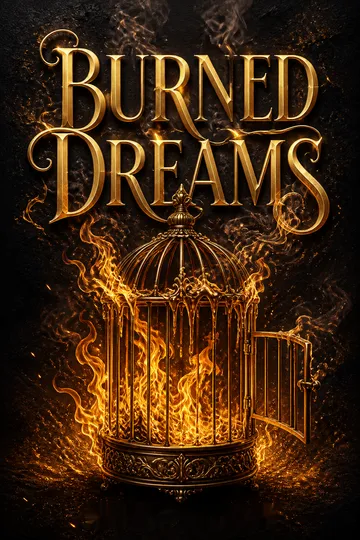
Burned Dreams builds its romance around a collision between two forms of survival. Alessandro survives by turning loss into a plan, reducing grief to evidence, targets, and a sequence of actions. Ravenna survives by keeping her mind active inside a life designed to make her passive: she hides money in shopping, turns trusted visits into exchanges, and stores escape plans in ordinary routines. Both are observant, but their observation initially serves different ends. He studies her to decide how to use her; she studies him to determine whether proximity means danger.
The book’s central ethical pressure is the gap between protection and possession. Rocco calls control care and uses it to restrict Ravenna’s food, dress, movement, and speech. Alessandro’s first impulse is also possessive, because he intends to make Ravenna suffer for what Rocco did. His transformation depends not on desire alone but on learning to recognize her actions as choices. Ravenna’s self-defense lessons matter for the same reason: safety cannot rest entirely on a powerful man’s promise when her body has been the site of other people’s decisions.
Grief is treated as an active force rather than a past event. Natalie remains present through the charm, the revenge wall, and Alessandro’s vow. His release is not forgetting her, but separating remembrance from the demand to repeat violence. Ravenna does not replace Natalie; she insists on being seen as herself. The staged death and departure make that change concrete, while the epilogue tests it by letting Ravenna share, rather than merely endure, Alessandro’s dangerous world.
The novel does not resolve violence into innocence. Rocco’s death is brutal, Alessandro’s methods remain lethal, and the final mission renews danger. Instead, the story locates its hopeful turn in consent, truth, and shared responsibility. The lovers’ escape works because Ravenna is no longer a debt to be paid, a target to be punished, or a person to be hidden. She becomes a partner who chooses the road ahead.
Review Summary
Burned Dreams received mixed reviews, with an average rating of 3.87 out of 5. Readers praised the suspenseful plot, steamy romance, and character development. Some enjoyed the forbidden love and bodyguard tropes, while others found the protagonist's revenge motivation repetitive. Critics noted inconsistencies in character behavior and pacing issues. The book's shorter length left some wanting more depth. Overall, fans of mafia romance and the series appreciated the intense chemistry between the main characters, Alessandro and Ravenna, despite some feeling the execution could have been stronger.
People Also Read






Characters
Ravenna Cattaneo Pisano
The hidden escape plannerRavenna is a young woman whose family loyalty has made her the practical center of a precarious household. She works multiple jobs, worries over her mother and brother, and tends to respond to danger by calculating what can be controlled. In public, she can appear polished and compliant, but this presentation hides careful planning and a stubborn wish to reclaim her own choices. Her attraction to Alessandro grows alongside her need to judge whether his attention is safe, not simply whether it is passionate. Ravenna’s central tension is between a learned belief that family duty requires self-erasure and a developing conviction that protecting herself is also a form of strength.
Alessandro Zanetti, called Az
The grieving tacticianAlessandro is a highly skilled operative shaped by poverty, institutional coercion, and years of lethal work. He speaks little and plans obsessively, using surveillance, false identities, and routines to make danger feel manageable. His loyalty to Natalie once gave his life a purpose beyond violence; grief later narrows that purpose into revenge. Ravenna unsettles him because she is both connected to his target and unmistakably her own person. His instinct to protect her conflicts with his belief that keeping a promise requires completing his revenge. Beneath his intimidating control is a man who understands tenderness but distrusts it when it threatens the identity he has built around loss.
Rocco Pisano
The controlling capoRocco is a powerful Cosa Nostra capo who cares intensely about status, appearances, and obedience. He performs the role of a prosperous, attentive husband in public while imposing narrow rules on Ravenna’s food, clothing, movement, and contact with others. His insecurity sharpens into control, and he treats humiliation as a way to maintain authority. Rocco also competes for recognition within his own organization, especially against men he sees as favored by the don. He is most dangerous when his polished self-image is challenged, because he interprets resistance not as another person’s claim to autonomy but as a personal insult.
Natalie
Alessandro’s lost homeNatalie is Alessandro’s wife and the person who gave his early life companionship, tenderness, and a reason to imagine escape from the streets. They met as teenagers and built a life from shared hardship. She believed Alessandro worked in security rather than knowing the full nature of his covert work. Her memory remains central to his choices, at first sustaining his promise to seek revenge and later forcing him to confront the difference between honoring her and living only through grief.
Vitto Cattaneo
The reckless younger brotherVitto is Ravenna’s younger brother, still grieving their father and drawn toward the criminal world he once occupied. Gambling and the hope of earning a place in the Cosa Nostra offer Vitto an appealing shortcut to money and status. He resents Ravenna’s attempts to direct him, mistaking her protection for interference. His choices create real danger for the family, but his bravado also covers an immature need to prove he can provide for himself.
Mamma Lola
The family’s quiet anchorRavenna and Vitto’s mother works cleaning houses despite chronic back pain and limited money. She has spent years compensating for the emotional reserve of her late husband by making her children feel loved through practical care and small gestures. Her secret exchanges with Ravenna help sustain the escape plan, though her fear for her daughter makes silence increasingly painful. She remains loving without being passive, and her honesty with Vitto comes from a desperate wish to stop him from repeating the harm he has helped set in motion.
Felix
The resourceful handlerFelix is an older former handler from Alessandro’s covert unit who maintains a complicated loyalty to the operatives he once supported. He is cautious about Alessandro’s plans, but his practical skills make him a valuable source of documents, information, and connections. His dry irritation often disguises genuine concern. Felix understands the costs of clandestine work and helps Alessandro survive it, even when he cannot persuade him to choose a safer path.
Sergei Belov
The haunted former operativeSergei is one of Alessandro’s former teammates, a capable operative whose exposure to the unit’s violence has damaged his stability. Felix watches over him with a care that exceeds ordinary professional duty. Sergei’s presence reminds Alessandro that the men shaped by the covert program are not simply weapons; they are people who may be left struggling with what they were trained to do.
Captain Kruger
The coercive commanderKruger commands the secret unit that recruits young operatives through pressure and leverage. He values skill and obedience, treating personal attachments as weaknesses to exploit. His methods create capable agents while undermining any moral legitimacy the unit claims to possess. For Alessandro, Kruger represents the system that turned survival skills into instruments of state-sanctioned violence.
Drago Popov
The Serbian syndicate bossDrago leads a Serbian criminal organization that does business with the New York Cosa Nostra while guarding its own interests fiercely. He presents himself without much ceremony, but his calm manner conceals a practiced capacity for violence. Drago expects respect and remembers injury. His dealings with Rocco expose how easily business agreements become personal conflicts in a world where power is enforced by reputation and retaliation.
Salvatore Ajello
The New York donSalvatore Ajello is the head of the New York Cosa Nostra, a leader who delegates work but expects his capos to respect the organization’s hierarchy. His authority shapes Rocco’s ambitions and the terms under which other criminal groups operate. He is neither a simple mentor nor a purely distant ruler; favors and obligations influence his decisions. To Alessandro, Ajello represents the danger of acting outside the Family’s rules.
Elio Pisano
Rocco’s status-minded fatherElio is Rocco’s father, a senior Mafia figure whose approval matters deeply to his son. He enjoys rank and social authority, but his relationship with Rocco is marked by criticism rather than warmth. His presence intensifies Rocco’s need to prove himself through wealth, influence, and public displays of success.
Melania
Ravenna’s trusted friendMelania has been Ravenna’s close friend since high school and works at a pharmacy. She offers practical help while recognizing that Ravenna cannot speak freely in front of her bodyguard. Their discreet exchanges give Ravenna access to medication and reassurance outside Rocco’s control. Melania’s friendship is grounded in familiarity, not curiosity about Ravenna’s wealth or status.
Pietro
The courteous family friendPietro knew Ravenna’s father and has treated Ravenna kindly since she was young. He offers a contrast to the possessive men around her, though his presence also triggers the danger Rocco attaches to any male attention.
Kai Mazur
The feral former operativeKai is one of Alessandro’s former teammates, a huge, unpredictable operative whose instincts often outrun ordinary caution. He has survived the unit’s most dangerous assignments and carries a reputation for frightening intensity. The epilogue’s rescue mission makes clear that his fate remains bound to the people he once worked beside.
Plot Devices
The Revenge Wall
A map of grievanceAlessandro’s wall of photographs, reports, and notes turns his search for Natalie’s killer into a visible working system. Her photograph occupies the center, surrounded by records of the hit-and-run and later by images of Rocco, Elio, and Ravenna. The wall helps Alessandro track evidence and maintain focus as he moves between safe locations. It also reveals how revenge has become a substitute for a broader life: each new fact is added to a structure he revisits instead of allowing the past to change. As he grows attached to Ravenna, the wall’s arrangement becomes harder to reconcile with what he sees in her.
The Resale Escape Fund
Luxury turned into freedomRavenna buys the expensive clothes and jewelry Rocco expects her to display, then secretly passes selected items to her mother to sell. The resale money is meant to fund an escape for Ravenna, her mother, and Vitto. Because Rocco controls her spending and watches her movements, she hides the scheme inside apparently extravagant shopping and coded visits. Alessandro notices the pattern before he understands its purpose, making the purchases evidence of Ravenna’s agency rather than proof of vanity. This device connects her resourcefulness to the family debt that forced her into the marriage.
The Security Cameras
Surveillance with blind spotsRocco’s cameras monitor the mansion, its driveway, and its perimeter, enforcing his control over Ravenna while giving Alessandro a technical puzzle to solve. Alessandro studies the camera fields and walks the grounds to identify blind spots, then uses that knowledge to move unseen and manipulate recordings. Ravenna also lives under the cameras’ social pressure: even a small gesture toward a bodyguard could provoke Rocco. The system therefore works in two directions. It helps Rocco police his household, but its predictable coverage gives Alessandro a route to counter surveillance and eventually stage the couple’s disappearance.
The Teddy-Bear Charm
A keepsake of divided loyaltyThe small charm once belonged to Natalie and becomes the only piece of her returned belongings that Alessandro keeps close. He attaches it to a leather cord around his wrist, where it accompanies him through his revenge campaign. Its presence makes his grief tactile rather than abstract, and Ravenna notices it before learning whose it is. When Alessandro leaves the charm at Natalie’s grave, the gesture marks a change in how he carries his past. He does not deny the love he had for Natalie, but he stops using her memory as a reason to destroy Ravenna.
Poker and the Final Hand
Power returned to its playersPoker links Ravenna’s forced marriage, Alessandro’s revenge, and Rocco’s downfall. Vitto’s game with Rocco creates the debt that costs Ravenna her freedom. Alessandro later beats Rocco in a hidden high-stakes tournament, taking his diamonds and money, then turns the game into a method of punishment in the mansion. The recurring cards give the plot a concrete image of agency under unequal conditions: characters do not receive fair hands, but they can still change how a game is played. The final ace of hearts follows Rocco’s death, joining violence to the possibility of a new life.
FAQ
Synopsis & Basic Details
What is Burned Dreams about?
- A Dual Quest for Freedom: Burned Dreams follows Alessandro "Az" Zanetti, a former street thief coerced into a secret government assassin unit, and Ravenna Cattaneo, a woman forced into a marriage with a ruthless mafia capo, Rocco Pisano, to settle her brother's gambling debt. Both are trapped in lives of violence and control, yearning for escape.
- Vengeance and Survival Intertwined: Az, driven by a deep-seated need for revenge against Rocco for the death of his beloved Natalie, infiltrates the Cosa Nostra as Rocco's bodyguard. Unbeknownst to him, Ravenna is also secretly plotting her escape from Rocco's escalating abuse.
- A Collision of Fates: Their paths converge within the gilded cage of the Pisano mansion, where Az's mission of vengeance clashes with an unexpected, undeniable attraction to his target's wife. The story explores their struggle for survival, the blurring lines between hate and love, and the ultimate choice between a past defined by retribution and a future forged in shared liberation.
Why should I read Burned Dreams?
- Deep Psychological Exploration: Readers seeking a dark romance that delves into the profound psychological impacts of trauma, abuse, and vengeance will find Burned Dreams compelling. It offers a raw, unflinching look at how characters navigate their inner demons while fighting for external freedom.
- Complex Character Arcs: The novel excels in its portrayal of morally gray protagonists, particularly Alessandro's transformation from a cold, calculating avenger to a fiercely protective lover, and Ravenna's journey from a seemingly helpless victim to a resilient, empowered survivor. Their evolution is both gritty and deeply satisfying.
- Intense Emotional Stakes: Beyond the action and suspense of the mafia world, the story is rich with emotional depth, exploring themes of love, sacrifice, and the possibility of redemption. The forbidden attraction between Az and Ravenna is charged with palpable tension, making their connection a powerful driving force.
What is the background of Burned Dreams?
- The Shadowy Z.E.R.O. Unit: The narrative is set against the backdrop of a highly classified, off-the-books government program, the Z.E.R.O. unit, which recruits and trains individuals like Alessandro into cold-blooded assassins. This clandestine world, characterized by "concrete walls, electrical wires... and the pervasive smell of mold," highlights the dehumanizing nature of state-sanctioned violence and its lasting psychological toll on its operatives.
- The Cosa Nostra Underworld: The story deeply embeds itself in the traditional structures of the Italian-American Mafia, or Cosa Nostra, in New York. It portrays the rigid hierarchy, the emphasis on "family" (both literal and organizational), the brutal enforcement of debts, and the constant power struggles among capos like Rocco Pisano, offering a glimpse into a world where "marriage has always been considered sacred" yet is easily corrupted by power and greed.
- A World of Control and Deception: Both the Z.E.R.O. unit and the Cosa Nostra operate on principles of absolute control, surveillance, and deception. This pervasive atmosphere of manipulation and hidden agendas forces characters like Az and Ravenna to live double lives, constantly performing for their captors while secretly plotting their liberation, creating a tense and unpredictable environment.
What are the most memorable quotes in Burned Dreams?
- "Don't just accept the hand you've been dealt in life. Sometimes, you need to be the dealer.": This quote, a lesson from Alessandro's father, encapsulates his core philosophy and foreshadows his relentless pursuit of control over his own destiny and his elaborate revenge plot. It highlights the theme of agency in a world where characters are often dealt terrible hands.
- "I hate you, Ravenna Pisano.": Uttered by Alessandro during a moment of intense intimacy, this paradoxical declaration reveals the profound internal conflict raging within him. It underscores the struggle between his ingrained mission of vengeance and the overwhelming, unwanted love he develops for Ravenna, making it a pivotal line in understanding his complex motivations.
- "It's like a beautiful blaze that consumes me, shining light on a darkness that has festered in my soul for so long. And I want to stay in this light forever if you'll let me.": Alessandro's confession of love to Ravenna, contrasting his earlier "burning madness" of revenge, signifies his ultimate transformation. This quote beautifully articulates the redemptive power of their connection, where love becomes a purifying fire, illuminating and healing his long-held darkness.
What writing style, narrative choices, and literary techniques does Neva Altaj use?
- Dual Narratives and Shifting POV: Altaj employs alternating first-person perspectives for Alessandro and Ravenna, immersing readers deeply into their individual psychological states. This narrative choice allows for rich internal monologues, revealing their unspoken fears, desires, and complex thought processes, such as Ravenna's coping mechanism of "calculating how much money I need to get myself out of this horror show" during abuse.
- Sensory and Visceral Detail: The author uses vivid sensory descriptions to ground the reader in the characters' experiences, from the "pervasive smell of mold" in the Z.E.R.O. unit to the "powdery scent" of Ravenna that "invades my nostrils." This visceral language, especially in scenes of violence or intimacy, heightens the emotional impact and realism, making the characters' pain and pleasure palpable.
- Symbolism of Fire and Ashes: Altaj weaves in recurring symbols and metaphors to deepen thematic resonance. Alessandro's "rock fortress" of revenge, which "starts shaking" and "crumbles into a cloud of dust" as his feelings for Ravenna grow, powerfully illustrates his internal struggle and transformation. The motif of "fire and ashes" is used not just literally (burning houses) but also metaphorically for destruction and rebirth, as seen in Alessandro's desire to "burn together" with Ravenna.
Hidden Details & Subtle Connections
What are some minor details that add significant meaning?
- Alessandro's Lock-Picking Rules: In the prologue, Alessandro's father teaches him two rules for picking locks: "One—all locks have weak points. Two—some weak points are more exploitable than others." This seemingly minor detail foreshadows Alessandro's strategic approach not just to physical security, but also to people and systems, as he later identifies and exploits Rocco's psychological "weak points" to dismantle his life.
- Kai Mazur's Braid and "Souvenirs": Kai's unusually long, jet-black braid, swinging "like a tail across his back," and his habit of bringing back grotesque "souvenirs" like a severed hand, subtly characterize him as a primal, almost animalistic figure. This detail highlights the extreme dehumanization within the Z.E.R.O. unit and serves as a dark mirror to Alessandro, showing what he could become if he fully succumbed to his violent nature.
- Ravenna's "Acting" at Her Mother's: Ravenna's staged interactions with her mother, where they "act for my benefit" by discussing clothes she "purchased" and discreetly exchanging notes and items, reveal the constant performance required for her survival. This subtle detail underscores the pervasive surveillance and control Rocco exerts, forcing Ravenna to maintain a facade even with her own family, and showcasing her quiet, strategic resilience.
What are some subtle foreshadowing and callbacks?
- The "Revenge Wall" as a Living Manifestation: Alessandro's meticulous "revenge wall," covered in photos and notes, is a powerful visual callback to his initial trauma and a constant reminder of his purpose. The ritual of "meticulously repin[ning] them—in the exact same pattern—at a new location" with each move foreshadows the deep-seated, almost ritualistic nature of his vengeance, and its eventual crumbling mirrors his emotional shift.
- The Elevator Scene as a Microcosm: The claustrophobic elevator incident, where Alessandro uses a counting game to calm Ravenna's panic, subtly foreshadows their evolving dynamic. His unexpected empathy and her reliance on his touch ("I anchor myself to his touch") callback to Rocco's psychological torture (locking her in darkness) and foreshadow Alessandro becoming her source of safety and liberation, despite his initial intent to harm her.
- Rocco's Impotence and Control: Rocco's impotence, revealed early in the marriage, is a subtle callback to his deep-seated insecurity and his need for absolute control. His inability to perform sexually directly fuels his abusive "martial education methods" and his obsession with appearances, foreshadowing his ultimate downfall as Alessandro systematically strips away his power and pride, culminating in the symbolic "poker game" where Rocco loses everything.
What are some unexpected character connections?
- Felix Allen's Moral Compass: While primarily Alessandro's handler and fixer, Felix unexpectedly serves as a subtle moral compass and a source of humanity within the brutal Z.E.R.O. unit. His genuine concern for Sergei ("He looks after Sergei as if he is his own kid") and his grumbling but ultimately compliant assistance to Alessandro, even when it involves "digging around for you" for a dead body, reveals a surprising depth of loyalty and care beneath his gruff exterior.
- Sergei Belov as Alessandro's Dark Mirror: Sergei, a fellow Z.E.R.O. operative, acts as an unexpected parallel and warning for Alessandro. His descent into madness ("Until he started going nuts a few years ago") and his casual embrace of violence ("He probably never hurt anyone before Kruger inducted him and shaped him into a cold-blooded killer") highlight the psychological toll of their shared past. Sergei's presence in the epilogue, still involved in dangerous missions, underscores the difficulty of truly escaping their former lives, even for Alessandro.
- The Unseen Network of Cosa Nostra Wives: The subtle interactions between Ravenna and other Cosa Nostra wives, like Eleonora and Mrs. Natello, reveal an unexpected, albeit superficial, network. While often gossiping and self-absorbed, their presence highlights the societal expectations placed on these women and the isolation Ravenna experiences. Mrs. Natello's willingness to buy "secondhand garments" from Ravenna's mother, despite her wealth, hints at a hidden economy of survival among these women, even if they don't acknowledge Ravenna's true plight.
Who are the most significant supporting characters?
- Felix Allen: Felix is crucial as Alessandro's primary contact and enabler for his revenge plot. He provides the necessary resources, information, and logistical support, acting as a behind-the-scenes orchestrator. His reluctant but consistent assistance, despite his exasperation, underscores his deep, almost paternal, loyalty to Alessandro, making him indispensable to the protagonist's journey.
- Mamma Lola: Ravenna's mother is a quiet but powerful force, representing the family Ravenna is fighting to protect. Her unwavering love and her participation in Ravenna's secret scheme to sell clothes provide a vital emotional anchor and a tangible link to Ravenna's past and her hopes for a future free from abuse. Her silent suffering and eventual outburst reveal the hidden toll of their circumstances.
- Vitto Cattaneo: Ravenna's younger brother, Vitto, is the catalyst for her forced marriage and a constant source of both frustration and motivation. His reckless behavior and naive understanding of the mafia world ("If it wasn't for me, she wouldn't be rich") highlight the generational cycle of involvement in Cosa Nostra. His eventual realization of Ravenna's suffering and his desire for revenge solidify his role as a symbol of the family's vulnerability and Ravenna's protective instincts.
Psychological, Emotional, & Relational Analysis
What are some unspoken motivations of the characters?
- Alessandro's Self-Punishment: Beyond avenging Natalie, Alessandro's relentless pursuit of Rocco is subtly driven by a deep-seated self-hatred and guilt. He believes Natalie's death was his fault ("If I went directly home, she would probably still be alive"), and his brutal, drawn-out revenge plan is a form of self-flagellation, a way to punish himself for failing to protect her. His initial intent to kill Ravenna is also a twisted extension of this self-punishment, as she represents the very thing he failed to save.
- Ravenna's Calculated Defiance: Ravenna's seemingly passive endurance of Rocco's abuse masks a fierce, unspoken motivation for survival and agency. Her meticulous planning to save money by selling clothes, her secret accounting work, and her small acts of rebellion (like wearing her hair down) are not just about escape, but about reclaiming her identity and dignity. She's not a "doormat," but a strategist, using her intellect to fight back when physical strength is not an option.
- Rocco's Impotence-Driven Cruelty: Rocco's extreme possessiveness and violence are implicitly motivated by his deep insecurity stemming from his impotence. His need to control every aspect of Ravenna's life, from her appearance to her meals, and his sadistic "punishments," are desperate attempts to assert power and masculinity that he feels he lacks. His public displays of affection are a facade to hide his secret, making his cruelty a direct manifestation of his profound shame.
What psychological complexities do the characters exhibit?
- Alessandro's Crumbling Fortress of Vengeance: Alessandro's psyche is initially a "rock fortress" built on eight years of meticulous revenge planning, providing him with a singular purpose. However, his growing feelings for Ravenna cause this fortress to "shake" and "crumble," revealing the psychological complexity of a man whose entire identity is tied to a destructive goal. This internal battle between his "bloodthirsty, feral beast" and his burgeoning love for Ravenna creates immense psychological turmoil, forcing him to redefine his purpose.
- Ravenna's Conditioned Responses and Reclamation: Ravenna exhibits the psychological complexities of a survivor of prolonged abuse, including conditioned fear responses ("I'm narrowly able to hide it. Rocco Pisano, the man who proclaims to have the biggest balls in the world, is scared shitless.") and claustrophobia. Her journey involves a gradual reclamation of her self-worth and agency, moving from a state where she "stopped fighting him and let him shape me into his obedient dog" to actively seeking self-defense and asserting her will, culminating in her declaration, "I'm a warrior."
- The Paradox of Alessandro's Protection: Alessandro's psychological complexity is highlighted by the paradox of his protective instincts towards Ravenna. Despite his initial hatred and plan to kill her, he finds himself unable to harm her, instead becoming her fierce protector. This internal contradiction—wanting to "annihilate" her tormentor while simultaneously feeling "disgusted by the fact that I've started to care for the woman who is married to Natalie's killer"—showcases the profound shift in his moral compass and the unexpected nature of his love.
What are the major emotional turning points?
- The Elevator Scene's Vulnerability: The malfunctioning elevator, triggering Ravenna's claustrophobia, marks a significant emotional turning point. Alessandro's unexpected empathy and gentle distraction ("Let's count... Odd numbers only. Backward. Start at seventy-one") break through Ravenna's guarded exterior and Alessandro's own emotional walls. This moment of shared vulnerability establishes a nascent trust and hints at a deeper connection beyond their assigned roles.
- Alessandro's Witnessing of Ravenna's Abuse: The moment Alessandro overhears the housekeeper denying Ravenna food ("only bread and water") and later sees the bruises on her neck, it becomes a critical emotional turning point. His "blind rage" and immediate intervention ("Get out," "And keep your mouth shut, unless you want me to shut it for you. Permanently.") signify a shift from detached observer to active protector, fundamentally altering his perception of Ravenna and his mission.
- The Party Shooting and Alessandro's Choice: The violent attack at Mrs. Natello's brunch, where Ravenna is nearly caught in the crossfire, serves as the ultimate emotional turning point for Alessandro. The visceral fear of losing her ("I picture Ravenna, her blood-covered body lying atop shards of glass on the floor") shatters his "revenge fortress" completely. This moment forces him to choose Ravenna's safety over his eight-year quest for vengeance, leading to his heartfelt confession, "I love you, Ravi," and the decision to abandon his personal kill for Rocco.
How do relationship dynamics evolve?
- From Antagonism to Alliance: Initially, Alessandro views Ravenna with "hate. Loathing. And barely contained rage," seeing her as a symbol of Rocco's corruption and his ultimate "payback." Ravenna, in turn, perceives him as "sinister" and another potential threat. Their dynamic slowly shifts through shared moments of vulnerability (the elevator), Alessandro's subtle acts of protection (the breakfast, the coat), and Ravenna's quiet defiance, evolving into a fragile, unspoken alliance against Rocco.
- Protector and Protected: As Alessandro witnesses Rocco's abuse, his role transforms from a detached bodyguard to Ravenna's fierce, albeit secret, protector. He intervenes in small ways, then actively teaches her self-defense, and ultimately takes direct action against Rocco. This dynamic fosters a deep sense of trust and dependence in Ravenna, who finds safety in his presence ("I felt like no one could do me harm"), and
Synopsis & Basic Details
What is Burned Dreams about?
- A Dual Quest for Freedom: Burned Dreams follows Alessandro "Az" Zanetti, a former street thief coerced into a secret government assassin unit, and Ravenna Cattaneo, a woman forced into a marriage with a ruthless mafia capo, Rocco Pisano, to settle her brother's gambling debt. Both are trapped in lives of violence and control, yearning for escape.
- Vengeance and Survival Intertwined: Az, driven by a deep-seated need for revenge against Rocco for the death of his beloved Natalie, infiltrates the Cosa Nostra as Rocco's bodyguard. Unbeknownst to him, Ravenna is also secretly plotting her escape from Rocco's escalating abuse.
- A Collision of Fates: Their paths converge within the gilded cage of the Pisano mansion, where Az's mission of vengeance clashes with an unexpected, undeniable attraction to his target's wife. The story explores their struggle for survival, the blurring lines between hate and love, and the ultimate choice between a past defined by retribution and a future forged in shared liberation.
Why should I read Burned Dreams?
- Deep Psychological Exploration: Readers seeking a dark romance that delves into the profound psychological impacts of trauma, abuse, and vengeance will find Burned Dreams compelling. It offers a raw, unflinching look at how characters navigate their inner demons while fighting for external freedom.
- Complex Character Arcs: The novel excels in its portrayal of morally gray protagonists, particularly Alessandro's transformation from a cold, calculating avenger to a fiercely protective lover, and Ravenna's journey from a seemingly helpless victim to a resilient, empowered survivor. Their evolution is both gritty and deeply satisfying.
- Intense Emotional Stakes: Beyond the action and suspense of the mafia world, the story is rich with emotional depth, exploring themes of love, sacrifice, and the possibility of redemption. The forbidden attraction between Az and Ravenna is charged with palpable tension, making their connection a powerful driving force.
What is the background of Burned Dreams?
- The Shadowy Z.E.R.O. Unit: The narrative is set against the backdrop of a highly classified, off-the-books government program, the Z.E.R.O. unit, which recruits and trains individuals like Alessandro into cold-blooded assassins. This clandestine world, characterized by "concrete walls, electrical wires... and the pervasive smell of mold," highlights the dehumanizing nature of state-sanctioned violence and its lasting psychological toll on its operatives.
- The Cosa Nostra Underworld: The story deeply embeds itself in the traditional structures of the Italian-American Mafia, or Cosa Nostra, in New York. It portrays the rigid hierarchy, the emphasis on "family" (both literal and organizational), the brutal enforcement of debts, and the constant power struggles among capos like Rocco Pisano, offering a glimpse into a world where "marriage has always been considered sacred" yet is easily corrupted by power and greed.
- A World of Control and Deception: Both the Z.E.R.O. unit and the Cosa Nostra operate on principles of absolute control, surveillance, and deception. This pervasive atmosphere of manipulation and hidden agendas forces characters like Az and Ravenna to live double lives, constantly performing for their captors while secretly plotting their liberation, creating a tense and unpredictable environment.
What are the most memorable quotes in Burned Dreams?
- "Don't just accept the hand you've been dealt in life. Sometimes, you need to be the dealer.": This quote, a lesson from Alessandro's father, encapsulates his core philosophy and foreshadows his relentless pursuit of control over his own destiny and his elaborate revenge plot. It highlights the theme of agency in a world where characters are often dealt terrible hands.
- "I hate you, Ravenna Pisano.": Uttered by Alessandro during
Perfectly Imperfect Series







About the Author
Other books by Neva Altaj




Download PDF
Download EPUB
.epub digital book format is ideal for reading ebooks on phones, tablets, and e-readers.








