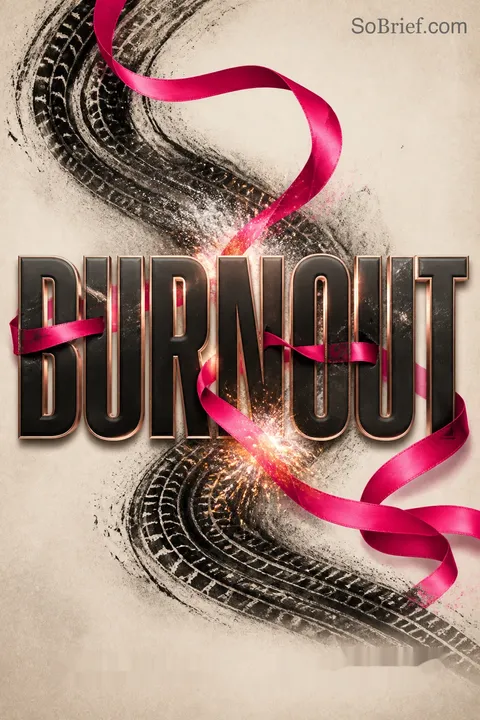


Plot Summary
Prologue
At the motocross season’s final race, Knox Holland needs a win to claim the championship. He races for his late mother’s birthday, but his teammate Link crowds him during a jump and sends him tumbling down an embankment. Knox survives, but the fall costs him the victory.
After Link takes the title, Knox loses his temper in front of the team and shoves him. The team drops Knox, choosing to protect its unity over his talent. He returns to Valley without a contract, still fast, still furious, and suddenly unsure how to keep racing.
The opening makes Knox’s anger legible before it makes it excusable. Link’s reckless move threatens both Knox’s body and the tribute he has built the race around; the public shove then turns private grief into a professional liability. Knox experiences the season as a chance to recover years he surrendered to family duty, so losing the title feels like losing time twice. Yet the team’s decision exposes a weakness his speed cannot solve: he treats control as something earned through effort, while racing depends on cooperation with people he cannot command. His return to Valley begins not as a triumph, but as a collision between ambition and the habits that once helped him survive.
Avery Misses Her Landing
At Valley University, Avery Oliver tries to reclaim the balance-beam routine that earned her an Olympic silver medal, but her injured knee locks when she prepares for its difficult dismount. Rather than risk another injury, she finishes with an easier landing. Her coach, Coach Weaver, then restricts her to floor practice, a careful step that feels to Avery like proof she is falling behind.
Tristan Williams, the men’s team’s celebrated gymnast, challenges her to stop protecting herself, while Avery’s roommate, Quinn, backs the coach’s patience. Avery knows she wants to compete, yet each cautious practice lets her avoid discovering whether her confidence has healed along with her knee.
Avery’s injury is not only a physical limit; it disrupts the method by which she understands herself. Gymnastics has let her inhabit a more daring self than her cautious everyday temperament, so the knee threatens both performance and identity. Her choice of a safe landing is rational, but it also preserves uncertainty: she cannot fail a skill she does not attempt. Coach Weaver’s restriction therefore works in two directions, protecting Avery’s body while exposing the fear that caution can disguise. Tristan names that avoidance bluntly, but Quinn offers a more humane interpretation. Their differing responses establish the central question of Avery’s recovery: how to distinguish responsible patience from surrender.
Pink Meets Black
Quinn takes Avery to watch her boyfriend, Colter, perform at a freestyle motorcycle show. On the way in, Avery brakes sharply to avoid a black motorcycle whose rider has cut across her path. She recognizes the same rider among the performers’ friends: tattooed, self-possessed Knox Holland, who studies her pink dress and white sneakers as if they belong at another event.
When Colter introduces them, Knox invites her for a ride. Avery refuses, remembering the near collision; Knox teases her, and she calls him an arrogant risk. Their attraction arrives wrapped in irritation. Avery leaves knowing little about him, except that his attention unsettles her more than she wants to admit.
Their first meeting is built from visual contrast and mutual misreading. Avery sees Knox’s dark clothes, motorcycle, and ease with attention as evidence of danger; Knox mistakes her polished appearance for fragility. Both use judgment to keep desire at a manageable distance. The show itself complicates those assumptions: Avery admires the riders’ disciplined control, while Knox has not yet seen the athletic skill beneath her pretty dress. Their banter establishes competition as a shared language, but it is also a shield. Each can flirt without admitting vulnerability because every expression of interest can be reframed as a challenge.
No Team, No Plan
After the championship, Knox asks Mike, the owner of Thorne Racing, to reconsider cutting him. Mike refuses, citing Knox’s fight with Link and the tension he created across the team. Knox insists that his riding was never the problem, but his temper has cost him the chance to prove it.
At home, he keeps trying to manage everything himself, from Flynn’s school expenses to the family’s daily routines. His older brother Hendrick points out that refusing help is not the same as protecting them, then urges Knox to join Colter’s freestyle tour. Knox resists, since tricks are not motocross racing, but Flynn’s belief in him finally gets him back on the practice track.
Knox’s professional crisis repeats an older family pattern: he assumes responsibility, rejects assistance, and treats any dependence as a threat to his autonomy. Mike’s refusal is painful partly because it is not a verdict on his talent. It identifies a social failure Knox cannot repair simply by riding faster. Hendrick’s proposal gives the problem a practical form: joining a different team could let Knox practice cooperation before asking the racing world to trust him again. Flynn’s encouragement matters because Knox has built his identity around protecting his youngest brother. The same loyalty that once kept him from pursuing his own dream now becomes the reason he finally tries a new route toward it.
The Gymnast Says No
Knox struggles to make even simple freestyle tricks look controlled, and Colter suggests that Avery’s gymnastics training helped him improve. When Knox turns up at Avery’s gym, he asks for an efficient list of exercises, then dismisses her two-hour sessions as excessive and implies she is too delicate to understand hard training.
Avery refuses to help. At Colter’s pool party, Knox apologizes and admits he was defensive about needing anyone. Avery has learned that Knox’s mother died when he was young, though he shares little else about his family. She agrees to train him several evenings a week, but warns that he will have to follow her process rather than demand a shortcut.
The refusal marks a boundary that Knox cannot overcome with confidence or charm. He approaches Avery as if expertise can be reduced to a convenient tool, then attacks the person whose help he needs when she refuses to simplify it. Her anger protects the value of her discipline, a value already under pressure from people who treat her injury as evidence of decline. Knox’s apology is an early experiment in accountability: he names his behavior without asking her to excuse it. Avery’s agreement is not forgiveness without conditions. She grants access to her knowledge only after he accepts that learning requires time, attention, and a degree of trust.
Handstands and Hard Truths
Avery begins with stretches, handstands, and controlled entries and exits, exercises Knox considers remote from riding. He watches her patiently help a young gymnast who is struggling on the beam, then starts to recognize that her coaching depends on close observation, not toughness performed for an audience.
Avery remains unsure he is benefiting, especially when he checks his phone and leaves one session early. She confronts him outside the gym, expecting another brush-off.
Instead, Knox explains that Flynn’s coach has warned that the boy’s failing math grades could affect his eligibility to play sports. Knox shows Avery a video of himself landing a freestyle trick more cleanly and credits her work with improving his awareness in the air.
This section makes instruction reciprocal. Avery teaches Knox to notice small corrections in his body; his presence also gives her a setting in which competence is visible without being measured by a competition score. The struggling child reveals her instinctive patience, while Knox’s departure exposes the family obligations beneath his brusque manner. Avery’s mistaken assumption that he has simply lost interest echoes her own fear that effort will not lead anywhere. The video does not prove that her methods solve every problem, but it gives them a concrete result to build on. Trust begins when both stop interpreting incomplete information as rejection and ask what actually happened.
A Ride After Dinner
At a sponsor dinner, Tristan questions Avery’s cautious return to gymnastics in front of the people funding her career. Knox counters that recovery takes patience and reminds the room that rushing an injury can cost an athlete everything. Grateful for his support, Avery accepts his invitation to ride with him. He takes her to a local track, where she watches him win a race.
Afterward, a drunken rider named Justin insults Knox’s career and provokes him about his father. Knox shoves Justin before he can escalate the confrontation. Avery follows him back to his motorcycle, comforts him about his lost team and his mother’s birthday, and they share their first intimate encounter, stopping short of sex.
Avery and Knox recognize each other most clearly when one of them is under scrutiny. Knox defends Avery not by insisting she is invulnerable, but by arguing that patience is part of athletic discipline. At the track, she sees the force and skill behind his confidence; after Justin’s provocation, he sees that she will stay present when his control slips. Their first physical intimacy follows this exchange of recognition. It does not erase their differences or repair Knox’s career. Instead, it creates a new risk: they have begun to rely on one another emotionally while still describing the connection as casual.
The Bartender Misunderstanding
At Colter’s birthday, Avery sees Knox leave with a tattooed woman and assumes he has chosen another hookup after flirting with her. Knox later appears at Avery’s dorm, where she admits she was jealous and uncertain how casual relationships are supposed to work. She also tells him that her former boyfriend, Nolan, cheated on her.
Avery wants to be close to Knox but sets a boundary against having sex. Knox respects it. They share an intimate night without intercourse, then remain together talking and watching television, despite his claim that he does not cuddle. Avery’s request for clarity does not make them a couple, but their tenderness makes the arrangement harder to treat as uncomplicated.
Avery’s jealousy is less possessiveness than an alarm: she has been hurt by a partner who withheld the truth, and ambiguity now feels dangerous. Her boundary lets her choose closeness without pretending that trust has already been restored. Knox’s response is important because he does not treat sexual access as the price of his attention. His willingness to stay beside her also unsettles his own rules about casual encounters. The scene shifts the romance from flirtation into negotiated intimacy. Neither character has yet named a shared future, but each has begun to behave as though the other’s comfort matters beyond the immediate pleasure of the moment.
A Place at Dinner
Knox brings Avery to the home he shares with Hendrick, Archer, Flynn, and Brogan, Archer’s longtime friend who has become family. The noisy household makes clear how closely the brothers rely on one another; Avery also learns that Knox has been Flynn’s guardian and took on adult responsibilities after their mother died and their father disappeared.
Later, Knox gives Avery a pink dirt bike and teaches her to ride on a quiet trail outside Valley. She proves a quick learner, and he shows her a hidden waterfall that matters to him. Back at his house, Avery chooses to trust him enough to have sex for the first time. Their intimacy now rests on shared history as well as attraction.
The family dinner gives Avery a view of Knox that his solitary posture cannot convey. He is not simply a man who dislikes help; he has spent years becoming the help everyone else could count on. Meeting the brothers lets her understand that his independence was shaped by necessity, not merely pride. The pink bike then reverses their usual roles: Knox offers Avery a new skill and a private place from his own history, while she accepts the gift as an invitation into his world. Their first sex follows an accumulated exchange of trust. Physical closeness becomes an extension of the care they have already shown, rather than a substitute for knowing each other.
A Medal, A New Team
At her first competition since the knee injury, Avery performs on beam and earns bronze, though she immediately notices the turn and dismount she still wants to improve. She and Quinn drive to Flagstaff to surprise Knox at a freestyle show. Knox performs a difficult Superman Seat Grab in front of the crowd, using the body control he has practiced with Avery.
After the show, Mike approaches him. Rather than offer a place back at Thorne, he connects Knox with Neon Punch, a new motocross team willing to give him a chance. Knox accepts the opening, but the news means he will leave Valley. The medal and the contract are victories, yet both arrive with uncertainty about what each athlete must give up to keep advancing.
Their parallel successes sharpen rather than erase the problem between them. Avery’s bronze confirms that she can compete again, but it does not quiet her fear that she has lost her former level. Knox’s performance shows that the detour into freestyle has developed his control, while Mike’s offer restores a path toward the career he wants. Each achievement carries a cost: Avery measures herself against a past self, and Knox must leave the people who have made Valley feel like home. The sequence frames ambition not as a solitary triumph but as a negotiation between personal growth and attachment.
The Family Line Breaks
Knox’s estranged father reappears at the track and asks to see the brothers. Knox refuses, afraid that their father will repeat his old pattern of arriving briefly and disappearing. The family disagrees about whether Flynn deserves to make that choice himself.
At a later basketball game, their father shows up, and Flynn’s promising performance ends when he breaks his pitching arm in a collision. Avery joins Knox and the brothers at the hospital while Flynn undergoes surgery.
Knox postpones his move to New Mexico, convinced Flynn needs him. Hendrick, Archer, Brogan, and Flynn insist they can manage at home and that Knox should not sacrifice another racing opportunity. Their support forces him to confront the difference between leaving and abandoning someone.
Knox’s conflict with his father is not resolved by a single apology, because the injury of abandonment lies in the repeated cycle of hope and absence. Knox tries to protect Flynn by preventing that cycle from starting, but the others recognize that protection can become another form of control. Flynn’s broken arm intensifies the conflict: Knox’s instinct is to stay, even when the family explicitly asks him to go. His brothers’ insistence that they can share responsibility challenges the belief that love requires self-erasure. Avery’s presence at the hospital makes care feel communal rather than exclusive, but Knox still has to choose whether he can trust others to carry their part.
Love, Before the Dismount
Knox joins Neon Punch after his brothers persuade him to leave Valley and trust them with Flynn’s recovery. On his first weekend home, Avery tells him she loves him and cannot keep pretending that occasional hookups are enough; Knox says he cannot promise a relationship across their demanding schedules.
The next day, at Avery’s meet, she rolls her ankle on vault and fears another season-ending injury. Knox comes to see her before returning to New Mexico and admits he loves her, asking for a real relationship despite the distance.
Avery returns to beam after the ankle is wrapped. She performs her upgraded dismount cleanly, earns a perfect ten, and runs to Knox afterward. His declaration and her landing arrive together, but neither achievement replaces the other.
The climax asks both characters to risk the failure they have been organizing their lives to avoid. Avery has protected herself from another betrayal by insisting on casual terms, then finally names the deeper attachment she wants. Knox has tried to protect her from his father’s pattern of absence by refusing to promise anything, but his refusal also denies her the agency to choose that risk for herself. His confession corrects the mistake without claiming distance will be easy. Avery’s return to beam is not caused by romance; she makes the athletic choice herself. The perfect score and the reunion therefore stand as parallel acts of trust, each achieved through effort rather than rescue.
A Future Across State Lines
Knox and Avery begin a long-distance relationship, filling the miles between New Mexico and Valley with calls, messages, flowers, and a pink Neon Punch jersey bearing his name. Flynn recovers enough to accept a baseball scholarship at the Houston university he has long wanted to attend. When Knox returns to Valley, he finds Avery preparing for a summer tour with leading gymnasts and celebrates the opportunity with her.
He also stops treating his father’s presence as a decision he alone can make: when Flynn invites their father to Parents’ Night, Knox lets him attend, though he remains guarded. The reunion does not erase the past, but Knox allows Flynn to choose what contact he wants while continuing to show up for his brothers.
The resolution does not make distance disappear; it gives the couple practices that keep the relationship tangible. Small daily exchanges matter because Knox once equated commitment with a promise he might fail to keep. He learns that reliability can be built through repeated contact, not guaranteed by geography. The family subplot reaches a similarly measured outcome. Knox does not forgive his father on Flynn’s behalf or assume that one appearance repairs years of absence. Instead, he makes room for Flynn’s choice while retaining his own boundaries. Both resolutions replace all-or-nothing thinking with ongoing responsibility: love is not a perfect guarantee, but a pattern of showing up.
Epilogue
By the next motocross season, Knox is winning races for Neon Punch in a bright pink jersey, and Avery is there with Flynn and the rest of the family to watch him finish strong. Avery has claimed an NCAA all-around title; Flynn is preparing for college; and the brothers have gathered around Knox rather than expecting him to carry everything alone.
When Knox crosses the finish line, Avery throws herself into his arms. The championship Knox once chased as a solitary tribute now belongs to a fuller life: one built from racing, family, and a love he no longer keeps at a distance.
The final race answers the opening without simply reversing it. Knox is again competing for a title, but the emotional conditions have changed: his family surrounds him, Avery shares the moment, and success no longer has to repair his mother’s loss or prove his worth to an absent father. Avery’s own championship and Flynn’s next step keep the ending from making her future an accessory to Knox’s. The pink jersey carries the playful intimacy of their relationship into his professional life, while the assembled family makes visible the support Knox once refused. Victory matters, but it is no longer the only evidence that his life has moved forward.
Analysis
Burnout links two sports through a question neither athlete can answer with talent alone: how much control is necessary for safety, and when does control become avoidance? Avery’s gymnastics depends on exactness, yet her injured knee makes precision feel like a promise she may no longer be able to keep. Knox’s motocross career rewards nerve, but his anger and refusal to rely on others repeatedly damage the teams that could sustain him. Their training exchanges make these vulnerabilities legible to each other. Avery teaches Knox that bodily control is learned through incremental attention; Knox offers her a form of belief that does not demand an immediate return to peak performance.
The romance works because support is practical before it is declarative. Avery spends hours helping Knox, Knox defends her recovery in a sponsor meeting, and both learn each other’s habits through repeated practice. Their attraction grows inside labor, not apart from it. Yet the book resists presenting love as a cure for injury, bereavement, or family instability. Avery still has to risk her own beam routine. Knox still has to join the team and decide how much influence his father should have in Flynn’s life. The relationship becomes meaningful when each person stops making decisions for the other in the name of protection.
Knox’s family history gives the novel its deepest psychological conflict. Having been abandoned by a father who came and went, Knox interprets commitment as a danger: if he cannot promise constant presence, he would rather promise nothing. This is conscientiousness shaped by fear. His brothers’ willingness to share caregiving challenges the belief that responsibility belongs to one person, while Flynn’s ability to choose his own contact with their father distinguishes agency from abandonment. The resolution does not erase past harm or guarantee an effortless long-distance romance. Instead, the characters accept uncertainty and keep showing up. The epilogue’s crowded race stands as the clearest measure of Knox’s change: he still wants to win, but he no longer has to stand alone to prove he belongs.
Review Summary
Burnout by Rebecca Jenshak is a highly-rated sports romance featuring Knox, a tattooed motocross rider, and Avery, an Olympic gymnast. Readers praise the unique sports combination, witty banter, and character development. The enemies-to-lovers dynamic and found family themes resonate strongly. Many appreciate the dual perspectives and steamy scenes. While some found the pacing uneven, most reviewers were captivated by the chemistry between Knox and Avery. The book is part of a series focusing on the Holland brothers, leaving readers excited for future installments.
People Also Read









Characters
Avery Oliver
The recovering OlympianAvery is a decorated gymnast whose precision and competitive drive have shaped her life since childhood. Away from the beam, she is more cautious than her routines suggest, and a serious knee injury makes her question whether she can return to the level that once defined her. She is perceptive, funny, and generous with her time, as shown when she coaches younger gymnasts and helps Colter improve his body control. Her care does not make her passive: she challenges Knox when he disrespects her expertise and gradually learns to state what she needs from him. Avery’s central tension is between protecting herself from disappointment and choosing the difficult work of trusting her abilities and other people.
Knox Holland
The guarded motocross riderKnox is a gifted motocross racer whose confidence on a bike contrasts with his difficulty asking for help or managing anger. After his mother’s death and his father’s repeated absences, he took responsibility for his younger brothers and built his identity around being the one who stays. That loyalty is admirable, but it can become a way to avoid his own ambitions and deny others the chance to support him. Knox is dryly funny, physically fearless, and more tender than his guarded manner suggests. He respects competence, even when he first mistakes Avery’s skill for fragility. His development depends on learning that teamwork and commitment are not weaknesses, and that staying present does not mean carrying every burden alone.
Quinn
Avery’s bold roommateQuinn is Avery’s roommate and closest college friend, a former gymnast who chose a life with more room for fun. She is playful, candid, and quick to encourage Avery out of isolation, whether by taking her to a motorcycle show or a party. Her relationship with Colter is affectionate and openly enthusiastic, offering Avery a nearby example of romantic ease. Quinn can be mischievous when she thinks Avery needs a push, but her loyalty is steady, especially when Avery is hurt or uncertain.
Colter
The freestyle riding friendColter is Knox’s childhood friend, a former motocross racer who now performs freestyle tricks. His easy warmth and optimism make him a bridge between Knox and the team that takes him in. Colter knows both men’s abilities and recognizes that Avery’s gymnastics training could help Knox, even before Knox understands why. He is also Quinn’s devoted boyfriend, comfortable showing affection and building a shared life. His confidence sometimes makes him pushy, but he consistently tries to create opportunities for the people he cares about.
Hendrick Holland
The eldest brotherHendrick is Knox’s older brother, a former professional football player who has returned to Valley and opened a bar. He is engaged to Jane and increasingly willing to help care for the family, though he knows Knox has carried more than his share. Hendrick combines blunt humor with emotional insight; he is the first to challenge Knox’s belief that self-sacrifice is the only responsible choice. His own experience pursuing a dream gives him the perspective to encourage Knox to pursue his.
Archer Holland
The observant brotherArcher is one of Knox’s younger brothers and Brogan’s longtime friend. Deaf after a childhood accident, he communicates through signing and lip-reading, and the family makes a point of including him in conversations. Archer is thoughtful and often sees the practical truth beneath Knox’s stubbornness. He supports his brother without pretending that sacrifice is always necessary, and his measured presence helps the family approach difficult questions without turning every disagreement into a fight.
Brogan
The brother by choiceBrogan is Archer’s best friend and, in every meaningful sense, one of the Holland brothers, though they are not related by blood. Knox’s mother gave him a place in the family when his own home life was difficult. He is a bartender at The Tipsy Rose, a teasing presence, and a loyal friend who is willing to call Knox out when he is being foolish. His humor softens tense moments, while his history with the family makes his advice carry particular weight.
Flynn Holland
The youngest brotherFlynn is Knox’s youngest brother, a reserved high school athlete with strong potential in basketball and baseball. Knox has spent years protecting him from the instability of their childhood, but Flynn is not simply someone to be protected. He is observant, encouraging, and increasingly willing to tell Knox what he needs, including when his brother must pursue his own career. Flynn’s choices help the family recognize that care can include trust, not only shelter.
Coach Weaver
Avery’s exacting coachCoach Weaver leads Valley’s gymnastics team with a disciplined, economical style. She sees Avery’s physical and emotional strain, limits risky skills while her knee is still healing, and expects her to rebuild carefully rather than chase an immediate return. Her restraint can frustrate Avery, but it reflects a coach’s responsibility to protect an athlete beyond the next competition. When Avery is ready, Weaver’s confidence gives her room to take risks again.
Tristan Williams
The celebrated teammateTristan is a two-time Olympic gold medalist and one of the country’s most admired collegiate male gymnasts. His skill is matched by a cocky manner and an instinct for blunt criticism, especially when he thinks Avery is holding back. He challenges her in ways that can sting, but he also knows what public expectations do to an athlete. Their history is complicated by a brief, unsatisfying kiss, and their interactions remain competitive rather than romantic.
Link
Knox’s reckless teammateLink is a younger rider on Knox’s former team, talented but known for taking aggressive risks. He wants recognition and believes Knox’s comeback has taken attention that should belong to him. His rivalry with Knox becomes consequential at the season’s final race, where a dangerous maneuver sends Knox off the track. Link functions as a reminder that individual ambition can become destructive when competition is treated as permission to endanger a teammate.
Mike
The former team ownerMike owns Thorne Racing and values a team’s ability to work together as much as any individual rider’s speed. He knows Knox is talented, but he refuses to overlook the fight and conflict that follow the championship crash. Mike is neither a simple villain nor an easy source of redemption; his decision forces Knox to face the professional cost of his temper. Later, he helps connect Knox with another opportunity.
Brooklyn
The sharp freestyle riderBrooklyn is the only woman on Colter’s freestyle team, a skilled rider with a guarded manner and a sharp sense of humor. She organizes events and understands the demands of performing in a high-risk sport. Brooklyn is not quick to welcome newcomers, but she respects ability and notices Knox’s progress. Her practical presence gives Avery a glimpse into the rider community beyond Knox’s particular charm.
Hope
Avery’s young gymnastHope is a thirteen-year-old gymnast who gravitates toward Avery at the local club gym. Fearless and talkative, she prefers difficult skills and keeps working when a turn or landing goes wrong. Avery’s informal coaching helps her develop, and Hope’s direct questions about relationships often puncture the adults’ evasions. She admires both Avery and Knox, and her enthusiasm makes their growing connection visible to others.
Jane
Hendrick’s fiancéeJane is Hendrick’s fiancée and a senior at Valley University. Known professionally as Ivy Greene, she had a career as a child performer before choosing a quieter college life. She is warm, perceptive, and quickly welcomes Avery into the Holland household. Jane’s relationship with Hendrick offers a model of partnership that is affectionate without being effortless, and she is willing to challenge Knox when he confuses caution with doing the right thing.
Knox’s father
The absent parentKnox’s father is an estranged parent whose intermittent presence shaped the brothers’ childhood. His unpredictable returns left Knox wary of promises and determined to protect Flynn from similar disappointment. He believes he can reopen family relationships by appearing again, while his sons remember the years when he failed to show up. His presence forces the brothers to decide what boundaries mean when a younger sibling may want a different relationship.
Knox’s mother
The family’s steady centerKnox’s mother owned the local bar and was a generous presence in the brothers’ home, including to Brogan when he needed a place to belong. She encouraged Knox’s ambition and loved watching gymnastics, even though her sons’ lives took them in different athletic directions. Her memory remains important to Knox, who carries a rose tattoo and marks her birthday through racing. The brothers’ loyalty to one another reflects the care she gave them.
Nolan
Avery’s former boyfriendNolan is Avery’s former boyfriend, a college basketball player whose dishonesty left her cautious about trusting romantic partners. His past relationship with Avery influences the boundaries she sets with Knox, even though Nolan is not present in her day-to-day life.
Plot Devices
The balance beam
A test of renewed trustThe beam makes Avery’s recovery visible in a precise, physical form. A wobble, a cautious dismount, or a clean combination translates private confidence into observable action. Her injury turns the apparatus from a familiar home into a place where every movement can expose fear. The beam also parallels Knox’s motorcycle work: both athletes must learn to manage risk through control rather than brute force. Avery’s progress on it belongs to her own training, not to Knox’s encouragement, though his belief in her helps her see that the skill is still within reach.
Freestyle riding
Control through surrenderFreestyle riding forces Knox to move beyond the racing skills he already trusts. He must leave the seat, reposition his body, and return to the bike in midair, making athletic control depend on tolerating a temporary loss of ordinary control. Avery’s gymnastics lessons give him a new vocabulary for balance, alignment, and timing. The sport also places him inside Colter’s cooperative team, where preparation and trust matter alongside individual daring. Freestyle therefore advances the career plot while making Knox confront the same difficulty in relationships: allowing support without treating it as weakness.
The rose tattoo
A private memorialKnox’s rose tattoo links his mother’s memory to his body and his racing life. He touches it before the championship race, dedicating the effort to her birthday, and its presence explains why the loss of the title cuts deeper than an ordinary professional defeat. The mark is an intimate reminder rather than a public speech about grief. It gives Avery a way to understand that Knox’s ambition is tangled with family love, while also showing how he carries loss without readily discussing it.
The pink dirt bike
A gift that invites trustKnox’s pink dirt bike turns his interest in Avery’s world into a concrete invitation. He does not merely praise her athleticism; he provides the equipment and instruction that let her try his sport for herself. Its color echoes Avery’s personal style and stands out against Knox’s habitual black clothing. The bike makes their relationship reciprocal: she has helped him develop control in the gym, and he gives her access to a new kind of movement and a private landscape beyond campus. Because the gift marks a major step in their intimacy, this device contains a relationship spoiler.
Distance between teams
A test of commitmentThe athletes’ schedules create a practical conflict rather than a misunderstanding that can be solved by one conversation. Knox must travel to New Mexico to join a new racing team, while Avery remains in Valley for classes, recovery, and collegiate competitions. Knox initially treats distance as a reason not to promise a relationship, fearing that limited presence will repeat his father’s harm. Avery asks for more because she understands that intimacy without honesty is not enough. Their calls and messages later turn the schedule into a repeated choice to remain involved rather than a guarantee that the distance will feel easy.
FAQ
Synopsis & Basic Details
What is Burnout about?
- Dual Journeys, Shared Growth: Burnout follows the intertwined stories of Knox, a motocross racer grappling with loss and responsibility, and Avery, a gymnast recovering from injury, as they navigate personal and professional challenges.
- Unexpected Connection: Their paths cross when Knox seeks Avery's help to improve his freestyle skills, leading to a complex relationship filled with tension, attraction, and mutual support.
- Themes of Resilience: The novel explores themes of resilience, family, and personal growth as both characters confront their fears and insecurities, ultimately finding strength in their vulnerabilities.
Why should I read Burnout?
- Compelling Characters: The novel features well-developed characters with relatable struggles, making their journeys both engaging and emotionally resonant.
- Dynamic Relationship: The evolving relationship between Knox and Avery is filled with tension, humor, and heartfelt moments, offering a compelling exploration of trust and connection.
- Themes of Growth: Burnout delves into themes of resilience, family, and personal growth, providing a thought-provoking and inspiring read that explores the power of overcoming adversity.
What is the background of Burnout?
- Contemporary Setting: The story is set in a contemporary world, focusing on the competitive environments of motocross racing and collegiate gymnastics.
- Sports Culture: The novel explores the demanding nature of these sports, highlighting the physical and mental challenges faced by athletes.
- Personal Struggles: The background also includes the personal struggles of the characters, such as Knox's family responsibilities and Avery's recovery from injury, adding depth and complexity to the narrative.
What are the most memorable quotes in Burnout?
- "I don't say things I don't mean.": This quote from Knox highlights his directness and honesty, a trait that contrasts with his initial guarded nature and becomes a cornerstone of his relationship with Avery.
- "You're better than this. Get out of your head.": Tristan's blunt advice to Avery, though harsh, underscores the internal battles she faces and the need to overcome her self-doubt.
- "I'm sorry because I was a jerk.": Knox's simple yet sincere apology to Avery marks a turning point in their relationship, showcasing his willingness to acknowledge his flaws and grow.
What writing style, narrative choices, and literary techniques does Rebecca Jenshak use?
- Dual POV: The story is told from the alternating perspectives of Knox and Avery, allowing readers to gain insight into their thoughts, feelings, and motivations.
- Dialogue-Driven: The narrative relies heavily on dialogue, creating a fast-paced and engaging reading experience that highlights the characters' personalities and relationships.
- Emotional Depth: Jenshak uses vivid descriptions and internal monologues to convey the characters' emotional states, drawing readers into their personal struggles and triumphs.
Hidden Details & Subtle Connections
What are some minor details that add significant meaning?
- The Rose Tattoo: Knox's rose tattoo, a tribute to his late mother, is a recurring symbol of his love and grief, highlighting his deep emotional connection to his family.
- Avery's Leotards: The color of Avery's leotards often reflects her emotional state, with pink representing her vulnerability and blue her strength, adding a subtle layer of symbolism.
- The Black Motorcycle: Knox's all-black motorcycle symbolizes his tough exterior and rebellious nature, contrasting with Avery's pink Bronco, which represents her more open and vulnerable personality.
What are some subtle foreshadowing and callbacks?
- Link's Recklessness: Link's aggressive riding style foreshadows his role in Knox's championship loss, highlighting his inability to prioritize teamwork over personal ambition.
- Avery's Handstands: Avery's handstand exercises with Colter foreshadow her ability to help Knox with his freestyle skills, showcasing her expertise and control.
- The "Princess" Nickname: Knox's use of "princess" as a nickname for Avery, initially a taunt, evolves into a term of endearment, reflecting the changing dynamics of their relationship.
What are some unexpected character connections?
- Colter and Avery's Training: Colter's past training with Avery reveals a shared history and a connection that helps Knox see her in a new light, highlighting the small world of Valley.
- Brooklyn's Father: Brooklyn's connection to a legendary rider adds depth to her character and creates a parallel with Knox's own family history, showcasing the pressures of living in the shadow of a famous parent.
- Hendrick and Jane's Relationship: Hendrick and Jane's relationship provides a counterpoint to Knox and Avery's, highlighting different approaches to love and commitment, and showing the importance of support.
Who are the most significant supporting characters?
- Flynn: As Knox's younger brother, Flynn's journey and aspirations are a constant source of motivation for Knox, highlighting the importance of family and responsibility.
- Quinn: As Avery's best friend, Quinn provides emotional support and a contrasting perspective on relationships, helping Avery navigate her feelings for Knox.
- Colter: As Knox's friend and Avery's former training partner, Colter serves as a bridge between their worlds, facilitating their connection and offering guidance.
Psychological, Emotional, & Relational Analysis
What are some unspoken motivations of the characters?
- Knox's Need for Control: Knox's desire to control his environment stems from his past experiences with loss and instability, driving his need to protect his family and succeed in racing.
- Avery's Fear of Failure: Avery's reluctance to fully commit to her training stems from her fear of reinjury and the pressure to live up to her past success, highlighting her internal struggle with self-doubt.
- Link's Insecurity: Link's aggressive behavior is driven by his insecurity and need for validation, revealing his underlying desire to prove himself and outshine Knox.
What psychological complexities do the characters exhibit?
- Knox's Emotional Guard: Knox's emotional guard is a defense mechanism against further loss and vulnerability, making it difficult for him to express his feelings and trust others.
- Avery's Perfectionism: Avery's perfectionism is a coping mechanism for her fear of failure, driving her to push herself to her limits while also making her hesitant to take risks.
- Tristan's Entitlement: Tristan's entitlement stems from his past success and recognition, leading him to believe he is superior to others and deserving of special treatment.
What are the major emotional turning points?
- Knox's Apology: Knox's sincere apology to Avery marks a turning point in their relationship, as he acknowledges his flaws and shows a willingness to change.
- Avery's Vulnerability: Avery's admission of her jealousy and insecurities allows her to connect with Knox on a deeper level, fostering trust and understanding.
- Flynn's Injury: Flynn's injury forces Knox to confront his fears and insecurities, leading him to reevaluate his priorities and seek support from others.
How do relationship dynamics evolve?
- From Tension to Trust: The relationship between Knox and Avery evolves from initial tension and misunderstandings to a place of mutual respect and support, highlighting the power of communication and vulnerability.
- From Competition to Camaraderie: The dynamic between Knox and his teammates shifts from rivalry to camaraderie, as they learn to work together and support each other's goals.
- From Independence to Interdependence: Both Knox and Avery learn to rely on others, recognizing the importance of support and connection in overcoming personal and professional challenges.
Interpretation & Debate
Which parts of the story remain ambiguous or open-ended?
- Knox's Future with Neon Punch: While Knox joins Neon Punch, the long-term implications for his career and personal life remain open-ended, leaving readers to wonder how he will balance his ambitions with his relationships.
- Avery's Long-Term Goals: Avery's future in gymnastics is left somewhat ambiguous, as she continues to navigate her recovery and explore new opportunities, leaving readers to speculate about her path.
- The Nature of Knox and Avery's Relationship: The exact nature of Knox and Avery's relationship is left open to interpretation, as they navigate the complexities of love, commitment, and personal growth.
What are some debatable, controversial scenes or moments in Burnout?
- Knox's Initial Treatment of Avery: Knox's initial dismissive and insulting behavior towards Avery is a point of contention, raising questions about his character and the nature of their relationship.
- Avery's Jealousy: Avery's jealousy over Knox's interactions with other women is a debatable moment, highlighting the complexities of her emotions and the challenges of navigating a new relationship.
- Knox's Decision to Leave: Knox's decision to leave for New Mexico despite his feelings for Avery is a controversial moment, raising questions about his commitment and his ability to balance his personal and professional life.
Burnout Ending Explained: How It Ends & What It Means
- Open-Ended Hope: The ending of Burnout is not a neat resolution, but rather an open-ended hope for the future, with Knox and Avery acknowledging their love for each other while also facing the challenges of distance and personal growth.
- Focus on Personal Growth: The ending emphasizes the importance of personal growth and self-discovery, as both characters continue to navigate their individual journeys while also supporting each other.
- Uncertainty and Possibility: The ending leaves readers with a sense of uncertainty and possibility, highlighting the complexities of love and relationships and the potential for growth and change.
Holland Brothers Series




Download PDF
Download EPUB
.epub digital book format is ideal for reading ebooks on phones, tablets, and e-readers.








