

Key Takeaways
Recycle acquisition capital to turn one successful rental into the next.
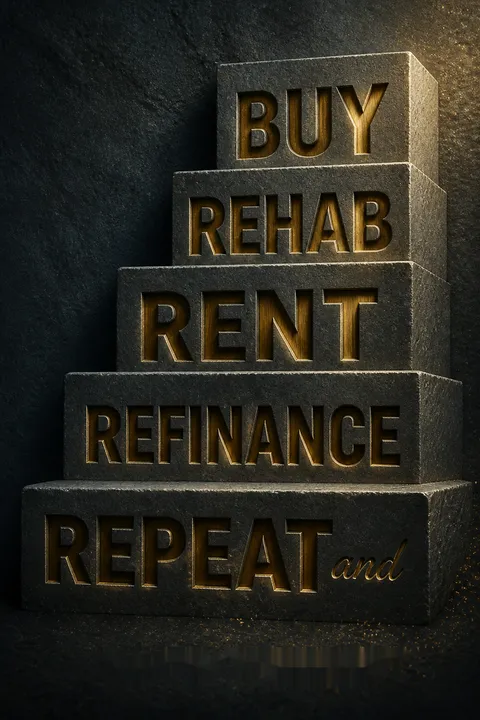
Change the order of financing. BRRRR means buying a property, improving it, renting it, refinancing against its improved value, and using recovered capital to invest again. In a traditional purchase, a mortgage is arranged first, often leaving much of the new equity inaccessible. BRRRR postpones long-term financing until after improvements have raised the property’s value. The strategy aims to make the same pool of money fund multiple purchases, rather than leaving it tied up in each one.
Greene’s first Florida deal. After selling a low-performing Arizona rental for about $65,000 net, Greene bought and renovated a Florida property with cash. Refinancing returned $80,000, including $15,000 more than he had invested. He says that initial capital eventually helped him acquire ten Florida properties. The result illustrates the model’s potential, not a guaranteed outcome: costs, appraisals, and loan terms determine how much cash actually comes back.
The powerful idea is not simply borrowing more. It is shortening the time between investing capital and making it available for another productive use. Finance calls this capital turnover; business operators recognize the same logic in inventory that must move rather than sit on a shelf. Yet a refinance does not create free wealth. It converts equity into debt, so the strategy succeeds only when the rental income and reserves can support the larger payment. The story is persuasive as a demonstration of possibility, but one investor’s favorable result cannot establish a typical return.
Make your margin at purchase, not through optimistic rehab math.
Start with a discount. Greene identifies three sources of distress that can produce buying opportunities: weakness in a whole market, an owner’s personal difficulties, or a property’s physical problems. He particularly favors damaged properties because their condition can deter financed buyers, leaving fewer competitors. His rough screens include the 1 percent rule, where monthly rent is about 1 percent of the purchase price, and a target of keeping purchase plus renovation costs near 75 percent of after-repair value, or ARV. These are filters, not proof of a profitable deal.
Know what creates value. Single-family houses are generally compared with nearby similar sales, while larger multifamily properties are assessed more like businesses, with income central to value. Greene’s cautionary story of Sam shows the cost of ignoring the numbers: Sam overpaid, inflated his expected resale value, and then tried to rescue the deal with an ambitious renovation. The original purchase price left too little margin for mistakes.
This section’s strongest discipline is separating a deal’s potential from the story an eager buyer tells about it. In decision science, overconfidence often appears as false precision: an uncertain future appraisal gets treated as a dependable number. Simple screens can interrupt that tendency, but they can also mislead when treated as laws. A 1 percent rent ratio says little about taxes, repairs, insurance, vacancy, or local demand. The 75 percent target also depends on financing assumptions and costs. The useful habit is to test conservative scenarios, not to make a rule appear true by stretching the inputs.
Find mispriced properties by solving problems ordinary buyers cannot finance.
Build a deal-finding network. Greene’s essential team, called the Core Four, consists of an agent, lender, contractor, and property manager. Together, they can identify properties, estimate financing, price repairs, and assess rental prospects. He recommends finding experienced people through investors and other trusted professionals, and earning their cooperation by bringing referrals, clear communication, and reliable business. Deal sources range from agents and wholesalers to direct mail, personal contacts, auctions, and driving through neighborhoods to spot neglected homes.
Verify what others provide. A wholesaler can bring a property already under contract, saving the buyer time, but may not represent the buyer’s interests. Greene recounts buying a property advertised with 30 percent more square footage than it actually had. Verify measurements, comparable sales, zoning, flood risk, and other material claims with independent sources. A cash or cash-equivalent offer can appeal to sellers seeking speed and certainty, but urgency is no substitute for due diligence.
The network is not just a collection of contacts. It is a way to gather specialized knowledge before one person’s blind spot becomes an expensive commitment. This resembles distributed decision-making: an agent may understand local sales, while a manager knows tenant demand and a contractor sees hidden repair scope. The model works best when incentives are explicit and each specialist can disagree without risking the relationship. It also has a real tension: trusted referrals reduce search costs, but familiarity can encourage complacency. Independent verification keeps relationships useful without turning trust into a substitute for evidence.
Treat renovation dollars as tests of value, not decorative upgrades.
Spend where the market notices. A renovation should either improve condition, increase usable space, support higher rent, or strengthen the appraisal. Greene looks first for inexpensive ways to add bedrooms, bathrooms, or square footage, particularly when an existing layout contains underused space. He also describes upgrade hacking: when labor and demolition are already necessary, spending a little more on durable, appealing materials in a small area can make the finished property look substantially better without greatly increasing the total project cost.
Control scope and execution. Kitchens and bathrooms often offer visible improvements, but luxury finishes are not automatically worthwhile in a rental. Get itemized bids that separate labor, materials, and tasks, and agree on scope and timing before work begins. Pay in stages after checking completed work rather than paying the entire amount upfront. Greene’s experience with a roof leak that led to severe structural damage also makes a practical point: inspect major systems early, and budget for costly repairs before refinancing.
The section treats renovation as a capital-allocation problem, not a decorating contest. That is a useful shift: the relevant question is whether an improvement changes what tenants will pay, how quickly the unit rents, or how an appraiser compares it with nearby homes. The fixed-cost argument behind modest upgrades is especially compelling when labor is already committed. However, an appraisal premium is uncertain, and a visually impressive finish may not survive tenant use. A sound renovation plan balances appeal with durability and assigns a conservative value to benefits that cannot be directly controlled.
Underwrite rent and tenants as carefully as acquisition price.
Check rent in stages. For an initial estimate, Greene recommends rental-comparison tools and deal calculators. After a property becomes a serious candidate, verify the estimate with local investors, property managers, and rental listings in the multiple listing service. A manager can also judge whether the neighborhood is one they are willing to serve. To gauge future rent pressure, Greene looks at employment, housing supply, time on market, how quickly managers fill vacancies, new construction, and whether existing tenants accept rent increases.
Vacancy can erase a premium. A unit advertised at the highest plausible rent may sit empty while a cheaper comparable rents quickly. Greene argues that filling a unit promptly, then adjusting rent at renewal, can outperform holding out for a small monthly increase. He also stresses tenant screening, responsive management, and choosing areas with strong amenities and care for property. Hospital and school proximity are among his suggested indicators of a potentially attractive tenant pool, not guarantees of tenant quality.
Rent estimates are forecasts of behavior, not just numbers copied from nearby listings. A rental may look comparable on paper yet attract fewer applicants because of condition, street location, or competing supply. Checking multiple sources is therefore a form of triangulation: agreement among independent estimates is more informative than confidence in any single one. The vacancy example also highlights a subtle point in pricing, where a small discount can buy time and reduce lost income. Still, a low asking rent does not ensure a good tenant or justify weak screening. Price strategy and tenant selection solve different problems.
Confirm refinance terms before buying; equity is not cash.
Ask the lender before committing. Greene recommends securing a pre-approval and clarifying the lender’s seasoning period, cash-out rate, closing costs, loan limits, and rules for investment properties. Seasoning is the required time a lender may make an owner wait before refinancing. A portfolio lender keeps loans on its own books and may offer more flexibility than a lender that sells loans onward, though its rates and terms can differ.
Understand the value basis. Loan-to-value, or LTV, measures the loan against the appraised property value. Loan-to-cost, or LTC, measures it against the investor’s project costs. If a renovated property appraises at $100,000 and a lender allows 75 percent LTV, the loan ceiling is $75,000 before fees and other limits. That does not mean the investor will recover all project costs. A low appraisal, closing charges, lender policy, or insufficient qualifying income can leave substantial capital in the property.
The refinance is the strategy’s hinge, so lending assumptions deserve the same scrutiny as the purchase and repair estimates. This is a classic problem of liquidity versus solvency: a property can have positive equity on paper while the owner lacks cash to meet immediate obligations. A lender’s approval can also depend on borrower finances and underwriting rules, not merely property value. Confirming terms early reduces one uncertainty, but it cannot eliminate appraisal risk or future changes in credit conditions. The strongest plan includes a fallback, such as holding the asset with adequate reserves or selling if the rental economics fail.
Keep reserves and sustainable debt, because leverage magnifies each mistake.
Separate equity from protection. Greene argues that positive cash flow and cash reserves, rather than a large amount of trapped equity, help an owner keep making payments during vacancies, repairs, or other disruptions. Reserves matter because equity is not always quickly accessible, especially when values fall or lenders tighten standards. A well-bought property can also retain options: refinance, hold, or sell, depending on the rental performance and available opportunities.
Count the costs of each exit. Selling may involve commissions, closing expenses, and taxes on a gain. Refinancing can provide access to equity without a sale, but it adds debt and still carries costs. Greene presents refinancing as generally not taxable in the way a sale is, while tax treatment depends on the specific circumstances and merits professional advice. Higher leverage can increase the return on the remaining cash, but it also raises payments and magnifies the consequences of a rent shortfall, repair surprise, or lower appraisal.
The book is right to distinguish equity from operating resilience, but it sometimes treats leverage as less risky because the investor can recycle more capital. Both points can be true: capital left in a property may be exposed to loss, while debt creates a fixed obligation regardless of occupancy. The relevant question is not whether leverage is good or bad in the abstract, but whether the rental can withstand plausible stress. Stress-testing rent, vacancy, repairs, and refinancing terms is more informative than comparing a projected return with a borrowing rate alone.
Systematize repeatable work before scaling property count.
Turn experience into process. Greene’s Four E’s framework asks investors to reduce wasted effort, improve the odds of a good result, shorten delays, and delegate suitable tasks. Checklists for offers, inspections, repairs, lender requirements, and tenant turnover make expectations easier to repeat and mistakes easier to catch. He also recommends reviewing failures, keeping backup professionals, and staying in touch with people who may bring future deals.
Scale only after learning the unit. His hypothetical comparison gives Tom, who saves $42,000 annually and buys conventionally, 15 properties, while Mike’s BRRRR approach reaches 84 in the model. The figures depend on stated assumptions about timing, financing, rent, and repeated deal quality, so they are an illustration rather than a forecast. The broader point is that recycling capital and improving operations can compound results. But higher volume also multiplies errors, so test the process before expanding it.
Systems convert personal know-how into organizational capacity. A checklist does not make an investor brilliant, but it can prevent a forgotten inspection or an unclear repair agreement from undoing a strong deal. This is the practical bridge between a strategy and scale: repeatable work can be delegated, audited, and improved. The Tom and Mike contrast gives that idea narrative force, though its long-run arithmetic rests on unusually consistent execution. Real businesses face uneven repairs, lending constraints, and changing markets. Volume is an advantage only after the underlying process performs under ordinary friction.
Analysis
BRRRR is best understood as a capital-recycling strategy inside a leveraged rental business. Its distinctive promise is not that rehabilitation automatically creates profit, but that purchasing below value, improving the asset, and financing against the finished property may allow the investor to reuse capital while retaining ownership. That sequence can accelerate acquisitions compared with leaving most available funds in each purchase. It also creates a demanding coordination problem: acquisition, construction, leasing, appraisal, lending, and operations must all work well enough for the next cycle to begin.
The book’s memorable comparisons make the case vividly, especially the contrasting investors and the author’s account of turning one sale into a growing portfolio. Those stories demonstrate a mechanism, not a controlled comparison or typical outcome. The model assumes access to favorable deals, reliable contractors, adequate liquidity, successful appraisals, suitable financing, and rents that cover the resulting debt. If even one assumption fails, the investor may have more capital trapped in a property, not less. The hypothetical portfolio projections should therefore be read as illustrations of compounding under specified conditions, not as expected results.
A useful decision test is to separate three questions. First, does the property work as a rental using conservative operating assumptions? Second, does the purchase and improvement plan leave enough equity after fees and a cautious appraisal? Third, can the owner carry the debt if the refinance is delayed or the unit is vacant? These questions temper the book’s enthusiasm for leverage without rejecting its central insight. Capital efficiency matters, but resilience matters too. Investors should treat refinance proceeds as borrowed funds, preserve reserves, and compare holding with selling when the economics change. The approach is most compelling when disciplined underwriting and operational systems accompany the ambition to scale.
Review Summary
Buy, Rehab, Rent, Refinance, Repeat receives mostly positive reviews for its comprehensive explanation of the BRRRR real estate investment strategy. Readers appreciate the detailed information and practical advice, though some find it repetitive or overly promotional. Many praise the book for its clarity and usefulness for both beginners and experienced investors. Critics note that it could be more concise and provide more balanced perspectives on risks. Overall, reviewers find it valuable for understanding the BRRRR method, even if they don't ultimately pursue this strategy.
People Also Read





Glossary
BRRRR
Rental capital-recycling methodAn investment sequence in which an investor buys a property, improves it, rents it, and refinances based on its improved value. The investor aims to recover some or all of the initial capital and use it for another purchase. The amount recovered depends on the appraisal, lender terms, project costs, and rental performance.
After Repair Value (ARV)
Estimated post-renovation valueThe estimated market value of a property after planned improvements are complete. For a single-family home, investors commonly estimate ARV by comparing the renovated property with similar nearby sales. It helps set a maximum purchase and renovation budget, but it remains an estimate until supported by an appraisal or sale.
Loan to Value (LTV)
Loan as share of valueA lending measure comparing the loan amount with the appraised value of the property. If a lender offers 75 percent LTV on a property appraised at $100,000, the theoretical loan amount is $75,000 before fees, underwriting limits, or other conditions. A higher LTV can return more capital while increasing debt.
Loan to Cost (LTC)
Loan as share of costsA lending measure comparing the loan amount with the investor’s project costs, typically including acquisition and renovation expenses. Unlike LTV, it does not directly use the finished property’s appraised value as its basis. Investors compare LTC and LTV terms because they can produce very different refinance proceeds.
Core Four
Essential investing teamGreene’s name for four professionals who support a rental investment business: an agent who helps source and assess properties, a lender who arranges financing, a contractor who manages improvements, and a property manager who handles tenants and operations. The framework emphasizes finding capable, reliable collaborators rather than trying to perform every role alone.
Upgrade hacking
Low-cost value-enhancing upgradesA renovation approach that looks for modest additional spending that can improve a property’s appeal or durability when labor or demolition is already required. For example, an investor might choose a better material for a small bathroom surface. The method depends on local tenant preferences, project scope, and whether the upgrade supports rent or value.
1 Percent Rule
Rough rent screening ratioA preliminary screening guideline that compares monthly rent with the purchase price. A property meets the rule when its monthly rent is roughly 1 percent of its price. It can help decide which opportunities deserve closer review, but it does not account for taxes, insurance, debt payments, vacancy, repairs, or management.
Four E’s
Operational improvement frameworkGreene’s framework for improving business processes through four aims: using less effort or money, raising the likelihood of success, completing work faster, and assigning suitable tasks to others. He applies the framework to repeated real estate activities, using systems and reviews of past work to improve performance.
LAPS
Deal evaluation sequenceA deal-finding sequence named for lead, analyze, pursue, and success. An investor begins with many possible opportunities, evaluates those that fit initial criteria, makes offers on selected properties, and completes due diligence and closing on accepted offers. Each stage narrows the pool and concentrates effort on stronger prospects.
Path of Progress
Direction of local growthA way of thinking about how housing demand may spread outward from expensive or expanding employment centers. Buyers priced out of one area may move toward nearby locations, potentially increasing demand there. The concept asks investors to examine employment, affordability, infrastructure, geographic barriers, and new development rather than assume appreciation.
Velocity of money
Capital reuse frequencyThe speed or frequency with which the same investment capital can be recovered and deployed again. In BRRRR, a refinance may return funds from a renovated rental so they can support another purchase. Greater velocity can expand acquisition capacity, but only if the new debt remains affordable and the underlying investments perform.
FAQ
What's Buy, Rehab, Rent, Refinance, Repeat about?
- Focus on Real Estate Investing: The book outlines the BRRRR method, a systematic approach to building wealth through rental properties.
- Step-by-Step Guidance: It provides detailed instructions for each phase of the BRRRR process, making it accessible for both new and experienced investors.
- Personal Success Story: Author David Greene shares his journey from a police officer to a successful real estate investor, illustrating the method's transformative power.
Why should I read Buy, Rehab, Rent, Refinance, Repeat?
- Simplifies Complex Concepts: Greene breaks down intimidating aspects of real estate investing, making them approachable for anyone.
- Proven Strategies: The book is filled with real-life examples and strategies that demonstrate the effectiveness of the BRRRR method.
- Empowerment Through Knowledge: Readers gain the confidence and knowledge needed to take action in real estate investing.
What are the key takeaways of Buy, Rehab, Rent, Refinance, Repeat?
- Importance of Buying Right: Securing properties at a discount is crucial for long-term success.
- Maximizing ROI: The BRRRR method allows investors to recover more capital than initially invested, leading to higher returns.
- Building a Strong Team: Surrounding yourself with a "Core Four" team—agents, lenders, contractors, and property managers—is essential.
What is the BRRRR method in Buy, Rehab, Rent, Refinance, Repeat?
- Definition of BRRRR: It stands for Buy, Rehab, Rent, Refinance, and Repeat, a systematic approach to real estate investing.
- Step-by-Step Process: Each step is designed to create value and recover capital, enhancing financial stability and growth.
- Focus on Cash Flow: Emphasizes generating cash flow through rental income while building equity through property appreciation.
How does the BRRRR method increase ROI according to David Greene?
- Lower Investment Basis: Buying at a discount and refinancing based on increased value lowers the investment basis.
- Recovering Capital: Investors can pull out more capital than initially invested, creating a cycle of continuous investment.
- Efficiency in Investing: Increases the velocity of money, allowing capital to work harder and grow wealth over time.
What are some common rehab strategies mentioned in Buy, Rehab, Rent, Refinance, Repeat?
- Adding Square Footage: Increasing property size can significantly boost its value.
- Increasing Bedrooms and Bathrooms: More bedrooms and bathrooms make properties more desirable and can command higher rents.
- Strategic Remodeling: Focus on kitchens and bathrooms for remodels, as they yield the highest returns.
How can I find great deals in real estate as suggested in Buy, Rehab, Rent, Refinance, Repeat?
- Networking with Other Investors: Building relationships can lead to valuable insights and opportunities.
- Using Wholesalers: They can help find properties at a discount, but it's crucial to verify their information.
- Direct Mail Campaigns: Sending mail to potential sellers can uncover motivated sellers willing to sell at a discount.
What are the benefits of cash offers in real estate according to David Greene?
- Stronger Negotiating Position: Cash offers are more attractive to sellers, increasing the likelihood of closing deals smoothly.
- Access to Distressed Properties: Many distressed properties require cash offers, tapping into a market often overlooked.
- Faster Closing Times: Cash transactions can close much faster, often within ten days, providing an advantage in competitive markets.
How can I build a strong team for real estate investing as per Buy, Rehab, Rent, Refinance, Repeat?
- Identify Your Core Four: Assemble a team of a real estate agent, lender, contractor, and property manager.
- Seek Out Investor-Friendly Professionals: Look for team members who also invest in real estate for better understanding and insights.
- Bring Value First: Establish relationships by offering value to your team members, building trust and encouraging prioritization of your needs.
What are some common pitfalls to avoid in real estate investing according to David Greene?
- Overpaying for Properties: Always buy under market value to protect your investment.
- Neglecting the Rehab Process: Manage the rehab process effectively to avoid cost overruns and delays.
- Ignoring Market Conditions: Be aware of market trends and plan for potential corrections to safeguard investments.
How do I calculate cash flow for a rental property as explained in Buy, Rehab, Rent, Refinance, Repeat?
- Income vs. Expenses: Subtract all operating expenses from total rental income to calculate cash flow.
- Consider All Costs: Include property management fees, maintenance, insurance, and taxes in calculations.
- Use Tools for Accuracy: Utilize online calculators like BiggerPockets for quick analysis of potential cash flow and ROI.
What are the best quotes from Buy, Rehab, Rent, Refinance, Repeat and what do they mean?
- “Cash flow covers your expenses.”: Highlights the importance of maintaining positive cash flow to sustain investments.
- “You can only lose what you put in the pot.”: Encourages leveraging other people's money to minimize risk exposure.
- “Real estate is a get-rich-slow game.”: Emphasizes the importance of patience and long-term strategies in building wealth through real estate.
About the Author


Download PDF
Download EPUB
.epub digital book format is ideal for reading ebooks on phones, tablets, and e-readers.








