


Plot Summary
Tamil’s Lasting Sacrifice
At Tamil’s funeral, Adara watches the ice fae lower their dead beneath a sacred lake. Tamil and the priestess Tuliana died protecting Adara from General Slaugh’s forces, leaving the clan without its heir or spiritual guide. The Oracle Quye explains why their losses matter: Nox, the shadow demon once inside King Aolis, is provoking the Houses into war to generate enough chaos to open a passage into the shadow realm.
Adara urges Lord Tor not to avenge his daughter, since fighting would feed Nox’s plan. He agrees to seal the ice fae borders instead, but warns that his people cannot wait long. The failed ritual still needs a priestess, and Adara’s only remaining hope lies with the dragons who fled Ediria.
The funeral makes the cost of Adara’s choices visible before the quest resumes: her allies’ deaths are not abstract casualties but a family’s grief and a people’s endangered future. Her appeal to Lord Tor turns mourning into a political test. Revenge is emotionally legible, yet strategically useful to Nox, so Adara must ask a warrior community to practice restraint without diminishing its loss. Einar’s support and Quye’s bluntness help Adara relinquish misplaced guilt, but they cannot erase responsibility. The section establishes the story’s central pressure: the heroine must act quickly while persuading others not to make the crisis worse.
The Portal’s Price
The group divides its work. Mavlyn and Leap return toward Domhain to discourage enlistment, while Adara, Einar, and Quye cross the shadow barrier into the ruined fire fae realm.
Shadow beasts attack during their flight, and Einar brings them to shelter at his family’s devastated estate, where Adara sees what the fae war cost him. In a tower, Quye finds an ancient fire fae letter and journal about dangerous magical experiments. At Mount Furian, Einar reopens the portal with his blood and a Radiant-charged stone, but as its keeper he cannot pass through.
Adara and Quye leave him behind for four weeks. Their incomplete mating bond makes the separation painful for both, while Einar searches the ruins for history and gathers primal stones for their return.
The journey binds intimate and historical wounds together. Adara sees the physical ruin of Einar’s home, while he must accept a separation that makes their attachment hurt rather than simply console. The portal’s rules also keep him from solving the crisis by following her, forcing both lovers to trust each other at a distance. Meanwhile, the old journal offers a counterweight to inherited history: the dragons’ story may not be the story Ediria was taught. The choice to carry it forward is deliberately uncertain, since recovering knowledge does not immediately heal the damage that ignorance has already caused.
Gods in Disguise
Adara and Quye emerge in Palmyria, where strangers bow before them as divine visitors. Their search for the dragons leads through a desert city and into a temple dispute: one dragon has been presented as the crocodile god Sobek-Ra, and his people have become the favored objects of worship.
When a dragon calls Adara and Quye enemies and orders their deaths, the moon goddess’s High Priestess Anuket gives them sanctuary. Under the temple’s truth-compelling moonlight, the travelers explain their origin and reveal that the supposed deity is a refugee from Ediria.
Anuket realizes High Priest Inatol has used the deception to enrich his temple and weaken rival faiths. Adara feels she has betrayed the dragons by exposing them, but the revelation gives the other priests grounds to challenge Inatol’s authority.
Palmyria repeats Ediria’s political pattern in a new religious register: an outsider’s fear becomes a public story, and that story concentrates wealth and authority in the hands of a few. Adara’s instinct is to secure help without harming the dragons, but the truth-compelling ritual removes that option. Her discomfort is important because honesty is not portrayed as consequence-free virtue; it threatens people who have built a refuge around a lie. Anuket offers a different model of power. She uses institutional authority to protect strangers and examine evidence, rather than simply defending her own faction.
Yaggir Names the Exile
At the God-King Ramsenan’s trial, Anuket accuses Inatol of fraud, and Adara identifies the dragon posing as Sobek-Ra. Yaggir, Einar’s former deputy, confirms the deception and explains that the real dragon priestess, Princess Ylena, was exiled with others who refused the scheme. Ramsenan condemns Inatol and gives the dragons a choice between exile and years of service.
The false god Myras attacks the throne and is destroyed by Anuket’s magic. Yaggir obtains a royal writ lifting Ylena’s banishment and offers to fly Adara and Quye to her island. Before they leave the city, another dragon attacks; Adara pins him with ice and spares his life. The encounter makes clear that finding Ylena will not instantly make the dragons welcome Adara.
Yaggir’s testimony changes the quest from locating a powerful priestess to confronting the cost of a community’s compromise. The dragons used worship as protection, but that bargain marginalized Ylena and divided their own people. Yaggir’s late decision to speak does not make him innocent; it makes him useful and accountable at once. Ramsenan’s judgment leaves room for restitution rather than treating every participant as equally culpable. Adara’s choice not to kill the attacker carries the same principle into action: she will not reproduce the violence that made her own people enemies of the dragons.
Fenwood Rejects Mavlyn
While Adara searches for Ylena, Mavlyn and Leap return to Fenwood to warn villagers that Nox is steering the Houses toward war. Mavlyn’s parents help arrange a meeting, but the crowd turns hostile when she reveals that Adara killed Dune Terran, the headman’s son, in battle.
Leap rescues Mavlyn before the villagers can seize her. In Talamh, Mavlyn finds support from childhood friend Emelie, university organizer Roylan, and newspaper editor Rina. Their article spreads her warning, drawing students into discussion, but Lady Mossi’s guards confiscate copies and arrest the friends who remain at Emelie’s home.
Mavlyn and Leap escape with help from two students. Their allies are released, yet the authorities post wanted notices, forcing the group to move from persuasion toward direct resistance.
Mavlyn’s first public failure exposes the limits of truth when grief and political loyalty already shape what people can hear. The headman’s rage is personal, but it gives the crowd a concrete reason to dismiss a larger warning. Talamh offers a contrasting public sphere: students question the evidence instead of silencing her immediately. That opening is fragile, as the paper seizure and arrests show. Mavlyn’s development is not a sudden transformation into a fearless leader; she learns to speak despite uncertainty, then accepts that public persuasion can create risks for people who choose to stand beside her.
The Deadlands’ Buried Record
Alone in Hearthfyre, Einar searches the ruined royal archives while collecting primal stones for the fight ahead. The records describe dragons appearing in craters among abandoned fire fae settlements, with no memory of their arrival or the vanished inhabitants.
The discovery complicates the history Einar has inherited, though it does not yet explain what happened. Shadow creatures attack him, and when he falls asleep in the open, leech-like beasts drain his inner fire. Adara senses his danger through their bond and wakes him.
He reaches a healing hot spring, then struggles through a blizzard into the Gaoth Aire. Kiryan meets him there, confirms that Nox has captured Mavlyn, and uses Radiant power to charge a primal stone so Einar can return to Mount Furian and reopen the portal in time.
Einar’s search is both an act of service and a challenge to the defensive stories that shaped dragon identity. The archive’s account raises a question rather than delivering a tidy answer, allowing uncertainty to become productive instead of shameful. His near-fatal exhaustion counters the image of the invulnerable dragon general: survival depends on Adara’s bond, his own adaptability, and Kiryan’s intervention. The primal stones turn historical remnants into practical resources, but their power does not erase the need for cooperation. Einar’s route back is a race against time, made urgent by the knowledge that Mavlyn’s life now depends on Adara’s return.
Mavlyn Becomes the Target
As recruitment accelerates, Mavlyn and her Talamh allies disguise themselves and distribute pamphlets outside a military training camp. They set fire to the barracks and supplies, hoping to delay the draft, but Griffin Riders arrive. Mavlyn stays behind to cover the others and is captured; Leap escapes with an arrow wound.
Nox questions Mavlyn in prison, magically forcing her to disclose the group’s plans and names. At her public trial, Mavlyn is sentenced to death for sedition.
Nox releases her speech long enough for Mavlyn to accuse the rulers of serving the demon, then demands the names of her collaborators in exchange for a farewell with her parents. Mavlyn refuses. Nox’s shadow taint attacks her mind, but Mavlyn discovers a protected sanctuary in her dreams, the Traveler’s Grove, and holds onto it as execution approaches.
Mavlyn’s sabotage reflects a moral trap: she opposes leaders who treat ordinary people as expendable, yet her own attack risks injuring recruits who may have little choice in their enlistment. Her capture strips away public rhetoric and tests a more private form of courage. Nox can extract information, but cannot fully dictate what Mavlyn chooses to protect at trial. The Traveler’s Grove matters because resistance becomes psychological as well as political. Mavlyn cannot escape the prison or undo the geas, but she creates an inner boundary the demon cannot cross, preserving a self that coercion cannot entirely occupy.
Adara Claims Icefire
On the island, Ylena tests Adara before agreeing to train her. Adara earns the dragons’ respect by freeing a hooked mother orca, then follows the Umnar’s fast, meditation, and blood-inked tattooing. She awakens her ice dragon and completes her first transformation, gaining the icefire needed to purge shadow corruption.
When dragons discover they can wield icefire through charged primal stones, Yaggir, Diyani, and others volunteer to return with her. During the flight back, Myras’s supporters attack.
Adara kills their leader with a blast of ice, and the rest withdraw. Meanwhile, Einar reaches Mount Furian with Kiryan’s charged stone and opens the portal. Adara and her new allies arrive in Ediria to find Mavlyn’s execution already underway and a civil war gathering on the Plains of Geelan.
The Umnar gives Adara power only after she demonstrates attention, discipline, and a capacity to care beyond her own immediate goal. Saving the orca is a small but consequential test: she protects life even when doing so costs her strength. Her first dragon form resolves a long-standing estrangement from her heritage, while the shared icefire prevents her victory from becoming a solitary superpower. The returning dragons choose to risk safety because Adara has earned trust, not because lineage alone commands obedience. That collective strength is still not enough to avert the war; it makes a last intervention possible.
Icefire Breaks the Battle
Adara’s dragons distract the crowd at Mavlyn’s execution, and Einar carries Mavlyn from the stage. Adara drives the shadow taint from her friend, while Quye stays behind to guide Mavlyn out of the Traveler’s Grove. Kiryan reveals that the Houses are already fighting on Geelan.
There, Nox has possessed Lady Mossi and is turning soldiers into shadow creatures; Adara also discovers a second Shadow waiting to take General Slaugh. The dragons use their stones to cleanse the armies as Adara fights Nox.
When Nox threatens to kill Gelsyne, Adara’s mother fights back from within, allowing Adara to flood her with icefire and destroy the demon. Lady Axlya gives Adara her own charged stones, then dies from the strain. Adara uses their power to destroy the other Shadow and free Mossi; Oren kills Slaugh.
The climax makes victory depend on several kinds of resistance rather than a single decisive blow. Mavlyn has survived through an inner refuge; Gelsyne fights for control from inside possession; the dragons cleanse soldiers instead of simply killing them; and Adara accepts help from Axlya, a former adversary. Her refusal to sacrifice her mother for a clean tactical victory becomes possible because Gelsyne acts too. The battle does not excuse Slaugh, who retains responsibility for his choices, but it distinguishes him from those whose minds were controlled. Power here is most effective when joined to agency and accountability.
A Fourth Kingdom Emerges
After the battle, Lady Mossi learns that Nox manipulated her and offers to relinquish her seat, but Avani persuades her to remain and help repair the damage. Adara cures Tempest, restoring Lord Oren’s daughter and heir.
At a summit, Adara refuses the throne of Ediria and proposes replacing the kingdom with a republic in which House leaders govern together and lesser fae gain a voice. She claims Hearthfyre for the dragons, whose return has made its restoration possible.
Quye’s translation of the fire fae journal supplies the final historical revelation: fire fae summoned the dragons in an attempt to bind them, and the spell merged the two peoples. The leaders accept Hearthfyre as a fourth kingdom and agree to negotiate trade and aid, ending the war between dragons and fae.
Adara’s political solution extends the story’s personal ethic into institutions. She refuses to turn prophecy into a claim of permanent authority and instead redistributes power, including to lesser fae who have borne the cost of House decisions without representation. The revelation about the fire fae does not absolve the factions of their past violence; it explains how a failed attempt at domination produced a people whose origins were then misremembered. The proposed republic answers that history not by erasing difference but by building procedures for negotiation. The ending’s peace is therefore a structure to maintain, not a reward that arrives automatically after defeating a demon.
Epilogue
Two years later, Adara and Einar have nearly rebuilt the dragon estate in Hearthfyre. The new republic’s trade agreements have brought water, cleared skies, and fertile soil back to the damaged land, and fae have begun settling beside the dragons.
Adara and Einar share the work of ruling their home and attending council meetings. Their future is no longer only a matter of surviving the next battle. As Adara teases Einar about beginning another project, she reveals that she wants them to prepare a nursery.
The epilogue measures peace through practical, visible changes: crops grow, fae move into Hearthfyre, and a damaged estate becomes a shared home. Those details keep the ending from treating political agreement as instant repair. Adara’s life with Einar now includes governance and rebuilding, not merely romantic escape from danger. Her wish for a nursery makes the future tangible, but it also carries the story’s larger concern with inheritance. The couple can imagine children because they have helped create conditions in which difference need not lead automatically to war.
Analysis
The novel’s central conflict is not simply between fae and demons. Nox gains power by exploiting political structures already organized around hierarchy, grievance, and unequal access to truth. The Houses’ rulers can be manipulated because they are accustomed to treating lesser fae as resources and rivals as threats. Mavlyn’s campaign attacks that machinery at its base: she asks ordinary people to refuse conscription, but discovers that accurate information cannot instantly undo grief, propaganda, or fear. Her experience makes the final political proposal feel earned rather than decorative. A republic with a voice for lesser fae addresses the conditions that let leaders wage war without broad consent.
Adara’s mixed ancestry gives the story a bodily version of its political question. She is repeatedly treated as a symbol, a potential heir, or a dangerous exception before others recognize her as a person. Mastering the dragon within does not require her to choose one parent’s people over the other. Instead, the Umnar lets her hold both inheritances without being governed by either alone. That integration becomes politically consequential when dragons and fae cooperate to cleanse the battlefield rather than merely defeat one another.
The historical revelation about the fire fae complicates the idea that peace depends on discovering a perfectly innocent side. The fire fae attempted to summon and bind another people; the dragons emerged through a failed spell; later generations turned incomplete memory into justification for prolonged war. Recognizing the truth does not make the harm disappear. It makes a different future imaginable because the enemies are no longer defined by a false origin story.
Romance, friendship, and political alliance all function through reciprocal trust. Einar cannot accompany Adara through the portal, Mavlyn must act without the safety of her friends, and Gelsyne resists Nox from inside her own body. No single hero controls every outcome. The resolution depends on people preserving agency under pressure, sharing power, and accepting obligations beyond victory. The rebuilt Hearthfyre and proposed republic suggest that defeating a threat is only the first task; a livable peace requires institutions and relationships designed not to recreate the conditions that made the threat possible.
Review Summary
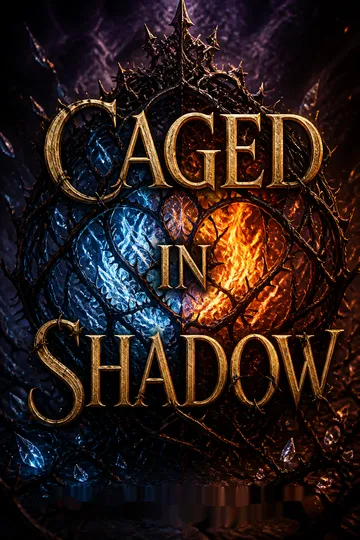
Caged in Shadow received mixed reviews, with an average rating of 3.89 out of 5. Many readers found the book disappointing due to the prolonged separation of main characters, slow pacing, and lack of character development. Some appreciated the adventure and world-building but felt the romance was lacking. Critics noted anticlimactic endings and rushed plot points. Positive reviews praised the story's potential and enjoyed the dragon-related elements. Overall, opinions varied widely, with some finding it an entertaining YA read and others struggling to finish.
People Also Read

Characters
Adara
The divided-blood heirAdara is a young woman of royal descent, born to a dragon father and fae mother, whose unusual inheritance makes her both politically valuable and difficult to place. She is brave and fiercely protective, but grief and responsibility can turn her toward self-blame. Her instinct is to act directly when someone is threatened; her deeper challenge is learning when to lead, when to accept help, and how to resist being used as a symbol by older rulers. Her relationship with Einar offers intimacy without diminishing her independence, while Mavlyn and Quye keep her connected to friendship and trust. Adara’s central drive is to master her abilities so she can protect her loved ones and give her divided world a chance to live differently.
Einar
The last dragon generalEinar is a dragon warrior shaped by the near destruction of his people and the loss of his homeland. His hatred of fae history is rooted in survival, not simple cruelty, and his first response to danger is often to protect others through force. His bond with Adara challenges the isolation he has learned to treat as necessary. He must trust her to cross a portal he cannot enter, and his loyalty to her coexists with grief for the dragons and landscapes he left behind. Beneath his formidable strength is a leader who worries about those in his care and longs to recover a future his people were denied.
Mavlyn
The earth fae organizerMavlyn is Adara’s childhood friend, an earth fae with plant magic and a scholar’s curiosity. Her loyalty is active: she follows Adara into danger, then tries to persuade ordinary people that they need not surrender their lives to a war designed by their rulers. She begins with doubts about her own influence, especially when she returns to the village that once felt like home. Public rejection and political danger force her to distinguish belonging from obedience. Mavlyn’s compassion does not make her passive; she can organize, speak, and take risks, while remaining alert to the human cost of the resistance she helps lead.
Quye
The irreverent OracleQuye is an air fae seer whose visions connect her to the spirit and dream realms. Her playful, sharp-tongued manner can disguise how seriously she takes her responsibility to guide others. She is powerful in her own right, able to command the wind and shift into an owl, though people often reduce her to prophecy and underestimate her practical abilities. Quye helps Adara interpret the threat of Nox and finds evidence in the fire fae records, but she cannot see the futures of those closest to her. Her growing love for Mavlyn gives her a personal stake in a future she cannot predict, and a reason to accept uncertainty.
Nox
The Mother of ShadowsNox is a shadow demon who seeks to widen the breach between worlds by provoking conflict among Ediria’s Houses. She manipulates rulers and soldiers through possession, influence, and promises of power, treating individual lives as fuel for a larger conquest. Her intelligence lies in finding weaknesses that already exist: ambition, fear, old grievances, and the desire for control. Nox is not simply a battlefield threat; she works through institutions and intimate relationships, making it difficult for her targets to recognize when their own motives have been bent. Her presence tests whether people can preserve agency when coercion is subtle or overwhelming.
Gelsyne
Adara’s adoptive motherGelsyne raised Adara with genuine care and protected her from dangers she did not fully explain. A former attendant to Princess Olette, she is bound to Adara by chosen motherhood as well as by the secrets of the girl’s birth. Her protective decisions come from love, but withholding the truth also leaves Adara unprepared for the forces seeking to control her. Gelsyne represents the complicated costs of caregiving: shielding a child can preserve her safety while limiting her understanding.
Leap
The lightning-borne runawayLeap is a young air fae with rare lightning magic, raised through hardship among thieves and later adopted by harpies. He is quick-witted, restless, and more capable than his age leads others to assume. His history with his abusive cousin Ryker makes trust difficult, while his loyalty to Adara, Mavlyn, and Quye gives his strength a direction beyond self-preservation. Leap’s street skills and cloud familiar make him valuable in rescue and sabotage, but he must learn that bravery is not the same as acting alone.
Ylena
The exiled dragon priestessYlena is Einar’s sister and the dragon priestess who guards her people’s coming-of-age traditions. She is disciplined, perceptive, and reluctant to trust someone whose choices could affect the whole community. Her caution is shaped by exile and by the responsibility of protecting a small, vulnerable population. Ylena tests Adara’s patience as much as her magical ability, teaching her that power without mental steadiness can become dangerous. She values loyalty demonstrated through action rather than claimed through blood alone.
Yaggir
The divided dragon deputyYaggir once served beside Einar as a deputy and remains tied to the dragon community’s painful divisions. He is capable and loyal, but his instinct to stay behind as a moderating presence has also allowed him to avoid a difficult choice. Adara’s arrival forces him to confront the consequences of that compromise. His connection to both Einar and Ylena gives him a bridge between factions, though restoring trust requires more than good intentions.
Lady Mossi
The earth realm’s rulerLady Mossi rules Domhain and sees herself as the guardian of its people. Her long experience makes her politically formidable, but it also encourages her to trust her own judgment and preserve control. She is capable of care and restraint, yet ambition and the pressure to maintain authority can make her vulnerable to manipulation. Her relationship with her granddaughter Avani reveals a softer, more familial side beneath the ruler’s command.
Lady Axlya
The water house matriarchLady Axlya rules the water fae House Usciete with immense experience and a deep need to manage political risk. She is sharp, strategic, and accustomed to treating people as pieces in a larger negotiation. Her distrust of Adara grows from old histories and fears about power, but it also blinds her to the value of a leader who cannot be neatly controlled. Axlya’s pride and competence are closely intertwined, making it difficult for her to admit when another person has understood a threat more clearly.
Lord Oren
The air realm’s guarded rulerLord Oren governs the air fae with a soldier’s caution and a father’s protectiveness. He expects order and loyalty, especially from his children, and his authority can become rigid when fear for his family is involved. His complicated relationship with Leap reflects a household shaped by old injuries and unequal power. Oren’s sense of responsibility is genuine, though the crisis forces him to consider whether restraint is wisdom or simply another form of pride.
General Slaugh
The ambitious commanderSlaugh is a scarred military commander who seeks the throne and commands the Shadow Guard. His long service under King Aolis has left him hungry for recognition and frustrated by the limits placed on him. He is vulnerable to Nox’s promises, but his ambition and willingness to wield power are his own. Slaugh’s conduct makes him dangerous not only because he can command armies, but because he sees political authority as a prize that excuses nearly any cost.
Lord Prentis
The reluctant claimantPrentis is Lady Axlya’s nephew and a potential claimant to Ediria’s throne. He wants to rule, yet he understands that conquest would leave a kingdom too damaged to govern. His willingness to argue for negotiation sets him apart from more aggressive leaders, even when he remains entangled in his aunt’s ambitions. Prentis is politically cautious rather than purely idealistic, and his development depends on deciding when loyalty to family must yield to responsibility for the wider realm.
Tempest
The air heir in perilTempest is Lord Oren’s daughter and heir, as well as a hostage whose safety matters to the air fae. Her role ties the political conflict to a family’s fear of losing one of its own. She is part of a younger generation whose future depends on decisions made by rulers and soldiers, and her bond with her family gives Oren’s military choices a personal dimension.
Anuket
The moon temple priestessAnuket is a High Priestess of Aahuti who uses her authority to shelter Adara and Quye. She is discerning, measured, and willing to challenge a rival temple when evidence supports the charge. Her conduct shows that religious office can serve inquiry and protection rather than factional advantage.
King Ramsenan
Palmyria’s God-KingRamsenan rules Palmyria and presides over the trial that exposes the dragon cult’s deception. He is deliberate and politically alert, attentive to evidence as well as public authority. His judgment balances punishment with the possibility of restitution, making him a counterpoint to rulers who use power chiefly to preserve their own position.
Emelie
Mavlyn’s university friendEmelie is Mavlyn’s childhood friend, a student who offers hospitality and becomes part of the Talamh resistance. Her curiosity and loyalty draw her into a conflict larger than her ordinary academic life. She wants both a future of her own and a world in which people can speak freely.
Roylan
The student organizerRoylan is Emelie’s boyfriend and a university organizer who helps Mavlyn turn private concern into public action. His confidence and connections make him an effective advocate, while his willingness to take risks reveals that his politics are more than performance.
Rina
The student editorRina edits the Talamh Tribune and uses her access to print Mavlyn’s warning. She is energetic and committed to the work of public information, though she must weigh the value of reaching readers against the danger publication brings to her friends.
Avani
Mossi’s thoughtful granddaughterAvani is Lady Mossi’s granddaughter and one of the hostages taken to control the Houses. She is observant and emotionally perceptive, with a clearer view of her grandmother’s vulnerabilities than Mossi may realize. Her presence links the political struggle to the costs imposed on families.
Tamil
The ice fae heirTamil is Lord Tor’s daughter and heir, remembered by her family and clan for her courage and conviction. Her belief in Adara helps bring the heroine to the ice fae, and her choices set the story’s immediate stakes in motion.
Kiryan
The guiding RadiantKiryan is a Radiant who advises Adara’s group and can act through the physical world when necessary. He is knowledgeable but not omnipotent, and his guidance often requires others to accept risk rather than wait for rescue. His interventions connect the group to spiritual forces while preserving their responsibility to make choices themselves.
Plot Devices
The prophecy
The burden of expectationThe prophecy identifies Adara as the person capable of ending the shadow infection, making her both a source of hope and a target for rulers who want to control her. It gives the struggle a clear purpose, but it does not provide an easy route to success: she still needs to master her powers, find a priestess, and persuade allies to resist Nox’s strategy. The prophecy also tests whether Adara will treat destiny as a command to rule or as a responsibility to protect others.
The mating bond
Love across separationAdara and Einar’s dragon bond allows their feelings and, at crucial moments, a faint sense of each other’s condition to cross distance. Because they have not completed it, their connection remains painful and incomplete, but completing it too soon could tie their lives together before the danger has passed. The bond intensifies the romance while creating practical consequences: Einar cannot follow Adara through the portal, and her concern for him becomes a source of strength during his perilous return.
The Umnar
Power earned through disciplineThe dragons’ coming-of-age ritual combines fasting, meditation, a vision of the inner beast, and a tattoo made with the participant’s own blood. For Adara, the Umnar opens the path to her dragon form and icefire. Its danger is psychological as well as physical: a participant who cannot master the inner beast may lose control of their own mind. The ritual gives her new abilities only after she demonstrates focus, endurance, and a willingness to accept the demands of her mixed heritage.
Portals and primal stones
A costly bridge between worldsEinar is bound to the portal at Mount Furian and can open it only from that site, using his blood and a primal stone charged with magic. This rule separates him from Adara during her search and makes her return dependent on timing. Primal stones also store power, allowing Adara’s icefire to be shared with dragons who can then help cleanse shadow corruption. The stones therefore connect the private journey through the portal to the collective struggle in Ediria.
The fire fae journal
History’s missing explanationAn ancient letter, journal, and royal archive records offer fragments about fire fae experiments and the dragons’ arrival in Hearthfyre. At first, these texts seem peripheral to Adara’s urgent search for Ylena. Quye’s later translation connects the records to the dragons’ origin and overturns the simple account of the old war. The documents do not merely supply lore: they make the characters test how inherited history is constructed, and they give the summit a factual basis for recognizing Hearthfyre as the dragons’ home.
Of Dragons and Fae Series

Download PDF
Download EPUB
.epub digital book format is ideal for reading ebooks on phones, tablets, and e-readers.








