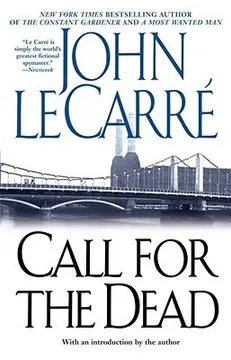


Plot Summary
A Suicide at Walliston
George Smiley has spent a lifetime in intelligence, trading an academic career for a profession that has left him cautious, overlooked, and alone after his wife, Ann, left him. Now the Service summons him before dawn: Samuel Fennan, a Foreign Office official Smiley interviewed about an old Communist Party connection, has apparently shot himself.
Smiley had considered their conversation friendly and had told Fennan the inquiry would probably go no further. His superior, Maston, fears a political scandal and sends him to Walliston to learn why Fennan died.
There Smiley meets Elsa Fennan, a frail, fiercely self-possessed widow who says the interview devastated her husband. Her account unsettles him, and an unexpected exchange telephone call leaves him with a question he cannot dismiss.
The case begins with a conflict between procedure and consequence. Smiley knows the interview was mild, but Fennan is dead and the official explanation makes the institution look blameless. Elsa forces Smiley to see the human cost hidden inside a security file, while Maston asks him to manage appearances. Smiley’s professional habit of studying people as evidence is therefore challenged by a woman who insists that the evidence has a body, a history, and a grieving household.
The Call That Shouldn't Be
Special Branch Inspector Mendel checks the exchange records: Fennan himself requested an 8:30 call the evening he supposedly decided to die, and the suicide note was typed on his own portable machine. Elsa claims she made the request because she forgets appointments, but her explanation does not fit the evidence.
Smiley suspects murder and urges Maston to involve the police; Maston refuses, preferring the accepted suicide account. Then Smiley finds a letter in Fennan’s hand asking him to meet at Marlow the next day, and resigns rather than help bury the case. At home, he spots a stranger waiting inside. Pretending to deliver laundry, Smiley avoids entering, records nearby car numbers, and seeks Mendel’s help.
The call is powerful because it is both mundane and out of place. It makes the official story wobble without yet proving an alternative, forcing Smiley to work from discrepancies rather than certainty. Maston’s refusal exposes how institutional self-protection can convert doubt into an administrative inconvenience. Smiley’s resignation is not a clean escape: it removes his official authority just as a stranger appears to be waiting for him, leaving him dependent on the practical cooperation of Mendel.
Blondie’s Borrowed Car
Mendel traces one car from Smiley’s list to Adam Scarr, a Battersea dealer who rents vehicles under false arrangements. While Smiley investigates the yard, an unseen attacker clubs him and leaves him unconscious.
Mendel confronts Scarr and learns that a well-dressed foreigner, known only as Blondie, has used a specially prepared car for years; a hidden envelope contains cash and an instruction to sell the vehicle. Smiley spends weeks in hospital recovering.
Mendel later tells him Scarr has been found drowned in the Thames, and that the telephone number Blondie used belonged to the East German Steel Mission, which abruptly left London the day Fennan died. The car trail now points toward organized espionage, not an isolated domestic tragedy.
The borrowed car turns a private suspicion into an operational pattern. Scarr’s dishonest but limited business becomes a support structure for a hidden network, while the attack on Smiley shows that someone is actively erasing connections. The evidence is still fragmentary: a car, a phone number, a vanished mission, a dead garage owner. Le Carré makes intelligence work feel less like deciphering a master plan than gathering scraps from people who do not know what their scraps mean.
The Music Case Route
In hospital, Smiley asks Peter Guillam, his younger colleague, to investigate the Steel Mission. Mendel checks the Weybridge repertory theatre Elsa regularly attends.
An usher remembers her arriving with a music case and waiting for a man who brought a matching case; when he failed to appear on the night Fennan died, Elsa left early and arranged for him to collect hers. The man’s description matches Smiley’s attacker. Guillam identifies him as Mundt, an aide to the mission’s leader, Dieter Frey.
Smiley recognizes Frey as a brilliant, forceful agent he once ran in Nazi Germany, where the young Jewish dissident had risked himself to supply wartime intelligence. Frey now serves East Germany, turning an old professional bond into a dangerous uncertainty.
The theatre’s ordinary routines conceal a carefully designed exchange. A music case and a reserved seat become instruments of espionage, yet the clues emerge through an usher’s memory rather than a secret document. Frey’s history complicates Smiley’s judgment: he is not confronting an unknown enemy but a former colleague whose courage once mattered to him. That personal knowledge offers insight, but it also risks making Smiley see what he wants to see.
Elsa’s Carefully Made Story
Smiley visits Elsa again and tells her that the men connected to Fennan are being killed. Under pressure, she describes a network in which Frey recruited her husband, she carried his copied documents in the music case, and Mundt murdered Fennan after mistaking Smiley’s park interview for a security threat.
She gives Smiley an emergency address and says she typed the suicide note. Guillam’s checks complicate the account: Fennan had recently stopped taking sensitive files home, had requested leave for the day he was to meet Smiley, and had written the 8:30 call in his diary as a reminder to contact him. Smiley concludes that Fennan may have suspected Elsa and tried to expose her. He sends her a coded church postcard to draw Frey into the open.
Elsa’s account is persuasive because it contains real details, but its coherence may itself be a tactic. Smiley must distinguish what she knows from what she wants him to believe, a problem intensified by his sympathy for her suffering and Fennan’s apparent vulnerability. The files and diary shift the case from a story of a husband’s betrayal to a possible story of his belated resistance. Smiley’s postcard is an experiment in human expectation: he tests whether Frey still trusts the old code.
The Sheridan Trap
Elsa responds to the postcard by travelling to Hammersmith, buying two tickets for a later performance, and mailing one to the address she believes Frey uses. Smiley, Guillam, and Mendel watch the theatre, expecting the signal to bring Frey. He appears in person, limping through the stalls, and sits beside Elsa.
During the performance they talk warmly, then grow tense as each seems to realize the other did not initiate their meeting. At the final curtain, Frey helps Elsa prepare to leave, then slips away through the crowd. Smiley and Guillam find her still seated, dead from pressure to her throat. Frey has turned Smiley’s attempt to expose their connection into one last opportunity to silence the woman who knows it.
The theatre makes surveillance and performance inseparable. Smiley stages a signal, Elsa follows it, and Frey enters a public room where each person must pretend to understand the others’ intentions. The audience’s attention belongs to the play, while the real violence happens in the margins. Elsa’s death is the cost of Smiley’s experiment, even though he had no way to control how Frey would respond. The case’s human center is not a solved puzzle but a woman destroyed by competing systems of belief and fear.
The River Takes Frey
Mendel follows Frey through the fog to a houseboat near Battersea Bridge, then calls Smiley for help. When Frey comes ashore, the two men pursue him; Frey knocks Mendel down and raises his pistol against him.
Smiley attacks without a weapon, driving Frey backward until the former agent falls over the bridge railing into the Thames. Frey’s body is later recovered. In his report, Smiley records the evidence but also offers a second, unproven reading: Elsa may have been the real agent, while Fennan had begun selecting worthless files and arranging a meeting to expose her.
The 8:30 call, he now thinks, gave Fennan an excuse to meet him. Smiley refuses Maston’s promotion, receives Ann’s offer to return, and flies to Zurich without resolving what he will do.
The final struggle is both physical and moral: Smiley survives by using force against a man whose life he once helped preserve. Frey’s death ends the immediate pursuit but cannot settle the truth of Fennan’s loyalties or Elsa’s. Smiley’s report preserves uncertainty rather than disguising it as certainty, a rare act of intellectual honesty in a service built on controlled narratives. His refusal of promotion and journey toward Ann leave him between professional duty and private longing, with neither choice made easy.
Analysis
Call for the Dead treats espionage as a system that converts intimate lives into information, then asks what happens when the people inside that system stop behaving according to its paperwork. Smiley begins with an apparently straightforward suicide and an institution eager to preserve that explanation. Each clue complicates the file: a telephone call, a typed note, a borrowed car, a music case, a diary entry. None speaks for itself. Their meanings depend on whose account Smiley trusts, and the evidence repeatedly turns against his first conclusion.
The novel’s moral tension comes from the difference between political ideals and the human beings made to serve them. Fennan’s apparent political past, Frey’s remembered resistance to Nazism, and Elsa’s history of persecution all complicate the simple categories of loyal and disloyal. The people who claim to act for a future society are capable of treating individual lives as expendable. Yet the book refuses the comfort of declaring one side wholly virtuous: Smiley’s own Service suppresses facts when publicity threatens national policy, and his investigation exposes how bureaucracy can harm people without ever appearing violent.
Smiley’s method is also an ethical problem. His attention to minute discrepancies allows him to discover what a clean official narrative conceals, but analysis can become a way of keeping suffering at a distance. Elsa’s accusation that intelligence work turns people into files reaches him because it is partly true. By the end, his report preserves uncertainty rather than pretending the case has been settled beyond doubt. He has stopped the immediate threat, but cannot restore the dead or know exactly what Fennan intended. The final journey toward Zurich offers no tidy cure for his loneliness. It leaves Smiley facing the same question as the investigation: whether a person can return to a life after years spent observing it from behind glass.
Review Summary
Call for the Dead, John le Carré's debut novel, introduces George Smiley, a brilliantly cerebral yet physically unassuming British spy. Reviewers largely praise its atmospheric Cold War London setting, intelligent characterization, and moral complexity, though some note it reads more as a murder mystery than a spy thriller. Smiley's humanity and perceptiveness make him a compelling anti-Bond figure. Minor criticisms include pacing issues and an overly expository ending. Most readers rate it 3.5–4 stars, viewing it as a strong, promising series debut.
People Also Read





Characters
George Smiley
The patient intelligence manA quiet, stout, bespectacled intelligence officer whose shabby appearance conceals a disciplined observer of human behavior. Smiley entered the Service after Oxford, where he had hoped to study German literature, and spent years working alone in Europe. His marriage to Ann ended painfully, leaving him wary of emotional dependence and inclined to retreat into analysis. He is neither a glamorous field operative nor a natural bureaucrat; his strength lies in noticing small inconsistencies and understanding how fear changes a person’s choices. The case tests whether that detached method can coexist with compassion, especially when institutional convenience demands that he stop asking questions.
Elsa Fennan
The guarded widowSamuel Fennan’s German-born wife is physically frail but mentally alert, shaped by years of persecution and deprivation. She has built a life around protecting the few attachments she can trust, and her controlled manner makes it difficult to tell grief from self-command. Elsa distrusts political abstractions because she has seen how doctrines become instruments of real suffering. Her relationship with Fennan is intimate but not simple: she understands his ambitions, fears their consequences, and measures them against her own need for safety. To Smiley, she is at once a witness, a survivor, and a person whose motives cannot be read from appearance alone.
Samuel Fennan
The Foreign Office idealistA cultured, intelligent Foreign Office official with a past association with the Communist Party at Oxford. Fennan is remembered as articulate and generous, but also self-assured and capable of keeping his private convictions separate from the life others see. His Jewish background and experience of European political upheaval inform his understanding of ideology, while his career places him close to sensitive government information. Smiley likes him after their interview and finds his apparent composure hard to reconcile with the tragedy that follows. Fennan’s beliefs, loyalties, and capacity for change become the central questions that shape the investigation.
Dieter Frey
The brilliant former agentA striking, physically disabled German intelligence figure whose forceful personality commands attention. As a young man under Nazi rule, Frey opposed the regime and became an unusually effective wartime source for Smiley. He combines political conviction with practical daring, and Smiley remembers him as imaginative rather than merely obedient. Their shared history gives Frey a place in Smiley’s mind that an ordinary adversary would not occupy. Now associated with East German official work, Frey embodies the difficulty of separating past courage from present allegiance.
Peter Guillam
Smiley's younger colleagueA thoughtful intelligence officer with expertise in satellite espionage, Guillam provides Smiley with information that official channels are reluctant to surface. He is practical, loyal, and alert to the Service’s political constraints, but he does not mistake procedure for truth. His work on the Steel Mission and Foreign Office records helps turn Smiley’s intuitions into testable possibilities.
Mendel
The methodical police allyA sharp, plain-spoken Special Branch inspector nearing retirement, Mendel approaches the case through patient verification and street-level knowledge. He respects practical competence, distrusts grand explanations, and is willing to work beside Smiley despite the differences between policing and intelligence. His persistence supplies the investigation with physical leads and human contacts that Smiley cannot obtain alone.
Maston
The cautious senior officialThe Minister’s Adviser on Intelligence, Maston is a polished civil servant skilled at translating institutional needs into official decisions. He values order, political manageability, and the appearance of control. His relationship with Smiley is strained by their different definitions of responsibility: Maston sees the danger of a public scandal, while Smiley sees the danger of accepting a convenient account.
Mundt
The mission's efficient aideA young, handsome operative attached to the East German Steel Mission. His controlled manner and professional competence make him difficult to distinguish from an ordinary diplomatic employee. He has links to Frey’s organization and appears in the investigation through the borrowed-car trail and the theatre’s music-case routine.
Ann Smiley
The absent former wifeSmiley’s beautiful, socially confident former wife left him during the postwar years for a racing driver. Their marriage remains a private measure of what Smiley has lost, even though he rarely speaks openly about the wound. Ann is impulsive and restless, and her later contact forces Smiley to consider whether affection can be resumed after abandonment.
Adam Scarr
The crooked garage ownerA flamboyant Battersea car dealer who operates through small scams and treats information as another commodity. Scarr’s appetite for profit brings him into contact with a mysterious foreign client, but he is not a trained spy and does not grasp the full danger of the arrangement. His testimony offers the investigators a rough, useful outline of the hidden car service.
Elizabeth Pidgeon
The theatre usherA young repertory-theatre worker who handles seating and cloakroom details. Her memories of Elsa’s music case and the man who collected it provide the investigation with an unplanned but crucial eyewitness account.
Plot Devices
The 8:30 exchange call
The first loose threadA request for a morning telephone call seems incompatible with Fennan’s apparent decision to die that night. The exchange can verify who placed it, while Fennan’s diary later links it to his plan to contact Smiley. The call first exposes a lie and then gains a different possible meaning, showing how one concrete fact can support rival interpretations as the evidence changes.
The theatre music cases
A cloakroom courier routeElsa and a male companion bring music cases to the Weybridge repertory theatre and use the cloakroom tickets to exchange them. The routine makes covert transfers look like an ordinary evening out, and the missing case on the night Fennan died points investigators toward the man who collected it. The theatre staff’s habits and records become evidence because espionage has been built into a repeated social ritual.
The coded church postcard
A false summonsSmiley uses a communication method associated with Frey’s wartime tradecraft: a religious image signals a request for an urgent meeting. He sends Elsa a postcard depicting a church, hoping she will mistake it for an authentic message. Her response brings Frey to a monitored theatre, but the signal produces a lethal encounter rather than a controlled arrest.
George Smiley Series

About the Author

Download PDF
Download EPUB
.epub digital book format is ideal for reading ebooks on phones, tablets, and e-readers.








