

Key Takeaways
Treat vaccine decisions as community decisions, not private preferences
One outbreak, two children. In the measles outbreak linked to Disneyland in 2014, a traveler exposed patients at a hospital, including Maggie, a three-year-old being treated for leukemia. She had been vaccinated before cancer weakened her immune system. Her baby brother was too young to be vaccinated. The family faced weeks of anxious waiting because infection could reach children whose protection was incomplete.
Private choices travel. The story makes the book’s central tension concrete: parents decide for their own children, but infection moves through shared spaces. A decision that feels personal can alter the risk faced by infants, immune-compromised people, and others who cannot rely on vaccination for protection.
What's striking is how the family’s experience turns an abstract debate about parental choice into a problem of shared exposure. This resembles other public goods, such as clean water: each household benefits from collective protection, but no household can produce it alone. The analogy does not settle every policy question. It does show why personal consent has limits when one person’s decision changes another person’s risk. That point is strongest when it centers the people with the least ability to protect themselves, rather than treating vaccination as a simple test of whether parents are good or bad.
Remember that vaccination protects neighbors who cannot protect themselves
Protection spreads outward. Herd immunity is population-level protection that develops when enough people are immune to interrupt an infection’s spread. The threshold varies by disease, but the book gives an approximate range of 85 to 95 percent. A vaccinated person can act as a barrier between an infected person and someone vulnerable, such as a newborn or an immune-compromised patient. Some people also fail to gain protection from a vaccine, even when they receive it.
Not every shot works this way. Tetanus is not contagious, so vaccination protects the person who receives it, not the wider community. Most childhood vaccines, however, reduce opportunities for contagious diseases to reach others. The author calls people who benefit from community immunity without contributing to it free-riders.
The public-goods frame explains why vaccination can be both individual care and mutual aid. It also clarifies that a threshold is not a moral dividing line: transmission patterns differ, and community protection can weaken unevenly across neighborhoods. The free-rider label is analytically useful, but can sound like an accusation when used on parents already worried about their children. A more persuasive discussion pairs the obligation to contribute with visible evidence that institutions also protect families through accessible care, reliable information, and fair treatment.
Read mandates as both public-health tools and exercises of state power
Protection has a history. Before vaccination, smallpox variolation deliberately exposed people to material from the disease. It carried real danger, yet caused fewer deaths than smallpox itself. Edward Jenner’s cowpox-based vaccination offered a safer alternative, and compulsory vaccination eventually became a legal tool. In 1905, the Supreme Court’s decision in Jacobson v. Massachusetts upheld a state vaccination requirement during an outbreak, while also limiting state action to measures reasonably related to public health.
Access mattered, too. The renewed school vaccination laws of the 1960s and 1970s were partly intended to increase immunization among low-income children, not simply to punish refusal. But public health agencies also have histories of coercive action. The same government power that can prevent outbreaks can be abused, so the history helps explain both the value of mandates and the distrust they provoke.
This history resists two easy stories: that mandates are inherently tyrannical, or that public health authority is automatically benevolent. Legal power can address risks individuals cannot manage alone, but legitimacy depends on necessity, proportionality, and accountability. That concern is especially important because the book notes that the legal logic of Jacobson was also used to support involuntary sterilization. Historical association does not make vaccination equivalent to those abuses; it does make careful limits on state power part of a serious defense of public health.
Distinguish parental diligence from scientific evidence about population risk
Expertise has different meanings. Many parents who question vaccines describe reading widely, consulting providers, comparing sources, and relying on close observation of their children. The author calls the broader cultural ideal individualist parenting: the expectation that parents should intensively manage each child’s health and treat that child’s needs as unique. In the study’s 34-parent sample, most participants were white, and only five were fathers, reflecting how vaccine decisions were often treated as mothers’ work.
Personal knowledge has limits. A parent can know a child’s history and behavior better than a distant advisory panel. But a personal observation cannot, by itself, establish that a vaccine caused a condition or estimate a rare risk across millions of people. The conflict is not between caring parents and indifferent experts. It is between intimate knowledge and population-level evidence.
What's striking is that the work of becoming an informed parent can itself feel like proof of expertise. In fields such as education and chronic illness care, patient knowledge can expose important gaps in professional practice. Yet uncommon harms are especially difficult to judge from individual experience: vivid cases feel more predictive than they are, while population statistics can seem remote. A productive conversation treats parental observations as meaningful signals to examine, not as proof of cause, and explains why population evidence is relevant to an individual child.
Do not confuse natural exposure with safer immunity
Natural is not risk-free. Some parents see infection as a more authentic route to immunity than vaccination, which they regard as artificial. Both infection and vaccination prompt the body’s immune system to respond, though the resulting protection can differ. Infection may provide longer-lasting immunity for some diseases, but it also requires getting sick and can bring serious complications. Before the chickenpox vaccine, about four million U.S. cases occurred each year, with roughly ten thousand hospitalizations and around a hundred deaths.
Timing shapes meaning. Parents particularly questioned vaccines given soon after birth, when they saw babies as pure and vulnerable. The hepatitis B vaccine also seemed mistimed to some because it protects against risks that may arise much later. Public health guidance, by contrast, emphasizes the danger of infection early in life and the difficulty of reaching people later.
The natural-versus-artificial distinction often works as a moral judgment before it works as a medical one. It can express a legitimate desire to avoid unnecessary intervention, but it does not measure danger: pathogens are part of nature, too. The book’s discussion is most useful when it separates the emotional appeal of naturalness from the actual tradeoff between a vaccine’s risks and the illness it prevents. That distinction preserves room for scrutiny of medical interventions without treating avoidable infection as harmless or inherently superior.
Acknowledge vaccine failures without treating every suspicion as proven
Some concerns have real roots. Vaccine history includes manufacturing failures, such as the Cutter polio incident, and rare harms from vaccines that were properly made. The Rotashield rotavirus vaccine was withdrawn after safety monitoring identified an increased risk of intestinal injury. These events help explain why some parents doubt assurances that vaccines are risk-free. The federal Vaccine Injury Compensation Program was created partly to compensate people harmed by vaccination and to help maintain vaccine supply.
Evidence still matters. Thimerosal was removed from most childhood vaccines as a precaution, but research did not establish that it caused autism. Andrew Wakefield’s small study suggesting a link between the MMR vaccine and autism was retracted, and his medical license was revoked for misconduct. The author distinguishes genuine uncertainty and documented failures from claims that stronger evidence has rejected.
Trust grows when institutions can describe what went wrong, how a signal was detected, and what changed in response. A system that insists on perfection invites disbelief as soon as a failure becomes public. At the same time, acknowledging uncertainty does not require treating every allegation as equally credible. The useful standard is neither blind confidence nor blanket suspicion, but transparent methods, independent scrutiny, and clear distinctions among a confirmed injury, an unresolved question, and a disproven causal claim.
A slower schedule feels tailored, but leaves children exposed longer
Customization has costs. The Advisory Committee on Immunization Practices reviews evidence on vaccine safety, timing, and interactions when it recommends a schedule. Its recommendations also try to limit missed appointments, an important concern for families with less reliable access to care. The book reports that roughly 20 to 25 percent of parents use an alternative or delayed schedule. Some spread doses out, separate combination vaccines, or use blood tests to check for signs of immunity.
More visits do not prove more safety. A slower schedule can feel reassuring and may give parents a sense of control, but it creates more appointments, expense, and time during which a child remains susceptible. Antibody tests also do not provide a simple answer for every vaccine or necessarily satisfy school requirements. The book identifies no evidence that parent-designed schedules improve safety.
The appeal of a slow schedule is understandable: spacing decisions can make an overwhelming process feel manageable. But personalization is not automatically precision. A schedule informed by population data may look uniform because it is designed to work across varied families and exposure patterns. The practical test is whether customization improves outcomes, not whether it feels more attentive. Clinicians can acknowledge parents’ discomfort while explaining the costs of delay and accepting partial vaccination when the alternative is no protection at all.
Natural-living routines cannot build a private wall around disease
Care can feel like control. Parents who reject vaccines often describe breastfeeding, carefully selected food, supplements, home care, or avoiding crowded settings as ways to protect children. These practices may support health in some ways, but they do not replace vaccination or guarantee protection from vaccine-preventable illnesses. Breastfeeding can reduce some infections, for example, but it does not provide blanket immunity against the diseases targeted by childhood vaccines.
Protection depends on resources. Parents who can stay home, prepare specialized food, homeschool, or limit social contact have options unavailable to many families. The author describes how some parents imagine controlled social worlds, while overlooking that infection can arrive through ordinary contact. The result is a mistaken sense that careful parenting can make a child’s disease risk fully private and manageable.
These practices reveal more than health beliefs; they show how class and gender shape who can perform intensive care. When mothers are expected to prevent every possible harm, choosing food, childcare, and medical treatment becomes evidence of moral competence. That burden deserves scrutiny without dismissing the genuine care behind it. At the same time, individual routines cannot eliminate shared exposure. Public health is most equitable when it reduces preventable risk for everyone, rather than assuming families can privately purchase, prepare, or supervise their way to safety.
Make clinicians honest guides, not enforcers or silent bystanders
Care involves competing duties. Pediatricians are expected to respect family preferences, build trust, and protect children, while also considering the health of the wider community. Their options depend on practice conditions. A cash-only doctor may spend an hour tailoring care, but that model excludes families who cannot afford it. A busy clinic serving publicly insured patients may have far less time for extended conversations.
Stories can clarify stakes. Austin, a healthy 17-year-old, died after influenza developed into pneumonia and a serious bacterial infection. His death illustrates why a disease that often seems routine can be dangerous. The book shows doctors using cases like this to explain risk, while also trying to keep communication open with parents who decline vaccines. Honest discussion should neither shame families nor conceal serious consequences.
Clinicians function as translators between large-scale evidence and the particular fears of a family. That role is harder when appointments are short and the provider is perceived as representing a pharmaceutical or regulatory system. Respectful dialogue can improve the relationship, but respect alone does not make claims equally accurate. The strongest approach combines empathy with a clear recommendation, explains what is known and unknown, and gives parents room to ask questions without making the physician’s public-health responsibilities disappear.
Make vaccine liberty reciprocal by protecting access as well as choice
Freedom has shared consequences. Some parents in the study recognize that their unvaccinated children benefit from other people’s immunity, yet still put their own children first. Meanwhile, many children who miss vaccines are not opting out; their families face barriers such as missed appointments, transportation problems, or inconsistent medical care. These children may be more vulnerable, but are often less visible in debates focused on parental choice.
Trust needs reciprocity. The author argues that public institutions should explain how schedules are set, acknowledge uncertainty, address conflicts of interest, and make care accessible. Vaccine communication that emphasizes only a parent’s duty to protect their own child can obscure the benefits to others. A fairer approach connects individual freedom to shared protection and ensures that expectations of participation are matched by support.
The book’s closing argument is not simply that individuals owe something to society. It is that obligations become more legitimate when society also provides something tangible in return. That reciprocity matters for vaccine policy and for other public programs: rules imposed on families with limited access can deepen inequality, while affluent families may have more room to opt out. A durable public-health compact therefore needs both clear expectations and practical support. Without the second, appeals to solidarity can sound like demands made by institutions that have not earned trust.
Analysis
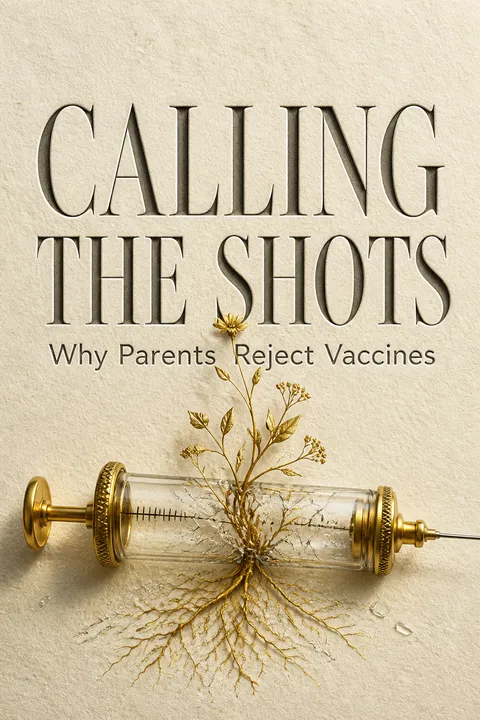
Calling the Shots is a sociological study of vaccine refusal, not a medical guide or a neutral tally of competing claims. Its central move is to shift attention from asking whether hesitant parents are ignorant to asking what their decisions mean in a culture that prizes individual choice, intensive parenting, and personalized care. The opening story of Maggie, exposed to measles while her immune system was compromised by cancer, gives that analysis moral and emotional force: a parental decision made for one child can affect another child who has no comparable capacity to choose.
The book’s historical chapters complicate contemporary assumptions. Vaccines have been promoted through markets, government programs, professional authority, and legal mandates. Some policies expanded access for poorer children; some state actions were coercive. Vaccine skepticism therefore cannot be reduced to irrationality, even though the author clearly distinguishes legitimate institutional failures from claims unsupported by evidence, including the proposed vaccine-autism connection.
The strongest contribution is its account of unequal agency. Parents who opt out are commonly better resourced and more able to research, customize care, and avoid exposure. Their sense of control can obscure the families with fewer choices, including children who are under-vaccinated because care is hard to reach. The analysis also reveals how responsibility for health decisions falls disproportionately on mothers, who face pressure both to trust experts and to prove that they have independently investigated every risk.
The study’s qualitative depth is also a limit on what it can establish. Its Colorado interviews and observations illuminate meanings and social processes, but do not represent all parents who question vaccines, and participants’ explanations cannot determine vaccine causation. The distinction between understanding a decision and endorsing it is therefore essential. The book’s policy challenge is to make public-health advice more transparent, accessible, and trustworthy without pretending that individual choice has no effects on others. Its argument is most persuasive when it treats solidarity as an institutional responsibility as well as a parental one.
Glossary
Herd immunity
Community-level infection protectionHerd immunity is population-level protection that occurs when enough people are immune to an infectious disease that its spread is interrupted. The proportion needed varies by disease. People who are immune can help shield those who are too young to be vaccinated, cannot safely receive a vaccine, or do not develop protection after vaccination.
Individualist parenting
Child-centered risk managementIndividualist parenting is the approach the author uses to describe parents’ emphasis on managing risk and making health decisions for their own children, often through intensive research and personalized care. It reflects a wider expectation that good parents should act as experts on a child’s unique needs, sometimes placing those needs ahead of community obligations.
Vaccine narrative
Cultural story of vaccine benefitThe vaccine narrative is the widely accepted account that vaccines are a reliable and beneficial form of prevention. The idea, attributed in the book to sociologist Jacob Heller, helps explain how people can support vaccination without detailed technical knowledge or direct experience of the diseases vaccines prevent. Challenges to this shared story can be treated as irrational even when they raise real questions.
Free-rider
Beneficiary without contributionIn this book, a free-rider is someone who benefits from community protection created by widespread vaccination while choosing not to contribute to it. The concept describes a collective-action problem, not a claim that every unvaccinated person has the same circumstances. Some people are unvaccinated because of medical limits or barriers to care rather than parental choice.
Slow vax
Delayed or altered vaccinationSlow vax refers to parent-directed schedules that delay, spread out, separate, or omit some recommended vaccines. Parents may use these schedules to reduce anxiety about simultaneous doses or to make care feel better suited to a child. The book notes that such schedules require more appointments and can extend the period during which children are susceptible to infection.
Advisory Committee on Immunization Practices (ACIP)
Federal vaccine recommendation panelThe ACIP is a federal advisory committee that reviews evidence on vaccine safety, effectiveness, timing, and use, then recommends routine vaccination schedules. Its recommendations guide the Centers for Disease Control and Prevention and are widely adopted by medical organizations and states. The committee considers population-level disease prevention as well as practical issues such as dose timing and access.
Vaccine Adverse Event Reporting System (VAERS)
Passive adverse-event reportingVAERS is a U.S. system that accepts reports of health events occurring after vaccination from the public and healthcare providers. It is a passive reporting system, meaning reports are submitted voluntarily and do not by themselves establish that a vaccine caused an event. The information can help identify possible safety signals that require further investigation.
National Vaccine Injury Compensation Program (VICP)
No-fault vaccine injury compensationThe VICP is a federal program created to compensate people who are injured by certain vaccines. Funded by a tax on vaccines, it was designed as a less adversarial route to compensation than ordinary lawsuits. The program also formed part of a policy compromise intended to address concerns about vaccine injuries while helping maintain a stable supply of vaccines.
Jacobson v. Massachusetts
Landmark vaccine-mandate rulingJacobson v. Massachusetts was a 1905 U.S. Supreme Court case about a man who refused a smallpox vaccination required during an outbreak. The Court upheld the state’s authority to impose reasonable measures to protect public health, while recognizing that state power was not unlimited. The case remains a major legal precedent in debates about vaccination, bodily autonomy, and public responsibility.
Download PDF
Download EPUB
.epub digital book format is ideal for reading ebooks on phones, tablets, and e-readers.








