

Key Takeaways
Cape Cod backed Lincoln while condemning John Brown: Union loyalty was not abolitionism
A complicated political map. Before the war, Cape Cod’s ship captains traded with Southern ports, and federal law required them to return escaped enslaved people found aboard. Yet the region voted strongly for Republicans in 1856 and 1860, when the party opposed slavery’s expansion. That did not mean every voter supported immediate abolition. Many opposed John Brown’s armed raid at Harpers Ferry and prioritized preserving the Union. The Cape’s politics combined economic dependence, anti-slavery sentiment, and fear of national breakup.
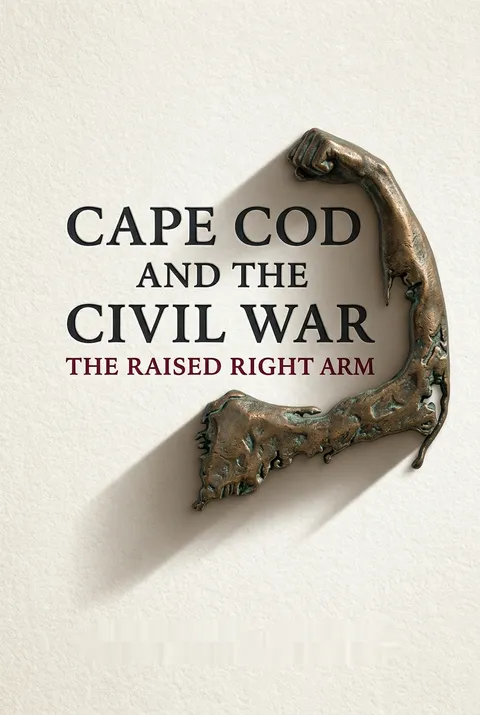
A local symbol. The Cape was sometimes called Massachusetts’s raised right arm because of its shape. The phrase became a banner for Sandwich’s first company of soldiers, linking regional identity to the Union cause. But the banner did not erase the tension between commerce and conviction that had shaped local choices for decades.
What's striking is how this local history resists a tidy moral map. A community can oppose the spread of slavery while still rejecting abolitionist tactics, fearing economic loss, or placing national unity first. Political historians often distinguish policy preference from moral commitment, and the Cape makes that distinction vivid. The book also cautions against treating an election result as a referendum on one issue: votes reflected multiple concerns, including trade and infrastructure. The useful lesson is to ask what a political choice opposed, and what it actually endorsed, before assigning it a single motive.
See how federal law made Cape mariners enforce slavery
Law collided with conscience. The Fugitive Slave Law of 1850 required people who encountered escapees to help return them, with penalties for refusal. Cape sailors could find themselves caught between legal obligation, livelihood, and personal judgment. In 1851, mate Cephas Ames discovered Thomas Sims, a fugitive, aboard a vessel in Boston Harbor and helped detain him. Sims was returned to slavery after a heavily guarded trial. The episode exposed how ordinary commercial work could make Northern mariners participants in slave-catching.
A second test. In 1859, captain John Orlando and others found Columbus Jones aboard a ship near Hyannis, restrained him, and arranged to send him south. They were tried for kidnapping and acquitted. Local newspapers sharply disagreed about whether the verdict reflected public feeling. These cases show that abolition was not only debated in lecture halls. It was contested through the daily choices of ship crews, courts, and communities.
This is a case study in how institutions distribute moral responsibility. A legal rule can turn a person’s job into participation in a harmful system, while allowing each participant to describe the action as mere compliance. That pattern appears well beyond slavery, from bureaucratic violence to modern supply chains. The book’s strongest contribution is its attention to specific intermediaries, especially sailors who were neither national policymakers nor detached observers. At the same time, its evidence comes from sources with distinct political agendas, including abolitionist and Democratic newspapers. Reading those accounts against one another is essential to understanding both the events and their contested meaning.
Follow the schooners: Cape Cod helped move the Union war machine
A maritime region at war. Cape Cod’s civilian fleet became a logistical resource for the Union. The government hired privately owned vessels to carry troops, horses, food, weapons, coal, and other supplies. This work helped reopen ports and sustain campaigns from North Carolina to Louisiana and Virginia. A schooner that had once carried ordinary coastal freight might instead haul hay for army horses; passenger steamers became troop ships or floating hospitals.
Risk and reward. Owners and crews could earn substantial fees. A 219-ton schooner chartered in 1862 brought its owner $876 for a month, while a large steamer could earn about $1,000 per day. But transport work was dangerous: storms sank vessels, enemy forces captured ships, and crews could become prisoners. Cape shipping was not simply background to the war. It helped carry the Union’s military power, while exposing local people and businesses to its risks.
The transport story usefully shifts attention from battles to the systems that make battles possible. Military history often celebrates commanders and turning points, but campaigns also depend on ships, food, fuel, and routes that remain open. In this account, maritime skill becomes a form of military capacity without every sailor becoming a conventional soldier. The high charter payments also reveal the war’s economic contradictions: public needs created profits for private owners, while public procurement could invite fraud and favoritism. Logistics are never politically neutral. They connect strategy to local livelihoods, and they determine which risks are carried by whom.
Recruitment ran on hometown trust, cash, and fear of conscription
Local ties mattered. The Union Navy struggled to recruit Cape fishermen, even though the region had a deep maritime workforce. Army recruiters could promise familiar local commanders, enlistment bounties, and government-provided clothing. The Navy offered no comparable enlistment bounty, paid less, and might assign sailors under officers they did not know. In 1862, Cape Cod towns set local payments that brought the average bounty package to about $200. A familiar recruiter could make the difference: Provincetown’s Godfrey Rider drew volunteers by emphasizing his local roots and understanding of Cape men.
Pressure increased. As volunteers became harder to find, Massachusetts used a draft. Of 914 Barnstable County men drafted in 1863, only seven entered service directly; exemptions, commutation payments, and substitutes accounted for most of the rest. By 1864, some towns recruited successfully through local veterans, while others hired men from elsewhere. Enlistment reflected patriotism, but also money, trust, family needs, and the threat of conscription.
Recruitment here resembles a labor market shaped by incentives and trust, not a simple test of courage. A bonus can offset lost wages or support dependents, while a known leader reduces uncertainty about service. The Navy’s difficulties show that institutions compete for the same workers, and that small differences in pay, equipment, and command can redirect labor. The draft figures also complicate any clean distinction between volunteers and reluctant soldiers: substitutes and commutation fees let some men avoid service, while others served in their place. These arrangements reveal how unequal resources could shape who bore the physical burden of war.
The war reached home through emptied shops, aid circles, and bereaved households
Communities supplied the front. Women across Cape Cod organized soldiers’ aid groups, sewing, knitting, collecting food, and raising money. Falmouth residents, for example, held a clam-chowder benefit that raised more than $50. The work gave civilians a direct role in caring for soldiers, while local newspapers carried requests from men at the front for letters, food, and news from home.
Labor and loss reshaped daily life. More than forty Sandwich glassworkers enlisted, forcing the glassworks to close three of its four furnaces temporarily and hire additional women. Families also lost essential income. When Martin Tinkham died of typhoid, his mother, who depended on his earnings, struggled financially and relied on friends and a small pension. Soldiers’ deaths were not abstractions: bodies sometimes arrived before families had received news of an illness. The home front was a network of work, care, and economic vulnerability.
The book makes visible a form of wartime labor often hidden behind the combat narrative: care work. Sewing, fundraising, nursing, and keeping businesses operating were not decorative expressions of patriotism. They helped sustain soldiers and their families, while also revealing who absorbed the costs when young workers left. This perspective connects military history to social reproduction, the often-unpaid work that maintains households and communities. The account also shows that local resilience had limits. Aid societies could provide comfort, but they could not replace a wage earner or undo a death. Community support mattered precisely because it was not an adequate substitute for security.
Count disease, hard labor, and prison beside battlefield fire
Combat was only one danger. Cape soldiers faced exhausting marches, bridge building, digging, poor food, exposure, and illness. On Folly Island in South Carolina, men of the Fortieth Massachusetts Regiment lived on a narrow diet that contributed to scurvy and intestinal disease. In 1863, disease killed soldiers who had not been wounded in battle, including men in Louisiana and North Carolina. Even routine fatigue duty could cause serious injuries.
Captivity could be fatal. The book traces Cape men through Andersonville, Danville, and Salisbury, Confederate prisons where hunger and disease took a heavy toll. Of fifteen Cape men sent to Andersonville, only three survived, according to the account. The 1864 battles were especially devastating: the new Fifty-eighth Massachusetts entered the Wilderness and Spotsylvania campaigns with many inexperienced recruits, and lost heavily. The war’s human cost accumulated through combat, sickness, deprivation, and imprisonment.
This broader accounting corrects a common cognitive bias: spectacular events are easier to remember than slow attrition. A bullet wound has a clear moment; disease, malnutrition, and prison deprivation often unfold across weeks and are less narratively neat. Yet the difference between combat and noncombat death does not map neatly onto the difference between dramatic and ordinary suffering. The book’s local records make those pathways legible through individual cases. Its numbers should also be read with care, since recordkeeping was incomplete and captivity could leave men missing or unidentified. Such uncertainty is itself part of the history, not merely a flaw in the count.
Recover the women, Black soldiers, and Native servicemen from the margins
Service took many forms. Cape women organized relief, and Eliza A. Chamberlain moved to Washington in 1864 to teach formerly enslaved children while also helping sick soldiers. Black men from the Cape served in the Union army. The book identifies Charles L. Ellis and George H. Clark as the only known African American soldiers from the region, and notes that several Cape men became officers in Black regiments. Their service connected local history to emancipation and the changing meaning of the Union cause.
Other stories resist easy categories. Samuel Wood, a member of the Herring Pond Wampanoag community, served in the Fortieth Massachusetts. His comrade Henry Baker carried him gruel while he was hospitalized, calling him a brother. Such lives complicate any account that treats the Cape as culturally uniform or the army as composed only of white, native-born men. The records also show how limited historical visibility can be: some people appear only briefly in surviving documents.
Recovering overlooked participants changes more than the cast of characters. It changes what the war is understood to have been about. Black soldiers’ service and Chamberlain’s teaching place emancipation, education, and care alongside Union military operations. Wood’s story also challenges the assumption that regional identity was singular, while his comrade’s aid offers a glimpse of intimacy built across difference. The evidence is uneven, and the author’s identification of only two known African American Cape soldiers should be understood as a limit of documented records, not proof that no others served. Historical silence often tells as much about archival survival as about participation.
Keep the war open in memory: its sea losses outlasted surrender
The end did not end every loss. In April 1865, news of Lee’s surrender brought bells, cannon fire, and celebrations across Cape Cod. But the returning companies were diminished, and many families had lost sons, husbands, or brothers. The book’s appendix catalogs 205 Cape-connected deaths, including those killed in combat, those who died of wounds or disease, and men who died in prison.
The sea kept its own reckoning. Confederate commerce raiders continued to affect Cape shipowners and crews after the war ended. The legal claims for captured or destroyed vessels were not finally settled until the 1880s, sometimes with compensation going to heirs. The closing cemetery portraits return the reader to individual lives: a teacher, a young fisherman, a prisoner, a musician. Their stories resist the comforting idea that victory made the costs disappear.
A war’s official endpoint is a political fact, not a universal experience. Families continued to manage bereavement, disability, lost income, and unresolved property claims after the surrender ceremonies. This distinction is central to memory studies, which examine how public anniversaries can compress prolonged consequences into a single date. The book’s cemetery structure gives those consequences a human scale, while its appendices preserve names that a narrative cannot fully contain. A memorial list is not the same as a complete account, especially when records omit people or leave their fate uncertain. Still, naming the dead is a form of historical repair.
Analysis
This book uses local history to make a national conflict tangible. Its central argument is not that Cape Cod stood outside the war and was suddenly drawn in, but that the region was already entangled with the slavery crisis through shipping, law, party politics, and Southern commerce. The war then transformed those ties: merchant vessels became transports, local recruits became units in distant campaigns, and families supplied money, labor, care, and grief.
The most useful analytical feature is the movement between scales. A ship’s charter fee links a private owner to federal strategy; a fugitive slave case turns national law into a crew’s immediate decision; a soldier’s illness reveals the household economics behind enlistment. This method prevents the history from becoming either a list of battles or a sentimental gallery of biographies. The repeated contradictions are meaningful rather than inconvenient: Cape voters could oppose slavery’s expansion and condemn John Brown, while sailors could depend on Southern trade and later serve the Union Navy.
The book’s documentary approach also has limits that it acknowledges. Newspapers were partisan, records of naval service and pilots were fragmentary, and some stories survive only through pension claims, diaries, or family accounts. Those sources can recover overlooked people, but they do not make every conclusion equally certain. The account is strongest when it signals those gaps instead of smoothing them over.
Its larger contribution is to show that war is made and endured through infrastructure as much as ideology. Shipping routes, recruiting incentives, hospital ships, aid societies, and prison exchanges connected Cape Cod to distant campaigns. The region’s experience therefore offers a practical way to study any conflict: follow the people and resources moving between home and front, then ask who gains, who serves, and who is left to absorb the consequences.
Review Summary
Cape Cod and the Civil War received positive reviews on Goodreads, with an overall rating of 4.17 out of 5 based on 6 reviews. Readers praised the book for its compact yet comprehensive view of Cape Cod's contributions to the Civil War. One reviewer, who had contributed photos and information, appreciated the book's portrayal of the island's role in the battles. Another reader described it as a good reference book with great notes, highlighting its thoroughness. The positive feedback suggests that the book effectively combines historical detail with readability.
Glossary
emergency officers
Temporary Union Navy officersMerchant ship captains and mates appointed to serve as Union Navy officers during the war. Applicants needed recommendations from people with whom they had sailed, had to pass examinations, and had to swear allegiance. The appointments addressed the Navy’s urgent need for experienced officers; the book identifies about 170 Cape Cod emergency officers.
charter party
Government vessel-hire contractThe agreement by which the federal government hired a privately owned vessel for military transport or other service. Shipbrokers connected owners and captains with government agents, who negotiated rates and terms. Payment depended on the vessel and its assignment, and the process could be tainted by fraud or improper dealing.
fishing bounty
Federal support for fishermenA congressional payment associated with the cod fishery. It originally helped offset the high cost of salt and encouraged young fishermen to become sailors, creating a potential source of naval manpower in wartime. During the Civil War, Cape newspapers argued that fishermen who received the bounty should serve in the Navy, though many chose army service instead.
Wide-awakes
Republican campaign clubsOrganized groups supporting Abraham Lincoln and the Republican campaign in 1860. Members wore distinctive dark caps and capes with a red band and marched at political rallies. Cape Cod had Wide-awake chapters, including in Dennis and Sandwich, where members took part in public demonstrations for Lincoln.
United States Sanitary Commission
Union soldier-aid organizationAn organization formed by women in New York City in 1861 to improve care for Union soldiers. Its presence encouraged local branches and independent aid societies across the North. On Cape Cod, these groups knitted, sewed, collected supplies, and raised funds, giving civilians a practical role in supporting soldiers.
Download PDF
Download EPUB
.epub digital book format is ideal for reading ebooks on phones, tablets, and e-readers.








