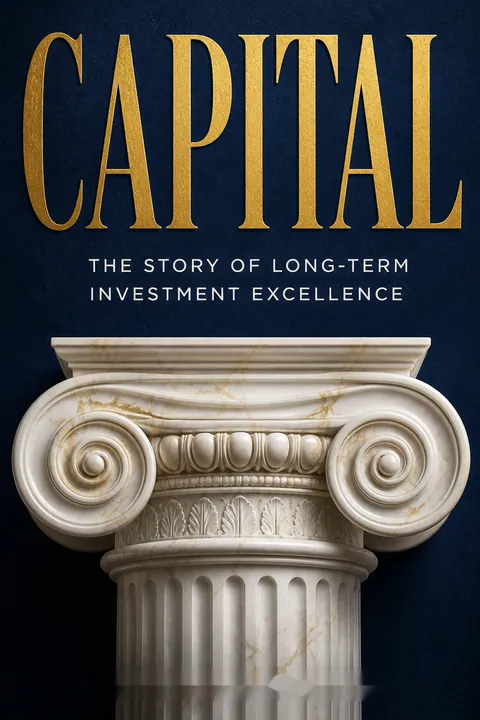


Key Takeaways
Build an investment firm around client outcomes, not asset gathering.
Three interests, one mission. In 1963, Capital formalized a commitment to serve clients, Associates, and owners together. The idea was practical as well as ethical: strong investment results help attract and keep clients, while capable professionals and a financially sound firm make continued service possible. Capital’s success was not only measured in assets gathered or profits earned, but in whether all three groups benefited over time.
Results with a long horizon. In the thirty years ending June 2003, the six domestic equity funds listed in the book all exceeded the S&P 500’s 11.46 percent annual return, after their expenses. AMCAP returned 14.71 percent annually, while the Income Fund of America returned 12.28 percent. The firm also avoided advertising and individual celebrity, favoring durable client relationships over attention.
The three-party mission resembles stakeholder governance, but Capital’s version is unusually operational: it asks leaders to balance interests that can conflict, rather than treating shareholder return as the sole test. That can make decisions slower, yet it may reduce the temptation to sacrifice service or staff development for short-term margins. Investment returns are volatile, so a thirty-year comparison is more informative than a single hot period. Still, a successful case study cannot establish that this structure caused the results, and a long record should not be mistaken for a guarantee.
Design roles around talented people, then keep redesigning the organization.
Start with people. Founder Jonathan Bell Lovelace did not treat the organization as a fixed chart of jobs to fill. He looked for capable individuals, gave them room to contribute, and adjusted responsibilities as their interests and strengths developed. This approach grew from the firm’s beginnings: Lovelace left the brokerage business before the 1929 crash, then established an investment firm in Los Angeles in 1931. For its first two decades, Capital barely broke even, yet he kept building its research capability and recruiting.
Make opportunity deliberate. The firm’s history turns on people found through chance encounters, but the leaders repeatedly acted on those chances. They recruited persistently, held candidates to high standards, and tried to place new Associates where their abilities fit. The point is not to wait for lucky hires. It is to build a firm that recognizes and develops talent when it appears.
This is a useful alternative to designing an organization solely for administrative neatness. In knowledge work, matching a person’s strengths to a role can improve both motivation and output, while periodic redesign prevents yesterday’s success from becoming today’s constraint. The approach does demand managers who know their people well and are willing to revise assumptions. It also risks favoritism if flexibility is not paired with clear standards. Capital’s emphasis on measured contributions and careful recruiting is what makes its person-centered model more than informal improvisation.
Divide portfolios so individual conviction can scale without creating star managers.
Split responsibility, not accountability. Capital’s multiple-counselor system assigns different portions of a fund to several decision makers. Each invests independently and is accountable for the results of their segment, while the combined fund reflects multiple approaches. The system began in 1958, when the firm divided two funds among four counselors. It offered an alternative to giving a whole fund to one star or forcing a committee to settle disagreements through compromise.
Keep decisions visible. Capital tracks each counselor’s holdings and results, shares investment information, and evaluates decisions against external benchmarks. Analysts can also manage real money through the Research Division Account. The design helps a growing fund add decision makers without forcing any one person to manage an uncomfortably large portfolio. It also requires painstaking records, consistent rules, and senior support when independent views collide.
The system resembles modular engineering: a large undertaking is divided into components with clear ownership, then combined into a working whole. That can preserve local expertise while limiting dependence on a single star. But modularity does not eliminate coordination costs. Capital’s own experience shows that separate portfolios need shared information, compatible objectives, and reliable accounting; without them, clients can receive inconsistent results. The model is therefore less a plug-and-play structure than an operating system that depends on trust, measurement, and the discipline to make disagreement productive.
Refuse products that sell best when investors are least prepared to hold them.
Popularity can signal danger. Capital often waited to introduce a fund until its investment area had fallen out of favor. The New World Fund, designed to give individual investors measured exposure to emerging economies, launched in 1999 after several years of weak emerging-market returns. By contrast, the firm declined to offer a money-market fund during the 1974 stock-market slump, wary that investors might sell equities near a low and miss the recovery.
Choose the channel carefully. Capital built a wholesaling business by working through brokers who could help clients stay invested, rather than relying on consumer advertising or chasing recent results. The book reports annual redemptions of about 12 percent for American Funds, compared with roughly 25 percent for the industry. That persistence matters: a fund can be well managed and still fail investors who buy after a boom and sell during a decline.
This is behavioral finance applied to product design. Investors often extrapolate recent returns, buying what has just risen and abandoning what has fallen. A manager that profits from rapid product launches may therefore have incentives misaligned with a client’s long-term welfare. Capital’s restraint tries to counter that cycle before it starts. The tension is real, though: waiting for pessimism can miss valid demand, and a firm’s judgment about what clients can handle may become paternalistic. Strong disclosure and genuine choice remain important alongside protective restraint.
Treat shareholder service as part of investment trust, not back-office overhead.
Routine failures feel personal. Capital’s decision to build its own shareholder-service operation followed a warning sign at its bank provider: essential records were being stored in a shoebox amid severe processing problems. Investment professionals initially saw administration as low-status work. Bob Cody argued that inaccurate statements, delayed payments, and unanswered questions could destroy the confidence that investment results alone might not secure.
Invest in the experience. Capital created American Funds Service Company in 1968 and gave its staff career prospects and standards it considered comparable to other parts of the firm. By the time described in the book, the operation served more than 20 million shareholder accounts, handled an average of 25,000 calls a day, and aimed to answer each call within three rings. Its employee turnover was reported at 12 percent, far below the 60 to 70 percent common in the field.
Service quality is a form of risk management. When people cannot understand a statement or get help with a transaction, they may interpret an operational failure as evidence that the whole institution is unreliable. That is especially consequential in finance, where clients cannot easily judge the quality of investment decisions themselves. The shoebox episode also shows how weak signals can expose systemic fragility. Yet high service standards are costly, and a firm must measure whether added expense improves outcomes rather than treating lavish service as a virtue in itself.
Hire for judgment and collegiality, then give people room to grow.
Select for the work. Capital’s recruiting looked beyond grades and credentials for curiosity, sound judgment, humility, and the ability to work well with colleagues. Serious candidates could face 15 to 20 interviews over two days. The firm also developed The Associates Program, a two-year rotation through six areas of the business, from administration to investing. Participants learned how different jobs fit together before choosing a direction.
Make growth visible. Associates received detailed reviews drawing on assessments from colleagues, along with guidance on how to improve. Roles could change as people’s abilities and interests changed. Analysts could take on investment decisions, while experienced researchers could remain researchers rather than being pushed into management. The firm tried to tolerate mistakes when they were part of serious work, but it also made results visible and expected people to learn from them.
This approach combines selection, development, and feedback, rather than assuming that hiring alone solves the talent problem. Its strength is cumulative: longer careers help specialists deepen expertise and build relationships that improve communication. The challenge is scale. Intensive interviews and individualized coaching consume time, and colleague ratings can reproduce group biases if dissenters are undervalued. A sound system therefore needs more than a collegial atmosphere. It needs ways to protect unusual perspectives while ensuring that kindness does not become reluctance to address poor work.
Research the business itself, not the market's latest narrative.
Value means future worth. Capital’s analysts examined a company as an operating business, asking what its long-term prospects were and whether its share price offered a reasonable entry point. A practical test was to imagine buying the entire company: if its total market value seemed unjustified, buying a small portion was no more rational. This allowed the firm to consider growth stocks as well as conventionally cheap shares.
Look where consensus cannot. Analyst Jason Pilalas built detailed forecasts for pharmaceutical products and saw potential in SmithKline’s ulcer drug Tagamet, which could reach patients discouraged by older treatments. Capital invested heavily before the drug became a blockbuster, then sold when the company’s pipeline weakened. The method was not simply to find good companies. It was to estimate what could change, compare that view with the price, and revise it when the evidence changed.
The whole-company test counters a common cognitive trick: treating a share as an abstract price movement rather than a claim on a real business. Product-level analysis also forces a forecast to explain how revenue and profits might arise, not merely repeat a broad market story. These practices can support patient, concentrated judgment. Their vulnerability is model error. Detailed forecasts can create false confidence when assumptions are uncertain, so scenario testing and willingness to sell are as important as analytical depth.
Repair organizational failures before blaming an unfavorable market.
Growth can expose bad design. Capital Guardian Trust rode a surge of pension-fund demand from a small start-up to $1.5 billion in assets. Its portfolio managers were new to one another, relied too heavily on popular Wall Street ideas, and did not coordinate their approaches. Some portfolios were fully invested while others held large cash reserves. During the 1973 to 1974 bear market, clients left and assets fell to $600 million.
Change the process. Mike Shanahan took charge, pushed managers to share information, restored reliance on Capital’s research, and made results easier to compare. The firm did not abandon its investment approach merely because it was unpopular. Clients including Ford and Mobil retained Capital Guardian despite poor results, and the accounts recovered as market conditions improved. The episode makes a distinction between temporary losses caused by markets and deeper damage caused by weak organization.
The episode is a useful warning against attributing every failure to bad luck. Market conditions can explain losses, but inconsistent portfolios and neglected research point to controllable design failures. In organizational learning, a postmortem is valuable when it separates these causes without turning blame into a substitute for diagnosis. Capital’s recovery also depended on clients willing to stay through a difficult period, so the lesson is not that conviction always pays. It is that conviction must be supported by process, accountability, and credible relationships.
Keep investing in unfamiliar markets until patient expertise becomes an advantage.
Commit before the crowd arrives. Capital began international investing in the 1950s and opened a Geneva office in 1962, despite low demand and years of operating losses. It helped create the EAFE Index to measure international stock markets. In 1985, David Fisher pushed the firm to pursue an emerging-markets mandate, even though the markets had weak disclosure, limited liquidity, and very different political conditions.
Turn presence into knowledge. The World Bank’s investment arm selected Capital to manage a fund, but its initial offering raised only $44 million and missed the target for a New York Stock Exchange listing. Capital continued building research and institutional demand. Its emerging-markets assets grew at an average annual rate of 27 percent over the following decade, according to the book. The record depended on local research and years of groundwork, not simply on the label of a promising new market.
This is a case of building a capability before its value is obvious. Early presence can create knowledge, relationships, and credibility that later entrants cannot buy instantly. In strategy terms, the firm preserved an option on a future market while developing the competence needed to use it. But persistence alone is not proof of wisdom. Emerging economies differ sharply, and political risk, liquidity, and local business practices can defeat broad generalizations. Capital’s experience supports patient research, not indiscriminate exposure.
Pay and transfer ownership for stewardship, not just this year's results.
Reward a longer view. Capital tied investment professionals’ bonuses to a moving average of results over four years, rather than relying only on the latest year. It also created a separate profit-sharing plan for key contributors, recognizing work that could not be captured by investment returns alone. The firm’s private ownership made it easier to absorb weak periods and keep investing in people and technology without having to satisfy public-market pressure for immediate earnings.
Pass ownership forward. By the time described in the book, more than 350 key people held shares. Voting shares were transferred back to the firm as senior owners aged, with scheduled buybacks beginning at 65 and completed by 72. The formula-based internal share price kept transfers affordable, while loans helped younger Associates buy in. The design treated ownership as a responsibility shared across generations, not merely a prize for founders.
Longer measurement periods can reduce incentives to chase short-term wins, while broad ownership can help employees think like stewards rather than hired hands. Together, they address familiar principal-agent problems by linking personal reward to durable organizational health. But no formula can make fairness automatic. Long-term performance measures can still reward luck, and internal share prices may create disputes over who receives the gains. Capital’s model relies on sustained trust in the people setting those rules, which makes transparency and independent scrutiny essential.
Analysis
Capital’s story is not primarily a tale of superior stock selection. It is an account of organizational design built around the premise that investment judgment is difficult to scale without damaging it. The firm’s distinctive mechanisms reinforce one another: multiple decision makers reduce dependence on stars; shared research supports their independent choices; long-term compensation discourages short-term imitation; patient distribution attracts investors less likely to flee during downturns; and private ownership gives leaders room to fund capabilities before demand is certain. The system is coherent because the pieces fit, not because any single policy is magic.
The most revealing scenes are failures. Capital Guardian Trust grew rapidly, lost contact with the research culture, and suffered badly. Its rescue required managerial attention, clearer coordination, and a return to evidence-based investing. That episode complicates any portrait of Capital as naturally excellent. The firm’s culture did not prevent mistakes; it provided resources and norms that made correction possible. Equally, the long commitment to international and emerging-market investing shows how strategic patience can look wasteful until an industry changes.
The book’s evidence deserves caution. It is a history of a surviving, unusually successful organization, so survivorship bias is unavoidable. The record of selected funds over long periods does not isolate culture’s contribution from investment skill, market exposure, fees, or chance. Capital’s practices are also expensive and demanding. Deep research, careful hiring, individualized development, and high-touch service may be difficult to reproduce in firms without stable ownership or substantial resources.
The broad lesson is not to copy Capital’s surface features, such as anonymity or a flat structure. Those can become empty rituals. The deeper lesson is to design incentives, decision rights, information flows, and succession rules around the work that creates value. For Capital, that work is patient investment judgment in the service of clients. Its achievement is to make that purpose organizationally difficult to forget.
Review Summary
Capital receives mostly positive reviews, praised for its insights into building successful organizations and investment strategies. Readers appreciate the book's focus on balancing client, staff, and owner interests, as well as its emphasis on long-term thinking and modesty. Some criticize it as a marketing piece, but many find it valuable for investment professionals and business leaders. The book is noted for its detailed account of Capital Group's history, culture, and investment philosophy, offering lessons applicable beyond the finance industry.
Glossary
multiple-counselor system of portfolio management
shared portfolio responsibilityA system that divides a fund or account into separately managed portions, each assigned to a counselor who makes investment decisions and is accountable for that portion’s results. The combined portfolio reflects several decision makers rather than depending on a single star or requiring consensus on each trade. Capital supports the system with shared information, measurement, and coordination.
EAFE Index
international stock benchmarkAn index created by Capital to measure the performance of major stock markets outside the United States, covering Europe, Australia, and the Far East. Capital developed it because international investors needed an objective comparison for evaluating results. The index also helped make international investing more measurable for investors and institutions.
The Associates Program (TAP)
rotational graduate trainingCapital’s two-year program for selected college graduates. Participants rotate through six areas of the firm, including administration, marketing, and investing, spending enough time in each to learn its basic work. The program is designed to expose early-career hires to how the organization functions and help them identify where their abilities may fit.
Research Division Account
analyst-managed portfolioA Capital portfolio in which research analysts make direct investment decisions rather than only recommending securities to portfolio counselors. Analysts can invest in companies and industries they study, gaining responsibility for results as well as research. The account became part of Capital’s broader approach to distributing investment decisions across multiple professionals.
Special Compensation Plan
long-term profit sharingA Capital plan established in 1981 to distribute part of the company’s pretax profits among key contributors. Participation units are assigned annually and vary by person and year, reflecting contributions over time. The plan supplements share ownership, which changes more slowly, and is intended to connect rewards to the firm’s long-term success.
FAQ
What’s Capital: The Story of Long-Term Investment Excellence by Charles D. Ellis about?
- Comprehensive history of Capital Group: The book chronicles the founding, growth, and organizational innovations of Capital Group Companies, one of the world’s leading investment management firms.
- Focus on long-term investing: It highlights Capital’s commitment to research-driven, long-term investment strategies and contrasts this with the short-term focus prevalent in much of the industry.
- Organizational culture and management: Ellis explores how Capital’s unique culture, flat structure, and people-centered management have contributed to its sustained success.
- Broader lessons: The narrative offers insights applicable to other professional organizations, especially those managing knowledge workers.
Why should I read Capital: The Story of Long-Term Investment Excellence by Charles D. Ellis?
- Rare insider perspective: Ellis had unprecedented access to Capital’s senior Associates, providing candid insights into the firm’s inner workings and values.
- Lessons in organizational excellence: The book is a valuable resource for anyone interested in leadership, management, and building high-performing organizations.
- Investment philosophy and practice: Readers gain a detailed look at Capital’s research-intensive, long-term investment approach, challenging conventional wisdom about market timing.
- Strategic and historical context: The book situates Capital’s story within broader industry trends, offering context for understanding modern investment management.
What are the key takeaways from Capital: The Story of Long-Term Investment Excellence by Charles D. Ellis?
- Long-term focus wins: Capital’s consistent outperformance is rooted in its patient, research-driven investment philosophy and avoidance of short-term fads.
- Organizational innovation matters: Unique structures like the multiple-counselor system and a flat hierarchy have enabled Capital to scale while maintaining quality.
- Culture is a competitive advantage: Modesty, integrity, and a people-centered approach are central to Capital’s enduring success.
- Balanced mission: The firm’s explicit commitment to serving clients, associates, and owners equally ensures long-term alignment and sustainability.
What are the main investment principles and strategies in Capital: The Story of Long-Term Investment Excellence by Charles D. Ellis?
- Bottom-up, research-driven investing: Investment decisions are based on thorough, proprietary research by analysts and portfolio counselors, not macroeconomic predictions.
- Broad value investing: Capital defines value investing broadly, including growth stocks undervalued relative to their long-term potential.
- Long-term horizon and low turnover: The firm holds investments longer and trades less frequently than most, reducing costs and deepening understanding.
- Independent and contrarian thinking: Capital encourages independent judgment and often takes positions against prevailing market sentiment.
How does the multiple-counselor system work at Capital Group, as described by Charles D. Ellis?
- System structure: Several portfolio managers independently manage segments of the same fund, each making their own investment decisions.
- Diversifies decision-making: This approach reduces reliance on any single manager and mitigates risks associated with “star” managers.
- Encourages accountability and collaboration: Managers are individually accountable but share ideas, balancing independence with teamwork.
- Key to long-term success: The system has been central to Capital’s ability to manage large assets and achieve consistent outperformance.
How did Capital Group Companies start and evolve, according to Charles D. Ellis?
- Founded by Jonathan Bell Lovelace: Lovelace started the firm in 1929, emphasizing independent research and client service.
- Early struggles and persistence: The company was only break-even for its first 20 years, surviving through tight cost controls and a long-term vision.
- Growth through innovation and acquisition: Capital expanded by acquiring troubled funds, launching new products, and developing the multiple-counselor system.
- Global leadership: By the late 20th century, Capital had become a global investment leader, maintaining a culture of excellence and modesty.
How does Capital Group approach organizational culture and people management, as detailed in Capital by Charles D. Ellis?
- Individual strengths and roles: Roles are designed around Associates’ capabilities and interests, fostering fulfillment and high performance.
- Rigorous recruiting and development: The firm invests heavily in recruiting diverse talent and nurturing young professionals through programs like TAP.
- Flat, collegial structure: Minimal hierarchy and status symbols promote trust, open communication, and collaboration.
- Meritocracy and objectivity: Compensation and advancement are tied to objective results, with a focus on fairness and team cohesion.
What are the key organizational innovations at Capital Group, according to Charles D. Ellis?
- Multiple-counselor system: Divides portfolios among several managers, balancing accountability and information sharing.
- Flat and flexible structure: Avoids rigid hierarchies and status symbols, dispersing decision-making power for agility.
- Balanced three-way mission: Explicitly manages for the success of clients, associates, and owners.
- Integration of sales and investment: Combines strong investment management with a highly effective mutual fund distribution arm.
How did Capital Group develop its international and emerging markets investing capabilities, as described by Charles D. Ellis?
- Early and persistent commitment: Began international investing in the 1950s, enduring early losses and skepticism.
- Strategic global expansion: Established offices in key financial centers to build local expertise and research.
- Emerging markets leadership: Became a major player by focusing on on-the-ground research and early entry, overcoming internal and external challenges.
- Adaptation and learning: Navigated regulatory and cultural complexities by establishing its own standards and procedures.
What are the main management philosophies and leadership styles at Capital Group, according to Charles D. Ellis?
- Servant leadership: Leaders focus on enabling talented individuals rather than commanding, fostering trust and long-term thinking.
- Consultative but decisive: Decision-making involves broad input but is not consensus-driven, empowering individuals to act.
- Tolerance for ambiguity: The firm embraces continuous restructuring and open discussion, avoiding bureaucracy.
- Balance of logic and ethics: Leadership combines rational reasoning with strong ethical values, sustaining objectivity and fairness.
How does Capital Group approach compensation and ownership, as explained in Capital: The Story of Long-Term Investment Excellence by Charles D. Ellis?
- Private ownership: Associates privately own the firm, allowing a long-term perspective free from public market pressures.
- Fairness and meritocracy: Compensation is closely tied to individual contributions and investment results, using multi-year averages.
- Broad ownership participation: Ownership is redistributed generously, with support for new Associates to buy shares.
- Nonfinancial rewards: Associates value professional growth, talented colleagues, and a low-politics environment over status symbols.
What are the best quotes from Capital: The Story of Long-Term Investment Excellence by Charles D. Ellis and what do they mean?
- “The market is screwy most of the time.” — Highlights the importance of patience and a long-term perspective in investing, as markets are often irrational.
- “We don’t care about the composition of the S&P 500.” — Emphasizes Capital’s independent, research-driven approach, focusing on company value over index mimicry.
- “Don’t be greedy.” — Reflects the firm’s cultural emphasis on fairness, restraint, and long-term thinking.
- “Capital is in the business of making decisions on incomplete information.” — Stresses the reality of investing under uncertainty and the need for disciplined research and judgment.
About the Author


Download PDF
Download EPUB
.epub digital book format is ideal for reading ebooks on phones, tablets, and e-readers.








