


Plot Summary
Homecoming at the Chateau
Celeste Carver arrives in Louisiana to stay with Ivy, her childhood best friend, now a leader in the secretive KORT and soon to become a mother. The reunion begins with their old movie-inspired dancing, but Liam Graves, one of Ivy’s closest allies, watches Celeste with a mixture of irritation and unmistakable attraction.
Celeste has spent years being groomed by her influential family to marry into politics, a duty intensified by the deaths of her brother Ben and uncle. She calls the polished men chosen for her empty, yet believes refusing her family would deepen their grief. Beneath her cultivated manners, she wants work with her father’s business and a life that feels genuinely hers. Liam sees only the mask, and she resents him for it.
Celeste’s return sets private desire against inherited obligation without making either side simple. Her family’s pressure is not loveless: grief has turned affection into a demand that she carry forward the future Ben never reached. Celeste interprets obedience as a way to protect those she loves, even as it erases her preferences. Liam’s first misreading reproduces the very judgment she experiences elsewhere: he mistakes polish for shallowness. Their antagonism is therefore rooted less in incompatibility than in mutual misrecognition.
A Book Beneath the Threat
Months before Celeste arrives, intruders breach her family home while the security team deliberately lets them search, hoping to learn what they want. The men admit that the Skulls hired them to find a mysterious black book, but they cannot explain its contents. Liam and Wells investigate quietly, keeping the break-in from Celeste and Ivy while Frank Carver asks them to protect his family.
Frank also asks Wells to steer Celeste toward a political match and away from his criminal business. Liam is stunned to hear she wants to work there, then angers himself by agreeing to help her find a husband. When Celeste later declines calls from the political candidates, her grandfather presses her to fulfill the family’s ambitions.
The missing book turns a family visit into the visible edge of a larger conflict, while secrecy becomes an early habit of protection. Frank’s request reflects the novel’s central contradiction: he wants Celeste safe from a dangerous world that he himself helps sustain. Liam’s promise to find her a suitable match is less neutral than he pretends. His jealousy begins before he admits desire, revealing how quickly protection can become a claim over another person’s choices.
The Stable Is Her Answer
At breakfast, Liam challenges Celeste’s plans to meet a politician and tries to stop her leaving for the stables. Ty overrides him and drives her to Whispering Pines, where she photographs children in an equine-assisted therapy program and joins them in riding, grooming, and painting.
The work is not a campaign pose: Celeste has developed the project after photographing hardship in Europe, and the children draw out her unguarded warmth. Ty is moved by the care she gives them and tells her she need not let Liam define her worth.
Later, Wells explains that Ivy’s life includes the four men as well as Celeste, and that refusing to know them could strain their friendship. Celeste agrees to make an effort, though Liam remains difficult to approach.
The stables provide evidence that Celeste’s identity is not merely hidden beneath a polished surface; it is already expressed through sustained attention to vulnerable people. Ty recognizes this because his own compassion is practiced through practical rescue work. Wells reframes Celeste’s fear of losing Ivy as a question of accepting the relationships that now shape her friend. Belonging here is not a replacement of the childhood bond, but an invitation to let that bond expand.
La Lune Noire Games
At the Noire family’s exclusive resort, Celeste encounters Pruitt Lancaster, an old acquaintance whose attention makes the men around her immediately wary. She refuses to be intimidated by the family’s gambling games. After winning at blackjack, she defeats Cash Noire at chess in five moves, then beats him at pool, turning the evening into a contest she controls.
The group’s protectiveness begins to feel less like exclusion and more like acceptance. On the elevator ride down, Liam stops the car and confronts her about the playful, capable person he has watched all evening. They nearly kiss, but Celeste slips away before he can turn the moment into a certainty. Liam is left wanting to know her beyond the confident persona he has judged.
The games make Celeste’s strategic intelligence visible through action rather than family reputation. Her victories complicate Liam’s assumption that privilege has made her effortless or fragile. Yet she still controls intimacy by deciding when to approach and when to withdraw, preserving the agency her family’s plans threaten. The elevator encounter matters because Liam asks to understand her, not simply possess her; her retreat shows that being seen is as frightening to her as being dismissed.
The Barnside Kiss
Liam takes Celeste to the stables on his motorcycle, then watches her lead a foster-care group through the therapy program. When the children’s experiences stir memories of his own years in foster homes, he misreads the outing as Ty’s attempt to expose him and accuses Celeste of manipulating him.
She challenges his assumptions, and he kisses her against the barn, abruptly ending the argument in a rush neither can dismiss. When she reaches for more, Liam stops her, insisting she has not earned his trust or his desire.
Celeste refuses to show how deeply the rejection lands and turns their planned dinner into another round of teasing. Later, Liam confronts Ty for arranging the outing without warning; Ty explains that he hoped Liam would recognize the spark between them.
The kiss follows a painful failure of empathy: Liam’s trauma makes a sincere act of care feel like an ambush. Celeste, meanwhile, refuses to soothe him by surrendering her dignity, even while she wants him. Their erotic sparring lets both characters approach vulnerability indirectly, through challenge and control. Ty’s intervention is compassionate but imperfect, illustrating that care without consent can reproduce the very loss of agency it hopes to repair.
Dustin’s Date Interrupted
Celeste’s family expects her to give Dustin Barclay a chance, so Liam accompanies her as security while secretly listening to the dinner. Dustin reveals that he wants a wife whose Venezuelan heritage can help him appeal to Latino voters, reducing Celeste to a campaign asset. Liam joins the table, claims her openly, and threatens Dustin until the politician leaves.
Celeste is furious that Liam invaded her privacy, but she also admits she had hoped their attraction meant something more. Before they can resolve the argument, Wells calls with news that Ivy’s labor has begun. Liam carries Celeste to the car, and they race to the hospital, where Celeste watches Ivy’s chosen family gather around her.
Dustin’s proposal makes explicit the transactional logic Celeste has been trained to accept, giving Liam’s intervention both protective force and a troublingly possessive edge. Celeste’s anger is important: attraction does not cancel her right to privacy. The sudden labor redirects their conflict toward Ivy, whose impending child makes the household’s interdependence tangible. Celeste’s place in that family remains uncertain, but the urgency of showing up for Ivy gives her a role no political arrangement can supply.
Felicity and the Pool
Ivy and Wells welcome their daughter, Felicity, and Celeste photographs the new family before taking her turn holding the baby. The celebration also sharpens Celeste’s grief: Felicity is born on Ben’s birthday, and Celeste feels the distance between her old place beside Ivy and Ivy’s life with Wells, Ty, Gage, and Liam. Natasha reminds her that loving Ivy does not mean she has been replaced.
Later, Liam finds Celeste by the pool with her photography portfolio. She explains how grief shaped her images and recalls the car crash that killed Ben. Liam listens without trying to tidy her pain. She admits that his presence makes her feel alive, and they spend the night together, though she still calls it temporary.
Felicity’s birth intensifies rather than resolves Celeste’s fear of being displaced. The date binds new life to old loss, making joy and mourning coexist without either invalidating the other. Liam earns intimacy by listening to Celeste’s account of Ben instead of treating her grief as a problem to solve. Her insistence that their night is temporary protects her from imagining a future she believes she cannot choose.
The Noire Family Knot
Liam investigates Pruitt after the unsettling encounter at La Lune Noire and finds a family connection to Oliver Jensen, a presidential candidate whom Ivy distrusts. He also presses Axel and Ryker Noire about Pruitt’s claim of distant relation.
The brothers reveal that their mother’s affair produced Jax and Rena, and that the other man was Johnny Balzano, a powerful KORT chair. Pruitt’s grandmother possesses evidence of the affair and is using it as leverage.
The revelation gives Liam a possible link between the Noires, Balzano, Jensen, and the missing black book, but Axel withholds details until he can visit in person. Meanwhile, Liam discovers that Pruitt’s older brother Easton appears in records of an erased identity, suggesting he may have survived the crash that supposedly killed him.
Family lineage becomes political infrastructure in this section: private parentage can threaten public power, while a single hidden relationship connects otherwise separate factions. Liam’s investigation is methodical, but its fragments resist a clean explanation. The emerging pattern mirrors Celeste’s own predicament, where family loyalty carries both emotional meaning and dangerous obligations. Easton’s uncertain survival converts an old wound into an active threat, showing how unresolved history can be weaponized in the present.
The Red Dress Date
Celeste’s mother presses her to meet Scott Filmore, a polished political hopeful, while Celeste dresses in red and tries to quiet her doubts. Liam has secretly monitored her phone and location for safety; when he reveals this during the date, she is outraged but cannot deny she wants him.
He slips into her booth, distracts Scott, and gives Celeste a clandestine moment of pleasure before leaving her to finish dinner. Scott then invites her to his hotel suite to view campaign photographs. Once inside, he turns violent and blocks her exit.
Celeste locks herself in the bathroom, floods the floor, and throws a plugged-in hair dryer into the water when he breaks in. Liam arrives to find her alive and Scott dead, then arranges a cover story that makes Scott disappear in a helicopter crash.
The red dress gathers several forms of performance: Celeste’s family expects political glamour, Scott expects access to her identity, and Liam’s surveillance disguises control as safety. Her resistance in the bathroom is not a rescue fantasy; she identifies the tools available and acts under pressure. The scene changes her relationship to violence because survival requires a lethal choice. Liam’s cover-up protects her, but it also folds her into the secret world she had been trying to enter on her own terms.
Easton Was Never Dead
After Scott’s disappearance, Liam and Wells connect the failed abduction to a larger operation. Liam confirms that Easton Lancaster survived the crash that killed Ben and suspects Easton’s disappearance is tied to the book.
He also learns that Scott’s associates transport women for powerful clients and were promised a major political reward for delivering Celeste. The men expected to move her through the Skulls, an armed criminal network already linked to the break-in at the Carver home.
Liam and Gage capture two transporters and force them to reveal the intended handoff, though they cannot name the ultimate buyer. The clues now point toward someone with political reach, while Liam’s attempt to keep Celeste safe becomes a fight against a network that has been tracking her movements.
The investigation turns romance into a matter of exposure: Celeste is not merely near danger because of Liam, but is valuable to a network that has mapped her family and routines. That distinction complicates her mother’s warning that Liam’s world is the source of every threat. Easton’s survival links personal betrayal to organized crime, while the transporters reveal how political ambition can outsource violence through layers of deniable intermediaries.
The Shopping Trip Bomb
During a private shopping trip, a bomb tears through the designer store. Keith is killed, Arnold is also lost in the attack, and Rena survives by taking cover and arming herself. Liam and the others fight through the wreckage, but masked attackers carry Celeste toward a waiting van. Ivy ignores Wells’s shouted warning, fires at the men blocking her, and jumps into the van just before it pulls away.
Her decision leaves Wells, Liam, Ty, and Gage facing the attackers while their two closest women disappear into the same vehicle. The surviving group traces Ivy’s tracker to a warehouse, but thermal scans show more than fifty armed men between them and the captives. Liam has to wait for reinforcements rather than charge in blindly.
The attack destroys the household’s illusion that careful security can keep danger outside its walls. Keith and Arnold’s deaths make protection costly in human terms, not just logistical ones. Ivy’s choice to pursue Celeste reverses their childhood roles: the woman once protected by Celeste now refuses to abandon her. Liam’s restraint while locating the warehouse is a hard form of care, because rushing in could turn a rescue into two more losses.
The Cell Reveals Ben
Inside the warehouse, Celeste and Ivy overhear their captors describe a ledger of corruption once held by a dead judge. Ben Carver and Easton Lancaster had both known about it. Easton survived the race crash, left Ben trapped in the burning car, and staged his own death; he now believes Celeste can lead the Skulls to the hidden book.
Ivy identifies herself as an O’Reilly leader, making the kidnappers realize they have taken a KORT chair as well. Liam, Wells, Ty, and Gage breach the warehouse and kill the armed captors before they can harm either woman. Liam carries Celeste out as she vomits from shock. The rescue ends the immediate abduction, but the ledger’s location and the reason Ben died remain unresolved.
The revelation transforms Ben’s crash from an unbearable accident into an intentional betrayal, forcing Celeste to revisit the foundation of her grief. Easton’s motive remains only partly visible, which preserves suspense while making the past newly dangerous. Ivy’s authority functions as a bargaining shield, but she never relies on status alone; she stays beside Celeste. The rescue restores physical safety without restoring innocence or certainty.
Coordinates Beneath the Stones
At a Tennessee safe house, Celeste deciphers Ben’s five old conspiracy books. Underlined page numbers, decimal marks, and altered letters form coordinates to a park in Denver, while a Nietzsche bookmark about stones points her toward the correct stepping stone.
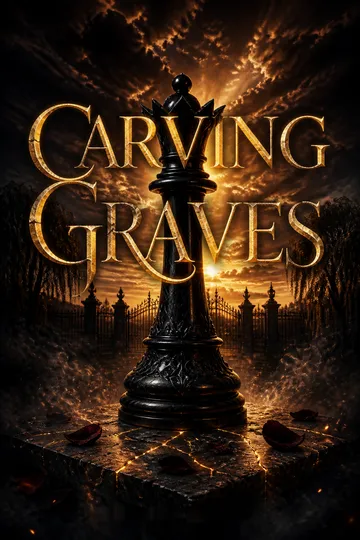
Liam, Gage, and Rex dig up a metal box containing the black ledger and a chess queen with a note from Ben. The book implicates officials across government and records that Frank’s company concealed the body of Eleanor Healy, Ivy’s murdered birth mother.
Celeste wants time to consider what this means for her father, but Liam argues the information belongs to their shared family and must be handled together. Back home, Frank admits how The Order constrained his career and acknowledges that Celeste has been forced to sacrifice too much.
Ben’s code is both an intellectual puzzle and a final act of care: he trusted Celeste’s memory, habits, and ability to interpret his private language. The hidden ledger complicates that gift by implicating her father in a crime bound to Ivy’s origins. Celeste’s wish to control the book is not simple possessiveness; it is an attempt to honor Ben while protecting people she loves. Her father’s admission begins a more honest relationship, but does not erase the consequences of his choices.
The FBI Loyalty Test
After Liam leaves to handle KORT business, Celeste returns to her parents without her phone or the ledger. At an opera outing, FBI agents arrest Frank and Ava and tell Celeste that her cooperation can secure their freedom.
Agent Colehorn tries to make her identify Liam and his allies, showing photographs but offering no concrete charge against her. Celeste recognizes his name from the ledger and learns that his associate Vargas is also compromised.
She invokes that information carefully, making Colehorn fear she can expose his crimes, then pushes for a deal without surrendering KORT secrets. The threat works: her parents are released. Her success is not luck alone; she reads the missing evidence, controls what she reveals, and protects Ivy’s identity as well as her own family.
The test forces Celeste to perform the political skills her family cultivated, but she now uses them to defend her own chosen loyalties rather than advance a campaign. Her leverage depends on restraint: she suggests what she knows without laying out the ledger or exposing KORT. The scene exposes the moral ambiguity of her new power. She gains freedom for her parents by threatening a corrupt agent, not by escaping the compromised system that created the danger.
Hearts Before the Knights
At a Chicago church, Liam reunites with Celeste and explains that the FBI confrontation was a KORT loyalty test. The leaders accept her after she protects both her parents and the organization, then impose a marriage deadline and strict rules on secrecy and fidelity.
Liam presents Easton and Pruitt’s severed hearts as a wedding gift, explaining that he killed the men responsible for Ben’s death and Celeste’s peril, while framing Oliver Jensen and Russell Filmore for the wider murders.
Celeste endures the grotesque display without retreating, thanks KORT on behalf of her family, and chooses Liam and their household openly. She understands that her future carries danger, but no longer mistakes sacrifice for love. The decision gives her belonging without requiring her to disappear inside someone else’s plan.
The grotesque gift makes KORT’s welcome inseparable from its violence. Celeste’s acceptance is therefore not a clean escape into romance; it is a conscious entry into a system whose protection depends on coercion and secrecy. Her choice nonetheless marks a change in agency. She no longer treats the future as a sentence imposed by grief or family expectation. Liam’s devotion matters, but the decisive act is her own willingness to claim this life.
Epilogue
Ten days later, Celeste and Liam marry in the grounds of the Louisiana estate, with Maddox Noire officiating and their found family gathered around them. Their reception fills the property with dancing, food, photographs, and Felicity in Celeste’s arms. Liam gives Celeste a stable, horses, and a photography studio so she can bring her therapeutic work home and share it with the women they shelter.
Later, they ride his motorcycle beneath the night sky and make love in the studio. Celeste gives him back the Zippo he once lost, engraved with the family’s affection and their shared language of the ace. Their marriage begins not with a promise of safety, but with a place where both can belong.
The wedding resolves the book’s central question of whether Celeste can choose herself without abandoning everyone she loves. Her new studio and stable convert her private passion into meaningful work, rather than merely folding her into Liam’s world. The engraved lighter also reverses Liam’s old metaphor: he once believed he had to seize the winning card, while Celeste names him as the person who changed the game and chose her. The ending offers belonging as an active practice, made from shared labor, memory, and daily return, not as a guarantee that danger has vanished.
Analysis
Carving Graves makes family both refuge and machinery. Celeste’s political relatives love her, but their grief and ambition turn that love into a role she is expected to perform. Liam’s chosen family offers a different model, yet it is hardly innocent: surveillance, violence, secrecy, and coercive tests are woven into its care. The novel’s central question is therefore not whether Celeste can find a safe world, but whether she can choose a dangerous one without surrendering her agency.
Her photography gives that question a practical form. Celeste looks at suffering without reducing people to it, whether she is documenting hardship abroad or making children feel at ease around horses. The work offers purpose that neither a political marriage nor an adrenaline rush can provide. Ben’s coded books extend this pattern: attention to particular lives, memories, and details becomes the means by which she inherits knowledge and acts on it.
Liam’s arc turns on the difference between being chosen and taking possession. His past teaches him to secure what he fears losing, so he repeatedly treats protection as authority. Celeste challenges that impulse, while Liam’s willingness to see her intelligence and grief helps her trust him. Their relationship does not resolve the ethical contradictions of KORT. Instead, Celeste enters it with clearer knowledge of its dangers and a role she has chosen, particularly through the shelter and therapeutic work.
The story’s symbols complicate easy redemption. The sunrise promises that someone will return, but it does not promise that tomorrow will be harmless. The chess queen and ace represent competence gained through attention, not invulnerability. Even the wedding follows the deaths and coercion that secured Celeste’s entry into KORT. The ending offers neither escape nor moral purification. It offers a harder form of hope: belonging can make a dangerous life more bearable when it also leaves room for meaningful work, honest grief, and decisions made by the person who must live with them.
Review Summary
Carving Graves is a highly praised romantic suspense novel with elements of dark romance and mafia themes. Readers love the chemistry between Liam and Celeste, the found family dynamic, and the thrilling plot tw-developed characters. The book is filled with tension, banter, and unexpected twists. Many reviewers consider it even better than the first book in the series. Liam Graves emerges as a fan-favorite character, described as possessive, morally grey, and utterly devoted to Celeste. The audiobook narration by Aiden Snow and Angelina Rocca also receives high praise.
People Also Read










Characters
Celeste Carver
The strategist beneath silkCeleste is a wealthy young photographer raised to serve her family’s political ambitions. Her poise is both skill and armor: she knows how to read a room, conceal uncertainty, and turn other people’s expectations to her advantage. She is drawn to risk not simply for excitement but because intense experiences interrupt the numbness left by grief. Her loyalty to Ivy is foundational, and her photography reveals a compassionate attention to people others overlook. Celeste’s deepest conflict is whether choosing her own desires would betray the family that loves her. She is more capable and morally complex than her cultivated image suggests.
Liam Graves
The possessive dark angelLiam is a KORT operative, intelligence specialist, and former Navy SEAL whose confidence conceals the wounds of a childhood spent in foster care. He distrusts polished appearances and initially interprets Celeste’s manners as evidence of shallowness. His humor, tactical intelligence, and possessiveness make him both compelling and dangerous; he often treats control as proof of care. Beneath that force is a profound fear of being discarded, shaped by years of instability. Liam’s bonds with Wells, Ty, Gage, and Ivy taught him that loyalty can be chosen. He wants Celeste not merely as a lover, but as someone who sees his damaged history without asking him to hide it.
Ivy Kingston Wells
Celeste’s irreplaceable best friendIvy is Celeste’s childhood best friend, Wells’s wife, and a leader within KORT. Her imaginative inner life can look like distraction, yet it gives her an unusual ability to notice danger and read people. She is warm, stubborn, and capable of fierce action when someone she loves is threatened. Ivy’s bond with Celeste predates her marriage and her dangerous work, so she understands the grief beneath Celeste’s fear of being left behind. Her role in the household is not simply to be protected: she shapes its emotional life, challenges its men, and insists that their loyalty include the people who matter to her.
Wells Kingston
The household’s steady commanderWells leads the close-knit group surrounding Ivy and commands respect as both a strategist and a former military operator. His instinct is to manage danger through preparation, rules, and control, especially where his wife and child are concerned. That discipline is balanced by a gentleness he rarely displays outside the family. Wells has worked for years to keep his friends alive and connected, and he recognizes that loyalty can become possessive if it leaves no room for choice. His conversations with Celeste reveal an ability to understand the loneliness beneath her polished composure. He is the household’s center of gravity, though he does not always know when protection becomes concealment.
Tytan Reynolds
The gentle-hearted rescuerTy is one of Liam and Wells’s closest friends and a trusted member of their household. Patient and emotionally perceptive, he notices the goodness in Celeste before Liam can admit it. His work protecting abuse survivors reflects a desire to repair what he could not protect in his own family. Ty often uses humor to keep the group light, but his empathy carries old pain and can make him reluctant to risk intimacy. He treats Celeste as a person in her own right and gives her a bridge into the household.
Gage Porter
The imposing family protectorGage is the group’s physically formidable enforcer, a man whose bluntness and appetite for confrontation can unsettle newcomers. He is also loyal, funny, and more tender than his intimidating presence suggests. Ivy’s friendship helped him become more connected to the people around him, and he takes family obligations seriously. His growing warmth toward Celeste appears through small, practical gestures, including sharing exercise and welcoming her work with vulnerable children. Gage distrusts hesitation when safety is at stake, but his severity comes from protectiveness rather than indifference.
Rena Noire
The guarded punk princessRena is the youngest daughter in the Noire family and a friend of Ivy and Celeste. Her gothic style and dry wit mask the constraints of having overprotective brothers who control much of her social life. She longs for a partner who can be both protective and gentle, someone trustworthy with her private desires. Rena’s friendship with Celeste grows through shared frustration with family expectations. She brings levity to tense gatherings while remaining alert to the vulnerabilities that privilege cannot erase.
Frank Carver
The guarded family patriarchFrank is Celeste’s father, a wealthy developer whose legitimate business fronts more dangerous services connected to The Order. He loves his daughter, but fear has led him to steer her toward a supposedly safer political marriage and away from his own work. Frank’s priorities are shaped by loss and by the compromises demanded of him within a powerful secret organization. He wants to protect Celeste, yet his protectiveness often becomes a decision made on her behalf. His relationship with her is marked by affection, expectation, and truths that neither has easily known how to share.
Ava Carver
The strategic, watchful motherAva is Celeste’s mother, a perceptive woman who rose from a turbulent childhood into a world of wealth and political influence. She understands that charm and appearance can be used as forms of power, and she teaches Celeste to read hidden motives. Her fear for her daughter comes from a history she has not fully explained, not from a lack of love. Ava’s advice can sound like pressure because she has learned to survive by anticipating danger. She wants Celeste protected, even when her methods make her feel unseen.
Benjamin Carver
The brother who taught her strategyBen is Celeste’s adored older brother, a gifted legal mind with political ambitions and a taste for racing, photography, and adventures with his sister. He treated Celeste as intelligent enough to understand difficult ideas, even when she was young, and encouraged her to make her own way. His combination of charm and foresight left a deep imprint on how she approaches choices. Ben remains present in Celeste’s memories through the books, photographs, and private rituals he shared with her.
Natasha
Ivy’s fierce, welcoming motherNatasha is Ivy’s mother and a maternal presence in the household. She is affectionate toward Liam and his friends, but practical enough to question whether they can provide adequate security and still build lives of their own. Her concerns come from love and from grief, which has made family especially precious to her. Natasha also recognizes that Celeste’s sadness is not disloyalty to Ivy; she gives Celeste permission to feel joy and loneliness at once.
Rex
Celeste’s steadfast bodyguardRex leads Celeste’s personal security team and has protected her for years. Reserved and observant, he understands her rebellious streak and tries to preserve as much freedom as her safety allows. His loyalty is personal as well as professional, and he respects Celeste’s judgment even when her choices make his work harder. Rex’s steady presence gives Celeste a link to her family’s world as she enters Liam’s.
Axel Noire
The polished eldest brotherAxel is the eldest Noire brother, composed and protective of his family. He manages the family’s public-facing power with polish, while keeping private matters close. When a secret about his parents threatens his younger siblings, his caution reflects the burden of having acted as a protector for years. He respects the boundaries between families but knows that some dangers reach across them.
Ryker Noire
The watchful Noire brotherRyker is one of Rena’s older brothers and helps oversee the Noire family’s security and resort. He is suspicious of outsiders, direct when challenged, and deeply invested in protecting his siblings. His role in managing access to the family’s exclusive spaces reflects a broader Noire habit of guarding information as carefully as territory.
Pruitt Lancaster
The privileged old acquaintancePruitt is a wealthy, self-assured acquaintance from Celeste’s earlier life and a member of the Lancaster family. His polished manners do little to disguise his habit of treating people as extensions of his own status. He carries connections that reach into powerful families, making his presence more consequential than his casual confidence suggests.
Easton Lancaster
Ben’s racing-world friendEaston was Ben’s close friend and part of the racing scene Celeste remembers from adolescence. To her, he belongs to a period of excitement, loyalty, and youthful trust. His apparent place in her brother’s life gives him an emotional significance beyond his social standing, while the details of their shared past remain painful for Celeste.
Scott Filmore
The polished political prospectScott is a charming political hopeful introduced to Celeste through family connections. His campaign ambitions make him representative of the kind of respectable match her relatives favor. He knows how to present himself as an appealing, accomplished man, and Celeste initially gives him the consideration her family expects.
Oliver Jensen
The spotless presidential candidateOliver is a popular presidential candidate whose immaculate public image draws Ivy’s suspicion. His connection to the Lancaster family and KORT’s political machinery gives his campaign significance beyond ordinary electoral competition. He represents the difficulty of distinguishing genuine integrity from a reputation carefully polished for public view.
Johnny Balzano
The combative KORT chairJohnny is one of KORT’s five powerful chairs and a persistent opponent of Ivy’s proposals. He is politically shrewd, combative in meetings, and protective of his own leverage. His family connections make him a central presence in the disputes between the Noires and KORT, even when he is not in the room.
Keith
The loyal security veteranKeith is one of Celeste’s longtime guards, a dependable member of Rex’s team. He is practical and protective, but his own relationships matter to him beyond the job. He wants Celeste to be safe without losing the independence that makes her who she is.
Arnold
The family’s longtime driverArnold has served the Carver family since before Celeste was born. Quietly affectionate and amused by her adventurous streak, he gives her a familiar, grandfatherly presence amid the family’s changing circumstances.
Daniel O’Reilly
Ivy’s newly found fatherDaniel is Ivy’s biological father and a powerful figure associated with the O’Reilly family. He is raising his niece and nephews and is still finding his place in Ivy’s life. His history connects personal loss to the criminal and political structures surrounding KORT.
Plot Devices
The black ledger
A catalogue of leverageThe ledger contains documented corruption, crimes, and compromising secrets gathered by a powerful judge. Its disappearance motivates the break-in at the Carver home and draws the Skulls, political operatives, and KORT into the same conflict. Ben hides it for Celeste using a trail of coded clues, trusting her to find it if she needed protection. Once recovered, it threatens powerful figures and implicates Frank in the concealment of a murder. The ledger functions as both evidence and moral test: Celeste must weigh her brother’s intent, her father’s safety, and the claims of the people she has chosen as family.
Ben’s coded books
A sister’s inherited cipherBen gives Celeste five books and marks selected page numbers and letters in ways she will recognize. A bookmark about stones, decimal points, and her childhood geocaching memories help her assemble coordinates to a park in Denver. The clues show how well Ben understood Celeste’s habits and how deliberately he planned for her to find the ledger without creating an obvious trail. The device turns reading and memory into action: Celeste does not solve the puzzle by raw intelligence alone, but by remembering the private experiences that made the clues meaningful.
Chess and the ace
A language of agencyChess shapes how the Carvers understand strategy, while Liam’s ace imagery expresses his belief that he must seize what life has denied him. Celeste’s victories at the Noire resort establish that she can read a board and act without panic. Ben’s hidden queen and Liam’s tattoo turn those games into personal symbols: Celeste is not meant to remain a pawn, and Liam sees her as the decisive card he has spent years seeking. The motif tracks a shift from treating life as a contest imposed by others to choosing how, and with whom, to play.
Tracking and false identities
Protection with a priceLiam monitors Celeste’s phone and location, while KORT members use trackers, burner phones, erased records, and cover identities to stay ahead of enemies. These systems help the group protect Celeste and locate Ivy during the kidnapping, but they also compromise privacy and trust. Liam’s secrecy is presented as both tactical necessity and a symptom of his belief that control can prevent loss. The repeated disguises and surveillance force Celeste to ask whether safety that removes her choice is truly care, even as the danger around her makes those tools difficult to refuse.
The KORT loyalty test
Belonging under pressureKORT tests Celeste by placing her parents in FBI custody and watching whether she will expose the organization to secure their release. The apparent investigation is engineered through compromised agents and incomplete evidence, leaving her to identify leverage without knowing the full rules. Celeste uses information from the ledger carefully, protecting both her parents and Ivy’s hidden identity. The test gives formal shape to the book’s conflict between inherited family and chosen family, but its coercive design also reveals the cost of membership: acceptance requires proving that private loyalty will not endanger the organization.


Download PDF
Download EPUB
.epub digital book format is ideal for reading ebooks on phones, tablets, and e-readers.








