

Key Takeaways
Judge an ad by orders and inquiries, not applause or awards
Action is the point. Whitman treats advertising as selling, not decoration or entertainment. An ad succeeds when it moves someone toward a useful next step, such as requesting information, visiting a shop, or buying. A clever campaign that earns praise but produces no response has missed its job. That emphasis shapes the whole book: understand what motivates a prospect, make the offer believable, and ask for action clearly.
Measure the response. The author’s recurring test is practical: if nobody calls, clicks, visits, or orders, the message needs work. The reader should not confuse an attractive layout or a witty line with commercial effectiveness. Even a good product needs an ad that makes its value understandable and gives the audience a reason to act.
The book’s action-first standard is useful because it gives small businesses a concrete way to judge creative work. It also resembles the distinction in experimental science between an elegant explanation and a result that survives measurement. Yet not every valuable ad produces an immediate sale. Some build recognition or trust that influences later choices, so short-term response should be measured alongside longer-term customer behavior. The stronger lesson is not that brand-building is useless, but that its purpose and evaluation should be explicit rather than hidden behind awards or cleverness.
Build your pitch around the want your product satisfies, not its parts
Start with human wants. Whitman groups enduring motivations into the Life-Force 8: staying alive and enjoying life, food and drink, safety, sexual companionship, comfort, status, protecting loved ones, and social approval. He contrasts these with learned preferences such as convenience, beauty, bargains, and being informed. The point is not to list every desire in every ad, but to identify which one the product genuinely serves.
Translate features into outcomes. A shovel is a metal blade on a handle; what the buyer wants is a hole for planting flowers or a tree. A product’s features matter when they explain how that outcome happens. Whitman describes desire as tension arising from an unmet need, followed by action aimed at relief. Advertising becomes relevant when it connects the product to that relief.
This approach anticipates the modern practice of selling a job to be done: customers often buy a tool because of the progress it helps them make, not because they admire its specifications. The Life-Force 8 is memorable as a prompt for brainstorming, but it is not a complete map of motivation. People’s priorities vary by culture, circumstance, and individual identity. A marketer should use broad human needs to generate hypotheses, then verify which outcome matters to the particular audience instead of assuming every buyer wants the same thing.
Make customers rehearse the benefit in their imagination before they buy
Let the mind try it. Whitman argues that concrete language lets a reader mentally experience a product before owning it. He calls vivid, descriptive modifiers PVAs, or powerful visual adjectives. A plain claim about a pool-cleaning device gives little to picture. A description of its shape, movement, sound, and the clearer water it leaves creates a richer preview of using it.
Engage the senses. The book calls the mind’s sensory impressions internal representations, or IRs. Sight, sound, touch, smell, and taste can all help form an imagined experience, though not every product can use every sense. The writer’s task is to replace vague claims with specific actions and details that help readers picture the result, such as fresh bread with a crisp crust rather than simply good bread.
Mental simulation is a powerful bridge between abstract promises and anticipated experience. Research in consumer psychology commonly finds that imagining an action can make it feel more familiar and easier to evaluate. The technique is strongest when the imagined scene is plausible and connected to the actual product. Sensory richness can also disguise a weak offer, or make an unproven result feel certain. Vivid writing should therefore make a real benefit easier to understand, not inflate what the product can deliver.
Match the message to readiness, risk, and how much thought buying requires
Meet prospects where they are. The Transtheoretical Model describes five stages of change: a person may not know a product exists, may be considering it, preparing to buy, taking action, or making it part of a routine. A new product needs explanation; a familiar one may need a reason to switch or stay. Whitman suggests either addressing different stages in one comprehensive message or building a sequence of messages over time.
Choose the right route. The Elaboration Likelihood Model distinguishes central persuasion, which relies on careful thought and evidence, from peripheral persuasion, which uses cues such as attractive images, authority, or popularity. A high-stakes purchase usually needs stronger reasoning than a low-cost routine choice. A bean brand and a house do not call for the same depth of argument.
The useful insight is that persuasion depends partly on the audience’s state, not just on the copywriter’s skill. This connects to decision science: people devote more attention when a choice feels consequential, personally relevant, or difficult to reverse. Peripheral cues can help simplify low-stakes choices, but they are fragile when buyers later encounter contradictory evidence. For expensive or risky products, clear proof and comparison protect both the customer and the seller. Readiness also rarely moves in a perfectly straight line, so marketers should treat stages as a planning aid rather than a rigid diagnosis.
Pair every alarming claim with a believable, achievable remedy
Fear needs an exit. Whitman’s fear appeal is not simply a dramatic threat. Drawing on research discussed in the book, he says it works best when the audience recognizes the danger, receives a specific response, believes that response can reduce the danger, and feels able to carry it out. A self-defense course, for example, must do more than cite crime statistics. It also needs to show how ordinary students can learn and use the training.
Make belief inspectable. Testimonials, demonstrations, credible endorsements, research, and guarantees can support a promise. A guarantee also reduces the buyer’s perceived risk during the gap between paying and experiencing the product. Fear without a credible remedy may freeze people or make them distrust the advertiser. The product must actually address the problem being used to motivate action.
The four-part approach resembles protection motivation theory, which explains why threat messages need both a serious risk and a feasible response. A message that heightens danger while leaving people powerless can produce avoidance rather than action. Evidence also functions as a trust signal, but borrowed authority is not proof by itself: an impressive logo or recognizable face can create confidence without validating a claim. Ethical persuasion makes the remedy, its limits, and its supporting evidence visible, especially when the stakes include health, safety, or money.
Differentiate with details competitors cannot honestly claim
Give buyers a reason to choose. Whitman calls a business’s distinctive promise its USP, or unique selling proposition. A generic claim such as better quality leaves the customer to guess. Specifics create a clearer comparison: a restaurant might explain that it makes pasta daily, prepares sauce from scratch, and uses fresh herbs. A hardware store can make its range tangible by naming the unusual breadth of its stock rather than calling itself helpful.
Find the details that matter. The author urges businesses to ask customers what they value, dislike, and would change. Surveys can reveal which benefits deserve emphasis and what price or offer feels appealing. Specificity is not a license to invent superiority. The claim should be true, relevant to the customer, and distinctive enough to help the business occupy a recognizable place in the market.
Specificity works partly because it reduces the buyer’s effort to compare alternatives. It can also signal operational knowledge: a business that explains how its product is made appears more accountable than one relying on vague praise. But detail is persuasive only when it helps answer a meaningful customer question. An inventory count or technical fact can become noise if buyers do not care about it. Customer research helps separate distinctive proof from decorative information, while honest substantiation prevents differentiation from turning into empty positioning.
Lead with the benefit, then make every word and image easy to read
Win the first glance. Whitman recommends putting the strongest customer benefit in the headline because many readers scan rather than read an entire ad. A headline should identify its audience and make the value clear. The body should use familiar words, short sentences, and concrete details instead of making readers decode jargon. The Flesch Reading Ease Formula is one tool for estimating how difficult prose may be, though the author stresses plain communication more than score-chasing.
Design for comprehension. Relevant photographs, especially images showing a product in use, can attract attention and help demonstrate the promise. Captions, readable type, and a clear visual order guide the eye. Whitman favors enough copy to explain and support the offer, rather than cutting information merely to make an ad short. Long copy works only when it stays useful and engaging.
This advice joins cognitive fluency with visual hierarchy: information that is easy to process is more likely to be noticed and understood. A benefit-led headline also helps readers quickly decide whether the message concerns them. Readability formulas and conventional design rules are helpful diagnostics, not universal laws; audience, medium, accessibility needs, and brand context all matter. In particular, print and digital typography behave differently. Testing with actual readers can reveal whether a clean design clarifies the offer or merely makes it look polished.
Let customer research and split tests choose your winning offer
Replace guesses with evidence. Whitman recommends testing different headlines, prices, and offers rather than assuming silence means customers do not want the product. A chiropractor could compare a free evaluation with a discounted first visit or a bonus service. The business can send different versions to comparable groups and track which produces more calls or purchases. The results show what the audience responds to, not what the owner happens to prefer.
Ask before spending. Surveys can reveal what customers like, what frustrates them, what they might pay, and what would bring them back. The book advises keeping surveys short and easy to return, and offering a small reward when appropriate. Testing should focus on one meaningful difference at a time when possible, so the business can learn which change affected response.
This is the book’s most durable scientific habit: treat advertising as a hypothesis, then observe behavior. A split test is a small experiment, and customer surveys provide useful context for designing the next one. The distinction matters because stated preferences and actual purchases can diverge. Results also depend on timing, audience quality, and sample size, so a single test should not be mistaken for a permanent law. Continuous, disciplined testing turns creative intuition into a source of ideas that the market can verify.
Make the next step effortless, and give a real reason to act now
Remove buying obstacles. Whitman treats an ad as a salesperson that must make the next move easy. Give clear ordering instructions, contact details, directions, convenient payment choices, and a simple response form. A personalized mail piece with a return envelope removes more effort than a vague invitation to get in touch. A strong guarantee can make the purchase feel less risky, particularly when the product costs enough to invite second thoughts.
Use honest urgency. Deadlines and limited quantities can interrupt procrastination by making delay feel costly. The book distinguishes firm cutoffs from claims that supply is genuinely limited. These devices should reflect real constraints; artificial scarcity may trigger a purchase once, but damage trust afterward. The final message should state exactly what to do and why acting within the stated period benefits the customer.
This section anticipates choice architecture: small changes in friction, defaults, and clarity can strongly affect whether people complete an intended action. A visible phone number or pre-addressed reply form is not glamorous, but it reduces the number of decisions between interest and purchase. Scarcity can create urgency, yet it also invites reactance when buyers suspect manipulation. The most sustainable design pairs convenience with truthful constraints. A customer should be able to act quickly without being misled about availability, risk, or the value of the offer.
Analysis
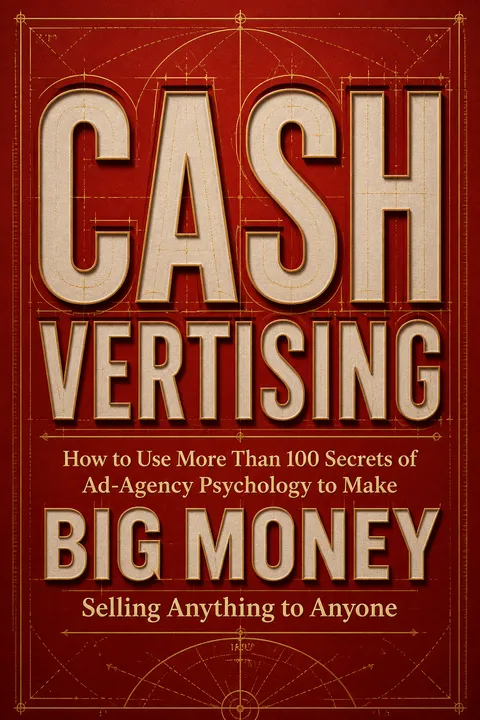
Cashvertising is a direct-response manual with a clear organizing claim: advertising earns its keep by changing what a prospect does. Its broad catalog of psychological principles and production tips can make it seem like a bag of tricks, but the most coherent reading is a sequence. Identify the audience’s desired outcome, show how the product provides it, supply reasons to believe the promise, and remove barriers to action. The many devices, from testimonials to headlines and guarantees, serve different points in that chain.
The book’s strongest contribution is its relentless customer-centered translation. Features become useful only when connected to outcomes, and outcomes become persuasive when made specific, credible, and easy to imagine. Its emphasis on testing also counters the common tendency to mistake personal taste for market evidence. Small firms can apply the advice without hiring a large agency, especially by asking customers questions and comparing offers systematically.
Its weaker tendency is to treat persuasion as broadly predictable and buyers as mainly motivated by stable impulses or cognitive shortcuts. The book itself notes that response varies, but its confident tone can make techniques sound more universal than they are. A cue that simplifies a low-stakes purchase may appear manipulative in a high-stakes one. Vivid language can clarify experience, but also exaggerate it. Scarcity can prompt action, but false scarcity erodes trust. The practical boundary is truthfulness: claims should be supportable, urgency real, and the product capable of delivering the promised benefit.
The book is best used as a repertoire of hypotheses rather than a guaranteed formula. Its old print examples often translate well to digital communication because attention, comprehension, trust, and effort remain relevant problems. Yet channels change how people encounter messages, and contemporary marketers must account for privacy, accessibility, platform constraints, and rapid feedback. The lasting value is not any single headline pattern. It is the discipline of connecting a real customer want to a clear offer, then letting observed response improve the message.
Review Summary
Cashvertising receives high praise for its comprehensive and actionable advertising techniques. Readers appreciate the psychological insights, practical examples, and clear writing style. Many consider it essential reading for marketers and copywriters. The book's focus on print advertising and dated examples are noted as minor drawbacks. Some readers find the aggressive sales tactics questionable, while others value the straightforward approach to creating effective ads. Overall, reviewers commend the book for its wealth of information and potential to improve advertising skills.
People Also Read







Glossary
Life-Force 8
Eight basic human wantsWhitman’s label for eight biologically grounded desires he considers especially powerful in advertising: survival and enjoyment of life, food and drink, safety, sexual companionship, comfortable conditions, status or superiority, protection of loved ones, and social approval. The framework helps advertisers connect a product to a basic human motivation rather than describing features alone.
Means-End Chain
Product to ultimate benefitA way of tracing a product feature through its immediate benefit to the more important result the customer ultimately wants. A sign, for example, attracts attention, which may bring customers, sales, and income. Whitman urges advertisers to sell this end result, not merely the product component that helps produce it.
Transtheoretical Model
Stages of readinessA model used in the book to describe five stages through which people may move in adopting a behavior: precontemplation, contemplation, preparation, action, and maintenance. For advertising, it highlights that some prospects need basic awareness while others need decision details or reinforcement. Messages can address several stages or unfold as a sequence.
Elaboration Likelihood Model
Two routes to persuasionA persuasion model distinguishing central processing, in which people evaluate arguments carefully, from peripheral processing, in which cues such as popularity, appearance, or authority influence judgment. Whitman applies it to advertising choices: consequential purchases usually need substantive evidence, while routine decisions may rely more on simple cues.
Inoculation Theory
Strengthen existing attitudesA theory of persuasion associated in the book with psychologist William J. McGuire. It proposes that a mild challenge, preceded by a warning and followed by an opportunity to defend a position, can strengthen an existing attitude. Whitman applies this to brands by preparing customers to answer competitors’ criticisms, while cautioning that an attack that is too strong may weaken the attitude instead.
CLARCCS
Six persuasion cuesWhitman’s mnemonic for six influence cues associated with Robert Cialdini: comparison, liking, authority, reciprocation, commitment or consistency, and scarcity. These cues can guide decisions when people are not carefully analyzing every argument. The book presents them as useful shortcuts, not substitutes for product quality or truthful claims.
PVAs
Vivid descriptive modifiersShort for powerful visual adjectives, Whitman’s term for descriptive words that help a reader picture a product or experience more vividly. The method replaces generic claims with specific sensory language, such as describing a food’s texture or a service’s visible result. Its purpose is to make the benefit easier to imagine.
Internal representations
Mental sensory impressionsThe book’s term for the sensory and emotional impressions people form internally when remembering or imagining an experience. These impressions can involve sight, sound, feeling, smell, and taste. Whitman argues that concrete advertising language can make a future product experience more imaginable before purchase.
Unique Selling Proposition
Distinctive customer promiseOften abbreviated USP, this is the specific reason a customer should prefer one business or offer over competing alternatives. Whitman argues that a useful proposition must be supported by real differences in the product, service, or business practice. A catchy label alone cannot create a lasting distinction.
Flesch Reading Ease Formula
Prose difficulty estimateA readability measure developed by Rudolf Flesch that estimates how easy a passage is to read, using sentence length and syllables per word. Higher scores indicate easier reading. Whitman recommends it as a practical check for advertising copy, while emphasizing that simple, clear language matters more than mechanically pursuing a particular score.
FAQ
What's "Cashvertising" about?
- Advertising Psychology: "Cashvertising" by Drew Eric Whitman delves into the psychology behind effective advertising, revealing over 100 secrets used by top ad agencies.
- Consumer Behavior: The book explores how understanding consumer desires and behaviors can significantly boost sales.
- Practical Techniques: It provides actionable techniques and strategies to create compelling ads that drive consumer action and increase profits.
Why should I read "Cashvertising"?
- Boost Sales: Learn proven methods to enhance your advertising efforts and increase sales.
- Understand Psychology: Gain insights into the psychological triggers that influence consumer behavior.
- Practical Application: The book offers practical, easy-to-implement strategies that can be applied to any business.
What are the key takeaways of "Cashvertising"?
- Life-Force 8: Understanding the eight basic human desires that drive consumer behavior is crucial for effective advertising.
- Principles of Persuasion: The book outlines 17 foundational principles of consumer psychology that can be leveraged in advertising.
- Ad-Agency Secrets: It reveals 41 techniques used by ad agencies to create persuasive and successful ads.
What is the "Life-Force 8" in "Cashvertising"?
- Basic Desires: The Life-Force 8 refers to eight fundamental human desires that are biologically programmed into everyone.
- Sales Drivers: These desires include survival, enjoyment of food and beverages, freedom from fear, and social approval, among others.
- Advertising Appeal: Tapping into these desires can significantly enhance the effectiveness of advertising campaigns.
How does "Cashvertising" explain the use of fear in advertising?
- Fear Factor: The book discusses the "Fear Factor" as a powerful motivator in advertising, urging consumers to take action.
- Stress and Action: Fear causes stress, which in turn motivates consumers to act to alleviate that stress.
- Ethical Use: It emphasizes that using fear is ethical only if the product genuinely offers a solution to the fear-induced problem.
What are some of the 17 foundational principles of consumer psychology in "Cashvertising"?
- Ego Morphing: This principle involves creating an image for a product that consumers want to associate with their identity.
- Transfer: Using symbols or endorsements from respected authorities to lend credibility to a product.
- Bandwagon Effect: Encouraging consumers to join a group or trend, leveraging their need to belong.
What are some of the 41 ad-agency secrets revealed in "Cashvertising"?
- Psychology of Simplicity: Emphasizes the importance of clear and simple communication in ads.
- Bombard with Benefits: Focus on highlighting the benefits of a product rather than just its features.
- Scarcity: Creating a sense of urgency by suggesting limited availability to prompt immediate action.
How does "Cashvertising" suggest using testimonials in advertising?
- Social Proof: Testimonials serve as social proof, helping to build trust and credibility with potential customers.
- Authenticity: Genuine testimonials from satisfied customers can significantly enhance the persuasive power of an ad.
- Collection Strategy: The book advises actively seeking testimonials by asking customers for their honest opinions and experiences.
What is the "Guillotine Principle" in "Cashvertising"?
- Attention Grabber: The Guillotine Principle involves using a photo of a person's face in an ad to immediately capture attention.
- Personal Connection: Faces add a personal touch to ads, making them more relatable and trustworthy.
- Repetition: Consistently using a recognizable face can help build brand recognition and trust over time.
What are some of the best quotes from "Cashvertising" and what do they mean?
- "People buy because of emotion and justify with logic." This highlights the importance of appealing to emotions in advertising, as emotional responses drive purchasing decisions.
- "The headline is the 'ticket on the meat.'" This emphasizes the critical role of a headline in grabbing attention and drawing readers into the ad.
- "Consumers buy based on what the product will do for them, not on what ingredients it has." This underscores the importance of focusing on benefits rather than features in advertising.
How does "Cashvertising" address the debate between long and short copy?
- Long Copy Wins: The book argues that well-written long copy consistently outsells short copy by providing more information and persuasion.
- Engagement: Long copy allows for a deeper engagement with the reader, addressing multiple angles and concerns.
- Testing: It encourages testing different lengths to see what works best for a specific audience and product.
What is the "Psychology of Pricing" in "Cashvertising"?
- Odd-Even Pricing: The book discusses how prices ending in odd numbers (e.g., $9.99) suggest greater value than rounded prices.
- Perception of Value: Fractional pricing can make a product seem like a better deal, influencing consumer perception.
- Prestige Pricing: For high-end products, using whole numbers (e.g., $100) can convey quality and exclusivity.
About the Author
Other books by Drew Eric Whitman

Download PDF
Download EPUB
.epub digital book format is ideal for reading ebooks on phones, tablets, and e-readers.








