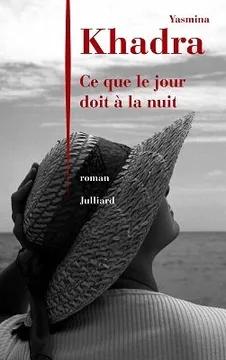


Plot Summary
The Harvest Burns
Ten-year-old Younes1 watches his father, Issa,5 stake the family's future on a promising wheat harvest. Three days before reaping, fire consumes the fields. Issa5 tries to beat back the flames with a bucket, then signs away the ancestral land when the caid arrives with a French official and documents.
The family leaves with their belongings on a cart, while their dog follows until Issa5 drives it off. On the road, Issa5 gives up the cart and mule for a little money from Miloud, an old acquaintance, and leads his wife and children toward Oran on foot. His refusal to accept help leaves them with no home and no clear prospect beyond the city.
The fire turns a natural disaster into a social one. Issa's land is not merely lost; its destruction exposes how debt and colonial authority can make a family's catastrophe profitable to others. His insistence on walking alone preserves his pride while transferring its cost to his wife and children. Younes learns early that endurance is not the same as control: his father's labor cannot protect them from a system that has already decided who may keep the land.
The Son Given Away
In Oran, Issa5 settles his family in a filthy room in Jenane Jato and searches for day work, often returning with little. After he accidentally leaves Younes1 alone near a dangerous square, a gargotier keeps the boy safe and guides them home. Issa5 later asks his older brother Mahi,3 a pharmacist, for money, but rejects Mahi's3 offer to educate Younes,1 hearing concern as an insult to his fatherhood.
When Issa5 carries his savings to a business meeting, El Moro beats him and steals the money. Issa5 goes out at night with a butcher's knife; El Moro is soon reported dead. Broken by defeat, Issa5 finally brings Younes1 to Mahi3 and gives his son the chance he had refused.
Issa's pride is both a defense against humiliation and a trap. He cannot accept support without fearing that it will redefine him as dependent, so even his love for Younes first appears as refusal. The decision to entrust his son is not a simple surrender: it is a painful revision of what being a father requires. Younes, meanwhile, experiences care as something unstable, alternately offered by strangers and withheld by the parent whose approval he most wants.
Jonas Enters the House
Mahi3 brings his nephew to his spacious home, where his French wife, Germaine,4 bathes him, dresses him in new clothes, and begins teaching him to read. The household calls him Jonas, a change Younes1 accepts without understanding how much it will matter. Mahi3 delays school until he is sure Issa5 will not reclaim the boy.
During a visit to Jenane Jato, Younes1 finds his mother feverish and his younger sister Zahra6 withdrawn and unresponsive; he returns to Mahi's3 home without them. Later, he sees Issa5 drunk and humiliated outside a bar. Issa5 cannot rise without falling, then walks away from his son in shame. Soon afterward, he disappears, leaving Younes1 to imagine where he has gone.
The new home offers safety, but safety comes with a divided identity. Jonas is the name attached to education, European manners, and the future Mahi can provide; Younes remains bound to the family left in the slum. The father's disappearance deepens the split by making absence a permanent object of interpretation. The boy's fantasies about Issa's return are less evidence of childish naivety than a way to protect love from the humiliation he witnessed.
Oran Closes Behind
As war spreads through Europe, Mahi's3 secret meetings and support for Algerian nationalists draw police attention. After a week in detention, he returns shaken and increasingly isolated, then decides that staying in Oran endangers his family and political associates. He sells the pharmacy and house and moves with Germaine4 and Younes1 to Rio Salado, a prosperous village of vineyards and colonial families.
The move separates Younes1 from Lucette,17 his kind childhood friend, and gives him a new school, a new landscape, and a life among European neighbors. Mahi3 hopes the village will be a safer place to rebuild, but Younes1 is learning that a change of address cannot erase the distinctions that determine who belongs.
Mahi's move is both practical protection and an act of retreat. His political convictions have exposed the distance between intellectual solidarity and the risks of direct action, while detention leaves him less able to inhabit his former confidence. For Younes, each relocation offers material improvement but demands another severance. The village's order appears gentler than Jenane Jato, yet its boundaries are more polished than absent. Belonging there depends on whether others can overlook the name, ancestry, and poverty he carries.
The Rose in the Book
In Rio, Younes1 meets Emilie,2 a sick nine-year-old who visits the pharmacy for injections. He slips a rose into her geography book, then loses sight of her when she stops coming. He grows close to three schoolmates: the confident Jean-Christophe,8 aspiring writer Fabrice,9 and comic, insecure Simon.10
Isabelle Rucillio,12 a wealthy girl who once called Younes1 her favorite companion and kissed him, later rejects him after learning his birth name is Younes rather than Jonas. She makes clear that his blue eyes cannot make him acceptable as an Arab husband. Her rejection teaches him that affection inside the colonial community can be conditional, while the rose he gave Emilie2 remains an unspoken token of a brief, gentler connection.
The rose and the rejected name mark two opposing lessons about intimacy. The flower is a gift without a bargain attached; Isabelle's affection, by contrast, collapses under the pressure of racial hierarchy and inheritance. Younes is not simply excluded from one romance. He discovers that the identity which helps him pass among his friends can be treated as a deception the moment it becomes inconvenient. His emerging selfhood is therefore shaped by other people's permission as much as by his own choices.
The Cazenave Boundary
At seventeen, Younes1 delivers medicine to Emilie's mother,2 Mme Cazenave,11 a striking woman recently returned to her home outside the village. She invites him inside, and he experiences his first sexual encounter with her. Afterward, she treats the intimacy as something to be contained and tells him to keep away from her daughter.2
Younes1 obeys, though he has not yet connected Emilie2 to the child who once visited Mahi's3 pharmacy. When Emilie2 later becomes close to Fabrice,9 Mme Cazenave11 confronts Younes1 and makes the connection explicit: he must not become involved with her daughter2 after having been with her. Her fear of scandal and religious condemnation leaves Younes1 with desire he cannot acknowledge openly.
The encounter is marked by a severe imbalance of age and power, even as Younes remembers it through the intoxicating language of adolescent awakening. Mme Cazenave controls the terms: she initiates the intimacy, then dictates its meaning and draws a boundary around her daughter. That boundary converts private desire into moral surveillance. Younes's later silence is not just loyalty to a friend or obedience to a prohibition; it is also the residue of having been taught that his own feelings may be dangerous to name.
Jelloul Shows the Other Country
After the 1945 massacres of Algerian demonstrators, Younes1 sees the political crisis reach his immediate circle. André Sosa13 beats Jelloul,7 his young Arab servant, for reasons tied to growing suspicion of Muslims. Jelloul7 comes to Younes1 for money to feed his family, then lets him see the poverty of the douar where they live.
Younes1 carries him home by bicycle and witnesses a world of hunger hidden beyond Rio's vineyards. Later, Jelloul's7 words return when André's13 father boasts that colonists made the land prosperous and therefore have the right to keep it. Younes1 challenges that claim, describing the dispossession of the people who lived there before the farms and roads were built.
Jelloul makes structural inequality legible by forcing Younes to cross a physical boundary. The douar is not an abstraction or a political slogan; it is a place where a family must choose submission because too many lives depend on one wage. Younes's argument with Sosa matters because it converts borrowed sympathy into speech. He still lives within colonial privilege, but he can no longer claim ignorance of the labor and deprivation supporting it.
The Love He Wouldn't Claim
As a young woman, Emilie2 returns to Younes's1 orbit and recognizes him as the boy who once hid a rose in her book. She begins a relationship with Fabrice,9 but her attention keeps turning toward Younes.1 Jean-Christophe8 also falls for her after his turbulent relationship with Isabelle12 collapses.
When Emilie2 finally tells Younes1 that she loves him, he cannot answer: his feelings are real, but he fears betraying Fabrice9 and cannot escape the taboo created by his affair with her mother.11 Simon,10 who loves Emilie2 too, accepts Mme Cazenave's11 proposal and marries her. Emilie2 asks Younes1 to stop the match, but he remains silent. She sends him the old geography book with the dried rose inside, and he attends the wedding alone with his regret.
Younes's defining mistake is not that he lacks love, but that he treats restraint as proof of virtue. His silence protects him from choosing among competing loyalties, while leaving Emilie and his friends to absorb the consequences. The old rose becomes material evidence that a small act of tenderness survived across years, but it cannot compensate for the decision he fails to make. In this story, moral caution is not neutral: it can preserve a person's self-image while quietly deciding another person's future.
José Dies at the Snack
In 1956, José Sosa is stabbed outside André's13 snack. Grief-stricken and furious, André13 blames Jelloul,7 who had been away visiting his ill father, and beats him in front of the gathered villagers. The police arrest Jelloul,7 and rumors say he confessed. His mother later begs Younes1 to intervene, insisting that Jelloul7 was at home when José died.
Younes1 takes the plea to Jaime Sosa, but the landowner dismisses the family's account and promises that Jelloul7 will be executed. Jaime's speech about his family's labor on the land triggers Younes1 to challenge the idea that cultivation grants ownership. His protest does not free Jelloul,7 but it marks the point at which Younes1 openly contests the power surrounding him.
José's death shows how grief can become a license to punish the person already made vulnerable by class and ethnicity. André's suspicion follows a ready-made hierarchy: Jelloul is available to blame because his word carries less weight. Younes recognizes the injustice but cannot undo it through private loyalty alone. His argument with Jaime is a moral awakening with limited immediate power, a reminder that seeing clearly and changing conditions are separate capacities.
The House in Flames
During the escalating war, armed FLN attackers storm Simon10 and Emilie's2 home, kill Simon,10 and set the house on fire. Younes1 reaches the grounds and finds Emilie2 hiding in the old stable with their young son, Michel.21 Krimo,16 Simon's10 armed chauffeur, orders Younes1 away, and Emilie2 makes clear that she does not want him near her.
She leaves Rio for Oran, while Younes1 is left with the knowledge that Simon10 is dead and Emilie2 has endured another loss with him absent from her side. The violence also transforms the village: Muslims face tighter restrictions, armed patrols multiply, and retaliation becomes part of daily life.
The fire makes private intimacy impossible to separate from public violence. Simon's home, once a site of marriage and family, becomes a battlefield, while Emilie's rejection gives Younes a personal wound he cannot disguise as political misfortune. His exclusion is understandable: his past silence has already damaged their bond, and grief leaves no room for him to claim the role of rescuer. The scene also collapses Rio's self-image as a sheltered village. The war has entered its domestic spaces.
Ouari Returns as Sy Rachid
In 1959, an armed FLN teenager takes over the pharmacy and holds Younes1 and Germaine4 until Jelloul7 arrives with a wounded commander. The patient is Ouari,14 Younes's1 silent childhood companion from Jenane Jato, now known as Sy Rachid.14
Germaine4 removes the bullet while Younes1 and the FLN men keep the operation supplied and concealed. Jelloul7 presses Younes1 to recognize the war as his own, but Younes1 resists being ordered into allegiance by men carrying guns.
Once Ouari14 recovers, Younes1 drives him and the others toward their unit, then continues delivering medical supplies through discreet nighttime arrangements. The choice is practical before it is ideological: he helps because the wounded need care, even as the political consequences close around him.
Ouari's return joins two versions of Younes's life that had seemed unrelated: the child who hunted birds with him and the commander now moving through a war. The reunion makes the cost of political passivity intimate rather than rhetorical. Still, Younes resists Jelloul's coercive certainty. His contribution begins in care, not conversion, preserving a distinction between solidarity and submission even as he accepts greater risk.
The Price of Medicine
Younes's1 secret medical deliveries continue until Krimo16 discovers Laoufi, the FLN nurse, and kills him. Krimo's16 men bring Laoufi's body and scattered medicines to the pharmacy, then beat and imprison Younes,1 demanding that he identify the fighters he has helped. Younes1 denies knowing them and endures repeated torture.
Pépé Rucillio,15 Isabelle's12 powerful grandfather, intervenes with military authorities and vouches for Younes's1 innocence, securing his release. At home, Germaine4 tends his injuries, but Younes's1 suspicion that Isabelle12 arranged the rescue wounds her. The distance between them hardens. Younes1 has risked his safety for the wounded, yet the ordeal leaves him more isolated from the woman who raised him.
Younes's assistance has moved beyond private kindness into a network that the colonial state reads as treason. His refusal to betray the fighters is a moral choice, but it does not grant him control over how others interpret it. Pépé's intervention reveals a second, unequal route to justice: influence can halt violence where evidence and innocence cannot. The cost is emotional as well as bodily, since Younes's distrust injures Germaine just when he most needs her care.
A Country Changes Hands
Jean-Christophe8 returns to Rio after years away, but refuses to see Younes,1 still blaming him for the love triangle that preceded his enlistment. By independence in 1962, he is imprisoned as an OAS militant. Jelloul,7 now an officer in the Algerian army, brings Younes1 to the cell and lets him decide whether Jean-Christophe8 should go free.
Younes1 releases his old friend, who leaves without offering reconciliation. Outside, European families abandon the village, André13 burns his damaged snack, and Younes1 persuades Germaine4 to stay with him. In Oran, he searches for Emilie2 amid the violence and mass departures but cannot find her. The country has gained independence; Younes1 has not recovered the people he loves.
The release reverses the earlier power dynamic: Younes now holds a choice over the man who once rejected him, but he refuses to turn captivity into revenge. Independence does not repair the relationships history has broken. The departing Europeans and the newly sovereign Algerians carry incompatible losses, and the novel resists treating either as simple triumph. For Younes, political freedom arrives beside an unresolved private absence, leaving the national transition emotionally unfinished.
Marseille's Closed Door
In 1964, André13 helps Younes1 locate Emilie2 in Marseille, where she is living in exile. Younes1 finds her outside her apartment and tells her he came for her, but Emilie2 believes their story ended long ago. She had waited for him to return after their first meeting in Marseille; he did not.
She now refuses to rebuild what war, separation, and his hesitation have damaged. Before turning away, she touches his face and tells him that no one is to blame, but that the world has taken too much from her. Younes1 leaves France that night. He writes to her over the years, yet receives no answer, unaware that she has kept every letter unopened.
Marseille gives Younes a chance to act, but not a chance to erase the years in which he failed to act. Emilie's refusal is not a test he can pass by arriving with enough remorse. Her life has been shaped by losses that cannot be repaired through his late sincerity. The unopened letters, revealed only much later, complicate the silence without nullifying it: connection remained possible, but neither person knew how to cross the distance at the right time.
Epilogue
In 2008, after Emilie's2 death in Aix-en-Provence, the elderly Younes1 visits her grave and reunites with old friends. Her son Michel21 gives him a box containing his unopened letters and one final note. Emilie2 explains that she had waited for him after their Marseille meeting and forgives the hurt between them.
At the airport, Younes1 delays his flight, and Jean-Christophe8 arrives at last. The two old friends embrace, setting aside decades of resentment. Younes1 boards for Algeria carrying neither a recovered romance nor an erased past, but a measure of peace.
The ending does not grant Younes the life he once imagined with Emilie. Instead, it changes the meaning of his long silence: she had waited, and later chose not to open his letters, preserving a quiet that soothed her. The delayed revelation offers forgiveness without pretending that timing can be reversed. Jean-Christophe's arrival provides a different kind of repair, one made possible by surviving long enough to relinquish grievance. The rose's remains and the letters turn memory into something tangible, not a cure, but a form of belated recognition.
Analysis
The novel makes private hesitation inseparable from public history. Younes1 moves through a country divided by colonial privilege, but his most consequential failures often happen at intimate scale: he refuses Emilie2 when she asks him to choose, misreads care as humiliation, and waits for certainty until opportunities close. Those errors do not make him uniquely weak; they show how a person trained to survive between communities can mistake noncommitment for safety.
Land gives this conflict physical form. Issa's5 burned harvest, the vineyards cultivated by European settlers, and Jelloul's7 impoverished douar are competing records of who has worked, suffered, and been allowed to belong. The novel refuses to make either community morally uniform. It gives its characters generosity, cruelty, courage, self-deception, and grief across ethnic lines, while showing that structural power is not evenly shared. Personal decency matters, but it cannot by itself repair dispossession.
Memory becomes the novel's final counterweight to historical rupture. The rose, the letters, and the childhood friends preserve traces that political violence and exile cannot entirely erase. Yet remembrance is not reconciliation on demand. Emilie's2 note offers forgiveness only after she is gone, and Jean-Christophe's8 return requires both men to release an old grievance. The ending proposes a modest form of hope: the past cannot be restored, but its survivors can sometimes stop repeating its injuries.
Review Summary
Readers largely praise Ce que le jour doit à la nuit as a beautifully written, emotionally powerful novel blending love, friendship, and Algerian colonial history. Many admire Khadra's lyrical prose and vivid storytelling. However, some critics find the protagonist Younes frustrating for his passivity and indecisiveness, particularly regarding his lifelong, unfulfilled love for Émilie. While the historical backdrop of Algeria's independence war is compelling, a few readers feel it remains underdeveloped in favor of a melancholic romance.
People Also Read

Characters
Younes, called Jonas
The divided witnessYounes is the son of a rural Algerian family who grows up in the home of his uncle Mahi3 and French aunt Germaine4, where he is called Jonas. He is observant, sensitive to humiliation, and drawn to friendship, but his caution often disguises fear of choosing wrongly. Moving between Jenane Jato and the colonial village of Rio Salado gives him education and security while making him conscious of the people excluded from that life. His central struggle is not simply between two cultures; it is between the identity others offer him and the loyalties he cannot set aside. He wants to act honorably, yet repeatedly discovers that silence also has consequences.
Emilie
The love beyond reachEmilie is Mme Cazenave's11 daughter, a thoughtful and self-possessed young woman whose childhood illness brings her to Mahi's3 pharmacy. She remembers kindness precisely, including the small gift Younes1 leaves in her book, and grows into someone willing to state her feelings even when doing so risks embarrassment and rejection. Emilie values emotional honesty and resists being treated as a prize passed between men. Her relationships with Fabrice9, Jean-Christophe8, and Simon10 unfold against the pressures of friendship, class, religion, and the unstable world around her. Beneath her composure is a strong need to choose her own life rather than accept the future others have arranged.
Mahi
The protective uncleMahi is Issa's5 older brother, a pharmacist, intellectual, and supporter of Algerian national aspirations. Having received an education through Christian religious care and built a stable life with Germaine4, he believes learning can offer Younes1 a future beyond poverty. His generosity is sincere, but his confidence in education and urban opportunity can sound like judgment to his proud younger brother. Mahi combines political idealism with a deep attachment to the boy he raises, and he understands that protection sometimes requires practical decisions rather than grand declarations. His household gives Younes1 shelter while also introducing him to the cultural divide that shapes the novel.
Germaine
The adoptive motherGermaine is Mahi's3 French wife and Younes's1 steadfast caregiver. She welcomes the boy with physical warmth, teaches him, and works to make an unfamiliar home feel safe without demanding that he immediately forget his family. Her affection is practical: meals, lessons, protection, and constant attention. Germaine also carries her own religious identity and emotional history, but she rarely makes love conditional on agreement. Her compassion crosses the divisions of the household and community, even when fear and mistrust strain her relationship with Younes1. She represents a form of belonging grounded in daily care rather than ancestry, while remaining vulnerable to the same upheavals that unsettle everyone around her.
Issa
The proud fatherIssa is Younes's1 father, a farmer whose dignity is bound to the land he works and the ability to provide for his family. He is taciturn, stubborn, and more comfortable expressing love through labor than tenderness. Losing the harvest and land destroys not only his livelihood but his sense of worth. His resistance to help comes from pride and fear of being diminished, though it also deepens his family's hardship. Issa's relationship with Younes1 teaches the boy how devotion and shame can become tangled, leaving affection present even when neither father nor son knows how to express it safely.
Zahra
Younes's quiet sisterZahra is Younes's1 younger sister, a quiet child who becomes withdrawn after the family loses its home and land. She is later understood to be deaf and unable to speak, though she learns a trade with support from a local seamstress. Her presence exposes how easily adults overlook a child's needs when survival consumes the household. Zahra remains central to Younes's1 sense of family even when distance and uncertainty separate them.
Jelloul
The insurgent witnessJelloul begins as a young servant working for the Sosa13 family, responsible for supporting a large and impoverished household. He is sharp, proud, and painfully aware of the humiliation built into his dependence on an employer who treats him as property. His encounter with Younes1 exposes both the material distance between their lives and the emotional contradictions of Younes's1 position. Jelloul later becomes an Algerian nationalist fighter, convinced that personal kindness cannot substitute for collective change. He is courageous, but his certainty can become coercive, especially when he demands that others choose a side on his terms.
Jean-Christophe Lamy
The wounded first friendJean-Christophe is Younes's1 older friend and the confident center of their childhood circle. Handsome, proud, and emotionally volatile, he wants admiration as much as affection and tends to mistake intensity for certainty. His long relationship with Isabelle12 reflects the pull between social ambition and genuine attachment. His friendship with Younes1 is deep enough to survive years of shared life, yet vulnerable to jealousy, wounded pride, and unspoken loyalties. Jean-Christophe's decisions often arise from a desire to escape humiliation or recover control, making him capable of warmth and generosity as well as devastating withdrawal.
Fabrice Scamaroni
The generous poetFabrice is Younes's1 friend, an aspiring writer whose talent brings him recognition beyond Rio Salado. Gentle, courteous, and imaginative, he often serves as the group's moral center, though his good nature does not protect him from romantic disappointment. He takes friendship seriously and tries to give others room to make their own choices. His relationship with Younes1 is marked by affection and trust, but their different responses to love and loss gradually alter their closeness. Fabrice's writing offers him a way to shape experience rather than merely endure it.
Simon Benyamin
The comic-hearted friendSimon is the quick-witted, self-deprecating member of Younes's1 circle. His jokes conceal anxieties about his appearance, prospects, and ability to be chosen, but his humor is also a genuine gift that draws people together. Simon dreams of a life more expansive than clerical work and eventually enters business. He values his friends intensely and fears that romantic competition could damage their bond. Beneath the clowning is a perceptive man who can recognize other people's pain, even when he struggles to speak honestly about his own.
Mme Cazenave
The beautiful motherMme Cazenave is Emilie's mother2, an elegant widow whose self-command conceals loneliness and fear of social and religious judgment. Her beauty gives her authority in the eyes of the young Younes1, but she also uses that authority to control the meaning of their intimacy. She is protective of Emilie2 and anxious about the consequences of desire, reputation, and faith. Her choices place a lasting burden on Younes1, while her own vulnerability makes her more than a simple antagonist. She embodies the difference between feeling something and accepting responsibility for what that feeling sets in motion.
Isabelle Rucillio
The proud heiressIsabelle is the wealthy granddaughter of Pépé Rucillio15, raised to expect deference and to shape the social world around her. She is disciplined, ambitious, and emotionally possessive, yet not incapable of recognizing when she has behaved unfairly. Her early rejection of Younes1 exposes how class and race govern even intimate choices in Rio Salado. Her complicated bond with Jean-Christophe8 shows the difference between wanting to possess someone and learning to meet them as an equal.
André Sosa
The changing landownerAndré is the son of a powerful vineyard owner and one of Younes's1 childhood companions. He begins as a privileged young man who treats Arab workers as inferior, then returns from travel fascinated by American self-invention and opens a modern snack bar. His ideas about freedom do not immediately free him from inherited attitudes, and he can be generous with friends while cruel to people beneath him socially. André's contradictions make visible how privilege may soften, adapt, or defend itself without disappearing.
Ouari, later Sy Rachid
The silent childhood allyOuari is a solitary boy from Jenane Jato who catches and sells songbirds with Younes1. Reserved and difficult to read, he offers companionship through shared work rather than conversation. His watchful manner protects them from local bullies, although he does not always intervene when Younes1 needs him. The contrast between his quiet childhood and his later role in the independence struggle makes him a figure through whom Younes1 confronts the distance between remembered friendship and political reality.
Pépé Rucillio
The village patriarchPépé Rucillio is Rio Salado's wealthy and influential patriarch, a businessman whose standing can sway local opinion and official decisions. He guards his family's position and belongs to the colonial order, yet his judgments are not reducible to money or ideology. He understands the responsibilities attached to his reputation and sometimes uses his authority to protect people outside his family. His presence reveals how justice in the village can depend on personal influence as much as on institutions.
Krimo
The armed chauffeurKrimo works as Simon's10 chauffeur and becomes an armed defender of Emilie2 and her son21. His fierce loyalty is shaped by the dangers of war, and he responds to uncertainty with suspicion and force. Krimo embodies the way political conflict turns personal protection into a justification for hostility. His judgments of Younes1 are severe, but his own wounds and choices place him within the same moral wreckage he condemns.
Lucette
The childhood companionLucette is Younes's1 first close friend in Oran, a warm and generous girl who gives him a sense of ordinary childhood. Their companionship offers respite from poverty and dislocation, but their lives part when Mahi3 moves the family away.
Jamila
The careful correspondentJamila is the daughter of a Muslim lawyer and an aspiring legal professional herself. She and Younes1 exchange letters for years, but their shared reserve keeps the relationship within the safe bounds of courtesy rather than confession.
Badra
The patio's outspoken neighborBadra is a forceful, humorous mother in Jenane Jato who helps sustain the shared life of the courtyard. Her blunt jokes ease the women's sorrow, while her care for neighbors reveals the solidarity that poverty has not erased.
Hadda
The abandoned young motherHadda is a beautiful young neighbor in Jenane Jato whose husband disappears, leaving her with two small children. Her vulnerability and uncertain future haunt Younes1, and the fortune-teller's reading of her hand becomes one of the novel's recurring images of hope and hardship.
Michel Benyamin
The keeper of lettersMichel is Emilie2 and Simon's10 son, raised amid the lasting effects of war and family loss. As an adult, he becomes the bridge between Younes1 and his mother's private history. His practical kindness allows an old story to reach its belated conclusion without demanding that he choose between the people who shaped it.
Plot Devices
Younes and Jonas
A name split in twoMahi's3 household calls Younes1 Jonas, giving him a name that fits the French-speaking environment where he is educated and raised. His mother continues to call him Younes, while his friends and neighbors use Jonas. The names track more than pronunciation: they mark the identities he is asked to inhabit and the communities between which he moves. This device makes assimilation intimate and audible. Each name carries a different claim on his loyalty, so the question of who he is cannot be separated from who is speaking to him.
The Pressed Rose
A keepsake across timeYounes1 places a rose inside Emilie's2 geography book when they are children. The flower survives their separation and later returns to him when their adult feelings collide with family history and friendship. It links a fleeting act of tenderness to the choices that follow, carrying memory where conversation fails. The rose does not solve the relationship or restore lost time; its power comes from proving that a small kindness mattered to someone else.
The Land and Vineyards
A contested homeThe novel repeatedly places characters against fields, farms, vineyards, and gardens. Issa5 loses ancestral land after his crop burns, while colonial landowners describe their own labor as proof that the country belongs to them. Jelloul's7 impoverished douar exposes the human cost hidden behind the cultivated landscape. These places are not scenery alone: they are material evidence in competing accounts of belonging. The same earth can represent inheritance, livelihood, conquest, and exile, depending on who is standing on it.
Batoul's Readings
Hope dressed as prophecyBatoul reads palms and water patterns for the women of Jenane Jato. Her predictions about Hadda20 and Younes1 give people a way to speak about futures they cannot control. The readings function less as reliable supernatural instruction than as emotional scaffolding: Hadda20 seeks preparation for abandonment, while Younes's1 mother uses prophecy to sustain faith that Issa5 will return. The device shows how people make uncertainty bearable, though belief can also keep them waiting when evidence offers no comfort.
The Box of Letters
A delayed answerYounes1 writes to Emilie2 after their meeting in Marseille, but the letters remain unopened in her possession. After Emilie's2 death, her son gives Younes1 the box, along with a final note explaining that she had waited for him after their encounter and forgave him. The letters turn silence into a concrete object and revise what Younes1 thought he knew without undoing the separation. The device makes timing central: affection survived, but neither person could know what the other was prepared to receive.
Download PDF
Download EPUB
.epub digital book format is ideal for reading ebooks on phones, tablets, and e-readers.








