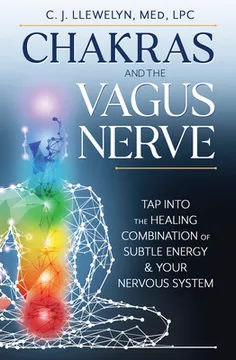


Key Takeaways
Treat body alarms as clues about safety, not verdicts about present danger.
The body remembers. Llewelyn argues that physical sensations can carry traces of past experiences before a person can explain them in words. She calls awareness of internal sensations and their meanings interoception. A related term, neuroception, describes the nervous system’s rapid response to cues before conscious thought catches up.
Start with curiosity. Joan, a client who developed panic and dissociation after a medical emergency, began reconnecting with her body through walking, noticing sensory details, and gentle movement. Therapy helped her process the event without requiring her to accept a particular spiritual explanation. The lesson is not that every ache reveals trauma, but that bodily signals can be useful starting points for asking what is happening now and what the body may have learned before.
The useful distinction is between treating sensation as data and treating it as a definitive account of the past. Research on interoception examines how people perceive internal bodily signals, and those signals can shape emotion and decisions. But they are also affected by illness, fatigue, medication, and expectation. The body can warn accurately, or it can apply an old alarm to a new situation. Joan’s story models a careful response: notice the signal, establish present safety, and explore its meaning without imposing a ready-made interpretation.
Read shutdown, mobilization, and connection as protective states, not character flaws.
Three response patterns. Using the Polyvagal Theory, the book describes shutdown, fight-or-flight mobilization, and social engagement as ways the body responds to perceived safety or danger. Shutdown may look like numbness, exhaustion, or dissociation. Mobilization can bring agitation and readiness to escape or defend. A more settled state supports connection and flexible attention.
Protection can look confusing. Candi had dissociated in cars since a childhood crash killed her mother. After a new collision, she reached for a familiar scent, moved her body, and slowly returned to conversation and awareness. Understanding her response as protection helped replace shame with useful information. These patterns are not conscious choices, and they do not prove that danger is present now. They suggest a need to check current circumstances and respond with care.
This framing can reduce self-blame: a person who freezes or becomes restless is not simply failing to behave sensibly. It also offers a practical question, namely what small change might help the system regain flexibility? Scientific caution matters here. The sympathetic nervous system is anatomically distinct from the vagus nerve, despite the book’s loose description of the three patterns as vagal branches. Polyvagal Theory is influential in trauma practice, but some of its evolutionary and physiological claims remain debated. Its vocabulary can still be useful as a clinical map, not a complete account of nervous-system biology.
Use the chakra-vagus map as a reflective model, not proven anatomy.
A proposed overlay. Llewelyn connects seven chakras with emotional themes and bodily experience: root with physical security, sacral with relationships, solar plexus with identity and thought, heart with compassion, throat with communication, third eye with inner meaning, and crown with empathy and spirituality. She groups the lower three as the essential chakras and the upper four as the evolving chakras.
A personal framework, not a finding. The author says the chakra-vagus alignment comes from her clinical observations and spiritual practice, and acknowledges that scientific research has not established the alignment. A person might use the map to ask where distress is felt, or which life concern it resembles. The framework is not evidence that a specific organ problem has an energetic cause, or that a sensation diagnoses a blocked chakra.
The map’s strength is interpretive rather than anatomical. A structured vocabulary can help people describe experiences that otherwise feel vague, much as metaphors in psychotherapy can make an internal conflict easier to discuss. Its usefulness depends on keeping metaphor and mechanism separate. The vagus nerve has measurable anatomy; chakras belong to spiritual traditions and are not established neural structures. Treating the two as equivalent risks lending scientific authority to an unverified claim. Presented as an optional meaning-making tool, however, the model can invite self-reflection without demanding that every reader share its metaphysics.
Build regulation with small, repeatable signals of safety.
Begin with manageable cues. The book calls practices that help someone feel grounded, soothed, and able to engage resourcing. Its examples include noticing the room, feeling the feet on the floor, body scanning, gentle movement, slower breathing, and spending time in a personally reassuring space. The right practice is the one a person can tolerate, not the one that looks most impressive.
Movement can restore presence. Joan found walking and simple knee bends more accessible than sitting still. The author also describes using familiar scents and supportive people as grounding cues. These methods are presented as preparation for deeper therapeutic work, not as cures for trauma. If turning inward increases distress, the book recommends shifting toward gentle movement or external sensory awareness rather than forcing stillness.
This emphasis on choice and small steps fits a broader principle in trauma-informed care: a coping strategy should increase agency, not become another demand to perform wellness correctly. Sensory orientation can help distinguish the present environment from a remembered threat, while movement may give someone a less intimidating route into bodily awareness. No technique works for everyone. Breathing exercises, for example, can feel uncomfortable or activating for some people. The book’s strongest practical advice is therefore its flexible one: notice the response, adapt the exercise, and stop when the practice is overwhelming.
Separate a thought-driven alarm from the feeling beneath it.
Notice the sequence. The book distinguishes anxiety, which it describes as a physiological alarm shaped by worrying or conflicting thoughts, from emotions such as sadness, anger, or fear. It presents thoughts as fast interpretations that can activate bodily stress, while emotions can offer information about what matters or hurts. This is the author’s therapeutic distinction, not a universal clinical definition of anxiety.
Create room to choose. Metacognition means noticing how one is thinking rather than automatically accepting a thought as fact. Chandelar, a client who used food and other distractions to numb distress, gradually connected stomach sensations to childhood fears about family security. Naming the thought, noticing the bodily response, and considering its source gave him more options than immediately trying to silence the discomfort.
The separation between alarm and underlying feeling can be clinically clarifying, especially when bodily activation gets mistaken for proof that something must be done immediately. Cognitive therapies similarly teach people to examine thoughts rather than treat them as facts. The distinction should not be made too rigidly, though. Anxiety is also an emotion and a clinical term, not merely an effect of thinking. A more flexible use of the book’s idea is to ask what is happening at several levels: what thought appeared, what body response followed, and what concern or need might be present?
Name your values before you ask others to respect your limits.
Boundaries need a reference point. The book treats emotional boundaries as limits around inner life, including feelings, beliefs, attention, and personal time. Its Value Circle exercise asks readers to distinguish what they value in the outer world from what they value internally. Once those priorities are clearer, a request can be specific rather than a vague demand that someone be more considerate.
Brittney’s pattern changed with practice. She routinely gave clients extra time and responded to her mother’s repeated calls, then felt depleted. With her therapist, she set limits on appointment length and agreed with her mother on one daily call. Both relationships became more manageable. The book’s boundary script also separates the event, the person’s interpretation, the feeling, and the request. Limits protect connection when they are communicated clearly and consistently.
A boundary is most effective when it describes what someone will do, not when it tries to control another person’s feelings or choices. Brittney’s examples show how a practical limit can interrupt overfunctioning, the habit of taking responsibility for more than one’s share. The book also sorts people who respond to new limits into rough categories, including those who adjust and those who persistently manipulate. That can help identify patterns, but labels should not replace attention to context, safety, and repeated behavior. A single awkward response is not enough to diagnose a relationship.
Let safe relationships help regulate you, without surrendering your voice.
Calm can be shared. Co-regulation is the book’s term for the settling that can occur when people exchange signals of safety through attention, voice, facial expression, touch, or quiet company. Deep listening matters because being heard can make connection feel less threatening. The author also emphasizes that speech tone carries information: a familiar, steady voice can feel different from shouting or a flat, hostile delivery.
Connection need not be complicated. Chris, a veteran with post-traumatic stress, felt unsettled during a thunderstorm while his wife was away. His therapist suggested spending time with his dog, a safe companion whose presence could help him feel less alone. Co-regulation is reciprocal, but it does not mean agreeing with someone, ignoring one’s needs, or staying with a person who is unsafe.
The social dimension of regulation is a valuable counterweight to advice that treats self-soothing as a solo project. Human beings often settle through predictable, responsive interaction, and listening can communicate respect without requiring a solution. The book’s account of facial expression and vocal tone captures how much communication occurs outside literal wording. Still, safety is not guaranteed by a smile, calm voice, or close relationship. Those cues can be misleading, and people differ in how they express warmth. The best guide is the pattern of interaction over time, alongside a person’s own sense of choice and safety.
Process trauma with professional support, not forceful self-excavation.
Trauma is more than a memory. The book describes trauma as the effects of a distressing event on safety, connection, and later responses. It distinguishes explicit memories, which can be recalled as events or stories, from implicit memories, which may appear as sensations or emotional reactions without a clear narrative. A smell, for example, triggered Janelle’s distressing college memory years after the event.
Support before deep processing. The author stresses that self-help exercises are resources, not a substitute for assessment and treatment by a licensed clinician. A trauma-informed therapist can help someone stabilize, understand their reactions, and choose an appropriate approach, such as EMDR or somatic work. Bodily reactions deserve attention, but they cannot by themselves establish exactly what happened. The goal is to reduce distress and improve present-day functioning without forcing a particular story.
The distinction between having a body response and knowing its cause is crucial. Memory is reconstructive, and a strong sensation or image does not independently verify a historical event. That caution does not invalidate distress; it supports careful, non-leading treatment that focuses on safety and current impact. The book is at its most responsible when it discourages solitary trauma processing and points toward licensed care. Readers facing immediate danger, severe dissociation, or thoughts of self-harm need direct professional support, not a visualization exercise or an attempt to recover memories on their own.
Let spiritual practice deepen healing, not replace it.
Meaning is not the same as avoidance. The book uses spiritual bypassing to describe relying on spiritual practices to sidestep painful psychological experiences. Meditation, energy work, or yoga may feel calming, yet they can also become ways to avoid trauma, relationships, or treatment when used only to escape discomfort.
Susan’s experience illustrates the risk. She pursued meditation and energy work while struggling with addiction, dissociation, and the effects of childhood abuse. Her recovery included support groups, residential treatment, and trauma therapy. Once more grounded and sober, she found her yoga and meditation practice more present and meaningful. The point is not to reject spirituality, but to let it accompany rather than substitute for practical care and psychological work.
This distinction is useful well beyond spiritual life. Any valued practice can become avoidance when it is used to evade a problem that requires attention, including exercise, work, or constant helping. At the same time, spiritual practice can offer community, meaning, and routines that support recovery. The relevant question is not whether a practice is spiritual, but what function it serves in a person’s life. Does it increase contact with reality and choice, or narrow life around escaping difficult feelings? Susan’s story suggests that the same practice can function differently as circumstances change.
Choose empathy that honors another’s agency instead of rescuing.
Understanding is not taking over. The author distinguishes empathy, which tries to recognize another person’s experience while respecting their autonomy, from sympathy that turns into rescuing or controlling. Listening, suspending judgment, and taking responsibility for one’s own harmful behavior are presented as practical forms of empathy.
Grief can make room for action. Azim Khamisa’s son Tariq was murdered by a fourteen-year-old during a gang initiation. Khamisa chose to reach toward the young person’s family and founded an organization focused on mentoring youth and preventing violence. The story shows how compassion can coexist with profound harm and grief. It does not require excusing violence, abandoning justice, or reconciling with someone who remains dangerous.
The distinction between supporting someone and taking over their choices aligns with a central tension in caregiving: help can preserve agency, or quietly displace it. Khamisa’s response is striking because compassion becomes organized action rather than a demand that grief disappear. His example is extraordinary, however, and should not become a moral standard imposed on people who have been harmed. Empathy does not require forgiveness, contact, or equal attention to every party. It can mean recognizing another person’s humanity while maintaining accountability and boundaries.
Analysis
The book’s central contribution is a practical invitation to take bodily experience seriously in psychological and spiritual life. Its clinical stories make abstract ideas legible: a scent can provoke an old reaction, a familiar voice can soothe, and movement can restore a sense of presence. The recurring therapeutic sequence is sensible: notice the response, establish enough safety to remain present, explore its meaning, and seek skilled support when the distress exceeds self-care.
Its most useful distinction is between a sensation and the interpretation attached to it. A tight stomach may be a meaningful signal, but it does not reveal its cause by itself. The book sometimes blurs these levels when it presents chakras as aligned with nerve pathways or describes particular feelings as messages from a Soul Self. The author acknowledges that research has not established the chakra-vagus correspondence. Readers should therefore treat the chakra system as a spiritual and reflective vocabulary, not as an anatomical discovery or diagnostic tool.
The nervous-system discussion also needs careful handling. Polyvagal language can give people a humane alternative to moral judgments about freezing, agitation, or withdrawal, but its simplified evolutionary story and physiological claims are contested. The sympathetic nervous system is not literally a branch of the vagus nerve. Likewise, the book’s neat division between anxiety and emotion may help some readers observe thoughts and body responses, but anxiety is also commonly understood as an emotion and clinical condition.
These qualifications do not erase the book’s strongest practical message: healing should increase agency, not demand forced calm or self-blame. Its exercises are best treated as optional experiments, and its trauma stories as illustrations rather than proof of a universal mechanism. The book itself directs readers toward licensed, trauma-informed care for deeper work. Its framework is most valuable when it encourages curiosity while leaving room for uncertainty, medical causes, personal belief, and professional judgment.
Glossary
Polyvagal Theory
A model of safety responsesA theory developed by Stephen Porges that describes how autonomic nervous system activity relates to threat responses, social engagement, and regulation. Llewelyn uses its vocabulary to discuss shutdown, mobilization, and connection. The theory is influential in trauma-informed practice, although some of its physiological and evolutionary claims remain contested.
neuroception
Unconscious safety detectionA term used in Polyvagal Theory for the nervous system’s rapid, nonconscious detection of cues associated with safety or danger. In the book, it describes bodily reactions that can occur before a person consciously identifies what they are responding to. It is a way to discuss automatic responses, not a guarantee that the nervous system has correctly judged a situation.
interoception
Awareness of internal sensationsThe perception of signals arising from inside the body, such as breathing, heartbeat, tension, or stomach sensations. Llewelyn connects interoception with identifying emotional and physical needs. Paying attention to these signals may help someone notice distress or calm, but sensations can have many causes and require interpretation in context.
Essential chakras
Three lower chakra centersLlewelyn’s name for the root, sacral, and solar plexus chakras. She associates them respectively with physical security, relationships and emotion, and identity and thought. In her framework, these centers reflect basic human needs and early experiences. The category is the author’s interpretive organization of chakra concepts, not an established neurological classification.
Evolving chakras
Four upper chakra centersLlewelyn’s name for the heart, throat, third eye, and crown chakras. She links them with compassion, communication, spirituality, and empathy, and describes them as supporting inner awareness and meaning. This is a spiritual and psychological framework proposed by the author, not a scientifically verified map of nerve pathways.
co-regulation
Settling through safe connectionA process in which interaction with another person or trusted companion helps someone feel calmer and safer. The book describes cues such as attentive listening, a reassuring voice, affectionate touch, and shared quiet. Co-regulation does not mean agreement or dependence; it refers to how supportive connection can affect a person’s state.
resourcing
Skills that support stabilityIn trauma therapy, resourcing means developing grounding, calming, and supportive strategies that help a person manage distress and remain sufficiently present. Llewelyn’s examples include sensory orientation, movement, breathing, visualization, and mapping boundaries. These practices prepare for therapeutic work but are not, by themselves, a complete treatment for trauma.
spiritual bypassing
Using spirituality to avoid painUsing spiritual beliefs or practices to sidestep unresolved emotional wounds, difficult relationships, or psychological treatment. Llewelyn contrasts spiritual practice that supports grounded engagement with practice used mainly to escape distress. The term does not imply that meditation, yoga, or energy work are inherently avoidant; their role depends on how they function for an individual.
implicit memory
Memory without a clear storyMemory expressed through learned responses, sensations, or emotional reactions without a readily accessible, chronological account of an event. The book discusses it in relation to early experiences that may not be consciously remembered. An implicit reaction can be important to explore, but it does not on its own identify a specific event or prove what happened.
Eye Movement Desensitization and Reprocessing (EMDR)
A structured trauma therapyA psychotherapy approach in which a trained clinician helps a client process distressing memories while using bilateral stimulation, often guided eye movements. Llewelyn describes EMDR as one method used in trauma treatment and in her clinical stories. It is a professional therapy, not simply an eye exercise to use alone for processing traumatic memories.
Internal Family Systems (IFS)
Therapy for inner partsA psychotherapy model that understands a person’s inner life in terms of different parts, which may carry distinct emotions, beliefs, or protective strategies. In the book, IFS helps clients explore how younger parts may retain old fears and coping patterns. It is a therapeutic framework, not a claim that a person has multiple literal identities.
Download PDF
Download EPUB
.epub digital book format is ideal for reading ebooks on phones, tablets, and e-readers.








