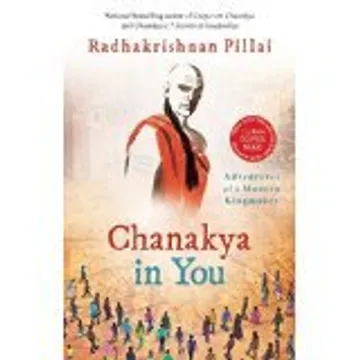


Plot Summary
Grandpa’s Library Door
During a holiday with his village-dwelling grandparents, the narrator listens as his grandfather tells stories drawn from books. When his cousins leave for the market, he stays behind and asks to see the library instead. His grandfather shows him its carefully ordered shelves, especially the works of Indian tradition, and identifies Kautilya’s Arthashastra as his favorite.
He explains that Kautilya was also called Chanakya, a teacher and strategist whose ideas could guide more than kings. The boy has not yet read the imposing Sanskrit text, but the name catches hold. A private afternoon among books gives his curiosity a direction, and the grandfather’s stories make ancient learning feel less like distant history than a living inheritance.
The first decisive act is not a formal lesson but the boy’s choice to remain with his grandfather when the more immediate pleasures of the market beckon. That choice makes curiosity an action rather than an inherited virtue. The library represents a disciplined memory, but the grandfather’s storytelling translates that memory into a form a child can enter. Chanakya arrives first as a name surrounded by affection and narrative, not as an abstract authority. The book’s central model of education is already present: knowledge survives when one generation makes it emotionally imaginable to the next.
The Book He Inherited
On the journey home from that holiday, the narrator thinks about his grandfather’s lessons and decides to take them seriously. Within days, his grandfather dies. The boy reaches the family home after the funeral rites have begun, and searches rooms where he expects to find the familiar storyteller. In the library, he instead finds the open Arthashastra on the table.
His grandmother lets him take it, along with the books his grandfather has left for him. Grief gives the book a new weight: it is both a difficult text and a remaining connection to the person who first opened it for him. As the narrator grows older, he reads widely, collects books, and begins making notes on Chanakya’s life and writings.
The inheritance converts absence into an obligation, but the book does not simply preserve the grandfather as a sentimental relic. It gives the narrator a task that can outlast grief: to keep reading, questioning, and eventually transmitting what he learns. His library habit is therefore both intellectual and relational. The grandfather’s death also introduces a recurring structure in the story, in which a guide disappears physically while leaving behind methods, texts, and values that the student must learn to use independently. Memory becomes productive when it prompts work.
A Student Seeks a Guru
As the narrator collects writings on Chanakya and rereads the Arthashastra, he becomes dissatisfied with knowing its contents only through translations and private effort. At a spiritual discourse, a Sadhu explains that scripture requires self-discipline, divine grace, a teacher’s guidance, and a text that opens through study.
The narrator recognizes that effort alone has not made him understand the work fully. He asks how to find the right teacher and learns about the Guru-Shishya tradition and the Gurukul, where a student learns through daily life as well as formal lessons. Back home, he asks his parents to help him find such a place. They support the idea, and his father offers a contact for a Sanskrit scholar who may take him on.
This change is epistemological as much as personal. The narrator has treated repeated reading as a route to mastery, then discovers that accumulation can produce familiarity without interpretation. The Sadhu’s account reframes knowledge as a relationship among effort, teacher, tradition, and receptivity. His parents’ response matters because they do not force his ambitions into the usual timetable of education and employment. Their support allows him to treat uncertainty as a legitimate stage of formation, rather than as evidence that he has failed to choose a practical future.
Six Months in the Village
The narrator telephones the professor his father recommended and stumbles over the word Arthashastra before explaining his interest. He has no academic background in Sanskrit, but the professor is moved by the story of the grandfather who first introduced him to Chanakya.
He agrees to teach him for six months in a village, near an ashram with a major Indology library. After completing college, the narrator travels there alone. The professor and his wife welcome him, and the narrator discovers that the village scholar has chosen rural life despite his international academic standing.
At the ashram, he meets the wealthy trustee who funds its research and hears how the Arthashastra has informed the trustee’s business and charitable work. The narrator’s idea of leadership begins to widen beyond kingship.
The professor’s decision to accept the narrator rests not on credentials but on commitment and the emotional continuity between generations. That choice challenges a credential-first model of learning without dismissing expertise: the narrator still needs a scholar to interpret the text. The village and ashram also complicate his assumptions about success. Scholarship, spiritual practice, public influence, and business coexist in one place. The trustee’s example gives the narrator an early glimpse of wealth as an instrument, preparing him to connect the ancient text to a modern vocation.
The Ashram’s Hard Lessons
After a dawn ritual dedicates his studies to the gods, his ancestors, and the Arthashastra, the narrator begins working through the text with his Guru. He compares translations, brings questions to class, and learns that Chanakya’s political science begins with Aanvikshiki, disciplined philosophical thinking.
His Guru insists that thought must lead to action, and that judgment must rest on ethical purpose. At a national conference, the narrator encounters scholars and officials studying the same text from different angles, and receives an invitation to present work himself.
Near the end of the six months, he overworks in an attempt to finish every verse. His Guru orders him to take a week away from the books. Rest restores his concentration; the narrator completes a research paper, earns a certificate, and leaves with a practical obligation to live what he has studied.
The apprenticeship refuses to equate seriousness with relentless exertion. The Guru’s instruction to stop studying exposes a contradiction in the narrator’s ambition: he wants to honor the text, yet risks turning it into a quota. The conference broadens his learning from private mastery to intellectual community, while the research paper makes him responsible for articulating an interpretation of his own. Most important, the certificate is not presented as the final proof of wisdom. The Guru assigns the harder test beyond the ashram: whether principles can shape conduct under ordinary pressures.
A Career Without a Map
Back home, the narrator feels out of step with friends who have jobs or further studies. He decides he wants to become a business owner, though he cannot name an industry.
His father consults a university professor trained in Vedic astrology, who reads the narrator’s chart as favoring work involving communication and commerce, but advises him to gain experience first. The professor also recommends a basic Sanskrit course, since the narrator lacks the qualifications for advanced study. The narrator applies for a business development position at a large company.
At the interview, he emphasizes that he wants to build the company’s business before judging the job by its salary, and is selected. His Arthashastra certificate and unusual answer soon attract the attention of the company chairman.
The narrator wants independence before he has acquired the knowledge that would make independence sustainable. The astrologer’s advice does not solve that tension by dictating a single destiny; it turns the job into an apprenticeship rather than a surrender of ambition. The Sanskrit course similarly keeps his intellectual project alive while he enters the commercial world. The chapter’s useful psychological movement is from impatience to sequence. He can still imagine a large future, but he begins to accept that experience is not a detour from it.
The Chairman’s Unpaid Offer
Before the narrator starts his sales job, the chairman summons him to discuss the Arthashastra and his interview notes. Impressed by the narrator’s willingness to prioritize business development over salary, the chairman offers him a place in the chairman’s office as a management trainee.
The position comes with no pay, while the original salaried job remains available. The narrator chooses the unpaid role because the chairman promises to teach him business directly. On his first day, he attends company reviews and hears the chairman present the firm’s social purpose to new recruits.
The chairman then sets an unusual rule: the narrator must observe rather than ask questions. For six months, he follows the tycoon through meetings, public events, and private routines, recording what he sees.
The unpaid offer tests whether the narrator’s stated priorities can survive a real sacrifice. He chooses access to knowledge over immediate income, but the arrangement is not romanticized as pure self-denial: the chairman is deliberately assessing him and gives him structured exposure. The ban on questions makes attention itself the curriculum. Rather than rewarding quick verbal cleverness, the chairman asks the young man to notice patterns before trying to control them. The method prepares him for leadership by making observation a form of disciplined participation.
From Office to Mine
After months of watching the chairman, the narrator asks how wealth is created and learns to identify, build, manage, and distribute it. The chairman then transfers him to the minerals and metals division, where the CEO gives him a well-paid operations post despite his lack of technical training.
The narrator travels to remote mines, studies the ground-level business, and continues Sanskrit classes around a demanding schedule. His work earns him a rapid promotion to assistant director. Instead of celebrating, he realizes that climbing the company ladder would take him farther from his purpose of building a business of his own.
He resigns. Soon afterward, a university friend whose research he admires encourages him to present on the Arthashastra. Their renewed intellectual connection becomes personal when the narrator proposes marriage and she accepts.
The promotion is not a setback but a revealing success: the narrator has become good at a career he never intended to make his own. His decision to resign tests whether he can distinguish external validation from internal direction. The contrast between the chairman’s office and the mines also supplies him with an unusually broad view of business, from strategy to operations. His relationship with the scholar begins in shared intellectual respect, so intimacy grows alongside, rather than in place of, his search for purpose.
A River Reveals the Business
At the Kumbh Mela, the narrator speaks with foreign visitors who want more than a standard sightseeing itinerary. Explaining that India’s history and spiritual traditions require interpretation, he suddenly sees an opening for a travel company built around meaningful cultural tours.
He researches the tourism market and develops a plan that can begin with advance payments rather than major capital. His fiancée supports the idea, though her family’s marriage expectations make financial uncertainty urgent.
The narrator asks the former chairman for advice and receives encouragement to prove the concept on a small scale. He organizes a one-day temple tour, plans the route and food himself, and handles a flat tire without abandoning the trip. The event turns a broad ambition into a working business and earns a modest profit.
The Kumbh conversation gives the narrator a vocation that joins his strongest existing interests: Indian history, storytelling, organization, and enterprise. His business idea is not simply to move travelers between landmarks, but to make cultural knowledge part of the service. The first tour then tests whether that vision can survive logistics. The flat tire is a small but essential lesson in contingency planning, while the profit shows that an ideal can be measured without being reduced to money. His fiancée’s support adds a personal stake to the experiment.
The Ramayana Circuit
The narrator decides that transport companies, hotels, guides, and agencies should be treated as partners rather than disposable suppliers. At a travel exhibition, he meets an overseas Indian association leader seeking a spiritual route through places connected with the Ramayana.
The narrator designs the itinerary, consults experienced agents, and adjusts the arrangements to suit the group’s needs. Although he has never managed a large international tour, he accepts responsibility for the trip. The planned group grows from about two hundred to 650 travelers.
For twenty days, he coordinates their journey across India, and the visitors finish satisfied and spiritually moved. The association leader asks him to develop a Mahabharata tour next. The successful trip establishes his reputation and gives his young company a substantial next opportunity.
This is the first major test in which the narrator’s inner conviction must answer for other people’s safety, comfort, and money. His confidence is rooted in service, but the successful outcome also depends on research, consultation, and coordination. The decision to call vendors partners is not merely a change in tone; it recognizes the interdependence on which tourism depends. The 650 travelers transform a small experiment into proof of scale. The story presents faith as a source of courage, not as a replacement for practical preparation.
A Partner in Business
After the tour succeeds, the narrator and his fiancée tell their families about their relationship and marry once she completes her PhD. As the travel company grows, he approaches the former chairman for help expanding it.
A large investment would bring professional expertise, but the proposed shareholding makes the narrator fear losing control of the business he built. A childhood friend, now a senior finance executive, reframes the investor as a teacher whose experience may be as valuable as his capital. The narrator accepts the partnership.
The company launches a larger, technology-driven version with the chairman’s team and a public profile the narrator could not have achieved alone. He begins to understand that growth requires other people to have a genuine stake in the enterprise.
Marriage and investment both ask the narrator to move beyond the fantasy of self-sufficiency. The personal partnership is built with family support, while the business partnership makes ownership itself a question of trust. His first response to dilution is defensive because he has confused control with authorship. The childhood friend’s analogy helps him see that expertise can extend rather than erase his own agency. The company’s expansion follows only after he accepts a more distributed model of responsibility.
Fatherhood and the PhD
The narrator’s wife, now teaching at a university, nudges him back toward the doctorate he had set aside. Their household changes again when she becomes pregnant with twins, a daughter and a son. The narrator must divide his time among parenting, his expanding business, and research on Kautilya’s leadership philosophy.
His doctoral guide helps him manage both the intellectual work and university procedures. His children become a source of renewal after long days of travel and meetings, while their questions revive his own habit of explaining ideas through stories.
At work, he studies Chanakya’s advice on selecting and caring for ministers, then applies it to hiring managers and building a team. The company’s success increasingly depends on capable people, not on his personal effort alone.
The twins turn the narrator’s abstract interest in responsibility into a daily practice of care. His simultaneous roles could easily become a tale of heroic overwork, but the more important change is his recognition that achievement depends on relationships and systems. His children also echo the story’s opening: knowledge passes through stories, but now he is the one telling them. In business, the same ethic becomes managerial. By treating employees as learners and people to develop, he converts the Guru-Shishya model into an organizational principle.
A Doctorate in Athens
After several years of doctoral research, the narrator’s paper on Chanakya’s leadership philosophy is selected for the World Congress of Philosophy in Athens. He presents it as part of the Indian delegation, bringing his study of the Arthashastra into an international academic setting.
On returning, he commits to finishing the degree, submits his thesis, and passes the oral examination. His wife’s encouragement and his guide’s direction have carried him through a demanding stretch of work.
The doctorate opens a new question: how to share his research beyond individual lectures. At a business event, he realizes that a book can reach readers he will never meet in person. A publisher’s chairman hears him speak and invites him to develop his research into a book.
The trip to Athens gives the narrator’s study a public scale, but the decisive achievement is not simply recognition abroad. He completes the doctorate and then asks how knowledge can travel farther than its author. This turns scholarship toward communication. The book idea grows from the same logic that first drew him to his grandfather’s storytelling: durable knowledge must be made accessible to new readers. His academic authority becomes useful when it creates a bridge between research and ordinary experience.
The Bestseller’s Wider Reach
The publisher’s editorial team reshapes the narrator’s thesis into an accessible book on Kautilya’s relevance to modern business. He promotes it through events in fourteen cities, and it sells 100,000 copies, becoming a national bestseller.
A film company adapts the work, while executives begin inviting him to advise and speak. As his enterprises grow, he gives more responsibility to professional managers and turns his attention toward teaching other leaders.
A conversation with the former chairman changes how he thinks about money: wealth can support knowledge and service, but its moral character depends on how people use it. The narrator gradually releases his old fixation on becoming the richest person in the world. He no longer needs that goal to validate his work.
The book’s success makes the narrator’s private apprenticeship publicly transmissible. Its reach also changes his identity: he is no longer only an entrepreneur applying Chanakya, but a teacher asked to interpret him for others. The discussion of wealth prevents the story from treating financial success as either inherently virtuous or inherently corrupt. Money is consequential because it magnifies choices. The narrator’s surrender of the richest-person ambition marks a psychological shift from achievement as proof of worth toward work as contribution.
The Chairman’s Final Choice
As the former chairman’s health declines, he tells the narrator that the group needs a leader chosen for ability rather than family inheritance. He names the narrator as his successor, recalling the years in which he trained and tested him.
The board accepts the choice, and the narrator becomes the company’s youngest chairman. Soon afterward, the former chairman dies. Alone in the office that once belonged to his mentor, the narrator grieves and recognizes that he has inherited not just authority but the responsibility to guide others.
He begins to think of leadership as a chain of development: today’s leader must notice and prepare the next person. The company’s transition succeeds because the mentor had taught him to observe, learn, and eventually take responsibility without him.
The succession completes the chairman’s teaching relationship while exposing its emotional cost. The narrator receives the position he has been prepared for, but the appointment arrives alongside the loss of the person who made it possible. His grief is not incidental to leadership; it marks the point at which borrowed judgment must become his own. The story’s kingmaker motif therefore changes meaning. The mentor’s influence is most durable not when the student obeys him, but when the student learns to develop another generation.
Children Choose Their Paths
As the narrator’s twins reach adulthood, his son decides to prepare for the Indian Foreign Services, using the Arthashastra’s account of envoys to explain his choice. His daughter chooses music and plans to train in a traditional Gurukul.
The narrator initially struggles with how different their ambitions are from his own, then takes them to experienced diplomats and musicians so they can test their plans with informed advice. Meanwhile, his business group expands across the world, and he invests in younger entrepreneurs and research.
A national survey names him the richest man in India, then an international list places him at the top globally. He credits the people whose companies he backed and directs much of his wealth toward social causes and innovation rather than treating the ranking as the measure of his life.
The children’s choices expose the difference between transmitting values and reproducing a parent’s career. The narrator’s initial surprise reveals how easily pride in independence can become a demand that children follow an approved path. He corrects himself by consulting experts rather than imposing a verdict. His wealth reaches its greatest scale at the same moment that he has ceased to treat wealth as a personal finish line. The contrast makes the story’s ethical claim concrete: prosperity matters most when it enlarges other people’s choices.
The Leader Lets Go
Although the business group expects him to remain chairman, the narrator retires while still healthy, convinced that his managers can run the companies without him. He chooses a capable young woman from the founding family as his successor and prepares her for the role, despite doubts from some board members about a woman leading the group.
On his final day, he reflects on the mentor who once trusted him with the same responsibility. After leaving the company, he finds meditation increasingly effortless and experiences a profound sense of unity that he understands as liberation.
His work in the world has not been driven by a lack of ambition; rather, he has reached a point where ambition no longer defines him. He can act without needing to possess the result.
Retirement here is neither defeat nor withdrawal from responsibility. The narrator secures continuity by choosing and training a successor, and his choice challenges a family business culture that had historically favored men. His final inward experience is framed as the culmination of a life in which material achievement and spiritual inquiry have remained intertwined. The passage risks presenting enlightenment as a neat reward, yet its narrative logic is clear: relinquishing control becomes credible only after he has built institutions and people capable of continuing without him.
Stories Return to the Library
In later life, the narrator and his wife settle at their farmhouse, where he writes, reads, and gives less attention to business invitations. He accepts one final public role when India hosts the World Congress of Philosophy, and uses his keynote to connect material prosperity with ethical and spiritual purpose. Years later, his grandchildren visit his library and ask about the books that shaped him.
The narrator recommends learning through a Guru and returns to the Arthashastra, the book his own grandfather once placed before him. He urges the children to study their inherited wisdom and use it to serve a changing country. The story closes where it began, with an elder turning a beloved book into an invitation for the next generation.
The ending completes a circular structure without merely repeating the opening. The narrator now occupies the grandfather’s position, but his authority rests on a life of practice rather than on the book’s prestige alone. His final lecture enlarges the audience from family to global thinkers; his grandchildren bring the teaching back to intimate scale. The book survives not as an unquestionable answer but as a discipline of thought that each generation must interpret. Transmission succeeds when inheritance becomes usable responsibility.
Analysis
Chanakya in You uses the shape of a life story to argue that ancient political thought can function as practical education, but it makes that argument through successive relationships rather than through a single conversion. The narrator does not discover the Arthashastra once and then apply it flawlessly. He encounters it first as a child’s curiosity, then as a difficult text requiring a teacher, and later as a framework tested by employment, entrepreneurship, marriage, parenthood, and institutional leadership. Each stage revises what leadership means.
The book’s most important structural pattern is the transfer of authority. Grandpa gives the narrator a book; the Sanskrit scholar teaches him how to study it; the chairman teaches him how to observe an organization; the narrator eventually trains managers and successors. Knowledge becomes legitimate through use and transmission, not mere possession. This is why the closing return to the library matters: the narrator’s authority is not a final personal achievement but a role he has inherited and must pass on.
The narrative also resists a simple opposition between spirituality and money. Its business episodes insist on material competence: the narrator researches tourism, learns from failure risks, builds partnerships, accepts investment, and develops professional teams. Its spiritual episodes question whether growth serves a purpose beyond self-expansion. The richest-person ambition is fulfilled only after it has lost its hold over him, making the distinction between reaching a goal and being governed by it central to the arc.
Some of the book’s claims, especially around astrology and enlightenment, are presented as the narrator’s convictions rather than tested propositions. The narrative’s strongest evidence lies instead in observable changes: he accepts mentorship, revises plans, shares control, and supports other people’s work. Its practical lesson is not that a scripture guarantees success, but that disciplined reflection can alter how success is pursued, distributed, and finally relinquished.
Review Summary
Chanakya in You receives mixed reviews, with an average rating of 3.90 out of 5. Some readers appreciate its inspirational content and practical application of Chanakya's teachings, while others criticize it for being overly positive and unrealistic. The book is described as a blend of autobiography, fiction, and Chanakya's wisdom. Many readers find it easy to read and engaging, but some express disappointment with the lack of depth and struggle in the protagonist's journey. Several reviewers note that the book sparked their interest in Indian scriptures and philosophy.
Characters
The narrator
The apprentice entrepreneurThe narrator begins as a curious but academically ordinary boy whose grandfather’s stories awaken his interest in Chanakya. He is ambitious, receptive to mentors, and often impatient to know what his future should be. His defining strength is not effortless brilliance but the willingness to study, observe, revise a plan, and seek advice. As he moves among scholarship, business, marriage, parenting, and leadership, he tries to connect practical success with ethical purpose. He can be overconfident and initially confuses recognition with fulfillment, but he is capable of noticing those errors and changing course. His story examines how a person can inherit wisdom without remaining merely an imitator of the people who taught it.
Grandpa
The first teacherThe narrator’s village-dwelling grandfather is a devoted reader, a keeper of books, and an accomplished storyteller. Rather than treating ancient learning as remote or intimidating, he turns it into stories his grandchildren can picture and remember. His influence arises from patience and attention: when the narrator chooses the library over the market, Grandpa recognizes the seriousness of that curiosity and introduces him to the Arthashastra. He gives the boy an intellectual inheritance without demanding that he understand it all at once. For the narrator, Grandpa represents the first form of education, one in which affection makes difficult knowledge approachable and leaves a lasting direction.
The Arthashastra Guru
The village scholarA retired Sanskrit professor who agrees to teach the narrator through an intensive, one-to-one course in a village Gurukul setting. He expects preparation rather than passive listening and asks his student to compare sources, bring questions, and connect ideas to real decisions. His teaching joins intellectual rigor with spiritual discipline, while his willingness to insist on rest reveals care for the student’s limits. He does not present the Arthashastra as a museum object or a formula for power. Instead, he makes the narrator test its relevance through judgment, ethical reflection, and action. He embodies a demanding but generous model of mentorship.
Doctor
The scholar and partnerThe narrator’s university friend is a committed researcher whose academic ambitions are independent of his. She supports his uncertain early plans, encourages him to return to doctoral study, and understands that his work and family responsibilities compete for time. Her manner is practical and perceptive: she offers opportunities that help him act rather than simply reassuring him. She also pursues her own scholarly life, later teaching and writing, so their relationship is not built around his career alone. As a partner, she provides emotional steadiness while maintaining her own standards and goals. Her character links intellectual companionship with the everyday work of building a family.
The Chairman
The business mentorA powerful businessman who sees promise in the narrator’s unusual approach to work and offers him direct training. He teaches through observation, exposure, and carefully timed questions, allowing the young man to learn how an organization operates before demanding that he explain it. His ambition is linked to social contribution, not only corporate scale. He also has the confidence to place responsibility in someone outside the family tradition of succession. To the narrator, he becomes both a practical teacher and a model of how authority can be used to identify and prepare future leaders.
Papa
The open-minded fatherThe narrator’s father encourages spiritual inquiry and treats his son’s unconventional educational plans as serious choices. He connects the narrator with the Sanskrit scholar and later helps him consult an astrologer when he is unable to choose a career. Rather than dismissing ambition or uncertainty, he asks questions and offers frameworks for thinking. His example reinforces the family’s habit of discussion across generations and traditions. He is a guide who supports independence without pretending that independence means having to find every answer alone.
Mummy
The spiritual motherThe narrator’s mother is devout, intellectually engaged, and emotionally perceptive. She supports his departure for the six-month Gurukul study despite the distance and uncertainty, trusting both his purpose and the spiritual protection of the journey. At home, she contributes lively counterpoints to family discussions and helps maintain ties between generations. Her practical care never erases her confidence in her son’s ability to make an unusual choice. She offers a model of affection that protects without confining.
Guruma
The scholar’s companionThe Sanskrit scholar’s wife is herself an accomplished academic and helps make the narrator’s stay in the village feel like family life rather than institutional lodging. She welcomes him, attends to his needs, and supports her husband’s demanding teaching arrangement. Her presence broadens the narrator’s view of the Gurukul: learning is shaped not only by formal instruction but by the household and its daily care. She combines scholarly ability with practical warmth.
The Trustee
The ethical businessmanThe wealthy trustee supports an ashram devoted to Indological research and helps sustain work that might otherwise remain neglected. He explains how the Arthashastra informs the identification, creation, management, and distribution of wealth. His example challenges the narrator’s early assumption that business success and moral purpose are incompatible. He does not treat wealth as proof of virtue, but as a resource whose value depends on what its owner does with it. The trustee gives the narrator his first practical picture of entrepreneurship joined to public service.
The CEO
The fieldwork supervisorThe minerals and metals division’s CEO takes over the narrator’s training after the chairman’s office apprenticeship. He places him in operations despite his lack of technical credentials, arguing that practical knowledge of mines and employees is essential to business. His demanding assignments expose the narrator to the physical and logistical realities hidden behind executive decisions. He treats the young employee as someone capable of learning on the ground, not as a finished product.
The childhood friend
The candid adviserA childhood friend who becomes a senior finance professional, he serves as the narrator’s sounding board when investment threatens to feel like a loss of ownership. He understands both the emotional attachment an entrepreneur can develop toward a company and the practical need for outside capital. His advice helps the narrator distinguish fair partnership from surrender. Their friendship is marked by candor and mutual respect, and his own admiration for the narrator’s willingness to take entrepreneurial risks complicates the usual roles of adviser and role model.
The son
The future diplomatThe narrator’s son grows up with access to the Arthashastra but develops a vocation distinct from his father’s. He chooses public service through the Indian Foreign Services and uses Chanakya’s account of diplomacy to explain his reasons. His preparation shows that he has considered the demands of the career rather than merely borrowing his father’s interests. He is respectful of his father’s guidance but willing to defend a different path.
The daughter
The aspiring musicianThe narrator’s daughter has artistic ability and a clear desire to pursue music through deep study. She plans to train in a traditional Guru-Shishya setting, echoing her father’s formative education while choosing her own discipline. Her certainty forces the narrator to recognize how little he knows about his children’s private plans. She is independent, prepared, and unwilling to treat family wealth as a substitute for making her own way.
Plot Devices
The Arthashastra
A guide for decisionsKautilya’s Arthashastra begins as the grandfather’s favorite book and becomes the intellectual spine of the narrator’s life. The text prompts him to seek a Sanskrit teacher, shapes his study of leadership and strategic thinking, and later informs choices about work, partners, hiring, wealth, and public responsibility. It is not used as a magical answer key. Its influence depends on interpretation, comparison with other views, and application to specific circumstances. The book also links the narrator’s personal growth to a wider act of transmission, as he eventually teaches its ideas to readers, employees, and descendants.
Guru-Shishya learning
Knowledge through mentorshipThe teacher-student relationship appears in several forms: the grandfather introduces the text, the Sanskrit Guru interprets it, the chairman teaches business through observation, and the narrator later mentors employees and prepares successors. Each teacher offers more than information. The student learns through habits, conduct, attention, and responsibility. The pattern makes education relational and lifelong, while allowing the narrator to become a teacher without simply repeating the methods of those who taught him.
The inherited book
A generational memoryThe grandfather’s copy of the Arthashastra carries both his annotations and the narrator’s later notes. It gives the story a physical link between childhood curiosity, formal study, and adult practice. The book’s passage from one generation to another is echoed when the narrator teaches his own family and eventually discusses the text with his grandchildren. Its function is not simply symbolic: the narrator repeatedly opens it to seek guidance, compare interpretations, and frame fresh questions.
The travel enterprise
Wisdom tested in businessThe narrator’s travel company gives him a concrete arena in which to test ideas from the Arthashastra. A small temple excursion teaches him to plan and prepare for problems; the Ramayana tour demands coordination at scale; later growth requires partnerships, capital, technology, and capable managers. The business is also shaped by the narrator’s desire to interpret Indian history and spirituality for visitors. It turns abstract lessons about economic activity and leadership into decisions with visible consequences for customers, employees, and partners.
Wealth and detachment
Success becomes a spiritual testThe story repeatedly asks what wealth is for. The narrator first wants to become exceptionally rich, then learns from the trustee and chairman to identify, create, manage, and distribute money. As his companies expand, he invests in other entrepreneurs and research rather than treating accumulation as an end in itself. The tension between material success and spiritual freedom drives his change in ambition. Wealth becomes neither a villain nor a guaranteed virtue; it magnifies the priorities of whoever controls it.
About the Author
Other books by Radhakrishnan Pillai




Download PDF
Download EPUB
.epub digital book format is ideal for reading ebooks on phones, tablets, and e-readers.








