


Plot Summary
The Book in Grandpa's Room
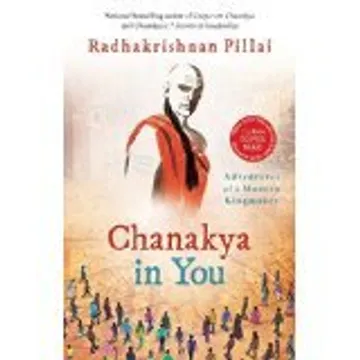
During a village holiday, the young narrator stays behind while his cousins go to the market and follows his grandfather into a carefully kept library. Surrounded by books on Indian traditions, he learns that his grandfather's favorite is Kautilya's Arthashastra, a work associated with the strategist Chanakya.
The old man makes history feel like practical guidance and explains why a leader needs both judgment and moral purpose. The visit becomes their last: soon after the family returns to the city, the grandfather dies. At the funeral rites, the boy finds the Arthashastra left open in the library and asks his grandmother to let him take it home. She gives him the book and the rest of his grandfather's collection.
The book enters the story as both an inheritance and a task. The grandfather does not simply pass on information; he changes the boy's idea of what knowledge is for, linking reading to decisions, responsibility, and ethical leadership. His sudden death makes that lesson emotionally urgent. The open book gives grief a physical focus: it cannot replace the person, but it lets the child continue a relationship through study. The narrator's later ambitions therefore begin not with a career plan, but with an intimate act of remembrance.
Grief Learns to Read
As he grows up in the city, the narrator keeps his grandfather close by collecting books and spending spare hours in libraries. Though an average student, he reads widely, gathers material on Chanakya, and studies the Arthashastra repeatedly without feeling that he understands it fully.
A spiritual teacher explains that scripture requires effort, faith, a knowledgeable guide, and openness to the text itself. The narrator recognizes that solitary reading cannot supply everything he seeks.
He learns about the Guru-Shishya tradition, in which a teacher guides a student's character as well as learning, and about the Gurukul, where study is woven into daily life. He takes this question home, ready to ask his parents for help finding such a teacher.
Reading first becomes a way to keep the grandfather present, then a discipline that exposes its own limits. The narrator's repeated study does not make him more certain; it makes him aware of what he lacks. That shift matters because it turns admiration into a search for relationship. The book presents expertise not as private possession but as knowledge shaped through effort, guidance, and conduct. By seeking a teacher rather than another translation, the narrator begins to accept that becoming capable involves being taught, observed, and corrected.
A Village Guru Agrees
The narrator's parents welcome his wish to study the Arthashastra through a traditional Gurukul arrangement. Near graduation, his father gives him the number of a recently retired Sanskrit professor.
The professor initially questions the request: the narrator has no formal Sanskrit training and cannot explain his purpose beyond his grandfather's influence. But when he learns that the young man has read the English translation many times and is willing to travel for six months, he accepts him.
After college examinations, the narrator leaves the city by train and bus for the professor's village. His teacher and the teacher's scholar wife, whom students call Guruma, receive him at their home. The journey has moved him out of familiar routines and into a demanding apprenticeship with no promised career attached.
The family's support challenges the assumption that education must lead directly to a job. The professor's questions also distinguish genuine commitment from credential-seeking: the narrator cannot yet offer expertise, but he can demonstrate sustained interest and willingness to submit to a process. His arrival in the village makes that decision concrete. Rather than treating tradition as a romantic escape, the story frames it as a deliberate change of environment, with new obligations, close observation, and a teacher who will decide how the learning proceeds.
The Ashram's Living Text
The professor sets a daily routine, and after a morning initiation, he walks the narrator through an ashram that combines spiritual practice with an extensive Indology library. There he meets the trustee, a wealthy businessman who funds research and describes the Arthashastra as useful beyond ancient kings.
The narrator, suspicious of rich people, is surprised when an ashram accountant explains that many donors give anonymously and that the text concerns creating, managing, and sharing wealth.
This businessman has applied its principles in his own work. The narrator begins to imagine entrepreneurship as a possible way to serve others, not merely a route to status. The discovery unsettles his inherited assumptions about money and gives his six-month study a contemporary purpose.
The ashram tests the narrator's ideas against people rather than abstractions. The trustee's generosity and the accountant's practical knowledge complicate his easy equation of wealth with corruption. The book does not claim that money automatically makes a person virtuous; instead, it asks what institutions and purposes wealth supports. The narrator's emerging interest in business is therefore a psychological revision, not a sudden conversion. He begins to see that inherited wisdom might guide modern economic life, while also recognizing that his own judgments need to be examined.
Six Months of Thinking
At the library, the narrator compares translations and commentaries, then brings unresolved questions to his teacher instead of expecting lectures to do all the work. Their discussions move from Chanakya's respect for earlier thinkers to Aanvikshiki, the disciplined examination of choices.
The professor warns that thought without action can become paralysis, so the student learns to balance analysis with initiative. Four months into the course, he is behind schedule and studies so intensely that he becomes exhausted.
His teacher orders him to rest for a week, after which he finishes the text and writes a research paper on its relevance to modern business. The ashram awards him a research certificate, and his teacher asks for no payment, only that he put the knowledge into practice.
The study's decisive lesson is procedural: compare, question, judge, act, and recover. The narrator's overwork shows how easily dedication can reproduce the very imbalance that strategic thinking should prevent. His teacher's enforced rest is not a detour from learning but part of it. The final paper also tests comprehension differently from an exam: the student must connect a classical text to a real contemporary problem. The certificate recognizes his work, while the request to apply it denies him the comfort of treating knowledge as a completed possession.
The Chairman's Unpaid Offer
Back home, the narrator faces pressure to choose a livelihood. A university Sanskrit professor reads his horoscope as encouragement to pursue several possible fields, but advises him to gain work experience before starting a company. The narrator joins a large business group as a business development trainee.
His interview answer, which puts building the company's business ahead of personal salary, catches the chairman's attention. After discussing the Arthashastra with him, the chairman offers a place in his own office as a management trainee, with no salary, in exchange for close instruction.
The narrator accepts. On his first day, he accompanies the chairman to welcome new recruits and hears the organization frame business as service. The young man has found a second teacher, this time inside the corporate world.
The horoscope offers direction, but it does not decide the narrator's future for him. The decisive opportunity comes through how he presents his priorities and how the chairman recognizes a teachable disposition. The unpaid role reverses the usual logic of employment: its immediate reward is access to a mentor, not income or rank. This echoes the earlier Gurukul, but places the student in a boardroom. The narrative suggests that apprenticeship can exist inside modern institutions when authority is willing to teach and the learner is willing to observe.
Promotion Becomes a Trap
For six months, the narrator follows the chairman through meetings, social commitments, and spiritual study, learning by watching rather than asking questions. When the chairman finally explains how wealth is identified, created, managed, and distributed, he transfers the trainee to the minerals and metals division.
The CEO gives him a senior operations post and a substantial salary, then sends him to mines and remote sites to understand the business from the ground up. While working, the narrator also studies Sanskrit and eventually tops his foundation course.
The company promotes him to assistant director, but the success feels like a narrowing corridor: each advancement would pull him further from entrepreneurship. He resigns, choosing uncertainty over a prestigious career he had never intended to keep.
The promotion is a success by the company's standards and a crisis by the narrator's own. His resignation reveals that competence and desire are not the same thing: he can excel at a role without wanting it to define his life. The chairman's mentorship has taught him to see wealth as a process, but it has also given him enough confidence to refuse an attractive path. This is the story's first costly act of self-direction. He leaves security not because the job has failed, but because it is succeeding in the wrong direction.
The Ganga Names a Business
After leaving the company, the narrator prepares a paper on management in the Arthashastra and presents it at a university seminar. A professor's praise revives his interest in research, while his close friend, known in the story as Doctor, accepts his unexpected marriage proposal despite his lack of a settled career.
At the Kumbh Mela, foreign visitors ask how they can experience India beyond familiar tourist sites. The narrator describes the country's spiritual history and realizes that visitors need guides who can explain it.
By the Ganga, he recognizes a business opportunity in cultural and spiritual tourism. He researches the industry, sketches a model that can begin with advance customer payments, and shares it with Doctor. For the first time, his wish to become an entrepreneur has a specific field.
The narrator's transition depends on two forms of recognition. Doctor trusts his potential before he has a stable professional identity, and the foreign visitors reveal a need that he can meet. The river setting matters because it joins personal reflection to a practical market insight, but the business idea still requires research and design. His ambition stops being a vague wish for wealth and becomes a service tied to a distinctive knowledge of India. The scene also places love and work on uncertain ground together: Doctor supports him, but neither can yet know what the business will demand.
The Ramayana Circuit
The narrator begins with a one-day temple tour, arranging transport and food himself; a flat tire teaches him to plan for failures, while both mothers meet during the trip. He then builds relationships with hotels, transport providers, guides, and other travel companies, treating them as partners rather than disposable vendors.
At an industry exhibition, an overseas Indian association organizer seeks a spiritual tour following places connected to the Ramayana. The narrator designs the itinerary and promises careful service despite having no experience with a group of that size.
The association's expected two hundred travelers become six hundred fifty. Over twenty days, he coordinates the pilgrimage, and the group finishes satisfied. Its organizer immediately asks him to develop a Mahabharata tour, turning a risky first contract into a real business foothold.
The first tour functions as a small-scale rehearsal for the larger one: the flat tire teaches contingency, and the mothers' meeting quietly joins the narrator's personal and professional worlds. The Ramayana circuit succeeds because he combines research, partner coordination, and a service ethic, not because confidence alone is enough. The unexpected growth from two hundred to six hundred fifty raises the stakes after he has accepted responsibility. His success validates the market, but it also creates a new obligation to build systems that can withstand demand.
A Partner, Not a Patron
As spiritual tours expand, Doctor presses for their families to meet, and they become engaged after she completes her doctorate. They marry with mentors and relatives from both families present. The business then outgrows what the narrator can manage alone.
His former chairman proposes investment, professional management, and technology, but the narrator fears surrendering the company he built. A childhood friend reframes the investor as a teacher as well as a source of capital.
The narrator accepts the chairman as a partner, agrees to a shareholding structure, and launches a larger version of the company before the media and industry leaders. Meanwhile, Doctor encourages him to return to doctoral research. The founder must now learn that growth, like marriage, requires trust and shared responsibility.
This section pairs two forms of commitment that both threaten the narrator's wish to remain fully in control. Marriage asks him to build a life with another person; investment asks him to let another person shape the company. His friend's analogy helps him see that outside expertise can extend rather than erase his own work. Accepting shares turns the chairman from benefactor into partner and changes the company's structure. The chapter's deeper tension is not whether independence is valuable, but whether independence becomes self-sabotage when it refuses all collaboration.
The Scholar Becomes an Author
After the birth of twins, the narrator balances family, business, and doctoral research on Chanakya's leadership philosophy. His guide selects his paper for the World Congress of Philosophy in Athens, where he presents Indian political thought to an international audience.
He completes his thesis and earns his doctorate, then uses his research as the foundation for a book. A publisher invites him to develop it, and he promotes the finished work across cities until it sells one hundred thousand copies. Further books and a film adaptation follow.
As his company grows, he learns to recruit people for their curiosity, judgment, and capacity to learn, treating employees as developing colleagues rather than merely staff. The scholar, entrepreneur, and teacher begin to reinforce one another.
The narrator's intellectual life stops being an inward pursuit and becomes a means of public influence. Athens supplies recognition, but the book's lasting leverage comes from the ordinary act of writing and distributing what he has learned. His family responsibilities prevent the doctorate from becoming an isolated triumph; research has to coexist with parenting and management. His approach to employees extends the teacher-student model into business, though with material accountability attached. The section links knowledge-sharing to organizational growth, showing how the narrator turns personal study into structures that can outlast his direct labor.
The Prince Takes the Chair
The chairman's health worsens after decades of building the business group. He chooses the narrator, rather than a relative, to become the next chairman, explaining that performance matters more than birthright.
At the board meeting, the directors support the choice, and the narrator assumes leadership while his mentor is still alive. Soon afterward, the chairman dies. In the office that once belonged to him, the new leader grieves and understands that the source of his hardest business counsel is gone.
A calendar bearing a message about a father's death and a son's adulthood sharpens the loss. The narrator's title has changed, but the emotional consequence is more profound: the student must now guide people without returning to the person who trained him.
Succession here is not simply a transfer of authority. The chairman's choice makes the narrator's achievement inseparable from the mentorship that produced it, while the death removes the relationship that could have made the new role feel secure. The transition from prince to king, an image drawn from their shared political vocabulary, becomes psychologically exact: training can prepare someone for power, but it cannot remove the loneliness of exercising it. The narrator inherits not only an office but the obligation to become a mentor for others.
Children Choose Their Roads
As the twins grow into young adults, the narrator tries to guide them while recognizing that family wealth cannot choose their lives for them. His son explains that he wants to enter the Indian Foreign Service and serve as a diplomat, grounding his choice in the Arthashastra's account of envoys.
His daughter chooses music, planning advanced study with a traditional teacher and further academic research. The narrator first reacts with concern, then consults retired diplomats and accomplished singers so the children can hear what their chosen paths require.
He learns that his role is to advise without taking ownership of their decisions. Their choices unsettle his assumptions, but they also show that the wisdom he inherited has become theirs to interpret independently.
The children reverse the direction of the book's central teaching relationship. The father who has spent years translating Chanakya for others discovers that his children can use the same text to challenge his preferences. His discomfort exposes a familiar contradiction: parents may profess respect for self-determination while hoping their children will reproduce their own forms of success. Consulting experts lets him replace paternal certainty with informed support. The children inherit neither a predetermined career nor a rejection of tradition; they inherit the freedom to make tradition answer new questions.
The Richest Man Lets Go
The narrator's companies multiply, and a magazine eventually names him the richest man in the world. He attributes his fortune to investing in capable people, guiding them, and funding research and social causes, rather than to solitary achievement.
Although the ranking fulfills an old ambition, it no longer governs him. He steps down as chairman and chooses a woman from the founding family whom he has prepared to lead, despite doubts from some board members.
In meditation, he experiences a profound loosening of his attachment to status and identity. Later, he and Doctor settle near nature, while he writes, supports charitable work, and advises seekers. His children build lives in diplomacy and music, and his family expands beyond his business concerns.
The title of richest man arrives after the narrator has already begun to question the desire that once drove him. That timing separates external achievement from inner freedom: the public label confirms a ranking but cannot supply a final purpose. His decision to appoint a woman leader gives his retirement an institutional consequence, not merely a private spiritual one. The story frames self-realization as a change in how he acts, rather than withdrawal from responsibility. Wealth becomes a tool he can direct without treating it as proof of his worth.
The Last Lesson Travels
Years into retirement, the narrator accepts one final public invitation: to open the World Congress of Philosophy when it is held in India. He presents the country's traditions as a meeting of material prosperity, ethical duty, and spiritual inquiry, drawing on the Arthashastra that has shaped his life.
Later, with Doctor and their grandchildren in their village home, he returns to the childhood scene that began his own education. Asked which book matters most, he names the Arthashastra and urges the children to study it with a teacher and learn Sanskrit.
He wants them to use inherited wisdom without becoming complacent in a prosperous country. The lesson ends not as a claim to authority, but as an invitation for the next generation to think and act for itself.
The ending completes a generational loop without merely repeating it. The narrator gives his grandchildren the same kind of doorway his grandfather opened for him, but adds the experience of having tested the text in education, business, public service, and family life. His final lecture moves that inheritance onto a world stage; the quieter advice at home returns it to intimate scale. The paired settings resist a choice between public achievement and private transmission. Knowledge survives because it can be carried outward and then taught again in ordinary rooms.
Analysis
Chanakya in You builds a coming-of-age narrative around a question of inheritance: what does it mean to receive wisdom from the past without merely venerating it? The narrator's grandfather gives him the Arthashastra, but the book becomes useful only after teachers make him read it critically and circumstances force him to apply it. That process repeatedly complicates simple measures of success. The narrator performs well in a corporate career, yet resigns because achievement has begun to separate him from his chosen aim. He later accepts investment because independence without collaboration would keep his company small. These decisions present self-direction not as refusal of advice, but as the ability to judge when advice serves a larger purpose.
The story also links material prosperity and spiritual inquiry without pretending they are automatically compatible. Business can fund research, create employment, and support social projects, but money can also become a measure of identity. The narrator's rise to extraordinary wealth matters less than his eventual change in relation to it. His shift from wanting a world ranking to investing in people gives the book's ideal of stewardship a personal test: can he use power without needing it to define him? His retirement and spiritual experience answer this through changed conduct, including the transfer of leadership to a capable woman.
Education provides the narrative's deepest structure. The grandfather teaches through stories, Guruji through close study, the chairman through observation, and the narrator later through mentoring. The children complete this pattern by making independent choices from the same intellectual inheritance. Knowledge survives not because the next generation obeys, but because it can reinterpret what it receives. The book's final movement from a global philosophical address back to grandchildren in a library makes that idea concrete: public influence and intimate teaching are two scales of the same work.
Characters
The narrator
The searching strategistThe unnamed narrator begins as a curious boy shaped by his grandfather's stories and becomes a reader, student, entrepreneur, family man, and public thinker. He is ambitious, but not initially clear about what ambition should serve. His central strength is his capacity to learn from people who approach life differently, from a village scholar to a corporate chairman. He can also mistake relentless effort for good judgment, as his exhaustion during the Gurukul study and anxiety over sharing his business show. His inner conflict is how to combine independence with guidance, and material achievement with ethical purpose. Chanakya's work gives him a framework, but his life repeatedly tests whether he can apply it without turning it into a rigid formula.
Grandfather
The first storytellerThe narrator's village-dwelling grandfather is a devoted reader, an affectionate storyteller, and the first person to make ancient Indian thought accessible to the boy. His library reflects a mind organized by curiosity, while his stories translate scholarship into lessons about maturity, history, and leadership. He gives the narrator freedom to ask questions but also insists that books require effort. His importance comes from the way he makes learning feel personal rather than institutional. The Arthashastra becomes meaningful to the boy because it is first meaningful to this grandfather, whose warmth and intellectual life establish the model of wisdom the narrator will seek in other teachers.
Father
The practical encouragerThe narrator's father combines practical judgment with trust in his son's unusual interests. Rather than pushing him directly into a conventional job after graduation, he helps him find a Sanskrit scholar and supports the six-month study plan. He also introduces astrology as one possible aid to career discernment, while emphasizing that the narrator must still act for himself. His manner is steadier than demonstrative, but his willingness to make space for uncertainty gives his son room to choose. He carries forward the intellectual openness associated with the grandfather and helps it become a family practice rather than a single childhood memory.
Mother
The spiritual anchorThe narrator's mother is pious, intellectually lively, and emotionally perceptive. She supports his departure for the village even while feeling the natural concern of a parent, and she later takes an active interest in his work, marriage, and children. At home, she contributes a perspective that can challenge her husband's interpretations of stories and scripture. Her support is not simply reassurance: she helps make a household where debate, faith, and learning can coexist. She represents the emotional continuity between the narrator's childhood and the family life he later builds.
Guruji
The demanding Sanskrit teacherGuruji is a recently retired Sanskrit professor who agrees to teach the narrator after hearing that the boy's interest began with his grandfather. He expects preparation and independent study rather than passive dependence, then uses discussion to connect textual interpretation with decisions in daily life. His discipline is balanced by close attention to the student's limits: when the narrator overworks, Guruji orders him to rest. He treats the Arthashastra as knowledge that must be practiced, not merely mastered academically. His teaching provides both intellectual rigor and a living example of the Guru-Shishya relationship the narrator has been seeking.
Guruma
The scholar's household partnerGuruji's wife is a Sanskrit scholar who welcomes the narrator into the household and helps make the ashram period feel like family life rather than formal instruction alone. She notices his exhaustion and encourages rest, providing a humane counterweight to his drive to finish the text. Her presence broadens the narrator's idea of a Gurukul: learning depends on a whole environment of care, routines, and example, not just classroom expertise.
The ashram trustee
The ethical businessmanThe wealthy trustee funds the ashram's research and applies the Arthashastra to contemporary business. His involvement challenges the narrator's suspicion that successful businesspeople must be exploitative. He presents wealth as something to identify, create, manage, and distribute, connecting commercial skill with social responsibility. The trustee becomes an early model of the kind of entrepreneur the narrator might become, though he encourages the young man to study before trying to imitate him.
The chairman
The business mentorThe chairman is a powerful business leader who also sees himself as a teacher. He recognizes the narrator's unusual priorities during a hiring process and offers him close access to the workings of the company. His instruction emphasizes observation, patience, wealth creation, and the value of capable people. He does not simply reward the narrator; he tests and trains him, then later trusts him with increasing responsibility. Their relationship gives the narrator a second model of mentorship, this time in the corporate world, and forces him to confront the difference between earning success and choosing a life.
Doctor
The scholarly life partnerDoctor is the narrator's college friend, an ambitious researcher who completes a PhD and becomes a university teacher. She recognizes his potential even when he is uncertain about his career and accepts his proposal before his professional future is settled. She supports his business plans but also reminds him of his intellectual ambitions, encouraging him back toward doctoral research. Their relationship is built around mutual respect and distinct purposes: she pursues scholarship while he moves between enterprise and study. Her steadiness helps the narrator imagine commitment not as a reward for having everything resolved, but as a partnership through change.
The CEO
The fieldwork instructorThe CEO of the minerals and metals division takes over the narrator's training after the chairman's office. He places the young man in operations despite his lack of technical credentials, explaining that ground-level experience is essential to understanding a business. His direct questions and practical expectations contrast with the chairman's observational teaching style. He helps the narrator see how large organizations depend on both strategic judgment and knowledge of daily operations.
The childhood friend
The candid sounding boardThe narrator's childhood friend works in finance and offers clear advice when the narrator hesitates to accept investment. He understands the fear of losing control but points out that a serious investor contributes more than money, especially when that person can also teach. His counsel helps the narrator see partnership as a means of extending a company rather than surrendering its identity. The friend also reveals his own admiration for the narrator's willingness to take entrepreneurial risks.
The son
The future diplomatThe narrator's son grows up around stories and the Arthashastra, then chooses public service and diplomacy rather than joining the family business. He grounds his choice in the text's discussion of envoys and international relations. His preparation shows that he has thought seriously about the demands of the career, not simply rebelled against his father. By explaining his reasons, he makes the narrator confront whether he can support a path different from his own.
The daughter
The aspiring musicianThe narrator's daughter is creatively gifted and chooses music as a serious vocation. She plans to study through a traditional teacher and pursue further academic work, showing both independence and respect for inherited forms of learning. Her decision gives the narrator another chance to practice guidance without control. She is observant about her father's assumptions and expects him to ask rather than presume that he knows her plans.
Chanakya
The absent intellectual guideChanakya, also known as Kautilya, is not a present-day character in the narrator's life, but the Arthashastra makes him a constant intellectual presence. The grandfather introduces him as strategist and kingmaker; the narrator's teachers then open his work as a guide to leadership, judgment, economics, and conduct. Chanakya matters less as a distant monument than as a body of ideas that the narrator tests in workplaces, family decisions, and business. The text's influence is powerful precisely because the narrator must interpret it rather than simply repeat it.
Plot Devices
The inherited Arthashastra
A book becomes a compassThe grandfather's copy of Kautilya's Arthashastra gives the story a continuous object through which learning, memory, and action connect. It begins as a child's intimidating book, becomes the focus of the narrator's Gurukul studies, and later supplies ideas he applies to employment, entrepreneurship, leadership, and family decisions. Its function is not to provide automatic answers. The narrator reads it with teachers, compares interpretations, and must judge how its principles fit modern circumstances. The book carries the grandfather's influence forward while allowing each new mentor to add a different practical meaning.
Guru-Shishya learning
Knowledge travels through exampleThe Guru-Shishya relationship structures the narrator's education. His grandfather first makes learning personal through stories; Guruji demands disciplined study and reflection; the chairman later teaches business through observation. Each teacher passes on more than information, because the narrator watches how they work, treat others, and make decisions. In turn, the narrator carries this model into his business by mentoring employees and sharing knowledge with younger people. The device links ancient learning traditions to modern professional life without treating them as identical.
Aanvikshiki
Thinking tested by actionAanvikshiki, presented as a disciplined science of thinking, gives the narrator a method for dealing with choices rather than a list of fixed outcomes. Guruji teaches him to compare views, examine consequences, and avoid both impulsive action and endless analysis. The narrator later uses this approach when considering jobs, business partnerships, investment, and his children's careers. Its importance lies in the tension it creates: sound judgment requires reflection, yet reflection must eventually lead to action. The principle keeps the Arthashastra relevant as circumstances change.
The Ramayana circuit
Culture becomes a livelihoodThe custom-designed Ramayana tour converts the narrator's knowledge of Indian history and spirituality into a service that international visitors actively want. An overseas association's request leads him to build an itinerary, coordinate transport and accommodation, and manage a group far larger than anticipated. The tour tests his planning, trust in partners, and commitment to guest care. Its success establishes the travel company and creates a model for later cultural tours. It also gives the business a distinctive identity beyond ordinary ticket booking.
Wealth as stewardship
Money must circulate responsiblyThe book repeatedly distinguishes possessing wealth from using it well. The trustee, chairman, and narrator treat wealth as something that must be identified, created through work, managed carefully, and returned to society through investment, employment, research, and philanthropy. This principle shapes the narrator's business decisions, including his willingness to accept a partner and his later investments in other entrepreneurs. It also challenges the assumption that spiritual seriousness requires rejecting material success. The story's argument depends on how wealth is handled, not on wealth alone.




Download PDF
Download EPUB
.epub digital book format is ideal for reading ebooks on phones, tablets, and e-readers.








