Plot Summary
Auctioned Innocence, Chosen Weapon
In a world ruled by vampires and lycans, humans are property, sorted and sold for their blood and beauty. Juliet, a rare blood virgin, is paraded naked before the elite and purchased by Darius, a powerful vampire with secret ambitions. Though trained for perfect submission, Juliet's spark of intelligence and resilience catches Darius's eye. He sees in her not just a pet, but a weapon to be molded for his own long-planned rebellion against the Blood Alliance. Juliet's fate is sealed: she will be remade, used, and perhaps destroyed in the pursuit of Darius's endgame.
Rituals of Submission
Juliet is delivered to Darius's estate, stripped of all agency, and forced to perform the rituals of obedience drilled into her since birth. Every gesture, every word is calculated to please her new master. Darius, however, immediately begins to subvert her training, refusing the bows and curtsies, demanding eye contact, and introducing her to a world where rules are not as rigid as she believed. Juliet's fear is palpable, but so is her determination to survive. The power dynamic is established, but Darius's intentions remain shrouded in mystery.
Master and Pet: First Night
The first night is a dance of power and vulnerability. Darius alternates between gentleness and dominance, confusing Juliet's expectations. He feeds from her, but with pleasure rather than pain, and introduces her to forbidden sensations. The boundaries between predator and prey blur as Juliet's body responds to his touch, even as her mind reels from the loss of control. Darius's friends observe, amused and envious, as he begins the slow process of breaking Juliet's conditioning—not through cruelty, but through calculated pleasure and psychological games.
Unlearning Obedience
Darius refuses to let Juliet hide behind her training. He challenges her to think, to question, to feel. He gives her access to his estate, tasks her with reading forbidden histories, and exposes her to truths about the world that shatter her carefully constructed reality. Juliet learns that humans once ruled, that the Blood Alliance is not eternal, and that her fate as a blood virgin is more horrifying than she imagined. The seeds of rebellion are planted, but fear and habit hold her back.
Lessons in Pleasure
Darius uses pleasure as both reward and weapon, teaching Juliet that her body can be a source of power, not just pain. Their encounters grow increasingly intimate and intense, with Darius always in control, but always pushing Juliet to claim her own agency. The line between submission and consent blurs, and Juliet begins to crave not just survival, but the pleasure and connection Darius offers. Yet, the threat of being discarded or bred remains ever-present.
The Library of Forbidden Truths
Immersed in Darius's library, Juliet devours histories that reveal the rise of the Blood Alliance, the subjugation of humanity, and the true purpose of blood virgins. She discovers that her destiny is not unique—she is one of many, bred and trained for the pleasure of her masters, then discarded or forced to breed more like herself. The realization is devastating, but also galvanizing. For the first time, Juliet questions not just her fate, but the entire system that created her.
Shattering the Human Shell
Overwhelmed by the truth, Juliet confronts Darius, demanding answers and refusing to accept her fate. Her anger and pain break through her conditioning, and Darius welcomes the emergence of her true self. He reveals his own plans: to use Juliet as a weapon against the Blood Alliance, to make her irresistible and deadly, and to offer her a choice—bond with him and become immortal, or face the fate of all blood virgins. The power dynamic shifts as Juliet realizes she has, for the first time, a sliver of agency.
The Proposition: Poison and Power
Darius lays out his proposition: through a forbidden ceremony, Juliet can gain immortality, protection, and a place at his side—not as a mere pet, but as his Erosita, a bonded mate and weapon. In return, she must give him everything: her body, her blood, her soul, and her cooperation in his political machinations. The offer is both a gift and a trap, and Juliet, with no real alternative, accepts. The first steps of the ceremony are taken, binding their fates together.
Ceremony of Blood and Bond
The ceremony is both erotic and violent, a mingling of blood, sex, and power. Juliet drinks from Darius, and he from her, deepening their connection and granting her a taste of immortality. Their physical union is delayed, heightening the tension and anticipation. Darius's control is absolute, but Juliet's desire and agency begin to assert themselves. The ceremony is not just a ritual, but a transformation—for both master and pet.
Training the Perfect Weapon
Darius intensifies Juliet's training, teaching her not just to please, but to manipulate, to fight, and to survive in the treacherous world of vampire politics. She is tested repeatedly—forced to interact with Darius's friends, to endure their touch and feeding, and to perform in public. Each trial is a lesson in both submission and resistance, pleasure and pain. Juliet's identity as a weapon is forged in these crucibles, but her humanity is not entirely lost.
The Test: Failure and Punishment
Darius sends Juliet to seduce and kill a rival vampire, but her conditioning overwhelms her, and she fails to act. The punishment is both physical and psychological—Darius asserts his dominance, but also forces Juliet to confront the remnants of her training. The lesson is brutal: survival in this world requires more than obedience; it demands will, cunning, and the ability to fight back. Juliet's transformation is incomplete, but the process is irreversible.
The Politics of Sharing
As Darius's ambitions grow, Juliet is thrust into the world of vampire politics, where sharing one's pet is both a display of power and a test of control. She is paraded before rivals and allies, subjected to their touch and feeding, and forced to perform the role of perfect submissive. The experience is humiliating and dangerous, but also a crucible in which Juliet's resolve is hardened. Darius's possessiveness is tested, and Juliet's agency is both weaponized and suppressed.
The Regent's Dinner
At a dinner with the Regent, Sebastian, Juliet must play the part of the obedient blood virgin while Darius navigates the treacherous waters of vampire politics. The threat of sharing, of being used and discarded, looms large. Darius's true feelings are masked by necessity, and Juliet is left to wonder where she stands. The dinner is a turning point—Darius secures the Regent's support for his political ambitions, but at the cost of Juliet's trust and sense of safety.
Breaking and Rebuilding
The cumulative trauma of her experiences—failed missions, public humiliation, the threat of sharing—breaks Juliet. She lashes out at Darius, expressing her hatred and despair, and begs for death. Instead of punishing her, Darius comforts her, holding her through her breakdown and promising her a choice: to stay with him as his mate, or to find freedom elsewhere. The power dynamic is rewritten, and Juliet emerges from the ashes of her old self, ready to claim her place at Darius's side.
The Lycan Sanctuary
Darius takes Juliet to the Majestic Clan, a lycan sanctuary where humans live freely and Erositas like Ismerelda, Cam's mate, thrive. Juliet is exposed to a world where choice and happiness are possible, and where the bonds between human and immortal are based on love, not just power. The experience is both liberating and terrifying—Juliet is offered the chance to stay, to live free of Darius and the Blood Alliance, but her heart and bond pull her back to him.
The Truth of Erosita
Through conversations with Ismerelda and Darius, Juliet learns the true nature of the Erosita bond: it is rare, powerful, and eternal, but also fraught with danger and sacrifice. She is given a real choice for the first time—remain in sanctuary, or return to Darius and the perilous world of vampire politics. The decision is agonizing, but Juliet's love and sense of purpose draw her back to Darius. Their bond is completed, and Juliet claims her place as his equal and partner.
The Choice: Freedom or Bondage
The final test is not one of obedience, but of will. Juliet demands fidelity from Darius, refusing to share him as she is shared. She asserts her right to choose, to love, and to fight. Darius, moved and challenged, accepts her terms, and their bond is sealed—not just by ceremony, but by mutual respect and desire. Juliet is no longer a pet or a weapon, but a partner and queen.
The Final Ceremony
The consummation of their bond is both violent and ecstatic—a joining of flesh, blood, and spirit that transcends the boundaries of master and slave. Juliet is remade, immortal and powerful, her humanity and agency intact. Darius is transformed as well, his ambitions tempered by love and partnership. Together, they are ready to face the challenges of the Blood Alliance and the world beyond.
Ascension and Aftermath
With Juliet at his side, Darius ascends to power, securing his position as sovereign and setting the stage for revolution. Their partnership is both a political alliance and a love story, forged in blood and fire. The world remains dark and dangerous, but hope flickers in the bond between master and mate. The final image is one of resolve: together, they will fight for a future where choice, agency, and love are possible—even in a world built on domination and submission.
Characters
Juliet
Juliet begins as a blood virgin, bred and trained for perfect submission, her entire identity shaped by the Coventus and the demands of vampire society. Intelligent, multilingual, and beautiful, she is chosen by Darius not for her obedience, but for the spark of resistance he senses within her. Juliet's journey is one of painful awakening: she is broken, remade, and ultimately empowered through a series of trials that force her to confront the truth of her world and her own desires. Her relationship with Darius is fraught with power imbalances, but she gradually claims agency, demanding not just survival, but love, fidelity, and partnership. Juliet's transformation from pet to weapon to queen is the emotional heart of the story, embodying themes of trauma, resilience, and the quest for selfhood.
Darius
Darius is a centuries-old vampire, outwardly cold and calculating, but driven by a long-simmering desire to overthrow the Blood Alliance and avenge his maker, Cam. He purchases Juliet as part of a grand strategy, intending to use her as a weapon and symbol in his political machinations. Yet, Darius is not immune to Juliet's humanity—her pain, her pleasure, and her growing willfulness challenge his control and reshape his ambitions. Psychologically, Darius is a study in contradictions: he is both sadist and protector, manipulator and lover, revolutionary and traditionalist. His development is marked by a gradual relinquishing of absolute power, culminating in a partnership with Juliet that is as much about love as it is about rebellion.
Ivan
Ivan is Darius's closest confidant, a vampire who balances Darius's idealism with practical, sometimes cynical, advice. He is both a sparring partner and a voice of reason, pushing Darius to act decisively and questioning his attachment to Juliet. Ivan's own history as a lower-class vampire informs his skepticism of the aristocracy and his support for Darius's revolutionary aims. His relationship with Juliet is complex—he admires her beauty and potential, but is wary of her influence on Darius.
Trevor
Trevor is another of Darius's inner circle, known for his irreverence, appetite for pleasure, and willingness to indulge in the darker aspects of vampire society. He provides levity and contrast to the more serious Ivan, but is also a skilled political operator. Trevor's interactions with Juliet are marked by both genuine admiration and objectification, reflecting the broader tensions of the world they inhabit.
Sebastian (The Regent)
Sebastian is a high-ranking vampire whose support is crucial to Darius's ascension. He is shrewd, charming, and dangerous, embodying the seductive allure and ruthless pragmatism of the Blood Alliance. His interest in Juliet is both personal and political, and his approval of Darius is a turning point in the story's power dynamics.
Jace
Jace is a royal vampire, Darius's oldest friend, and a key player in the plot to overthrow the Blood Alliance. He is both a political operator and a provocateur, orchestrating public displays and private tests to advance Darius's cause. Jace's relationship with Juliet is layered—he is both a threat and a protector, a rival and a co-conspirator. His own harem and status as a royal highlight the complexities of power, desire, and loyalty in this world.
Ismerelda (Izzy)
Ismerelda is the mate of Cam, Darius's maker, and a living example of the Erosita bond's potential for love and equality. She offers Juliet a vision of a different life—one where choice, happiness, and partnership are possible. Izzy's wisdom, resilience, and compassion make her a mentor and mirror for Juliet, helping her navigate the treacherous path from property to partner.
Cam
Cam is Darius's maker and the rightful king of the vampires, believed dead but actually in hiding. His legacy shapes Darius's ambitions and the broader revolutionary movement. Cam's relationship with Ismerelda is the template for the Erosita bond, representing both the dangers and the possibilities of love in a world built on domination.
Mira
Mira is a powerful lycan, mated to her own alpha, and an ally in the plot against the Blood Alliance. She provides sanctuary and perspective, showing Juliet that not all supernaturals are cruel, and that alliances across species are possible. Mira's strength and independence challenge the gender and power norms of both lycan and vampire societies.
The Blood Alliance
The Blood Alliance is less a character than a pervasive force—a system of laws, rituals, and hierarchies that dehumanizes, commodifies, and destroys. Its rules shape every aspect of the characters' lives, from the auction block to the dinner table, and its power is both external and internalized. The struggle against the Blood Alliance is both political and psychological, a fight for freedom, dignity, and the right to choose.
Plot Devices
Ceremony and Bonding
The central plot device is the forbidden ceremony that binds a human and vampire as Erosita and Sire. This ritual is both literal and symbolic—a mingling of blood and sex that grants immortality, power, and a psychic connection. The ceremony is used to explore themes of consent, agency, and the possibility of partnership in a world built on domination. It also serves as a catalyst for character development, forcing both Juliet and Darius to confront their desires, fears, and the limits of their control.
Conditioning and Reprogramming
Juliet's journey is structured around the breaking of her conditioning—her training in obedience, submission, and self-erasure—and her gradual reprogramming as a weapon, partner, and queen. Darius's methods—pleasure, knowledge, pain, and choice—are all plot devices used to explore the psychological costs of trauma and the possibility of healing and agency.
Political Intrigue and Public Performance
The narrative is driven by Darius's political ambitions and the need to perform power in public—through auctions, dinners, ceremonies, and displays of sharing. These set pieces are used to explore the performative nature of dominance, the dangers of visibility, and the ways in which intimacy and agency are weaponized in the struggle for power.
Foreshadowing and Revelation
The story is structured around the gradual revelation of hidden histories—the rise of the Blood Alliance, the fate of Cam, the true nature of the Erosita bond, and the possibilities of rebellion. Foreshadowing is used to build tension and to signal the possibility of change, even in a world that seems immutable.
Dual Perspectives and Psychic Connection
The alternating perspectives of Juliet and Darius, combined with the psychic bond created by the ceremony, allow for a deep exploration of power, desire, and transformation. The connection is both a source of intimacy and a site of conflict, mirroring the broader themes of domination and partnership.
Analysis
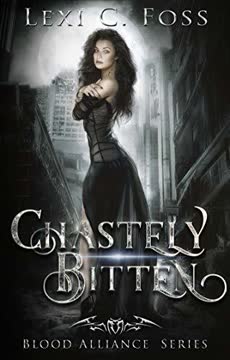
Chastely Bitten is a dark, erotic, and psychologically rich reimagining of the vampire romance, set in a dystopian future where power is absolute and humanity is commodified. At its core, the novel is a meditation on agency, trauma, and the possibility of transformation within systems of domination. Juliet's journey from property to partner is both harrowing and hopeful, illustrating the costs of survival and the slow, painful process of reclaiming selfhood. Darius, for all his power, is equally shaped by the system he seeks to overthrow—his love for Juliet is both a rebellion and a risk, forcing him to confront the limits of control and the necessity of trust. The novel's use of ritual, ceremony, and public performance highlights the ways in which power is both enacted and resisted, and its focus on pleasure as both weapon and liberation complicates traditional narratives of submission and dominance. Ultimately, Chastely Bitten is a story about the possibility of change—not just for individuals, but for worlds. It asks whether love, agency, and partnership can survive in a world built on violence, and suggests that even in the darkest of systems, the seeds of rebellion and hope can take root.
Last updated: