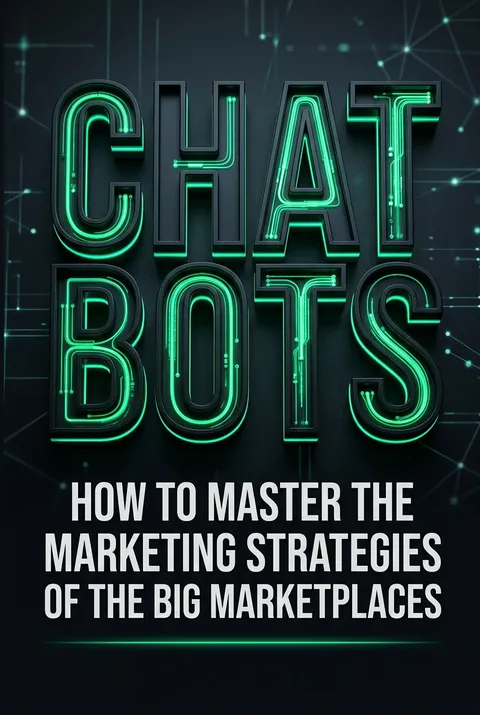


Key Takeaways
Use chatbots to remove customer friction, not to imitate a person
A practical definition. A chatbot is software that communicates with people through text or voice, usually on a website, messaging app, or social network. It can answer questions, guide a purchase, or complete routine tasks. The book’s central case is practical: make help available quickly, at any hour, without requiring an employee to handle every interaction.
Convenience beats the disguise. A bot can answer a basic question, suggest a product, or help place an order. The book points to businesses such as Domino’s and Taco Bell, which let customers order through messaging. The useful measure is not whether the exchange feels human, but whether it helps the customer finish what they came to do. When it cannot, a human should be easy to reach.
What's striking is how the book’s strongest argument is about access, not artificial personality. Service design often treats friction as effort imposed on a customer: searching for an answer, waiting in a queue, or repeating a problem. Automation can remove some of that effort. But simulating a person can create the wrong expectation if the system cannot understand an unusual request. Clear signals about the bot’s abilities, plus a visible route to human help, can build more trust than a convincing avatar.
Automate repeat questions, but keep humans ready for hard cases
Start with repetition. Chatbots can handle common questions, route requests to the right department, and reduce queues by responding to several people at once. This can free customer-service staff to focus on problems that require judgment or personal attention. The book argues that customers benefit too, because a quick response can be easier than waiting for an email reply or an available agent.
Keep an exit open. A bot may fail when a request is complex, unexpected, or emotionally charged. The book therefore favors combining automated service with human support, rather than treating the bot as a full replacement. For instance, Botsify is described as allowing an agent to take over when the automated conversation is not helping. The handoff is part of the service, not evidence that the bot has failed.
This division of labor resembles the principle of exception handling in software: automate predictable cases, and make unusual cases recoverable. The crucial design question is not only how many conversations a bot can contain, but how gracefully it recognizes uncertainty. A poor handoff can make customers repeat themselves, erasing the time saved by automation. Businesses should also avoid transferring every difficult interaction to the same small group of employees without considering workload and training.
Build a bot only where customer volume makes it useful
Look for recurring demand. The book says a chatbot may be unnecessary for a business with little customer contact. It may be more useful when support agents are overloaded, many inquiries repeat, or customers need help outside normal business hours. A service-focused business, such as travel, may use a bot to handle initial questions before an employee steps in.
Find a specific point of friction. The book also suggests considering a bot when customers abandon shopping carts or leave a site without subscribing or buying. A bot could ask what went wrong and guide the shopper toward completing the process. That is a possible use, not a guarantee of more sales. The business should first identify the problem it intends to solve, rather than adding a chatbot simply because the technology is available.
The strongest adoption test is whether a recurring customer problem is both costly and sufficiently predictable to automate. This connects chatbot planning to service operations: volume, repetition, and the consequence of delay all matter. A small business with infrequent, high-stakes conversations may benefit less than a larger business answering the same simple question hundreds of times. Cart abandonment also has many possible causes, so a bot should be treated as a way to learn and assist, not as a cure for a weak offer or confusing checkout.
Put help where customers already message, shop, and read
Meet people in place. Chatbots can operate on websites, social networks, and messaging apps. The book argues that a business can reach customers more easily by using channels they already visit, instead of expecting them to return to a separate website. It gives CNN as an example of delivering articles through messaging apps, extending the publication’s reach beyond its own site.
Make the interaction useful. The same channel can support a transaction as well as content. Domino’s and Taco Bell are cited as examples of customers ordering through bots, including via messaging services. Other examples in the book include product discovery, travel searches, and account support. The channel should match the task: a useful message can help a customer act, while an unnecessary message can feel like another interruption.
Channel choice is part of the product experience, not a technical afterthought. A familiar messaging app can lower the effort required to ask a question or place an order, while a poorly chosen channel adds friction. The book’s examples span news, food, travel, and retail, which makes the larger lesson about matching interaction to context. Businesses should also consider whether a channel encourages appropriate expectations about privacy, urgency, and the kind of support available.
Treat conversations as market research, not just support tickets
Listen for patterns. The book recommends recording and analyzing chatbot conversations to learn what customers ask about. Repeated questions can reveal information that is hard to find, product details that need clarification, or steps in a process that cause confusion. Conversations may also offer clues about customer interests, preferences, and purchasing behavior.
Use the findings carefully. Those patterns can inform improvements to customer service, product recommendations, and business decisions. A chatbot may also use information from prior interactions to make responses more relevant. The value is not in collecting the largest possible pile of transcripts. It is in turning recurring questions into a clearer experience, while ensuring that the information gathered is appropriate to the task and handled responsibly.
Conversation data offers an unusually direct view of the questions customers actually ask, rather than the questions a company assumes they ask. That makes it useful for product design and communication as well as marketing. Still, chat logs are not a complete portrait of a market: they reflect the people who chose to use the bot, and the options the bot made available. Privacy also matters. Clear disclosure, limited data collection, and careful access controls help ensure that customer insight does not become customer surveillance.
Make the bot's scope narrow enough to answer reliably
Two ways to respond. A rules-based chatbot follows predefined instructions and answers, making it suitable for simple, predictable tasks such as common product questions. An artificial intelligence-based chatbot uses machine learning to interpret natural language and may improve through user interactions. Natural Language Processing, or NLP, is the technology described in the book for interpreting words, phrases, intentions, and context.
Capability has limits. The book warns that bots can struggle with complex questions, language differences, and unexpected situations. A fixed-answer bot cannot adapt well when a user’s needs fall outside its programmed paths. Even a system designed to learn needs suitable conversational data and a clear understanding of what users need. A defined task, such as answering a set of common questions, is a safer starting point than promising a bot can handle everything.
A narrow scope is a reliability strategy. In human-computer interaction, users build expectations from what a system appears able to do; a broad promise followed by brittle responses creates avoidable frustration. Rules-based systems can be dependable within a small domain, while machine-learning systems can handle more varied language but may still misunderstand intent. The useful comparison is not simple versus intelligent. It is whether the system’s actual capabilities fit the task and whether its uncertainty is handled honestly.
Choose the simplest platform that fits your channels and needs
Choose for the job. The book surveys tools with different strengths. ManyChat is presented as a tool for Facebook Messenger campaigns and interactive messages. Botsify is described as supporting Messenger and websites, with a human takeover option. Other products in the guide offer combinations of messaging integrations, analytics, payment support, or visual conversation builders.
Compare what you will use. The book recommends matching a platform to the channels customers use and the features the business actually needs. A comprehensive product is not automatically a better choice if a basic setup will do. It also advises considering a provider’s reputation and customer support, since implementation and operation can bring problems. The listed products and plans are a snapshot, so current availability and capabilities should be checked before purchase.
The practical purchasing principle is to buy capability only when it serves a defined workflow. Feature-heavy software can create implementation work without improving the customer experience, while an overly limited tool may make a useful human handoff or channel integration impossible. Platform comparison should therefore begin with the customer journey, then test whether a product supports it. Because chatbot vendors and messaging platforms change quickly, the book’s catalog is best read as a set of examples, not a current ranking.
Test, monitor, and refine before trusting automation with customers
Prepare before launch. The book advises setting clear project goals, choosing a suitable development platform, and training and testing the chatbot before releasing it to the public. For an AI-based bot, this includes gathering conversational data and understanding how users communicate. For any bot, the answers and pathways should reflect the questions customers are likely to ask.
Keep improving. Launch is not the finish line. The book recommends monitoring interactions and adjusting the system so that it continues to provide accurate, useful responses. Customer conversations can show where the bot is confused or where a process needs improvement. In practice, this means checking both whether the bot solves common requests and whether it directs unresolved problems to a person rather than leaving customers stranded.
This is an iterative approach to automation: deploy only after testing, then treat real interactions as feedback. A helpful evaluation can distinguish successful resolution from mere conversation volume. Businesses might track whether customers get the answer they need, how often they request a human, and where misunderstandings recur. Those measures are suggestions for applying the book’s advice, not metrics specified in it. The broader point is that automation deserves ongoing quality control, especially when customer needs or the surrounding platform change.
Analysis
This is a concise business primer, not a technical manual or a fully developed marketing strategy. Its most useful contribution is a grounded account of where chatbots can fit: common customer questions, initial triage, sales assistance, content delivery, and routine transactions. The recurring recommendation is to connect automation to a real business need, select a tool that works on the channels customers use, and retain human support for situations a bot cannot resolve.
The text’s structure is more catalogue than argument. It introduces benefits, lists use cases and vendors, and closes with familiar implementation advice. Its examples help readers imagine practical applications, but they do not establish that a chatbot will improve sales or satisfaction in every setting. The numerical claims about customer preferences for round-the-clock support and messaging are presented without identifying their studies, so they are better treated as prompts for investigation than as universal benchmarks. Vendor details are also time-sensitive, a limitation the book itself acknowledges by noting how quickly internet technology changes.
A sharper way to apply the book is to begin with a service problem, not a platform. Identify a frequent, low-complexity interaction, decide what a good resolution looks like, and make the bot’s limits and human handoff explicit. Then use the conversations to find recurring confusion and refine the service around it. This shifts the aim from replacing staff to reducing avoidable effort for customers and employees.
The distinction between rules-based and AI-based bots is valuable, but the book gives little detail on the tradeoffs involved in training, accuracy, or data handling. Its own cautions about conversational limits point toward a broader principle: greater technical sophistication does not eliminate the need for careful scope, testing, and accountability. For a small business, a modest bot that reliably answers a narrow set of questions may be more useful than an ambitious assistant that fails unpredictably. The lasting lesson is not that every company needs a chatbot. It is that automation works best when it serves a defined customer task and remains answerable to human judgment.
Glossary
Natural Language Processing (NLP)
Interprets human languageA technology that enables a computer system to process language as people use it. In the book, NLP helps a chatbot interpret words, phrases, intentions, and context so it can respond to a user’s question. It is described as one of the technologies that supports conversational interactions.
Machine Learning
Learns from interaction dataA technique for training a chatbot using historical data and user interactions. The book describes machine learning as a way for a system to improve its responses over time and become more accurate or efficient. Its effectiveness depends on the data used for training and the tasks the chatbot is expected to handle.
Rules-based chatbots
Follow predefined responsesChatbots programmed to respond according to predefined rules and answers. They are suited to simple, well-defined tasks, such as answering common questions about a product or service. Because their responses depend on programmed pathways, they can struggle when a user asks something outside those pathways.
AI-based chatbots
Interpret and learn from languageChatbots that use artificial intelligence techniques, including machine learning, to interpret natural language and produce responses. The book says these systems can learn from interactions and adapt over time. They may handle varied user language better than fixed-rule bots, but can still struggle with complexity, language differences, and unforeseen situations.
Download PDF
Download EPUB
.epub digital book format is ideal for reading ebooks on phones, tablets, and e-readers.








