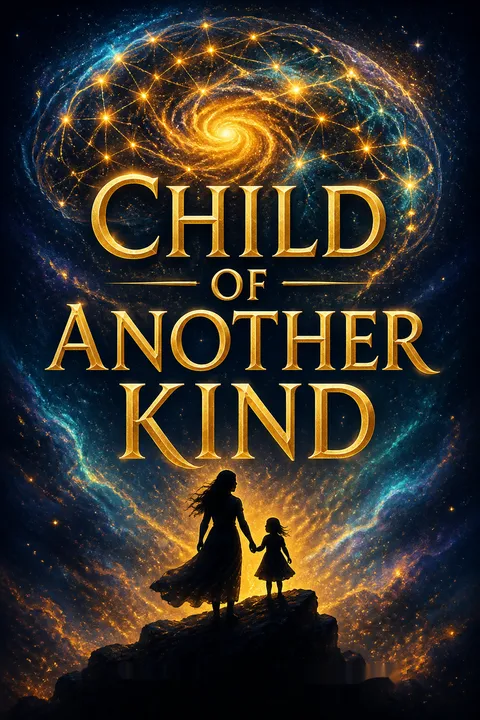


Plot Summary
The Man at the Table
In 1990, Cynthia Pace lets a stranger named Turner into her Asheville home, believing he represents a church. Her four-year-old daughter, Maddie, studies him and sends a warning into her mother's mind: he is dangerous. Cynthia quietly retrieves pepper spray, but Turner draws a gun and demands valuables. When he reaches for duct tape, Cynthia sprays his eyes, seizes the gun, and drives him out.
A neighbor records his license plate, helping police arrest him later. Maddie explains that Turner is a violent criminal, though she cannot explain how she knows. Cynthia believes her. The rescue establishes their private bond: Maddie's unsettling perceptions are not simply a burden, because they can protect the person who loves her most.
The opening makes Maddie's gift morally legible before it is scientifically legible. Her warning is not a display of power for its own sake; it gives Cynthia the seconds needed to act. Cynthia's response matters just as much: she does not dismiss her daughter's perception as childish fantasy, even when she cannot explain it. Their bond is built on reciprocal trust, with Maddie supplying knowledge and Cynthia supplying protection. The encounter also establishes the story's central tension: access to another person's hidden life can expose real danger, but acting on that knowledge may isolate the person who sees it.
The School Cannot Hold Her
At six, Maddie repeatedly interrupts class to expose classmates' misdeeds. Principal Banes confirms the accusations are largely true but treats the disruptions as the central problem. The school's psychologist, Dr. Rand, asks Maddie to explain herself; she recognizes disturbing memories in him and blurts out what she has seen.
The next day, the school expels her. Cynthia begins homeschooling, while the school episode teaches Maddie that truth can make authority defensive rather than grateful. At seven, Maddie uncovers that her adoptive father, David, has been unfaithful.
Cynthia divorces him, and David gives up his parental rights. Maddie and Cynthia lose a family structure, but not their closeness. Later, psychologist Amy Branch helps Cynthia manage Maddie's education and increasingly difficult gift.
Maddie's early trouble is not that she cannot distinguish right from wrong, but that she has not learned the social difference between knowing and disclosing. The school sees interruption and accusation where Cynthia sees accurate perception; Dr. Rand's reaction sharpens Maddie's mistrust of adult authority. David's departure makes her gift consequential inside the family as well as at school. Cynthia protects Maddie by homeschooling her, yet that choice also narrows the child's access to peers. Amy offers a more nuanced response: she treats Maddie's perceptions as real while recognizing that exposure to others' memories may overwhelm her. The adults' competing reactions foreshadow the institutional conflict to come.
A Brain Within a Brain
By 1998, Amy fears Maddie is not only absorbing vivid memories but erasing painful ones from people she knows well. Amy's husband, neurologist Tom Branch, examines Maddie's brain and finds an unexplained central mass that activates when she accesses memories.
He concludes that Maddie can read and store other people's memories, and experiments show she can also reach short-term thoughts. Tom develops lead-and-barium glasses that suppress the ability. Maddie confirms they work by failing to learn what Tom did outside the room, then removes them and reads it immediately.
Wanting to know her own beginnings, she persuades Cynthia to visit the adoption agency. The tests give Maddie a practical measure of control, but they cannot answer why she is different or where she came from.
The brain scan translates an intimate, ethically fraught experience into something measurable without making it ordinary. The glasses are important because they offer choice rather than cure: Maddie can lower the volume of other minds, though doing so also makes her feel less protected. Tom's work is unusually collaborative. He gives Maddie a role in testing, while Amy keeps the focus on her emotional welfare. Yet the scientific explanation deepens the mystery instead of closing it. If a physical structure accounts for Maddie's powers, it does not explain its origin or purpose. Her decision to investigate her adoption therefore follows naturally from the medical discovery.
The Blond Man's Trace
At the adoption agency, Cynthia and Maddie learn that an infant had been left at a fire station before Cynthia adopted her. Captain Weeks remembers finding the baby but has a conspicuous gap around the event.
Lieutenant Bradford cannot consciously recall the day, yet Maddie retrieves his memory of a tall, blond man walking away from the station. She suspects the stranger can erase memories as she can. Soon afterward, Amy and Tom report that someone has broken into both offices and stolen their files on Maddie.
Fearing the intruders will come for the child, they send Cynthia and Maddie to a remote mountain cabin. The blond stranger's identity remains unclear, but the missing memory and stolen records transform Maddie's search for her origins into a threat to their safety.
The adoption trail gives Maddie's private suspicion an external shape: somebody else may share her abilities, and may have deliberately concealed her arrival. Memory becomes both evidence and a vulnerability. Maddie can recover what Captain Weeks cannot, but another person has apparently edited his mind before she ever reaches it. The stolen files then show that institutions beyond the family have begun to treat her as a valuable case. Cynthia's choice to leave home is an act of protection, but it also moves them into a landscape where they have fewer witnesses and fewer safeguards. The mystery escalates through the very mechanism that once helped Maddie protect her mother.
The Cliff Takes Cynthia
At the cabin, two armed contractors arrive while Cynthia and Maddie are gardening. The women flee uphill, hoping a ledge above the road will conceal them, but the rock gives way beneath their feet. Maddie lands unharmed, revealing extraordinary strength; Cynthia strikes the road, badly injured. As Cynthia dies, Maddie feels a strange current leave her mother's body and then discovers she can lift it with ease.
A contractor shoots Maddie with a tranquilizer dart before she can escape. She wakes in a glass enclosure at a military facility, separated from the other captives and from her mother's body, which has been cremated. Cynthia's death fulfills the danger she had feared, while Maddie's sudden strength offers no way to undo it.
This is the story's irreversible rupture. Cynthia has spent years turning Maddie's difference into something survivable through trust, education, and practical protection; the armed capture destroys that domestic shelter in minutes. Maddie's physical power appears only under extreme grief, so it arrives as both a revelation and a cruelly late resource. She can carry Cynthia's body but cannot restore her mother or defeat the tranquilizer. The current she senses at Cynthia's death also plants a question that neither grief nor the captors can answer. The glass enclosure literalizes Maddie's new condition: watched, contained, and unable to reach the person who gave her a human emotional life.
Not Heaven, Not Earth
After dying, Cynthia awakens on a peaceful island called World 2A, in a younger, remade body. Aya, a young woman who guides newcomers, takes her to the Teacher, a blond man whose appearance matches the stranger from Maddie's recovered memory. He explains that Maddie marked Cynthia as a candidate for this place.
Maddie is an Imprint, a being manufactured on World 2A and sent to Earth to identify people whose emotional lives interest its Makers. The Teacher says Cynthia's essence was captured at death and placed in a new body. World 2A is not the Christian heaven Cynthia expected, and its makers cannot confirm her God exists. She remains convinced that her daughter is hers, whatever species created her.
Cynthia's afterlife is designed to unsettle the categories that once organized her faith. She has a body, a community, and a guide, yet no confirmation of God or heaven. The Teacher's account makes Maddie's life part of a larger system, but Cynthia refuses to let biological origin overrule maternal relationship. That refusal is psychologically important: she does not deny what she learns, but she rejects the inference that creation determines belonging. The story also repositions the blond man. He is no longer merely a clue in Maddie's adoption history; he is an administrator of a world that claims a role in both women's lives.
The Captives' Origin Story
At the Nevada facility, government psychologist Dr. Lemare confirms that Maddie's brain differs from a human brain and says an older captive, Abagail, has described another world and manufactured beings called Imprints.
Maddie agrees to testing, asks for books, and bargains for information rather than attempting a reckless escape. Dr. Lemare eventually shares Abagail's account: Imprints are made in a laboratory on World 2A and sent to Earth to identify empathic people, as well as their narcissistic opposites.
Maddie recognizes that her own early life fits the account, but she still feels human because she learned love and goodness from Cynthia. The explanation answers her question about parents while leaving her trapped among people who classify her as a specimen.
Maddie's cooperation is a survival strategy, not surrender. She reads Dr. Lemare's professional caution and offers a relationship in which both can gain something: the facility gets reliable participation, and Maddie gets knowledge and intellectual occupation. Her insistence that emotions count as part of being human challenges the government's narrow biological definition. Abagail's account gives Maddie a possible origin, but it does not settle her identity. The distinction between being manufactured and being loved becomes central: the first describes how she began, while the second describes how she became a person capable of choosing, grieving, and caring for others.
Two Worlds of Desire
On World 2A, Cynthia works at the Imprint House, where she helps nurture babies being prepared for Earth. The Teacher warns her not to enter the Transfer Station, making the forbidden door her first personal challenge.
He later takes her to World 2B, where the residents are selected for narcissism rather than empathy. Its people maintain competing religious institutions yet unite around a country club and self-interest. Cynthia argues that their faith is often a badge of superiority, not care for others, and the Teacher accepts her explanation.
He then tells her that she will eventually sail to World 3, where the Makers live. Cynthia's work caring for infants gives her a daily connection to Maddie's childhood, even as she begins to question the system that sends them away.
The contrast between World 2A and World 2B turns an abstract nature-versus-self-interest debate into a lived social experiment. Cynthia's judgment is not based simply on religious labels; she watches how people use institutions and identifies the gap between professed belief and actual concern for others. At the Imprint House, the babies make the system emotionally concrete. For Cynthia, they are not just components in a study but vulnerable lives beginning a journey she knows can be painful. Her forbidden-door challenge also tests obedience: she must decide whether loyalty to the system can coexist with her desire to reach Maddie.
The Council's Impossible Question
Cynthia sails across the vast sea to World 3 and learns that the Makers are a highly advanced, emotionless species studying empathy and narcissism. Their Council includes Originals and human-Maker hybrids drawn from both experimental worlds.
Some members want Cynthia removed, while others want her to introduce them to God. A proposal to blend her essence with a Maker and send the hybrid to heaven fails when Cynthia argues that faith cannot survive if it is diluted.
Instead, she offers to teach the Teacher what belief means, not merely recite scripture. The Council votes overwhelmingly to return her to World 2A. On the journey back, the Teacher admits that the Makers once failed to capture Jesus's essence, a mystery that continues to drive their search.
The Council scene forces Cynthia to distinguish faith as information from faith as lived commitment. The Makers already possess scripture as data, so repeating its language cannot produce the experience they seek. Cynthia's rejection of a blended essence is also a defense of moral agency: a shortcut that preserves religious words while altering the believer would not be genuine belief. Her offer to teach the Teacher is imperfect and perhaps impossible, but it converts her faith from private certainty into a relationship. The revelation about Jesus explains why these observers care about a reality they cannot verify: their technology has met a boundary it cannot explain.
A Green Light in Paris
Back on World 2A, Cynthia asks the Teacher to let her help find Maddie. At the Monitoring Station, Tom Branch shows her the system used to track Imprints and marked humans. The Teacher had ordered Maddie's switch turned back on after Cynthia negotiated for her safety, but the other captured Imprints remain off.
Tom explains that the lights mark whether an Imprint is alive or reachable. Maddie's signal is green: she survived the facility and appears to have escaped it. Her location has shifted from Nevada to Paris.
Cynthia also learns that the two other missing Imprints have died after leaving protection from the Makers' signal. The discovery gives her a real lead, but not permission to return to Earth or a guarantee Maddie will agree to come back.
The Monitoring Station converts Cynthia's longing into evidence, but the evidence arrives with an ethical cost. Maddie's green light means she is alive, while the missing signals of the other Imprints reveal that the Makers' system can treat sentient beings as expendable. Cynthia's earlier bargain has mattered, yet she cannot mistake one exception for a change in policy. Tom's role makes the information humanly legible; a mother receives not an abstract status report but a precise location. The Paris signal rekindles hope while sharpening the conflict between rescue and autonomy. Cynthia wants reunion, but Maddie may have built a life beyond the system's reach.
The Glass House Opens
By puberty, Maddie remembers her Imprint origin and learns that the signal from World 2A has killed other captured Imprints. She has befriended Abagail and Tommy, who share her confinement, and persuades Dr. Lemare to let them go outdoors. Maddie survives the exposure, but Abagail and Tommy suffer immediate brain failure.
Their deaths leave Maddie alone, though their years together have taught them care and consideration. She then convinces the government to lend her to the FBI, where she uses memory reading to solve cases, including identifying nine victims of a suspected serial killer. The work gives her purpose, but her confinement and the investigators' emotional distance make her fear she is losing the kindness Cynthia taught her.
The deaths outside the facility expose the cost of treating extraordinary people as research assets. Maddie makes the request because she wants ordinary air and because she believes the danger may have passed; the result is devastating, even though she herself survives. Her grief does not turn her against connection. Instead, she uses the FBI arrangement to create work with consequences beyond her cell, while remaining alert to the emotional habits she is absorbing from professionals. The cases prove her abilities can serve justice, but also show that competence is not the same as freedom. She can expose other people's hidden histories without reclaiming her own life.
Amsterdam Turns Violent
In 2006, FBI agent Gino Morelli recruits Maddie for an undercover meeting with Russian crime boss Boris Volkov in Amsterdam. Gino trusts her with more than the usual role: he removes her shock collar and treats her as a partner. Maddie learns Russian, reads Volkov's memories during dinner, and gathers evidence about his criminal network.
After the meeting, two of Volkov's men shoot Gino and try to seize her. Maddie overpowers them, boards public transport, wins cash at a casino, and sends the FBI a written account of Volkov's operations before leaving Amsterdam by train. She reaches Paris alone. Gino's trust has given her a glimpse of partnership, but his killing makes freedom feel inseparable from grief and danger.
Gino offers Maddie something different from the controlled compassion of her captors: trust with real stakes. Removing the collar is not merely a gesture of kindness; it makes her responsible for choosing whether to stay. The undercover assignment lets her use her abilities on her own terms, yet the violence after the meeting strips away the protection that partnership seemed to promise. Maddie's response combines practical intelligence with emotional restraint: she escapes, preserves the evidence, and grieves only once she is safely moving away. Freedom begins not as a settled condition but as a sequence of decisions made under pressure.
Paris, Without Permission
In Paris, Maddie changes her appearance, finds a quiet routine, and earns money at casinos without attracting notice. Writing about her life helps her bear the absence of Cynthia. In 2007, the Teacher finds her at a café and confirms Cynthia is alive on World 2A. He offers to take Maddie there, warning that powerful forces may eventually recapture her.
Maddie refuses. She wants her mother, but insists that Earth is her home and asks the Teacher to bring Cynthia to her instead. The Teacher leaves without promising to do so. Maddie's choice is painful because it protects the independent life she has built while placing the reunion she most wants beyond her control.
Maddie's refusal is not a rejection of Cynthia; it is a claim to define what home means after years of being moved, studied, and confined. The Teacher frames World 2A as a route to her mother, but Maddie sees that accepting the offer would require surrendering the life she has assembled in Paris. Her choice preserves agency at the price of uncertainty. The café becomes the setting for a mature conflict between attachment and self-determination: love does not automatically authorize one person to decide where another should live. Maddie asks for a different solution, though she has little power to make it happen.
Mother and Daughter, Again
On World 2A, Cynthia learns Maddie is alive in Paris but cannot accept a life that keeps them apart. She abandons the prospect of becoming a Maker and asks the Teacher to let her return to Earth, even if that means giving up the world beyond death. After consulting the Council, the Teacher brings Cynthia back in a younger body.
In 2010, he finds Maddie at her café and brings Cynthia to her. Maddie recognizes her mother immediately, and the two embrace. Cynthia can stay. She has not returned to her old life unchanged: she is young again and carries abilities resembling Maddie's. The reunion fulfills the bond that began with a warning at a kitchen table, while leaving both women free to choose what comes next.
The reunion resolves the book's central conflict by making love consequential without making it possessive. Cynthia's choice to return is not a rejection of faith so much as a recognition that the life she most deeply wants is shared life with Maddie. Maddie's earlier refusal is honored: Cynthia comes to Paris rather than demanding that her daughter abandon it. The new body and shared abilities suggest that the relationship has changed, but not dissolved; mother and daughter can now meet as companions with overlapping capacities. The Teacher's intervention also marks a shift in the experiment, since the people being studied have altered the system's decisions through the relationships they formed.
Epilogue
At the café, Cynthia and Maddie discuss the Teacher's growing capacity to understand emotion and the new life they might make in Paris. Cynthia has returned in a younger body and reveals that her brain now allows her to read memories and communicate telepathically.
Maddie is delighted to find someone who shares her abilities and can choose when to open or close her mind. They decide to use new names, with Maddie becoming Juliette Allard and Cynthia considering Lili Allard, a sisterly identity rather than the old mother-daughter arrangement alone. Together they begin imagining a future shaped by choice, affection, and ordinary days.
The epilogue refuses to restore the past as if nothing happened. Cynthia and Maddie do not resume their old roles unchanged: they are nearly the same age, share new abilities, and consider names that give their relationship room to evolve. Yet the old bond remains visible in their pleasure at being together and in Cynthia's instinctive pride. The Teacher's continuing presence is also reframed. He is not simply an all-powerful custodian but a learner whose understanding depends on human relationships. The ending's hope is therefore practical rather than absolute: the women have not solved every mystery, but they can face uncertainty together.
Analysis
Child of Another Kind repeatedly asks whether a person is defined by origin, capacity, or relationship. Maddie is manufactured rather than born in the ordinary human way, but Cynthia's care gives her a moral education that neither programming nor scientific classification can replace. The novel makes this tension concrete through institutions: a school disciplines Maddie's truth-telling, a military facility contains her, the FBI borrows her abilities, and the Makers track her as an instrument. Each institution values what she can do before it understands who she is.
Cynthia's parallel journey turns the same problem toward faith. World 2A can restore her body, World 3 can explain its technology, and the Makers can recite scripture, yet none of these capacities guarantees access to the experience Cynthia calls God. Her conversations with the Teacher suggest that knowledge without emotional participation has a boundary. The Makers can observe compassion but cannot initially inhabit it; Cynthia can believe, but her certainty is tested when her inherited account of the afterlife fails to match what she experiences.
The novel's strongest ethical claim emerges through choice. Maddie refuses to exchange her Parisian freedom for a reunion arranged on the Makers' terms. Cynthia eventually makes the opposite journey, asking to return to Earth rather than remain in a system that values her as a candidate or experiment. Their reunion works because Cynthia comes to Maddie's chosen home. The book therefore treats love not as ownership or sacrifice alone, but as attention to another person's agency. Its speculative machinery matters most when it tests that principle: a world capable of remaking bodies and tracking minds must still learn that a relationship cannot be engineered into obedience.
Review Summary
Child of Another Kind is a science fiction novel exploring the unique bond between a mother and her adopted daughter with special abilities. Readers praise Decker's world-building, character development, and thought-provoking themes. Many found the story engaging and emotional, appreciating its blend of sci-fi and spirituality. Some critics felt the dialogue was simplistic and the religious elements overbearing. Overall, the book received positive reviews for its imaginative premise and exploration of human relationships, though opinions varied on its execution.
Characters
Maddie Pace
The memory-reading daughterAdopted by Cynthia as an infant, Maddie grows up able to enter other people's memories, communicate thoughts, learn at extraordinary speed, and sense moral danger. Her unusual perception gives her information but little control over how adults and peers react to it. Cynthia teaches her compassion and self-restraint, while isolation teaches her to protect her privacy. Maddie's intelligence can make her seem older than she is, but her longing for dependable affection remains unmistakably young. She wants to understand her origin without letting that origin define her humanity. Her deepest strength is not simply what her body or mind can do, but her continuing capacity to care for people who have treated her as a problem or a tool.
Cynthia Pace
A mother's fierce protectorCynthia is Maddie's adoptive mother, a devout Christian whose faith is open to questions and whose first instinct is to protect her child. She meets Maddie's unusual abilities with curiosity rather than shame, homeschooling her when institutions fail to understand her. Cynthia's courage is practical: she acts quickly when Turner threatens them and later keeps seeking ways to help Maddie despite uncertainty about the worlds around her. Her religious convictions provide a moral framework, but they do not make her rigid or unfeeling. She is driven by maternal attachment, a belief in goodness, and the desire to do right even when no authority can tell her what right requires.
The Teacher
The Makers' human guideThe Teacher is a powerful figure who manages World 2A and guides Cynthia through its rules, technologies, and competing possibilities. He is associated with the blond stranger from Maddie's earliest history, though his precise nature is difficult to grasp. He speaks with measured certainty and tends to view people through the Makers' experiments, which can make him seem indifferent to suffering. At the same time, he is curious about what human emotion means from the inside, not merely as a subject of observation. His relationship with Cynthia and Maddie tests the limits of a worldview built around information, classification, and control.
Aya
Cynthia's first island friendAya welcomes Cynthia to World 2A and helps her learn the routines of a place where time, food, work, and sleep operate differently from Earth. She is gentle, attentive, and eager to make newcomers feel less alone. Her friendship with Cynthia develops through shared walks, meals, and visits to the mountain lake. Aya's warmth is paired with a quiet watchfulness; she notices what others feel even when they do not say it aloud. She gives Cynthia a human-scale introduction to a world whose larger purpose is often opaque.
Tom Branch
The neurologist and allyTom is Amy's husband and a neurologist who investigates Maddie's brain without reducing her to a diagnosis. His memories reveal a young man willing to risk himself to protect a bullied student, a quality that helps Maddie trust him. He tests her abilities carefully and develops glasses that let her block memory access when she chooses. Tom's scientific curiosity is balanced by practical compassion; he understands that an explanation is only useful if it helps Maddie live. Later, his analytical skills give him a natural place in the monitoring work on World 2A.
Amy Branch
Maddie's careful psychologistAmy is a psychologist who has worked with Maddie for years. She takes the child's experiences seriously while recognizing that involuntary access to other people's memories can cause emotional harm and social isolation. Amy's concern for confidentiality reflects her awareness that researchers, companies, and government agencies may see Maddie as an opportunity rather than a child. She sets limits when she cannot safely help, but tries to connect Maddie with Tom and remain involved. Her role is defined by an effort to protect Maddie's well-being without pretending to understand everything about her.
Dr. Lemare
The government's cautious examinerDr. Lemare oversees Maddie's evaluation at the military facility. She begins from the government's need to classify and contain an unprecedented subject, but she is capable of responding to Maddie's intelligence and vulnerability. Their working relationship develops through negotiation: Maddie cooperates in exchange for books, information, and contact with the other captives. Dr. Lemare's professional caution never entirely disappears, yet she is more humane than the institution she serves. She represents the possibility of ethical conduct inside a system built around secrecy and control.
Gino Morelli
The trusting FBI partnerGino is an experienced undercover FBI agent with strong international contacts and a talent for entering dangerous circles without losing his integrity. He recruits Maddie for an operation against a Russian criminal network and treats her as a partner rather than a piece of equipment. His willingness to remove her shock collar gives her an unfamiliar experience of trust. Gino is confident and socially skilled, but his decisions are shaped by genuine respect for the person working beside him. He shows Maddie how cooperation can feel different from supervision.
Abagail
The older fellow captiveAbagail is an older woman held at the Nevada facility whose unusual perceptions make her a source of information about the Imprints. Before her capture, she worked as a nurse and lived an ordinary life in California. She is difficult for the authorities to manage, but Maddie sees more than the label attached to her. Her attachment to plants and her capacity for connection complicate assumptions that unusual behavior makes someone dangerous or empty.
Tommy
The neglected young captiveTommy is a boy from Grand Rapids whose adoptive family offers little care or guidance. After his abilities are discovered, he is confined at the same facility as Maddie and Abagail. He is guarded at first, but ordinary pleasures such as books, games, and shared meals help him build trust. Tommy's history shows how a child's unusual behavior can worsen when adults respond with punishment rather than understanding.
Wang Li
The blunt Imprint House guideWang Li introduces Cynthia to the work of the Imprint House, where beings are produced and prepared for Earth. Her humor punctures the facility's sterile routine, and her directness makes her a memorable presence in Cynthia's new life. She understands the procedures better than she explains their larger purpose, which suits a world where many inhabitants know their duties without knowing where those duties lead.
David Pace
Maddie's adoptive fatherDavid is Cynthia's husband and Maddie's adoptive father. His private choices disrupt the family, and his discomfort with Maddie's abilities helps him withdraw from their lives. He is a contrast to Cynthia's willingness to stay present when the truth becomes inconvenient.
Dr. Rand
The school psychologistDr. Rand is assigned to assess Maddie after her classroom outbursts. His calm professional manner conflicts with what Maddie perceives in his memories, making him an early example of authority that does not match its reassuring surface.
Terry Ross
Maddie's first FBI partnerTerry is an FBI agent who works with Maddie on cases before Gino replaces him. He is disciplined, dependable, and careful about procedure. His professional reserve helps the Bureau use Maddie's abilities, though it offers her little personal closeness.
Gabriele
The Council's ambitious SelfGabriele is a human-Maker hybrid on the Council, formerly a national leader on Earth. He presses for Cynthia to help the Makers reach God, but his arguments also reveal the Council's uncertainty about whether faith is knowledge, fantasy, or something they have not yet learned to experience.
Jimmy
The fearless cliff diverJimmy is a young man with Down syndrome who spends time at the mountain lake on World 2A. His daring dives draw cheers from the people around him, and his easy acceptance within the group gives Cynthia a glimpse of a community organized around companionship rather than status.
Principal Banes
The school disciplinarianPrincipal Banes treats Maddie's classroom disruptions as a serious behavioral problem, even while acknowledging that her accusations are often accurate. She represents an institution more concerned with order than with understanding the child causing the disturbance.
Captain Weeks
The fire-station captainCaptain Weeks found Maddie as an infant at the fire station and later recalls the discovery without remembering who left her there. His memory gap becomes an important clue in Maddie's search for her origins.
Lieutenant Bradford
The firefighter with a clueLieutenant Bradford was returning a fire truck around the time Maddie was left at the station. He cannot consciously recall seeing anyone, but his preserved memory contains a detail that helps Maddie identify the blond stranger.
Plot Devices
Maddie's memory-reading brain
Access to hidden livesMaddie's unusual brain allows her to access memories and, in some circumstances, short-term thoughts. She uses the ability to recognize danger, uncover crimes, assess whether someone is trustworthy, and gather information that would otherwise remain inaccessible. The same capacity can overwhelm her with other people's painful experiences and may affect the memories of people she knows closely. It therefore operates as both investigative tool and emotional exposure, shaping her relationships with family, authority, and strangers. The ability is not fully under her control, which makes learning when not to use it as important as learning what it can reveal.
The shielding glasses
A chosen mental boundaryTom Branch creates glasses with lead-and-barium lenses to suppress Maddie's ability to read memories. They do not correct her already exceptional eyesight; they give her a way to limit the constant intrusion of other minds. Maddie tests them by trying to retrieve Tom's recent memory and finding nothing, then removes them and succeeds. The glasses become a practical form of consent: Maddie can decide when to know more and when to experience people without their histories flooding her. Their protection is imperfect against the Teacher's far greater abilities, but they give Maddie meaningful control in ordinary human interactions.
The Imprint signal
Tracking and controlThe Makers use signals and switches to monitor Imprints on Earth and determine whether they remain active, are reachable, or are dead. The signal can also cause catastrophic brain failure in captured Imprints who leave the protection of the military facility. At the Monitoring Station, colored lights let workers track individual Imprints, including Maddie. Cynthia's insistence persuades the Teacher to reactivate Maddie's switch, creating a crucial exception to the system's usual treatment of captured Imprints. The device makes the Makers' power concrete while exposing the ethical cost of treating sentient beings as replaceable instruments.
Worlds 2A and 2B
A human nature experimentWorld 2A gathers people selected for empathy, while World 2B gathers people selected for narcissism. The Makers use the two communities to observe how contrasting emotional tendencies shape behavior, social structures, and advancement. Cynthia's visits show that the worlds are not simple moral labels: residents build institutions, work, and form relationships, but their defining motivations shape what those structures become. Her observations of World 2B's religious divisions and shared self-interest help the Teacher understand the difference between professed belief and actual care. The paired worlds reveal that the beings studying humanity are also testing their own assumptions about value.
The Makers' Council
A verdict on beliefThe Council on World 3 brings together original Makers and human-Maker hybrids associated with the two experimental populations. It decides whether Cynthia should continue onward, return to World 2A, or help the Makers pursue knowledge of God. The Council's debate makes private conviction part of an institutional decision, but Cynthia resists the idea that faith can be acquired by copying scripture or blending essences. Its vote sends her back to World 2A and gives the Teacher a chance to learn from her. The Council also establishes that the Makers' apparent omniscience does not eliminate disagreement or uncertainty.
Another Kind Series


Download PDF
Download EPUB
.epub digital book format is ideal for reading ebooks on phones, tablets, and e-readers.








