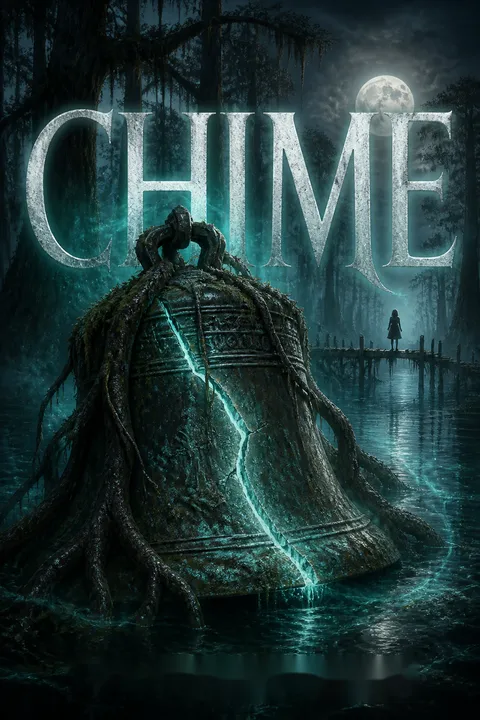


Plot Summary
Prologue
At her trial, Briony Larkin insists she has confessed to everything and deserves to hang. She distrusts the face that makes her look innocent, and expects her story to confirm that she is wicked.
The Chime Child, a woman who can perceive the spirit world, has asked Briony to explain herself rather than accept her confession. Briony resists, then begins to recount the events that led her here.
The frame makes Briony both defendant and narrator, but not a reliable judge of herself. Her certainty that she deserves death sounds like moral clarity until the story reveals how thoroughly guilt has shaped her memory. The Chime Child’s demand for an account introduces a crucial alternative to Briony’s self-condemnation: testimony can be examined, not merely accepted. The opening therefore makes storytelling a form of inquiry. Briony’s central task is not simply to survive a trial, but to discover whether the story she tells about herself is true.
A House Full of Men
Two months after her stepmother’s death, seventeen-year-old Briony Larkin waits with her father and her identical twin, Rose, for city engineer Mr. Clayborne and his son, Eldric. The Claybornes will lodge at the parsonage, and Eldric will study there after leaving university without a degree.
Briony resents the intrusion, especially because Rose has begun coughing and their father dismisses her worry. Clayborne’s work is more alarming: he plans to drain the swamp, which supports the village’s strange inhabitants and old beliefs. Briony is already living by a private sentence of guilt: she believes she caused Rose’s damaged mind and her stepmother’s injury, and has to keep both secrets.
The arrival gathers the book’s pressures into one household. Briony’s father prefers propriety and silence, while Briony treats constant caretaking as punishment she has earned. Rose’s cough gives that private guilt an immediate physical threat. Clayborne’s engineering project expands the conflict beyond family: the same impulse to control what seems inconvenient may endanger the swamp and the people who depend on it. Eldric’s arrival matters because his curiosity and ease unsettle the rigid habits Briony uses to keep herself contained.
The Swamp Takes Rose
When Rose bolts into the swamp, Briony and Eldric race after her, crossing dangerous bogs and waterways. In the trees, they find three witches tormenting Rose and stealing her pink ribbon. Briony drives them off with an unnatural gust, while Eldric sees only the wind and its effects.
The sight triggers Briony’s memory of a childhood swing: at seven, she had been jealous of Rose and believes her anger raised the wind that sent her twin crashing down. She remembers her stepmother warning her to hide what happened from their father. Briony treats this memory as proof that she is a witch, and renews her vow to watch over Rose, even as resentment makes that duty feel like a sentence.
The rescue shows Briony’s care and resentment operating at once. She risks herself to recover Rose, yet interprets every feeling of jealousy as evidence that she is dangerous. The scene also establishes a gap between what Briony perceives and what Eldric can see, a gap that makes her secret feel isolating. Her memory of the swing appears to settle the question of blame, but its precision is suspect: Briony repeats it as a rule rather than examining it as a recollection.
Death in the Quicks
After the witches’ attack, the village authorities question Briony and Eldric. During the search, Briony sees Death on the shoulder of Eldric’s tutor, Mr. Drury, and follows him into the swamp despite her promise to stay away. When false lights lure Drury into the treacherous Quicks, he runs from Briony’s warning and disappears beneath the bog.
At his funeral, Briony hears dead children explain that the Boggy Mun sent swamp cough because Clayborne’s men are taking the swamp’s water. They ask her to make the adults stop the drainage. Rose is coughing too, but Briony fails to learn whether it is the deadly illness before the children’s voices fade.
Drury’s death turns Briony’s second sight into an ethical burden. She sees danger but cannot make Drury trust her, and his drowning intensifies her fear that entering the swamp brings harm. The ghost children offer knowledge with a public consequence: the sickness is not an inexplicable natural disaster but retaliation for a specific intervention. Yet Briony’s private fear of exposure competes with their request. Her hesitation over Rose’s symptoms shows how guilt can narrow attention precisely when responsibility demands clarity.
Blood Salt Bargain
Trying to save her sister without revealing what she knows, Briony visits the Boggy Mun alone. She offers her blood and salt each evening if he will withdraw the swamp cough. The ancient spirit instead asks whether she has someone particular to save. When Briony names Rose, he immediately infects her twin and tells Briony that the only lasting remedy is to keep the water in the swamp.
Briony returns home believing her attempt to help has made Rose ill. The Brownie, an Old One she once banished, follows her back into the parsonage. Briony has not escaped the supernatural world by keeping silent; she has made herself responsible for a bargain whose cost she cannot control.
Briony approaches the Boggy Mun as if sacrifice can substitute for changing the conditions causing the crisis. His answer exposes the weakness in that bargain: she offers personal suffering while leaving the draining untouched. Naming Rose also turns an abstract plea into an immediate consequence. The scene connects Briony’s self-punishment to her secrecy; she would rather bleed privately than persuade the village publicly, even though the latter is the only solution the Boggy Mun recognizes.
Fire at the Pumping Station
Briony slips into the pumping station at night and lights candles in the sealed building, setting the gas-powered machinery ablaze. As it explodes, Mucky Face rises from the river and tells her that an Old One, not Briony, called him to strike her stepmother two years earlier. Briony cannot accept the correction; she remembers the wave injuring her stepmother and believes her own anger summoned it.
The destroyed station briefly stops the drainage, appeasing the Boggy Mun and lifting the cough from the villagers. But Clayborne’s men begin rebuilding it. Briony’s success buys time, not safety, and her conviction that she is responsible for the old catastrophe remains intact.
The explosion is both practical sabotage and an attempted answer to Briony’s moral predicament. She acts decisively when the target is a machine, but cannot yet accept Mucky Face’s account of the injury she attributes to herself. That refusal matters: physical evidence changes the swamp’s condition, while a correction to memory cannot yet change her identity. The station’s reconstruction also prevents easy triumph. Briony has interrupted the danger, not resolved the political conflict driving it.
Nelly Daws Hangs
The village arrests Nelly Daws, a red-haired young woman, after witnesses claim one of the swamp witches had red hair. At the trial, Rose can distinguish Nelly’s hair from the witch’s, but the adults discount her uncertain, wandering testimony. Eldric gives a precise account of the witches’ attack, while Briony becomes ill from the courtroom’s eel-like smell and cannot speak.
The Chime Child warns against judging by appearance, yet the court convicts Nelly. The villagers watch her execution from the Alehouse; she does not turn to dust, the sign that she was human rather than an Old One. Briony sees the mistake and leaves the celebration shaken by what the crowd can do when fear passes for evidence.
Nelly’s execution makes the village’s supernatural justice system answerable for the harm it claims to prevent. The court possesses a witness who can notice a concrete distinction, Rose, but treats her manner as a reason to disregard her observation. The Chime Child’s caution cannot overcome the community’s appetite for certainty. Briony’s silence is not consent, but it has the same public effect. Nelly’s death sharpens the stakes of Briony’s own secret: a trial may be fair in intention and still condemn the wrong person.
A Second Fuse
With Clayborne rebuilding the station and Rose coughing again, Briony returns during a storm carrying paper, paraffin, and communion wine to set another fire. Robert, the village firefighter, catches her before she can ignite anything. Eldric arrives and keeps her secret from both fathers, then asks her to let him help.
Briony cannot explain the cough or her plan, but shares the wine with him and accepts the warmth of his coat. Their secret club, the Fraternitus, begins to mean more than mischief: Eldric offers loyalty without demanding a full confession. Briony still withholds the cause of her desperation, but for the first time she experiences protection that does not have to be earned through self-punishment.
Briony’s second attempt repeats the first in method but not in emotional conditions. She is no longer simply acting alone; Robert intercepts her, and Eldric chooses confidentiality over punishment. Their shared wine creates a modest form of communion, one based on presence rather than explanation. Briony’s inability to ask directly for help remains a real obstacle, however. Eldric can offer trust, but she has not yet learned to make her danger legible to another person.
Mooncrumbs and Masks
At Eldric’s garden party, Briony watches the elegant Leanne draw him into conversation while Rose waits in vain for Robert, whom she hoped would attend. Eldric later leads Briony through the swamp on a moonlit initiation, laying a trail of luminous marks to a tiny wire-and-pearl wolfgirl.
Their parents find them returning at dawn and assume the worst, but Eldric’s concern for Briony and the new intimacy between them survive the embarrassment. Meanwhile, Leanne encourages Eldric’s inventive fidgets, and he grows so absorbed in making them that his energy begins to fail. Briony feels jealousy but has not yet understood that Leanne’s admiration may be doing more than flattering him.
The party and initiation set two kinds of attention against one another. Leanne recognizes and rewards Eldric’s creativity, while Briony receives from him a handmade image that reflects her own buried wildness. Rose’s disappointment over Robert also gives the gathering a quieter emotional counterpoint: affection does not arrive on command. Briony’s jealousy is therefore more than romantic rivalry. She fears losing the person who has begun to see her, yet mistakes that fear for a flaw in herself.
The Hand in the Bog
Briony bargains again with the Boggy Mun, this time asking him to keep Rose and Tiddy Rex alive but no better until Halloween, when she can bring the ghost children to the village. He agrees, on condition that she restore the water by then. As Briony leaves, the Dead Hand seizes her and crushes her right wrist.
Eldric reaches her with a Bible Ball and pulls her free, but the damage is severe. Briony wakes in the sewing room with her hand encased in plaster and Eldric keeping watch. Her injury forces her to depend on others, while Rose begins preparing an unexplained collage meant to help Briony understand something about herself.
The bargain marks a change from private pleading toward a public plan: Briony intends to let the dead explain the sickness. The price is a deadline, and the Dead Hand makes that deadline bodily. Losing the use of her right hand unsettles her competence, especially because she has used self-reliance to avoid asking for care. Eldric’s rescue and Rose’s secret preparation offer different forms of assistance. Briony has not yet understood either gift, but she can no longer pretend that survival is a solitary task.
Blackberry Night
On Blackberry Night, Briony enters the swamp in a dress woven to resemble moonlight, despite her uncertainty about Eldric and Leanne. Cecil, drunk and possessive, catches her alone and forces himself on her. Briony bites and punches him, but cannot break his grip until Eldric arrives and beats Cecil away.
Eldric checks her for injuries, then the two share a tender kiss before he stops, unwilling to take advantage of the moment. Briony runs from him, convinced his restraint means he wanted someone else. In the days that follow, Eldric falls ill, and Briony fears that her jealousy or her presence has harmed him as she believes she has harmed others.
Cecil’s assault makes the difference between desire and coercion unmistakable. Briony’s practiced boxing gives her some means of resistance, but Eldric’s intervention is necessary; the rescue does not erase her own actions. Their near-kiss introduces mutual tenderness, then Briony’s habit of interpreting ambiguity as rejection drives her away. Her fear that Eldric’s illness is her fault shows how quickly old guilt colonizes new relationships, even when the immediate evidence points elsewhere.
The Wave Turns Back
Eldric recovers when Leanne’s visits stop, prompting Briony to connect his exhaustion to her relentless encouragement of his fidgets. When a wave rises to kill Briony, she commands Mucky Face to return to the river and recognizes that another powerful Old One sent it. She tells Eldric she can see the Old Ones, then identifies Leanne as a Dark Muse who feeds on creative energy.
Eldric resists the accusation, but Briony has also begun to see how Leanne’s influence drains him. Before Halloween, Briony finally tells Eldric she believes herself a witch. He demands proof, and her anger erupts in a punch that makes him laugh rather than abandon her.
Briony’s insight depends on observing consequences rather than trusting the romance Leanne has staged around Eldric. His recovery in her absence becomes evidence, and Briony risks her own safety to stop the wave before she can fully explain it. Telling Eldric about her second sight is a substantial act of trust, even though she continues to call herself a witch. His demand for proof briefly hurts her, but his laughter after her punch leaves room for connection rather than a verdict.
The Dead Speak
On Halloween, Briony leads twenty-nine dead children from their graves to Hangman’s Square. They tell the villagers that the Boggy Mun sent the cough because engineers stole his water, and the crowd prepares to reopen the sluices. Then Briony’s stepmother appears as an Unquiet Spirit and accuses Briony of murdering her.
The villagers turn on Briony, but Eldric climbs the gallows and fires his pistol to make a path for her escape. In the storm-dark swamp, the Dead Hand catches Eldric and tears away his right hand. Briony cuts away his sleeve, stops the bleeding, and drags him toward help. Carrying him forces her memories back to the arsenic she used to poison her stepmother.
The night brings Briony’s public service and private guilt onto the same platform. The ghost children make the village confront a preventable cause of death, but her stepmother’s accusation turns that moment of recognition into a threat of execution. Eldric’s use of the pistol buys Briony a chance to flee; the Dead Hand’s attack then reverses their earlier rescue roles. Briony’s practical care for him persists even as the memory of poisoning begins to surface, binding survival to an account she cannot yet bear to tell.
The Story Unravels
At Briony’s trial, Eldric asks her to describe the illness and fire that preceded her stepmother’s death. As she speaks, he shows that the memories she trusts do not fit the evidence: Briony had been growing weaker as she wrote, while her stepmother urged her to continue. Her father confirms that the woman had drained his musical energy too, and identifies her as a Dark Muse.
Briony remembers that she poisoned her stepmother with arsenic supplied by Cecil after realizing Rose had become another source of nourishment. She had confused the Dark Muse’s manipulation with witchcraft and blamed herself for injuries she did not cause. The poisoning remains real, but the story around it changes.
Eldric does not clear Briony by dismissing her memories; he asks her to narrate details until their contradictions become visible. This method respects the truth that she did poison her stepmother while challenging the imposed explanation that she was a witch who had injured her family. The Dark Muse’s exploitation of creativity turns care into extraction: Briony’s writing and her father’s music become resources someone else consumes. Her moral responsibility can now be judged in relation to what she was trying to prevent.
Rose's Midnight Register
When Briony still insists that she is a witch, Rose finally reveals the secret she has guarded since childhood. A midwife’s register records Rose’s birth shortly before midnight and Briony’s at the chime itself, placing Briony between days.
Stepmother had used that fact to make Briony believe she was a witch, and had threatened Rose to keep the record hidden. Rose’s evidence identifies Briony as a Chime Child, like the woman overseeing the trial, rather than proving the guilt Briony expects.
Her father also refuses to support the accusation that Briony damaged Rose. The trial ends without the hanging Briony demanded. Outside court, the rejected Leanne is visibly wasting away, while Briony walks free but must begin rebuilding her sense of self.
Rose’s revelation transforms her precision from a family quirk into an act of protection. Her register and collage have both preserved distinctions that adults overlooked, including the difference between a birth before midnight and one at the chime. Briony’s identity changes not because her past disappears, but because its evidence is finally read correctly. The trial’s resolution depends on testimony from people who had been underestimated: Rose, Briony herself, and Eldric as a patient listener.
A Story Still Growing
After months of illness and recovery, Briony meets Eldric on the parsonage porch. He has lost his right hand, and Briony still fears that he has become guarded because of what happened, but he gives her a ring set with moonstones and yellow diamonds. She tells him what she loves about his care, his humor, and the way he helps her feel strong; he tells her he loves her.
Briony begins replacing the false memories that taught her to hate herself. She writes again, promising the Old Ones that their stories will survive, and joins Eldric in forming the Fearsome Four with Tiddy Rex. The swamp remains threatened by future engineering, but Briony now has allies and a voice with which to record it.
The ending refuses to make love a cure for injury or memory. Eldric’s missing hand and Briony’s prolonged recovery remain part of their shared future, while their decision to speak honestly gives the relationship a different foundation from Briony’s old secrecy. Writing also changes function: once a means by which the Dark Muse depleted her, it becomes a chosen act of preservation. Briony’s renewed attention to the swamp extends that recovery beyond herself, toward the vulnerable community and its stories.
Analysis
Chime links supernatural danger to ordinary acts of control. Clayborne’s drainage project treats the swamp as wasted land, while the Boggy Mun’s retaliation shows that the landscape is not empty or passive. Its inhabitants have claims, histories, and vulnerabilities that human progress can erase. The ghost children make that cost visible in the form of children who died before the living understood why.
Briony’s crisis is equally concerned with control over memory. She has organized her life around a story in which jealousy makes her monstrous and every harm confirms her guilt. That belief has psychological force because it offers a brutal kind of order: if she caused the damage, then constant vigilance might prevent more. The truth is more complicated. She did poison her stepmother, but the revelation that her stepmother was consuming the family’s creative energy changes the moral context without making Briony’s act unreal. The book resists both easy absolution and simple condemnation.
Rose’s role is essential to that resistance. Adults repeatedly mistake her literal speech and unusual habits for incapacity, yet her attention to color, paper, and recorded detail preserves knowledge others miss. Eldric contributes a different corrective by asking Briony to narrate the details rather than accept her self-judgment. Together, these forms of attention let the truth emerge without making any single observer all-knowing.
The novel’s ending does not promise that old injuries vanish. Briony and Eldric must live with physical loss, illness, and the consequences of their choices. What changes is their relation to those facts: Briony can write, ask for help, and imagine herself as more than the worst account she has inherited. Storytelling becomes neither escape nor proof of innocence, but a shared method for remembering what the village might otherwise lose.
Review Summary
Chime received mixed reviews, with many praising its unique writing style, complex characters, and original fantasy elements. Critics lauded Billingsley's lyrical prose and the unreliable narrator, Briony. The romance between Briony and Eldric was well-developed and refreshing. Some readers found the narrative confusing and the self-loathing protagonist difficult to connect with. However, most agreed that the book was a beautifully crafted, thought-provoking story that explores themes of self-discovery, emotional abuse, and the power of perception.
People Also Read


Characters
Briony Larkin
Guilt-bound twinA clever, watchful seventeen-year-old who has spent years caring for Rose and interpreting her own anger as proof of wickedness. Briony hides behind a sharp tongue and a composed face, but she is intensely observant and acts quickly when someone is in danger. Her love of stories and knowledge of the swamp connect her to worlds other people cannot see. She wants to be useful, yet distrusts care offered to her and treats self-punishment as a form of responsibility. Her central struggle is to distinguish what she has actually done from what she has been taught to believe about herself.
Rose Larkin
Precise, paper-loving twinBriony’s identical twin, whose changed way of thinking can make ordinary conversation difficult for others. Rose counts steps, sorts colors with a keen eye, and assembles collages from scraps of paper. She dislikes surprises and strangers, but her literalness is not a lack of intelligence; she notices details that more conventional witnesses miss. Her attachments to ribbons, firemen, and stories give her a distinct inner life, even when adults treat her as fragile or childlike.
Eldric Clayborne
Restless, generous newcomerMr. Clayborne’s twenty-two-year-old son, a university dropout sent to continue his studies in the Swampsea. Eldric is physically imposing but playful, making intricate fidgets from small objects and turning discomfort into humor. His affection is practical: he listens, helps Rose, teaches Briony to box, and offers protection without always demanding an explanation. His easy confidence can conceal uncertainty, especially around work and intimacy. He draws Briony toward friendship by treating curiosity and mischief as forms of life rather than evidence of guilt.
Rose and Briony's stepmother
The girls' second motherThe woman who married Reverend Larkin and helped raise his twin daughters. She encouraged Briony’s writing and accepted Rose’s paper collages, offering the girls more freedom than their father’s ideas of proper upbringing allowed. Briony remembers her as patient, imaginative, and fiercely protective. Her influence remains powerful after her death because Briony has built many of her beliefs about duty and guilt around what she said and did.
Reverend Larkin
A father behind silenceBriony and Rose’s father, a clergyman whose instinct for propriety often prevents him from seeing what his daughters need. He retreats into work and religion when family life becomes painful, leaving Briony to shoulder much of Rose’s care. His love is real but difficult for him to express, and he has a musical life he has largely set aside. His reserve shapes the family’s habit of silence, while his attempts to reconnect show how much remains unsaid between parent and children.
Leanne
A polished London visitorAn elegant woman who attends the witch trial and becomes a frequent presence around Eldric. She is socially assured, dresses in striking colors, and speaks admiringly of his inventive talent. Her sophistication contrasts with Briony’s guardedness and gives Eldric a glimpse of the wider world he has known. Briony watches her closely, unsure whether her charm is sincere and increasingly troubled by how much of Eldric’s attention she commands.
Cecil Trumpington
The entitled suitorThe judge’s son, who courts Briony with old-fashioned manners and assumes she will eventually accept him. Cecil enjoys appearing daring and worldly, but his charm carries a possessive edge. He drinks, associates with people who use arsenic, and is invested in how others perceive his masculinity. His pursuit contrasts sharply with Eldric’s more attentive companionship, while Briony’s refusal exposes the danger beneath Cecil’s polished performance.
The Chime Child
A witness between worldsAn older village woman, Mrs. Gurnsey, born at midnight and able to perceive spirits and Old Ones. She serves at trials involving supernatural beings because she understands what ordinary witnesses cannot. The Chime Child distrusts easy accusations and worries about condemning the innocent, though age and a recent grave mistake weigh on her confidence. Her role joins the village’s legal customs to its spirit world.
Mr. Clayborne
The engineer from LondonEldric’s father and the engineer responsible for draining the Swampsea. He believes machinery and land reclamation will bring practical improvements to the village. Comfortable among the locals but shaped by urban ideas of progress, he often clashes with Eldric over work and responsibility. His relationship with his son is affectionate but strained by disappointment, and his engineering project gives the supernatural conflict a material, political cause.
Pearl
The parsonage's steady helperA former household helper who returns as Briony and Rose’s practical support. Pearl cooks, helps care for Rose, and understands the daily demands of living with her. Her own grief after the death of her baby shows the private burdens beneath her competence. She treats Eldric with amused directness and helps the household through food, clothing, and care rather than speeches.
Mr. Drury
Eldric's doubtful tutorEldric’s tutor, an American who doubts the existence of the Old Ones and resists carrying a Bible Ball into the swamp. His skepticism leaves him poorly prepared for its dangers. His brief presence tests whether rational confidence can substitute for local knowledge.
Tiddy Rex
The village's bright boyA nine-year-old village boy who helps around the Alehouse and speaks warmly to Briony and Rose. His freckles, enthusiasm, and willingness to learn make him a rare source of uncomplicated company for Briony. He knows local customs for warding off the Old Ones and looks up to Eldric. His health becomes one of the stakes in Briony’s efforts to halt the swamp cough.
Robert
Rose's admired firemanA village firefighter whom Rose admires and considers her friend. Robert is patient with her and steps in when Briony’s temper gets the better of her. His practical kindness gives Rose a relationship outside her family and helps her feel recognized as more than someone who needs care.
The Boggy Mun
Lord of swamp waterAn ancient Old One who rules the swamp’s water and responds harshly when humans take it from his home. The Boggy Mun speaks in riddles and bargains, reading the human need beneath Briony’s proposals. He connects the swamp cough to the engineers’ work and makes clear that the sickness will not end while the water remains stolen.
Mucky Face
The river's living waveA river spirit who can rise into a towering, forceful wave. Mucky Face is dangerous when summoned but has a voice and judgment of his own. Briony knows him from the edge of the swamp, and his power makes the boundary between her family’s home and the supernatural world feel dangerously thin.
The Brownie
A persistent household spiritA small Old One associated with the smell of mint and apple, who follows Briony despite her attempts to send him away. The Brownie is affectionate, mischievous, and difficult to exclude from human spaces. His presence reminds Briony of her earlier connection to the Old Ones and the risks she associates with it.
Nelly Daws
The accused redheadA young woman from a neighboring village, known for her red hair and dancing. Nelly becomes the target of suspicion after a witness links her hair to one of the swamp witches. Her trial exposes how easily a physical resemblance can be mistaken for proof.
Dr. Rannigan
The village doctorThe local doctor who treats the Larkin family and understands the grim course of swamp cough. He offers practical care without promising cures, and his blunt medical knowledge counters the comforting evasions of Briony’s father.
Mad Tom
The village's lost carverA harmless, disoriented villager who carries an umbrella and searches for his lost wits. He has a connection to the village’s stonework and its older memories. People often dismiss him, a habit that makes them overlook what his attention to Leanne may reveal.
Plot Devices
The Second Sight
A window into spiritsBriony sees Old Ones, Death, and the dead children who speak from their graves, while most people around her see only reeds, wind, and ordinary darkness. This ability gives her access to information that can save lives, but it also isolates her and makes her fear that the village will mistake her for an Old One. The Chime Child’s role in witch trials establishes that supernatural perception can serve justice, though it does not automatically make a witness infallible.
The Swamp Cough
A sickness tied to stolen waterThe Boggy Mun sends the deadly cough in retaliation for the engineers draining the swamp. Briony first tries to bargain away the illness with blood and salt, only to put Rose at risk; later, she secures a reprieve until Halloween and plans to let the dead explain the cause. The cough converts a dispute about engineering into a family emergency, forcing Briony to choose between protecting her secret and persuading the village to restore the water.
Bible Balls
Protection from Old OnesThese small pieces of paper bearing Bible verses offer protection from many of the swamp’s supernatural beings. Eldric carries one during the search for Rose and brings one when he follows Briony into the swamp. They do not guarantee safety from every danger, nor can they prevent a person from making a foolish choice, as Mr. Drury’s death demonstrates. Their presence turns local custom into practical knowledge rather than mere superstition.
Stories and Memory
A record that can healBriony’s stories once give the Old Ones a way to be remembered, while Rose treasures stories in which she can be a hero. The act of writing also becomes central to Briony’s understanding of her illness and the memories shaping her guilt. The novel contrasts spoken memory, which can be distorted or lost, with written testimony that can be revisited and tested. Briony’s return to writing therefore connects personal recovery to preserving the swamp’s history.
The Midwife's Register
A hidden truth in inkA birth record kept by Rose contains the precise times at which the twins were born. Rose has preserved the document for years, obeying a threat that made secrecy feel like loyalty. The details in the register later challenge Briony’s conviction about who she is. As a plot device, it gives Rose’s attention to records and exact distinctions a decisive role, and turns a private family secret into evidence the court can consider.
Download PDF
Download EPUB
.epub digital book format is ideal for reading ebooks on phones, tablets, and e-readers.








