Key Takeaways
1. The Bible: God's Authoritative and Sufficient Word
All the words in the Bible are God's words.
Divine Authority. The Bible is not merely a collection of human writings; it is God's very breath, making every word authoritative and true. To disbelieve or disobey Scripture is to disbelieve or disobey God himself, as its claims are ultimately self-attesting and validated by the Holy Spirit in the believer's heart. This divine origin means the Bible is the ultimate standard for truth, against which all other claims must be measured.
Clarity and Necessity. While some passages may be challenging, the Bible clearly presents all things necessary for salvation, Christian living, and spiritual growth. It is indispensable for knowing God personally, receiving forgiveness, and understanding His will. Without Scripture, or someone explaining it, faith in Christ is impossible, as "faith comes from hearing, and hearing through the word of Christ" (Rom. 10:17).
Sufficiency for Life. The Bible contains all the words God intends for us to have to become, live, and grow as Christians, equipping us for "every good work" (2 Tim. 3:16-17). This sufficiency means we should not add to its commands or teachings, nor should we impose extra-biblical guidance on others. It encourages us to search its pages for guidance, trusting that God has revealed exactly what is right for us.
2. God's Nature: Infinite, Unchanging, and Relational Trinity
God's independence means he doesn't actually need us or anything else in creation for anything.
Infinite Attributes. God exists eternally, independently, and unchangeably, possessing all excellent qualities perfectly. He is omnipresent, filling all space, yet distinct from creation. He is omniscient, knowing all actual and possible things, and omnipotent, able to do all His holy will. These attributes reveal a God who is:
- Eternal: No beginning or end (Ps. 90:2).
- Omnipresent: Present everywhere with His whole being (Ps. 139:7-10).
- Omniscient: Knows everything in one eternal act (1 John 3:20).
- Omnipotent: Able to do all His holy will (Matt. 19:26).
Moral Perfection. God is the ultimate standard of goodness, truthfulness, love, holiness, righteousness, and justice. He is inherently good, always chooses the best goals, and is faithful to His promises. His love is self-giving, His holiness separates Him from sin, and His justice ensures He always acts rightly, punishing sin while also providing forgiveness through Christ.
The Trinity's Unity and Diversity. God is one being, yet eternally exists as three distinct persons: Father, Son, and Holy Spirit. Each person is fully God, sharing the same divine essence, but they have distinct roles. The Father directs, the Son obeys and executes, and the Spirit empowers and sustains. This mysterious unity and diversity serve as a model for relationships, such as marriage and the church, demonstrating God's wisdom in creation.
3. Creation and Humanity: Made for Glory, Marred by Sin
God did not create us because he was lacking or needing anything.
Purposeful Creation. God created the universe from nothing, a free act to display His greatness, excellence, and delight. All creation, from the heavens to the earth, declares His glory and was deemed "very good" (Gen. 1:31). This means the material world is inherently good and to be enjoyed with thanksgiving, not rejected.
Humanity's Unique Place. Humans are the pinnacle of God's creation, uniquely made "in the image of God" (Gen. 1:27). This means we are like God and represent Him, possessing moral judgment, spiritual nature, intellect, and relational capacity. Our creation in His image gives us both great dignity and the responsibility to:
- Glorify God: Live for His honor and praise (Isa. 43:7).
- Replicate His Image: Be fruitful and multiply, filling the earth.
- Care for Creation: Subdue and have dominion over the earth as His representatives.
Sin's Distortion. While humanity was created perfect, sin has distorted God's image within us, affecting our intellect, emotions, desires, and physical bodies. This distortion means we no longer perfectly reflect God's likeness, but the image is being restored through Christ, conforming believers to His perfect image (Rom. 8:29).
4. Sin's Reality and Christ's Atoning Sacrifice
Sin is any failure to conform to the moral law of God in act, attitude, or nature.
The Nature and Origin of Sin. Sin is a direct contradiction to God's holy character, encompassing actions, attitudes, and our very nature. It originated with Satan and entered humanity through Adam and Eve's willful disobedience, not through God's fault. As a result, all humanity inherited a sinful nature and guilt from Adam, making us unable to please God on our own.
- Inherited Sin: We are "by nature children of wrath" (Eph. 2:3).
- Total Depravity: Every part of our being is affected by sin.
- Guilt: Adam's sin resulted in the guilt of all humanity (Rom. 5:12).
The Penalty of Death. The "wages of sin is death" (Rom. 6:23), encompassing spiritual separation from God and eventual physical death. This penalty is just, as God's righteousness demands punishment for all rebellion against Him. However, God, in His love, chose to save some, making a way for justice and mercy to meet.
Christ's Atonement. Jesus, fully God and fully man, lived a perfect, sinless life and died a horrific death to earn our salvation. His atonement involved:
- Perfect Obedience: Living a life of righteousness counted for us (Rom. 5:19).
- Suffering and Death: Bearing immense physical, mental, and spiritual pain, including the full wrath of God for our sins (1 Peter 2:24).
- Propitiation: A sacrifice that satisfied God's justice, allowing Him to look favorably upon us (Rom. 3:25).
Through this, Christ paid the penalty we deserved, overcame separation, and freed us from sin's bondage.
5. Salvation: God's Call, Our Faith, and Lifelong Transformation
Election is an act of God before creation in which he chooses some people to be saved, not on account of any foreseen merit in them, but only because of his sovereign good pleasure.
God's Sovereign Election. Before creation, God chose some people to be saved, not based on their foreseen faith or works, but solely on His sovereign good pleasure. This doctrine, often called election or predestination, is a source of comfort and assurance for believers, knowing God works all things for their good (Rom. 8:28). It also motivates evangelism, as God uses human means to bring His elect to salvation.
Effective Calling and Regeneration. God's "effective calling" is a powerful, undeniable summons through the gospel that brings about saving faith in the hearts of the elect. This is accompanied by "regeneration," an instantaneous, secret act of God imparting new spiritual life, transforming a "heart of stone" into a "heart of flesh" (Ezek. 36:26). This divine work enables a person to respond to the gospel.
Conversion: Repentance and Faith. The human response to God's effective call and regeneration is "conversion," a willing, personal decision to repent of sins and trust in Christ for salvation.
- Repentance: A conscious decision to turn away from sin.
- Faith: Turning to Christ, trusting Him alone for forgiveness and eternal life (John 3:16).
This initial conversion sets a pattern for ongoing repentance and faith throughout a Christian's life.
Justification, Adoption, and Sanctification. Upon conversion, God instantaneously "justifies" believers, legally declaring them righteous by forgiving their sins and crediting Christ's righteousness to them (Rom. 3:26). Simultaneously, He "adopts" them into His family as children, granting an intimate relationship and heirship to His blessings (John 1:12). "Sanctification" is the progressive, lifelong work of both God and the believer, making them increasingly free from sin and more like Christ, though perfection is not achieved until death or Christ's return.
Perseverance and Assurance. All true Christians will be kept by God's power and will "persevere" in faith until the end of their lives. This "perseverance of the saints" means that only those who continue in faith are truly Christians (John 8:31). Assurance of salvation comes from a present trust in Christ, the Holy Spirit's inner witness, and observable growth in Christ-like character and obedience (2 Peter 1:5-8).
6. The Hope of Resurrection and Eternal Life in a Renewed Creation
We would rather be away from the body and at home with the Lord.
Christ's Victorious Resurrection and Ascension. Jesus' physical resurrection from the dead, in a perfect body no longer subject to weakness or decay, is the cornerstone of Christian hope. It validates His atoning work, ensures our justification, and guarantees our future resurrection. Forty days later, Jesus ascended to heaven, where He is "exalted at the right hand of God" (Acts 2:33), reigning until all enemies are under His feet.
Death for Believers and Unbelievers. For Christians, death is not a punishment but a means God uses to complete sanctification, bringing their souls immediately into His presence (2 Cor. 5:8). While sorrow is natural, it is not a hopeless grief. For unbelievers, death leads immediately to eternal punishment, with no second chance for salvation, emphasizing the urgency of the gospel.
The Glorious Future Resurrection. At Christ's return, believers who have died will have their new, perfect bodies reunited with their souls, and living believers will have their bodies instantly transformed. This "glorification" means receiving imperishable, healthy, and beautiful bodies, reflecting God's original design (1 Cor. 15:51-52). This is the final step in redemption, fulfilling the hope of a renewed physical existence.
Heaven: A New Heaven and New Earth. After the final judgment, believers will inherit a fully renewed creation—a "new heavens and new earth" (Isa. 66:22). This will be a place where:
- Paradise Restored: Free from sin's curse, decay, pain, and sorrow (Rev. 21:4).
- God's Dwelling: God will dwell intimately with His people (Rev. 21:3).
- Full Enjoyment: Life will include eating, drinking, music, and creative activities, all to God's glory.
Our greatest joy will be unhindered fellowship with God, seeing His face, and experiencing the fullness of perfect love, peace, and joy (Ps. 16:11).
7. The Church: Christ's Body, Mission, and Future Reign
The church is the community of all true believers for all time.
The Universal and Local Church. The church is the community of all true believers throughout history, visible only to God (the "invisible church"). On earth, it is manifested in local congregations (the "visible church"), which may contain both genuine believers and those who do not truly follow Christ. It is described through various metaphors:
- Family: Members relate as fathers, mothers, brothers, and sisters (1 Tim. 5:1-2).
- Body of Christ: Christ is the head, and members have distinct functions (1 Cor. 12).
- New Temple/Priesthood: A holy community dedicated to worship.
Marks and Mission of a True Church. Traditionally, a true church is identified by:
- Correct Preaching: Faithful proclamation of biblical doctrine and the gospel.
- Correct Administration of Sacraments: Biblical practice of baptism and the Lord's Supper.
- Functioning as a Church: Actively pursuing its God-given purposes rather than being a parachurch organization.
The church's mission encompasses: - Worship: Ministering to God through praise and thanksgiving (Col. 3:16).
- Nurture: Building up members to maturity in Christ (Eph. 4:12-13).
- Evangelism and Mercy: Preaching the gospel and caring for the poor and oppressed (Matt. 28:19; Gal. 6:10).
Empowered by the Spirit. Christ promised to build His church and empowered it with the Holy Spirit, who bestows "spiritual gifts" for ministry. These gifts, both natural and miraculous, are given "for the common good" (1 Cor. 12:7) and for "building up" the church (1 Cor. 14:26). They provide a foretaste of Christ's future reign, demonstrating His power and fulfilling the church's mission until He returns.
Christ's Return and Final Judgment. Jesus will return to earth, though the exact time is unknown, preceded by signs like global gospel proclamation, great tribulation, and the appearance of the "man of lawlessness." Upon His return, He will execute the "final judgment," judging all humanity. Believers will receive rewards, while unbelievers will face eternal punishment in hell, a place of torment for those who rejected Christ. This judgment will display God's perfect justice and mercy, satisfying our innate sense of a need for righteousness.
Last updated:
Review Summary
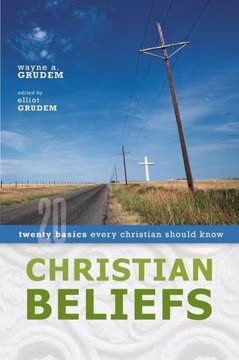
Christian Beliefs receives mostly positive reviews (4.25/5), praised for being a concise, Scripture-focused introduction to systematic theology. Readers appreciate Grudem's clear, accessible writing and its usefulness for new believers, youth groups, and teaching. It distills his larger Systematic Theology into 156 pages covering 20 core Christian doctrines. However, critics note it presents Reformed/Calvinist theology as universal Christian doctrine, particularly regarding election and predestination. Some find it too basic or dry, while others value its brevity and biblical grounding as a reference tool.
Similar Books