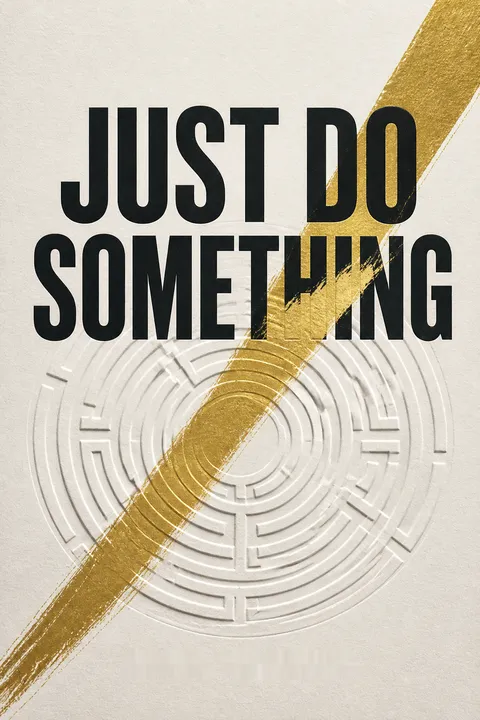


Key Takeaways
Stop waiting for a private map; make a faithful, wise choice.
The central release. DeYoung challenges the belief that God expects people to identify one hidden, perfect route before choosing a job, home, or spouse. In his account, God’s care for a person’s future does not usually arrive as advance instructions for each decision. The practical alternative is to live by what Scripture makes clear, ask for wisdom, and choose among permissible options rather than waiting for certainty that may never come.
Action beats spiritualized delay. The book opens by describing adults who keep sampling careers, relationships, and places, calling indecision a search for God’s will. Its counterexample is DeYoung’s grandfather, who believed God was calling him to serve young people and acted despite opposition. The point is not to act carelessly, but to stop treating hesitation as proof of spiritual seriousness.
The argument usefully separates trust in God from the demand to feel certain about every choice. Decision science offers a parallel: people often delay when they imagine a perfect option exists, because any choice then feels like a potential loss. Yet the book’s advice is not simply to pick quickly. It pairs initiative with moral limits, counsel, and prayer. That qualification matters. For decisions involving safety, dependents, or serious harm, deliberation is responsibility, not evasion. The target is paralysis disguised as piety, not careful judgment.
Separate God's sovereign plan, moral commands, and choices Scripture leaves open.
Three meanings, three tasks. DeYoung distinguishes three uses of “God’s will.” The will of decree is what God sovereignly ordains, whether or not people can see it. The will of desire is what God commands people to do, such as live justly and faithfully. The will of direction is the supposed private itinerary many Christians hope to uncover for each major decision. The first is trusted, the second obeyed, and the third, DeYoung argues, is not usually disclosed in advance.
Why the distinction helps. Deuteronomy 29:29 contrasts what remains hidden with what God has revealed for people to follow. Confusing these categories can make an ordinary choice feel like a test with one invisible correct answer. The framework instead directs attention toward known duties while leaving nonmoral choices open to wise judgment.
This taxonomy does important conceptual work: it prevents the word “will” from sliding between God’s control, God’s commands, and a person’s guess about the future. That precision can reduce both anxiety and blame shifting. It also reflects a broader theological tension: divine sovereignty does not erase human accountability. A choice can be part of a providentially governed life and still be the chooser’s responsibility. Readers from traditions that expect more direct personal guidance may disagree with the book’s conclusion about direction, but the categories make the disagreement clearer.
Limit your options before abundance turns freedom into paralysis.
More choice, more strain. Drawing on sociologist Robert Wuthnow, DeYoung describes younger adults as persistent tinkerers, reluctant to settle on a career, relationship, or place. He notes that in 1960, 77 percent of women and 65 percent of men had completed major transitions into adulthood by age thirty. By 2000, the figures had fallen to 46 percent and 31 percent. He also cites Barry Schwartz’s grocery-store inventory, which included 285 kinds of cookies and 360 shampoos, to show how ordinary decisions multiply.
Choosing means closing doors. When every option stays available, each decision can feel like losing several better lives. DeYoung argues that this can feed second-guessing and a prolonged, directionless adulthood. He does not say everyone should follow the same timetable; illness, study, and other circumstances can delay transitions. His challenge is to stop using endless exploration as a substitute for commitment.
The book connects a cultural condition, abundant options, to a personal habit, deferring commitment. This resembles the “choice overload” problem in behavioral science: a large menu can increase comparison costs and make people less satisfied with what they select. Reducing options can be a form of self-governance, not narrow-mindedness. The caution is that delayed adulthood cannot be explained by indecision alone. Economic pressures, education costs, and caregiving responsibilities also shape when people can settle. The book acknowledges exceptions, but its generational diagnosis is sharper than its evidence can establish on its own.
Prioritize obedience to revealed commands over decoding morally neutral choices.
Focus on what Scripture addresses. DeYoung distinguishes moral decisions, where right and wrong are at stake, from nonmoral choices among options Scripture does not specifically prescribe. The Bible does not name a preferred university, town, or lawful career. It does, however, place sustained emphasis on holiness, truthfulness, love, worship, generosity, and care for others. A career choice can still become morally wrong through the work itself or the motives behind it, but the job title alone may not settle the question.
Shift the question. Instead of spending most of their energy wondering whether they should live in one state or another, readers are urged to consider how they can serve faithfully wherever they go. DeYoung’s point is not that practical decisions are irrelevant. It is that concern about unmentioned choices can crowd out attention to obligations Scripture makes explicit.
This shift resembles a distinction in ethics between choosing an outcome and cultivating the character that shapes many outcomes. It also counters a common attention imbalance: people can agonize over a location while neglecting honesty, compassion, or reliability in the place they already inhabit. Still, “morally neutral” should not be mistaken for “consequence-free.” Work and residence affect family life, community, and opportunity. The book’s stronger point is that those consequences call for prudence, not for pretending that every acceptable option has a secret divine ranking.
Trust providence enough to take risks without demanding a preview.
Courage without guarantees. DeYoung uses Esther’s decision to approach the Persian king, despite the danger of death, as an example of acting on a clear moral duty without knowing the outcome. She sought communal support through fasting, then took the risk of pleading for her people. The story offers no assurance that the result would be safe. Her decision rests on the urgency of the need, not on a forecast of success.
Faith is not risk removal. DeYoung argues that confidence in God’s sovereignty can free people to obey when obedience is costly. He applies that idea to giving generously, speaking truth, serving others, pursuing meaningful work, or initiating a relationship. The aim is not recklessness. It is refusing to make perfect knowledge of the future a condition for doing what is right.
Esther’s story makes the book’s case vivid: moral clarity can be enough to act even when outcomes remain uncertain. This resonates with courage research, which treats brave action not as the absence of fear but as movement toward a valued end despite fear. The distinction between courage and recklessness remains essential. Esther faced a specific threat to a people and had counsel; her example is not a blanket endorsement of every risk. A sound application asks whether the cause is genuinely good, who bears the danger, and whether wiser alternatives exist.
Let Scripture anchor discernment, while treating unusual impressions as fallible.
A stable source of guidance. DeYoung argues that Christians can be confident they hear God through Scripture, which he understands as the Spirit continuing to speak through the biblical text. He also affirms that God can guide through extraordinary events, including visions or other unexpected experiences, but says these are rare rather than the normal pattern. In his reading of Acts, even Paul usually planned journeys and made practical decisions instead of receiving specific supernatural directions.
Test claims carefully. The book’s position is not that God can never surprise someone. It is that private impressions should not carry the authority of Scripture or override its moral teaching. This protects people from feeling they must obtain a special message before acting, while keeping room for unusual experiences that remain consistent with biblical teaching.
The distinction between an authoritative text and a private impression helps prevent personal certainty from becoming unchallengeable authority over others. It also gives communities a shared standard for testing claims. The book’s account is shaped by a particular Christian theological tradition, and Christians disagree about how regularly spiritual gifts operate. Even within traditions that expect such gifts, discernment usually requires communal testing. The practical insight travels across those differences: a powerful feeling may matter, but its intensity alone does not establish its source or make it binding on someone else.
Treat opportunities, feelings, and signs as clues, never conclusive proof.
Four tools can mislead. DeYoung examines open doors, “fleeces” or requested signs, randomly selected Bible verses, and personal impressions. An available job can be an opportunity, but ease does not prove that it is the right choice. Gideon’s fleece is not a general instruction to make God perform tests. A verse read in context can correct or encourage someone, but a randomly opened passage should not be treated as a custom forecast. Feelings may inform a decision without becoming divine commands.
Context beats coincidence. DeYoung recalls pastor John Newton reading a biblical promise to Paul and initially applying it to his own possible ministry in Warwick, then recognizing that the promise concerned Paul in Corinth. The anecdote warns against turning a passage addressed to someone else into a guaranteed prediction for oneself.
These examples expose a familiar cognitive trap: people notice confirming events more readily when they already want a particular answer. Treating an open door or a striking coincidence as decisive can strengthen that bias. The book’s alternative is not to ignore circumstance or intuition, but to weigh each as limited evidence alongside Scripture, sound judgment, and trusted advice. A useful nuance is that signs can still prompt reflection. The danger begins when a clue is promoted into certainty, especially when that certainty excuses harm or silences legitimate questions.
Build wisdom before the crisis through Scripture, counsel, and prayer.
A practiced way of judging. DeYoung presents wisdom as a God-centered ability to understand what is right and live accordingly, rather than a secret answer to a specific future question. Proverbs describes seeking wisdom as a serious pursuit. The book identifies three ordinary means: absorb Scripture, listen to wise counsel, and pray. Scripture shapes moral understanding; trusted people notice blind spots; prayer asks for insight, good motives, humility, and faithfulness.
Make the choice. These habits matter most as a way of life, not as a last-minute formula. DeYoung describes agreeing to a speaking invitation after checking that the dates and subject worked, even though the person offering it repeatedly encouraged him to pray first. His point is that a person already seeking wisdom can sometimes decide without extending deliberation for its own sake.
This model treats judgment as something formed over time, a view shared by traditions of practical wisdom from Aristotle to contemporary virtue ethics. A person with developed habits and trusted relationships can respond more capably when a decision arrives. Counsel also distributes the cognitive burden and makes assumptions visible. Yet advice is not automatically wise: communities can share biases, and authority figures can exert pressure. The book’s emphasis on teachability works best when paired with discernment about whose counsel is informed, honest, and attentive to the decision-maker’s actual circumstances.
Choose work for faithful service, not as a hunt for perfect fulfillment.
A practical vocational test. For a job decision, DeYoung recommends asking whether the work is morally permissible, whether it can support necessary family responsibilities, and whether the person has the abilities and temperament it requires. He also argues that access to a caring, Bible-centered church should matter when considering a move. Scripture, trusted counsel, and prayer help assess these questions; then the person can choose without waiting for a unique career signal.
Calling includes ordinary work. DeYoung says that teaching, medicine, retail, business, and many other lawful jobs can honor God. He contrasts contentment, which serves faithfully in present circumstances while remaining open to change, with complacency, which gives up on worthwhile effort. A meaningful career can be a gift, but it is not the only route to a meaningful life.
The book’s account pushes against the idea that vocation must feel like a singular personal destiny. That can make work less precarious as a source of identity and allow ordinary labor to be valued. It also recognizes that jobs are embedded in relationships and communities, not merely individual preference. Still, contentment should not be used to sanctify exploitation or prevent someone from leaving harmful conditions. The distinction the book draws between contentment and passivity is crucial: acceptance of the present can coexist with practical efforts to improve it.
Seek a wise marriage, not a supernatural signal or mythical soulmate.
Use moral and relational judgment. DeYoung says Scripture gives principles for marriage, not the name of a future spouse. In his framework, Christians should seek a partner who shares their faith, listen seriously to family and friends, and examine motives rather than marrying from fear, status, or desire alone. He challenges the idea that only one person on earth could be a suitable spouse, arguing that commitment and shared direction matter more than discovering a predestined match.
Initiative has a place. DeYoung points to his grandfather, who met his future wife through ordinary daily life and did not recall agonizing over whether marriage was the correct choice. The author urges men who want marriage to communicate their intentions and accept the possibility of rejection. He also affirms singleness as a valid and potentially fruitful life, rather than a failed version of marriage.
Rejecting the soulmate myth can reduce needless comparison and help couples treat marriage as a commitment built through shared practice, not a permanent test of compatibility. The book also rightly makes room for singleness. Its advice about initiative, however, is strongly gendered and reflects a particular social model of courtship. That model may not fit every culture or couple. The more general principle is mutual clarity: people should communicate honestly, seek relevant counsel, and avoid attributing their own preferences or rejections to a message from God.
Practice steady responsibility now, then recognize providence in hindsight.
A life of active trust. DeYoung closes with the story of his grandfather Menser Vanden Heuvel, who began working during the Great Depression, later served in the Air Force, built businesses, raised a family, and stayed involved in church life. He did not describe waiting for a detailed plan before taking initiative. Looking back, he credited both hard work and God’s provision. The story gives the book’s theology a human shape: make responsible choices in the present, remain grateful for what has come, and trust God with what cannot yet be seen.
Faithfulness over perfect timing. The grandfather’s example is not presented as a template everyone must copy. Its force is the contrast between taking useful action and spending a lifetime waiting for ideal certainty. DeYoung’s final appeal is to obey Scripture, serve others, and get on with ordinary decisions.
The closing story offers a compelling alternative to a life organized around continual self-assessment. Its combination of effort and gratitude resists two distortions: treating success as entirely self-made, or treating providence as a reason to remain passive. The grandfather’s historical circumstances were unusually demanding, so his path should not become a universal measure of maturity. What transfers is the posture, sustained responsibility without a guarantee of comfort, followed by humility about how much of a life’s shape lies beyond personal control.
Analysis
Just Do Something is a pastoral argument against turning uncertainty into a spiritual obstacle course. Its central move is definitional: “God’s will” can mean sovereign providence, moral instruction, or a supposed individualized blueprint. Once those meanings are separated, the reader no longer has to infer a hidden command from every opportunity, emotion, or coincidence. The ordinary task becomes clearer: obey what is revealed, use judgment where Scripture leaves options open, and trust God with outcomes that remain unknown.
The book’s narrative energy comes from its contrast between two postures. One is the anxious chooser, surrounded by options and waiting for unmistakable confirmation. The other is the grandfather who works, serves, makes consequential choices, and interprets his life with gratitude. This contrast is memorable because it puts theology into habits rather than leaving it as an abstract debate about providence. Esther’s risk-taking and Paul’s ordinary planning further challenge the idea that faithful living requires advance certainty.
The argument is strongest when it distinguishes wisdom from divination and courage from passivity. It is less conclusive when it attributes delayed adulthood mainly to abundant choice or generational temperament. Economic conditions, education, health, and family obligations can delay independence without reflecting avoidance. Likewise, the book’s advice about marriage draws on a particular account of gender and courtship that readers may need to adapt. Those limitations do not undo its core insight: not every important decision has one divinely encoded answer waiting to be decoded.
Theologically, the book offers a distinctly providential account of agency. Human decisions matter, even when they do not control history. Psychologically, it recognizes that the search for certainty can become a strategy for avoiding regret, responsibility, and risk. Its practical remedy is neither impulsiveness nor resignation. It is formed judgment: Scripture, prayer, community counsel, attention to motives, and then a real decision. The result is a faith less concerned with predicting the route and more concerned with walking it faithfully.
Review Summary
Just Do Something receives mostly positive reviews for its direct approach to finding God's will. Readers appreciate DeYoung's message that Christians should make decisions based on wisdom and Scripture rather than waiting for divine signs. Some praise the book's brevity and practicality, while others find it overly simplistic or harsh. Critics argue that DeYoung's advice may discourage seeking God's guidance in important decisions. Despite mixed opinions, many readers find the book liberating and recommend it for those struggling with decision-making in their Christian walk.
People Also Read








Glossary
will of decree
God's sovereign planThe will of decree refers to what God has ordained to happen. In DeYoung’s account, it governs all events, including details people cannot foresee, and cannot ultimately be thwarted. It is distinct from God’s commands, which people may disobey, and from the imagined personal blueprint people often try to discover before making ordinary decisions.
will of desire
God's revealed commandsThe will of desire means what God commands and desires from people, including obedience, holiness, love, and faithfulness. Unlike the will of decree, it can be disregarded. DeYoung emphasizes that Scripture makes this moral direction known, so Christians should focus on obeying it in their choices rather than searching for hidden instructions about every detail of life.
will of direction
A supposed personal blueprintThe will of direction is DeYoung’s term for the belief that God has a specific route for each person’s choices, such as one correct career, city, or spouse, which must be identified in advance. He argues that God has providential purposes for people, but does not normally require them to uncover this detailed plan before choosing among morally permissible options.
way of wisdom
Discernment formed through practiceThe way of wisdom is DeYoung’s practical approach to decisions that Scripture does not settle directly. It involves learning biblical principles, seeking counsel from wise people, praying for insight and right motives, and then making a responsible choice. Wisdom is not a private prediction of the future, but a formed capacity to judge and act faithfully.
FAQ
What's "Just Do Something" about?
- Purpose of the book: "Just Do Something" by Kevin DeYoung offers a liberating approach to finding God's will, emphasizing action over indecision.
- Main argument: The book argues against the conventional view of God's will as a hidden path and encourages readers to make decisions based on wisdom and biblical principles.
- Target audience: It is aimed at young adults and Christians who struggle with decision-making and discerning God's will in their lives.
- Structure: The book is structured around understanding God's will, the pitfalls of indecision, and practical steps to make wise choices.
Why should I read "Just Do Something"?
- Practical guidance: The book provides practical advice for making decisions without being paralyzed by fear of missing God's will.
- Encouragement to act: It encourages readers to take responsibility for their choices and to act with confidence and faith.
- Biblical foundation: DeYoung uses Scripture to support his arguments, making it a resource for those seeking a biblical perspective on decision-making.
- Relatable examples: The author uses relatable anecdotes and examples to illustrate his points, making the book engaging and accessible.
What are the key takeaways of "Just Do Something"?
- God's will is not hidden: DeYoung argues that God's will is not a secret to be discovered but a life to be lived in obedience and wisdom.
- Importance of wisdom: The book emphasizes the role of wisdom, gained through Scripture, prayer, and counsel, in making decisions.
- Action over indecision: It encourages readers to stop overthinking and to take action, trusting in God's sovereignty and guidance.
- Focus on sanctification: The ultimate goal is to live a life of holiness and obedience, rather than seeking specific signs or directions.
How does Kevin DeYoung define God's will in "Just Do Something"?
- Will of decree: This refers to God's sovereign plan that will come to pass, which is beyond human understanding and control.
- Will of desire: This is what God commands and desires from His people, as revealed in Scripture.
- Will of direction: DeYoung argues against the idea that God has a specific, hidden plan for each person's life that must be discovered.
- Focus on obedience: The book emphasizes living according to God's will of desire, which involves obedience and sanctification.
What is the "better way" to find God's will according to Kevin DeYoung?
- Seek first the kingdom: DeYoung advises focusing on seeking God's kingdom and righteousness rather than obsessing over specific decisions.
- Use wisdom: He emphasizes the importance of using wisdom, gained through Scripture, prayer, and counsel, to make decisions.
- Trust in God's sovereignty: The book encourages trusting in God's control over the future, rather than trying to predict or control it.
- Act with confidence: Readers are encouraged to make decisions confidently, knowing that God is with them and will guide them.
What are the common misconceptions about God's will addressed in "Just Do Something"?
- God's will as a maze: DeYoung argues against the idea that God's will is a complex maze that must be navigated perfectly.
- Over-spiritualizing decisions: The book warns against over-spiritualizing every decision and waiting for a divine sign before acting.
- Fear of missing out: It addresses the fear that making the wrong decision will lead to missing God's best for one's life.
- Passivity as piety: DeYoung challenges the notion that passivity and indecision are signs of spiritual sensitivity.
How does Kevin DeYoung suggest we use Scripture in decision-making?
- Search for principles: Instead of looking for specific answers, DeYoung advises searching Scripture for principles that guide decision-making.
- Transformation through Scripture: He emphasizes the importance of being transformed by the renewal of the mind through regular engagement with the Bible.
- Community reading: The book encourages reading Scripture in community, seeking insights and wisdom from other believers.
- Scripture as a guide: DeYoung highlights that Scripture provides the moral and ethical framework for making wise decisions.
What role does prayer play in decision-making according to "Just Do Something"?
- Pray for wisdom: DeYoung encourages praying for wisdom and understanding rather than specific answers or signs.
- Pray for right motives: He advises praying for pure motives and a heart aligned with God's will of desire.
- Pray for transformation: The book suggests praying for transformation and growth in holiness as part of the decision-making process.
- Prayer as a lifestyle: DeYoung emphasizes that prayer should be a regular part of life, not just a tool for making decisions.
What advice does Kevin DeYoung give about work and career decisions?
- Search the Scriptures: Consider biblical principles such as the righteousness of the job and the ability to provide for one's family.
- Seek wise counsel: Talk to trusted friends, family, and mentors about your skills, abilities, and potential career paths.
- Pray for guidance: Pray for pure motives, honesty, and faith-based decision-making in career choices.
- Make a decision: After considering these factors, make a decision confidently, knowing that many jobs can glorify God.
How does "Just Do Something" address the topic of marriage?
- Biblical principles: DeYoung emphasizes marrying within the faith and being equally yoked as key biblical principles.
- Seek counsel: He advises seeking the opinions of friends and family to ensure the relationship is healthy and God-honoring.
- Pray for purity: Pray for pure motives and a heart prepared to be a godly spouse.
- Take action: DeYoung encourages men to take initiative in relationships and not to overthink the decision to marry.
What are some of the best quotes from "Just Do Something" and what do they mean?
- "God is not a magic 8-ball": This quote emphasizes that God is not a tool for predicting the future but a guide for living wisely.
- "Seek first the kingdom of God": This quote highlights the importance of prioritizing God's kingdom and righteousness in decision-making.
- "God's will is your sanctification": This quote underscores the book's focus on holiness and obedience as the primary aspects of God's will.
- "Do something": This simple phrase captures the book's call to action, encouraging readers to make decisions and trust in God's guidance.
What is the significance of wisdom in "Just Do Something"?
- Central theme: Wisdom is a central theme in the book, guiding readers to make decisions based on biblical principles and godly counsel.
- Source of guidance: DeYoung emphasizes that wisdom, rather than specific signs or revelations, is the primary means of discerning God's will.
- Acquired through practice: Wisdom is gained through regular engagement with Scripture, prayer, and community, leading to transformed thinking.
- Freedom in decision-making: The book argues that wisdom provides the freedom to make decisions confidently, knowing they align with God's will.
About the Author

Download PDF
Download EPUB
.epub digital book format is ideal for reading ebooks on phones, tablets, and e-readers.








