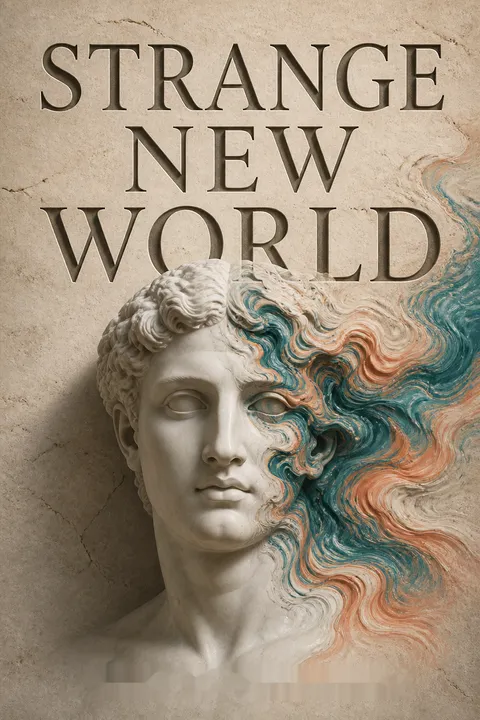


Key Takeaways
See sexual politics as the public result of expressive individualism
The self turns inward. Trueman uses expressive individualism to describe the modern belief that a person’s deepest identity lies in inner feelings and desires, and that authenticity means expressing them outwardly. The claim is not that earlier societies lacked emotions, but that they more often treated feelings as something to judge against external standards, such as religious teaching, community obligations, or the body. In the book’s account, the modern self instead expects society to recognize and affirm its inner identity. Sexual politics, including disputes over marriage and gender, become especially intense because sexuality is treated as central to who a person is.
A cultural lens forms. Trueman argues that this outlook is not simply the product of people reading philosophers. It becomes a social imaginary: shared habits, stories, and intuitions that shape how people understand the world without deliberate argument. A change in medical assumptions about gender dysphoria serves as his example of the shift in authority from bodily sex toward inner conviction.
The distinction between having feelings and treating feelings as the final authority is the argument’s most useful analytical tool. It helps explain why a disagreement about conduct can be experienced as rejection of a person, rather than as a dispute over a rule. That shift is not unique to sexuality: it appears whenever personal testimony is treated as decisive evidence about identity. Yet inner experience can disclose real needs and harms, while still being open to interpretation. A culture needs ways to honor subjective experience without assuming that any single person’s account settles every moral or social question.
Notice how Romantic ideas made inward authenticity outrank social restraint
Rousseau shifts the focus. Trueman traces the inward turn to thinkers such as Jean-Jacques Rousseau, who treated feelings as a guide to the real self and society as a force that could distort it. Rousseau’s account of stealing asparagus as a boy emphasizes his motives and susceptibility to flattery, rather than the theft itself. He uses such episodes to suggest that people are naturally good and social pressures corrupt them. The book contrasts this view with the Christian doctrine of original sin, which sees moral failure as rooted in human nature as well as circumstance.
Art gives the idea force. Romantic writers and artists made nature seem like a source of moral insight and authentic feeling. In William Wordsworth’s poem about a boy who loses himself watching the moon and listening to owls, the boy’s unsophisticated life appears more genuine than the polished world of adults. Trueman’s point is that art can make a theory feel like common sense before most people could state it.
This history highlights how cultural assumptions travel through stories and images, not just formal arguments. A poem can make the spontaneity of an outsider feel morally attractive in a way a treatise cannot. Rousseau’s emphasis also contains a lasting insight: institutions and social pressures can deform people, and appeals to tradition do not automatically justify tradition. The harder question is whether unfiltered feeling reliably points toward the good. The book’s contrast with original sin presses that question, but the debate need not reduce to either pure human goodness or pure corruption. People are shaped by culture and also bring motives culture does not create.
When transcendent standards fade, morality can look like power or personal taste
Marx politicizes social life. Trueman presents Karl Marx as arguing that economic arrangements shape consciousness and that moral or religious teachings can protect the interests of the powerful. A factory worker who never owns or enjoys what he produces illustrates Marx’s idea of alienation: separation from the fruits and meaning of one’s labor. In this framework, even ordinary institutions can serve a political order, rather than standing outside politics.
Nietzsche removes the anchor. Friedrich Nietzsche’s declaration that God is dead, as Trueman reads it, means that inherited moral standards cannot simply survive unchanged after belief in their foundation collapses. Morality can then appear to be a tool one group uses to restrain another, or a matter of taste presented as universal truth. Oscar Wilde embodies the artistic alternative: life becomes an act of self-creation, and moral rules are challenged in the name of individual freedom. These thinkers differ, but all unsettle the idea of a fixed moral nature shared by everyone.
The account is strongest when it treats these thinkers as sources of questions that outlast their original systems. Marx’s suspicion of moral language can expose how power hides behind respectable rules; Nietzsche’s challenge forces societies to explain why their standards deserve allegiance. Neither observation proves that all morality is disguised domination. A rule may protect the vulnerable, coordinate shared life, or express a considered view of human flourishing. The distinction between criticizing a rule’s origin and assessing its truth matters. Showing that a norm has served power does not, by itself, show that the norm is false.
Once sex defines the self, sexual rules become political rules
Freud sexualizes identity. In Trueman’s account, Sigmund Freud helped make sexual desire central to theories of happiness and human motivation. If sex is treated as a primary route to fulfillment, and desire as a defining feature of the person, then rules governing sex can seem to govern identity itself. Freud also argued that civilization depends on restraining instinct, creating a lasting tension between individual desire and social order.
Reich turns tension into politics. Wilhelm Reich joined Freudian psychology to Marxist analysis. He portrayed conventional sexual rules and the authoritarian family as mechanisms that reproduce a particular social order. Sexual liberation therefore becomes more than permission to behave differently. It becomes a political program to change education, family life, and public norms. Trueman argues that the sexual revolution’s defining move is not merely expanding what society permits, but challenging the legitimacy of inherited codes. In this model, tolerance may feel inadequate if it leaves a person’s identity unaffirmed.
This sequence clarifies why apparently private questions can become public controversies: once desire is treated as identity, social rules appear to shape who may fully belong. Freud’s account also complicates the simple claim that releasing desire automatically creates freedom. If social life requires restraint, then every society must decide what forms of restraint are justified and who bears their costs. Reich’s analysis correctly directs attention to power within families and institutions, but it can also interpret nearly every boundary as oppression. A careful debate should examine both the burdens imposed by sexual norms and the social purposes those norms claim to serve.
Ideas spread through technology, institutions, and habits, not books alone
Culture is made practical. Trueman calls attention to the conditions that make an idea plausible in everyday life. The birth-control pill made it easier to separate sex from pregnancy; mass media made sexual images and lifestyles more visible; and internet pornography made private access far easier. These changes did not mechanically cause new beliefs, but they altered what people could do and what they routinely saw. The book also points to no-fault divorce and the weakening authority of churches, families, and national stories as parts of a broader change.
The world feels more malleable. Technology has made people less dependent on local geography and natural limits, from travel to medicine. Trueman argues that this encourages the intuition that the world, including the body, is material to be reshaped by human choice. Institutions also shift in his account: instead of forming people into shared roles, they increasingly provide platforms for personal expression and display.
The emphasis on material conditions improves an otherwise overly intellectual history. A theory matters differently once technology makes it actionable, media makes it familiar, and institutions reward its expression. This is a useful model for studying cultural change in general: beliefs, tools, incentives, and repeated practices reinforce one another. The claim should not be mistaken for technological determinism. The pill, the internet, or medical advances do not dictate one moral interpretation; societies make choices about how to use them. The same tool can widen freedom, create new dependencies, or do both at once.
Build identity from durable belonging, not self-definition alone
People need recognition. Trueman argues that identity is formed not only by personal choice but also through relationships and the terms of belonging set by communities. Recognition means more than noticing someone’s identity; it means affirming their membership and value within a group. A child picked last for a schoolyard team offers a simple picture of how exclusion can feel like a denial of worth.
Communities depend on stories. Political scientist Benedict Anderson’s idea of imagined communities explains how people can feel connected to millions of strangers through shared narratives, symbols, and history. Trueman argues that national, religious, and family identities have become less authoritative, while digital media makes many alternative communities easier to find. Online ties can create real belonging, even across great distances. But when people can choose among competing communities and narratives, shared civic identity becomes harder to sustain. Freedom without a stable sense of belonging can become a heavy burden.
The account resists a common oversimplification: people do not become socially independent simply because they define themselves individually. Even rebellion uses a vocabulary, audience, and community that give it meaning. This connects identity to a basic social need for recognition, while also explaining why exclusion can carry unusual force. A further question is how a society can preserve common membership without demanding sameness. Shared stories can unite, but they can also conceal whose experiences were omitted. The challenge is not to restore one uncontested narrative at any cost, but to make room for disagreement without dissolving the idea of a common public.
Ask whether recognition can protect one identity without silencing another
A coalition contains tensions. Trueman describes LGBTQ+ as a politically effective alliance whose groups do not share one view of sex and gender. He notes that lesbians and gay men historically organized separately, then found common cause during the AIDS crisis of the 1980s. In his account, the alliance’s later inclusion of transgender and queer identities puts pressure on categories such as lesbian and gay, which rely on biological sex distinctions.
Recognition raises conflicts. The Yogyakarta Principles, an international human-rights document discussed in the book, define sexual orientation and gender identity through attraction and internal experience, and call for legal recognition. Trueman argues that this framework can conflict with claims grounded in sex-based categories, including some feminist concerns. These are contested issues, not neutral conclusions. The broader point is that when recognition is treated as essential to dignity, disagreements over definitions can become disputes about whose identity and rights count.
The strongest insight here is that coalitions held together by shared opposition may contain unresolved disagreements about their own foundational terms. That tension deserves careful analysis rather than dismissal as either proof of incoherence or a reason to deny anyone protection. Legal systems often need categories to distribute rights and responsibilities, while lived identities may not fit those categories neatly. The difficult task is to identify actual conflicts, specify the interests at stake, and avoid treating every disagreement as either harmless or malicious. Recognition is important, but the principle of recognition alone cannot settle every conflict between competing claims.
Protect open debate when disagreement is treated as identity-based harm
Speech changes meaning. Trueman links pressure on religious liberty and free expression to the rise of psychological identity. If a belief or statement is understood as denying someone’s core self, disagreement can be interpreted as injury rather than as a competing argument. The book discusses disputes over same-sex marriage, religious business owners, and campus speakers to show how the line between criticism and exclusion becomes contested.
Marcuse offers a rationale. Herbert Marcuse argued that formally open debate can preserve an unjust social order, and that speech reinforcing oppression may need to be restricted. Trueman sees this logic in arguments for suppressing views deemed harmful. He also discusses legal decisions and policy changes in the United States that he interprets as expanding recognition while narrowing room for dissent. The central tension is between protecting equal participation and preserving space to question the norms used to define equality.
The book identifies a real conceptual problem: if speech can cause social harm, defenders of open debate must explain why all harmful speech should remain permissible, while censors must explain who gets to decide what counts as harm. The distinction between physical coercion and emotional injury is not a claim that emotional injury is unreal; it is a way to keep different kinds of harm analytically separate. Open debate can itself be unequal when some speakers face intimidation or exclusion. Its defense therefore requires more than a slogan: fair access, clear rules, and a willingness to answer unpopular arguments.
Form a counterculture through durable worship, teaching, and mutual care
Begin with the church’s own habits. Trueman argues that Christians should examine how consumer choice and the pursuit of personal comfort have shaped their churches. He points to the early church as a model of practical community: worship, shared care, and distinctive moral commitments helped make Christian life visible. The aim is not withdrawal from civic life, but a community that offers a different account of human dignity and responsibility.
Teach and embody the reasons. Trueman recommends grounding belief in the broad Christian story, using historical confessions and catechisms, and shaping emotion through worship, especially the Psalms. He also urges renewed attention to natural law, the view that human bodies and relationships have purposes relevant to moral judgment. These practices are meant to help believers explain not only what they believe about sex and identity, but why. The closing posture is neither confidence that history will quickly improve nor resignation, but faithful action joined to hope.
This response shifts the task from winning every public argument to forming people capable of living their convictions with consistency and care. Ritual, teaching, and mutual aid can shape intuition more deeply than occasional debate, because they make a worldview habitual and visible. Community also guards against a purely defensive politics by offering belonging rather than only criticism. Still, a counterculture must remain accountable to those it serves. Claims about tradition and natural order need patient explanation, and communities need safeguards against using belonging to conceal harm. Conviction becomes persuasive when joined to candor, service, and intellectual humility.
Analysis
Trueman’s central achievement is to connect debates that are often treated as separate: authenticity, sexual identity, technology, institutional authority, and free speech. His account proposes a sequence. Inner feeling becomes a privileged source of identity; sexual desire becomes central to the self; recognition becomes a condition of belonging; and disputes about sexual norms acquire political and legal force. The concept of the social imaginary explains how a society can absorb this sequence without most people reading the philosophers associated with it.
The work is best understood as an interpretive genealogy, not a complete causal history. Trueman explicitly distinguishes ideas that make a development intelligible from conditions that directly produce it. His discussion of contraception, media, institutional change, and digital communication reinforces that caution. Still, the selection of thinkers and the connections drawn among them reflect a Christian account of human nature and moral order. That framing illuminates the stakes of the argument, but readers should distinguish the historical claim that an idea influenced later debates from the normative claim that the idea is mistaken.
A further strength is the attention to belonging. Expressive individualism can sound radically individualistic, yet the book shows how identity depends on recognition by others and on communities that make a self-description socially legible. This helps explain why conflicts can intensify even when legal tolerance exists: people seek not only permission but membership. The same framework also raises a question the book cannot resolve by itself. If communities need shared standards, how can those standards be revised when they exclude or burden some members? A convincing answer must take both inherited moral frameworks and lived experience seriously.
The book’s lasting value is less a final verdict on every contested policy than a map of the assumptions beneath them. It encourages readers to ask where they locate authority, how institutions shape identity, and what forms of belonging can sustain disagreement without turning every dispute into a judgment on a person’s worth.
Review Summary
Strange New World receives mostly positive reviews, praised for its accessible analysis of modern identity and sexual politics. Readers appreciate Trueman's historical approach, tracing the roots of expressive individualism. Many find it insightful for understanding current cultural shifts. Critics argue it overlooks important factors and may reinforce conservative biases. The book is seen as valuable for Christians navigating contemporary issues, though some suggest it lacks constructive solutions. Overall, it's considered an important work for understanding societal changes, despite differing opinions on its conclusions.
People Also Read

Glossary
Expressive individualism
Inner feelings define identityA model of selfhood in which each person is understood to have an inner core of feelings and intuitions that should be expressed outwardly. In Trueman’s account, authenticity becomes a social expectation: others and institutions are expected to recognize the identity a person understands through that inner life.
Social imaginary
Shared everyday assumptionsThe background of images, stories, habits, and intuitions through which people commonly understand their social world. It is not usually a formal theory that people consciously apply. Rather, it makes familiar practices seem natural, legitimate, or obvious, and can spread ideas beyond the small group that first articulated them.
Politics of recognition
Belonging through affirmationThe struggle over whether a person’s identity is affirmed as a valued and legitimate part of a community. In this usage, recognition goes beyond allowing someone to act privately or acknowledging that an identity exists. It concerns social membership, equal standing, and the norms by which a community decides who fully belongs.
Imagined communities
Belonging among strangersA term associated with Benedict Anderson for communities whose members feel connected despite not knowing most other members personally. Shared histories, symbols, and narratives allow people to imagine themselves as part of a larger whole, such as a nation. Trueman applies the idea to newer communities built around identities and online connections.
Plastic people, liquid world
Changeable selves and surroundingsTrueman’s description of a modern outlook in which both personal identity and the world around it seem open to continual reshaping. People are understood as able to construct themselves, while technology and weakening traditional institutions make external sources of stability seem less authoritative. The phrase captures the interaction between self-making and social change.
Prepolitical
Outside direct political conflictA term for relationships and institutions understood as serving ordinary shared life without being primarily arenas of political struggle. Trueman argues that this boundary has weakened: when social relations are interpreted as expressions of power or economic interests, institutions such as schools, families, and businesses can become sites of political conflict.
Natural law
Moral order in natureThe view that the natural world, including human bodies and relationships, has purposes and a moral structure relevant to how people should live. In Trueman’s Christian account, bodily capacities and dependencies are not morally neutral raw material. They offer reasons for judgments about human flourishing, though the book presents natural law mainly as a framework for teaching within the church.
Yogyakarta Principles
Guidance on sexual rightsA set of principles formulated in 2006 concerning the application of international human-rights law to sexual orientation and gender identity. The document defines these concepts through patterns of attraction and internal experience, and calls for protection from discrimination. Trueman examines it as an influential statement of the legal and political claims associated with LGBTQ+ recognition.
Repressive tolerance
Tolerance that preserves powerHerbert Marcuse’s argument that formally permitting all views can protect an unjust social order by allowing dominant ideas to remain influential. He contended that speech supporting oppression may need to be restricted to enable social change. Trueman discusses the concept as a challenge to traditional defenses of broad free expression.
FAQ
What's "Strange New World" by Carl R. Trueman about?
- Cultural Analysis: The book explores how modern Western society has redefined identity, focusing on the rise of expressive individualism and the sexual revolution.
- Historical Context: Trueman traces the intellectual history from thinkers like Rousseau, Marx, and Freud to contemporary cultural shifts.
- Identity and Society: It examines how the concept of self has evolved, emphasizing the authority of inner feelings and the politicization of sexual identity.
- Cultural Crisis: The book argues that these changes have led to a cultural crisis, affecting everything from personal identity to societal norms.
Why should I read "Strange New World"?
- Understanding Modern Culture: It provides a comprehensive analysis of the cultural and intellectual forces shaping today's society.
- Insightful Historical Perspective: The book offers a historical perspective on how past thinkers have influenced current cultural trends.
- Critical Reflection: It encourages readers to critically reflect on the implications of modern identity politics and the sexual revolution.
- Relevance to Current Issues: The book addresses pressing contemporary issues, making it relevant for anyone interested in cultural studies or social change.
What are the key takeaways of "Strange New World"?
- Expressive Individualism: The book highlights how modern identity is centered around personal feelings and self-expression.
- Sexual Revolution's Impact: It discusses how the sexual revolution has transformed societal norms and personal identities.
- Cultural Fragmentation: Trueman argues that the collapse of traditional authorities like family and religion has led to cultural fragmentation.
- Need for Community: The book emphasizes the importance of community and shared narratives in maintaining social cohesion.
How does Carl R. Trueman define "expressive individualism"?
- Core Concept: Expressive individualism is the belief that each person must express their unique feelings and intuition to realize their individuality.
- Cultural Dominance: It has become the normative way of understanding selfhood in the modern West, prioritizing personal authenticity.
- Impact on Society: This concept has influenced societal norms, making personal lifestyle choices central to identity.
- Critique: Trueman critiques this focus, arguing it undermines communal values and traditional moral frameworks.
What role does the sexual revolution play in "Strange New World"?
- Central Theme: The sexual revolution is a key theme, illustrating how sexual identity has become central to personal and societal identity.
- Transformation of Norms: It has led to the normalization and celebration of previously stigmatized sexual behaviors.
- Political Implications: The revolution has politicized sexual identity, influencing laws and societal attitudes.
- Cultural Critique: Trueman critiques the revolution for destabilizing traditional moral codes and contributing to cultural chaos.
How does Carl R. Trueman view the collapse of traditional authority?
- Loss of Stability: Trueman argues that the collapse of traditional authorities like family, church, and nation has led to cultural instability.
- Impact on Identity: This collapse has forced individuals to seek identity and belonging in new, often unstable, communities.
- Cultural Fragmentation: The lack of shared narratives and values has fragmented society, leading to increased polarization.
- Need for Reformation: Trueman suggests a return to strong community values and shared narratives to address this fragmentation.
What is the significance of "The Yogyakarta Principles" in the book?
- Legal Framework: The Yogyakarta Principles are highlighted as a foundational text for understanding modern sexual orientation and gender identity laws.
- Subjective Identity: They emphasize the importance of self-defined sexual orientation and gender identity, reflecting the book's themes of expressive individualism.
- Cultural Influence: These principles have influenced global legal standards, shaping societal attitudes toward LGBTQ+ rights.
- Critique: Trueman critiques the principles for promoting a fluid and subjective understanding of identity, challenging traditional norms.
How does Carl R. Trueman address the concept of "recognition" in identity politics?
- Definition: Recognition refers to the affirmation and validation of one's identity by society, beyond mere tolerance.
- Importance: It is crucial for individuals to feel valued and accepted within their communities.
- Cultural Conflict: The demand for recognition has led to conflicts over societal norms and values, particularly in the context of LGBTQ+ rights.
- Implications: Trueman argues that the quest for recognition has reshaped societal expectations and legal frameworks.
What are the best quotes from "Strange New World" and what do they mean?
- "The modern self assumes the authority of inner feelings and sees authenticity as defined by the ability to give social expression to the same." This quote encapsulates the book's central theme of expressive individualism.
- "The sexual revolution does not simply represent a growth in the routine transgression of traditional sexual codes... Rather, it is the repudiation of the very idea of such codes in their entirety." This highlights the transformative impact of the sexual revolution on societal norms.
- "We all share more or less the same social imaginary." This emphasizes the shared cultural intuitions that shape our understanding of the world.
- "To respond to our times we must first understand our times." This underscores the importance of historical and cultural analysis in addressing contemporary issues.
How does Carl R. Trueman suggest we address the challenges of modern identity politics?
- Community Building: Trueman emphasizes the importance of strong communities and shared narratives in countering cultural fragmentation.
- Critical Reflection: He encourages critical reflection on the implications of expressive individualism and the sexual revolution.
- Return to Tradition: A return to traditional values and moral frameworks is suggested as a way to address cultural instability.
- Engagement with History: Understanding the historical context of modern identity politics is crucial for addressing its challenges.
What is the role of technology in shaping modern identity, according to "Strange New World"?
- Facilitator of Change: Technology has facilitated the shift from a fixed to a plastic world, allowing for greater individual autonomy.
- Impact on Community: It has weakened traditional narratives and enabled the formation of new, often unstable, imagined communities.
- Reinforcement of Individualism: Technology reinforces the focus on individual satisfaction and self-expression, central to expressive individualism.
- Cultural Influence: The internet and social media have transformed how we perceive identity and community, contributing to cultural fragmentation.
How does "Strange New World" relate to current debates on freedom of speech and religion?
- Challenge to Freedoms: The book discusses how modern identity politics challenge traditional freedoms of speech and religion.
- Psychological Harm: In a world where identity is psychologized, words and beliefs are seen as potentially harmful, leading to calls for censorship.
- Cultural Shift: There is a cultural shift from valuing free expression to prioritizing the protection of psychological well-being.
- Implications for Society: Trueman argues that these challenges have significant implications for societal norms and legal frameworks.
About the Author
Download PDF
Download EPUB
.epub digital book format is ideal for reading ebooks on phones, tablets, and e-readers.








