

Key Takeaways
Treat spiritual growth as whole-person restoration, not a private religious hobby
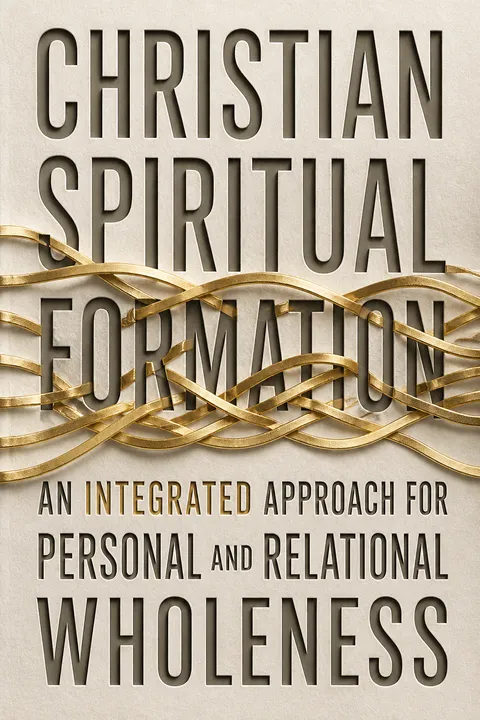
Restoration takes the whole life. Chandler defines Christian spiritual formation, or CSF, as God’s ongoing work of restoring believers toward the image of Jesus through the Holy Spirit. The process includes faith, emotions, relationships, intellect, vocation, physical health, and stewardship of resources. These dimensions interact: illness can strain relationships, a damaging job can affect faith and mood, and emotional wounds can disrupt spiritual practice.
The goal faces outward. The book opens with the restoration of the Sistine Chapel, whose original beauty could not be perfectly recreated. The analogy is that human beings, made in God’s image and fractured by sin, cannot simply repair themselves. John Newton’s life offers a human example: conversion led him away from slave trading and toward ministry and opposition to slavery. Formation is inner change expressed in how a person lives with others.
The model’s distinctive strength is that it refuses to treat spirituality as a sealed compartment. It resembles ecological approaches to health, where a change in one part of a system can affect the rest. That makes the framework useful for noticing when a spiritual struggle is also emotional, relational, bodily, or vocational. Its breadth can also become a burden if treated as a checklist for self-improvement. The more humane reading is diagnostic, not perfectionistic: identify neglected areas, seek support, and accept that circumstances constrain what growth looks like.
Receive God's love first, then let gratitude reshape every life domain
Love is the starting point. Chandler understands human formation as a response to divine love, revealed most clearly in Jesus’ self-giving death. God’s love is not merely a feeling or a reward for good behavior. It is the source of relationship, grace, and the invitation to become more Christlike. The Christian pattern is to receive love, respond to God, and extend care to others.
Belonging precedes performance. In Jesus’ story of the returning son, a father welcomes his estranged child before the son can earn his way back. Chandler uses this image to emphasize that failure does not erase the possibility of belonging to God. The response to that welcome is not passivity, but gratitude expressed through all areas of life. Faith, relationships, work, and the handling of resources become ways to reflect the love one has received.
This account of formation links identity to relationship rather than achievement. In psychological terms, secure belonging can make exploration and change more possible because a person is not required to prove worth before seeking help. The theological frame gives that security a source beyond family approval or social success. A useful nuance is that unconditional welcome should not be confused with endorsing harm or removing accountability. Love can hold a person’s dignity and insist that damaging actions be confronted.
Build spiritual habits as openings to grace, not scorecards of holiness
Change is cooperative, not self-made. Chandler presents the Holy Spirit as the source of transformation, while insisting that people must respond with intention and practice. Grace is God’s freely given help, not a prize for discipline. Christian practices such as prayer, Scripture, worship, service, confession, and Sabbath make room for communion with God and can shape character over time.
Practice without performance. Augustine’s conversion story captures the turning point: after years of searching and inner conflict, he encountered a passage from Scripture that helped him commit to following Christ. Chandler also treats suffering as a possible context for growth, citing Paul’s experience of finding endurance and a capacity to comfort others amid hardship. But practices are not formulas, and suffering is not automatically ennobling. The aim is to receive grace and grow in love, not to manufacture spiritual success.
The distinction between practice and performance matters because repeated actions shape attention and identity, whether or not they produce an immediate emotional reward. A ritual can create space for reflection, belonging, and moral rehearsal; it can also become a way to measure superiority. The account is strongest when it joins discipline with dependence and community. Its treatment of suffering needs careful handling: hardship can deepen compassion, but it can also injure or exhaust people. Support, safety, and practical help remain essential.
Read painful emotions as signals, then seek healing without denying harm
Feelings carry information. Chandler treats emotions as part of human formation, not distractions from faith. Jesus’ compassion, anger, sorrow, and grief illustrate that emotion can reveal what a person values and where suffering is occurring. Early relationships can influence how people understand themselves, trust others, and imagine God, but those patterns are not necessarily permanent.
Forgiveness opens a process. The book distinguishes wounds caused by harmful actions from wounds caused by care or protection that was absent. Unaddressed pain can feed false beliefs about being worthless or unlovable and shape later behavior. Joseph, sold into slavery by his brothers, eventually forgave them and saw that their actions had not defeated his life’s purpose. Chandler stresses that forgiveness does not erase pain or complete healing at once. It can release vengeance while a longer process of recovery continues.
Treating emotion as information is useful because feelings often point toward needs, boundaries, grief, or injustice that abstract reasoning can overlook. The account also avoids a simplistic equation between faith and emotional calm. Forgiveness is the section’s most demanding claim, and its careful distinction from instant healing is important. Forgiving an offender need not mean restoring trust, resuming contact, or abandoning protection and justice. In serious cases, skilled therapeutic and community support can complement spiritual care rather than compete with it.
Practice belonging through repair: faith grows in relationships, not isolation
Connection shapes character. Chandler sees family, friendship, church, and culture as settings where people learn trust, identity, and ways of treating others. A premature baby in the story of business leader Max De Pree received not only medical care but also daily touch and loving attention from her grandfather. The example underlines how care is communicated through both words and actions.
Conflict is part of connection. Even committed believers disagree. Paul and Barnabas separated over whether to give John Mark another chance, though Paul later valued Mark’s help. Chandler contrasts avoidance and attack with peacemaking: noticing one’s own contribution, addressing another person gently, and working toward repair. The church is meant to support this work, not to be an idealized community without conflict. Culture also shapes relationships, so listening across difference is part of faithful connection.
The chapter’s emphasis on relationship fits a basic truth of social development: people acquire habits of trust, conflict, and care through interaction, not merely private reflection. Its realistic treatment of disagreement is especially valuable because communities often confuse unity with silence. Still, community is not inherently safe or healing. Families and churches can also exclude, control, or injure. Belonging is credible when a group makes room for difference, protects vulnerable members, and repairs harm rather than demanding loyalty at any cost.
Train the mind to seek truth, then let love govern what it knows
Thinking belongs to discipleship. Chandler argues that faith and learning can strengthen one another. The mind develops through relationships, education, experience, and culture, and intellectual growth is part of loving God. Her example of IBM’s Jeopardy-playing computer Watson makes the contrast vivid: Watson could process information at extraordinary speed, but it could not feel, choose, or love.
Knowledge needs moral direction. The book draws on learning theories that emphasize development, social guidance, role models, and varied abilities. It also argues that knowledge without humility and love can become self-serving. Because media, advertising, and competing accounts of reality shape attention, Christians are urged to renew their minds through Scripture, prayer, and discernment. Chandler’s model does not ask readers to retreat from learning; it asks them to examine assumptions and use knowledge in service of truth and others.
The insistence that intellect is part of spiritual life counters a false choice between serious thought and devotion. It also recognizes that cognition is shaped socially and emotionally, not produced by a detached brain alone. The caution is that labeling whole worldviews as threats can short-circuit genuine inquiry. A robust intellectual formation should be able to describe opposing positions accurately, test its own assumptions, and distinguish careful scholarship from ideological caricature. Love should discipline inquiry without shielding beliefs from scrutiny.
Choose work by where gifts, burdens, and service converge
Calling unfolds through life. Chandler treats vocation as more than a job title. It includes the general call to follow Christ, a person’s particular contribution, and the responsibilities already at hand. The source of vocation is love expressed through service, not prestige or income alone. Work matters because it can develop ability, provide for needs, and give daily opportunities to practice integrity.
Look for convergence. Sojourner Truth, born enslaved, became an evangelist and advocate for abolition and women’s rights. Her spiritual convictions, experience of injustice, public speaking ability, and historical circumstances came together in a distinctive form of service. Chandler’s account of Albert Schweitzer likewise shows a calling emerging through reflection, experimentation, prayer, opportunity, and resistance from others. Gifts are clues, not proof of destiny. Feedback, faithful work, and concrete opportunities help clarify the next step.
This approach keeps vocation from collapsing into career optimization. A person’s work can be meaningful without being a perfect match for every gift, and care responsibilities or economic constraints may limit available choices. The convergence idea is therefore best used as a guide for discernment, not a test that makes people feel they have failed if their job is ordinary or necessary rather than ideal. Its emphasis on service also offers a counterweight to cultures that equate calling with visibility, personal branding, or exceptional achievement.
Care for your body as the ground that carries every calling
Embodiment matters. Chandler rejects the idea that spiritual life can be separated from the body. Physical condition affects mood, attention, relationships, and the ability to carry out responsibilities. The chapter focuses on nutrition, exercise, sleep, stress and rest, and sexual integrity. One example follows Valerie, whose heart failure and diabetes prompted changes to eating, sleep, exercise, and boundaries around demands. Her story presents bodily care as part of faithful living, not vanity.
Use practical, humane care. The book encourages regular movement, adequate sleep, balanced food, and rhythms of rest, while recognizing that health is influenced by circumstances and access to resources. It also affirms the dignity of people with disabilities and rejects treating bodily perfection as a spiritual measure. The purpose is not to control every health outcome. It is to care for the body as one is able and avoid confusing self-neglect with devotion.
The embodied view connects spiritual formation with public health and with ordinary constraints such as work schedules, disability, poverty, and access to care. That makes the chapter’s practical emphasis valuable, but its health claims require more caution than its theological claims: nutrition research changes, and individual medical needs differ. Health should not become a moral ranking system. A disability or illness is not evidence of weak faith, and people deserve dignity whether or not their condition can be changed.
Manage money, possessions, time, and earth as entrusted goods
Stewardship means caring responsibility. Chandler argues that people do not own creation or their resources absolutely; they are accountable for how they handle what has been entrusted to them. That includes care for the earth, money, possessions, and time. Environmental care is not treated as a side issue, but as one expression of respect for the Creator and concern for the well-being of others.
Make money a tool. Jesus’ warnings about wealth frame the chapter’s financial advice: earn, give, provide for family, repay debts, pay taxes, save, and leave an inheritance without letting accumulation become the master. Tolstoy’s story of Pahom makes the danger memorable. He races to claim as much land as possible, then collapses at the finish; the only land he needs is the plot for his burial. The same care applies to possessions and time, which can be spent in service or consumed by anxious striving.
The chapter treats economics as a moral practice, not simply a private technique for getting ahead. Its emphasis on environmental care also makes stewardship larger than personal budgeting, connecting consumption to shared conditions and future generations. Yet responsibility must be scaled realistically: individuals cannot solve structural environmental damage or financial insecurity by personal virtue alone. The useful question is both what a household can change and what institutions should be asked to change. Generosity and restraint matter, but so do fair systems.
Make love visible through character, and keep devotion balanced with service
Ethics is practiced love. Chandler gathers the seven dimensions under a central ethical aim: to reflect Christ’s character through love of God and neighbor. Virtues such as patience, kindness, faithfulness, and self-control are not merely ideals to admire. Repeated choices help make them part of a person’s character. The book contrasts pilot Chesley Sullenberger, who checked that passengers had left his damaged plane, with cruise-ship captain Francesco Schettino, who left his sinking ship before everyone was safe. Their actions reveal what professional skill alone cannot: the moral habits directing it.
Formation turns outward. The Good Samaritan, a socially despised outsider in Jesus’ story, cares for a stranger after respected passersby refuse to help. Chandler uses the episode to show that love crosses group boundaries and meets concrete need. She also warns against imbalance: private devotion without service can become self-absorbed, while service without inward formation can become exhausted self-reliance. The model aims for a life where inner faith and outward responsibility reinforce one another.
The emphasis on character captures how ethics works in real situations: rules rarely specify every choice, but practiced virtues can guide action under pressure. The examples also suggest that competence and goodness are distinct. A person can be highly capable yet fail others when moral habits are weak. At the same time, good character cannot be judged from a single dramatic act alone; institutions, power, and context shape what choices are possible. Love becomes durable when personal virtue is joined to structures that protect people.
Analysis
Chandler’s central contribution is to relocate spiritual formation from a narrow focus on inward devotion to an integrated account of Christian life. The seven domains make the claim concrete: belief, feeling, relationships, thought, work, bodily care, and material responsibility are not separate projects but interacting parts of a person’s response to God. The model’s theological engine is coherent. Humanity bears God’s image, Christ provides the pattern of restored humanity, and the Spirit enables transformation. Love is both the motivation and the test of that transformation, especially when it becomes ethical action toward others.
The book’s breadth is also its greatest challenge. A single framework spans biblical interpretation, psychology, medicine, environmental care, vocation, and financial practice. That breadth makes the model memorable, but it can give distinct kinds of claims the same apparent authority. A theological interpretation, a personal story, and a health statistic do not carry identical evidential weight. Readers should retain the spiritual argument while checking practical claims against current, qualified sources, particularly in health matters.
The framework is most useful as a map for attention, not a universal measurement system. Its claim that the seven dimensions characterize people across cultures is plausible as a broad description, but the categories and their priorities are shaped by the book’s Christian tradition and may not translate identically across communities. The model also needs to guard against making flourishing sound like an individual achievement. Poverty, disability, violence, discrimination, and illness can restrict choices regardless of a person’s faith or discipline. Chandler recognizes many such realities, and that recognition supports a more communal reading: formation involves personal response, but also relationships and institutions that make dignity and growth possible.
At its best, the book offers a compelling alternative to both spiritual compartmentalization and self-optimization. Its measure of growth is not a perfectly balanced life, but an increasingly integrated life in which received love becomes care, integrity, and service. The most practical question it leaves is not whether every dimension is thriving, but which neglected or wounded part of life is limiting a person’s ability to love well, and what kind of help is needed.
Glossary
Christian spiritual formation (CSF)
whole-life Christlike growthChandler’s term for the ongoing process in which God forms believers toward the image of Jesus through the Holy Spirit. It includes growth in faith, emotions, relationships, intellect, vocation, physical health, and stewardship. The process depends on grace and human cooperation, and its intended expression is a life of love and ethical service.
imago Dei
image of GodA Latin theological term meaning that human beings are created in God’s image. Chandler interprets this image holistically, including capacities for relationship, thought, work, bodily life, and care for creation. The image is damaged by sin but not erased, and its restoration is central to Christian formation.
imago Christi
image of ChristThe pattern of Christlikeness toward which Christian formation moves. Chandler presents Jesus as the perfect image of God and argues that the Spirit gradually forms believers in Christ’s character. This transformation is personal and communal, and is intended to shape how Christians live and serve others.
gloria Dei
glory of GodA Latin phrase meaning the glory of God. In Chandler’s framework, it names the purpose of human life and the outward result of formation. Believers give God glory when their character, choices, relationships, work, and care for resources reflect something of God’s goodness and love.
attachment filters
relational memories shaping expectationsA term Chandler draws from psychological discussion of attachment. It refers to memories of emotionally important relationships that influence how a person feels about self, other people, and God. Early experiences can shape expectations of trust and care, though later relationships and experiences can change those patterns.
means of grace
practices opening people to graceChristian practices, including prayer, worship, Scripture reading, service, and confession, understood as ways the Spirit can nurture relationship with God. Chandler distinguishes them from tasks completed to earn approval. Their purpose is communion and formation, not spiritual performance or a guaranteed formula for change.
vocational holiness
Christlike integrity in workA way of describing how ordinary work can become a setting for Christian formation. In Chandler’s account, the workplace offers repeated opportunities to serve others, practice integrity, examine motives, and resist temptations such as greed, manipulation, and the pursuit of status.
sin cycle
path from doubt to disobedienceChandler’s description of a recurring pattern that begins with doubt, develops through deception and illegitimate desire, and culminates in willful disobedience. The pattern is drawn from the Genesis account of the fall and is used to explain how people can become separated from God and misdirect their loves.
Download PDF
Download EPUB
.epub digital book format is ideal for reading ebooks on phones, tablets, and e-readers.








