

Key Takeaways
Treat church membership as public recognition, not a religious add-on
Membership makes faith visible. Leeman argues that Christianity is not merely a private claim to follow Jesus. A local church formally recognizes a person's profession of faith and takes responsibility for supporting and overseeing that person's discipleship. In return, the member commits to life with that particular community. The church does not make someone a Christian, just as an embassy does not make someone a citizen. It publicly affirms a claim the person cannot establish alone.
Belonging carries obligations. Membership is therefore more than attendance or access to religious services. It connects believers to a community that can teach, encourage, correct, and publicly affirm them. In Leeman's account, choosing Christ means choosing a local people among whom that commitment becomes recognizable.
The argument shifts belonging from personal preference to public accountability. That resembles a basic feature of civic life: citizenship is not only an inward sense of identity, but a status recognized by others and paired with duties. The analogy helps explain why a private declaration cannot do all the work of community. It also invites a crucial distinction: recognition is not infallibility. A church can affirm someone mistakenly, so its claims should remain open to correction by Scripture, evidence, and responsible communal judgment.
See the local church as Christ's embassy, not a spiritual storefront
A church represents a king. Leeman contrasts a club, whose members share an interest, and a service provider, whose customers choose what they want, with an embassy representing a ruler and his kingdom. In this image, the local church is an outpost of Jesus's coming kingdom: it announces his rule and publicly identifies people who claim allegiance to him. Jesus, not the state, holds final authority in the book's theological account.
Authority has limits. The church's distinctive authority is described as the power of the keys: receiving and removing members under the authority of Scripture. It is not the state's power of coercion. Pastors and congregations serve through teaching, care, and accountable judgment, and the church can err. The embassy image raises the stakes without making church leaders sovereign.
The embassy image does useful work because it joins representation to accountability: representatives speak for a community they did not invent. In political theory, delegated authority is legitimate only within its mandate, a useful check on religious power as well. The book's contrast with consumer choice is persuasive when churches become providers of customized spiritual experiences. Still, an embassy is an imperfect analogy. A church is also a fallible community of people, not a neutral administrative office, so its judgments require transparency and safeguards.
Look for gathered, identifiable believers, not a membership form
The pattern appears in practice. The New Testament does not present a modern membership application, but Leeman argues that it repeatedly portrays Christians as belonging to identifiable local churches. In Acts, about 120 disciples gather before Pentecost; after Peter's preaching, roughly 3,000 people are baptized and added to their number. The Jerusalem believers meet, share resources, address problems, and are described as a church.
Belonging has boundaries. The same writings describe elders caring for a particular flock, Christians submitting to known leaders, and congregations excluding people whose conduct undermines their profession. Baptism marks public identification with Jesus, while the Lord's Supper belongs to the gathered community. The evidence is not a membership handbook. It is a recognizable people with shared practices, responsibilities, and boundaries.
This is an argument from a recurring social pattern rather than from a single proof text. That method matters: institutions often exist in practice before later generations settle on formal names and procedures for them. Leeman's case is strongest when it links multiple features, such as baptism, communal worship, leadership, and discipline, instead of treating any one passage as decisive. Readers should still distinguish the observed pattern from the precise modern form imposed on it. A roll, interview, or vote may serve the pattern without being directly prescribed.
Make responsibility local enough that people know whom they serve
Membership specifies a relationship. Leeman asks how his obligations to Coyle, who belongs to his church, differ from his obligations to Mike, who attends another. Both men deserve Christian love, but only Coyle's church can formally affirm or discipline him. Membership locates shared responsibility: this congregation and member promise to care for, guide, and be answerable to one another.
A commitment gives shape. Leeman compares membership to marriage, not because the relationships are identical, but because a formal bond distinguishes a particular relationship from all other good relationships. The church publicly affirms a member's profession and offers oversight; the member submits to the church's care. Without that specificity, commands to encourage, correct, and serve one another can remain admirable but diffuse intentions.
The challenge is familiar beyond religion: people feel concern for everyone in principle but can sustain care only through particular relationships. Local commitment turns abstract responsibility into a question of who notices an absence, offers help, or speaks up when harm occurs. Yet bounded responsibility must not become indifference to outsiders or other congregations. Leeman's own distinction allows broad Christian solidarity alongside specific accountability. The practical test is whether local belonging increases outward service rather than narrowing compassion to an in-group.
Treat church metaphors as practices, not flattering labels
Each image adds a duty. The New Testament calls the church a body, family, flock, temple, bride, and people of God. Leeman argues that no single image captures the whole relationship. A body suggests dependence and different roles; family suggests shared identity and care; a temple points to God's presence among the people. These are not decorative titles for a group that otherwise lives like a collection of individuals.
Local life gives them substance. The church's shared authority and practices provide a structure in which these relationships can be lived. Members serve one another, bear burdens, offer hospitality, and gather for worship. A local church is also an imperfect preview of the wider, future community of believers. Its members do not automatically behave like a family or body simply because the labels apply. The images describe a calling that must be practiced.
The many metaphors resist a common simplification: turning community into either warm intimacy or rigid hierarchy. Different images highlight different dimensions, much as a complex system needs more than one model to be understood. This also makes the metaphors ethically demanding. Calling a congregation family can deepen care, but it can also pressure people to tolerate mistreatment in the name of loyalty. The image must be tested by the conduct it is meant to shape, especially whether vulnerable members receive protection and meaningful voice.
Welcome repentant believers, not polished performers
The standard is the gospel. Leeman says the basic qualification for membership is being a Christian, not reaching a high level of moral achievement. Churches should look for a credible profession of faith in Jesus and a willingness to turn from sin. Baptism is also ordinarily required as the public act of identifying with Christ and his people. The point is not to reward the already righteous, but to recognize people who rely on Christ and are beginning to follow him.
Pastoring beats gatekeeping. Leeman recounts interviewing a woman who could not initially explain the gospel. Instead of simply rejecting her, he arranged for someone to study the Gospel of Mark with her over six sessions. She later explained her faith and joined. A struggling or immature Christian is not automatically disqualified. The key distinction is between imperfect people seeking change and people whose profession lacks credible faith or repentance.
This standard holds together doctrinal clarity and moral humility. It resists two errors: treating membership as a prize for good behavior, and treating every sincere-sounding claim as self-validating. The interview story shows how an entry process can become instruction rather than a test designed to exclude. The harder question is who gets to define a credible profession, particularly across differences in education, language, or tradition. Patient listening and transparent criteria reduce the risk that cultural fluency will be mistaken for spiritual maturity.
Let commitment reshape your calendar, friendships, money, and vocation
Belonging changes ordinary choices. Leeman describes submission to church life as public, physical, social, affectionate, financial, vocational, ethical, and spiritual. In practical terms, members gather regularly, use their gifts, give to meet needs, pray for one another, and invite counsel about consequential decisions. He describes choosing a less attractive home because it placed his family closer to church members, making hospitality and daily support easier. He also notes Christians who declined career opportunities that would have limited their ability to serve.
Authority is not unlimited. Leeman presents pastors as shepherds who deserve honor and submission, but members also help affirm leaders and should challenge or remove those who deny the gospel. He warns readers to leave churches where leaders are characteristically abusive. Submission means accountable care, not surrendering judgment or safety.
The practical force of this account is that community depends on repeated contact, not merely shared ideals. Proximity, shared meals, and available time can make mutual aid more likely. But the costs are real: relocation, reduced income, or constrained careers can be unreasonable for people with caregiving duties, disability, financial insecurity, or unsafe congregations. The principle should be interpreted as deliberate consideration of others, not a universal demand for sacrifice on one prescribed scale. Healthy authority must increase members' capacity to act, not consume it.
Confront serious, visible, unrepentant sin to seek restoration
Discipline withdraws public affirmation. Leeman tells the story of Mono, a new member who continued lying to his employer about his work status. After months of appeals and offers of help, he refused to stop. His church removed him from membership and the Lord's Supper, saying it could no longer affirm his claim to represent Jesus. Mono later acknowledged his wrongdoing, sought reconciliation, and was welcomed back.
Correction aims at repair. Leeman distinguishes everyday correction from formal discipline, which he reserves for serious, outward, persistent sin that a person will not turn from. The process should move from private conversation toward wider involvement only as needed. Its aims are to expose and warn, seek the person's return, protect the congregation, and preserve the church's public witness. When repentance is credible, restoration should be welcomed without second-class status.
Mono's story illustrates why accountability can be more than punishment: a community's refusal to normalize a destructive choice may help someone face it. The restorative ending is essential, because exclusion without a credible path back can become social banishment. The model also depends on fair process. Churches can misread facts, confuse disagreement with sin, or apply standards unevenly. Clear evidence, multiple perspectives, proportionate steps, and protection for those reporting abuse are necessary to keep discipline from becoming a tool of control.
Keep the gospel standard fixed while adapting membership procedures
The task stays constant. Leeman says every church should guard the gospel, affirm credible believers, oversee discipleship, and distinguish the church from the world. But the procedures can vary with local conditions. A small, hidden congregation in a Muslim-majority city may know its members through conversations, shared meals, and baptism, while avoiding written records that could endanger them. A large church in Washington, DC, uses classes, interviews, votes, and membership rolls to manage complexity.
Context changes the risks. In places where Christianity is socially rewarded, easy professions may reflect cultural habit rather than conviction. In hostile settings, identifying as Christian can carry real costs. Leeman therefore treats membership structures as matters of prudence, not universal rules. The goal is not bureaucracy for its own sake, but a workable way to know who belongs and who is responsible for whom.
This is a useful distinction between principles and procedures. Organizations often need different safeguards as they grow, operate under surveillance, or face competing pressures; identical paperwork would not produce identical care. The comparison also complicates assumptions about religious freedom: social acceptance can blur commitment, while persecution can make professions costly and more legible. Neither context guarantees sincerity. Any procedure should be evaluated by whether it supports informed consent, safety, meaningful oversight, and reliable recognition, rather than by whether it resembles another church's system.
Show Christ's love through mercy that also calls people to change
Love joins welcome and direction. Leeman closes by arguing that Christian love is neither permissiveness nor moral scorekeeping. In his account, Jesus gives mercy to sinners and calls them into obedience; churches are meant to display that same combination in their relationships. Members bear with one another, forgive failures, and also help each other resist conduct that harms people or misrepresents their faith.
The witness is communal. A church's public credibility depends not on claiming perfection, but on showing a community where grace makes change possible. The story of a disappointed member reminds readers that churches can fail to provide the safety and loyalty their language promises. Leeman acknowledges the hurt and points toward forgiveness and repair, grounded in Christ rather than in confidence that church members will always behave well.
The pairing of mercy and moral clarity avoids a false choice between unconditional acceptance and accountability. In restorative approaches to conflict, care for the harmed person and the possibility of a wrongdoer's change are both important, though neither should be used to pressure victims into reconciliation. The book's vision is most compelling when humility accompanies its standards: communities can name wrongdoing while admitting their own failures. A church's witness is therefore measured not by polished claims, but by how truth, protection, forgiveness, and repair work together in practice.
Analysis
Leeman's central move is to reinterpret membership as a question of representation. If a person claims to follow Jesus, who is authorized to recognize that claim, and who is responsible for helping the person live it out? The answer is not an isolated believer's private certainty, but a local congregation that affirms and oversees discipleship. The embassy image makes this argument memorable because it connects belonging to public identity, delegated authority, and obligations to fellow citizens.
The book's most persuasive evidence is cumulative. Acts depicts converts being baptized and added to a known community; the letters address congregations as responsible bodies, assign care to elders, and assume that discipline can distinguish insiders from outsiders. Leeman uses this pattern to argue that modern membership procedures are adaptations of an older communal reality, not the reality itself. That distinction lets him defend membership without claiming that every church needs the same paperwork or governance procedure.
The important tension lies in the word authority. Leeman rejects both individual autonomy and domineering leadership, grounding church authority in Christ and limiting it to Scripture, pastoral service, and congregational responsibility. That is a coherent theological account, but the safeguards matter as much as the ideal. Leaders and majorities can confuse their judgments with divine judgment, particularly when dealing with dissent, trauma, or cultural difference. The book's own cautions about abusive leadership, member participation, and restoration are therefore not side notes. They are conditions for its model to remain credible.
The argument is also tradition-specific. Christians differ on how baptism relates to membership, who governs a congregation, and how much authority a church possesses. Leeman's case should be read as a serious biblical and ecclesiological proposal, not as a neutral description accepted across Christianity. Its broader challenge remains valuable even for readers who reject parts of the framework: faith that never becomes answerable to a real community risks becoming self-certification. Conversely, community without limits risks becoming coercion. The practical question is how a congregation can make belonging concrete while keeping authority accountable, care specific, and restoration possible.
Review Summary
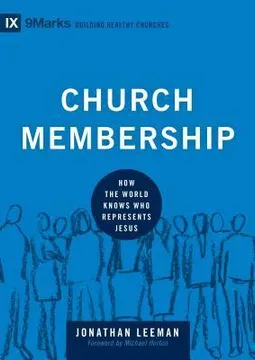
Reviews for Church Membership are largely positive, averaging 4.29 out of 5. Many readers praise Leeman's biblical grounding, accessibility, and compelling case for why church membership is essential to Christian life. The embassy/outpost analogy resonates strongly with readers. Some critics feel the scriptural arguments for formal membership structures are weaker than expected, suggesting deeper fellowship issues may be the root cause. Readers across multiple languages and traditions find value in the book, particularly its practical application and treatment of church discipline.
Glossary
Imperium
ultimate governing authorityLeeman uses this term for supreme authority, the power to which all other authorities answer. In his argument, Jesus possesses ultimate authority over nations and churches. The state exercises a limited authority under God, while the church exercises a distinct authority over Christian discipleship and public recognition of believers.
power of the keys
authority to affirm or removeA biblical image for the church's authority to recognize credible professions of Christian faith and, in serious cases, withdraw that recognition. Leeman connects it to Jesus's teaching about binding and loosing and to church discipline. The authority is meant to operate under Scripture, not as unlimited control by leaders.
embassy
outpost representing Christ's kingdomLeeman's metaphor for a local church as a visible representative of Jesus's kingdom in the present world. Like an embassy recognizing and serving citizens of another nation, a church publicly affirms Christians and helps oversee their life together. The image emphasizes representation, belonging, and allegiance, while not making the church identical to the kingdom.
church membership
formal mutual commitmentA formal relationship in which a church affirms a Christian's profession of faith and accepts responsibility for the person's discipleship, while the Christian submits to the church's care and oversight. For Leeman, membership makes Christian belonging public and particular. It identifies which congregation and member are specifically accountable to one another.
gospel ordinances
baptism and the Lord's SupperThe public practices of baptism and the Lord's Supper through which a congregation displays and reinforces its confession of Jesus. Leeman treats baptism as a person's public identification with Christ and his people, and the Supper as a communal proclamation of Christ's death and shared membership in the church.
church discipline
correction, including removalThe church's practice of correcting sin and, in serious cases of outward and unrepentant wrongdoing, removing a person from membership and participation in the Lord's Supper. Leeman presents formal discipline as a last-resort effort to warn the individual, seek repentance, protect the church, and preserve its witness. Repentance should lead to restoration.
About the Author
Other books by Jonathan Leeman


Download PDF
Download EPUB
.epub digital book format is ideal for reading ebooks on phones, tablets, and e-readers.








