

Plot Summary
Eight Cents and a Stick
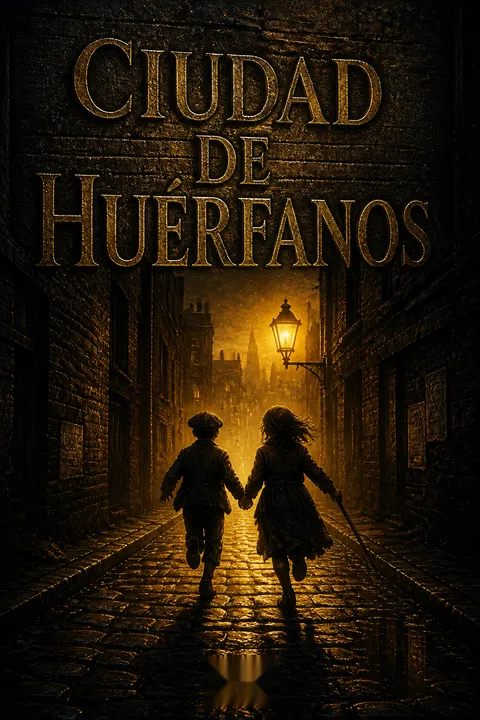
In the hard winter of 1893, thirteen-year-old Maks Geless sells newspapers on the Lower East Side because his family needs his daily eight-cent profit for rent. After he sells his last paper, gang leader Bruno and five Plug Uglies chase him through the crowded streets to steal his earnings.
Trapped in a dead-end alley, Maks is beaten until he calls for help. A ragged girl named Willa springs from the rubbish and scatters the gang with a heavy branch. Maks offers her a meal in return, and they walk toward his tenement together. He knows Bruno may seek revenge, but Willa’s strength has saved both his money and his chance to keep working.
Maks’s first crisis makes poverty a practical force, not scenery: losing a handful of coins could cost his family its next day of income. His instinct to refuse help gives way only when the beating leaves him no choice. Willa’s intervention reverses the expected arrangement between rescuer and rescued, while Maks’s offer of food turns gratitude into a tentative bond. The alley establishes the children’s world as one where ordinary survival depends on quick judgment, mutual aid, and the courage to ask for help.
Arrest at the Waldorf
At the Gelesses’ crowded flat, Maks learns that his sixteen-year-old sister Emma has been arrested for stealing a gold watch from the Waldorf Hotel, where she works as a housemaid. His mother is frightened, his father does not know how to navigate American courts, and their anxiety deepens when Papa reports that the shoe factory is closing.
Emma’s wages had helped support the household. Maks volunteers to visit her at the Tombs, while Willa remains with the family through a night of uncertainty. Bruno waits outside the tenement, so the family lets Willa stay. In the morning, Maks’s mother offers her a permanent place in their home, giving the abandoned girl a choice she has not trusted herself to want.
Emma’s arrest shifts Maks from earning for the household to trying to defend it. The family’s difficulty is not simply lack of money: unfamiliar institutions make even asking for help feel dangerous. Willa’s presence exposes the limits of the family’s neat, protective habits, but their decision to shelter her shows care becoming action. The parallel crises bind the plot: Emma is trapped by an accusation, while Willa has been left without reliable adults. Maks becomes the bridge between these forms of vulnerability.
Inside the Tombs
Maks takes food to Emma in the Tombs and sees her locked among crowded, desperate prisoners. Emma explains that hotel staff searched the dormitory and found a watch chain under her pillow, though the watch itself was missing. A hotel detective accused her, and a judge ordered her held for trial. Maks believes her, but the family has neither a lawyer nor money for bail.
Outside the prison, newsboy Chimmie points him toward Bartleby Donck, a sick, impoverished former Pinkerton detective. Willa tells Maks more of her own history: her mother died, her father vanished, and she has survived alone by collecting rags. She agrees to help Maks investigate, making their friendship a shared undertaking rather than a favor owed.
The chain is persuasive to the authorities precisely because it is incomplete: it supplies a visible object that can stand in for proof while leaving the actual watch unexplained. Maks encounters the gap between being innocent and being treated as innocent. Willa’s story also complicates the word orphan. Her father may be missing rather than dead, but either possibility has left her without protection. By agreeing to investigate beside Maks, she moves from guarded self-reliance toward chosen participation.
Donck Takes the Case
Maks and Willa find Donck asleep at his desk, surrounded by clutter and nearly overcome by illness. He dismisses their request for help, arguing that justice costs more than the family can pay. Willa refuses to leave with nothing and demands practical guidance. Donck relents when he sees Maks notices details and learns that the boy has read a detective story.
He assigns the children to test Emma’s account: find the room where a guest promised to praise her, learn whether the praise reached hotel management, and identify the room where the watch disappeared. Donck arranges for Maks to work as a bellboy under the false surname Brown, giving him access to the Waldorf. The trial is close, so their amateur investigation has little time.
Donck’s poverty makes his cynicism credible, but not final. He knows the law’s ideals and the cost of their failure; he has learned to protect himself by expecting disappointment. Willa interrupts that defense by asking for a usable next step rather than rescue. Maks’s apprenticeship begins with limited authority and incomplete knowledge, so detection becomes a discipline of attention rather than a magical talent. The false surname also places him inside the institution that has already judged his sister, but only on terms that conceal his connection to her.
A Name on the Bed
While Maks prepares for the Waldorf, Willa and his mother visit Emma again. Emma recalls that a polite guest interrupted her cleaning, asked her name, and promised to recommend her work. She remembers the room as 912, though she doubts the detail can help. Willa carries the number to Donck, who recognizes its importance but has no answer yet.
At home, Willa tells Maks’s mother that her own father was named Brunswick, then agrees to stay with the Geless family rather than return to the alley. Maks, meanwhile, reaches the servants’ entrance, endures a cold shower, and receives a bellboy uniform. The grand hotel makes him feel out of place, but it also gives him a route into Emma’s workplace.
The room number turns an ordinary memory into a testable lead, while Emma’s doubt reflects how little control she has over a story others have already decided. Willa’s disclosure of her father’s name is a small act of trust, not a solution to her abandonment. At the Waldorf, Maks’s enforced bath and uniform mark the price of entry: he must temporarily become acceptable to the institution before he can observe it. Both children are learning that access, whether emotional or physical, has to be negotiated.
The Waldorf’s Hidden Guest
Maks spends his first day at the Waldorf running errands among luxurious rooms and guests who treat servants as tools. He learns that the theft occurred in room 912, but hotel housekeeper Miss Foley says Emma received no commendation from a guest. On an errand, Maks sees a man who resembles the father in Willa’s family photograph sitting with political boss Joe Gorker.
Earlier, Maks had spotted Bruno in an abandoned house beneath the elevated train, and Bruno saw him peering inside. At the same time, Willa and Maks’s younger brother Jacob sell Maks’s papers. Bruno’s gang surrounds them, beats Jacob, takes Willa’s money, and carries her away to the hideout.
The Waldorf’s riches and the tenement’s precarity occupy the same city but obey different rules. Maks can enter the hotel only by wearing its uniform, yet the uniform does not make him belong. His observation of the man with Gorker creates a second mystery just as Emma’s case begins to yield evidence. Meanwhile, the gang’s attack turns Maks’s private investigation into a threat to the people who have helped him. The children’s labor, ordinarily a means of survival, has become a point of exposure.
Willa Taken
Maks returns home to find Jacob crying and the family searching for Willa. Bruno has left a message through Jacob: Maks must come to the gang’s house if he wants her back. Before leaving, Maks opens Willa’s tin box and compares her family photograph with the man he saw at the Waldorf. He is certain the guest was her father.
Rather than approach the hideout alone, Maks escapes the Plug Uglies watching his tenement by crossing the connected rooftops and descending a fire escape. He reaches Newspaper Row and tells the newsies where Bruno keeps Willa. Boys who have suffered the gang’s attacks arm themselves with sticks and stones and follow Maks uptown.
Maks’s confirmation gives Willa’s abandonment a face, but he cannot yet give it an explanation. The revelation arrives while she is missing, forcing him to hold two urgent loyalties at once. His choice to summon the newsies is a change in scale: the solitary boy who once tried to protect his coins now mobilizes a community. Their readiness is not abstract solidarity. Bruno’s repeated thefts and beatings have given the boys a common grievance, and Maks supplies a concrete target.
The Newsies Storm the Hideout
Maks leads the newsies to Bruno’s boarded-up house beneath the elevated train. They break through the windows and door, forcing the Plug Uglies into a violent fight. An overturned oil lamp ignites the dry building, scattering both gangs. Maks climbs to the upper floor and finds Willa tied to a broken bed. He frees her, but the stairs are already burning.
Maks knocks boards from a window, and the rush of air feeds the flames. Firemen spread a rescue net below, and Maks and Willa jump into it. The house collapses behind them. The newsies assume Bruno died inside, but Bruno has escaped through a narrow gap and resolves to confront the man who has been controlling him.
The rescue is both collective triumph and uncontrolled consequence. The newsies finally act against the gang, but their assault helps ignite a fire that endangers everyone inside, including the person they came to save. Maks’s courage therefore does not erase risk; it requires him to keep making decisions under pressure. Willa is no longer merely the fierce rescuer from the alley. Here she is rescued by the same boy, and their friendship becomes reciprocal. Bruno’s escape keeps coercion, not just gang violence, in play.
Two Deaths in the Lobby
After the fire, Maks brings Willa to the Waldorf and asks the bell captain to summon Mr. Brunswick. When Brunswick appears, Willa recognizes him as the father who left her. Bruno bursts into the lobby carrying a shovel and demanding Brunswick’s pistol. Brunswick draws the gun, but Willa’s arrival distracts him; Bruno tackles him, takes the weapon, and shoots him.
As Bruno searches Brunswick’s body, hotel detective Philip Packwood shoots Bruno dead. A gold watch falls among the things Bruno takes. Packwood identifies it as the watch stolen from the Waldorf guest, confirming that Emma could not have taken it. Willa kneels beside her father, but his startled, hostile response has offered no comfort before the violence ends their meeting.
The lobby brings the book’s separate systems of power into one room: the hotel’s polished order, the political world represented by Gorker, the gang’s coercion, and Willa’s personal loss. Willa gets the encounter she has longed for, but recognition does not restore the relationship she imagined. The watch, physically recovered from Brunswick, turns suspicion away from Emma and exposes how easily an institution accepted a convenient accusation. Packwood’s intervention ends the immediate violence, though it cannot make either death emotionally legible to Willa.
The Chain Breaks
At Emma’s Saturday hearing, Packwood explains how Brunswick entered room 912, asked Emma’s name, and later used her bed tag to locate her bunk in the staff dormitory. He planted the watch chain beneath her pillow, framing her for his theft.
With the watch and chain recovered, the judge dismisses the charge and releases Emma. Packwood credits Donck and Maks’s observation about the bed labels. The Gelesses celebrate Emma’s return, while Willa remains grief-stricken and unsure where she belongs.
She offers her mother’s gold ring to help pay for a doctor and medicine for Agnes. When Maks and Willa visit Donck to thank him, they learn he has died. His former love is there, wearing the necklace that inspired the detective story he had been writing.
The court’s explanation transforms small observations into evidence: room number, name, bed tag, and the missing watch form a chain stronger than the planted one. Emma’s release vindicates Maks’s trust, but the family’s relief is not a clean ending. Willa has lost the possibility of reunion and still needs a place to grieve. Her ring gives that grief a purpose without pretending it has vanished. Donck’s unfinished story links his final act of mentorship to the children’s future, suggesting that attention and care can outlast the person who taught them.
Epilogue
The family survives the factory’s permanent closure. Emma and Maks keep their Waldorf jobs, Jacob sells another paper, and Willa becomes a newsie while learning to read at night school. The money from Willa’s ring helps Agnes see a doctor; she improves, later becoming a bank typist and marrying Monsieur Zulot.
Papa eventually finds work repairing barrels at the Fulton Fish Market, though it takes more than a year. Mama continues taking in laundry. Their recovery is modest and uneven, but the children help keep the household together.
The future does not reward the Gelesses with sudden security. Their progress comes through wages, education, medical care, and the continuing labor of several family members. Willa’s literacy and Agnes’s career extend the practical meaning of rescue beyond the courtroom and burning house. The ring is not simply an inheritance converted into money: it becomes a choice to invest in a family Willa has made for herself. The closing emphasis on survival respects the limits of the victory. Emma is free, but poverty remains a condition the family must keep working against.
Analysis
City of Orphans makes poverty consequential at every scale. Maks’s eight-cent profit pays toward rent, Emma’s hotel wages steady the household, and Willa’s rag-picking barely buys food. Money also shapes justice: Emma can be held in degrading conditions while her family struggles to secure legal help, and Donck’s bitterness reflects a city where formal innocence does not guarantee protection. The mystery answers that injustice through close observation rather than sudden authority. A room number, a guest’s promise, and a name tag become evidence because Maks learns to connect them. The method is democratic in a limited but meaningful sense: a child can see what powerful adults overlook, though he must still gain access to their institutions.
The novel pairs that investigative plot with a more intimate question about family. Maks begins as a boy who believes loyalty means acting alone for the people he loves. Willa’s guardedness exposes the cost of having no dependable home, while the Gelesses’ decision to shelter her turns family into something practiced through meals, beds, work, and shared risk. Willa’s loss is not repaired by discovering her father; recognition cannot restore trust or undo abandonment. Her choice to give her mother’s ring toward Agnes’s care instead makes belonging an active commitment.
The story also refuses to make collective courage clean. The newsies answer Bruno’s violence together, but their attack helps set the hideout on fire and nearly traps the children they are trying to save. Bruno is both an aggressor and a boy being threatened and used by adults with political influence. This does not absolve him, but it places his cruelty within a system that recruits vulnerable children as instruments. In the end, the family’s survival is more convincing than a triumph over hardship. Emma is freed, Agnes gets treatment, and the children find work and education, while unemployment and illness remain real. The book’s hope is not that suffering disappears, but that people can make durable forms of care inside a city built to neglect them.
Review Summary
City of Orphans receives mostly positive reviews, with readers praising its engaging historical setting, compelling characters, and suspenseful plot. Many appreciate Avi's ability to vividly portray 1890s New York City and the struggles of immigrant families. The story of Maks and Willa solving a mystery while evading gangs captivates readers. Some criticize the pacing and dialect, but overall, reviewers find it an enjoyable and educational read for middle-grade students interested in historical fiction.
Characters
Maks Geless
Newsboy detectiveA thirteen-year-old Danish American newsboy, Maks contributes eight cents a day to the rent of his crowded family home. He is talkative, impulsive, and alert to the small details other people overlook, though he often doubts his own ability to understand what he sees. His devotion to Emma drives him into the Tombs, the Waldorf, and finally the newsies’ dangerous confrontation with Bruno’s gang. Maks begins with a child’s faith that loyalty should be enough to clear his sister. Donck’s guidance makes him test that faith through observation and evidence. His instinct to protect also expands into a willingness to ask for help and organize others.
Willa
Alleywise allyWilla is a homeless girl who collects rags, sleeps behind alley fences, and carries a branch for protection. She is guarded about her past and wary of questions, but she is observant, resourceful, and quick to defend someone in danger. Her first bond with Maks begins in a crisis, then deepens through shared work on Emma’s case. Willa longs for safety while resisting the vulnerability of depending on another household. Her doll, photograph, and tin box hold the remains of a home she cannot explain. She is learning to accept care without surrendering the fierce independence that kept her alive.
Emma Geless
Wrongly accused sisterMaks’s sixteen-year-old sister works as a housemaid at the Waldorf, where her wages and tips matter to the family. Emma is affectionate and lively, and she shares confidences with Maks that she does not necessarily share with her parents. Her arrest leaves her frightened and isolated, but she holds to her innocence despite pressure to confess. Emma’s memories of the hotel provide the details Maks and Willa must investigate. She is more than the case at the center of the mystery: her job, private pleasures, and close bond with Maks make the accusation a threat to a life she has begun to build.
Bruno
Coerced gang leaderSeventeen-year-old Bruno leads the Plug Uglies, a gang that robs and assaults newsboys. He is brutal and quick to threaten, but he is also being controlled by a well-connected man who holds a photograph of him and threatens him with prison. Bruno’s gang activity serves a political purpose beyond collecting coins: it is meant to frighten the newsies and weaken the newspaper’s reach. He resents being used, yet keeps repeating the violence that gives him power over other children. His fierce self-protection makes him dangerous, while his lack of security helps explain, without excusing, the choices he makes.
Bartleby Donck
Dying street detectiveDonck is a former Pinkerton detective and lawyer living in poverty on Delancey Street. He is deafeningly blunt, physically ill, and skeptical of easy claims about justice, having watched money determine whose innocence matters. Yet he recognizes Maks’s attention to detail and Willa’s refusal to be dismissed. Rather than solve Emma’s case for them, he teaches the children to compare observations and follow connections. Donck’s harshness partly protects him from the suffering he encounters, but the children’s faith in detective stories unsettles that defense. He is both a mentor and a critic of the romantic ideas that first inspire Maks.
Mr. Geless
Struggling fatherMaks’s father makes shoes in a factory and once earned his living building boats. He is proud of his family but unfamiliar with American courts and increasingly frightened as work disappears. His instinct is to protect his children through endurance, yet Emma’s arrest shows how little endurance can accomplish without knowledge and money. He welcomes Willa into the household and tries to make her feel included.
Mrs. Geless
Laundry-working motherMaks’s mother earns money by washing shirts and keeps the household running despite poor conditions and constant worry. She initially judges Willa by her dirt and ragged appearance, then recognizes the girl’s need for shelter and offers her a home. Her fear of prisons and unfamiliar institutions makes her dependent on Maks, but her kindness to Willa shows her capacity to revise her first impressions.
Agnes Geless
Studious older sisterFourteen-year-old Agnes works in the shoe factory and attends night classes in typing and accounting. She is precise, intellectually ambitious, and often corrects Maks’s language, but she is also seriously ill and tries to hide how much she is coughing. Agnes sees education as a way beyond factory labor, even when her parents worry about the cost and her health.
Philip Packwood
Waldorf hotel detectivePackwood investigates thefts at the Waldorf and has the authority to question and arrest its staff. His first response to Emma’s case relies too heavily on the chain found in her bed, but his old relationship with Donck makes him willing to reconsider the investigation. He also gives Maks access to the hotel, though he expects the boy to obey rules and prove himself.
Gustav Brunswick
Polished hotel guestBrunswick moves comfortably among wealthy hotel guests and influential political figures. His formal manner contrasts with the precarious lives of the children whose paths cross his. He is connected to the hidden pressures surrounding the Waldorf and the newsboys, but the full meaning of his presence is difficult for Maks to grasp at first.
Monsieur Zulot
Gentle French boarderZulot is a French immigrant who pays the Geless family for room and board while copying letters for a business near Wall Street. He reads adventure stories to the younger boys and quietly admires Agnes. His steady courtesy offers a gentler model of adult companionship within the crowded household.
Chimmie
Newsie with connectionsChimmie is one of Maks’s newsboy friends, a large, fast-running baseball enthusiast. He gives Maks the lead that takes him to Donck, turning a bit of street knowledge into the start of Emma’s investigation.
Joe Gorker
Embattled political bossGorker is a powerful city political boss whose alleged corruption is repeatedly attacked in The World. The newspaper’s coverage makes its newsboys valuable targets to people who want to influence what the public reads.
Plot Devices
The Watch and Chain
False evidence, real leadA valuable Breguet watch disappears from the Waldorf, while its chain turns up beneath Emma’s pillow. The chain is enough to make the police and judge treat Emma as a likely thief, although it cannot establish who took the watch. Maks and Donck follow that mismatch rather than accept the accusation as settled. When the watch is recovered from Brunswick, the gap between chain and watch becomes decisive evidence that Emma was framed.
The Bed Tags
A name reveals accessEach servant’s bed in the Waldorf dormitory carries a name tag. Emma gives her name to a guest who claims he will recommend her work, making it possible for someone who has never met her to locate her bed. Maks notices that the dormitory is often unattended and connects the tags to the planted chain. The detail turns Emma’s seemingly harmless interaction with a guest into part of a testable account of how she was framed.
Willa’s Tin Box
Memory becomes identificationWilla carries a photograph of her family and her mother’s ring in a small tin box, along with the doll that connects her to childhood. The photograph preserves a face and a version of home that Willa fears she has lost. When Maks recognizes a hotel guest who resembles the man in the picture, the image becomes a means of identification and forces Willa to confront the possibility that her father is alive. The keepsakes also represent what she is willing to bring into the Geless household.
The Newsie Network
Street labor becomes solidarityNewsboys buy their own newspaper bundles, so theft or intimidation can deprive them of both wages and the means to work the following day. Bruno’s gang exploits this vulnerability, and its attacks also serve a political effort to weaken The World’s distribution. Maks’s relationships with other newsies give him a way to gather information, find Donck, and call for help when Willa is taken. The network turns a scattered workforce into a collective force, though its resistance brings real danger.
Donck’s Detection Lessons
Observation forms evidenceDonck does not promise to rescue Emma or provide a conventional investigation. He gives Maks and Willa specific questions, then teaches Maks to connect separate facts rather than trust the first plausible explanation. The room number, the unfulfilled promise of praise, the dormitory layout, and the name tags acquire meaning only when compared. This method lets a boy with no money or official authority contribute to a case adults have mishandled. It also challenges the detective-story fantasy that solving a mystery depends on instinct alone.
Download PDF
Download EPUB
.epub digital book format is ideal for reading ebooks on phones, tablets, and e-readers.








