

Key Takeaways
Read Cleopatra as a sovereign strategist, not Rome's decorative seductress.
Power, not pageantry. Cleopatra VII belonged to the Greek-speaking Ptolemaic dynasty, which had ruled Egypt for nearly three centuries. At eighteen, she inherited a kingdom strained by famine, succession conflict, and dependence on Rome. She strengthened her position by speaking Egyptian, cultivating priestly support, and presenting herself through local religious traditions. Alliances with Caesar, then Antony, helped protect Egypt and, under Antony, expand its eastern Mediterranean holdings.
A ruler in a trap. Her relationships with Roman leaders were personal as well as political. The book's point is not that attraction was irrelevant, but that reducing her success to seduction erases her command of resources, diplomacy, language, and legitimacy. She ruled for twenty-one years and died before forty, as Rome was changing from republic to empire.
What's valuable in this reframing is its refusal to mistake a woman's access to power for proof that she used only sexual influence. Cleopatra's authority rested on a state, a treasury, a fleet, and a political education, resources that made her a consequential partner. Calling her modern can illuminate her independence, but it can also blur the distance between a Hellenistic monarch and a contemporary leader. Her unusually broad agency existed within dynastic rule, not a system of equal political rights.
Caesar's murder destroyed a man, but failed to restore the Republic.
Warnings went unanswered. On March 15, 44 BC, Caesar went to a Senate meeting despite warnings, his wife's frightening dream, and a philosopher's written alert. The philosopher did deliver his message, but the sources do not establish whether Caesar read it. More than sixty conspirators attacked him; he suffered twenty-three wounds, one described as fatal.
No successor plan. Brutus and Cassius claimed they were freeing Rome, but had not built a workable government to replace Caesar's authority. Antony seized the opening, gaining access to Caesar's papers and money, then shaping public reaction at the funeral. Caesar's will named the young Octavian as heir and adopted him into the family. The killing removed Caesar, not the political system increasingly dependent on powerful commanders and their armies.
A coup can succeed at removing a leader while failing at the harder task of governing what remains. The conspirators treated Caesar's death as if institutions would automatically resume their old functions. Instead, control of money, military loyalty, and public legitimacy determined who could act. The episode resembles a recurring problem in political transitions: opposition can unite around what must end, yet remain divided or unprepared about what should follow. Courage at the moment of rupture is not a substitute for institutional design.
Make legitimacy visible through language, ritual, and local symbols.
Symbols had an audience. Cleopatra was Greek by dynasty, but made efforts to connect her rule to Egyptian society. She spoke Egyptian, supported priestly institutions, and used the image of Isis in royal ceremony. She presented Caesarion as a divine child linked with Horus, giving his claim to rule meaning within Egyptian tradition as well as Roman dynastic politics.
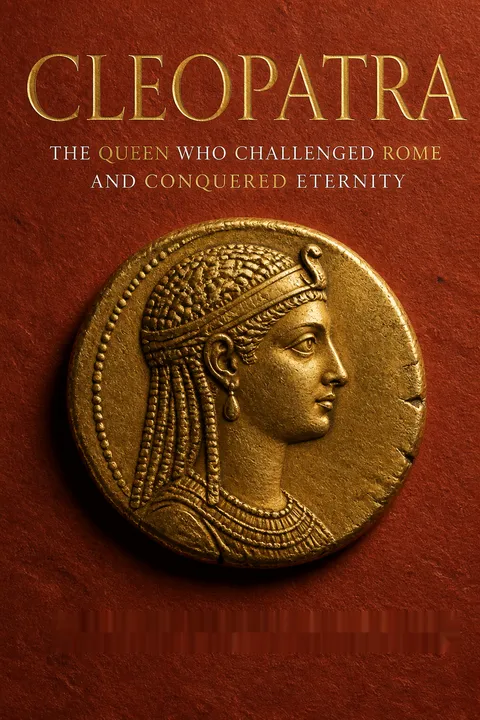
Ritual did political work. Coin portraits, temple dedications, and public ceremonies tied the queen to continuity, fertility, and Egypt itself. The book uses the term syncretism for the blending of religious traditions. Cleopatra drew on shared Greek and Egyptian symbols to make a foreign-origin dynasty appear locally legitimate, while also communicating across the wider Mediterranean world.
Political legitimacy is not only a legal status. It must be made recognizable to the people whose cooperation sustains rule. Cleopatra's use of language and religious imagery worked like a translation between court culture and local expectations. The strategy is especially striking because the Ptolemaic elite remained Greek and socially privileged. Symbolic inclusion could strengthen the queen's bond with Egyptian subjects without erasing that inequality. Shared rituals can build allegiance, but they do not by themselves redistribute power or resolve material grievances.
Cleopatra and Antony made romance serve a military alliance, and vice versa.
Diplomacy wore a costume. In 41 BC, Antony summoned Cleopatra to Tarsus to answer for Egypt's uncertain support during the war against Brutus and Cassius. She arrived by river aboard a lavishly staged ship, presenting herself as Aphrodite to his Dionysus. The spectacle turned an official summons into a public encounter between divine counterparts, while displaying the wealth and naval resources she could offer.
The bargain held both. Cleopatra gained Roman backing and territories; Antony needed Egyptian money, ships, and political stability for his eastern ambitions. Their relationship lasted about eleven years and produced three children. How much was love and how much calculation cannot be recovered. The intimate scenes in the book are plausible reconstructions, not eyewitness testimony.
The relationship need not be reduced to either pure passion or cold strategy. In elite politics, personal intimacy and statecraft often occupied the same space: trust could make an alliance durable, while shared interests gave the relationship practical stakes. The narrative is strongest when it keeps both explanations in view. It is less certain when it imagines private emotions in detail, because ancient accounts preserve political outcomes more reliably than interior lives. The evidence supports a consequential partnership, not a precise account of what either person felt.
At Philippi, Antony weaponized a marsh to sever his rivals' supplies.
Terrain became strategy. In 42 BC, Brutus and Cassius held a strong position near Philippi, with mountains and marshland protecting their sides and a route to the coast supplying their army. Antony's forces secretly built a raised passage through the marsh, allowing troops to threaten the supply line. Cassius countered by building defenses of his own, and fighting spread to both camps.
Confusion changed command. Brutus's troops initially captured Octavian's camp, while Antony's men took Cassius's. From a distance, Cassius misread friendly cavalry as enemies and ordered his freedman to kill him. Brutus was defeated in a second battle weeks later. The outcome turned on engineering and supply, but also on misread information and the loss of an experienced commander.
The episode makes military power look less like a contest of heroic personalities and more like a system of routes, food, terrain, and information. A marsh that seems to obstruct movement can become an instrument for disrupting an opponent's choices. The accidental nature of Cassius's death also shows how battlefield decisions depend on what commanders can see and correctly interpret. Still, a clever maneuver alone does not explain the victory: the result depended on two engagements, coalition weaknesses, and the subsequent collapse of Republican leadership.
At Actium, saving Cleopatra's fleet helped cost Antony his army.
A blockade narrowed choices. Before Actium in 31 BC, Octavian's admiral Agrippa seized key bases and disrupted the supply route from Egypt. Disease, hunger, and desertion weakened Antony and Cleopatra's force while it waited in Greece. Their fleet was larger, but many of its ships were heavy and less maneuverable than Octavian's.
The escape had a price. Cleopatra's ships broke through the naval formation with the royal treasure aboard, and Antony followed. The account treats this as a planned attempt to escape the blockade, though ancient explanations differ. Most of Antony's land army remained behind. Its soldiers, seeing their leaders gone and already demoralized, soon surrendered or defected. The fleet's escape preserved part of the royal wealth, but the coalition's military strength collapsed.
The decisive issue was not simply which fleet fought better. A military coalition depends on its members believing that their risks serve a shared purpose. Once Antony and Cleopatra escaped, the soldiers left on land could interpret the move as abandonment, whatever the commanders intended. This is a problem of coalition trust as much as tactics. The book's account also usefully separates an apparent flight from a planned breakout, while acknowledging that the precise intent cannot be known with certainty.
Octavian turned a Roman power struggle into a war against Cleopatra.
The framing shifted blame. After Antony publicly distributed eastern territories to Cleopatra and their children, Octavian cast him as a Roman leader captured by foreign influence. He had Antony's will read publicly, emphasizing its most politically damaging provisions, including Antony's wish to be buried in Alexandria. The will's presentation may have been selective, but its political effect was clear.
A foreign enemy unified Rome. Octavian persuaded the Senate to declare war on Cleopatra rather than on Antony, making a struggle between Roman rivals appear to be a defense of Rome against Egypt. Hostile accounts then reinforced the image of Cleopatra as a dangerous seductress. That propaganda simplified a real conflict: she was not merely a symbol, but a monarch with her own army, fleet, and strategic aims.
Scapegoating can turn a complicated domestic contest into a story with a legible enemy. Cleopatra's foreign identity helped Octavian recruit Roman loyalty without presenting the conflict simply as another civil war. Yet propaganda worked because it attached itself to genuine political facts: Antony had allied himself with a foreign ruler and assigned her territories. The useful distinction is between a narrative that distorts and one that invents. Octavian's framing did the former, converting a powerful opponent into the convenient face of a Roman struggle.
A political murder can strengthen the strongman it was meant to prevent.
The Republic lacked a repair plan. Caesar's assassins expected his death to revive senatorial government, but Antony and Octavian inherited the resources and loyalties that made Caesar powerful. Their Second Triumvirate joined three leaders in a formal power-sharing arrangement. The alliance then issued proscription lists, naming enemies for execution and confiscation. The book reports that nearly three hundred senators and about two thousand equestrians were targeted.
Octavian outlasted the rivals. Antony's eastern alliance with Cleopatra helped deepen his separation from Octavian. Their eventual defeat at Actium left Octavian without a comparable rival, enabling him to establish a durable new order. Cleopatra was a catalyst in this sequence, but the Roman Republic was already weakened by corruption, civil war, and military power concentrated in individuals.
The book's strongest large-scale claim is that Cleopatra helped accelerate the transition from republic to empire by giving Antony an eastern base and making his rivalry with Octavian more consequential. That is plausible as a causal argument, but it is not proof that events would have unfolded differently without her. Counterfactual history cannot be tested directly. A careful reading holds contingency and structure together: Cleopatra mattered, while the crisis of Roman institutions made one-man rule possible well before the final confrontation.
Cleopatra's suicide denied Octavian the triumphal captive he wanted.
The kingdom ended with her. After Octavian's forces entered Alexandria in 30 BC, Cleopatra's remaining options narrowed to surrender, captivity, or death. She chose suicide rather than be paraded in Rome. The exact method remains disputed: ancient writers tell a story involving a snake, while the book considers poison more plausible. Octavian buried her beside Antony, but their tomb has never been found.
Her heirs faced different fates. Octavian ordered the deaths of Caesarion and Antony's eldest son, Antyllus. Antony and Cleopatra's other children survived and were raised by Octavia. Egypt became Roman territory, and its wealth helped Octavian pay his troops. The queen lost her kingdom, but the image of her death, magnified by Roman propaganda and later retellings, outlasted the political order she tried to preserve.
Cleopatra's death was an act of agency within a situation shaped by conquest and coercion, not an uncomplicated victory over Rome. Her refusal to become a living exhibit denied Octavian one public symbol of triumph, while leaving him in control of Egypt. The contrast between her political defeat and her enduring cultural presence is revealing: rulers may control armies and archives, but they cannot fully control how later generations interpret a figure. The famous snake story itself shows how a plausible political image can become more durable than uncertain evidence.
Analysis
Angela's central argument is that Cleopatra was not a romantic ornament in a Roman story. She was a ruler whose decisions helped connect the last Ptolemaic kingdom to the struggle that produced Augustus. The book makes that case persuasively when it tracks concrete levers of power: Egypt's wealth and grain, its fleet, Cleopatra's language skills, her religious diplomacy, and her alliances with Caesar and Antony. These details restore political agency to a queen whose reputation was shaped by enemies who benefited from depicting her as an erotic threat.
The causal claim needs a boundary. Cleopatra helped make Antony's eastern strategy viable and gave Octavian an effective foreign antagonist. But the Republic's breakdown had deeper causes, including civil conflict, senatorial weakness, and the growing dominance of armies loyal to individual commanders. The claim that Octavian's empire depended on Cleopatra is therefore a valuable interpretation, not a demonstrable counterfactual. She altered the route history took; the book cannot establish that no other route led to one-man rule.
The narrative method is both the book's strength and its main risk. Reconstructing Rome's streets, Alexandria's court, and the movements of armies makes ancient history tangible. The author also repeatedly signals that buildings have vanished, sources disagree, and private scenes are hypothetical. Still, vivid staging can make an imagined gesture feel as certain as a documented event. Readers should distinguish the historical sequence from reconstructed dialogue, motives, and intimate moments.
That distinction does not diminish the story. It clarifies its achievement. Cleopatra's life becomes legible as a contest over legitimacy, resources, succession, and political storytelling, rather than a morality tale about a seductive queen. Her defeat ended Egypt's independence, but Octavian's version of the conflict never fully contained her meaning. The book's most lasting insight is that power operates on two timelines: the immediate contest for territory, and the slower contest over what later generations believe happened.
Review Summary
Cleopatra receives mixed reviews. While some praise Angela's engaging writing style and historical detail, others criticize the book for focusing too much on male figures and not enough on Cleopatra herself. Several reviewers note the author's tendency to romanticize and sexualize Cleopatra. Some find the book informative and immersive, while others feel it lacks depth and relies too heavily on speculation. The book's structure and pacing are also points of contention. Overall, opinions vary widely, with ratings ranging from 1 to 5 stars.
People Also Read
Glossary
Ptolemaic dynasty
Greek rulers of EgyptThe Macedonian Greek royal house that ruled Egypt after Alexander the Great's conquest. Founded by Ptolemy, one of Alexander's successors, the dynasty governed for roughly three centuries. Cleopatra VII was its last reigning monarch. Its rulers retained Greek court culture while governing an Egyptian population and increasingly relying on Rome.
Hellenism
Greek culture across regionsThe cultural world that spread after Alexander the Great's conquests, combining Greek language and institutions with local traditions across the eastern Mediterranean and parts of Asia. In the book, Alexandria represents Hellenism as a center of trade, scholarship, and cultural exchange. Cleopatra's education and political setting were shaped by this Greek-speaking world.
syncretism
Blended religious traditionsThe combining or adaptation of elements from different religious traditions. The book uses the term to explain how Greek and Egyptian deities and practices could be associated with one another. Cleopatra's presentation through Isis, alongside Greek divine imagery, helped make her authority meaningful to distinct communities.
Second Triumvirate
Three-man Roman allianceThe formal political arrangement made in 43 BC by Octavian, Mark Antony, and Lepidus. It divided Roman power among the three leaders and gave them authority to pursue Caesar's assassins and their other opponents. Its use of proscription lists and military force helped replace Republican political competition with rule by powerful commanders.
proscription lists
Names marked for executionLists issued by the triumvirs that identified people liable to be killed and have their property confiscated. Informers and killers could receive rewards. The measures targeted political enemies and people whose wealth could help fund the triumvirs' armies, creating widespread fear and enabling large-scale violence.
Acta Caesaris
Caesar's official decisionsThe acts, records, and decisions attributed to Julius Caesar's government. After Caesar's death, Antony controlled documents said to contain his plans and used them to validate appointments and policies. The phrase mattered politically because claiming to carry out Caesar's wishes could confer authority on the person controlling the records.
Donations of Alexandria
Antony's eastern territorial grantsThe public distribution of eastern territories and royal titles by Mark Antony to Cleopatra and their children in Alexandria. The ceremony reinforced their dynastic claims and presented Caesarion as Caesar's son. Octavian used the event to portray Antony as abandoning Roman interests and to rally support against Cleopatra.
pomerium
Rome's sacred boundaryThe consecrated boundary defining the sacred core of Rome. It separated the city from territory outside its ritual perimeter and shaped rules about access and military authority. The book notes that Cleopatra, as a foreign ruler, stayed across the Tiber rather than living within this central boundary.
FAQ
1. What is Cleopatra: The Queen Who Challenged Rome and Conquered Eternity by Alberto Angela about?
- Comprehensive historical narrative: The book provides a detailed account of Cleopatra VII’s life, focusing on her political and personal alliances, her education, and her pivotal role in the final years of the Roman Republic.
- Focus on Cleopatra’s influence: Angela highlights Cleopatra as a highly educated, politically astute queen who shaped Mediterranean history, challenging the traditional image of her as merely a seductress.
- Transition of eras: The narrative covers the twilight of the Egyptian kingdom, the rise of the Roman Empire, and the destruction of Hellenistic culture, culminating in the Battle of Actium and the deaths of Antony and Cleopatra.
- Immersive storytelling: Through vivid reconstructions of ancient Alexandria and Rome, the book brings to life the people, places, and events that defined Cleopatra’s era.
2. Why should I read Cleopatra: The Queen Who Challenged Rome and Conquered Eternity by Alberto Angela?
- Nuanced portrayal of Cleopatra: The book challenges stereotypes, presenting Cleopatra as a modern, independent, and strategic leader rather than just a romantic figure.
- Rich historical and cultural context: Readers gain insight into the political, social, and intellectual environments of both Ptolemaic Egypt and late Republican Rome.
- Engaging and accessible narrative: Angela combines academic rigor with novelistic storytelling, making complex history both accessible and compelling.
- Fresh perspective on familiar history: The book offers new interpretations of Cleopatra’s relationships with Caesar and Antony, and her impact on the transformation of the ancient world.
3. What are the key takeaways from Cleopatra: The Queen Who Challenged Rome and Conquered Eternity by Alberto Angela?
- Cleopatra’s modernity and agency: She was a pioneering woman whose intelligence, education, and political skill allowed her to shape history in a male-dominated world.
- Catalyst for historical change: Cleopatra was central to the transition from Hellenistic kingdoms to the Roman Empire, influencing major figures and events.
- Interplay of power and passion: The book demonstrates how personal relationships and political ambitions were deeply intertwined in shaping the fate of Egypt and Rome.
- Reconstruction of lost worlds: Angela’s meticulous research and vivid storytelling make ancient history tangible and relevant for modern readers.
4. How does Alberto Angela portray Cleopatra’s education and upbringing in Cleopatra: The Queen Who Challenged Rome and Conquered Eternity?
- Hellenistic education: Cleopatra received a first-class education in Alexandria, mastering Greek language, literature, rhetoric, and sciences, and was able to recite Homer’s epics.
- Multilingual and culturally open: She learned Egyptian (unlike her Ptolemaic predecessors) and embraced local customs, which helped her gain support from the native population and priests.
- Preparation for power: From childhood, Cleopatra was groomed for leadership, involved in state affairs, and trained in public speaking, debate, and strategic thinking.
- Expertise in sciences: Ancient and later sources credit her with knowledge in philosophy, medicine, mathematics, and even toxicology, reflecting her intellectual breadth.
5. What was Alexandria like during Cleopatra’s reign, according to Alberto Angela?
- Cosmopolitan metropolis: Alexandria was the Mediterranean’s second-largest city, a vibrant port with a diverse population of Greeks, Egyptians, Jews, and traders from across the ancient world.
- Urban planning and architecture: The city featured a grid layout, wide avenues like the Canopic Way, grand temples, palaces, and the iconic Lighthouse of Alexandria.
- Center of knowledge: Alexandria housed the Musaeum and the Library, attracting scholars and fostering scientific and cultural advancements.
- Cultural melting pot: The city’s multiculturalism and intellectual vibrancy were central to Cleopatra’s identity and reign.
6. How does Cleopatra: The Queen Who Challenged Rome and Conquered Eternity describe Cleopatra’s relationships with Julius Caesar and Mark Antony?
- Political and personal alliances: Cleopatra’s relationships with Caesar and Antony were both romantic and strategic, helping her secure Egypt’s sovereignty and expand her influence.
- With Julius Caesar: Their alliance began with her daring entrance to his presence, leading to her restoration as queen and the birth of Caesarion, whom she claimed as Caesar’s son.
- With Mark Antony: Their relationship blended passion and politics, symbolized by their children and their presentation as divine figures (Aphrodite and Dionysus) to legitimize their rule.
- Impact on history: These alliances shaped the fate of Egypt and Rome, contributing to the end of the Republic and the rise of the Empire.
7. What were the key events leading to Julius Caesar’s assassination, as presented by Alberto Angela?
- Accumulation of power: Caesar’s unprecedented honors and dominance alarmed many senators, who feared the end of the Republic and the rise of monarchy.
- Formation of conspiracy: A group of senators, including Brutus and Cassius, plotted to kill Caesar during a Senate meeting on the Ides of March, 44 BC.
- Ignored warnings: Despite omens and direct warnings, Caesar underestimated the danger and was ultimately murdered by over 23 stab wounds.
- Aftermath: His assassination plunged Rome into chaos, setting the stage for the ensuing civil wars and Cleopatra’s shifting alliances.
8. How did Cleopatra use religion and symbolism to strengthen her rule, according to Alberto Angela?
- Identification with Isis: Cleopatra portrayed herself as the living embodiment of the goddess Isis, connecting with Egyptian religious traditions and the native population.
- Divine lineage for Caesarion: She presented her son as the child of Julius Caesar and associated him with Horus, reinforcing their dynasty’s divine right to rule.
- Political propaganda: Through temples, coins, and public imagery, Cleopatra blended Egyptian and Hellenistic symbols to legitimize her power and appeal to diverse audiences.
- Religious diplomacy: Her religious policies helped secure the loyalty of both Egyptian priests and Greek elites.
9. What role did the Library and Musaeum of Alexandria play in Cleopatra’s life and reign, as described by Alberto Angela?
- Center of learning: The Library and Musaeum were hubs of scholarship, attracting intellectuals from across the ancient world and fostering advancements in science, literature, and philosophy.
- Personal education: Cleopatra was deeply influenced by this intellectual environment, which shaped her worldview and leadership style.
- Patronage of knowledge: She and Antony visited and supported these institutions, reinforcing their status as cultural patrons.
- Tragic loss: The eventual destruction of the Library symbolized the end of Hellenistic culture and the dawn of Roman dominance.
10. How does Alberto Angela describe Cleopatra’s beauty, personality, and charm in Cleopatra: The Queen Who Challenged Rome and Conquered Eternity?
- Not just physical beauty: Ancient sources and Angela emphasize that Cleopatra’s allure was rooted in her intelligence, voice, and captivating conversation rather than conventional beauty.
- Historical ambiguity: Contemporary depictions vary, with coins showing strong, regal features, possibly to emphasize authority rather than attractiveness.
- Power of personality: Plutarch and others note that her presence and wit had an irresistible effect on those around her, making her a formidable leader.
- Use of cosmetics: Cleopatra’s use of makeup, such as kohl, was both a beauty tool and a symbol of her power and cultural identity.
11. What does Cleopatra: The Queen Who Challenged Rome and Conquered Eternity reveal about the Battle of Actium and its significance?
- Decisive naval battle: The Battle of Actium in 31 BC pitted Antony and Cleopatra’s forces against Octavian’s fleet, with Octavian’s admiral Agrippa playing a key role.
- Tactical errors and betrayal: Antony’s choice to fight at sea, the desertion of allies, and Cleopatra’s planned escape contributed to their defeat.
- End of an era: The loss marked the fall of Antony and Cleopatra, the end of Hellenistic rule, and the rise of Octavian as Augustus, the first Roman Emperor.
- Transformation of the Mediterranean: Actium signaled the shift from a world of competing kingdoms to Roman imperial dominance.
12. How does Alberto Angela address the myths and propaganda surrounding Cleopatra in Cleopatra: The Queen Who Challenged Rome and Conquered Eternity?
- Roman propaganda: Angela explains how Roman sources depicted Cleopatra as a dangerous seductress to discredit her and Antony, shaping her image for centuries.
- Challenging stereotypes: The book reevaluates Cleopatra’s legacy, emphasizing her education, intelligence, and political skills over her supposed “sex appeal.”
- Enduring myths: Angela traces how Cleopatra’s story has been romanticized and distorted, but argues that her real impact on history is far more profound.
- Legacy and influence: The book highlights how Cleopatra’s true legacy lies in her role as a catalyst for historical change and as a symbol of female power and agency.
Download PDF
Download EPUB
.epub digital book format is ideal for reading ebooks on phones, tablets, and e-readers.








