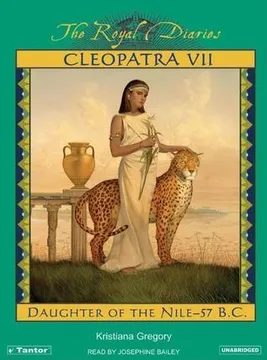


Plot Summary
The Serpent in the Palace
At twelve, Cleopatra watches her father, King Ptolemy XII, survive a snake placed in his bed only because his old servant Mento takes the bite and dies. Soon afterward, a cupbearer drinks poisoned wine intended for the king and collapses before Cleopatra’s eyes. Ptolemy disappears into hiding, leaving his eldest daughter Tryphaena to occupy his rooms and behave as ruler.
Cleopatra fears her sister’s ambition for good reason: when she asks where their father has gone, Tryphaena offers her wine and figs, then threatens her with a dagger when Cleopatra reaches for a pearl necklace. Cleopatra leaves alive, but learns that palace rank offers little protection when a sister has guards and a claim to the throne.
The crisis begins inside the family, where the palace’s grandeur cannot disguise how precarious Cleopatra’s safety is. The failed attacks on Ptolemy teach her that power is not secured by titles alone, while Tryphaena turns ordinary courtly exchanges, food, jewels, a visit to her rooms, into tests of submission. Cleopatra’s careful inspection of the wine and her controlled retreat show a child already practicing political judgment. Yet she is not emotionally hardened: she wants her father safe and remains alert to the difference between a ruler’s authority and a ruler’s ability to protect anyone.
A Queen Learns the Streets
Cleopatra’s friend Olympus, a young medical student who listens to both scholars and ordinary Alexandrians, tells her that anger against Ptolemy runs far beyond the palace. The king has drained the treasury, imposed unfair taxes, and reduced the value of new silver coins by withholding most of their silver. Worse, he plans to ask Rome for soldiers, promising a vast payment that Egypt’s workers will bear.
Cleopatra slips into the agora with Neva, her trusted maid, and hears a seller curse the king and offer crocodiles for a murderous prank. A street song then threatens both Ptolemy and his daughter. Cleopatra realizes that the danger is not only Tryphaena’s private ambition: her own family’s rule has made the streets hostile.
Olympus’s report changes Cleopatra’s view of the crisis from a contest between siblings into a problem of legitimacy. She does not excuse the people’s anger, even though their fury threatens her life. That capacity to hold competing truths, affection for her father alongside recognition of the harm he has caused, becomes central to her political education. Her disguised walk through the market matters because she chooses to encounter subjects directly rather than rely on palace reports. The scene also reveals a tension she cannot yet resolve: she wants to care for ordinary Egyptians, but her imagined future as queen still rests on preserving the dynasty that burdens them.
A Skull for Cleopatra
A drawing of the royal children appears at Bucephalus’s stall with Cleopatra’s head missing. Soon Puzo, the freed gladiator who guards her, finds a human skull marked with her name on the island palace. Olympus helps arrange her escape, and Cleopatra prepares to leave without telling her younger siblings.
On the night of departure, her leopard Arrow kills Berenice’s pet baboon, driving the gentle sister into grief and drawing Tryphaena’s armed searchers through the palace.
Cleopatra, Neva, and Puzo hide in a roof garden until Olympus signals from the harbor. They board Ptolemy’s ship. At sea, Olympus delivers Tryphaena’s declaration that she has taken the throne and will execute them if they return. Cleopatra is now an exile, not merely a threatened princess.
The threats become more than warnings once Cleopatra’s image and a skull turn her possible death into something tangible. Her escape also costs her the ordinary closeness she has with Berenice: Arrow’s attack on the baboon is instinct rather than malice, but it leaves the sisters separated at a moment when affection might have mattered. Cleopatra’s departure shows both courage and dependence. She can read danger, plan, and trust allies, yet her survival relies on Olympus’s signal and Puzo’s protection. Tryphaena’s proclamation makes exile the price of staying alive, and places Cleopatra’s private fear inside a public struggle over who may rule Egypt.
Latin at Pompey's Table
During the rough voyage, Cleopatra tends to her sick father and sees how often wine leaves him unable to lead. When a messenger ship brings Olympus’s warning that Tryphaena’s allies may poison her, she escapes Alexandria just in time.
In Rome, Ptolemy and Cleopatra are received at a banquet hosted by supporters, where Pompey mocks the king and treats the Egyptian guests as entertainment. Cleopatra understands the insults because Olympus taught her Latin.
Rather than let the general define her as a helpless child, she answers him in his language and makes clear that Egypt has come seeking an alliance, not humiliation. Pompey changes his manner toward her. Cleopatra has won a measure of respect, but her father’s drunken behavior confirms that she may have to speak and act for him.
Language functions here as more than a scholarly accomplishment: it gives Cleopatra access to the intentions others would hide behind her youth. At the banquet she uses that access to defend Egypt’s dignity, but the victory is limited. Pompey’s restraint depends on her intervention, while Ptolemy remains vulnerable to ridicule and political leverage. Cleopatra’s growing competence therefore brings an uncomfortable recognition: she is becoming her father’s interpreter in both the literal and political senses. The scene marks a shift from surviving the palace’s threats to negotiating with men who hold armies, money, and imperial ambitions.
Two Sisters Take Crowns
In Rome, news arrives that Ptolemy’s supporters have strangled Tryphaena. Before the king can regain control, Berenice’s guards kill the conspirators and Berenice claims the throne. Cleopatra worries for the sister she loves, but cannot return without Roman military support.
General Marc Antony is assigned to lead the campaign restoring Ptolemy. Cleopatra also befriends Julia, Pompey’s daughter and Caesar’s child, whose warmth offers a rare relief from political calculation.
The Roman army is not ready, however, and Caesar’s forces are far away. Each delay leaves Berenice ruling in Alexandria and Ptolemy dependent on Roman patrons. Cleopatra’s family conflict has become a public contest in which Rome can decide which Ptolemy sits on Egypt’s throne.
The two sisters’ rise to power exposes the dynasty’s central instability: succession is treated as a prize to seize, not an office secured through public consent. Cleopatra’s grief for Berenice coexists with her awareness that Berenice’s rule may threaten their father and herself. Meanwhile, Rome’s promised help is not neutral. The delay gives Roman officials leverage over a king who needs their soldiers, and makes Cleopatra’s future inseparable from their political choices. Julia’s friendship offers genuine personal kindness, but even that connection is made possible by the very network of power that confines Cleopatra.
Rome's Lessons in Power
As Cleopatra waits for enough soldiers to sail, Rome becomes a classroom she never chose. Cicero welcomes her into conversations about literature and politics, but she also sees him use his courtroom skill against a young woman who cannot defend herself. The wealthy Crassus profits from a house fire by demanding the property before his private fire brigade will help.
On the Appian Way, Cleopatra sees the remains of slaves crucified after Spartacus’s revolt, and at a theater she watches a captive condemned for the crowd’s amusement. These sights unsettle her confidence in Roman protection. In Herculaneum, she finds a brief refuge by the sea, but even there a current nearly sweeps Neva away until Puzo rescues her.
Cleopatra’s education in Rome is moral as much as political. She discovers that polished rhetoric can serve injustice, wealth can turn public catastrophe into private gain, and imperial order can depend on spectacular cruelty. Her discomfort does not make her innocent of the structures she inhabits; she is a princess whose household also depends on enslaved labor. The contrast between her judgments and her own position complicates her wish to become a better ruler. Puzo’s rescue of Neva briefly shifts the story from public violence to intimate care, revealing that the people who serve Cleopatra have attachments and fears beyond their usefulness to her.
The Long Wait for Egypt
The Roman campaign stalls through legal arguments and shortages of troops, while Ptolemy spends much of his time nursing headaches instead of preparing to return. Cleopatra studies Cicero’s persuasion and tries to manage her father’s moods.
Her relationship with Antony moves between friction and attraction: after he carries her out of a rainstorm without permission, she angrily keeps his sword, yet later accepts a chariot ride to inspect the ships at Ostia. She also learns that Neva and Puzo love one another and fears Ptolemy will punish them if he discovers it.
After Cicero stops opposing their departure, the fleet finally sails. At a farewell gathering Antony kisses Cleopatra; she turns away, uncertain whether wine, fear, or her own feelings prompted her retreat.
Waiting forces Cleopatra to practice influence without formal authority. She cannot command the Senate or make her father responsible, so she studies rhetoric, adapts her conduct, and cultivates people whose decisions affect her future. Antony’s impulsive physicality unsettles her because it resembles power without permission, while his attention also draws her toward a possible ally she cannot simply trust. Her protection of Neva and Puzo reveals an emerging ethical judgment: she sees their love as theirs, not merely as a disruption to her household. Yet she must conceal that judgment from a father whose favor remains dangerous to lose.
Homecoming Under Roman Steel
Roman ships and soldiers return with Ptolemy to Alexandria. Cleopatra leaps from the landing boat into the harbor and reaches Olympus, her closest friend, after two years apart. She then finds Berenice in the bath and tells her that their father wants to see her.
Ptolemy has reclaimed the throne, and he orders Berenice stripped of her royal cloak and led away. Cleopatra later sees her sister’s severed head carried into the hall. The restoration that should make Cleopatra safe instead shows her what her father does to a daughter he considers disloyal.
She is now next in line, but fears that Ptolemy may turn against her as easily. Amid soldiers and bloodshed, Arrow returns to her chamber, an unexpected piece of home in a palace made frightening again.
The return resolves the immediate question of who occupies the throne, but not the deeper question of whether Cleopatra can trust the institution or her father. Ptolemy’s restoration is secured through Roman force and the execution of his daughter, making family loyalty indistinguishable from political obedience. Cleopatra’s grief is sharpened by her own new position: the death of her sisters moves her closer to succession while making that future more perilous. Arrow’s return offers comfort, yet it cannot restore the safety Cleopatra once associated with the palace. The scene transforms homecoming into a recognition that belonging and protection are not the same thing.
The Nile Becomes Her School
With the streets still dangerous and Roman troops preparing to leave, Cleopatra resumes her studies with Olympus and Theophilus. She understands that books and palace lessons cannot teach her how Egypt’s people live, so she persuades Ptolemy to let her travel up the Nile.
He believes the journey is a girl’s adventure and is already arranging a marriage for her, while Cleopatra privately treats it as preparation to rule. She takes Olympus, Neva, Puzo, and Arrow aboard the royal barge.
During the journey she watches village life, respects the Egyptians’ belief that a hippopotamus is sacred, and sees children welcome her from the riverbanks. She has also arranged for an Egyptian priest to marry Neva and Puzo, giving them a future together even as she remains bound by royal expectations.
The ending turns Cleopatra’s ambition into a practice rather than a claim. She chooses travel because she knows that ruling requires knowledge of the people beyond Alexandria’s court, and the Nile carries her toward a more direct encounter with that responsibility. Her decision to honor Neva and Puzo’s marriage is a small but consequential exercise of authority: she uses her position to protect a bond that the palace might otherwise suppress. Still, the journey does not free her from dynastic control. Her father plans her marriage, and she must hide the political purpose of her expedition. Her education begins inside those limits, not outside them.
Epilogue
The book’s epilogue follows Cleopatra beyond the diary’s final river journey. At eighteen, she marries her younger brother Ptolemy XIII and rules with him after their father dies. Pompey later seeks refuge in Egypt but is murdered on the young king’s advisers’ orders; Julius Caesar arrives, and Cleopatra maneuvers to meet him.
She and Caesar have a son, then she later joins Marc Antony in a partnership that ends in defeat by Octavian. Antony and Cleopatra die after their forces lose, and Egypt becomes Roman territory. The epilogue also notes that Cleopatra and Olympus remain close throughout her life.
The epilogue places the young diarist’s education beside the historical scale of the life she will lead. The girl who studies languages, listens to villagers, and learns how Rome treats the vulnerable will eventually have to make decisions within the same brutal political world she fears. Her later alliances do not erase the book’s questions about power; they intensify them, since survival requires cooperation with forces that threaten Egypt’s independence. The continuing friendship with Olympus gives the account a quieter measure of continuity amid dynastic violence and imperial change. Her eventual defeat is presented not as proof that her early ambitions were foolish, but as the cost of trying to preserve a kingdom under expanding Roman control.
Analysis
The novel’s central tension is that Cleopatra’s education in rule begins inside a system she can neither trust nor simply reject. Her father’s misgovernment creates the popular anger that threatens the family, while her sisters’ bids for the throne teach her that succession often rewards force rather than care. Cleopatra’s ambition is therefore morally unstable in a productive way: she wants authority partly to protect Egypt, but she is also the beneficiary of the dynasty whose policies have injured its people.
Her strongest emerging political skill is attention. She learns languages, walks among market crowds, studies Roman arguments, and watches how power behaves when it believes no one vulnerable is looking. These acts make knowledge an alternative to inherited entitlement, though not a clean escape from it. Her later judgments about slaves, prisoners, and servants expose the limits of her perspective as well as its growth. She can recognize cruelty without yet possessing a political structure that would prevent it.
Exile intensifies that apprenticeship. Rome offers allies, education, and friendship, but its courts and public spectacles also reveal how readily refinement coexists with exploitation. Cleopatra’s need for Roman intervention saves her family’s immediate claim while weakening Egypt’s independence. The bargain foreshadows the bind at the heart of her future: survival may require alliances with the very power that threatens the country she hopes to lead.
The diary form preserves uncertainty instead of smoothing the child into a finished legend. Cleopatra’s fear of her father, attraction to Antony, devotion to Olympus, and tenderness toward Neva remain distinct parts of her character. By ending on the Nile rather than the throne, the book frames leadership not as a crown already earned but as a practice beginning: observe, learn, and accept that responsibility includes people whom royal households usually treat as possessions.
Review Summary
Reviews of Cleopatra VII: Daughter of the Nile are mixed, averaging 3.90/5. Many readers, particularly those who encountered it in middle school, appreciate its vivid portrayal of ancient Egyptian palace life, court intrigue, and historical details. Critics note historical inaccuracies, an overly self-congratulatory protagonist, and questionable religious portrayals, particularly Cleopatra's unlikely monotheistic leanings. Positive reviewers praise its engaging storytelling and educational value for young readers, while detractors find the plot slow and Cleopatra's character underdeveloped given her fascinating historical legacy.
Characters
Cleopatra
The listening princessAt twelve, Cleopatra is observant, curious, and more comfortable among books and crowds than many members of her family. Her gift for languages lets her move between Alexandria’s communities and understand what powerful men say when they assume she cannot. She wants to protect her father and country, but she also recognizes that his rule has injured ordinary Egyptians. This tension gives her ambition a moral dimension: she does not merely want the throne, she wants to become the sort of ruler who listens. Her diary records a child learning to manage fear, affection, and political calculation without pretending she has outgrown any of them.
Ptolemy XII
The faltering kingCleopatra’s father is a king whose attachment to wine and self-indulgence weakens his ability to govern or protect his children. He remains affectionate toward Cleopatra, yet she cannot depend on that affection to make him wise or consistent. His debts and unpopular policies drive the unrest that threatens the dynasty, while his reliance on Roman support draws Egypt deeper into foreign influence. To Cleopatra, he is both a loved parent and a warning: royal authority can coexist with personal weakness, and a daughter may find herself caring for the father who is supposed to care for her.
Neva
The trusted companionNeva is Cleopatra’s maid, reader, confidante, and closest companion in the private spaces of palace life and exile. She listens without trying to direct Cleopatra’s thoughts, and her steadiness gives the princess room to admit fear and loneliness. Their relationship crosses the usual distance between royal mistress and servant, though neither can ignore the hierarchy that governs their lives. Neva also has loyalties and longings of her own, including her love for Puzo and her separation from her family. Cleopatra’s growing recognition of those feelings marks a shift from seeing service as devotion to seeing the person who serves.
Puzo
The freed protectorPuzo is a Sicilian former gladiator whom Cleopatra frees before he can be forced to fight for Roman amusement. He repays her by guarding her with skill, discipline, and a fierce sense of duty. His disguises let him remain close without exposing her identity, while his knowledge of violence makes him a constant reminder of the dangers surrounding the royal family. Beneath his guarded manner is a private tenderness, especially toward Neva. Puzo’s loyalty is not simply obedience: his affection and personal history give him an inner life that Cleopatra must learn to respect.
Olympus
The scholar and confidantOlympus is a young medical student and Cleopatra’s trusted friend, valued for his learning and his willingness to listen to people across social boundaries. His knowledge of palace and marketplace life helps him recognize dangers Cleopatra’s family would rather ignore. He teaches her Latin, shares political warnings, and helps her prepare for decisions beyond her years. Their closeness is built through study, letters, and candid conversation rather than court ceremony. Olympus’s attention to evidence and consequence strengthens Cleopatra’s own habit of observation, and his presence links her intellectual life to the practical work of understanding Egypt.
Tryphaena
The ambitious elder sisterTryphaena is Cleopatra’s eldest sister, ten years her senior and convinced that she should rule. She uses status, guards, and intimidation to make others yield, and she treats her father’s absence as an opening to claim authority. Cleopatra sees her as dangerous not only because of what she does, but because Tryphaena appears to regard power as proof of personal entitlement. Her coldness narrows the space in which the younger princess can speak honestly. Tryphaena’s presence teaches Cleopatra that family affection can be subordinated to succession, and that a political rival may share one’s blood without sharing one’s obligations.
Berenice
The beloved sisterBerenice is Cleopatra’s older sister and the sibling she loves most. She is sociable, beautiful, and fond of clothes, banquets, and display, but she is less interested in the streets beyond the palace than Cleopatra is. Her gentleness makes her dear to Cleopatra, though the younger princess doubts that Berenice is prepared for the demands of ruling. Their affection complicates Cleopatra’s political judgments: she can question her sister’s fitness without ceasing to love her. Berenice represents the tenderness that survives inside a family trained to compete for rank and security.
Marc Antony
The Roman commanderMarc Antony is a Roman cavalry commander born in Alexandria, assigned to lead the military effort supporting Ptolemy. He is physically confident, sociable, often associated with drink, and capable of turning a tense encounter into a joke. Cleopatra finds him exasperating because he sometimes treats her as a child, yet his charm and authority draw her attention. Their encounters mix political dependence with personal curiosity, leaving Cleopatra unsure how to interpret his intentions. Antony matters because he embodies the Roman power she needs to negotiate with and the personal attraction she is not yet ready to name.
Theophilus
The Jewish philosopherTheophilus is a Jewish scholar and close friend of Cleopatra and Olympus. He discusses religion, ethics, and history with Cleopatra, challenging her assumptions about divine power and human responsibility. His letters in Hebrew keep their intellectual bond alive while she is in Rome. He is less involved in court maneuvering than Olympus, but his questions give Cleopatra another way to test the claims of kings and gods.
Pompey
The powerful Roman patronPompey is a celebrated Roman general whose military strength makes him a crucial figure in Ptolemy’s effort to regain Egypt. He is blunt, theatrical, and accustomed to controlling a room. His treatment of the Egyptian visitors shows Cleopatra that Roman support can come mixed with humiliation. As a patron, he offers access to protection; as a political actor, he reminds her that Egypt’s dependence on Rome carries a price.
Cicero
The brilliant oratorCicero is Rome’s celebrated lawyer and speaker, whose eloquence initially captivates Cleopatra. He encourages serious conversation and offers her a living example of how language can move political audiences. But his courtroom tactics and shifting political positions complicate her admiration. Cleopatra learns from him even when she questions his judgment, discovering that rhetorical brilliance is a tool rather than a guarantee of justice.
Julia
The Roman friendJulia, daughter of Julius Caesar and wife of Pompey, befriends Cleopatra during her Roman exile. She offers companionship through theater outings and glimpses of ordinary Roman life beyond political councils. Her kindness makes Rome feel less entirely hostile, though her family ties place her close to the power struggles surrounding Egypt. Julia gives Cleopatra a personal connection in a city where most relationships carry political weight.
Tullus Atticus
The generous Roman hostAtticus is a wealthy Roman who provides Ptolemy and Cleopatra with a place to stay and helps support their cause. His hospitality includes a seaside villa where Cleopatra finds respite from the heat and uncertainty of Rome. Though she initially misjudges him, his practical generosity becomes important during her long wait. He shows that political alliances can include sincere acts of care without becoming free of calculation.
Crassus
The profiteering power brokerCrassus is one of Rome’s richest and most politically powerful men. Cleopatra hears of his role in crushing Spartacus’s revolt and sees how he can exploit a house fire for personal gain. He represents wealth converted directly into influence, with little concern for those harmed along the way. His conduct sharpens Cleopatra’s suspicion that Rome’s powerful do not necessarily share the interests of the people they claim to govern.
Julius Caesar
The distant Roman rulerCaesar is a formidable Roman general whose campaigns keep him away from the negotiations in Rome. His decisions influence whether soldiers and political support can be spared for Egypt. Cleopatra knows him chiefly through reports and family connections, making him a powerful but still distant presence. He represents Rome’s expanding reach and the uncertainty of dealing with a leader whose attention is fixed on conquest elsewhere.
Arsinoë
The indulged younger sisterArsinoë is Cleopatra’s younger sister, still a child and accustomed to having her wishes indulged. She asks for unusual playmates and is strongly influenced by palace life. Cleopatra has been given some authority over her requests, which allows her to practice judgment on a small scale. Arsinoë is not yet a major political force, but her presence keeps Cleopatra conscious of the younger children who depend on adult decisions.
Octavian
The quiet Roman childOctavian is the young grandnephew of Julius Caesar whom Cleopatra meets through Julia. Thin and reserved, he spends time playing with a small handmade boat and ducklings. Their brief encounter gives Cleopatra a glimpse of a child in a Roman family whose name carries political significance, while reminding her of her own much younger brothers.
Plot Devices
Cleopatra's diary
A private record of growthThe dated diary makes the political crisis intimate and immediate. Cleopatra records threats, arguments, travel, and ordinary sensations in the same voice, so the reader can see how a child interprets events before she has the advantage of hindsight. Her entries also make the story’s time jumps legible, from the danger in Alexandria through exile in Rome and the return journey. The diary’s private form lets her admit fear, doubt, and resentment that she must conceal in public.
Secret letters and tablets
Warnings across hostile distanceMessages from Olympus and Theophilus carry political intelligence from Alexandria to Cleopatra in Rome, while Cleopatra uses sealed tablets to communicate without exposing her plans. These exchanges keep her connected to friends and events she cannot witness, and sometimes give her the warning needed to act before danger closes in. Letters also sustain intimacy across separation, especially when she cannot speak openly or return home. Their fragility mirrors the risk of relying on information that can be intercepted, delayed, or lost.
Multilingual ability
A key to hidden motivesCleopatra’s ability to speak Egyptian and several other languages lets her move beyond the palace and understand conversations meant to exclude her. Olympus adds Latin to her skills, enabling her to recognize Roman insults and answer Pompey in public. Language works as both a practical tool and a political advantage: it helps Cleopatra listen to subjects directly, read messages, and negotiate without depending entirely on interpreters. It also distinguishes her from other members of her family, shaping her belief that knowledge of people can prepare her to rule.
Roman military protection
Help with an imperial pricePtolemy’s plan to regain his throne depends on Roman loans, patrons, soldiers, and commanders. The promised protection enables the family to leave danger and eventually return to Alexandria, but each step deepens Egypt’s dependence on Rome. Delays in recruiting troops give Roman politicians leverage, while the soldiers’ arrival brings the threat of force into the city. The device makes the central political bargain visible: the family can reclaim power only by inviting an empire with its own interests into Egyptian affairs.
The Nile journey
An education beyond courtCleopatra’s voyage upriver is her chosen way to learn what palace life cannot teach her. From the royal barge she observes villages, customs, and the people whose lives depend on the kingdom’s rulers. The journey also gives her a practical setting to act on her values, including arranging Neva and Puzo’s marriage. Rather than conclude with a completed reign, the book ends with Cleopatra beginning this education, making the river a path toward responsibility rather than a ceremonial backdrop.
Download PDF
Download EPUB
.epub digital book format is ideal for reading ebooks on phones, tablets, and e-readers.








