

Key Takeaways
Build success by restoring your energy, not by chasing goals harder
Start with the leaks. Miedaner’s central claim is that people become more effective when they remove what repeatedly drains them and add activities that restore them. These drains can be small, like a broken button or a cluttered desk, or larger, like a job or relationship that no longer fits. She asks readers to write down the things they tolerate, then address the manageable ones instead of treating them as background noise.
Small repairs can unlock momentum. One client listed frustrations ranging from a messy inbox to feeling underpaid. As he rested, cleared his desk, and repaired household annoyances, he felt more able to pursue a better job. The book’s point is not that a repaired bathtub guarantees a promotion. It is that unresolved irritations consume attention that could be used elsewhere.
The practical strength here is its attention to low-grade friction. People often reserve effort for dramatic goals while ignoring the daily irritants that keep stealing focus. A written inventory turns vague dissatisfaction into a set of observable problems, some solvable in minutes. The limit is causal certainty: the anecdotes cannot establish that tidying a room produces career success. A more grounded reading is that reducing friction can improve mood and free attention, which may make useful action more likely. The small repair matters even when no lucky break follows.
Drop stale obligations and design a life around what genuinely energizes you
Separate desire from duty. The book calls long-standing goals that no longer inspire a person “shoulds.” A goal repeated for years without meaningful action may be inherited from family, advertising, or an old idea of success. Miedaner recommends either releasing it or reshaping it into something personally compelling. Instead of fixating on a number on the scale, for example, a person might build a broader plan for feeling healthy and enjoying movement.
Picture the life first. Readers are asked to imagine an ideal day, home, relationships, and work before choosing a career to support them. One executive discovered that gardening, painting, and design were missing from her serious corporate life. Trying these interests helped her recognize a neglected creative side and consider a new direction.
This approach treats motivation as information rather than a character test. Persistent avoidance may indicate that a goal is poorly chosen, too vague, or unsupported, not that someone lacks virtue. Designing a life before selecting a job also counters the habit of letting a career dictate every other priority. Still, an ideal-life exercise can expose a direction without solving the practical transition. Income, care duties, health, and local opportunity constrain choice. The useful move is to turn the imagined life into experiments, not to mistake the picture for a plan.
Protect your boundaries with calm, specific requests instead of silent resentment
Make the limit visible. Miedaner treats a boundary as a clear statement of what behavior is acceptable, not as a wall against closeness. Her four-step communication model moves from naming the behavior, to requesting that it stop, to insisting, and, if needed, leaving the interaction. The delivery should be calm and factual. In her example, an employee asked a shouting supervisor to speak more calmly, explaining that this helped her do better work.
Address small breaches early. The book argues that ignoring repeated slights can build resentment until a person erupts. A direct, timely response gives the other person a chance to adjust. At work, boundaries may require tact and attention to power differences. If a direct confrontation could risk employment or safety, seeking support or choosing a safer channel may be wiser than following a script literally.
The model offers a useful progression because it replaces the false choice between enduring mistreatment and retaliating. Naming a behavior and stating a request gives the other person actionable information. Its calm tone also separates the limit from an attack on character. Yet the framework assumes that the other party can respond in good faith. Hierarchies, discrimination, coercion, and abuse can make direct requests ineffective or dangerous. In those settings, documentation, allies, formal processes, or distance may matter more than conversational polish. The principle is self-respect, not confrontation for its own sake.
Clear physical and calendar space before inviting more commitments into your life
Make room deliberately. The book links clutter and overcommitment to reduced attention and a sense of being stuck. It recommends clearing out unused possessions, organizing work systems, and simplifying routines. A practical test is whether an item has been used recently, with reasonable exceptions for seasonal belongings. At work, the author describes sorting each paper by whether it should be discarded, referred to someone else, acted on, or filed.
Guard the space created. A cleared calendar can quickly refill if every request gets a yes. The book suggests delaying a response when unsure, then declining without elaborate excuses when the commitment is not right. Tracking time for a week can reveal hidden drains, such as a long commute, repeated phone interruptions, or hours of television. Protecting an open evening or a regular day of rest makes the new space useful rather than temporary.
The link between space and choice is compelling because clutter is not only an aesthetic problem. It creates decisions, search costs, and reminders of unfinished tasks. Time tracking performs a similar function: it replaces the feeling of having no time with evidence about where time goes. The author’s language about a vacuum attracting new opportunities is best read as metaphor, not physics. New space does not guarantee a better opportunity, but it does create capacity to notice and pursue one. Saying no is what prevents that capacity from being instantly consumed.
Make money a managed tool by ending debt cycles and building a cash cushion
Face the numbers first. Miedaner argues that earning more will not solve a spending pattern that remains unchanged. She recommends examining beliefs about money, tracking expenses, paying down debt, and saving consistently. One client who believed he had to provide without limit discovered that his household spent far more than it earned. Once he and his spouse reviewed spending together, they cut costs and directed money toward debt.
Buy room to choose. The book proposes building a reserve of at least six months of living expenses and aiming to save 20 percent of income, beginning with a smaller amount if necessary. The point is not a particular account balance but greater freedom to leave unsuitable work or handle surprises. Its investment and retirement examples reflect the book’s 2000 context; current rates, tax rules, and personal circumstances need fresh professional advice.
Financial margin has a concrete psychological and practical payoff: it can reduce the pressure to accept every job, client, or expense that comes along. The book also correctly distinguishes increased income from financial health. Its specific savings targets should not be treated as universal rules, especially for people facing high housing costs, unstable income, medical bills, or expensive debt. A more durable lesson is to establish a realistic sequence: understand cash flow, address high-cost liabilities, create an emergency buffer, and then choose investments suited to individual circumstances.
Meet emotional needs openly so relationships are chosen, not used as rescue plans
Name what is missing. The book defines emotional needs as conditions a person requires to function at their best, such as appreciation, independence, affection, or clarity. Irritability and recurring habits can signal that a need is going unmet. Miedaner asks readers to identify the need beneath a behavior and request specific forms of support from several people, rather than silently hoping one partner will guess correctly.
Build a wider circle. The book also emphasizes friendship, mentors, family, and a group of trusted advisers. A client who asked her mother for regular expressions of affection found that their relationship grew closer. Other practical habits include dating a spouse regularly, thanking people, and listening without rushing to offer advice. These actions make support more reciprocal and reduce the pressure placed on any single relationship.
The chapter’s useful distinction is between caring for someone and depending on that person to supply every source of security or recognition. Specific requests are easier to answer than hints, and a wider support network can make intimate relationships less burdened. The idea that unusual behavior always reveals a hidden unmet need is too simple: habits can also reflect stress, physiology, learned routines, or circumstances. Needs language is most helpful when used as a prompt for inquiry, not as a diagnosis of oneself or someone else.
Test work that fits your strengths through small projects before making a leap
Look for evidence in enjoyment. Miedaner asks readers to identify peak experiences, personal values, and abilities that others notice. A talent may feel ordinary to the person who has it, so asking friends or colleagues can surface strengths that are easy to overlook. The book advises inventing several possible careers rather than assuming there is only one acceptable path.
Experiment before committing. A special project, class, volunteer role, or part-time trial can reveal whether an interest belongs in a career or works best as recreation. One corporate executive who suspected she had a creative side began painting and exploring design rather than quitting immediately. The book also encourages retreats or sabbaticals for people who need distance from routine. Such breaks can refresh perspective, but require financial and workplace planning.
This is a strong antidote to the all-or-nothing career change. Small trials create information about skill, interest, and working conditions at lower cost than a dramatic resignation. The emphasis on strengths is valuable, provided strengths are not confused with effortless performance alone. Meaningful work can involve demanding tasks, and an enjoyable hobby may become less enjoyable under deadlines or commercial pressure. A sound career experiment therefore asks not only, “Do I like this activity?” but also, “Do I like doing it repeatedly, under real constraints, for the people who would pay for it?”
Reduce work friction by delegating, finishing tasks fully, and choosing priorities
Protect attention. The book recommends asking what matters today, what must be done, and what future task deserves preparation. It also suggests arriving early, doing one task at a time, and using technology or routines to remove repetitive work. A manager who tracked his week discovered hours lost to interruptions, phone calls, and searching through papers. Organizing files and setting focused work periods improved his department’s productivity.
Delegate with care. Handing off work requires training, a clear result, and an agreed check-in, rather than simply dumping an unwanted task on someone. The book also reframes procrastination: delay may point to dislike, missing knowledge, an overwhelming project, a poor goal, or a need to think. Identify the reason, then delegate, learn, break the task down, or reconsider the goal.
The strongest productivity advice here is diagnostic. Instead of treating delay as laziness, it asks what the delay is communicating. That question can reveal a training gap, an overloaded schedule, or work that should not be done at all. Delegation likewise becomes a management skill rather than an escape hatch. The claim that tasks can routinely be completed in half the time is less dependable; some work has genuine complexity, and artificial deadlines can degrade quality. Efficiency should mean preserving attention for valuable work, not merely compressing every task.
Treat self-care, rest, and play as operating conditions for sustained performance
Maintain the person doing the work. The book urges readers to improve their homes and workspaces, move their bodies, seek help with fitness, and address physical concerns that sap confidence. It treats massage, attractive surroundings, and small luxuries as forms of restoration, not rewards reserved for the wealthy. One client who had become sedentary found that a personal trainer and varied activities helped her establish a lasting exercise routine.
Schedule genuine recovery. Miedaner recommends a regular evening and a full day each week without obligations, along with play that absorbs attention. A client who resumed pottery found she was more relaxed and enjoyable company. The broader argument is that leisure is not wasted time when it renews energy. Self-care, however, should not become another expensive performance standard; rest and movement can be adapted to health, money, and circumstance.
This account challenges the familiar idea that rest must be earned after all work is complete. If recovery is postponed until the task list is empty, it may never arrive. Play also matters because it reconnects activity with curiosity and intrinsic reward, rather than treating every hour as an investment in output. The caution is that self-care can be commercialized into a shopping list of services and upgrades. Its value depends less on luxury than on whether an activity reliably supports health, agency, and connection.
Hold a clear intention, take practical action, and stay flexible about the outcome
Focus without forcing. In the final part of the book, Miedaner recommends writing a desired outcome repeatedly, keeping attention on what is wanted, and taking many small actions rather than trying to control one route. She calls these actions casting pebbles: make several thoughtful attempts, then notice which ones produce a response. A salesperson who stopped treating every call as a must-win pitch and instead focused on understanding people found the work more natural.
Celebrate progress. The author also asks readers to recognize what they have already changed, rather than moving immediately to the next ambition. Her claim that thoughts attract external events is stronger than the evidence in the book can establish. A grounded interpretation is that clear intentions shape attention and behavior. They can help someone notice openings and act, but cannot guarantee that chance, other people, or structural barriers will cooperate.
The most useful version of attraction is not magical causation but a combination of attention, readiness, and repeated action. A person who knows what matters may recognize a relevant opportunity that would otherwise pass unnoticed, while maintaining several options reduces dependence on a single outcome. The text sometimes treats favorable coincidences as proof that thoughts draw events toward the thinker. That interpretation risks blaming people when circumstances do not improve. Holding intention alongside flexibility preserves the motivating power of hope without confusing hope with control.
Analysis
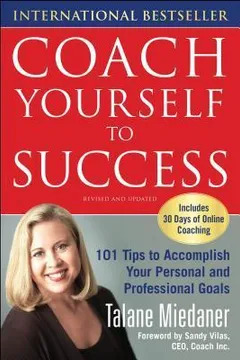
Coach Yourself to Success is a practical self-help book arranged as a ten-part progression: remove drains, create space, stabilize money, reclaim time, strengthen relationships, find meaningful work, improve execution, communicate well, care for the self, and pursue desired outcomes. Its 101 tips can appear scattered, but a single operating idea holds them together: success is easier to pursue when daily life supports energy, attention, and choice. The memorable examples are intentionally ordinary. A repaired household annoyance, a cleaned desk, a direct request, or a protected evening stands in for a larger shift in how a person treats their own needs.
The book’s strongest contribution is not its language of attraction. It is its insistence that ambition should be preceded by maintenance. Instead of telling a frustrated worker to try harder, it asks whether the person is exhausted, overcommitted, in debt, unsupported, or pursuing a borrowed goal. This resembles systems thinking: outcomes depend partly on the conditions that repeatedly shape behavior. The advice to track time and spending, clarify needs, delegate, and test career interests is particularly usable because it turns vague dissatisfaction into observable experiments.
The central limitation is evidential. Client stories illustrate possibilities, but they do not show that decluttering or positive thinking caused a promotion, romance, or windfall. The book occasionally converts coincidence into a general law and offers period-specific financial guidance that should not be followed without current context. Its more credible account is behavioral: reduced friction can free attention, clear priorities can change decisions, and supportive relationships can increase resilience. Read that way, its promise is not effortless control over life. It is a better-designed starting point from which to respond to life.
Glossary
Energy drains
Recurring sources of depletionMiedaner’s term for habits, irritations, relationships, clutter, or obligations that consume attention and vitality. The idea is broader than physical tiredness: repeatedly tolerating small unresolved problems can leave a person distracted and less able to act on important priorities. The proposed response is to identify these drains and reduce or remove the ones within reach.
Billionaire Game
A values discovery exerciseA thought exercise in which a person imagines having effectively unlimited money and lists desired experiences, possessions, and roles. The list is then examined to distinguish genuine priorities from status symbols or fantasies whose costs and upkeep may not be worth it. The exercise aims to clarify what the person actually wants, rather than prescribe spending.
four-step communication model
A graduated boundary scriptA method for responding to unwanted behavior in stages: identify what is happening, request that it stop, insist if it continues, and leave the interaction when necessary. The speaker is advised to stay calm and specific. The method is intended to make limits clear while giving the other person an opportunity to change their behavior.
mastermind group
A trusted advisory circleA group of people with different skills and perspectives who help one another think through goals, problems, and decisions. Members contribute advice, encouragement, and constructive challenge rather than leaving each person to solve difficult projects alone. The book presents this as a flexible arrangement, from informal individual calls to regular group meetings.
creative procrastination
Delay that supports incubationMiedaner’s label for postponing a task while the mind continues to work through a problem or idea. A break or routine activity can sometimes allow a solution to emerge. The term distinguishes useful incubation from avoidance caused by dislike, insufficient knowledge, overload, or a goal the person does not genuinely want.
sacred evening
Protected time without obligationsAn evening deliberately left free for rest, solitude, recreation, or spontaneous activity. It is considered protected because it is not to be casually filled with work or social commitments. The practice is meant to create regular personal time, especially for people whose calendars otherwise leave little room for recovery.
financial independence
Resources that make work optionalMiedaner’s definition describes having savings, investments, or income streams sufficient to live without needing to work for a living. A person may still choose to work, but financial pressure no longer dictates that choice. The book treats debt reduction, emergency reserves, and consistent saving as steps toward this greater flexibility.
Download PDF
Download EPUB
.epub digital book format is ideal for reading ebooks on phones, tablets, and e-readers.








