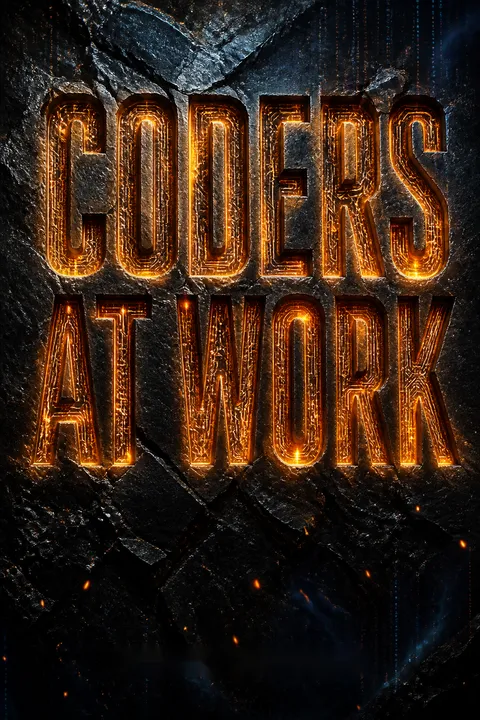


Key Takeaways
Treat programming as a craft of making useful systems, not merely writing code.
A larger craft. Across these interviews, programming means more than entering instructions. It includes choosing a problem, designing interfaces, explaining decisions, testing behavior, and leaving work another person can understand. The contributors differ sharply in temperament: Jamie Zawinski wants a working product in users' hands, Joshua Bloch designs APIs before implementing them, and Donald Knuth plans carefully before typing. Their shared point is not a universal workflow. It is that programming joins technical judgment with communication and design.
The work is personal. Dan Ingalls describes the pleasure of making an idea real; Joe Armstrong treats implementation as a way to understand a system; Fran Allen is drawn to the structures beneath complex behavior. These are not interchangeable motivations. They show why the book calls programming a craft: skill develops through making, examining, and revising real artifacts.
What's striking is how many forms of intelligence the craft rewards. Systems thinking, aesthetic judgment, curiosity, and empathy matter alongside formal reasoning. That resembles architecture, where a sound structure must satisfy both physical constraints and human use. It also cautions against treating programming skill as one measurable trait. A brilliant algorithm designer may not be a strong API designer, and a practical product builder may not care for mathematical elegance. The useful question is not whether a programmer is talented in the abstract, but which problems their particular strengths help solve.
Write for the next maintainer, because readability is a reliability feature.
Readable code reduces risk. Nearly every interviewee values code that can be understood after its author has moved on. Joshua Bloch spends serious time choosing names, while Douglas Crockford says comments should explain purpose or assumptions, not merely repeat a function name. A reader needs to see the structure of the problem, the data being handled, and the reasons for unusual choices. That makes future changes less likely to break hidden expectations.
Legibility is practical. Knuth presents programs as artifacts people should be able to read, not just instructions a machine can execute. Crockford organizes team code-reading sessions so programmers can catch defects and learn from one another. The book also shows a limit: comments can become stale, and an unreadable comment does not rescue confusing code. Clear names, simple structure, and accurate explanations work together.
Readable code functions like an external memory system. Cognitive science distinguishes the limited information a person can hold at once from the much larger knowledge that can be stored in written artifacts. Naming assumptions and exposing structure lower the mental burden on both author and reviewer. Yet readability is not identical to simplicity: an optimized inner loop may need careful explanation, and excessive decomposition can bury the main idea. The goal is not maximum prose or minimum line length. It is to make the code's important reasoning visible to the next person.
Test the shape of a solution before paying to build it fully.
Choose a process for uncertainty. Zawinski likes to get a visible or runnable piece working early because it reveals what the next step should be. Bloch takes a different route for APIs: he writes example client code against a short draft interface before implementing the machinery. If that client code is awkward, the design needs work. Knuth took yet another approach, drafting TeX before entering it into a computer. These methods differ because the problems differ.
Find the hard part early. Brad Fitzpatrick starts with interfaces, data layout, and the parts he does not understand, rather than saving surprises for the end. His LiveJournal experience taught him that migrations on a live service are painful. A small experiment, mock, or client example can expose a mistaken assumption before it becomes expensive. The best first step is the one that answers the project's most consequential unknown.
This is a practical version of experimental design: isolate uncertainty before committing resources. A user interface can be evaluated by putting a rough version in front of people; a storage architecture may be tested with a schema or a small prototype; an API can be judged by attempting to use it. The caveat is that prototypes answer only the questions they were built to test. A convincing demo may conceal performance, reliability, or maintenance costs. Good experimentation therefore asks not only, "Does this work?" but, "What important risk has this test left untouched?"
Ship a useful first version before a polished framework misses its moment.
Deadlines force choices. Netscape's early browser team set a six-month target, argued over features, and removed ideas that would keep the product from shipping. The first release was rough, but users adopted it quickly. Zawinski describes the satisfaction as coming from delivery and real use, not from perfect code. By contrast, a later Netscape rewrite expanded scope, disregarded the working product, and contributed to a disastrous release.
Beware the second system. Second-system syndrome is the tendency to make a successor too ambitious after a successful first system. The interviews do not argue that speed always beats quality. Zawinski stresses that sustained extreme hours are unhealthy, and Bloch argues for care in reusable APIs. The lesson is to distinguish necessary quality from imagined future-proofing. Ship a useful core, learn from use, and expand only when evidence justifies the cost.
A deadline can act as a constraint that improves prioritization, much as limited budgets do in engineering design. It forces teams to decide which capabilities matter to users now. But speed is not a universal virtue. A browser release can be corrected quickly; software controlling a spacecraft or medical device cannot assume easy recovery. The deeper principle is to make reversibility part of the plan. When errors can be repaired cheaply, early release buys information. When failure is costly or irreversible, more verification belongs before release.
Debug by testing assumptions, not by trusting the first plausible story.
Treat bugs as evidence. Brad Fitzpatrick describes spending 90 minutes debugging a program that was writing to one output path and reading from another. His code seemed not to change because his assumption about the filenames was wrong. The useful response is to check inputs, paths, and observations before making large edits. Fitzpatrick recommends changing one thing at a time and narrowing the cause rather than rewriting a whole system in frustration.
The tool can lie too. Zawinski once chased a failure that appeared to move between instructions, only to discover that the debugger mishandled a machine with speculative execution. Joshua Bloch found that a concurrency bug in his own code was actually caused by mislabeled lock routines in the underlying threading package. Debugging therefore means testing assumptions about the program, tools, and environment, using print statements, debuggers, tests, or inspection as appropriate.
Debugging resembles the scientific method because it converts a vague failure into competing explanations that can be tested. The strongest examples here involve mistaken premises, not merely faulty lines of code. This connects to cognitive bias: once a programmer commits to a theory, new evidence can be interpreted to support it. Deliberately checking the command line, the environment, and the debugger itself interrupts that confirmation loop. There is a tradeoff, however. Systematic diagnosis costs time, and a small isolated component may be faster to replace. The key is to make that choice consciously rather than reflexively.
Learn a codebase by tracing one real task through it.
Use a concrete entry point. Brad Fitzpatrick was initially afraid to read software he had not written. Contributing a patch to the Gaim instant-messaging project changed that: he began recognizing recurring structures instead of treating each codebase as alien. His practical entry sequence was to get a clean copy to build, make one small change, and send a patch that could start a conversation with maintainers.
Reading can be collaborative. Crockford makes teams read code together, while Guy Steele approaches a large system by tracing a familiar command from its entry point into the structures it uses. These methods turn code reading from passive browsing into investigation. A task gives the reader a reason to follow dependencies and reveals which abstractions matter. The aim is not to understand every line on day one. It is to build a reliable map by connecting a small change to its effects.
A real task supplies context, and context is what makes a large codebase cognitively manageable. This resembles apprenticeship in other technical fields: a novice learns not by absorbing an entire manual but by doing a bounded job with feedback. The small patch also creates a social bridge to maintainers, whose response can expose local conventions that documentation misses. The limitation is that a successful build and a passing change do not prove a deep understanding. New contributors should keep asking what invariants and dependencies their patch relies on, especially when a change crosses module boundaries.
Add language features only when real use justifies their cognitive cost.
Every feature has a price. Joshua Bloch recalls that Java generics solved a real problem, namely unsafe casts in collections, but their advanced type rules added more complexity than he had anticipated. Crockford argues for using a disciplined subset of JavaScript rather than every feature available. Brendan Eich, in contrast, warns that refusing language evolution can leave programmers with awkward workarounds. Their disagreement points to a real design tension: simplicity can exclude useful expression, while feature accumulation makes programs harder to learn and share.
Context beats allegiance. Zawinski chose C for a fast, cross-platform browser; Fitzpatrick valued Perl's availability and flexibility; Bloch sees Java's tools and community as part of its practical value. A language is not just syntax. It arrives with libraries, runtimes, conventions, and users. Evaluate the whole environment, then use the features that serve the task rather than treating any language as a creed.
Language design is a problem of managing cognitive load across a community. A feature can reduce local complexity while increasing the number of interactions programmers must understand. That is why counting features alone is misleading: a compact language may force repetitive work, while a richer one may offer a useful abstraction. The interviews also reveal path dependence. A language's tools and trained users can outweigh technical elegance, so replacing it is expensive even when a better design exists. The sound test is demonstrated value in real programs, balanced against the costs of teaching, debugging, and interoperability.
Make concurrent work safer by isolating state and limiting shared mutation.
Shared state multiplies uncertainty. Several interviewees identify concurrent code as especially difficult to debug because the same operations can happen in different orders. Joe Armstrong's Erlang approach uses message passing: independent processes communicate by sending messages rather than freely changing one shared memory space. He found that copying data could sometimes improve concurrency because it avoids the locks required for shared access.
No single model solves everything. Software Transactional Memory, or STM, groups shared-memory operations into transactions that either take effect together or do not. Simon Peyton Jones argues that it makes some concurrent operations easier to reason about than locks, while also warning that it cannot solve every problem. Zawinski, Crockford, and Brendan Eich all describe painful race conditions. Choose a model that makes ownership and communication explicit, then measure its performance and failure behavior.
The deeper issue is not simply that concurrency creates more execution orders. It is that shared mutable state obscures who may change what, and when. Message passing reduces that ambiguity by making interactions visible at boundaries; transactions make a set of operations appear atomic. Both approaches exchange one difficulty for another, such as copying overhead, contention, or starvation. This is why the interviews resist silver bullets. The practical design question is which invariants must hold, and which concurrency model makes those invariants easiest to state, enforce, and inspect.
Design boundaries for change before a live system makes migration expensive.
Scale reveals hidden coupling. LiveJournal began on a shared Unix server, then moved to separate web and database machines as demand grew. Web servers were easy to add, but the database became the bottleneck. Fitzpatrick eventually partitioned user data across database clusters, migrating accounts gradually while the service stayed online. He wished the application had been designed earlier around requests that could gather data across machines.
Do not confuse foresight with overbuilding. Clear interfaces and loose dependencies can make change cheaper, but elaborate infrastructure for an imagined future can delay a useful product. The interviews offer both warnings: live migrations consume time, while Netscape's overambitious rewrite discarded a successful codebase and failed. Keep boundaries simple, revisit them as evidence accumulates, and reserve large rewrites for systems whose current structure genuinely blocks necessary work.
This is a form of option value: a clean boundary preserves future choices without requiring the team to predict every future requirement. LiveJournal's gradual migration shows how a service can evolve without a single risky cutover, while also demonstrating the price of discovering architectural limits under load. The balance matters. Designing for every hypothetical scale wastes effort, but assuming no growth can make later change ruinously expensive. Good architecture does not eliminate uncertainty. It makes the cost of being wrong smaller and the cost of adapting more predictable.
Use code review to spread understanding, not merely approve changes.
Review is a learning tool. Crockford describes regular sessions where a programmer walks the team through code and colleagues ask about its intent, structure, and comments. The author can discover defects, but the rest of the group also learns how the pieces fit together. Google uses code review and directory owners to let many programmers contribute while keeping experienced people responsible for key areas.
Trust shapes the result. Bloch values discussing design decisions with a colleague before code is settled; Armstrong finds that explaining alternatives often clarifies his own thinking. Yet pair programming is not universally productive, and reviews can become destructive if criticism feels personal. A useful review focuses on the work, sets clear expectations, and makes it possible to disagree without humiliation. The goal is shared understanding and a codebase that does not depend on one person's memory.
Code review combines quality control with knowledge transfer, a rare process that can improve both the artifact and the team. It also reduces the risk of single-person ownership becoming a hidden dependency. Organizational research often distinguishes psychological safety from low standards: people need enough trust to expose unfinished work, while still being held to demanding technical expectations. The interviews imply both are necessary. Review is not automatically beneficial, however. Without respectful norms, it can reward status and argument rather than insight. Its value depends on making rigor collaborative rather than punitive.
Analysis
Coders at Work is not a handbook with one method hidden beneath fifteen interviews. Its form is the argument: experienced programmers disagree because they face different constraints, build different artifacts, and value different kinds of evidence. Knuth's deliberate planning, Zawinski's rapid visible prototypes, Bloch's API-first design, and Armstrong's long incubation are not contradictions to be flattened. Together they suggest a more useful rule: choose a working method according to the uncertainty that threatens the project most. The interviews repeatedly return to readability, yet they do not mean that code should merely look tidy. Readability preserves intent across time, teams, and changes in personnel. It acts as infrastructure for reasoning. This connects software craft to safety engineering, where a system must be inspectable by people who did not design it. Still, cleanliness cannot substitute for domain knowledge, measurement, or testing. A beautiful interface can expose the wrong abstraction, and a readable program can still fail in an untested environment.
The book's most durable tension is between speed and stewardship. Early Netscape needed to ship before competitors; LiveJournal needed to survive growth; long-lived compilers and language runtimes needed careful maintenance. No universal rule resolves these cases. Instead, the interviews imply that good programmers manage reversibility: prototype cheaply when uncertainty is high, invest in structure when others must build on the work, and avoid commitments that make correction prohibitively expensive.
Finally, the contributors resist the myth of the solitary genius without denying individual differences. They value mentors, code readers, reviewers, and colleagues who challenge assumptions. Programming remains an intellectual craft, but its artifacts are social objects. They must communicate across people and generations, not just instruct machines. That may be the book's clearest answer to what programming is: the disciplined construction of systems that other minds can understand, use, and change.
Review Summary
Coders at Work is highly regarded for its insightful interviews with programming luminaries. Readers appreciate the historical perspective, diverse opinions, and practical advice offered. Many find it inspiring and educational, praising the author's interviewing skills and the book's ability to capture the essence of programming as a craft. Some criticisms include repetitive questions and occasional dryness. Overall, it's considered a valuable read for programmers and those interested in computer science history, offering unique insights into the minds of influential coders.
People Also Read








Glossary
Literate programming
Code organized for human readingA way of writing software in which explanatory prose and code are developed together, with the presentation arranged to explain the program's ideas rather than merely follow the compiler's required order. A tool extracts or rearranges the code into an executable form. Knuth presents it as a way to make a program's reasoning readable alongside its instructions.
Second-system syndrome
An overambitious successorThe tendency for a team, after succeeding with an initial system, to design its replacement with too many features, abstractions, or architectural ambitions. The fresh start can tempt developers to exceed what they understand or can deliver. In the interviews, the failed Netscape rewrite illustrates how a successor can abandon a working product while promising a grander one.
Message passing
Communication through sent messagesA way for concurrent components to interact by sending explicit messages instead of directly reading and changing one another's shared memory. In Armstrong's Erlang model, processes communicate through messages and can remain isolated from each other's internal state. This makes interaction easier to identify, though it does not remove all costs or design challenges.
Shared-nothing
Processes keep separate stateA system design in which independent processes or machines do not rely on mutable memory shared directly with other processes. They coordinate through explicit communication, often by messages. The book discusses this approach as useful for concurrent and distributed systems because it limits interference, while recognizing that communication, failure handling, and data movement still require careful design.
Software Transactional Memory
Atomic groups of memory operationsA concurrency mechanism that lets a programmer group reads and writes to shared memory into transactions. A transaction appears to take effect as one unit, or is abandoned if it conflicts with another operation. Peyton Jones presents STM as easier to reason about than fine-grained locks for some problems, but not as a universal solution to concurrency.
FAQ
What's Coders at Work about?
- Interviews with programmers: Coders at Work by Peter Seibel features interviews with fifteen influential programmers, offering insights into their experiences and philosophies.
- Programming as a craft: The book delves into programming as a craft, exploring how these experts approach coding, design, and problem-solving.
- Historical and diverse perspectives: It provides historical context and diverse viewpoints, from early pioneers to modern developers, on the evolution of programming languages and practices.
Why should I read Coders at Work?
- Learn from experts: The book offers valuable insights from some of the most respected figures in programming, which can inform and inspire your own practices.
- Diverse perspectives: It presents a range of viewpoints on programming, broadening your understanding of different approaches and methodologies.
- Inspiration and motivation: The stories and experiences shared can motivate you to pursue your own programming projects and challenges with renewed enthusiasm.
What are the key takeaways of Coders at Work?
- Readability is crucial: Many interviewees stress the importance of writing clear and readable code for maintenance and collaboration.
- Continuous learning: Programming is an ever-evolving field, and even experienced programmers are always seeking better ways to write software.
- Collaboration and communication: Effective teamwork and communication are essential for successful software development and project outcomes.
What are the best quotes from Coders at Work and what do they mean?
- "Programs are meant to be read.": This quote emphasizes that code should be understandable to humans, not just machines, enhancing collaboration and reducing errors.
- "You can't prove by testing that a program is bug-free.": It highlights the limitations of testing and the need for rigorous design to ensure reliability.
- "The best way to learn programming is to write a lot of programs.": This underscores the importance of hands-on experience in mastering programming skills.
How did the interviewees in Coders at Work learn to program?
- Early exposure: Many started programming at a young age, often through school projects or personal interest, laying the foundation for their skills.
- Self-taught methods: Several learned through trial and error, reading manuals, and experimenting with code, highlighting the importance of hands-on experience.
- Mentorship and collaboration: The influence of mentors and collaboration with peers played a significant role in their development, as shared by many interviewees.
What programming languages and tools do the interviewees in Coders at Work prefer?
- Diverse language preferences: Interviewees express preferences for various languages, with many favoring Perl, C, and JavaScript for their flexibility and power.
- Tools for efficiency: Tools like Emacs and JSLint are mentioned as favorites for their utility in writing and debugging code.
- Evolution of language use: The book illustrates how programmers adapt to new languages and tools over time, reflecting the dynamic nature of the programming landscape.
What debugging techniques are discussed in Coders at Work?
- Print statement debugging: Many interviewees mention using print statements to track down issues, emphasizing its simplicity and effectiveness.
- Systematic approach: Some discuss a systematic method of debugging by narrowing down the location of errors through a process of elimination.
- Using assertions: Several programmers advocate for the use of assertions to catch errors early in the development process, ensuring code reliability.
How do the interviewees in Coders at Work approach code design?
- Prototyping and iteration: Many emphasize the importance of prototyping and iterating on designs, allowing for flexibility and adaptation as new insights are gained.
- Documentation importance: Writing documentation alongside code is highlighted to clarify intentions and ensure that the program's purpose is well understood.
- Focus on simplicity: A common theme is the preference for simplicity in design, advocating for clear, understandable code that avoids unnecessary complexity.
What role does intuition play in programming, according to Coders at Work?
- Guiding decision-making: Intuition can guide decision-making and problem-solving, as many interviewees suggest.
- Experience-based insights: Intuition often develops through experience, allowing programmers to recognize patterns and make informed choices.
- Balancing intuition and analysis: While intuition is valuable, analytical thinking and rigorous design are also necessary for robust software solutions.
How do the interviewees in Coders at Work view the future of programming?
- Evolving landscape: Many express optimism about advancements in technology and methodologies, believing programming will continue to evolve.
- Need for better tools: There is an emphasis on developing better tools and languages to improve the programming experience.
- Collaboration and community: The future is seen as increasingly collaborative, with a focus on sharing knowledge and resources.
What is the significance of functional programming in Coders at Work?
- Functional programming benefits: Advantages include easier reasoning about code and improved modularity, as discussed by several interviewees.
- Laziness as a feature: Lazy evaluation is highlighted as a powerful tool, allowing for more efficient use of resources.
- Integration with other paradigms: Functional programming can coexist with other paradigms, providing a richer toolkit for developers.
What advice do the interviewees in Coders at Work give to aspiring programmers?
- Embrace curiosity and experimentation: Aspiring programmers are encouraged to be curious, experiment with different languages and tools, and not fear mistakes.
- Focus on readability and documentation: Writing readable code and documenting it well is crucial for collaboration and future maintenance.
- Learn from others: Reading code written by others, participating in open-source projects, and seeking mentorship are advised to enhance skills and knowledge.
Download PDF
Download EPUB
.epub digital book format is ideal for reading ebooks on phones, tablets, and e-readers.








