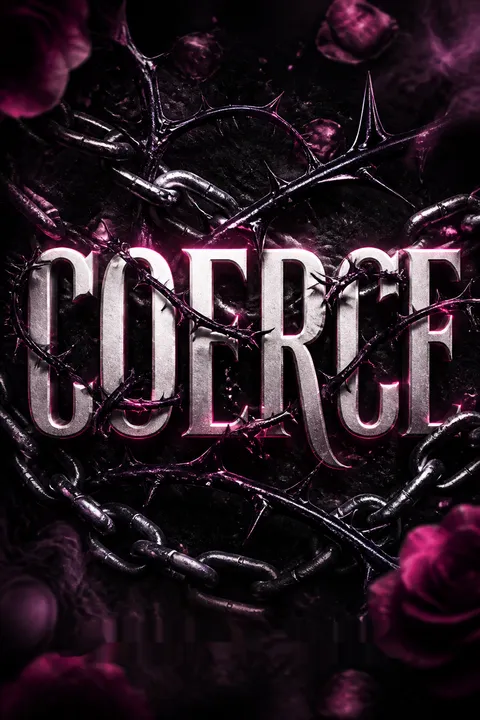


Plot Summary
Prologue
Atlas Monroe recalls the massacre of a rival family’s wedding, ordered after his father believes Atlas’s fifteen-year-old stepsister, Abigail, was raped by the groom. At home, the truth emerges: Abigail’s lover was the pool attendant, and Abigail’s mother helped her lie.
Atlas’s father kills both adults, then orders Abigail sent away. A photograph from the wedding shows a bloodied child alive among the bodies: Emma Walsh, the rival family’s heir. Atlas is told to find her and finish what the massacre began. He has spent years treating violence as inheritance, but the child’s image unsettles him.
The opening establishes the moral weather Atlas inhabits: violence is presented as family policy, and an unverified accusation becomes a license to punish an entire household. Abigail’s lie has consequences, but the adults’ response magnifies those consequences until children inherit the damage. Atlas’s discomfort does not yet make him compassionate. It makes him aware that the rules he accepts can turn one mistake into generations of bloodshed. Emma’s photograph gives that history a human face and plants the central question of the novel: whether a person can escape a past that powerful people insist on making their future.
The Dead Car's Detour
Ivy Brookes is juggling two low-paying jobs, a failing car, and the daily effort of keeping herself afloat. When her car dies on a busy road and her phone is dead, she reluctantly accepts help from Kenzo, a courteous stranger who says he is Atlas Monroe’s bodyguard. Atlas, wealthy and strikingly aloof, gives her a ride home, but notices her name without being told it.
Soon afterward, Ivy learns both her phone and her car have disappeared. Her life is already precarious, shaped by the deaths of her parents and years without dependable family; the missing belongings make her dependent on buses and other people’s generosity. Atlas’s rescue gives her a way home, while his unexplained attention leaves a question behind.
The first meeting is built around a practical imbalance rather than a romantic coincidence. Ivy needs transportation, while Atlas has money, security, and the power to decide what help looks like. Her caution is not coyness; it is an adaptive skill formed by living without a safety net. Atlas can afford to dismiss danger because his world is organized to absorb it. The missing car and phone begin as ordinary hardships, but their timing makes assistance feel both welcome and suspicious. The scene therefore introduces the novel’s recurring tension: protection can resemble care, yet the person offering it may also be controlling the danger.
A Bruised Night Shift
Working at the Drift, Ivy refuses a drunken customer’s invitation and fights off his attempt to touch her. After the club closes, he attacks her outside and knocks her unconscious. Pete, Atlas’s driver, hears the commotion and brings Ivy to Atlas’s home, where a doctor checks her head. Atlas says he undressed her because her clothes were wet, then makes his sexual interest unmistakable.
Ivy is shaken by the force of his attention, yet drawn to him; she leaves knowing he wants far more than friendship. Atlas’s care makes her feel protected after the assault, but his certainty that she will eventually belong to him makes the safety feel conditional. The attack also gives Atlas a reason to place a driver between Ivy and the city.
Ivy’s vulnerability is concrete: a customer punishes her for refusing him, and she wakes in the home of a far more powerful man. The distinction between rescue and control immediately becomes difficult to maintain. Atlas does respond to a real danger, but he treats Ivy’s dependence as an opening to claim authority over her. Her attraction does not erase the pressure in that arrangement. The scene’s emotional force comes from the collision of bodily fear with bodily desire, two reactions that can coexist without making coercion harmless. Pete’s intervention introduces a quieter form of care, one that does not demand intimacy in return.
Purple Flowers, Unknown Sender
Ivy returns home to find purple flowers and a note from someone who knows where she lives. She assumes Atlas sent them, but he denies it and grows angry at the possibility that another admirer is watching her. Earlier gifts had made her feel noticed; this one makes her feel exposed.
Atlas takes charge of the broken door and adds locks, though Ivy resists his offer to buy a full security system. Their attraction deepens through possessive visits and increasingly intimate attention, even as Ivy tries to keep her independence.
The flowers remain unexplained, and the mismatch between Atlas’s denial and his certainty about protecting her troubles her. She accepts practical help, but does not yet know that the threat has been arranged from inside Atlas’s own circle.
The flowers transform romance’s familiar token into evidence of surveillance. Ivy’s response is divided because the gift offers recognition at the same moment it violates her privacy. Atlas recognizes the danger, but his solution reinforces the imbalance: he chooses the locks, controls the response, and frames access to her as his responsibility. Her refusal of a security system is a small but important boundary, an attempt to preserve agency while accepting help. The scene also gives the reader a reason to distrust appearances. A protective gesture can be sincere in feeling and compromised in origin, a distinction that becomes increasingly consequential as Atlas’s attention intensifies.
A Rooftop First Date
Atlas arranges an extravagant private dinner on a rooftop, keeping Ivy away from other guests because he cannot tolerate men looking at her. When he cuts away her dress with a knife, Ivy is frightened but does not leave; he uses the moment to turn their sexual encounter into a ritual of possession. He discovers she has never had sex, then stops before intercourse and arranges a doctor’s visit and contraception.
The next morning, Ivy hears more about his work locating people who have run from debts and scandal, and sees that his house contains weapons as readily as luxuries. She has also told him about losing both parents as a girl. Their intimacy grows, but so does her awareness that Atlas’s tenderness and menace occupy the same room.
The date makes the book’s central contradiction unusually visible. Atlas stages privacy as a romantic luxury, then uses that privacy to impose his will. Ivy’s participation matters, but her fear and his dominance complicate any easy description of the encounter as mutual courtship. His decision to stop before intercourse and arrange medical care shows that restraint exists in him, though it does not undo the pressure surrounding the scene. Ivy’s history of bereavement helps explain why his attention feels like shelter; his arsenal and criminal work reveal the costs of accepting that shelter. The episode asks readers to distinguish intensity from trust, and care from control.
The Phone Was Tracked
As more flowers and unsettling signs appear, Ivy notices Atlas knows where she is and realizes her phone is tracking her. She hangs up on him and asks her coworker Marvin to check the device. Marvin finds a hidden tracker and offers her a spare room.
Before morning, Atlas enters the apartment, sedates Ivy, and carries her away. She wakes in his bed, furious that he drugged her and unwilling to accept his explanation that he was protecting her. Their argument becomes a struggle over whether love gives Atlas a right to monitor Ivy.
She remains attracted to him, but the episode exposes how readily he overrides her choices. Meanwhile, Atlas’s unseen violence continues elsewhere, including his killing of a man who tried to drug Ivy at the Drift.
This turning point makes surveillance literal and strips away the reassuring language that has surrounded Atlas’s protectiveness. Ivy takes a reasonable step toward safety by seeking help from Marvin; Atlas answers by removing her ability to choose where she sleeps. His fear for her may be real, but the sedative converts concern into bodily control. The novel’s dark-romance premise depends on that collision, and a trustworthy summary must not mistake desire for consent or protection for moral innocence. Marvin’s intervention offers an alternative model of care: he checks the phone, provides shelter, and asks what Ivy needs. Atlas’s killing of a would-be assailant reveals that his methods are not merely possessive but lethal.
The Jobs Begin to Vanish
Ivy’s life at work deteriorates. She is dismissed from the Drift after a VIP customer makes false complaints, then her gym boss, Henry, assigns her to serve Atlas’s father in a private suite. Atlas’s father touches Ivy and humiliates her publicly before implying she is a sex worker. Atlas arrives, sends her home, and tells her the encounter was a test of her loyalty.
He then strips his father of control over their businesses and kills Jim, his father’s guard. Atlas also kills Henry after finding footage of Ivy and compromising images in the gym office. Ivy does not know the full extent of these acts, but losing her jobs makes her increasingly dependent on Atlas. She has little money, no car, and no dependable family to turn to.
The professional losses are not background adversity; they narrow Ivy’s choices at precisely the moment Atlas is consolidating control. Her employers’ accusations and her exposure to Atlas’s father both show how easily a powerful man can define a woman’s reputation for her. Atlas retaliates with violence, which may feel protective to Ivy but also makes him judge, enforcer, and source of her security. His claim that his father’s harassment was a test further reveals the cost of treating people as pieces in a private game. The scene joins workplace vulnerability to criminal power, showing how coercion can grow through practical dependency as well as through sexual pressure.
A Home With Cameras
The stalker’s threats escalate outside Ivy’s apartment, where flower petals and a threatening message appear. When Atlas and Kenzo search the home, they find hidden cameras in the bedroom and bathroom.
Ivy leaves the apartment she had fought to maintain and moves into Atlas’s house, feeling that the stalker has taken the last private space she controlled. Atlas proposes marriage soon afterward, and Ivy accepts despite fearing the speed of their relationship.
She loves him, but the proposal offers no pause to resolve the coercion and surveillance already between them. The move gives her guards, a secure house, and financial shelter. It also places her inside Atlas’s world, where nearly every door, employee, and decision is under his influence.
The cameras make privacy the material stake of the story. Ivy does not simply choose a more comfortable home; she abandons her own space after someone has turned it into a viewing room. Atlas can offer security because he has resources, but moving in also concentrates her dependence on him. The proposal follows an emergency rather than a settled period of mutual knowledge, so its emotional meaning is double: Ivy chooses the man she loves while also seeking refuge from a threat he has not identified. Her acceptance is neither a clean surrender nor uncomplicated freedom. It captures the novel’s recurring ambiguity between a chosen bond and the circumstances that constrain choice.
Vows Under Vegas Lights
Atlas takes Ivy to Las Vegas, where they marry quickly and celebrate alone with Kenzo and Pete nearby. Ivy believes the sudden wedding is a reckless but joyful beginning. Back home, she accompanies Atlas to his restaurant, Vines, and learns from a waitress that he owns the Drift, the club that fired her.
Atlas had let Ivy believe he had no connection to the decision, though he had orchestrated her dismissal and used it to draw her closer. Ivy leaves before he can explain, feeling that the romance she trusted was built on a concealed business scheme. Atlas finds her in the rain and brings her home. Their marriage is now legally real, but the discovery makes Ivy question whether the vows joined two people or completed Atlas’s plan.
The wedding gives the relationship a public form, but the revelation about the Drift undermines the story Ivy told herself about how they came together. Atlas’s wealth is not merely a contrast between their backgrounds; it is an instrument with which he can arrange jobs, housing, and access. His concealment means Ivy cannot assess their relationship on equal information. Her flight is an attempt to recover a judgment that Atlas has repeatedly preempted. The scene’s emotional reversal is sharp because the marriage itself is not the betrayal. The betrayal is discovering that ordinary events in her life may have been engineered to make the marriage feel inevitable.
The Locked Bed
After Ivy confronts Atlas about what he has concealed, he binds her to the bed, blindfolds and gags her, and leaves her exposed while workers move through the house below. He claims he is trying to make her understand the danger of the stalker, but he later has sex with her without her consent. Ivy is left shaken and sickened by the man she had trusted.
A detective then tells her Henry has died by suicide and that police found photographs of Ivy asleep and naked. The news seems to confirm the stalker’s reach, while Atlas offers reassurances that blur fact and manipulation. Ivy is left trying to separate genuine threats from the man who says he is protecting her.
This is the relationship’s clearest rupture because Atlas makes fear into a lesson and Ivy’s body into its teaching tool. His stated intention cannot change the nonconsensual nature of what he does. The scene also shows how the language of protection can conceal punishment: Atlas wants Ivy to fear an outside threat, but his own actions give her more immediate reason to fear him. The detective’s report intensifies that confusion by supplying evidence of real surveillance while leaving its source uncertain. The reader is placed inside Ivy’s problem of interpretation, where every promise must be tested against conduct. Love may persist, but it no longer functions as proof of safety.
The Stalker Has a Name
Ivy discovers her stolen car hidden in Atlas’s garage and finds Kane, a man from Atlas’s criminal circle, waiting there. Kane admits that Atlas paid him to frighten Ivy, including the flowers and earlier threats. He says Atlas abandoned him after the attack outside the Drift, leaving him to face the consequences alone.
Kane tries to assault Ivy, but she throws dirt in his eyes, punches him, and fights free. Kenzo reaches her first; Atlas then beats and shoots Kane. His words echo a message Ivy has seen before, and she asks why the car is in the garage. Atlas can no longer deny that her fear was deliberately manufactured. The hired stalker is dead, but the betrayal now has a name and a source.
The revelation reorganizes the novel’s suspense: the threat was real in its effects, but not independent of Atlas. He used Kane to provoke fear, then positioned himself as the person who could answer it. Ivy’s resistance matters here; she does not wait passively for rescue but uses whatever is at hand to survive. Atlas’s killing of Kane removes the immediate attacker without repairing the underlying betrayal. The car becomes a particularly sharp symbol because its disappearance helped create Ivy’s dependence from their first meeting. The scene forces a distinction between removing danger and taking responsibility for having created it.
The Girl in the Massacre
Atlas takes Ivy into a locked room filled with photographs of her life and admits he arranged their first meeting, sabotaged her car, bugged her phone, planted the flowers, and used Kane and Henry to shape her choices. In his files, Ivy finds photographs of the wedding massacre from Atlas’s past. The bloodied child in the image is herself: Emma Walsh, the sole surviving heir.
Her adoptive parents had hidden her identity after a police officer rescued her, and the memories of the attack had remained buried. Atlas had been assigned to hunt her. Ivy is pregnant, and she tells him that killing Emma would mean killing their child’s family as well. When Atlas refuses to spare the Walsh heir, Ivy shoots him and runs.
The two revelations, Atlas’s manufactured courtship and Ivy’s hidden identity, converge on the same question: who has the authority to define Ivy? Atlas has treated her as a desired possession; the Walsh history treated her as an heir whose bloodline matters more than her wishes. Recovering the name Emma does not erase the life Ivy built as Ivy, but it forces her to confront the cost of adults’ decisions made around her. Pregnancy sharpens the moral stakes without making her choice simple. She shoots Atlas not because her love disappears, but because she finally refuses to let his inherited logic decide whether another generation must be sacrificed.
Blood at the Warehouse
Atlas follows Ivy to a warehouse, where he finds her tied beside his father and Abigail, his stepsister, holding a gun. Abigail reveals that she arranged the stalking and the kidnapping, disguising herself as the missing Walsh heir to draw the family into her revenge. Ivy recognizes the history behind the feud and tries to stop Abigail from repeating it.
Atlas tells Abigail that her son, Liam, survived and was adopted into a loving home; for a moment, she lowers her weapon. Atlas’s father grabs the gun and shoots Abigail. Atlas kills his father, but the gunfire also wounds Ivy in the stomach. She survives long enough to promise she will hold on, then falls into a coma while Atlas waits beside her.
The warehouse brings the opening’s inherited violence into a single room. Abigail has been shaped by the same crimes that shaped Atlas, but her revenge would make Ivy and the unborn child its next casualties. The news that Liam is alive interrupts the cycle briefly, giving Abigail a reason to imagine a life beyond loss. Her father’s intervention destroys that possibility, and Atlas answers with another killing. The stray wound to Ivy makes the cost of their family history bodily and immediate. Her coma suspends resolution: Atlas cannot force forgiveness, and his power cannot command her to wake. For once, he must wait without controlling the outcome.
Epilogue
Ivy wakes seven months later and, after a difficult recovery, gives birth to a daughter. Atlas names her Iris, recalling the purple flowers that marked the beginning of his pursuit. He admits the implant he presented as contraception was actually a tracker, prompting Ivy to threaten him with murder rather than accept another secret.
Still, she chooses to remain with him, asking for the dangerous, unvarnished man she fell in love with rather than a softened imitation. Their life together is not made innocent by survival, but Ivy now knows the history Atlas tried to hide and can name the terms she will not surrender.
The ending offers survival rather than moral cleansing. Ivy’s recovery and the birth of Iris give the story a future, but neither erases Atlas’s coercion or the violence that brought them there. The tracker confession is especially telling: even at the point of reunion, Atlas has not outgrown the impulse to secure love through surveillance. Ivy’s response, anger mixed with continued attachment, preserves her capacity to judge him instead of turning recovery into automatic forgiveness. Naming the child Iris also gives the flowers a changed meaning. What began as a tool of manipulation becomes a family name, but only because Ivy can now see both its tenderness and its history of control.
Analysis
Coerce builds its central romance around a conflict between emotional recognition and personal sovereignty. Ivy wants connection because bereavement and unstable care have left her with few dependable attachments. Atlas offers an intense form of attention, but he repeatedly converts that attention into surveillance, economic leverage, and physical control. His acts of care are not false simply because they coexist with abuse; rather, the book’s tension comes from their coexistence. That complexity asks readers to notice how affection can be genuine while its methods remain coercive.
The novel also treats family history as a mechanism that reproduces violence. Atlas inherits his father’s rule that injury must be repaid, while Abigail and Ivy bear the consequences of choices made by adults with greater power. The original lie does not excuse the massacre, and the massacre does not justify later revenge. By revealing Ivy’s connection to the Walsh family, the story makes private romance inseparable from public history: Atlas’s desire to possess Ivy is entangled with his assigned duty to erase her lineage.
Ivy’s survival depends on more than Atlas’s protection. She jokes, questions, resists, seeks help from Marvin, fights Kane, and ultimately acts against Atlas when she believes he will repeat the family’s violence. Those actions prevent her from becoming merely the object of a dark romance. Yet the ending remains deliberately uneasy. The couple reunites, but the story does not erase the harm or offer a model of healthy love. Its sharpest insight is that intensity does not prove safety, and survival does not automatically settle what forgiveness should require. The future they choose remains charged by the difference between being loved and being owned.
Review Summary
Coerce is a dark romance novel that has garnered mixed reviews. Many readers praise its intense, obsessive hero and steamy scenes, while others criticize the lack of character development and predictable plot twists. The book features an age-gap relationship between a possessive, wealthy man and a young, naive woman. Some reviewers found the hero's actions too extreme, bordering on abusive, while others enjoyed the toxic dynamic. The writing style and pacing received both praise and criticism, with some finding it entertaining and others feeling it rushed or underdeveloped.
People Also Read









Characters
Ivy Brookes
The self-reliant survivorIvy works exhausting jobs and measures risk carefully because she has had to build a life without parents or a dependable family network. Her humor is quick, but it often shields a deep fear of being left alone and a strong reluctance to accept help that might become a debt. She is attracted to Atlas’s intensity while remaining alert to the danger in his possessiveness. Her inner conflict is not simply whether she loves him; it is whether she can preserve her own judgment and identity inside a relationship that keeps narrowing her choices. Ivy’s toughness appears in practical decisions as much as in moments of physical resistance.
Atlas Monroe
The possessive crime heirAtlas is a wealthy businessman and criminal power broker whose polished self-command conceals a life organized around violence, surveillance, and control. He experiences attachment as an urgent claim rather than a mutual negotiation, and he repeatedly mistakes his ability to protect someone for a right to govern them. Ivy unsettles him because she responds to him with humor and directness instead of fear or calculation. His tenderness is real, but it exists beside a willingness to deceive and use force. The tension in his character comes from his desire to be loved without relinquishing the methods that make love feel like possession.
Kenzo
Atlas's trusted enforcerKenzo is Atlas’s closest associate, bodyguard, and practical fixer. He is observant, dryly funny, and accustomed to carrying out dangerous instructions without moral theatrics. His loyalty to Atlas is strong, but he can recognize when Atlas’s choices threaten more than they protect. With Ivy, Kenzo is often considerate in ordinary ways, which makes his participation in Atlas’s plans more complicated than simple cruelty.
Pete
The courteous driverPete drives for Atlas and becomes one of the first people in Ivy’s new orbit to treat her with uncomplicated kindness. His manners and concern contrast with the more coercive forms of protection around her. He is loyal to Atlas, but he does not make Ivy earn basic courtesy, and his steady presence offers her brief reassurance amid a life increasingly arranged by others.
Abigail
Atlas's troubled stepsisterAbigail is Atlas’s stepsister, raised within a family where affection and authority are tangled with threat. As a teenager, she makes a consequential choice that exposes how little power she has to control the adults around her. Her relationship with Atlas is strained by his judgment and their father’s harsh rule. She represents a family wound that Atlas has never resolved, even as he builds his adult identity around command and retaliation.
Atlas's Father
The old crime patriarchAtlas’s father leads a criminal family through fear, rigid ideas of loyalty, and a belief that violence can settle any debt. He regards even intimate relationships as matters of power and legacy. His influence shaped Atlas’s early understanding of consequence, masculinity, and authority, leaving his son both indebted to him and determined to outgrow his rule.
Marvin
Ivy's protective coworkerMarvin works with Ivy at the Drift and treats her like a younger sister. He is warm, funny, and willing to take concrete steps when he realizes she may be in danger, including checking her phone and offering her a safe place to sleep. His loyalty is uncomplicated, though his presence brings him into conflict with Atlas’s possessiveness.
Henry
Ivy's hostile bossHenry manages the gym where Ivy works and uses his authority to make her insecure about keeping her job. He is a petty, demanding supervisor whose treatment of workers reflects how economic pressure can make ordinary cruelty difficult to resist. Ivy keeps working for him because she needs the income, not because she mistakes his behavior for fair leadership.
Detective Miles
The underworld-connected detectiveDetective Miles is a police contact who investigates threats against Ivy while operating in a world where law enforcement and powerful private interests overlap. His inquiries provide information, but his position also reminds Ivy that official protection is not always independent of wealth or influence.
Emma Walsh
The young Walsh heirEmma is the youngest child associated with the Walsh family and a figure in the feud that shapes Atlas’s criminal world. Her early vulnerability carries enormous meaning for adults who speak of inheritance, revenge, and witnesses. The story’s larger conflicts reveal how readily powerful people turn a child into a symbol before considering what she needs to survive.
Seline
Atlas's calculating stepmotherSeline is Atlas’s stepmother and Abigail’s mother. She is ambitious, socially calculating, and willing to manipulate family loyalties to protect her position. Her choices help expose the danger of treating other people’s lives as pieces in a private scheme.
Lewis
The pool attendantLewis works for Atlas’s father and becomes entangled in Abigail’s private life. He is a young man without the power or protection enjoyed by the family he serves, a disparity that shapes the danger surrounding him.
Dylan Walsh
The accused Walsh heirDylan is a young member of the rival Walsh family, whose alleged actions trigger a devastating feud. His place in the story shows how quickly an accusation can become a political weapon when powerful families treat retaliation as justice.
Kane
A man in Atlas's orbitKane is connected to Atlas’s criminal operations and moves through the story as a source of unease. He is accustomed to following orders, but his own resentment and ambitions make him difficult to treat as a harmless subordinate.
Liam
A child at the centerLiam is a young boy whose existence links the family’s history to the possibility of a life beyond criminal inheritance. He is not an active participant in the violence, yet adults’ choices around him carry lasting emotional consequences.
Plot Devices
Purple flowers
Romance turned warningThe flowers first resemble a conventional courtship gesture, offering Ivy the unfamiliar pleasure of being noticed. Their repetition, personalized notes, and eventual connection to surveillance change their meaning. They become a visible measure of how attention can cross into intrusion, especially when the recipient does not know who is sending the gift or how that person knows intimate details. The flowers also anchor Atlas’s manipulative pursuit in an object that can be read as tenderness before the truth is known. Their later association with Iris gives the symbol a complicated afterlife, neither fully innocent nor entirely stripped of affection.
The missing car
Dependence engineeredIvy’s unreliable car is part of her ordinary economic struggle, but its disappearance makes her newly reliant on public transportation, Atlas’s driver, and eventually Atlas himself. At first it appears to be one more misfortune in a life already full of practical setbacks. Its presence in Atlas’s garage later changes the meaning of the first meeting and shows how a manufactured obstacle can make a powerful person’s assistance feel like fate. The car links the beginning of the romance to the eventual confession that Atlas manipulated Ivy’s circumstances.
Hidden cameras and trackers
Privacy made vulnerableCameras in Ivy’s home and tracking devices on her phone turn surveillance from a vague fear into a physical invasion. The devices make her feel watched even when she is alone and help drive her from the one home she controls. They also reveal the difference between a genuine threat and Atlas’s own intervention in her life. As plot mechanisms, they supply evidence and suspense; as symbols, they show how easily protection becomes indistinguishable from monitoring when the person with more power controls the technology.
The wedding photograph
Past exposed in an imageA photograph of the massacre’s lone child survives as a piece of evidence from Atlas’s past. When Ivy encounters it among his files, it connects her private memories and unexplained childhood history to the criminal feud that shaped Atlas. The image makes a buried identity visible without making its meaning immediately easy to accept. It also turns the book’s opening violence into an active force in the present, linking the child among the bodies to the pregnant woman Atlas has tried to claim.
The Walsh feud
Violence inherited forwardThe conflict between the Monroe and Walsh families begins with a lie, but the adults’ response creates consequences far beyond the original accusation. Revenge is framed as an inherited obligation, allowing each generation to justify new harm as repayment for old harm. The feud supplies the crime plot, but it also tests Atlas’s belief that violence is unavoidable. Its most important function is to place a child’s future inside a conflict she did not choose, then force Ivy to confront whether love can coexist with refusing that inherited logic.
About the Author
Other books by Candice M. Wright




Download PDF
Download EPUB
.epub digital book format is ideal for reading ebooks on phones, tablets, and e-readers.








