Plot Summary
Styx River Tragedy
On a sweltering July day in 1965, Jim and JoAnn Larkin vanish while boating on the Styx River, leaving behind their children, Jerry and Margaret, and Jim's mother, Evelyn. The river, with its snakes and secrets, swallows the couple, their bodies never recovered. The Larkins are left with only a cenotaph and a legacy of fear and loss. The tragedy marks the beginning of a generational curse, as the family's blueberry farm becomes both their livelihood and their prison. The river's darkness seeps into their lives, shaping their fears and destinies, and setting the stage for the horrors to come.
Blueberry Farm Shadows
Years later, the Larkin family—Evelyn, Jerry, and Margaret—eke out a living on the ancient blueberry farm, isolated by the encroaching woods and the ever-present Styx. The farm's prosperity is fading, the plants aging, and debts mounting. Jerry shoulders the responsibility, his future narrowing to the farm's decline and his grandmother's eventual death. Margaret, quiet and secretive, is on the cusp of adolescence, her world shrinking as the family's troubles grow. Evelyn, haunted by loss and age, clings to routine and hope, but the shadow of the river and the past looms over them all, threatening to consume what little they have left.
Margaret's Disappearance
On a stormy June evening, Margaret leaves for town on her bicycle and never returns. The family's anxiety grows as the storm rages, the phone lines go dead, and the river rises. Jerry and Evelyn's fears are compounded by memories of past loss. The next day, with no sign of Margaret, the family's dread becomes palpable. The community's indifference and the farm's isolation deepen their sense of helplessness. The disappearance is not just a personal tragedy but a rupture in the fragile fabric of their lives, exposing the vulnerability and isolation that define their existence.
Babylon's Uneasy Calm
Babylon, a small, insular town, is a place of gossip, grudges, and hidden tensions. The Redfield family, wealthy and powerful, exerts quiet control, while the Larkins are seen as outsiders, their misfortunes a source of speculation. Sheriff Ted Hale, Belinda his vivacious daughter, and the Redfield sons—Nathan and Ben—form a web of relationships that both support and suffocate the town. As Margaret's disappearance becomes known, the town's calm is disturbed, revealing undercurrents of suspicion, envy, and old resentments. The search for Margaret exposes the town's moral decay and the limits of its compassion.
The Search Begins
The Larkins, joined by friends and neighbors, begin a frantic search for Margaret. Sheriff Hale is skeptical, suggesting she ran away, but Evelyn and Jerry know better. The investigation is hampered by small-town politics, personal biases, and the town's reluctance to confront darkness in its midst. The searchers comb the woods and riverbanks, but the Styx keeps its secrets. The community's response is a mix of concern and voyeurism, as the Larkins' pain becomes public spectacle. The search becomes a ritual of hope and denial, as the family clings to the possibility of Margaret's safe return.
The Bridge and the Mask
The truth of Margaret's fate is revealed in a chilling sequence: a masked man ambushes her at the Styx River bridge, binding her to her bicycle and throwing her into the black water. The act is brutal, ritualistic, and deeply personal. The river, already a symbol of loss, becomes an accomplice to murder. The killer's identity is hidden, but the violence is unmistakable. The bridge, once a mundane crossing, is transformed into a site of horror and violation. The murder marks a turning point, unleashing forces—both human and supernatural—that will haunt Babylon.
Grief and Accusation
Margaret's body is eventually found, her death confirmed as murder. The Larkins are devastated, their grief compounded by the brutality of the crime and the town's inability to deliver justice. Evelyn becomes obsessed with finding the killer, convinced that Nathan Redfield is responsible. Her accusations are dismissed as hysteria, but her conviction is unshakable. The family's isolation deepens, as friends and neighbors withdraw, unwilling to confront the possibility of evil among them. The search for answers becomes a quest for vengeance, as grief curdles into obsession.
The Redfield Intrigues
The Redfield family's internal dynamics are revealed: James, the patriarch, is incapacitated; Nathan, ambitious and ruthless, schemes to acquire the Larkin farm, believing it sits atop valuable oil reserves. Ben, weak and pliable, is drawn into Nathan's orbit. The Redfields' wealth and influence shield them from scrutiny, even as their actions grow more sinister. Nathan's relationship with Belinda Hale adds another layer of complexity, as desire, manipulation, and violence intertwine. The family's secrets are buried as deeply as the bodies in the Styx, but the truth begins to seep out, threatening to destroy them all.
Secrets in the Soil
As the investigation stalls, old secrets come to light: the Larkins' financial struggles, the Redfields' past misdeeds, and the town's history of violence and cover-up. The blueberry farm, once a symbol of stability, is revealed as a site of buried trauma and unresolved guilt. The river, the land, and the people are all implicated in a cycle of harm and denial. The supernatural begins to intrude, as strange phenomena—ghostly apparitions, inexplicable stains, and unnatural weather—signal that the dead are not at rest. The soil of Babylon is tainted, and the past refuses to stay buried.
The Ghost in the Water
Margaret's ghost, and later those of Jerry and Evelyn, begin to haunt the living. The river becomes a conduit for their restless spirits, who seek justice, vengeance, or simply recognition. The supernatural manifestations are both terrifying and pitiful, reflecting the unresolved pain and injustice that permeate the town. The living are forced to confront the consequences of their actions and inactions, as the boundary between the natural and the supernatural dissolves. The ghosts are not merely symbols but active agents, demanding that the truth be acknowledged and the wrongs redressed.
The Town Turns Dark
As the full moon rises, violence erupts: Nathan, driven by guilt and fear, murders Jerry and Evelyn, staging their deaths as an accident. The town is plunged into chaos, as suspicion, paranoia, and supernatural terror grip the community. The Redfields' crimes are exposed, but too late to prevent further tragedy. The boundaries of sanity and reality blur, as the living and the dead become entangled in a dance of retribution. The town's moral center collapses, and the darkness that has always lurked beneath the surface comes to dominate.
The Inquest and the Sword
The official investigation is a farce: Warren Perry, an innocent schoolteacher, is arrested for the murders, while the real killer remains free. The evidence is circumstantial, manipulated by those in power. The sword used in the killings, stolen from the Redfields, becomes a symbol of the town's corruption and the perversion of justice. The inquest is a spectacle, offering closure without truth. The community's need for resolution outweighs its commitment to justice, and the cycle of violence continues. The dead, denied peace, become ever more insistent in their haunting.
Evelyn's Obsession
Evelyn, consumed by grief and rage, becomes a Cassandra figure, her warnings ignored by all. She pursues every possible avenue—legal, supernatural, personal—to bring Nathan to account. Her obsession isolates her further, as even Jerry begins to doubt her sanity. The town regards her as a madwoman, but her clarity of purpose is unmatched. Her quest for vengeance becomes a form of martyrdom, as she sacrifices everything in pursuit of justice. The line between victim and avenger blurs, as Evelyn's actions become increasingly desperate and unhinged.
The Dead Return
The full moon brings a climax of horror: the ghosts of the Larkins rise from their graves, seeking retribution against Nathan and Ben. The supernatural is no longer subtle but overt, as the dead physically assault the living, dragging them into the river and the grave. The boundaries between life and death, guilt and innocence, are obliterated. The town is forced to confront the reality of its sins, as the dead refuse to be silenced or forgotten. The haunting is both punishment and catharsis, a final reckoning for all that has been denied.
The Final Harvest
The Redfields' crimes are exposed, their power broken. Nathan, pursued by the vengeful dead, is driven to madness and death. The town, traumatized and diminished, is left to reckon with the consequences of its complicity and denial. The blueberry farm, once the heart of the Larkin family, is abandoned, its legacy one of sorrow and loss. The river, having claimed its due, returns to its slow, silent course. The survivors are left to pick up the pieces, but the scars—physical, emotional, and spiritual—remain.
The Moon Over Babylon
In the wake of the violence, Babylon is changed forever. The dead are buried, the guilty punished or destroyed, but the town's innocence is lost. The supernatural manifestations subside, but the memory of what has happened lingers. The river, the farm, and the cemetery become sites of memory and warning. The survivors—Belinda, Ginny, and others—struggle to find meaning and hope in the ruins. The story ends with the moon shining coldly over Babylon, a reminder that the past is never truly past, and that the dead are never entirely gone.
Characters
Evelyn Larkin
Evelyn is the emotional and moral center of the Larkin family, defined by resilience, grief, and a fierce love for her grandchildren. The loss of her son and daughter-in-law to the Styx River leaves her with a deep sense of vulnerability and a superstitious dread of the water. As the family's fortunes decline, Evelyn's anxieties mount, and her grip on reality becomes tenuous. Her obsession with finding Margaret's killer transforms her into a tragic avenger, alienated from the community and even her own family. Psychologically, Evelyn embodies the destructive power of unresolved grief and the corrosive effects of injustice. Her arc is one of descent—from hope to despair, from victim to a spectral force of vengeance.
Jerry Larkin
Jerry is a young man trapped by circumstance, loyalty, and a lack of options. He shoulders the responsibility for the failing blueberry farm and his aging grandmother, sacrificing his own ambitions and happiness. Jerry's relationship with Margaret is protective but distant, shaped by shared trauma and unspoken fears. As the family unravels, Jerry's stoicism gives way to helplessness and rage. His inability to save Margaret or protect Evelyn leads to his own destruction. Psychologically, Jerry is marked by a sense of inadequacy and fatalism, his identity consumed by duty and loss. In death, he becomes a symbol of the family's tragic fate and the town's collective guilt.
Margaret Larkin
Margaret is a quiet, introspective adolescent, shaped by the absence of her parents and the claustrophobia of rural life. Her disappearance and murder are the catalyst for the novel's descent into horror. Margaret's secret pregnancy and her doomed relationship with Nathan Redfield add layers of vulnerability and complexity to her character. In life, she is powerless; in death, she becomes a force of supernatural retribution. Psychologically, Margaret represents innocence corrupted, the consequences of adult sins visited upon the young. Her ghostly return is both a demand for justice and a manifestation of the community's repressed guilt.
Nathan Redfield
Nathan is the scion of Babylon's wealthiest family, driven by greed, entitlement, and a profound lack of empathy. His pursuit of the Larkin farm is motivated by both financial gain and a desire to dominate. Nathan's relationships—with his father, brother, Belinda, and Margaret—are manipulative and exploitative. His capacity for violence is masked by charm and social standing, but when threatened, he becomes a remorseless killer. Psychologically, Nathan is a study in sociopathy: self-justifying, emotionally detached, and ultimately undone by his own guilt and the supernatural consequences of his actions. His arc is one of hubris, downfall, and damnation.
Ben Redfield
Ben is Nathan's younger brother, easily led and morally pliable. He participates in Nathan's schemes out of fear and a desperate need for approval. Ben's complicity in the family's crimes is both passive and active; he is a follower, not a leader, but his actions have deadly consequences. Psychologically, Ben is marked by anxiety, guilt, and a childlike dependence on stronger personalities. His inability to assert himself or resist evil leads to his own destruction. In death, Ben is both victim and perpetrator, a symbol of the dangers of moral weakness.
Belinda Hale
Belinda is the sheriff's daughter, a cheerleader and social butterfly whose outward confidence masks deeper insecurities. Her relationships—with her father, the Redfields, and the Larkins—are shaped by the expectations and limitations of small-town life. Belinda's involvement with Nathan exposes her to danger, but her resilience and resourcefulness allow her to survive. Psychologically, Belinda is adaptable, pragmatic, and ultimately compassionate. She represents the possibility of survival and renewal, even in the face of horror and loss.
Ted Hale
Ted is the town's lawman, caught between personal relationships and professional duty. His friendship with the Redfields and his paternal love for Belinda complicate his response to the Larkin tragedy. Ted's initial skepticism and reluctance to confront evil allow the crimes to go unpunished, but as the evidence mounts, he is forced to act. Psychologically, Ted is a study in cognitive dissonance, struggling to reconcile his self-image as a protector with his failures. His arc is one of belated recognition and partial redemption.
James Redfield
James is the aging, incapacitated head of the Redfield family, whose wealth and authority are undermined by illness and the machinations of his sons. His relationship with Nathan and Ben is fraught with disappointment and suspicion. James's dependence on Belinda and Nina for care highlights his vulnerability. Psychologically, James is embittered, controlling, and ultimately powerless. His decline mirrors the moral decay of the family and the town.
Ginny Darrish
Ginny is the high school principal and a distant relative of the Redfields. Her intelligence, empathy, and superstition set her apart from the town's insularity. Ginny's support for the Larkins and her efforts to uncover the truth make her a key ally, but her influence is limited by social and familial constraints. Psychologically, Ginny is both rational and intuitive, a bridge between the living and the dead, the past and the present.
Warren Perry
Warren is a young schoolteacher, earnest and well-meaning, whose association with Margaret makes him a suspect in her murder. His arrest and imprisonment highlight the town's need for closure and its willingness to sacrifice the innocent. Psychologically, Warren is marked by anxiety, self-doubt, and a longing for acceptance. His ordeal exposes the failures of justice and the dangers of communal hysteria.
Plot Devices
Southern Gothic Atmosphere
The novel's setting—a decaying Southern town, an ancient farm, and a haunted river—creates an atmosphere of claustrophobia, decay, and latent violence. The landscape is both beautiful and menacing, its lushness masking rot and danger. The Styx River, in particular, is a powerful symbol of death, memory, and the supernatural. The setting is not merely a backdrop but an active participant in the story, shaping the characters' fates and amplifying the novel's themes of inheritance, guilt, and retribution.
Generational Trauma and Cycles
The narrative is structured around cycles of violence, loss, and denial. The Larkins' initial tragedy sets in motion a chain of events that repeats across generations. The sins of the fathers—literal and metaphorical—are visited upon the children, as old crimes resurface and demand reckoning. The plot uses foreshadowing, repetition, and mirroring to reinforce the sense of inescapable fate. The supernatural elements are both literal hauntings and metaphors for the psychological burdens the characters carry.
Supernatural Retribution
The novel employs classic ghost story devices—apparitions, poltergeist activity, and possession—to externalize the characters' guilt and the community's collective denial. The dead are not passive victims but active forces, seeking acknowledgment and vengeance. The supernatural is both a source of terror and a means of moral reckoning, forcing the living to confront truths they would rather ignore. The boundary between the natural and the supernatural is deliberately blurred, creating a sense of pervasive unease.
Small-Town Social Dynamics
The insularity of Babylon is both a shield and a trap. The town's social hierarchies, gossip networks, and unwritten codes of conduct shape the investigation and the characters' responses to tragedy. The Redfields' power allows them to manipulate events and evade justice, while the Larkins' outsider status makes them vulnerable. The plot uses these dynamics to explore themes of complicity, denial, and the limits of community.
Narrative Structure and Perspective
The novel shifts between the perspectives of various characters—Evelyn, Jerry, Nathan, Belinda, Ted, Ginny—allowing for a multifaceted exploration of events and motivations. The use of limited third-person narration creates suspense and ambiguity, as the reader is often privy to information that the characters are not. The structure is episodic, with each chapter building on the last, gradually revealing the full scope of the tragedy. Foreshadowing and dramatic irony are used to heighten tension and deepen the sense of inevitability.
Analysis
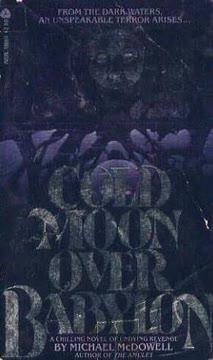
Cold Moon Over Babylon is a masterful Southern Gothic horror novel that uses the conventions of the genre—decay, family secrets, supernatural vengeance—to explore the corrosive effects of trauma, denial, and injustice in a small community. At its core, the book is a meditation on the ways in which the past refuses to stay buried, and how the sins of one generation are visited upon the next. The Styx River, both literal and symbolic, represents the boundary between life and death, memory and forgetting, justice and impunity. The supernatural elements are not mere scares but serve as a moral reckoning, forcing the characters—and by extension, the reader—to confront uncomfortable truths about complicity, power, and the cost of silence. The novel's critique of small-town insularity, the failures of justice, and the dangers of unchecked privilege remains deeply relevant. Ultimately, Cold Moon Over Babylon is a story about the necessity of facing the darkness within and without, and the price paid when a community refuses to do so. Its lesson is clear: the dead will not rest until the living acknowledge their wrongs, and true peace is only possible through truth and accountability.
Last updated:
Review Summary
Cold Moon Over Babylon is a highly-praised Southern Gothic horror novel by Michael McDowell. Readers appreciate its atmospheric setting, creepy imagery, and well-crafted characters. The story follows the Larkin family in a small Florida town as they deal with tragedy and supernatural vengeance. Many reviewers consider it one of McDowell's best works, praising his ability to create tension and his vivid descriptions of the Southern landscape. While some found certain aspects repetitive, most readers were captivated by the slow-burning horror and shocking twists.





