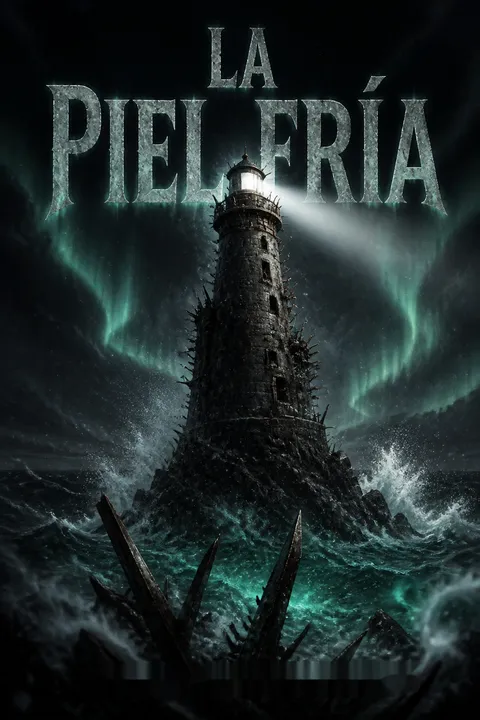


Plot Summary
The Empty Weather Station
The unnamed narrator accepts a year-long weather post on a remote southern island, carrying books and supplies but no clear hope of returning to the life he has left behind. The station house is damaged, its previous occupant missing, and the path to the lighthouse leads to Gruner, a filthy, barricaded signal technician who refuses to explain what happened.
The ship’s captain suspects the island is unsafe and offers to take the narrator away. The narrator refuses, telling himself his predecessor probably died by accident and Gruner is merely deranged. Once the captain and crew sail off, the narrator is alone with a ruined cottage, a silent forest, and a neighbor who knows more than he will say.
The island first appears as a job posting, but its abandoned house immediately makes administration feel like a thin fiction laid over danger. The narrator’s decision to stay is not simple courage: he has already withdrawn from human society and treats retreat as another defeat. Gruner’s silence intensifies that choice. He is not yet an antagonist in any conventional sense, but his withholding turns solitude into a problem the narrator cannot solve by routine or reason. The departing ship closes the only ordinary route back, making the narrator’s self-imposed exile physically irreversible.
Arms Through the Hatch
While unpacking, the narrator finds political correspondence from former comrades who have stayed silent about the abuses of their victorious movement and want him to do the same. The letter rekindles the disillusionment that sent him away.
That night, a webbed arm probes through the cottage door, then a crowd of amphibious creatures smashes a window and reaches inside. The narrator burns their hands with a log, throws embers through the opening, bars the shutters, and fights off another arm at the hatch.
At dawn, the attackers have vanished, leaving him bloodied and sleepless. He turns the remaining books and timber into fire piles and stakes, then discovers two rifles and ammunition hidden among his supplies, an unspoken provision from the captain.
The attack dismantles the narrator’s belief that knowledge and orderly work can make the island manageable. His political letter has already shown how ideals can be emptied out by those who inherit them; now the creatures present a danger that cannot be argued into moral categories. Survival becomes bodily and immediate. The hidden rifles matter not only as weapons but as evidence that another person understood the narrator better than he understood himself. The captain’s care arrives in a form the narrator would have refused openly, complicating his distrust of human attachments.
Beans Instead of Shelter
The narrator builds small spiked pits and fire barriers, then watches the creatures approach in numbers and fires through the cottage shutters. Across the island, Gruner’s shots answer from the lighthouse.
Afterward, Gruner visits with beans and water but refuses the narrator entry to the fortified tower. He also hints that their weapons could be useful to each other, so the narrator throws dirt at him and rejects the offer. During a violent rainstorm, the creatures batter the cottage door until its barricade gives way.
When one reaches through a slit, the narrator bites its hand, shoots through the damaged door, and survives until dawn. He recognizes that the creatures are not enemies in the human sense, but Gruner has knowingly left him exposed.
The narrator’s first clear moral distinction is between deliberate cruelty and impersonal violence. The creatures attack him, yet he begins to understand them as predators rather than conspirators. Gruner, by contrast, can choose to help and declines. That choice makes the lighthouse more than a shelter: it becomes a symbol of safety controlled by a person who treats access as power. The narrator’s fury fixes on Gruner because human omission feels more legible, and more culpable, than an attack driven by hunger or instinct.
A Hostage at the Spring
Unable to kill Gruner from ambush, the narrator waits near the island spring, hoping to capture him. Instead he surprises a small amphibious female collecting water. He beats and binds her, then uses her as leverage when Gruner appears with a gun. Their exchange turns into a firefight. Gruner risks himself to free the captive, and the narrator finally learns that she matters to him, though he still does not understand how.
At dusk, the two men agree to stop shooting at each other long enough to reach the lighthouse. They carry the narrator’s rifles and ammunition through the forest as the creatures gather. Together they repel the attackers at the tower door, and Gruner lets the exhausted narrator sleep for two days.
The hostage episode exposes the narrator’s capacity for cruelty before he has learned to recognize the captive as a person. He treats her value as something to be measured through Gruner’s reaction, reproducing the very instrumental logic he condemns in political life. Yet Gruner’s response also reveals that his attachment to her is real, however entangled with ownership. Their forced cooperation does not resolve the moral conflict. It merely gives both men a shared structure in which practical dependence can temporarily outrank suspicion.
The Lighthouse War
Inside the lighthouse, Gruner explains the rotating beacon, the reinforced entrance, the nails and glass in the walls, and the warning cans that alert them to approaching creatures. The captive serves their food and is called a mascot by Gruner; he claims she can sing when the attackers are near. The men share watches as raids grow more organized, with creatures climbing over one another to reach the balcony.
The narrator learns to conserve ammunition and help maintain the defenses, while Gruner remains coldly efficient and openly treats the captive as his possession. Months pass. The attacks intensify, Gruner loses part of a toe, and the two men keep the tower standing by turning their incompatible temperaments into a working alliance.
The lighthouse converts survival into a system of repeated tasks: repair, ration, watch, fire. This routine is both genuinely useful and psychologically dangerous, because it makes violence feel like ordinary labor. Gruner’s competence earns the narrator’s dependence without earning his trust. Their alliance is built on function rather than intimacy, while the captive’s presence shows how easily the men’s protection of themselves coexists with their domination of her. The island’s siege does not erase hierarchy; it gives old habits new justifications.
Beneath the Portuguese Wreck
As the raids threaten to overwhelm the tower, the narrator proposes salvaging explosives from a wrecked Portuguese vessel. Gruner resists, then agrees to operate the air pump while the narrator descends in the lighthouse’s deep-sea diving suit. They recover crates of contraband dynamite. During a second dive, the narrator encounters small, young creatures in the wreck’s flooded hold.
They tug at his helmet and play around him rather than attack. He surfaces calling them baby dolphins, but Gruner nearly shoots a creature appearing beside the boat. The encounter unsettles the narrator’s image of the enemy. Even so, he and Gruner return for more explosives, convinced that a large-scale blast may end the attacks.
The underwater encounter breaks the narrator’s settled equation between difference and threat. The young creatures are not harmless in some absolute sense, but their play makes the adult attacks look less like proof of monstrosity than one part of a social world he does not understand. His discovery arrives at the worst possible moment: he and Gruner have just acquired the means for mass killing. The narrator can register tenderness without yet escaping the momentum of retaliation. Recognition begins as an experience, not a moral conversion.
The Island Explodes
The men bury linked charges around the lighthouse, planning to funnel an attacking horde into the blasts. After several quiet nights, they deliberately leave the tower door open to draw the creatures in. A familiar attacker, missing part of a finger, reaches the stairs but retreats when the men hold fire. On a later night, an enormous crowd surrounds the lighthouse.
Gruner freezes, so the narrator triggers the first charge himself. The blasts kill hundreds and burn much of the forest; Gruner secretly packed extra dynamite into the lines, nearly destroying the tower as well. They spend the morning killing the wounded and moving bodies into the sea. The narrator sees the captive crying, but their apparent victory lasts less than two days.
The explosives turn defensive ingenuity into industrial-scale violence. The narrator and Gruner plan the massacre as a solution, but the blasts do not distinguish attackers from the wider life of the island, nor do they solve the conflict. Gruner’s hidden excess charges reveal that his appetite for decisive force exceeds even the plan they agreed upon. The captive’s tears puncture any clean account of triumph. The scene makes victory feel less like safety than a moral injury whose consequences cannot be contained within the battlefield.
Names for the Sitauca
After the massacre, the narrator discovers that his confused calendar places the replacement ship two weeks overdue. The creatures return, and one throws a stone back at him when he attacks with rocks. He begins to reconsider the captive, noticing that she can laugh and that the creatures sometimes try to rescue their wounded.
During another attempt to draw them into the tower, the narrator hears the captive singing in response to sounds from the forest. He interprets repeated sounds as the people’s name, Sitauca, and hers as Aneris. Gruner rejects this recognition. The narrator then plants Gruner’s old shotgun on the beach, hoping the Sitauca will understand it as an offer rather than a threat.
Naming changes the narrator’s relation to the conflict because it replaces an anonymous mass with a people and an individual. The evidence is incomplete, filtered through his hearing and hope, but it is enough to make continued killing feel less defensible. His calendar supplies a parallel revelation: no outside authority is coming promptly to restore order. Together, these discoveries shift responsibility back onto the people trapped on the island. The shotgun is a fragile sign, but it represents a new kind of action, one that risks misinterpretation rather than guaranteeing control.
The Triangle's Trust
The shotgun disappears, and the Sitauca children begin appearing around the lighthouse. The narrator lets them approach, then becomes their playmate despite their habit of stealing tools and pulling glass from the defenses.
A particularly persistent child, nicknamed the Triangle for his angular shape, clings to him and eventually falls asleep against him. The children’s presence keeps the adults from attacking, giving the island a precarious truce. The narrator sees that play can create familiarity without requiring shared language.
Gruner stays behind the tower’s shutters and distrusts the change. For a time, the narrator sleeps with the Triangle nearby and treats the children’s safety as more important than repairing every damaged barricade.
The children make peace tangible through small acts of dependence: approaching, touching, playing, sleeping. Their trust is not a treaty, and it does not settle the adults’ claims, but it interrupts the logic that every encounter must end in force. The narrator’s bond with the Triangle also changes his scale of attention. He has spent months thinking in numbers of bullets and attackers; now one frightened child can matter more than the defense of an entire wall. Gruner senses that equality in play threatens the hierarchy that has sustained him.
Gruner Leaves the Door
When the children fail to appear one morning, Gruner prepares for renewed war. The Triangle returns briefly with several Sitauca, but Gruner’s homemade flare launcher scatters them and drives the child away. That night Gruner fires at the adults, then accuses the narrator of sleeping with Aneris. He beats him and raises an axe, but abruptly turns from the narrator to attack a Sitauca entering the lighthouse.
Gruner charges outside with the axe and a log, fighting alone as the creatures surround him. The narrator reaches the balcony too late to see what becomes of him. Gruner does not return. His last action protects neither his fortress nor his authority; it carries him into the danger he had spent the novel trying to master.
Gruner’s collapse begins when the children’s truce fails, but its deeper cause is the threat that the Sitauca might be treated as people with claims of their own. His violence against the narrator and Aneris tries to restore a world in which he controls the terms of every relationship. The sudden turn toward the attacking Sitauca suggests that this control has already failed. His final charge can be read as courage, despair, or a last attempt to act without negotiation. The novel refuses to make that action morally clean.
The Last Bargain
Alone in the lighthouse, the narrator grieves for Gruner even though he had hated him, and the quiet after the fighting feels more threatening than an attack. He and Aneris sleep in the same room, but her indifference leaves him unable to imagine that she mourns Gruner or loves him. He lashes out at her, then walks beyond the tower and finds Sitauca adults watching from the forest.
They focus their attention on Aneris behind him. The narrator approaches with empty hands, yet stops when he suspects they may want her returned. He cannot decide that her freedom, or their demand, outweighs his own attachment. A ship appears offshore, but it is too distant to see his signals and disappears beyond the horizon.
The narrator reaches the limit of his professed moral change. He can recognize the Sitauca as a people and still withhold the person they may want back, because his desire has made Aneris both beloved and possessed. His grief for Gruner further complicates his self-image: he has lost an enemy who was also his only human companion. The passing ship offers a momentary alternative, but not a rescue. The narrator remains caught between the humane interpretation of others and the private claims he refuses to surrender.
The New Official
A replacement weather official finally arrives with a French captain and a rough, mixed crew. They find the narrator isolated in the lighthouse and mistake his silence and the missing predecessor for evidence of guilt. Their ship leaves after the men repair the station house.
That night, the Sitauca attack the new official there; the narrator stays inside the lighthouse rather than warn him. The next day, the official comes to the tower carrying ammunition. The narrator tells him the lighthouse offers no true escape and points him toward the sea.
Seeing a shallow reef beneath the water, the official attempts to walk across it as if the sea will bear him, then turns back. He chooses to remain and fight. The narrator watches the new man repeat the island’s old bargain.
The ending does not offer rescue as a clean solution. The new official has arrived from the human world, but its institutions are late, suspicious, and no more capable of understanding the island than the narrator was at first. His attempted walk across the water briefly turns escape into a question of belief, then the hidden reef exposes the practical limits of his hope. The narrator has gained knowledge but not freedom from repetition. By staying, the new official enters the same structure of fear, violence, and chosen endurance that shaped the narrator’s year.
Analysis
Cold Skin makes isolation an experiment in how people decide who counts as human when survival is at stake. The narrator arrives already estranged from political life, but the island prevents him from turning withdrawal into innocence. He must act against the Sitauca to stay alive, then confront evidence that they have children, relationships, communication, and claims to the land. His ethical recognition develops unevenly: he can pity the young creatures and still exploit Aneris, whose interior life he repeatedly confuses with the intimacy he wants from her.
Gruner offers a contrasting response to uncertainty. He reduces the conflict to a practical problem of fortification and ammunition, a strategy that keeps him alive but makes every sign of shared life appear dangerous. The narrator’s book learning does not automatically make him more humane; it often supplies eloquent explanations for desire and domination. Their rivalry shows how violence can be sustained not only by hatred but by fear of losing control over a world that no longer confirms one’s assumptions.
The novel’s most unsettling reversals occur when the apparent enemy becomes legible. The children’s games interrupt the siege, the wounded are shown to have companions, and Aneris’s song suggests a language beyond the men’s understanding. Yet legibility does not produce an easy peace. The narrator cannot relinquish his claim on Aneris, while Gruner cannot accept a world in which the Sitauca are more than targets. The explosives offer a literal spectacle of mastery, but they fail to end the conflict and leave the island burned. By bringing another official to the same shore, the ending turns the narrator’s experience into a pattern rather than an escape. The book’s bleak lesson is not that understanding is futile, but that recognition arrives too late when people mistake possession, fear, and survival for moral permission.
Review Summary
Cold Skin receives mixed reviews, with many praising its philosophical depth, compelling atmosphere, and exploration of human nature. Readers appreciate its examination of "otherness" and power dynamics. Some find it gripping and thought-provoking, while others criticize its portrayal of violence and gender roles. The book is often described as a blend of horror, adventure, and allegory, drawing comparisons to works by Lovecraft and Golding. Most agree it's not a typical horror novel, but rather a complex narrative addressing themes of isolation, xenophobia, and the cyclical nature of human behavior.
People Also Read

Characters
The narrator
Disillusioned weather observerAn unnamed European man who takes a remote weather post after losing faith in the political cause that once organized his life. He is observant, bookish, and inclined to explain experience through systems, yet isolation and danger repeatedly expose the gap between his principles and his behavior. He can be compassionate toward unfamiliar beings, but his need for companionship and his desire for Aneris distort his judgment. His narration records not only what happens but how he revises, evades, and sometimes mistrusts his own interpretations. He is drawn to the island as an escape from human society, then discovers that solitude cannot insulate him from power, dependence, or moral responsibility.
Gruner
Fortress-minded castawayThe bearded lighthouse keeper is in fact a former weather official who has survived alone on the island for years. He is coarse, practical, physically formidable, and capable of remarkable ingenuity when maintaining the tower’s defenses. His attention narrows to what can be measured, repaired, or fought, while questions about history and moral obligation unsettle him. He treats Aneris as his possession and the Sitauca as an undifferentiated threat. His relationship with the narrator moves between hostility and practical cooperation, revealing a man whose capacity for loyalty exists alongside an intense need to control his surroundings.
Aneris
Amphibious captive and companionAneris is a Sitauca woman who lives in the lighthouse under Gruner’s control and performs simple tasks there. Cold-skinned, quiet, and difficult for the narrator to interpret, she is first treated as an animal and later given a name after he hears her communicating with the Sitauca. She does not respond to affection in the way he expects, and her attention often remains beyond the human conflicts surrounding her. Her presence exposes how both men project their own needs onto her: Gruner’s ownership and the narrator’s longing for intimacy. She remains a person whose inner life the narrator cannot reliably translate.
The Triangle
Fearless Sitauca childA distinctive, angular Sitauca child who persistently seeks the narrator’s attention when the children gather near the lighthouse. He clings to the narrator, plays with him, and eventually sleeps beside him, creating a bond that crosses the boundary the adults defend with weapons. The Triangle’s boldness contrasts with the other children’s caution, while his dependence makes the narrator newly attentive to the cost of the conflict. He represents neither a political solution nor proof that the Sitauca are harmless. He is a child whose need for comfort becomes impossible for the narrator to dismiss.
The first captain
Wary ship captainThe captain who brings the narrator to the island treats him with guarded kindness. He recognizes the danger in the abandoned station and offers to take the narrator back rather than leave him there. Knowing the narrator’s objections to military weapons, he discreetly includes rifles and ammunition among the supplies. His practical care is more perceptive than the narrator’s pride allows him to acknowledge, and his quiet intervention later becomes essential to the narrator’s survival.
Sow
Seasoned Senegalese sailorA bald Senegalese sailor with a white beard, Sow helps unload the narrator’s supplies and offers him plainspoken advice before the ship leaves. His calm contrasts with the younger sailors’ unease, and his brief kindness gives the narrator one last human point of contact before isolation.
The replacement official
Late-arriving weather observerA young, formally dressed official sent to replace the narrator after his assigned ship is delayed. Bookish and initially certain that institutional records can explain what he finds, he arrives with a captain and crew who treat the island as a problem to be managed. His courage and fear coexist, and the sight of the island forces him to reconsider what counts as escape. He mirrors the narrator’s arrival without sharing his accumulated knowledge.
The replacement captain
Impatient French commanderThe captain who brings the replacement official is forceful, suspicious, and eager to complete his delayed mission. He assumes the narrator’s silence signals guilt and treats the island’s inhabitants as obstacles. His impatience and rough handling of his crew offer the narrator a glimpse of the human world he once chose to leave.
Plot Devices
The lighthouse
Shelter becomes a prisonThe island’s stone lighthouse is Gruner’s fortified home and the center of the narrator’s struggle to survive. Its beacon sweeps the surrounding land, its warning cans and reinforced walls provide defense, and its narrow stairs create a final bottleneck against attack. Yet access depends on Gruner’s consent, and safety inside the tower isolates the men from the world they are fighting over. The lighthouse therefore functions as both refuge and closed system: it protects its occupants while encouraging them to treat everything beyond its defenses as an enemy.
The Sitauca song
Warning becomes communicationAneris sings when the Sitauca are near, first serving as an early warning for Gruner and the narrator. Later, the narrator hears her singing as a response to sounds from the forest and begins to interpret it as communication rather than a simple alarm. That shift helps him identify the Sitauca as a people and Aneris as an individual with a name. The song does not provide a reliable translation or settle the conflict. Its importance lies in making the narrator question whether the sounds he has feared might also carry meaning.
The Portuguese wreck
A weapon with consequencesThe wrecked Portuguese vessel holds contraband dynamite, discovered after Gruner recounts the fate of its crew. The narrator’s deep-sea diving suit and air pump make it possible to retrieve the explosives from the flooded ship. The dynamite seems to offer a decisive answer to the Sitauca attacks, and the men use it to stage a devastating ambush. The wreck also yields the narrator’s encounter with the young Sitauca underwater, complicating the certainty that made the explosives seem necessary.
The hidden ammunition
Care disguised as forceThe first captain secretly packs two Remington rifles and ammunition into the narrator’s supplies, despite knowing the narrator’s antipathy toward the military. The weapons give him a chance to survive the first attacks and later make cooperation with Gruner possible. Their presence also complicates the narrator’s belief that he has escaped all human bonds: the captain protects him through an act he would have rejected if offered openly. Ammunition becomes both a practical resource and a measure of how quickly survival can draw a man into the violence he once opposed.
The weather calendar
Time becomes a trapThe narrator’s calendar records the passage of days through periods of sleepless combat, confusion, and missed entries. Its crossed-out dates and distorted markings show how the siege has damaged his sense of time. When he corrects the calculations, he realizes the replacement ship should already have arrived. The calendar offers no rescue; instead, it makes the failure of outside systems concrete and forces him to accept that the island’s crisis may continue without anyone coming to retrieve him.
Download PDF
Download EPUB
.epub digital book format is ideal for reading ebooks on phones, tablets, and e-readers.








