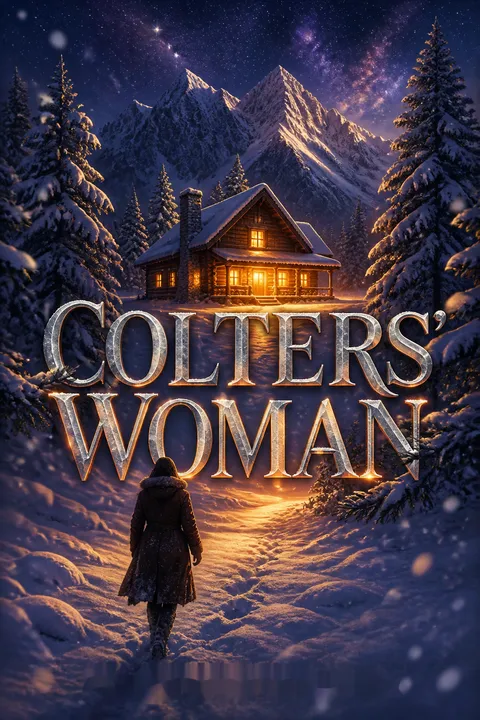


Plot Summary
Found in the Snow
Adam Colter finds Holly Bardwell unconscious in a snowy ditch beside the family hunting lodge. He carries her inside, where his brothers, Ethan and Ryan, help warm and feed her. Holly claims her car broke down, but the brothers find no vehicle and notice her bruises, hurried disguise, and terror when county sheriff Lacey McMillan asks about a missing woman.
Holly bolts from the room rather than face the police. The brothers decide not to reveal her presence until they understand whom she fears. Exhaustion finally overtakes Holly, while the Colters recognize an immediate, shared pull toward her and resolve to keep her safe, even though she has given them no reason to trust them yet.
The opening makes rescue both a practical act and an instant claim. Holly is literally exposed to the cold, but her guarded answers show that shelter alone cannot restore safety: the threat has already shaped what she can say and whom she can trust. The brothers respond as a unit before they know her story, which establishes the family’s unusual emotional structure while also raising a question about agency. Their certainty that Holly belongs with them may feel protective to them, but from her perspective it is another powerful group deciding what should happen to her. That tension gives the romance an immediate ethical and psychological complication.
One Woman, Three Brothers
At dawn, Holly slips outside, hoping to leave before the brothers wake. Ethan and Ryan catch her in the snow and bring her back, where Adam explains that the three men have always expected to share their lives with one woman. Their parents’ and grandparents’ relationships provide a family precedent, not a rule Holly must obey.
She is drawn to all three, yet their certainty unsettles her, especially when Adam speaks as though her place with them is settled. She asks whether they mean sex or a permanent partnership. Adam describes a life together, while Ethan and Ryan offer reassurance in their own ways. Holly finally admits the obstacle she has withheld: she is already married.
The brothers’ family history turns their relationship model from a passing fantasy into a lived possibility, but it does not make Holly’s consent automatic. Her first response is to run, a concrete reminder that attraction and trust are not the same thing. She is also struggling against a familiar pattern: accepting someone else’s protection because she fears being alone. By explaining that their family practice is chosen rather than compulsory, Ryan gives her a framework for understanding them without demanding that she immediately adopt it. The scene’s central conflict is not whether she desires the brothers, but whether she can choose them freely while frightened and dependent on their shelter.
Mason's Shadow
Holly identifies her husband, Mason, as the man she fears and warns the brothers that he is powerful and capable of killing them. She will not return to him, but she also worries that staying at the cabin will put the Colters in danger. She later explains that she left Mason on their wedding night after seeing him kill a man, and admits she has never had sex.
The brothers contact their Denver lawyer, Cal Davis, about ending her marriage. Holly remains wary of promises, but she also acknowledges wanting the men. As their intimacy begins, she chooses to explore that desire rather than treat her marriage or her past as proof that she must refuse a new life.
Holly’s marriage has taught her to distrust declarations of care, because Mason’s charm concealed violence and control. The Colters’ intensity therefore has two meanings: it offers the belonging she longs for, but it risks echoing the possessiveness she escaped. Her confession about witnessing a killing changes the danger from a private marital problem into a threat with possible criminal consequences. Meanwhile, her sexual inexperience is not presented as innocence untouched by harm; she has already learned how quickly safety can collapse. Her tentative choice to be intimate with the brothers matters because it begins to separate desire from fear, although the imbalance created by her dependence remains unresolved.
Holly Faces Mason
Holly sees Mason’s car outside a western store in Clyde and hides among the racks while Ethan and Ryan smuggle her out the back. Back at the cabin, she tells the brothers she witnessed Mason’s murder and confirms that she wants to end the marriage. When Lacey returns with a missing-person report, Holly agrees to go to the sheriff’s office so the Colters will not be blamed for keeping her.
Mason is waiting there and tries to take her away. Holly refuses, tells him she will expose the killing, and demands a divorce. The Colters arrive after she calls them, and she returns to the cabin on her own decision, having made her first direct stand against the man who controlled her.
This turn converts Holly from a person being hidden to a person who acts in public. The brothers’ protection matters, but the decisive move is hers: she enters the sheriff’s office, rejects Mason’s account of their marriage, and uses the truth she has carried as leverage. Lacey complicates the refuge by forcing the question of whether Holly’s choices can be heard outside the Colter household. Holly’s refusal to let the brothers handle everything for her is an early form of reclaimed authority. Mason still frightens her, but fear no longer determines her answer. The consequence is not immediate freedom; it is a more explicit conflict over who controls her future.
Ryan Opens the Door
As Holly settles into life at the cabin, Ryan takes her horseback riding and tells her the brothers will not share her with other men. His guardedness becomes clearer when she later finds him trapped in a nightmare. Ryan finally describes his capture in Iraq: wounded by shrapnel, he was left behind, held prisoner, and forced to witness the abuse and death of a British soldier before captors turned on him.
Holly stays with him and comforts him rather than pressing for details he cannot give. Ryan tells her he loves her. The brothers’ Denver trip is now approaching, and Holly’s growing bond with Ryan shows that their relationship is becoming more than the instinctive attraction that began at the cabin.
Ryan’s trauma emerges through sleep before it can be organized into a complete account. His nightmare exposes the gap between his disciplined exterior and the helplessness he carries from captivity, while his initial refusal to discuss it shows how secrecy functions as self-protection. Holly’s response is significant because she neither interrogates nor treats him as broken; she stays present and lets him choose how much to reveal. The relationship becomes reciprocal here. The Colters have sheltered Holly, but she can also offer a form of steadiness they cannot provide one another. Ryan’s declaration of love marks a shift from family destiny toward individual emotional commitment.
A Fortune and a Redhead
When Holly mentions protecting her inheritance, the brothers learn that her parents left her several million dollars in trust. The revelation makes her reconsider why Mason pursued her, and she realizes she may have mistaken financial interest for devotion. That evening, Adam leaves to help Lacey search for a runaway boy.
Holly’s jealousy grows because she knows he once considered a relationship with the sheriff. Ethan and Ryan try to reassure her, and Adam explains when he returns that Lacey was never the woman he wanted to build a life with. He also admits he should have clarified their history sooner. Holly’s fear of repeating her old mistake begins to ease as Adam answers her insecurity directly rather than dismissing it.
Money gives Holly a sharper interpretation of her past: Mason may have chosen her partly for the wealth she inherited, making her earlier belief in his protection feel newly humiliating. The insecurity then spreads into her present relationship, where Lacey’s history with Adam becomes a possible repetition of the same uncertainty. Holly is not simply jealous; she is trying to distinguish genuine attachment from being useful to a powerful man. Adam’s explanation helps, but his earlier silence shows that trust requires information, not just intense assurances. This section links financial vulnerability to romantic vulnerability and pushes Holly toward a more deliberate standard for judging care.
Ninety Days to Freedom
In Denver, Cal meets with Holly and the brothers and prepares divorce papers. He explains that Mason may contest the filing or slow it down, but cannot prevent Holly from ending the marriage. That practical certainty gives her a future measured in months rather than an indefinite struggle. The brothers take her to a salon, where a stylist repairs Holly’s hurried blonde dye and restores her natural brown hair.
She shops for clothes and begins reclaiming an appearance chosen for herself, not for concealment. The trip also gives the four of them a brief taste of ordinary life together in the city. Holly leaves Cal’s office relieved, believing the legal process is finally moving, though Mason’s access to her remains a danger.
Cal’s legal advice matters because it replaces the absolute power Mason claims with a bounded process. He may obstruct, but he cannot own Holly’s decision. That distinction gives her a practical form of agency, not merely emotional reassurance. The repaired hair carries a quieter significance: the disguise that failed to hide her is replaced by an ordinary appearance she can claim as her own. Together, paperwork and self-presentation mark a movement out of flight. Yet the trip is not a clean escape. Holly’s legal freedom is still pending, and the public city makes her more visible to Mason, setting up the next rupture.
The Car in Denver
While Holly crosses a Denver street with Ethan and Ryan, a sedan accelerates toward them. She shoves the two brothers forward and takes the impact herself, suffering a torn hip and a deep bruise. She refuses an ambulance, but Adam carries her back to the hotel and cleans the wound. The brothers suspect Mason arranged the hit, though they have no proof.
They end their trip early, return to the mountains, and tell Lacey that Holly may be targeted; Adam asks her to alert her deputies if Mason appears. The incident makes clear that legal paperwork alone cannot protect Holly. The Colters tighten their vigilance, while Holly struggles with the belief that her presence has put the men she loves in danger.
Holly’s instinct is to protect the brothers, even at the cost of her own body. The collision externalizes the danger that has until now lived in her warnings and memories. Its ambiguity is important: the Colters reasonably suspect Mason, but suspicion is not evidence, and the lack of proof limits what the sheriff can do. Their retreat to the cabin restores familiar ground while also narrowing Holly’s world around security. Her guilt becomes a second threat, because she interprets danger to the men as a consequence of choosing them. The scene therefore tests whether protection can coexist with her agency, rather than merely intensifying the brothers’ control.
The Blackout at Home
Weeks later, Lacey calls the cabin about a missing boy named Sam and asks the Colters to help search through fresh snow. Adam and Ethan leave with rifles, while Ryan stays with Holly. After they make love, the lights fail. Ryan checks the house, but a hidden attacker shoots him and knocks Holly down. He cuffs her hands and ankles, gags her, and carries her to a waiting vehicle.
Holly believes Ryan is dead. In the back, she works the gag loose, finds the attacker’s dropped phone, and manages to call Adam. She reports the attack and Ryan’s apparent death before the kidnapper takes the phone. Her warning gives the brothers a chance to pursue her, but she has no idea where he is driving.
The attack succeeds by manipulating the Colters’ strongest instinct: they leave to help a child, a choice consistent with their history of service. The blackout removes the security of their isolated home, and the assailant’s speed turns the cabin from sanctuary into a trap. Holly’s belief that Ryan is dead intensifies the emotional violence of her abduction, while the dropped phone gives her one narrow opening to act. She uses it despite being bound, showing how much her capacity for initiative has changed since the ditch. The call also creates a fragile connection across distance: she cannot control what happens next, but she can make sure the others know she is gone.
Blood on the Mountain
On the search, Adam and Ethan find Sam alive in a shed, then receive Holly’s call before the kidnapper disconnects. They race to the cabin and find Ryan shot in the shoulder but alive. Ryan identifies the attacker’s plan to take Holly to a remote cabin. Adam and Ethan search the mountain until they reach an old mining cabin, where they find the kidnapper unconscious and blood marking Holly’s trail.
Holly has escaped after the man broke her arm and stabbed her: she drove a pencil into his cheek, struck him with a rock, and staggered into the snow. Adam finds her collapsing and carries her toward help. A helicopter takes her to a Denver hospital, while Ryan is also flown there for treatment.
The rescue depends on several earlier details converging: Ryan’s military training helps him identify the attacker’s intention, the brothers’ knowledge of the mountains narrows the search, and Holly’s improvised weapons buy her the time needed to escape. None of these elements makes her safe by itself. Her survival is a sequence of physical decisions made while injured and terrified, followed by the brothers’ relentless search. The mountain landscape, previously a refuge, becomes difficult terrain where tracks can vanish beneath snow. Finding Holly alive does not erase the cost: Ryan and Holly both need serious medical care, and the family’s belief that the cabin alone can keep danger out has been shattered.
A Witness Leaves
While recovering in hospital, Holly secretly contacts Lacey and asks her to bring in San Francisco District Attorney David Masterson. He reveals that Mason is suspected of organized crime and that Holly’s parents had once raised fraud concerns shortly before their fatal accident.
Holly identifies Mason’s business partner, Thomas Goins, as another witness to the killing she saw. The attacker is later found dead, complicating any case tied to the assault, but Holly agrees to testify about the murder.
She demands protection for the Colters as well as herself. The district attorney arranges her transfer to a secure location. Adam, Ethan, and Ryan object, yet Holly leaves without telling them in person, choosing a legal fight that may keep Mason from reaching them again.
Holly’s decision is a painful reversal of the refuge she found with the Colters. She leaves not because she doubts her attachment, but because she believes love obliges her to reduce the danger around them. Her choice is both courageous and shaped by guilt, so it should not be mistaken for uncomplicated independence. The district attorney’s revelations enlarge the scale of Mason’s threat: Holly’s parents may have been caught in his financial schemes, and her marriage was part of a longer pattern of exploitation. By setting conditions for protection, she acts as a witness with demands rather than a passive victim. The price is separation from the people who have become her home.
Home, Then Vows
Six months pass before Mason accepts a plea deal on the eve of trial and receives a long prison sentence. Holly returns to the Colter cabin, pregnant with a child conceived before she left. Ryan welcomes her first; Adam’s anger gives way when she promises she will not leave them that way again, and Ethan draws her back into the family.
The brothers welcome the baby and plan a legal marriage to Adam alongside a private commitment to all three men. A week later, their parents gather beneath an outdoor arch. Holly exchanges vows with each brother and receives a ring woven from four connected strands. The ceremony makes public what their family has already chosen: a shared life built by commitment rather than legal convention.
The return resolves the novel’s central question of whether Holly can choose the Colters without surrendering herself. She comes back after pursuing Mason through the legal system, not because the brothers retrieve her or decide for her. Her pregnancy gives the separation a new emotional weight, while her promise addresses the breach caused by leaving without explanation. The wedding balances legal recognition with a private ritual that names all four relationships. That distinction reflects the limits of conventional institutions without pretending they do not matter. Holly’s new belonging is not simply a refuge bestowed by the brothers; it is a bond she re-enters after confronting the danger on her own terms.
Epilogue
In the appended story, years have passed and Holly is raising Seth, Michael, and Dillon with the three Colter brothers. When she tells them she is pregnant again, their alarm over her earlier difficult delivery briefly overwhelms their happiness, but they apologize and celebrate the news.
The brothers give Holly the meadow beside their land, a place she has long loved. At eight months, she goes there for a picnic with the boys and suddenly goes into labor. The brothers reach her in time to help deliver a daughter. Holly names her Callie, and the family names the meadow after the child whose first breath joined her to the mountain.
The coda tests whether the family’s hard-won stability can make room for renewed risk. The brothers’ first reaction to Holly’s pregnancy shows that protection can become restrictive when fear is allowed to speak for everyone. Their apology matters because it restores the shared decision-making they failed to practice at first. The meadow gift answers Holly’s long desire to belong to the landscape as well as to the family, and the birth there makes that belonging physical rather than symbolic. Callie’s arrival also revises the Colters’ belief that their family was already complete. The ending presents home as something that expands through care, not something secured once and for all.
Analysis
The novel’s emotional engine is the collision between protection and autonomy. Holly begins as a fugitive whose choices have been narrowed by Mason’s violence, and the Colters offer a dramatic counterforce: a home where she is wanted by three men rather than controlled by one. Yet the story does not make that contrast automatically simple. The brothers’ certainty, their language of possession, and their impulse to keep Holly from leaving can echo the structure she has escaped, even when their intentions are loving. Her growth is clearest when she acts beyond their shelter: she confronts Mason, pursues a divorce, negotiates protections with the district attorney, and accepts the cost of testifying.
The Colter brothers also face distinct tests. Adam must learn that authority is not the same as care; his protection becomes trustworthy when he explains himself and listens. Ethan’s steadiness makes emotional space for Holly and Ryan. Ryan’s captivity trauma reveals how silence can preserve a wounded person while also isolating him from those who love him. Holly’s presence helps him speak, but she is not presented as a cure; he has to risk disclosure himself.
The book binds romance to practical acts: finding Holly in the snow, feeding her, handling legal papers, searching the mountains, and remaining at her hospital bedside. Those acts make devotion tangible. At the same time, the story’s ideal of a shared partnership depends on a difficult balance: the brothers’ mutual bond must make room for Holly’s independent judgment, not absorb it. The ending is most persuasive when her return follows her own choices and when the ceremony recognizes commitments already negotiated in private. The appended birth story extends that argument across a family, showing that love becomes durable not by eliminating fear, but by admitting fear and deciding together what to do with it.
Review Summary
Colters' Woman receives mixed reviews, with some readers enjoying the steamy menage romance while others criticize the unrealistic plot and weak character development. Many find the instant love and frequent sex scenes entertaining, but the heroine is often described as frustratingly naive. The unique premise of three brothers sharing one wife intrigues some readers, though others find it implausible. Despite its flaws, the book is generally considered a guilty pleasure read, with the Colter brothers' individual personalities and the suspenseful elements adding appeal for some.
Characters
Holly Bardwell
The runaway witnessHolly is a young woman fleeing an abusive marriage, carrying both a visible injury and knowledge that could expose a powerful man. Her wealth and sheltered upbringing have not protected her from manipulation; instead, she has learned to mistake attention for safety. She is wary, observant, and more resilient than she initially believes, though guilt often makes her place other people’s needs above her own. The Colter brothers’ devotion tempts her with the belonging she has wanted, but she must distinguish chosen intimacy from dependence. Her defining strength is not fearlessness. It is her growing ability to act while afraid, set conditions, and claim responsibility for her future.
Adam Colter
The forceful protectorAdam is the eldest Colter brother and the lodge’s natural authority, accustomed to making decisions and expecting them to hold. Finding Holly awakens a fierce protectiveness that he interprets as certainty about their future. His directness can comfort her, but it can also crowd her when she needs room to choose. Adam’s work in the mountains and his habit of helping people in danger make him a dependable rescuer; his weakness is believing that protection excuses insufficient explanation. Holly challenges him to make trust reciprocal rather than assume that his intentions are enough.
Ethan Colter
The steady-hearted brotherEthan is the warmest and most openly reassuring of the three brothers. He often notices when Adam’s forcefulness is likely to frighten Holly and encourages his brothers to give her time. His easy manner is not passivity: he understands that trust has to be earned, and he offers steadiness without demanding immediate confession. Ethan’s affection is practical as well as emotional, expressed through food, comfort, and attentive care. He also recognizes the pain Ryan keeps hidden and values connection as a form of healing. His openness gives Holly a gentler route into a family whose intensity could otherwise overwhelm her.
Ryan Colter
The haunted youngest brotherRyan is the youngest Colter, a former Special Forces soldier whose quietness conceals physical injury and trauma from captivity. He watches before he speaks and often distrusts what others accept too quickly. His reserve can look like rejection, but it comes from experiences he has not yet found a way to share. Holly recognizes his pain because she knows what it is to live under fear, and their connection develops through patience as much as attraction. Ryan’s protective instincts are fierce, yet his deepest need is to be allowed vulnerability without being treated as weak.
Mason Bardwell
The polished threatMason is Holly’s husband, a wealthy and influential man whose public charm disguises coercion and violence. He expects obedience and treats Holly’s resistance as a challenge to his control. His reach extends beyond the marriage, making her fear that escape will endanger anyone who shelters her. Mason’s role exposes the difference between protection offered as care and protection used as ownership. He is not frightening because he is physically imposing, but because he has power, patience, and little regard for the consequences his actions impose on others.
Lacey McMillan
The persistent sheriffLacey is the county sheriff, practical and determined to establish what happened to a woman reported missing. Her past attraction to Adam leaves an awkward edge in her dealings with Holly, though her first obligation is the law. She does not automatically accept the Colters’ version of events and insists on hearing Holly’s account directly. That insistence makes her both a source of tension and a potential ally. Lacey’s bluntness and professional independence contrast with Holly’s instinct to avoid attention, and her presence forces the family to confront how their private loyalties intersect with public responsibility.
Cal Davis
The trusted attorneyCal is a Denver lawyer and friend of the Colters who helps translate Holly’s fear into a workable legal process. He explains what Mason can and cannot do in a divorce, giving Holly clear expectations instead of empty reassurances. His professional calm offers a useful contrast to the brothers’ instinct to solve threats through physical protection. Cal respects Holly as the client whose wishes matter, while remaining loyal to the men who asked him to help. His role makes the legal system legible at a moment when uncertainty has shaped nearly every choice she makes.
David Masterson
The determined prosecutorDavid Masterson is the San Francisco district attorney pursuing Mason for suspected criminal activity. He comes to Holly because her account may provide the testimony his office has lacked. Direct and focused, he treats her as a witness whose cooperation has value, but Holly makes clear that she will not proceed without protection for the Colters. His willingness to negotiate around those conditions gives her leverage in a process that could otherwise reduce her to evidence. Masterson represents institutional power at its most useful, though his assurances cannot erase the personal cost of Holly’s participation.
Maggie Colter
The welcoming matriarchMaggie is the Colter brothers’ mother and part of the family’s established shared partnership. Warm, perceptive, and practical, she welcomes Holly without treating the unconventional household as something requiring apology. Her acceptance matters because Holly wants more than the brothers’ desire; she wants to belong to a family. Maggie understands both the tenderness and the complications of this arrangement, and she offers a model of confidence that does not depend on social approval.
Caleb Colter
The family patriarchCaleb is one of the brothers’ fathers and a representative of the older generation whose shared marriage helped shape their expectations. He is thoughtful and measured, offering family history without presenting it as a command. His presence at the family’s major gatherings conveys acceptance and continuity. Caleb’s influence is less about authority than example: he shows the brothers that a lasting unconventional partnership depends on deliberate commitment and care.
Morgan Colter
The gentle fatherMorgan is one of the Colter fathers. He is affectionate and supportive, welcoming Holly into the family and helping her feel included in its traditions. His quiet warmth reinforces the family’s emphasis on care over convention.
James Colter
The supportive fatherJames is one of the brothers’ fathers and Maggie’s partner. His steady presence at family gatherings helps establish the household’s long-standing acceptance of shared commitment. He supports his sons while allowing them to make their own choices.
Riley
The helpful shopkeeperRiley owns the western store in Clyde. When Ethan asks for help hiding Holly from Mason, Riley agrees and quietly helps the brothers get her away. His practical loyalty shows that the Colters’ isolation does not mean they are without allies.
Thomas Goins
Mason's business partnerThomas Goins is connected to Mason’s business world and is identified as another person present at the killing Holly witnessed. His position matters because Holly’s account may not be the only testimony available, though the extent of his knowledge remains uncertain.
Seth Colter
The watchful eldest sonSeth is the eldest of Holly and the Colter brothers’ boys in the later family story. Serious and attentive, he is fascinated by Lacey’s police work and often tries to take responsibility for his younger brothers. His carefulness contrasts with their restless energy.
Michael Colter
The eager horsemanMichael is one of Holly’s sons, energetic and proud of his riding and outdoor adventures. He admires the Colter fathers and enjoys sharing their activities. His competitive streak with his brothers is balanced by the affection that holds the boys together.
Dillon Colter
The lively youngest boyDillon is the youngest of Holly’s three boys in the later family story. Quick-witted, impulsive, and affectionate, he can turn a peaceful family moment into comic disorder. He is especially inclined to seek comfort and closeness from Holly.
Plot Devices
The Colter family model
A chosen shared partnershipThe Colter brothers grew up seeing their parents and grandparents build lives with one shared partner. Their history gives Adam, Ethan, and Ryan a language for the relationship they want, but the book makes clear that it is a choice rather than a family compulsion. The model creates the central romantic premise and also raises questions about power, jealousy, and consent. Holly must decide whether this structure suits her, while the brothers must learn that wanting a permanent bond does not entitle them to make her decision for her.
Holly's eyewitness account
Evidence against MasonHolly witnessed Mason kill a man on their wedding day. Her knowledge explains why she fled, why she fears the police might return her to him, and why Mason wants to find her. It also becomes the basis for a possible criminal case. The revelation first operates as a secret she is afraid to share, then as leverage when she confronts Mason, and finally as testimony she can offer the district attorney. Her account links the intimate danger of the marriage to a wider criminal investigation.
The mountain refuge
Shelter with exposed edgesThe Colter lodge provides Holly with warmth, food, privacy, and a place to begin trusting the brothers. Its remote setting makes the family feel self-sufficient, but the same isolation can delay outside help and make the household vulnerable when the attacker strikes. Snow and mountain trails shape both the brothers’ work and their search for Holly. The setting is therefore more than a romantic backdrop: it offers refuge, tests survival, and reveals that safety depends on relationships and preparation, not geography alone.
The legal protection bargain
Safety through testimonyCal’s divorce advice gives Holly a legal route out of her marriage, while the district attorney’s offer of protective custody gives her a way to testify without simply returning to the Colters’ exposed home. The two legal processes serve different purposes: divorce ends Mason’s formal claim, and testimony may bring criminal consequences. Holly’s demand that the Colters also be protected turns her cooperation into a negotiated choice. The device drives the painful separation and connects personal freedom to the limits and responsibilities of public institutions.
The dropped phone
A lifeline in captivityAfter the attacker abducts Holly, his dropped phone gives her a narrow chance to contact Adam. Bound and gagged in a moving vehicle, she works herself free enough to place the call and report that Ryan has been shot and that she has been taken. The call does not reveal her location, but it confirms the danger and gives the brothers a reason to hurry back. It also pays off the earlier emphasis on the Colters’ radios and phones as practical tools in a remote landscape, where even a brief connection can change the search.
Colters' Legacy Series
About the Author
Other books by Maya Banks



Download PDF
Download EPUB
.epub digital book format is ideal for reading ebooks on phones, tablets, and e-readers.








