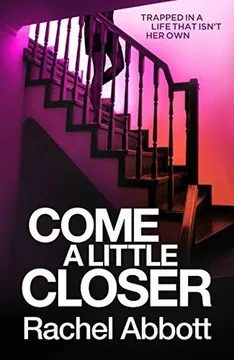


Plot Summary
Prologue
A woman called Judith sits in a locked room, cut off from daylight and unsure how she arrived there. Each night someone comes for her. She believes she has killed a man, though the memory is missing, and the life she once knew feels unreachable. The opening gives her confinement a terrible certainty: she is not merely lost, but has been made to distrust her own mind.
The prologue makes a name feel less like an identity than a sentence imposed from outside. Judith’s conviction that she killed someone is emotionally vivid but unsupported by memory, establishing the novel’s central instability: a person can be made to experience guilt as fact. The sensory deprivation matters because it deprives her of the ordinary checks that help people distinguish memory, suggestion, and fear. Her account invites sympathy while withholding certainty, placing the reader inside the same epistemic trap that will shape Callie’s story.
Pops Sends Callie East
After her grandfather dies, events coordinator Caroline Baldwin, known as Callie, keeps the Myanmar trip he bought her, despite her boyfriend Ian Fullerton’s anger and pressure to stay. Her grandfather had urged her to imagine a life beyond their increasingly unequal relationship, and she finally asks Ian to leave her house while she is away.
In Yangon, a fellow traveller named Paul watches her with unnerving attention. Callie avoids him, still raw from Ian’s hostile messages, and tries to treat the journey as a first step toward independence. She has few friends nearby and little confidence in her own judgment, so leaving is not a clean escape. It is a promise she is only beginning to believe she can keep.
Callie’s departure is both a practical act and a test of authorship. Her grandfather’s ticket gives her a legitimate reason to leave, but her difficulty asserting that choice shows how thoroughly Ian has trained her to defend ordinary independence as if it were selfishness. The trip offers physical distance without yet producing psychological freedom: she still reads Ian’s messages and anticipates his reactions. Paul’s silent scrutiny adds a second form of uncertainty, so the story does not allow travel to function as a simple cure. Callie has crossed a border, but the habits of submission travel with her.
A Car Without Lights
On a night out before her wedding, Sharon Carter drives to Pennington Flash to meet a stranger she has just encountered at a club. When a different car arrives without headlights, she abandons her own vehicle and hides beside the water. Its driver checks her empty car and records the registration, then takes a second person toward a secluded path. Only the driver returns.
Sharon escapes as snow begins to fall, but fear of her fiancé Jez learning why she was there keeps her silent. Days later, police find a young woman dead in a bird hide. DCI Tom Douglas, DI Becky Robinson, and their team notice that the body is too clean for a vagrant and bears no obvious injury. The missing shoes and unexplained oxygen loss make the death suspicious.
Sharon’s silence is not simple indifference. She has something to lose in the immediate, intimate world of her engagement, while the dead woman remains an abstraction she cannot identify. The scene shows how shame can obstruct public truth without making the witness malicious. For the investigators, the body’s apparent stillness is deceptive: the absence of visible violence becomes a puzzle rather than reassurance. The case begins by separating what people saw from what they are willing to report, a structure that later echoes Callie’s uncertainty about her own actions and the meaning of her memories.
Thea Offers Shelter
On the riverboat, Callie gradually accepts the company of Thea Atwell, an elegant older traveller who shields her from intrusive questions. Thea’s husband, Garrick, is a reserved psychiatrist, while Paul keeps asking about Callie’s life in Manchester and seems to study her answers. Ian’s messages grow more possessive, and he eventually reaches Callie by making an emergency call to the boat.
He lies that her mother has died, then berates her over money she withdrew from their joint account and threatens to reclaim her belongings. Callie breaks down after the call and tells Thea that her mother died years ago. Thea offers sympathy without judgment, and Callie begins to see the couple as a refuge from the man waiting at home.
Thea’s care meets Callie at precisely the point where coercive control has made ordinary trust difficult. Her kindness is concrete: she notices distress, offers company, and protects Callie from social pressure. That apparent attunement is powerful because Callie has been trained to doubt her own account of events. Paul’s questions, by contrast, make her feel inspected, but she lacks enough information to interpret his concern. The scene’s tension comes from competing readings of attention: one person seems caring, another threatening, while Callie’s depleted confidence leaves her unable to tell whether either impression is reliable.
Home Becomes a Trap
At the airport, Ian greets Callie with flowers and acts as though their breakup never happened. At home, he refuses to move out, claims a right to her property, and waits outside the bathroom after she briefly calls the police and then withdraws the request. The house is dirty, and his threats make clear that leaving him will not be enough.
At work, Callie discovers that a damaging Facebook post about her boss has been attributed to her, and she is dismissed before she can prove it was not hers. Ian relishes her loss of income and blocks her from leaving when she says she will stay elsewhere. Thea, unexpectedly waiting outside, offers Callie temporary accommodation. With no other immediate support, Callie accepts.
The setbacks form a coercive sequence rather than separate misfortunes. Ian’s refusal to accept the breakup, his financial claims, and the sabotage of Callie’s employment all reduce the options she can realistically use to leave. His power depends on making her appear unreliable to others while presenting himself as the reasonable partner. Thea’s offer therefore feels less like a risky choice than the only open door. Callie’s dependence on that rescue is not a character flaw; it is the consequence of isolation engineered around her. The reader, like Callie, has reason to welcome help before learning to question its terms.
The House Calls Her Judith
The Atwells’ sprawling home gives Callie a private suite, but Thea restricts where she may go and asks her to remain unseen by the cleaners. Garrick calls her Judith, explaining that he confuses the names of women they have helped. Thea supplies meals, herbal drinks, and sherry; Callie grows unusually sleepy and lets the couple postpone her plans to find work or resolve matters with Ian.
A nighttime episode leaves her outside with Thea’s car keys and no memory of leaving bed. Thea calls it sleepwalking and tends to her gently. Callie wants to believe this explanation, yet the locked doors, missing shoes, and repeated loss of time make the house feel less like shelter and more like a place whose rules she cannot see.
The home’s comfort and confinement are made inseparable. Callie has space, food, and attention, but the couple also controls her movement, schedule, and sense of time. Calling her Judith appears at first to be harmless forgetfulness; repeated often enough, it begins to loosen her attachment to her own identity. The drugged hospitality is especially effective because it arrives in forms culturally associated with care: tea, soup, a drink before bed. Callie’s doubts do not disappear; they are softened until she can no longer act on them. The scene exposes how dependency can be manufactured through small permissions and restrictions rather than overt force.
Blood in the Bath
Thea drives Callie to her house, where an argument with Ian turns unusually furious. Callie throws his clothes outside, cuts her hand on broken glass, and tells him she will force him out. Back at the Atwells’, Thea gives her a calming infusion and a meal. Callie later wakes in a bath while Thea washes blood from her body; her clothes and a claw hammer are stained.
Thea reports that a man in Callie’s neighborhood has been killed with severe head injuries. Callie cannot remember going out, but the hammer belongs to her garage, and she had been enraged at Ian. Thea insists the police are looking for Callie. Convinced she has murdered him, Callie accepts the couple’s offer to hide her in their cellar.
Callie’s guilt is built from physical evidence she cannot interpret: blood, a familiar tool, and a memory gap. Thea supplies the causal story before Callie can reconstruct events for herself. Because Callie has already been drugged and has recently experienced a frightening loss of control, the accusation fits her fear even when it does not fit her memory. Her acceptance of concealment is therefore coerced through a false choice: submit to the Atwells or face punishment for a crime she believes she committed. The scene turns self-doubt into a mechanism of captivity, showing how a fabricated account can become psychologically stronger than an absent memory.
Three Women, One Name
In the cellar, Callie meets two other women who are also called Judith. They are lethargic, follow strict routines, and drink the Atwells’ supplied mixtures. Callie resists the food and begins to notice a camera’s green indicator in the kitchen. She finds a photograph of Paul among the belongings of the younger woman, who eventually identifies herself as Hannah and recognizes Paul as her brother Nathan.
Hannah says she came to the Atwells after a mindfulness retreat and believes she stole a baby named Albie, though her memories are broken. The older woman, later revealed as Rosa, offers little at first. Callie also hears a man named Vincent demand access to a Judith, suggesting someone else is missing from the house.
The cellar converts isolated shame into a shared but carefully managed condition. Each woman has a personal explanation for why she must stay, yet all are deprived of names, belongings, and reliable memory. The repeated label Judith makes their individual histories interchangeable, which serves the household’s control as much as its convenience. Callie’s discovery of the camera marks a shift from passive confusion to observation: she starts treating the house as a system with mechanisms. Hannah’s uncertain confession also warns that the captives may be carrying stories planted by their captors, so solidarity requires patience rather than immediate certainty.
Penny Becomes Jasmine
Tom’s team studies the unidentified woman from Pennington Flash, whose death may have involved an exit bag and a cylinder of gas. Sharon finally reports what she saw, allowing police to narrow the car search, though she cannot identify the vehicle.
Investigators connect the victim to an earlier suicide attempt at the Flash and identify her as Jasmine DuPont, whose twin sister Esme had died by suicide. Jasmine had been isolated, grieving, and taking a strange combination of drugs, but none explains her death.
Tom also finds a similar unexplained death on a golf course, where a lonely woman had attended a support group. Both women had been seen with an elegant older woman with long silver hair. Meanwhile, Tom meets Nathan Gardner, who says his younger sister Hannah has disappeared.
The investigation moves from a single suspicious death toward a pattern defined by vulnerability rather than a conventional criminal signature. Jasmine’s identity restores her relationships and history, but it does not explain who accompanied her to the hide or why she died there. The similar golf-course case makes isolation itself feel like a point of access for someone seeking victims. Sharon’s belated testimony contributes a crucial fact while also showing how personal fear can delay justice. Nathan’s report of Hannah’s disappearance adds urgency to the pattern, but Tom must work with incomplete evidence and resist turning resemblance into proof.
Jack Finds the Link
Tom’s brother Jack unexpectedly appears at his home, forcing Tom to tell Louisa that Jack is alive after years believed dead. Jack’s return strains Louisa’s trust, but Tom explains that his brother’s past endangered several people and that he helped protect them; Louisa leaves to think, then later chooses to continue their relationship.
Jack uses Hannah’s laptop to trace her retreat and travel connections. Nathan recognizes the name Dorothea Atwell, who travelled with her husband Garrick and had also been on the Myanmar boat trip.
Callie Baldwin appears on that passenger list too. Nathan remembers Thea’s protective closeness to Callie, while Jack detects a signal jammer near the Atwell property. Tom realizes that the couple may connect Hannah, Callie, Jasmine, and the other dead woman, and sends Becky to investigate.
Jack’s return forces Tom to confront the cost of keeping a secret even when the secret was meant to protect others. Louisa’s response distinguishes understanding from trust: she can grasp Tom’s motive and still feel hurt by his earlier omissions. The parallel investigation makes Jack’s technical skill useful but ethically dangerous, since the information he finds is not obtained through official channels. This tension mirrors the Atwells’ misuse of authority on a more intimate scale: the question is not only what can be discovered, but what methods a person permits in pursuit of it. Tom’s instinct is to act, while his profession demands restraint.
The Treatment Breaks
Garrick’s sessions have encouraged Callie to loosen her clothes and accept his account of her supposed violence. Thea now drugs Callie before leading her into the couple’s bedroom, where Garrick waits in a candlelit bath and presses her to wash him as proof of trust. The scene recalls the earlier bath in which Thea claimed to have cleaned blood from Callie.
This time Callie recognizes the coercion and resists the trance. She pushes Thea aside, escapes through an unlocked door, and steals Thea’s car. After driving to her own street, she sees police tape across the house and concludes that Ian is dead and that the Atwells told the truth. Hungry and frightened, she eventually drives to the police station to surrender.
Garrick’s appeal to trust is exposed as an instrument for removing Callie’s capacity to refuse. He turns therapy into a ritual in which compliance is framed as recovery, while Thea’s care helps prepare the conditions for coercion. Callie’s resistance does not depend on suddenly becoming fearless; she notices that the situation is wrong and acts before certainty arrives. Her escape is therefore a small but decisive recovery of judgment. Yet the police tape reactivates the false narrative. Physical freedom comes first, while the harder task of distinguishing truth from suggestion remains unresolved.
The Police Find the Cellar
At the station, Becky tells Callie that Ian is alive and has been charged with Callie’s murder. Investigators had mistaken Callie’s blood, the violent argument, and her disappearance for evidence that Ian attacked her. Callie describes the Atwells’ cellar, and Tom organizes a raid.
Officers find Rosa unconscious below and Hannah upstairs, where she has used the remembered keypad code to escape the cellar. The Atwells are dead together in their bedroom, each beside an exit-bag apparatus.
A note asks that Judith be rescued and her remains returned, pointing to Thea’s missing sister and Garrick’s family connection. Police also learn that no baby was reported abducted: Hannah had been made to believe she took Albie, while a text sent in her name had ended her nanny job.
The reversal restores the difference between guilt and evidence. Callie’s missing memory had made her accept a murder confession, while the same blood and anger persuaded police that Ian had killed her. Both readings were plausible because the Atwells manipulated the conditions under which facts were interpreted. The rescue also reveals the scale of their system: the women were not simply sheltered, but deprived of identity and fed false histories. The baby story shows how an invented crime can secure obedience as effectively as a real one. The unresolved remains of Judith leave the household’s original wound only partly exposed.
The Cleaver Rises
Thea and Garrick cannot be prosecuted after their deaths, and Callie learns that Garrick had been struck off for abusive psychiatric practices. Ian is released, while Callie returns home exhausted and fails to change the locks before sleeping.
He is waiting in the living room the next morning, treating the arrest and their separation as grievances she must repair. Callie tries to keep him calm, but Garrick’s implanted language returns: Ian is portrayed as worthless, and violence as release.
Callie reaches for a meat cleaver and stands behind Ian’s chair with it raised. She repeats the identity and guilt Garrick drilled into her. The novel ends before she strikes, leaving her poised between the reality she has recovered and the destructive story still lodged in her mind.
The ending refuses the comfort of a clean rescue. Callie has escaped the cellar, learned that she did not kill Ian, and survived the Atwells, yet Garrick’s conditioning remains active under pressure. Ian’s return reopens the original coercive relationship, demonstrating that factual correction does not instantly dissolve psychological programming. The cleaver echoes the hammer that once served as fabricated proof, but here the danger is no longer a false memory alone: Callie is holding a real weapon. The final pause makes agency frighteningly present. Her next action is not predetermined, but the forces shaping it have been carefully planted.
Analysis
Come a Little Closer builds its suspense around a distinction that thrillers often collapse: what happened, what a person remembers, and what others persuade that person to believe happened. Callie’s captivity works because the Atwells do not rely on force alone. They combine drugs, isolation, imposed names, selective kindness, and a fabricated murder confession until dependency feels safer than resistance. Her experience makes the reader track evidence with unusual care: a hammer is not proof of guilt, a calm host is not proof of benevolence, and a coherent confession may be the product of manipulation rather than memory.
The police plot gives this private crisis a public counterpart. Tom and Becky face a death that appears peaceful but may have been assisted or staged, while Sharon’s fear delays the witness account that could clarify it. Jasmine’s grief and the golf-course victim’s isolation suggest that vulnerability is not a personal failing but a condition others can exploit. The novel’s most disturbing insight is that predation can present itself as expertise and compassion. Garrick’s language of trust turns therapeutic authority into permission to violate boundaries, while Thea’s nurturing manner makes coercion feel like rescue.
Tom’s relationship with Louisa offers a quieter counterpoint. He withholds truth to protect other people, yet discovers that benevolent motives do not erase the injury caused by secrecy. His dilemma resembles Callie’s in one important respect: trust requires more than feeling safe; it requires enough information to choose freely. The ending denies a simple restoration. Callie learns she did not kill Ian, but Garrick’s planted beliefs return when Ian reappears and threatens her peace. The raised cleaver leaves the final question open: whether recovering facts is enough to reclaim agency after someone has colonized the mind that interprets them.
Review Summary
Come A Little Closer is a gripping psychological thriller that keeps readers on edge. Abbott skillfully weaves multiple narratives, gradually revealing shocking twists. The story follows Callie, who meets a mysterious elderly couple while escaping an abusive relationship. Meanwhile, DCI Tom Douglas investigates a suspicious death. Readers praise Abbott's complex plot, character development, and ability to tackle difficult themes. While some found the story predictable or confusing at first, most agree it's a captivating addition to the series, with a chilling and unexpected ending.
Characters
Callie Baldwin
A shaken escapeeCallie, born Caroline Baldwin, works in events and is accustomed to solving logistical problems for other people. After her grandfather’s death, she is grieving, estranged from parts of her family, and vulnerable to Ian’s steady erosion of her confidence. Her trip to Myanmar begins as an attempt to honor her grandfather and reclaim a decision of her own. Callie is observant, but anxiety often makes her distrust the conclusions she reaches. Her central struggle is not simply escaping danger; it is learning to separate her own perceptions from stories imposed by people who claim to know what is best for her.
Tom Douglas
A rule-bending detectiveTom is a Manchester DCI whose attention is drawn to cases that resist easy explanation. He works closely with Becky and feels responsibility for his team, his daughter Lucy, and the people caught in his investigations. His instincts are valuable, but they sometimes pull him toward conclusions before the evidence is ready. His relationship with Louisa challenges his habit of keeping difficult truths compartmentalized, while his loyalty to his brother Jack repeatedly tests the boundary between private devotion and police duty.
Thea Atwell
A gracious older hostThea is an elegant older woman whose warmth makes her easy to trust. She notices discomfort, offers practical help, and has a talent for making vulnerable people feel personally chosen rather than merely accommodated. Her close partnership with Garrick gives her household a polished, orderly surface. She is attentive to other people’s emotional needs, though that attentiveness also makes her difficult to read: she knows how to soothe, redirect, and shape a conversation without appearing forceful.
Garrick Atwell
A persuasive psychiatristGarrick is a retired-seeming psychiatrist with a commanding voice and a strong belief in the power of trust. He prefers to observe before speaking, and his clinical authority makes his judgments sound measured even when they unsettle the people around him. He treats personal distress as something that can be interpreted and directed by an expert. His relationship with Thea is intensely close, and his intellectual confidence shapes the rules of their home as thoroughly as its locked doors do.
Becky Robinson
Tom’s perceptive partnerBecky is a DI, Tom’s trusted colleague, and an increasingly capable investigator in her own right. Pregnant and still determined to work, she resists being treated as fragile. She is skilled at calming witnesses and noticing the human reasons behind their hesitation, as she does with Sharon and Callie. Her directness balances Tom’s instinctive leaps, and her practical judgment helps keep the investigation attentive to evidence rather than theory.
Ian Fullerton
Callie’s controlling partnerIan lives with Callie in her house and has become dependent on her financially while resenting that dependence. He uses anger, blame, and emotional pressure to make her feel responsible for his circumstances. When she tries to end the relationship, he treats her decision as something he can overrule. His self-pity and entitlement coexist with calculated behavior, making it difficult for Callie to predict whether he is seeking reconciliation or simply restoring control.
Hannah Gardner
A missing sisterHannah is Nathan Gardner’s much younger sister, a former nanny who has struggled with isolation and the weight of family distance. A mindfulness retreat briefly gives her a sense of connection and direction. She is caring and emotionally receptive, especially toward children, but her uncertainty about her own memories makes her vulnerable to confident interpretations offered by others. Her relationship with Nathan carries years of regret and an unspoken wish to be noticed before a crisis.
Rosa
A captive nurseRosa is a nurse with professional knowledge of medication and its effects. She is older than Hannah but physically depleted, and she has learned to survive by keeping her head down. Her clinical training gives her flashes of insight into the women’s condition, even when exhaustion and fear make it hard to act on what she knows. She responds to Hannah with a practical tenderness, offering the small instructions that help another person endure a crisis.
Nathan Gardner
A searching professional gamblerNathan is a Manchester-born professional gambler who has spent years in the United States. His controlled manner is part of how he works, but his search for Hannah exposes regret about having been an absent older brother. He is also an old friend of Tom’s brother, giving him a route into Tom’s personal history. Nathan is persistent and resourceful, though his confidence can make him impatient with official procedures and the risks they are meant to manage.
Jack Douglas
Tom’s gifted brotherJack is Tom’s brilliant, unconventional brother, gifted with computers and accustomed to solving problems outside ordinary channels. His history has left him wary of exposure and deeply protective of the people he loves. He can be charming and irreverent, but his confidence in his own methods often forces Tom to confront the gap between what might help and what is lawful. Jack’s presence complicates Tom’s professional life while renewing an intensely affectionate sibling bond.
Louisa
Tom’s guarded partnerLouisa is an anaesthetist who values honesty because a previous relationship left her wary of deception. She and Tom share an easy affection, but she is careful about making a lasting commitment until she feels she can trust him fully. Her response to uncertainty is thoughtful rather than theatrical: she listens, considers what she has heard, and makes her own decision. She gives Tom a relationship in which emotional openness matters as much as good intentions.
Sharon Carter
A frightened witnessSharon is engaged to Jez and is close to her wedding when a reckless night at Pennington Flash leaves her with information she fears sharing. She is not a practiced liar, and guilt over her choices tangles with genuine concern about what she witnessed. Her delay gives the investigators an incomplete picture, but she eventually contacts Becky and helps narrow the timeline.
Jasmine DuPont
A grieving twinJasmine is Esme’s twin sister and once the more buoyant of the two. After Esme’s death, Jasmine struggles to understand what happened and carries guilt about her sister’s suffering. She seeks support through a bereavement group but remains socially isolated and difficult for acquaintances to track. Her story gives the investigation a human history behind the unidentified woman found at the Flash.
Esme DuPont
Jasmine’s troubled twinEsme is Jasmine’s twin, a young woman who struggles with depression and an eating disorder. Her family and sister try to help, but their efforts cannot make her pain legible or easy to manage. The loss of Esme becomes the defining rupture in Jasmine’s life and shapes the guilt that follows her.
Judith Atwell
The absent sisterJudith is Thea’s younger sister and the namesake whose identity shadows the women in the Atwell household. A photograph from the early 1970s and the visit of her husband Vincent establish her connection to the family. Her absence is felt through other people’s memories and demands, making her an unresolved presence in the story.
Vincent Bickerton
Judith’s searching husbandVincent is Judith Atwell’s husband, who comes to Thea’s home seeking contact after a long separation. He believes the family has turned Judith against him and refuses to accept Thea’s account as final. His frustration makes him seem threatening at first, but his persistence signals that the household conceals a history beyond Callie’s immediate crisis.
Jez
Sharon’s fiancéJez is Sharon’s fiancé, focused on their approaching wedding and accustomed to assuming she will tell him what matters. Her unexplained fear unsettles him, though he does not initially understand its cause.
Lynsey
An eager detectiveLynsey is a new detective on Tom’s team, intelligent and diligent but still anxious around senior colleagues. Her research into the victim’s toxicology helps the team think more carefully about the drugs involved.
Jumoke Osoba
A meticulous crime-scene managerJumoke, known as Jumbo, is an experienced crime-scene manager whose careful attention to small details prompts Tom to look beyond the obvious explanation for the death at Pennington Flash.
Amy Sanders
The forensic pathologistAmy is the Home Office pathologist who examines the unidentified woman. Her precise observations about lividity, oxygen deprivation, and marks on the victim’s neck give the investigation its first workable theory.
Philippa Stanley
Tom’s demanding superiorPhilippa is Tom’s superintendent and former colleague. She presses him to divide his attention among the department’s competing cases, then accepts the importance of the Flash investigation when its links become harder to ignore.
Plot Devices
The imposed Judith identity
Erases personal boundariesThe women in the Atwells’ cellar are all addressed as Judith, apparently because Garrick claims to confuse their names. The repeated renaming separates them from their earlier lives and makes one captive easier to substitute for another. For Callie, the name initially seems like a harmless mistake; for the women who have been there longer, it has become part of the routine that suppresses resistance. The name also points toward the absent Judith Atwell, whose place in the family helps explain why the Atwells gather vulnerable women around themselves.
Drugged hospitality
Blurs memory and consentTea, soup, sherry, and other comforting drinks become delivery systems for substances that dull the women’s awareness and make them easier to direct. Callie’s sleepiness, memory gaps, and apparent compliance are repeatedly explained as illness or emotional exhaustion. The method makes coercion resemble care: the captives are fed and tended even as their autonomy is being removed. When Callie resists the mixtures, she begins to notice the house’s surveillance and question the stories she has been given.
The exit bag
Conceals assisted deathsAn exit bag uses a plastic bag, tubing, and a cylinder of gas to cause death through oxygen deprivation without the familiar evidence of a violent attack. The device first gives Tom’s team a technical theory for the woman found at Pennington Flash. Its use makes apparent suicides difficult to distinguish from assisted suicide or murder, especially when equipment is removed from the scene. Later discoveries at the Atwell home show that this method belongs to a wider pattern of controlled deaths and helps explain why the investigation must treat apparently peaceful scenes with suspicion.
The planted murder story
Turns uncertainty into captivityThe Atwells use Callie’s missing memories, bloodied clothes, anger toward Ian, and a familiar hammer to make her believe she killed him. Callie has no reliable way to verify the claim while isolated in a house without ordinary access to news or other people. The lie makes her believe that remaining hidden is her only alternative to prison. At the same time, the false story distorts the police picture: Callie vanishes, and Ian is treated as a suspect in her apparent murder. The device drives both the personal and investigative plots.
Download PDF
Download EPUB
.epub digital book format is ideal for reading ebooks on phones, tablets, and e-readers.








