

Key Takeaways
Name the euphemism plainly: this was organized military sexual slavery
A state-run system. The label “comfort women” softened a brutal reality: women were confined and forced to have sex with Japanese military personnel. Yoshimi traces the system from its early stations in Shanghai in 1932 through Japan’s expanding war across Asia and the Pacific. Military and government agencies planned, supplied, transported, and supervised stations, sometimes directly and sometimes through civilian operators. The author estimates that between 50,000 and 200,000 women were subjected to the system, with more than a thousand stations at the low end of estimates.
Evidence from both sides. Yoshimi builds his case from military records, survivors’ interviews, and soldiers’ memoirs. Together, these sources show a policy embedded in state and military operations, not an isolated abuse by rogue individuals. The exact totals remain uncertain because records were destroyed or withheld.
The naming matters because euphemisms can make an institution seem ordinary and its victims incidental. In this case, the mild language of “comfort” obscures the absence of meaningful choice and the military’s role in organizing sexual access. The argument is strongest where independent sources converge: orders, logistics, soldiers’ recollections, and survivors’ accounts. Numerical estimates should still be read as ranges, not settled counts. That uncertainty concerns scale, however, not the documented existence or organized character of the system.
Trace coercion from the first false promise to life under guard
Coercion had many forms. Some women were abducted, especially in occupied territories. Many others were deceived with promises of factory, nursing, or domestic work, or trapped by poverty and debts advanced against their labor. In villages under occupation, a Japanese military request for women could be impossible to refuse, even when local officials or community leaders did the gathering. Korean and Taiwanese women were also transported across borders through official channels.
The route varied. The book describes sixteen-year-old Song Shin-do being promised work for her country, then passed between recruiters and taken to a station in China. In the Philippines, some women were seized directly by soldiers. These different paths matter: the system did not depend on one uniform method of recruitment. Whatever the route, women faced confinement and coerced sex once inside the stations.
This account offers a useful model of coercion as a continuum rather than a single dramatic act. Deception, debt, colonial subordination, and armed authority can narrow a person’s options until apparent agreement says little about freedom. That insight also guards against a common historical error: treating the absence of a documented kidnapping as proof of voluntary participation. At the same time, recognizing varied experiences preserves historical precision. A broad account of systematic abuse need not imply that every woman was recruited in the same way or endured identical conditions.
Follow permits, transport, and budgets to expose the system's state machinery
Policy moved through offices. Military units selected locations, requisitioned buildings, arranged transport, and set operating rules. The War Ministry issued a 1938 directive about recruiting women for stations, acknowledging that some recruiters used kidnapping-like methods and ordering closer military and police oversight. The directive did not end the system. It aimed to regulate recruitment and protect the army’s reputation.
The state supplied the routes. Women traveled by military vessels, railways, trucks, or aircraft. Police and government offices issued travel documents, while military staff registered women, monitored station operations, and managed fees and health checks. Civilian businesses sometimes ran the premises, but the military retained substantial authority over their use. Yoshimi’s central point is that indirect management does not make the institution private when the state directs, enables, and supervises it.
The administrative record reveals a form of responsibility that can disappear when attention focuses only on the person who physically seized a victim. Orders, permits, transport, medical inspections, and rules are not background details. They are the infrastructure that makes repeated abuse scalable. This resembles a broader problem in institutional analysis: responsibility becomes harder to see when tasks are divided among agencies and contractors. The book’s evidence makes that fragmentation legible. It also distinguishes degrees of involvement, rather than collapsing every official or civilian operator into the same role.
A system built to curb rape instead institutionalized sexual violence
The official rationale failed. Military leaders said stations would prevent rape in occupied areas, control sexually transmitted diseases, and improve troop morale. Yet rapes continued after stations were established. In 1938, a senior officer reported that his troops still committed rapes despite accompanying comfort stations. Military records also describe crimes as widespread, while commanders sometimes treated rape as a morale issue or failed to punish offenders.
The contradiction was structural. The system did not challenge soldiers’ entitlement to women’s bodies. It organized access to particular women while leaving other women exposed to assault. The military’s concern about disease likewise centered on troop readiness, not women’s health. By treating sexual violence as an inevitable male impulse to be managed, officials created a system that normalized violence instead of preventing it.
The stated purpose and the actual design point in opposite directions. If rape is treated as an unavoidable outlet, the response is likely to manage access rather than enforce consent and punish perpetrators. That is a recognizable institutional failure: a policy can reduce one visible risk while reproducing the underlying harm in a controlled setting. The record also cautions against accepting official metrics at face value, since military reports captured only a fraction of assaults. Still, the persistence of rape despite stations directly undermines the claim that these facilities were an effective protective measure.
A paid transaction can still be captivity when exit is impossible
Daily life meant control. Station rules set who could visit, when women could leave, how fees were divided, and when medical examinations occurred. Some women were made to see many customers in a day. One operator told Yoshimi that women could face as many as sixty men on an especially demanding day, though this was not presented as a typical daily count. Guards, language barriers, threats, debt, and military control made escape difficult.
Payment did not guarantee freedom. Some women received little or no money; others saw earnings consumed by debts, fees, or forced savings. They could be punished for refusing customers and exposed to disease, injury, and psychological trauma. The initial recruitment method is therefore not the only test of coercion. A person who cannot refuse sex, leave safely, or keep her earnings is not free simply because a fee changes hands.
The distinction between a commercial exchange and meaningful consent is essential here. Payment can coexist with coercion when someone else controls movement, working conditions, and the right to refuse. This perspective helps avoid reducing abuse to whether money was exchanged or a contract existed. It also highlights a limitation in the book’s evidence: individual conditions varied, and remembered numbers can be difficult to verify decades later. Those variations do not erase the recurring pattern of confinement, sexual compulsion, and restricted autonomy documented across many accounts.
Apply wartime law to the whole chain, not only violent kidnappings
Law reached beyond abduction. Yoshimi examines international agreements against trafficking in women and children, the 1930 convention on forced labor, and the laws and customs of war. These standards prohibited trafficking minors even with claimed consent, and prohibited coercive trafficking of adult women. The author argues that deception, debt bondage, forced labor, and confinement violated legal protections, not just direct physical seizure.
Colonial exceptions mattered. Japan had excluded its colonies from some treaty provisions, creating legal loopholes that helped turn Korea and Taiwan into sources of women. The book argues that these exceptions did not excuse practices elsewhere or settle the issue of state responsibility. In the 1944 Semarang case, Japanese officers and station operators were convicted by a Dutch military court for forcing Dutch women from internment camps into prostitution. The case showed that military authorities understood coercion could constitute a war crime.
The legal argument is most persuasive when it separates a treaty’s technical reach from the moral and institutional character of the conduct. Colonial exclusions shaped jurisdiction, but they do not transform coercion into consent. The Semarang proceedings provide a concrete test case because evidence led to convictions, including for forced prostitution. Legal categories can nonetheless be uneven: wartime courts treated some victims and contexts more fully than others. That uneven record makes careful legal analysis more necessary, not less, and supports the book’s insistence on examining the full chain of state action.
Read survivor testimony alongside archives, not as evidence awaiting permission
The archive was incomplete. After Kim Hak-sun publicly described her experiences and filed suit in 1991, Yoshimi returned to Japanese military archives. He found documents showing that the military had organized comfort stations. Their publication in January 1992 helped force the government to acknowledge military involvement. Further research uncovered dozens more documents, but many records had been destroyed or remained inaccessible.
Testimony adds what paperwork omits. Military files often classified women as logistical resources, not as people describing their own experiences. Interviews reveal how recruitment, confinement, and abuse were lived. Memories can contain gaps or change in detail, especially after decades, but that does not make them worthless. Yoshimi argues for reading testimony, official records, and soldiers’ memoirs together, while recognizing that no single source captures the whole past.
This is an argument about who gets to count as a historical knower. Archives preserve the priorities of the institutions that created them, so silence in an official file is not neutral evidence when those institutions destroyed records or classified victims as supplies. Oral testimony can recover experience excluded from bureaucratic language. Triangulation is valuable, but it should not become a demand that survivors meet a uniquely high standard while state records are treated as inherently authoritative. The strongest historical practice tests sources critically without granting power the exclusive right to define what happened.
An apology without public responsibility leaves the debt unsettled
Words and remedies diverged. In 1993, Japan’s government acknowledged military involvement, coercive recruitment, and women’s suffering, and expressed apology and regret. It nevertheless rejected legal responsibility for individual compensation, relying on postwar treaties and maintaining that claims had been settled. Survivors and advocates argued that acknowledgment without direct public redress was inadequate.
The fund exposed the disagreement. The Asian Women’s Fund, established in 1995, combined private donations for payments with government-funded medical and welfare services. Yoshimi reports that more than one hundred former comfort women accepted payments, while many survivors and supporters objected that private donations did not amount to state reparations. The dispute was not simply about the size of a payment. It concerned who was responsible, whether the state admitted wrongdoing, and whether survivors were treated as rights-holders rather than recipients of charity.
The distinction between apology and repair is more than semantic. An apology can recognize injury, while compensation and institutional action address responsibility and future obligations. A privately funded payment may provide material help, yet leave the state’s legal position untouched. That creates a design problem familiar in restorative justice: symbolic recognition, material remedy, and accountability are related but not interchangeable. The book also makes clear that survivors were not a single bloc. Some accepted payments, and others rejected the arrangement. A just response must respect that difference without using acceptance as proof that the dispute is resolved.
Make remembrance answerable to survivors, not national comfort
Survivors challenged official stories. Japanese public memory often emphasized Japan’s suffering, especially the atomic bombings, while minimizing its aggression and the suffering of people in occupied Asia. Korean and other governments also sometimes spoke for victims while sidelining survivors’ individual demands. By testifying and organizing, former comfort women recast themselves not as disgraced prostitutes but as survivors of military sexual slavery.
Memory requires institutions. The women and their supporters called for full disclosure, official acknowledgment, compensation, prosecution where possible, and education that would prevent repetition. Their activism helped bring wartime sexual violence before international human rights bodies. Yoshimi also connects the system to persistent inequalities and exploitation after the war, while warning that historical recognition matters because similar structures of military power and gendered vulnerability can recur.
Public memory is not merely a record of what a nation chooses to recall. It distributes authority, assigns victimhood, and shapes whose claims appear legitimate. The survivors’ interventions broaden the frame from national suffering to responsibility across gender, class, and empire. The connection to contemporary trafficking is useful when it identifies recurring vulnerabilities, but it should not collapse distinct historical systems or imply that every form of sex work is equivalent to enslavement. The enduring lesson is sharper: remembrance becomes credible when it preserves evidence, teaches contested history, and gives affected people power to define what repair requires.
Analysis
Yoshimi’s history is simultaneously an institutional investigation and a contest over who may define the past. Its central achievement is to connect levels of explanation that are often kept apart: a survivor’s coerced experience, the local officer arranging a station, the ministries authorizing travel, and the state’s later arguments about legal responsibility. This scale-shifting makes the system visible as policy without flattening individual lives into statistics.
The book’s evidentiary strategy is especially important. Military documents reveal planning and control, but they were produced by institutions that treated women as logistical objects and later destroyed records. Survivor testimony restores experience and agency, while soldiers’ memoirs sometimes reveal practices their authors did not regard as criminal. Read together, these sources do more than corroborate facts. They expose how the same event can be recorded as administration by one actor and remembered as captivity by another.
The legal discussion shows why the issue cannot be reduced to whether a particular woman was physically abducted. Deception, debt, minority, confinement, and colonial power shaped the conditions under which women were recruited and held. At the same time, the book’s own account suggests that historical claims require calibrated language. Estimates of total numbers remain uncertain, practices varied by location, and legal interpretation involves disputes about jurisdiction and responsibility. Such qualifications refine the argument rather than dissolve it.
The most consequential implication concerns accountability after violence ends. Official acknowledgment can coexist with resistance to compensation, education, and disclosure. That gap turns memory into a continuing political practice, not a ceremonial conclusion. The survivors’ demands ask whether a state can remember its victims as rights-bearing people and accept responsibility without making national pride depend on denial. This framework remains useful beyond Japan: it directs attention to the institutional arrangements that enable abuse, the evidence that survives them, and the remedies that affected people themselves consider meaningful.
Review Summary
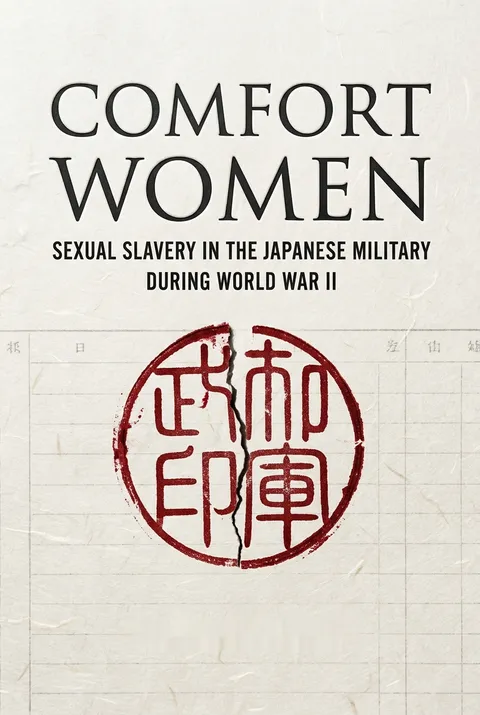
Comfort Women by Yoshimi Yoshiaki receives mixed reviews, with an average rating of 3.96 out of 5. Readers appreciate the thorough research and historical documentation but criticize the academic tone and lack of personal stories from comfort women. Some find the book repetitive and heavy on evidence, while others value its contribution to exposing the Japanese government's involvement in sexual slavery during World War II. Many readers express shock and sadness at the atrocities committed against women and hope for justice and accountability.
People Also Read





Glossary
military comfort women
Women forced into military sexual serviceA euphemistic term used for women confined and compelled to provide sex to Japanese military personnel during the Asia Pacific War. Yoshimi retains the familiar historical label while arguing that the system amounted to military sexual slavery. Recruitment methods differed, including abduction, deception, and debt, but the women’s lack of freedom inside the stations was central.
military comfort stations
Military-controlled sexual facilitiesFacilities established for Japanese military personnel where women were forced to provide sexual services. Some were directly managed by military units, others were run by civilians under military supervision, and some civilian facilities gave soldiers priority. Military authorities could control transport, access, operating rules, medical inspections, and security, making the stations part of military logistics.
debt slavery
Labor trapped by imposed debtA condition in which a person is held in work or service because an advance, recruitment payment, or other claimed debt must be repaid. In the comfort station system, recruiters or operators could use debts to restrict women’s ability to leave. Expenses and deductions could deepen the obligation, making the apparent contract a mechanism of captivity rather than free employment.
licensed prostitution system
State-regulated prostitution regimeThe officially regulated prostitution system used in Japan and extended to colonial territories. Although some legal protections existed, Yoshimi argues that debt, restrictions on movement, and obstacles to quitting often made it a form of sexual exploitation. The military comfort station system drew on this social and administrative background but subjected women to even more severe control.
Semarang case
Dutch trial over forced prostitutionThe 1944 case in Semarang, Java, in which Japanese officers and station operators forced Dutch women from internment camps into military comfort stations. After Japan’s defeat, a Dutch military court convicted several participants, including officers responsible for the operation. Yoshimi uses the case to show that military authorities could recognize forced prostitution as criminal, even while treatment of Asian victims remained unequal.
Download PDF
Download EPUB
.epub digital book format is ideal for reading ebooks on phones, tablets, and e-readers.








