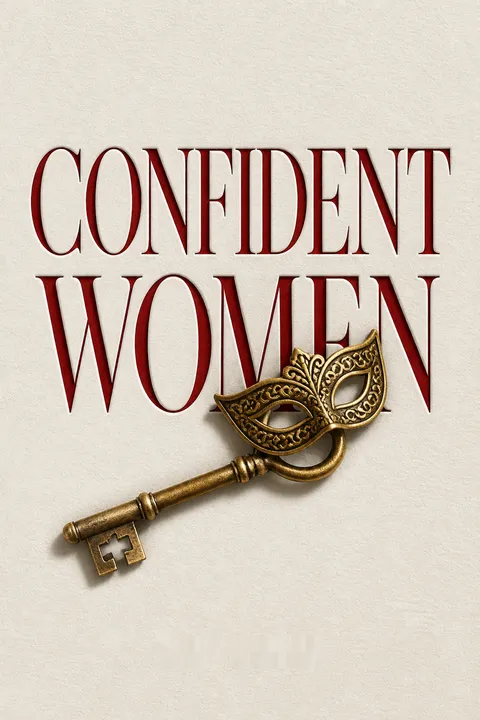


Key Takeaways
Recognize why con women fascinate us: their confidence stages forbidden ambitions.
Charm is part of the con. A confidence artist is a swindler who first wins trust, then uses it to gain money, access, or influence. Telfer opens with the overlooked power of likability: people who meet a con woman may describe her as warm, stylish, or unusually compelling, even after learning what she did. That admiration can turn the criminal into a performer and push the victims out of view.
The fantasy has an audience. These women appear to ignore rules around names, status, and wealth, acting out desires most people restrain. The book links social rank with belonging and control, and suggests that fascination can grow from imagining such freedom. That does not make the crimes admirable. It explains why audiences may identify with the con artist before considering who paid the price.
What's striking is how the book treats fascination as part of the story, not an innocent response outside it. Audiences can enjoy audacity while distancing themselves from victims, especially when a scam is packaged as stylish theater. That split resembles celebrity culture, where charisma can soften scrutiny and make rule-breaking look like personality. The distinction matters: understanding a con artist's appeal is not the same as endorsing her conduct. Still, storytelling itself can recreate the glamour it examines, so keeping the harmed people in frame is an ethical necessity.
Find the want beneath the pitch, because desire can mute scrutiny.
Desire opens the door. Jeanne de Saint-Rémy understood that Cardinal Rohan wanted the queen's approval. She claimed to be Marie Antoinette's confidante, arranged forged letters, and staged a midnight meeting with a lookalike who handed Rohan a rose. He saw what he longed to see: a path back into royal favor.
The scheme escalated. Jeanne persuaded Rohan to arrange the purchase of a necklace containing 647 diamonds, supposedly for the queen. She and her husband dismantled it and sold the stones. The fraud collapsed when the real queen denied buying it. Yet the scandal damaged Marie Antoinette's reputation and fed public contempt for the monarchy. The lesson is not merely that Rohan was deceived. His desire helped make a fantasy feel more credible than the obvious questions.
The case shows how persuasion often works by attaching a false claim to a real need. Rohan's longing was not invented by Jeanne; she redirected it toward a story that seemed to fulfill it. This is a useful lens for evaluating offers that promise access, recognition, or rescue. A strong emotional payoff can narrow attention to confirming details. But desire alone does not explain responsibility: the swindle depended on deliberate fabrication, and its consequences reached far beyond its most eager target.
Status signals can replace verification when a story flatters the room.
Appearances travel fast. Cassie Chadwick dressed and spent like a wealthy heiress, then claimed to be Andrew Carnegie's secret daughter. Wang Ti used designer goods, luxury cars, and her relationship with Olympic gymnast Xiao Qin to pass as a politically connected princeling. In both cases, visible status helped others accept an identity that had not been established.
The audience helped complete the picture. Wang Ti's friends were wealthy and famous themselves, yet her supposed political lineage made her seem especially important. Cassie's bankers saw a rich-looking woman and an opportunity to earn from her. These signals did not prove the stories; they made the stories socially convenient to believe. The performance worked because it fit what the people around them already wanted to think about wealth and influence.
Status is a shortcut for judgment: clothing, connections, and confident behavior can function as informal credentials. The cases also expose a social incentive to avoid checking. Asking for proof can feel awkward when the other person seems powerful, or when a relationship promises access to an exclusive circle. That pressure is not unique to elite settings, though its costs can be higher there. Visible success may be evidence of resources, but it is not evidence of how those resources were obtained.
Verify the source of official-looking evidence before trusting its authority.
A real document can support a falsehood. Cassie forged papers claiming to show assets held by Carnegie. She then persuaded a banker to copy her list of those supposed assets onto bank paper and sign it. The signature and paper were genuine; the wealth described was not. Cassie had turned a made-up claim into something that looked independently confirmed.
Authority can be borrowed. Jeanne's forged letters from the queen and a contract bearing a false royal signature worked because Rohan and the jewelers were ready to accept them. In each case, a document's appearance substituted for checking who created it and whether its claims could be confirmed. When a claim matters, the useful question is not only whether the paperwork looks official, but whether the underlying source is independently verifiable.
These episodes distinguish authenticity of a document from truth of its contents. A real signature, seal, or institutional letterhead may verify only that someone handled a piece of paper, not that the asserted facts are sound. This is a general problem in bureaucratic systems, which rely on records to scale trust beyond personal relationships. The answer is not to distrust every document. It is to verify consequential claims through a separate channel, rather than letting one impressive-looking artifact certify itself.
Grief makes certainty feel like care, even when the helper profits.
Comfort can become leverage. Rose Marks and her family ran psychic storefronts where clients arrived with illness, bereavement, or painful relationships. A reading could become a warning that the client was cursed, followed by an offer to remove the curse through costly spiritual work. Clients were told not to discuss the process with others and that stopping could ruin their lives.
The harm was not abstract. Romance novelist Jude Deveraux gave Rose about $17 million over years, believing Rose could guide her toward a safer life and help protect her child. After the child's death, Rose told her the spiritual work had to continue. The case does not show that every spiritual practice is fraudulent. It shows how a promise of certainty can become coercive when a helper controls both the explanation of suffering and the supposed remedy.
The exploitation here depends on an asymmetry: the client is seeking relief, while the adviser claims privileged knowledge about invisible causes and future outcomes. Grief can make a person more receptive to a coherent explanation, especially when ordinary institutions have offered little comfort. That vulnerability deserves respect, not mockery. At the same time, compassion cannot require unlimited credulity. A practical boundary is to examine whether a helper's support increases a person's options or makes the helper the only trusted route forward.
In a crisis, urgency can make skepticism feel cruel.
Tragedy speeds up trust. Telfer calls people who exploit public disasters tragediennes. Ruksana Ashraf filed insurance claims saying she had lost possessions in three major UK tragedies, including the Manchester Arena bombing and Grenfell Tower fire. Insurers paid her more than £50,000 before her fraud was uncovered. Ashley Bemis collected money and supplies by claiming her husband was fighting California's Holy Fire, though the supposed firefighter was an actor's image and the husband was invented.
Not every motive was money. Tania Head falsely claimed to have survived the September 11 attacks and became a prominent advocate for real survivors. She did not take compensation money, but her story gave her status and historical importance. The cases differ, yet all exploited the difficulty of questioning someone who claims proximity to catastrophe.
Crisis creates a moral squeeze: quick help is valuable, but urgency makes verification seem indecent. The book's examples suggest that compassion and basic checks need not compete. Donations can go through established channels, and claims for aid can be assessed without publicly humiliating the person making them. The risk of fraud is real, but suspicion can also burden genuine survivors. A sound response separates care for affected people from automatic confidence in every individual claim.
A story can outlive facts when it supplies the ending people need.
Hope kept Anastasia alive. After the Romanov family was killed in 1918, several women claimed to be the youngest daughter, Anastasia. Anna Anderson, later identified as Polish factory worker Franziska Schanzkowska, attracted supporters with a story of escape and trauma. Eugenia Smith made a similar claim. Their accounts faced contradictions and skeptical testimony, but believers often interpreted inconsistencies as effects of suffering.
Evidence eventually closed the question. DNA testing established that the Romanov remains belonged to the family, and the missing children's bodies were found in a second grave in 2007. No princess had escaped. Yet the survival story continued to reappear. It offered a kinder ending than execution, and allowed people to keep believing that a beloved young woman had been spared.
The Anastasia claims show that facts do not always compete with fiction on equal terms. DNA can answer a biological question, but it cannot satisfy the emotional wish that a brutal ending had been different. That distinction helps explain why debunking sometimes fails: a belief may be serving as consolation, not merely as a mistaken inference. A respectful response can acknowledge the appeal of the hopeful version while still stating what the evidence establishes.
Repeated performance can blur the line between invented identity and reality.
The act can consume its actor. Wang Ti began by presenting herself as more glamorous and connected than her ordinary background allowed. She claimed to be the daughter of powerful Chinese officials, then sold friends cars and apartments she did not own. The money funded more status displays and gifts, including lavish spending on Xiao Qin. When the scheme began to unravel, she kept selling nonexistent deals to repay earlier victims.
The lie became a routine. Wang Ti later said she had lied every day for so long that she could no longer tell what was true. Her story does not prove that every persistent fraudster believes her own inventions. It does show how a false identity can become self-reinforcing: each new promise requires another, until the performance is no longer a costume put on for a single audience.
Wang Ti's case makes fraud look less like one clever trick than a system that acquires momentum. Money props up the persona, the persona attracts more money, and the resulting obligations make retreat increasingly costly. This resembles an organizational feedback loop, where each decision is justified by the consequences of earlier decisions. The resemblance should not erase agency: pressure may explain why a scheme continues, but it does not cancel the damage done to the people drawn into it.
Never mistake a nonviolent con for a harmless one.
The damage outlasts the transaction. Rose Marks's clients lost savings, homes, and trust in their own judgment. Some were isolated from relatives while being pressed for more money. Wang Ti's victims included Olympic athletes and other public figures, with losses totaling about 60 million yuan. Financial harm could be devastating even when the fraud did not involve physical force.
Some stories crossed into violence. Sante Kimes exploited workers she held against their will, and she and her son were convicted of murders, including that of New York socialite Irene Silverman. Her crimes make clear that the category of con women cannot safely be romanticized as clever, nonviolent rule-breakers. These cases are not all alike, but the absence of a visible injury should never be mistaken for the absence of a victim.
The book usefully resists the idea that fraud is a victimless crime with entertaining costumes. Financial loss can alter a person's housing, relationships, and sense of competence; coercion can deepen that harm. Sante Kimes also warns against treating a category as morally uniform: some frauds remain financial, while some criminals use deceit alongside direct violence. The most accurate account preserves both facts, rather than either glamorizing every swindler or flattening different cases into one portrait.
Protect trust through verification, not blanket suspicion.
Confidence has two sides. It can mean belief in oneself, or trust placed in another person or promise. The con artist uses both: her self-assurance makes her story persuasive, while the target's trust makes cooperation possible. When the deception is exposed, victims may lose confidence in their own judgment as well as in other people.
Suspicion has a cost, too. Telfer ends by arguing that trust is not a defect simply because it can be exploited. A world where everyone assumes deceit would close off ordinary generosity and cooperation. The practical alternative is neither blind belief nor total distrust. It is to preserve human openness while checking high-stakes claims, especially when money, safety, or someone else's vulnerability is involved.
The ending offers a more useful choice than either celebrating the con artist or treating trust as foolish. Trust makes cooperation possible, but it works best when paired with proportionate safeguards. Verification can be understood as a way of protecting relationships, not as an accusation against every person in them. The remaining tension is real: checks can exclude or stigmatize people who already struggle to be believed. Good safeguards therefore need to be consistent, private where possible, and focused on claims rather than personal worth.
Analysis
Confident Women is a story-driven history of fraud, but its central subject is not technique alone. Telfer tracks how confidence is made persuasive, how audiences participate in it, and how public storytelling can turn criminals into folk figures. The cases range from forged royal intimacy and fake inheritance to spiritual exploitation, fabricated survivor identities, and murder. Their variety matters: there is no single psychology or method that explains every woman here. Some pursue wealth, some status, some escape, and some appear to build identities that eventually consume them.
The book's strongest interpretive move is its attention to the audience. Rohan wants royal approval, bankers want profitable access to Carnegie wealth, athletes inhabit a status-saturated circle, and mourners want contact with the dead. The con artist does not create these desires. She studies them and makes her deception fit. This shifts the reader's question from whether victims were foolish to what social assumptions made a claim feel plausible. It also reveals why the word confidence carries such force: the fraud relies on the artist's self-belief and the target's trust at once.
The narrative's liveliness is both an asset and a risk. Vivid clothes, forged queens, fake pregnancies, and pink getaway cars make the stories memorable, but they can also glamorize the very conduct the book condemns. Telfer counters that pull by repeatedly restoring the victims, the ruined reputations, the lost savings, and the violence. The contrast is especially important because not all the cases are morally or legally equivalent. A fraudulent spiritual service, an invented identity, coercive labor, and murder demand different judgments.
The book ultimately defends trust without recommending credulity. Its most durable implication is procedural: preserve openness in ordinary life, but do not let charisma, status, paperwork, or urgency serve as proof. Verification protects both the person being asked to believe and the social trust that makes generosity possible.
Review Summary
People Also Read


Glossary
confidence artist
trust-based swindlerA criminal who gains a person's trust and then exploits that confidence for money, access, or another advantage. The book emphasizes that the artist's self-assurance and the victim's belief work together: one makes the story persuasive, while the other enables the deception.
Modern Spiritualism
mediumship religious movementA religious movement that grew around claims that mediums could communicate with the dead. The Fox sisters' spirit-rapping performances in 1848 helped spur its growth. Mediums developed many forms of alleged contact, including messages, spirit writing, and physical manifestations.
medicine
audience researchA term used by Spiritualist mediums for gathering information about séance attendees before a performance. Knowing who was grieving, newly married, or facing a personal crisis could make a medium's supposed revelations seem uncannily accurate, even when the information came from ordinary research.
ectoplasm
claimed spirit substanceA pale, tangible substance that some mediums claimed emerged from their bodies as spirits manifested. Its appearance could be sensational and intimate in a dark séance room. Investigations and exposures found that some mediums used materials such as cloth or paper to produce it.
princelings
elite political offspringA term used in the book for the children of China's former Communist revolutionary and political elite, who were associated with inherited influence and privilege. Wang Ti falsely claimed this status, using the social power attached to the identity to impress acquaintances and support her fraudulent deals.
tragediennes
crisis profiteersTelfer's label for people who exploit public tragedies by falsely claiming a connection to them, soliciting donations, or seeking compensation. Their conduct can take different forms and motivations, from financial fraud to fabricated claims of survival or victimhood. The term describes a pattern, not a formal legal category.
Download PDF
Download EPUB
.epub digital book format is ideal for reading ebooks on phones, tablets, and e-readers.








