

Key Takeaways
Practice staying in disagreement even when no agreement is available
Resolution is not the only prize. The book calls conflict resilience the capacity to remain present in disagreement, learn from it, and act with care rather than reflexively retreating or attacking. It is a foundation for negotiation and conflict resolution, not a guarantee that either will succeed. In a Harvard Law School dialogue class, student facilitators repeatedly steered discussions away from the difficult questions participants had come to explore. At Seeds of Peace, Israeli and Palestinian teenagers instead stayed in intense dialogue, sometimes in tears. They did not settle the conflict between their communities, but some began to understand how history and family shaped the other side’s views and returned home committed to working together.
Value can survive disagreement. Anthony Fauci also stayed in conversation with ACT UP activists, including Larry Kramer, whose public attacks on him were fierce. Their conversations influenced how Fauci approached clinical trials and HIV research. The lesson is not that every difficult exchange produces agreement, but that honest engagement can reveal new information and change what people do.
The distinction between dialogue and resolution is essential in disputes where the underlying stakes are real and unequal. A conversation can build understanding without making an unjust arrangement acceptable or excusing harmful conduct. The Seeds example makes the value of dialogue concrete, while also showing its limits: personal connection does not by itself produce political peace. The useful test is whether participants gain clarity, voice, or a better basis for action, not whether the room ends pleasantly. That standard avoids both easy cynicism and the sentimental claim that simply talking heals every divide.
Interrupt avoidance before it teaches your brain that conflict is dangerous
Avoidance can train fear. The authors describe sensitization as the brain treating an unfamiliar or long-avoided experience as increasingly salient and threatening. Avoiding a hard conversation may ease distress now, but it can make the next conversation feel even more alarming. Katie, locked in a yearly fight with her mother about Thanksgiving, alternated between silence and counterattack. Her body reacted to the prospect of speaking up before the conversation had even begun.
Create room to choose. The book links conflict stress to five common reflexes: fight, flight, freeze, fawn, and fester, the last meaning suppressing or numbing distress. A brief pause, a slow breath, and naming the feeling can make a reflex less automatic. Katie could already imagine how her sister might open the conversation calmly and directly. The gap was not knowing the words, but being able to use them as herself.
The account offers a practical way to understand why avoidance can become self-reinforcing: immediate relief rewards the escape, while the next encounter feels more charged. That resembles a learning loop, not a character flaw, which makes experimentation more useful than self-reproach. Still, the book’s language about conflict and physical pain should be read as an analogy for overlapping threat responses, not as proof that every disagreement is literally an injury. Distinguishing a heated but manageable conversation from abuse or danger matters; otherwise, a useful challenge to avoidance can become pressure to endure harm.
Train both your conflict radar and your capacity to stay present
Notice what counts as conflict. Conflict tolerance has two parts: conflict recognition, the personal threshold at which an interaction registers as conflict, and conflict holding, the ability to remain engaged once it does. The same lively product meeting might feel like normal debate to one colleague and a serious clash to another. Neither person’s response alone defines the interaction; awareness of the difference can prevent quick judgments about motives.
Build capacity gradually. The book recommends noticing bodily signals and automatic thoughts, then trying one response beyond the usual reflex. Maya, irritated when her brother criticized her detailed travel itinerary in Japan, paused and took a short break rather than snapping back. The pause helped them identify the real issue: he wanted unhurried time with his sister. The authors also describe a month-long study in which participants practicing structured breathing reported improved mood and less stress. They advise starting with manageable disagreements, not the most painful one.
Separating recognition from holding is a useful diagnostic: someone can miss tension until it is severe, or notice small differences and feel unable to stay with them. That helps tailor practice rather than prescribing one ideal temperament. Gradual exposure can build confidence when the setting is sufficiently safe and the person has choice. It should not be confused with forcing exposure, particularly for people whose reactions reflect trauma. The practical strength of the model is its emphasis on flexibility across contexts: skillful engagement at work does not mean a person will find family conflict equally manageable.
Give your competing inner motives a hearing before speaking for yourself
Inner conflicts shape outer ones. The book calls the negotiation within the struggle among a person’s competing identities, needs, and values. Thomas, a gifted student deciding between law school and musical theater, felt torn between family expectations and the work that gave him joy. Treating one side as virtuous and the other as selfish would have hidden the actual dilemma.
Make the voices concrete. The authors describe mirror work, chair work, and table work. First, identify the reasons to raise an issue and the reasons to avoid it. Next, give each competing perspective a physical chair and speak from it, so quieter or shamed motives are not dismissed before they are understood. Finally, bring the fuller picture into a real conversation. In Sebastian’s case, a chair he had labeled selfish turned out to express a legitimate wish to discuss alternatives to moving his mother-in-law into his home.
This approach resists the false choice between self-sacrifice and self-assertion. People often communicate poorly not because they lack a script, but because they have not acknowledged what the script would cost them emotionally. Externalizing competing motives can make ambivalence easier to examine and less likely to leak out as defensiveness. The physical chair exercise will not suit everyone, and the book presents it as a practice, not a diagnosis. Its broader contribution is the reminder that a coherent position can emerge from multiple valid concerns rather than from silencing whichever one feels inconvenient.
Listen to uncover the concern beneath the argument, not to signal agreement
Listening is active inquiry. Deep listening means trying to understand both the substance and emotional force of another person’s view, without endorsing it. It includes reflecting back what was heard, asking open questions, allowing silence, and showing focused attention. When a student asks a question and the other person pauses, the authors recommend waiting rather than quickly replacing the question with a yes-or-no choice.
Curiosity can reveal options. A colleague listening to an Israeli settler who supported annexation learned that the speaker’s central concern was recognition of a historic claim, not necessarily immediate control of the land. That did not settle the conflict, but it exposed a concern hidden by the opening position. In another example, a study of doctor-patient communication found that participants shown a physician who listened poorly were more inclined to consider litigation. Being heard can matter to the relationship even when the substantive outcome is unchanged.
Listening is often mistaken for politeness or agreement, but its strategic value lies in discovering what a person is actually trying to protect. The settler example demonstrates how a stated position can conceal a distinct underlying concern, sometimes revealing room for a different conversation. The caution is that listening has costs, especially when the view being heard targets the listener’s identity or rights. It need not mean unlimited attention or exposure. A sincere question, clear boundaries, and the option to stop are more credible than a performance of empathy that masks a predetermined verdict.
State your reasons and needs, not just your verdict
A conclusion hides its path. The Ladder of Inference is a model for showing how people move from available information to selected observations, interpretations, and conclusions. In conflict, people often announce only the conclusion, leaving others to guess how they arrived there. Sharing the relevant observations and the meaning attached to them makes disagreement more discussable. The authors also warn against sweeping claims such as “you always,” which shift attention from the issue to a contest over character.
Look beneath demands. A position is what someone says they want; an interest is the underlying need or concern. A job candidate demanding a particular salary may be seeking fair compensation, money for tuition, or recognition. Naming those interests can reveal options beyond splitting the difference. Feelings may also need to be asserted. Reggie’s arguments about a business purchase went nowhere until he explained that criticism of his spending brought up shame from childhood.
The method encourages intellectual humility without requiring people to abandon convictions. Showing the path from evidence to conclusion gives the other person something to examine besides a bare assertion. Separating interests from positions can also replace an artificial tug-of-war with a search for options that meet different needs. But no technique guarantees persuasion, particularly when values genuinely conflict or one side has more power. The standard for a good assertion should therefore include accuracy and self-respect, not only whether the listener accepts it.
Design the conversation before its hardest subject takes over
Purpose shapes the process. Before a difficult meeting, decide what it is for: reaching a decision, generating options, or understanding each other without expecting agreement. Then choose the right participants, setting, time, and structure. The book calls this fitting the forum to the fuss. Clear ground rules can lower the risk of speaking honestly, while an agenda helps prevent a loud voice or a false deadline from controlling the exchange.
Structure makes dissent usable. Boeing’s safety failures illustrate what happens when concerns can be raised but are not meaningfully heard or addressed. By contrast, a Harvard Law School committee considering its crest created multiple ways for stakeholders to contribute and communicated how input would be considered. The committee’s final report included both a majority recommendation and a dissenting view. For negotiations, the authors advise identifying issues and interests before brainstorming options, then agreeing on fair criteria and practical follow-up steps.
Process is not administrative decoration. It distributes attention, shapes who can contribute, and signals whether disagreement is welcome or merely tolerated. The contrast between Boeing and the crest committee shows why a channel for dissent must connect to actual consideration, not simply collect comments. Yet process cannot neutralize hierarchy by itself. Participants need to know who holds decision authority, what can still change, and what protections exist against retaliation. Good design makes those realities explicit rather than promising a perfectly safe or perfectly equal conversation.
Choose whether to stay by comparing real alternatives, risks, and history
Compare an offer with your alternative. BATNA means Best Alternative to a Negotiated Agreement: the best course available if no agreement is reached. A person deciding whether to accept a raise, settlement, or business deal should list possible alternatives, assess which is actually best, and compare the offer against it. The authors caution against accepting a poor deal just because months of effort have already been invested, or rejecting a worthwhile one because pride or overconfidence distorts the comparison.
Not every conversation is worth entering. The book distinguishes ordinary discomfort from trauma, abuse, or a credible risk of harm. Consider the situation, power dynamics, and history with the other person before engaging. Dolly Parton left her professional partnership with Porter Wagoner to pursue independence, while retaining affection and respect for him. Her example shows that leaving a role or limiting contact need not erase the value of a relationship.
The decision framework counters two common distortions: treating the status quo as if it were no alternative, and treating past investment as a reason to continue. It also guards against the opposite mistake of assuming that every relationship must be repaired through dialogue. The book’s emphasis on individual judgment is important because trauma, financial dependence, and power are not interchangeable across people. A person’s safest or most viable option may be constrained. Clear-eyed assessment is more humane than either automatic endurance or automatic exit.
Make dissent easier by changing the room, not just the speaker
Culture rewards some responses. A person may learn to listen and speak more skillfully, yet still be punished by a workplace or family that treats disagreement as disloyalty. Joses, a Chamber of Commerce board member, raised evidence that the group’s habits were driving new businesses away, but colleagues dismissed his ideas as outside their culture. The problem was not simply his technique; the environment made dissent costly.
Influence can start small. The book recommends assessing how people actually handle conflict, not just reading formal policies. A fraternity made mentoring by alumni a trusted route for discussing bullying, building on a tradition members already valued. People without formal authority can also model better conduct or raise a concern privately, ask what purpose a behavior serves, describe its impact, and invite joint problem-solving. Repeated examples make constructive disagreement more visible and easier for others to imitate.
The move from individual skill to shared conditions is one of the book’s strongest insights. It avoids blaming employees for silence when leaders, incentives, or informal penalties make speaking risky. Cultural change is more credible when new practices fit local traditions and when leadership is accountable for responding to concerns. Modeling helps, but it cannot substitute for policy, protection, or decision-making authority. A lone constructive dissenter may influence a group, yet institutions must not make that person carry the entire burden of reform.
Analysis
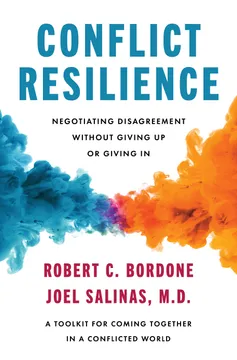
Conflict Resilience is a practical argument about capacity, not a promise of consensus. Its central shift is to treat the ability to remain engaged through disagreement as a prerequisite for negotiation, leadership, and durable relationships. The book’s sequence moves from personal diagnosis, through listening and assertion, to process design and culture. That progression matters: it locates conflict not only in what people say, but in the threat responses, internal stories, and institutional incentives that shape whether they can say or hear anything useful.
The most distinctive contribution is the integration of intrapersonal work with negotiation practice. Katie’s repeated Thanksgiving fight is not solved by supplying a clever line; the problem is that fear disables her access to skills she already possesses. Likewise, Reggie cannot improve a budget dispute by arguing harder when shame is driving his defensiveness. These cases make the claim that self-understanding is practical, not indulgent.
The book is strongest when it distinguishes process from outcome. Seeds of Peace participants did not produce geopolitical settlement, and a well-designed workplace dialogue need not change policy positions. Yet neither fact makes the engagement worthless. This framing gives readers realistic intermediate measures: whether people were heard, whether the actual disagreement surfaced, whether decision procedures were fair, and whether participants can continue working together.
There is also a necessary tension. Encouraging people to stay with discomfort can empower those trained to appease or withdraw, but it can also be misused by people with greater power to demand emotional labor from those most exposed to harm. The authors’ attention to trauma and exit is therefore not a footnote; it is a condition for ethical application. The approach is most persuasive when resilience means expanded choice, including the choice to pause, limit contact, or leave, rather than a duty to remain available to every opponent.
The neuroscience gives readers a memorable account of stress and habit, but the practical case does not depend on treating every metaphor as settled biology. The book’s durable contribution is behavioral: notice the reflex, make room for alternatives, listen for the underlying concern, speak from evidence and interests, and design settings where dissent has consequences beyond being heard.
Glossary
Conflict resilience
Capacity to engage disagreementThe ability to remain present with conflict, engage others constructively, and learn or grow from disagreement without defaulting to avoidance, aggression, or surrender. The book treats it as both a mindset and a set of practiced behaviors, and as a foundation for negotiation and conflict resolution rather than a guarantee of agreement.
Conflict tolerance
Recognizing and holding conflictA person’s capacity to recognize an interaction as conflict and to remain present once it is recognized. The authors divide it into conflict recognition, the threshold for noticing conflict, and conflict holding, the ability to stay engaged without impulsively attacking, withdrawing, shutting down, or yielding.
Conflict recognition
Personal threshold for conflictThe way a person’s internal barometer registers an interaction as conflict. Recognition varies with factors such as personality, upbringing, culture, physical state, relationship, and context. People can experience the same exchange differently, so understanding another person’s threshold can prevent mistaken assumptions about intent.
Conflict holding
Staying present with conflictThe capacity to remain engaged with a disagreement after it has registered as conflict, rather than reflexively fighting, avoiding, freezing, appeasing, or numbing. The book presents holding as trainable through self-awareness, breathing, noticing automatic responses, and trying manageable alternatives to habitual behavior.
Negotiation within
Dialogue among inner selvesThe internal struggle among competing identities, needs, values, and roles that can shape a person’s behavior in an outward negotiation. A person may want to speak up while also wanting approval, security, or loyalty. Identifying these competing motives can reduce self-silencing, defensiveness, and unexamined concession.
Mirror work, chair work, and table work
A three-stage reflection practiceA practice for preparing to handle conflict by first examining the reasons to raise or avoid an issue, then giving distinct competing inner perspectives an audible voice, and finally bringing the fuller understanding into a conversation with another person. The physical use of chairs is intended to make inner perspectives easier to notice and express.
BATNA
Best no-agreement alternativeBest Alternative to a Negotiated Agreement: the best course of action available if a person does not reach agreement with the other party. Assessing a BATNA requires identifying realistic alternatives and weighing them against one’s interests. It offers a benchmark for deciding whether an agreement is preferable to walking away or maintaining the status quo.
Ladder of Inference
How observations become conclusionsA model describing how people move from a broad field of available information to selected observations, interpretations, and conclusions. In conflict, people often state only the final conclusion. Explaining what they noticed and how they interpreted it makes their reasoning clearer and gives others a basis for inquiry or disagreement.
Emotional Approach Coping
Intentional emotional processingA coping approach in which a person intentionally identifies, processes, and expresses emotions related to stress. The book describes identifying the full mix of feelings, examining their sources and recurring patterns, and deciding whether and how to share them. The approach is not presented as equally helpful for every person or situation.
Download PDF
Download EPUB
.epub digital book format is ideal for reading ebooks on phones, tablets, and e-readers.








