

Key Takeaways
Treat the Analects as a living spring, not a monument.
Wisdom for ordinary life. The Analects is a collection of brief teachings and exchanges, not a single, orderly philosophical treatise. Yu Dan approaches it through xinde, an understanding shaped by both reflection and lived experience. Her image is a warm spring: readers enter the same source of wisdom but may find different guidance in it. Confucius offers practical principles for conduct, rather than making learning a test of obscure scholarship or reverence for ancient authority.
Read to practise, not display. In the book’s account, the teachings help people stay grounded amid change by turning attention toward everyday choices: how to treat others, handle disappointment, and find a steady direction. The point is not to memorize a set of sayings, but to let them inform the way a life is lived.
The approach makes an old text accessible by treating it as a prompt for judgment rather than a code to recite. That resembles the difference between knowing a rule and developing practical wisdom: real situations rarely arrive in the tidy form of a textbook example. There is a useful caution, however. A text this compact invites interpretation, and a modern reader can easily find confirmation for existing beliefs. Its warmth is an advantage when paired with close attention to what the teachings actually ask of a reader.
Build public life on trust, not material provision alone.
Trust is a foundation. Asked what a stable government needs, Confucius names protection, adequate food, and the people’s trust. When pressed to remove one, he gives up protection; when pressed again, he gives up food. Trust, in his view, is the condition a community cannot dispense with. People may endure hardship, but a government that has lost their confidence has lost its footing.
Prosperity needs a human measure. Yu Dan connects this idea to the limits of judging a society only by economic output. She cites happiness survey results for China that rose from about 64 percent to 73 percent, then fell to 68 percent across three surveys from the late 1980s to 1996. The figures are presented without methodological detail, but they illustrate her point: improving living standards do not automatically settle people’s sense of well-being.
The distinction between resources and legitimacy remains important: a state can provide services while still failing to earn confidence. Trust is not simply a feeling of loyalty; it depends on whether people experience public authority as dependable and fair. Nor should trust become a reason to excuse weak provision or inadequate protection. The strongest reading is not that material needs matter less, but that prosperity cannot substitute for a credible relationship between institutions and the people they serve.
Find happiness in self-command, not in the size of your store.
Possessions do not settle the heart. Confucius admires Yan Hui, a student who lived with very little yet retained his joy. The lesson is not that poverty is desirable, or that material hardship should be ignored. It is that a person’s inner life cannot be repaired simply by acquiring more. Yu Dan contrasts Yan Hui’s composure with modern dissatisfaction amid rising prosperity and visible inequality.
Integrity protects contentment. The poet Tao Yuanming left a minor government post rather than perform an act of deference he found degrading for a small salary. His choice shows that material advancement can carry a personal cost. The ideal person, or junzi, is neither made servile by poverty nor arrogant by wealth. Happiness here means keeping one’s principles and self-respect across changing circumstances.
This account anticipates a distinction familiar in well-being research: income can relieve real hardship without guaranteeing lasting satisfaction. Its strongest insight is not that people should want less in every circumstance, but that status goods cannot answer every question of value. The framing needs care, since praising contentment can be used to tell disadvantaged people to accept unfair conditions. Tao Yuanming’s refusal is a useful counterweight: inner freedom includes the ability to reject a gain that demands self-betrayal.
Help others advance without imposing your own path.
Use yourself as a guide. Confucius describes benevolence as caring for people and wisdom as understanding them. One practical test is to ask what kind of support would help another person stand on their own feet, rather than assuming that everyone wants the same life. The principle called shu, often rendered as forbearance or reciprocity, cautions against forcing others to endure what one would reject for oneself.
Know when to let go. Yu Dan retells a story of two monks who meet a woman unable to cross a river. An older monk carries her across and continues on; his younger companion remains troubled by the incident long after it is over. The story illustrates two parts of care: offer help when it is needed, then stop carrying resentment or judgment after the moment has passed.
The pairing of care with perspective-taking is more demanding than simple niceness. It asks a person to imagine another’s needs while resisting the temptation to make that imagination authoritative. In contemporary terms, assistance works best when it preserves agency rather than creating dependence or control. The monk story also captures rumination: replaying a finished event can extend its emotional effects. Yet letting go should not mean overlooking repeated harm; forgiveness and protection are different decisions.
Practice restraint until courage can outlast provocation.
Bravery needs a moral brake. Confucius distinguishes courage from impulsiveness. His student Zilu loves bold action, but courage without moral judgment can turn into aggression. Yu Dan points to the general Han Xin, who endured public humiliation rather than enter a pointless fight, and later became a successful commander. Restraint is not cowardice when it protects a larger purpose.
Do not relive every injury. Another story concerns a tea maker challenged to a duel by a swordsman. He has no fighting skill, but prepares for the encounter with the same calm concentration he brings to making tea. His composure unsettles his opponent. The tale makes a claim about presence, not combat technique: a steady mind can be more useful than a show of force. Repeating a painful story can also make a past injury dominate each new day.
The idea connects moral courage with emotional regulation: the pause between provocation and response creates room for judgment. That pause can prevent needless escalation and protect commitments that matter more than a moment’s satisfaction. But restraint is not always the right endpoint. In situations involving ongoing abuse or injustice, calm action may require setting limits, seeking help, or challenging the offender. The useful distinction is between refusing an impulsive reaction and refusing to respond at all.
Set limits before affection turns into control.
Closeness needs room. Confucius warns that excessive intimacy can damage relationships just as surely as neglect can. Yu Dan illustrates this with porcupines that crowd together for warmth, then move apart when their spines hurt one another. Friends need boundaries too: offer honest advice, but stop when the other person will not take it.
Care must respect independence. The book applies this principle to families, where love can become coercive when a parent or partner uses past sacrifices to demand obedience. Respectful distance is not indifference. It allows people, including children, to become distinct individuals rather than extensions of someone else’s wishes. Confucius’s advice to answer an injury with fairness rather than revenge or excessive kindness also fits this emphasis on proportion: neither hostility nor indiscriminate pardon is required.
The porcupine image gives a memorable account of a real relational problem: connection offers comfort, while too much access can feel intrusive. Modern ideas about autonomy and consent deepen the point. Support is more trustworthy when people can refuse it without being punished by guilt. The book’s language of balance is valuable, though balance should not become a demand that someone remain close to a harmful person. Boundaries protect dignity; they are not merely a technique for preserving every relationship.
Let small acts of courtesy carry your character.
Respect appears in details. Confucius shows courtesy through ordinary gestures: he stands when mourners, officials, or blind people pass, and waits for older guests to leave before he does. These actions matter not because ceremony is impressive, but because respect becomes visible through how a person treats others when little is at stake.
Words leave marks. Yu Dan also recounts a father who asks his quick-tempered son to hammer a nail into a fence whenever he loses his temper. The boy later removes the nails, but the holes remain. The story explains why apologies cannot always erase the effect of careless speech. Confucius’s advice to listen widely, speak cautiously, and act within one’s responsibilities is a practical discipline: pause, assess what is known, and avoid causing damage that reflection alone cannot undo.
Small gestures function as social signals, but their deeper value lies in habit formation: repeated acts of regard make respect more than a public performance. The fence story also captures an asymmetry often missed in apologies. A speaker may feel repaired after saying sorry while the recipient still carries the wound. The emphasis on caution should not produce silence or timidity, however. It is a call to make speech proportionate and responsible, not to avoid necessary disagreement.
Choose friends for the person they help you become.
Friends shape judgment. Confucius recommends companions who are upright, dependable, and well-informed. Their value is not mainly access to status or favors; they help a person become more honest, steady, and perceptive. He warns against flatterers, people who are pleasant in person but malicious in private, and smooth talkers whose confidence exceeds their substance.
Notice what company teaches. The book tells of a proud charioteer who works for the modest prime minister Yanzi but never learns from his employer’s example. His wife leaves after pointing out the contrast between Yanzi’s humility and the driver’s vanity. A friend or colleague can act as a mirror, but only if a person is willing to examine what that company reveals. Good friendship includes the capacity to hear something other than praise.
Friendship is an informal learning environment: people absorb not only advice but standards of behavior, attention, and ambition. That makes the warning against flattery especially sharp. Agreement can feel like intimacy while quietly removing the corrective feedback that supports good judgment. Still, the categories should not be treated as fixed labels for entire people. A more useful test is behavioral: does this relationship make honest disagreement possible, and does it help both people see their own blind spots?
Anchor ambition in a life your inner self can inhabit.
Purpose begins close to home. In a conversation about ambition, three students describe plans to govern states or serve in public ceremonies. A fourth, Zeng Dian, imagines a spring outing with friends and children, bathing in a river, enjoying the breeze, and returning home singing. Confucius identifies with this modest scene. Yu Dan reads it not as a rejection of public service, but as evidence that ambition needs an inner foundation beyond professional achievement.
Work can mean more than a task. A story about three workers laying bricks makes the distinction vivid: one sees exhausting labor, another sees a wall, and the third sees a church taking shape. The physical task is the same, but the sense of purpose differs. The book warns that success in a public role can coexist with neglect of one’s private longings.
Zeng Dian’s answer widens the usual definition of ambition. A meaningful life may include attention, friendship, and contact with the natural world, not only visible achievement. This is a helpful corrective to careers that consume the very capacities they are meant to express. The workers’ different interpretations also show that purpose can change how labor feels, but meaning alone cannot compensate for exploitative or unsafe conditions. Inner commitment matters, and so do the material terms under which work is done.
Treat life stages as practices, not age-based deadlines.
Growth changes its task. Confucius describes a life moving from commitment to learning at fifteen, to finding one’s footing at thirty, becoming less doubtful at forty, understanding Heaven’s decree at fifty, listening with greater openness at sixty, and following desire without crossing moral limits at seventy. Yu Dan presents these as directions for self-cultivation, not a checklist for measuring people against birthdays.
Learn, then integrate. The stages describe a shift from acquiring knowledge toward making it part of one’s character. At thirty, taking one’s stand means inner confidence, not owning a home or reaching a particular career rank. By forty, growth involves letting go of distractions and excess attachments. Later maturity means accepting what cannot be controlled, listening to others’ perspectives, and acting freely because principles have become habitual.
This life map is powerful as a reflective sequence: learning, steadiness, perspective, openness, and integrated conduct. It resembles developmental models that describe growth as increasing capacity rather than accumulating credentials. Its age markers should remain metaphors, not universal predictions. People mature under different social conditions, and many never receive the security assumed by a smooth progression. The practical question is therefore not whether someone has reached the expected stage, but which capacity their present circumstances invite them to cultivate.
Analysis
Yu Dan’s project is less a reconstruction of Confucius as a historical thinker than a translation of the Analects into a vocabulary of daily self-government. The source text’s short exchanges become a connected path: cultivate character, regulate response, treat people proportionately, choose formative company, and pursue work without surrendering the inner life. Its organizing figure is the junzi, not as a flawless saint, but as someone whose habits make integrity more reliable under pressure.
That synthesis gives the book its force. Instead of asking readers to master a scholarly system before benefiting from it, Yu Dan uses stories to show how a principle appears in ordinary moments: a boundary with a friend, a refusal to grovel for a minor post, or the decision not to answer insult with violence. The recurring movement is inward, but not private in the modern sense. Self-cultivation is presented as preparation for responsibility to family, community, and state. The account of public trust makes that social dimension explicit.
The book’s accessible moral language also creates a tension. Its emphasis on composure, acceptance, and restraint can help readers escape petty grievance, yet the same language can be misused to minimize structural injustice or ask the injured to absorb harm quietly. The better interpretation is that forbearance governs one’s response, not one’s duty to protect oneself or correct wrongdoing. Similarly, the ideal of harmony should not require agreement; the book’s own account of the junzi allows people to differ without becoming factional or insincere.
The life-stage sequence is best read as a set of developmental questions, not a timetable. Its value lies in shifting the measure of success from external milestones toward integrated judgment and conduct. Overall, the adaptation presents Confucian wisdom as practical ethics: a way to become less governed by status, impulse, and resentment, while remaining more attentive to other people and to the consequences of one’s actions.
Review Summary
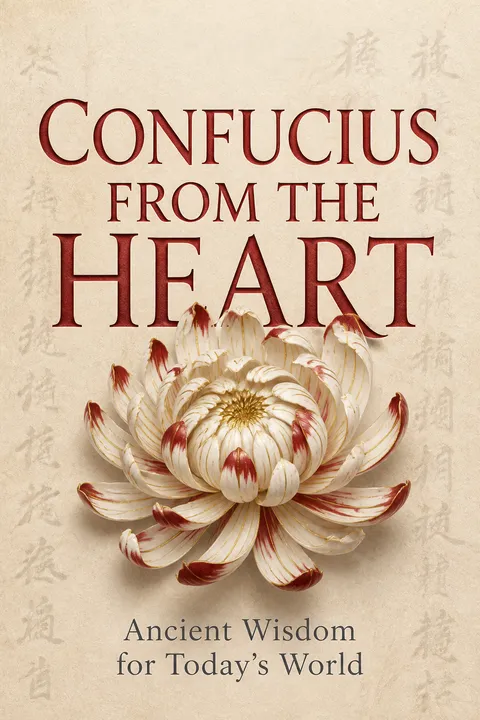
Confucius from the Heart receives mixed reviews, with an average rating of 3.76 out of 5. Some readers appreciate Yu Dan's modern interpretation of Confucian wisdom, finding it insightful and applicable to contemporary life. They praise the book's simplicity and its ability to make ancient philosophy accessible. However, critics argue that the book oversimplifies Confucius' teachings, lacks depth, and misrepresents the original ideas. Some reviewers find it inspiring and thought-provoking, while others dismiss it as shallow self-help literature that fails to capture the essence of Confucian philosophy.
People Also Read




Glossary
xinde
Heart-informed understandingA way of understanding a text through both thought and lived experience. Yu Dan uses the term for a personal, reflective engagement with the Analects, rather than a purely academic analysis. The same teaching may speak differently to different readers, because its meaning is tested in the circumstances of their lives.
junzi
Confucius’s exemplary personConfucius’s ideal of a morally cultivated person, sometimes translated as gentleman. In Yu Dan’s account, a junzi is not defined by wealth or birth, but by integrity, self-restraint, consideration for others, and a capacity to remain steady amid gain or loss. The ideal is presented as something ordinary people can work toward.
shu
Reciprocity and forbearanceA Confucian principle of using oneself as a measure in dealing with other people. It cautions against imposing on others what one would not accept oneself, and supports a practice of tolerance. In Yu Dan’s explanation, shu also involves releasing resentment rather than carrying an injury indefinitely.
benevolence
Care expressed through actionA central Confucian virtue that Yu Dan explains as loving and caring for people. It is not simply warm feeling: it includes helping others develop and succeed, beginning with situations close at hand. The book links benevolence with understanding people, since care without knowledge of another person’s needs can become intrusive.
Three Realms
Heaven, earth, and humanityA view of the world in which heaven, earth, and human beings are all essential parts of a larger whole. Yu Dan uses the idea to argue for balance between ideals and practical life, and for harmony between humanity and the natural world. Human dignity and responsibility belong within this shared order.
the Way of the Mean
Balanced, fitting conductA Confucian ideal of responding with the appropriate degree, rather than falling into excess or deficiency. Yu Dan distinguishes it from mediocrity or moral compromise. It aims at a high standard of conduct through proportionate judgment, emotional balance, and attention to the demands of a particular situation.
shi
Responsible scholar-officialA social and intellectual role associated with educated people who accept responsibility for public life. Yu Dan describes its highest form as combining self-control, integrity, and service to society. The role is not merely a title or a secure position; it involves carrying out a public mission without compromising one’s standards.
attuned ear
Listening across perspectivesYu Dan’s description of the mature capacity to hear different viewpoints and understand the reasons behind them. It involves adapting one’s perspective to another person’s circumstances without abandoning one’s own judgment. The image represents sympathy, tolerance, and a willingness to meet people where they are.
Download PDF
Download EPUB
.epub digital book format is ideal for reading ebooks on phones, tablets, and e-readers.








